West Virginia Warranty Deed from Individual to Husband and Wife
Overview of this form
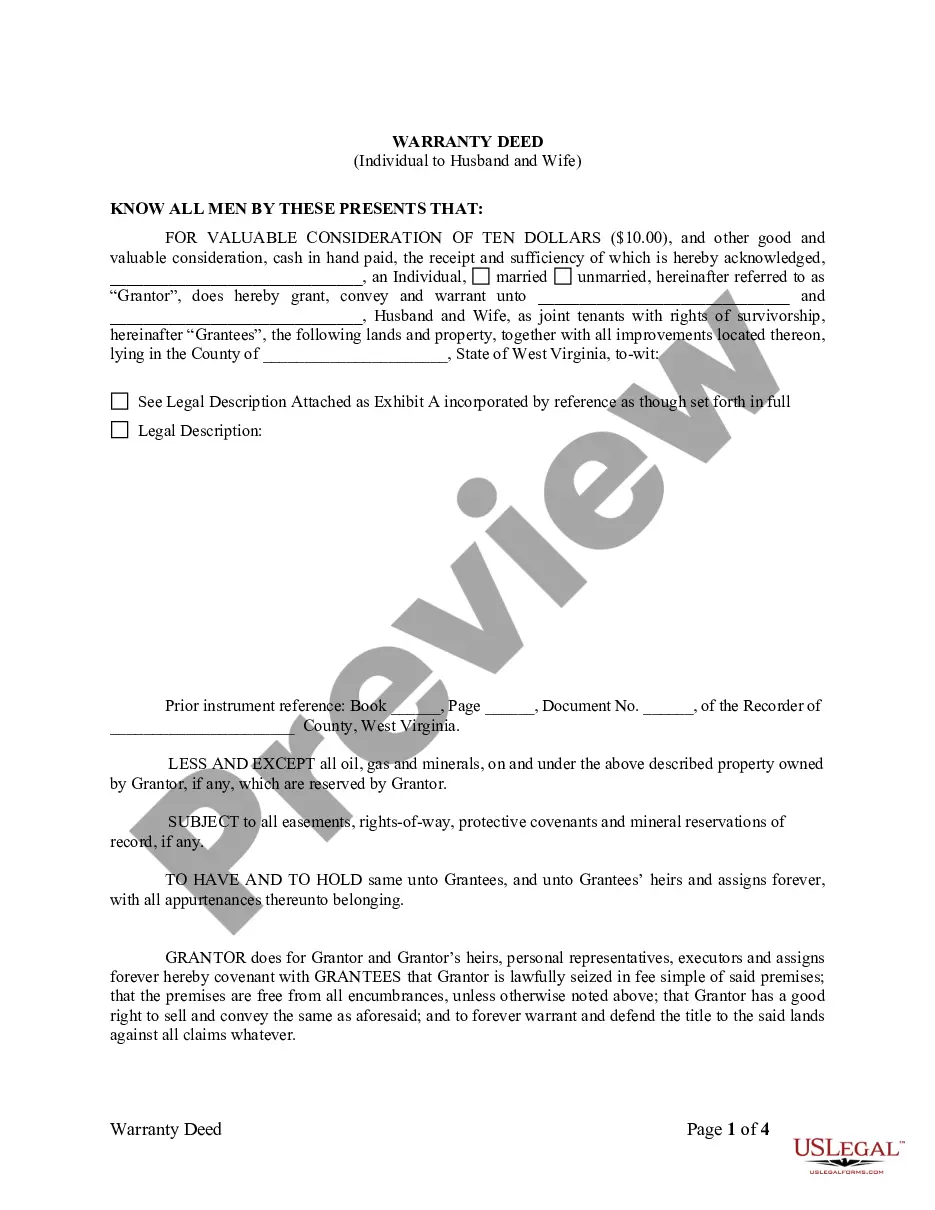
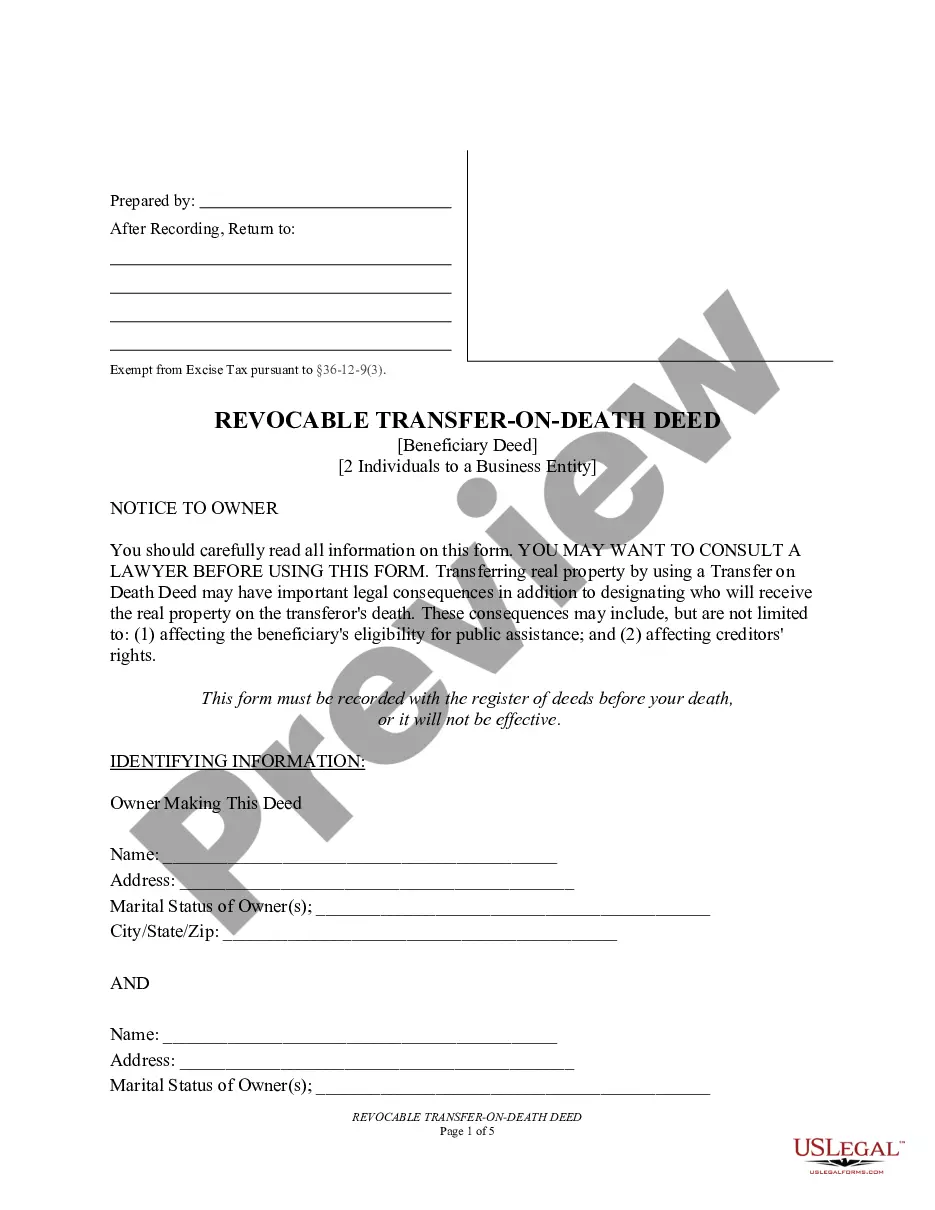
The Warranty Deed from Individual to Husband and Wife is a legal document used to transfer property ownership from one individual (the Grantor) to a married couple (the Grantees). This deed includes a warranty of title, meaning the Grantor guarantees that they own the property and have the right to transfer it. Unlike general property transfer forms, this warranty deed ensures that the couple will have rights of survivorship, allowing for property ownership to pass directly to the surviving spouse without going through probate. This form is specifically designed for couples, making it a tailored solution for married partners looking to hold property jointly.
Key parts of this document
- Identification of the Grantor as an individual and the Grantees as husband and wife.
- Legal description of the property being transferred, including its location.
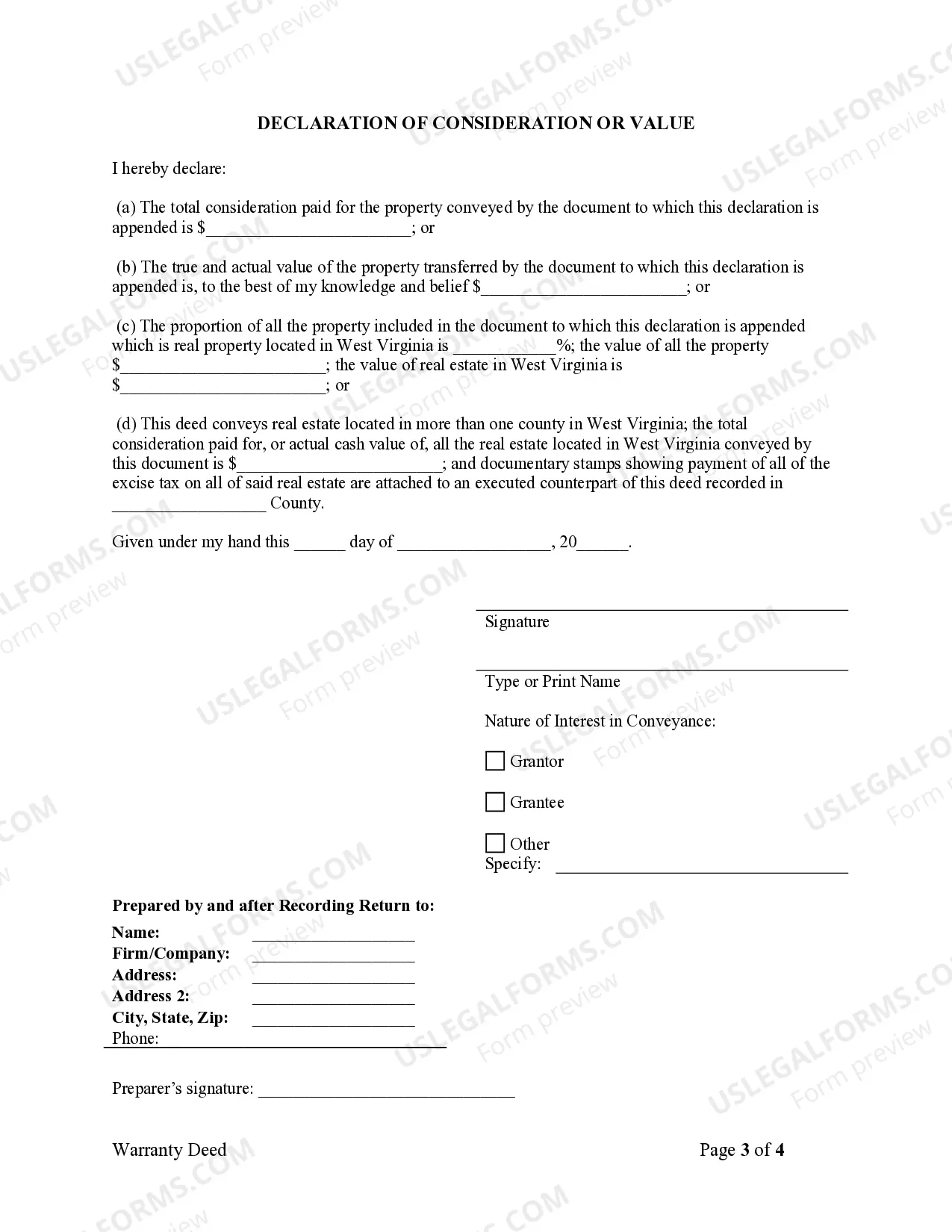
- Statement of consideration, usually including a nominal sum such as ten dollars.
- Warranties provided by the Grantor regarding property ownership and absence of encumbrances.
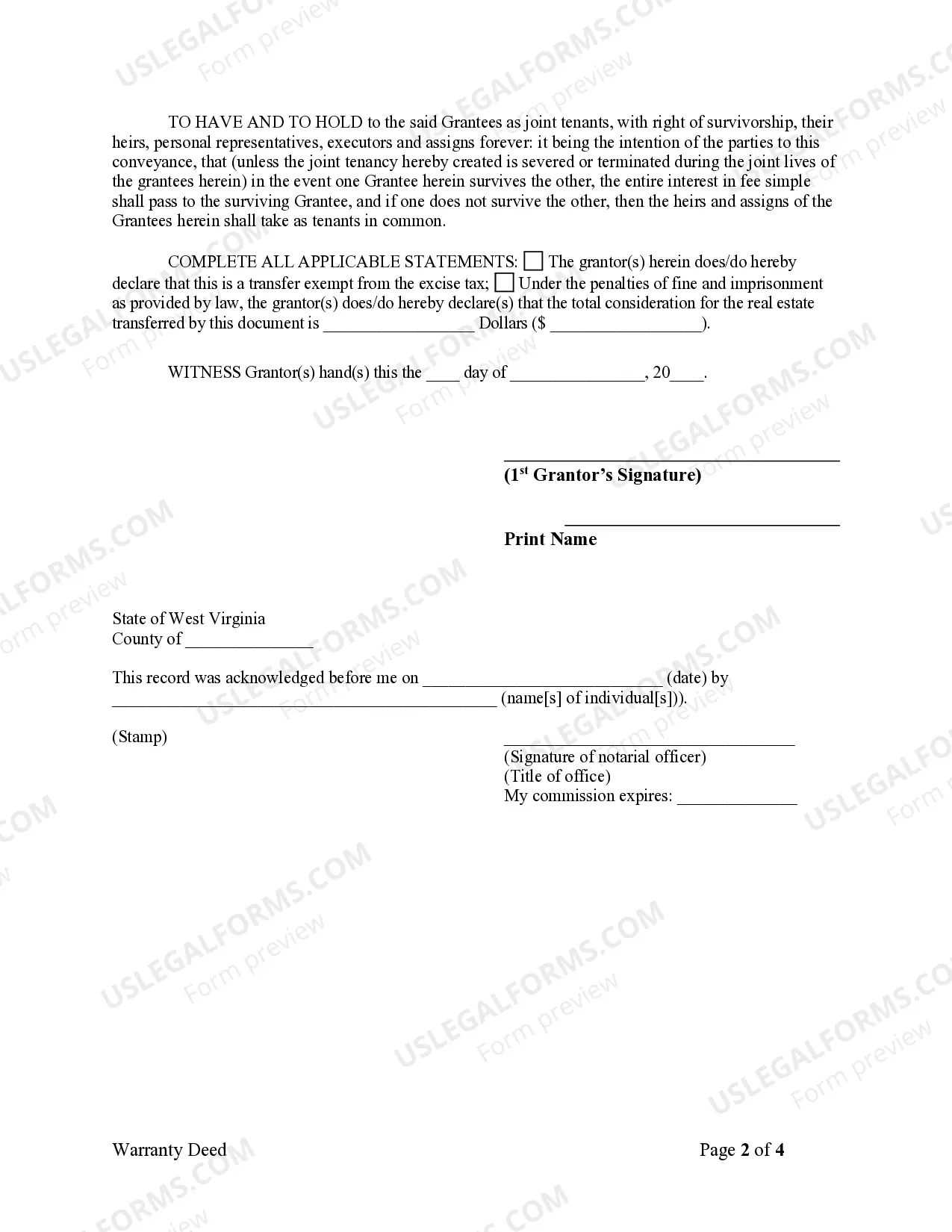
- Joint tenancy with rights of survivorship clause, specifying how the property will be handled upon the death of one spouse.
- Signature and acknowledgment requirements, including possible notary involvement.

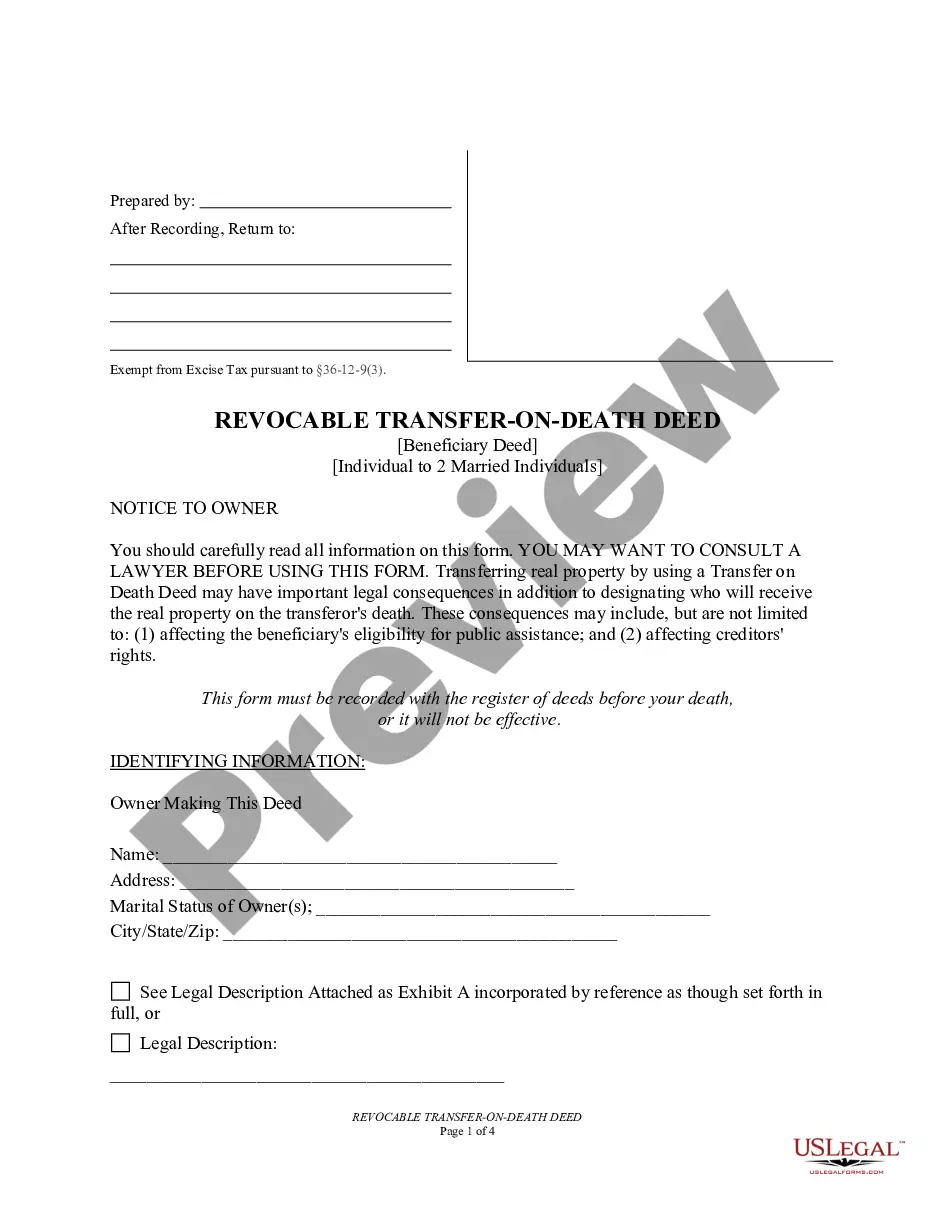
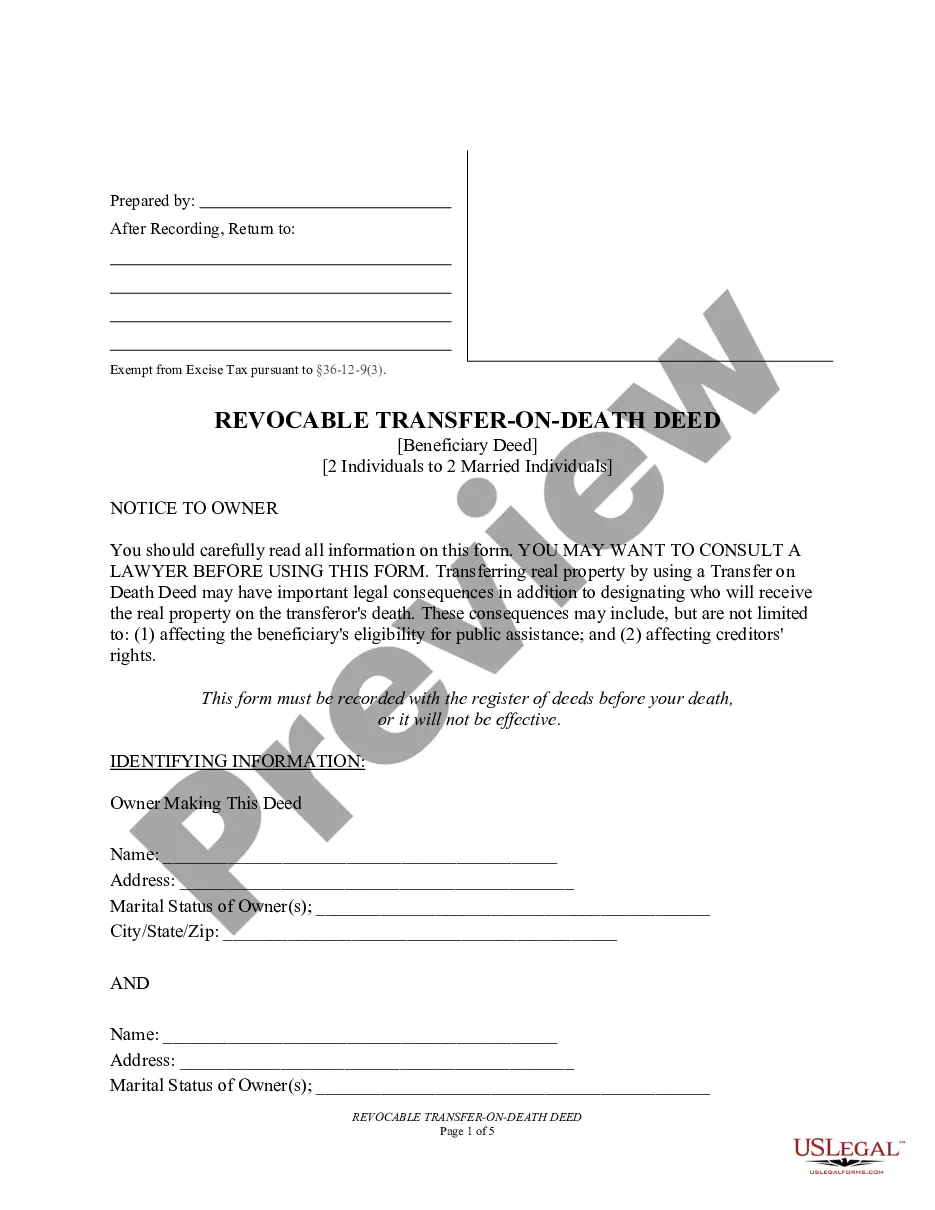
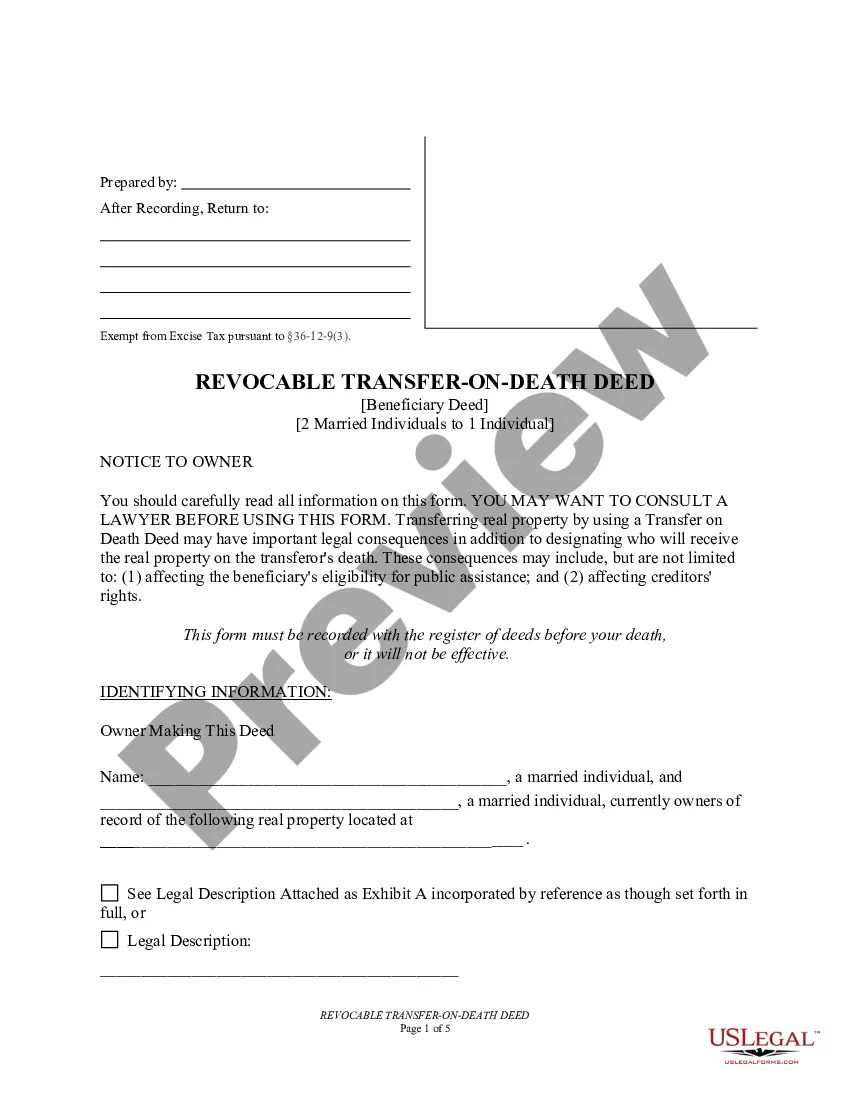
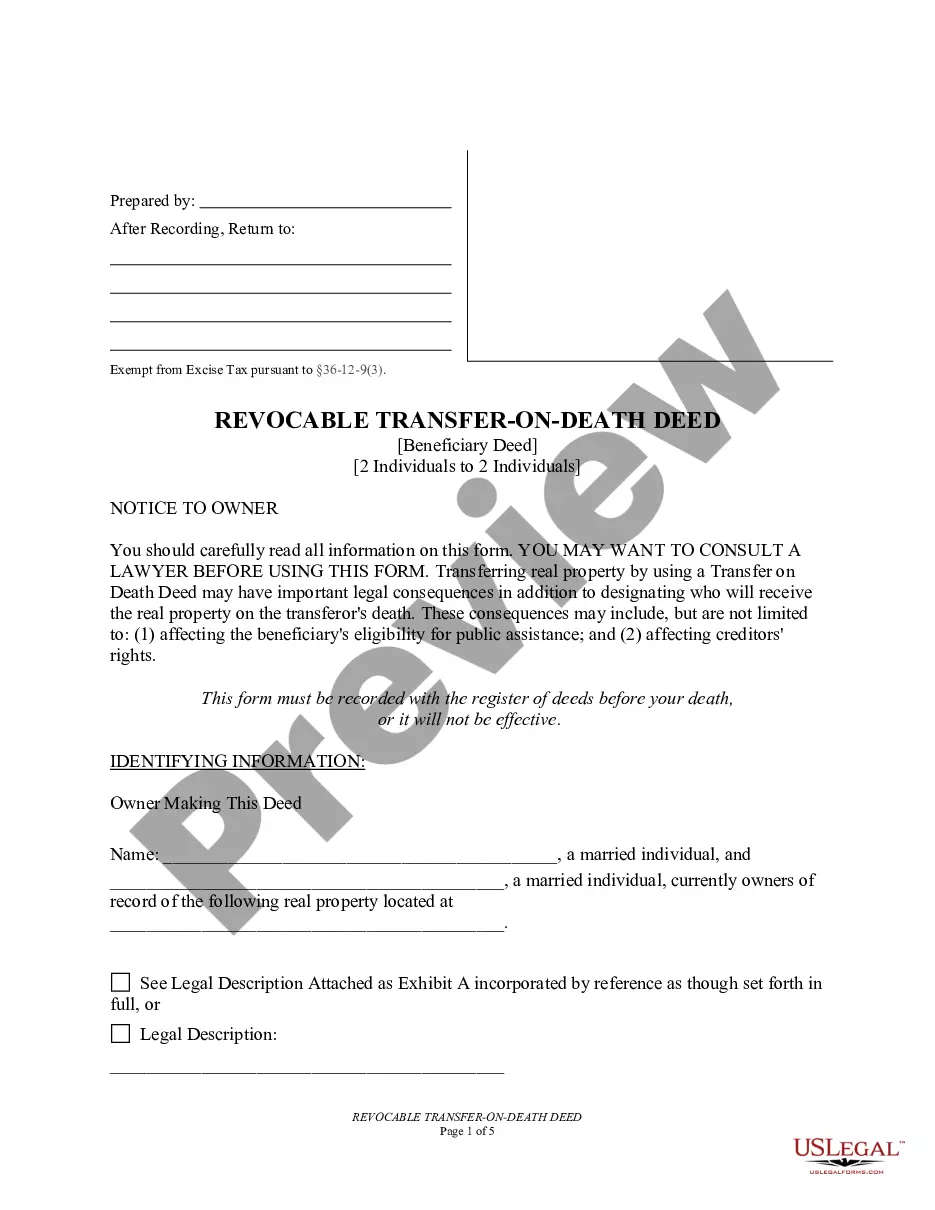
When to use this form
This form is appropriate in various situations, such as when one partner in a marriage wishes to transfer their interest in a property to both spouses to ensure joint ownership. It is also beneficial when establishing a clear legal ownership arrangement for a couple who may be changing their marital status or when creating a joint asset pool. These scenarios can include acquiring a new home together, transferring inheritance property, or simplifying ownership in case of one spouse's passing.
Who should use this form
- Individuals who wish to transfer real estate property to themselves and their spouse.
- Married couples looking to establish clear joint ownership of a property.
- Grantors who want to provide assurance of title and avoid future disputes regarding property claims.
- Couples who may want to ensure that property automatically passes to the surviving spouse in the event of one partner's death.
How to prepare this document
- Identify and enter the full legal names of the Grantor (the individual transferring the property).
- Specify the names of the Grantees (husband and wife) to whom the property is being transferred.
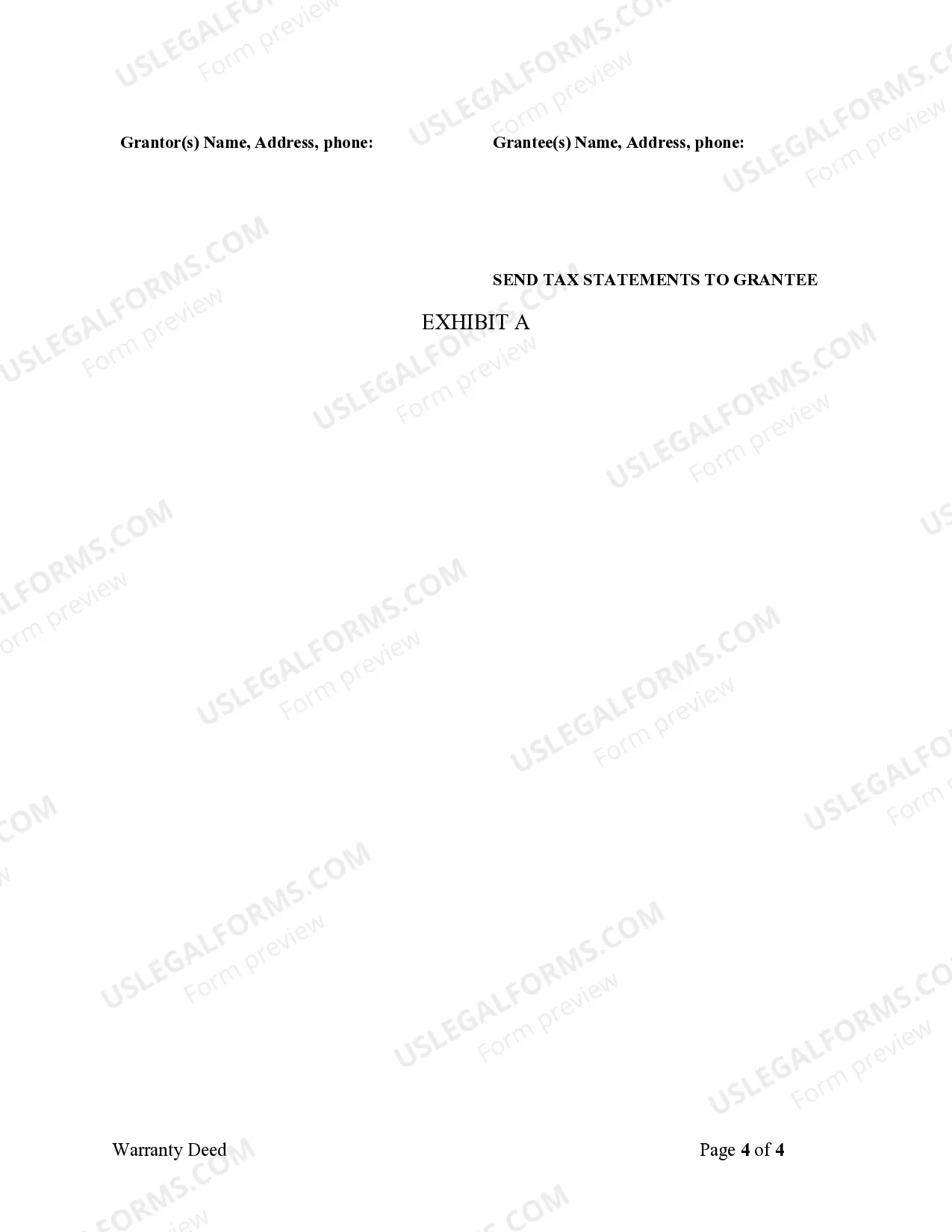
- Provide a complete legal description of the property, often attached as an exhibit.
- Fill in the consideration amount, typically set at ten dollars but can be adjusted based on your specific transaction.
- Have the Grantor sign the document in the presence of a notary public, if required.
- Make copies of the signed document for all parties involved and ensure it is filed with the appropriate county office for record-keeping.
Notarization requirements for this form
This document requires notarization to meet legal standards. US Legal Forms provides secure online notarization powered by Notarize, allowing you to complete the process through a verified video call, available 24/7.
Get your form ready online
Our built-in tools help you complete, sign, share, and store your documents in one place.
Make edits, fill in missing information, and update formatting in US Legal Forms—just like you would in MS Word.
Download a copy, print it, send it by email, or mail it via USPS—whatever works best for your next step.
Sign and collect signatures with our SignNow integration. Send to multiple recipients, set reminders, and more. Go Premium to unlock E-Sign.
If this form requires notarization, complete it online through a secure video call—no need to meet a notary in person or wait for an appointment.
We protect your documents and personal data by following strict security and privacy standards.

Make edits, fill in missing information, and update formatting in US Legal Forms—just like you would in MS Word.

Download a copy, print it, send it by email, or mail it via USPS—whatever works best for your next step.

Sign and collect signatures with our SignNow integration. Send to multiple recipients, set reminders, and more. Go Premium to unlock E-Sign.

If this form requires notarization, complete it online through a secure video call—no need to meet a notary in person or wait for an appointment.

We protect your documents and personal data by following strict security and privacy standards.
Mistakes to watch out for
- Failing to provide a complete and accurate legal description of the property.
- Not having the document notarized when required, which may invalidate the deed.
- Leaving out essential information such as the consideration amount.
- Filling out the form incorrectly or without the presence of both spouses if required.
- Not recording the deed with the local government office after completion.
Advantages of online completion
- Convenience of downloading the form when you need it without waiting for physical copies.
- Editable templates allow for customization to meet your specific requirements.
- Access to professionally drafted documents ensures legal compliance and accuracy.
- Time-saving aspect of having everything in one place, reducing legal hurdles.
- Cost-effective compared to hiring an attorney for simple property transfers.
Looking for another form?
Form popularity
FAQ
It's important to note that a warranty deed does not actually prove the grantor has ownership (a title search is the best way to prove that), but it is a promise by the grantor that they are transferring ownership and if it turns out they don't actually own the property, the grantor will be responsible for compensating
To record a quitclaim deed with a county clerk in West Virginia, the instrument must meet state and county requirements of form and content for documents pertaining to an interest in real property. All recorded deeds must be accompanied by a Sales Listing Form.
Special warranties allow the transfer of property title between seller and buyer. The purchase of title insurance can mitigate the risk of prior claims to the special warranty deed.
A special warranty deed to real estate offers protection to the buyer through the seller's guarantee that the title has been free and clear of encumbrances during their ownership of the property. It does not guarantee clear title beyond their ownership.
A warranty deed guarantees that: The grantor is the rightful owner of the property and has the legal right to transfer the title.The title would withstand third-party claims to ownership of the property. The grantor will do anything to ensure the grantee's title to the property.
This can give you full confidence to buy because you know that should any claims against the property or liens arise, it can hold the seller legally liable.A special warranty deed only serves as a guarantee that there are no problems with the title outstanding from when the current seller owned the property.
It will not protect against title issues that arose prior to the time the seller took occupancy. Consequently, it offers less protection to buyers, and more protection to sellers, than a general warranty deed, which is the most common option for selling or buying a property.