West Virginia Quitclaim Deed from Individual to Husband and Wife
What is this form?
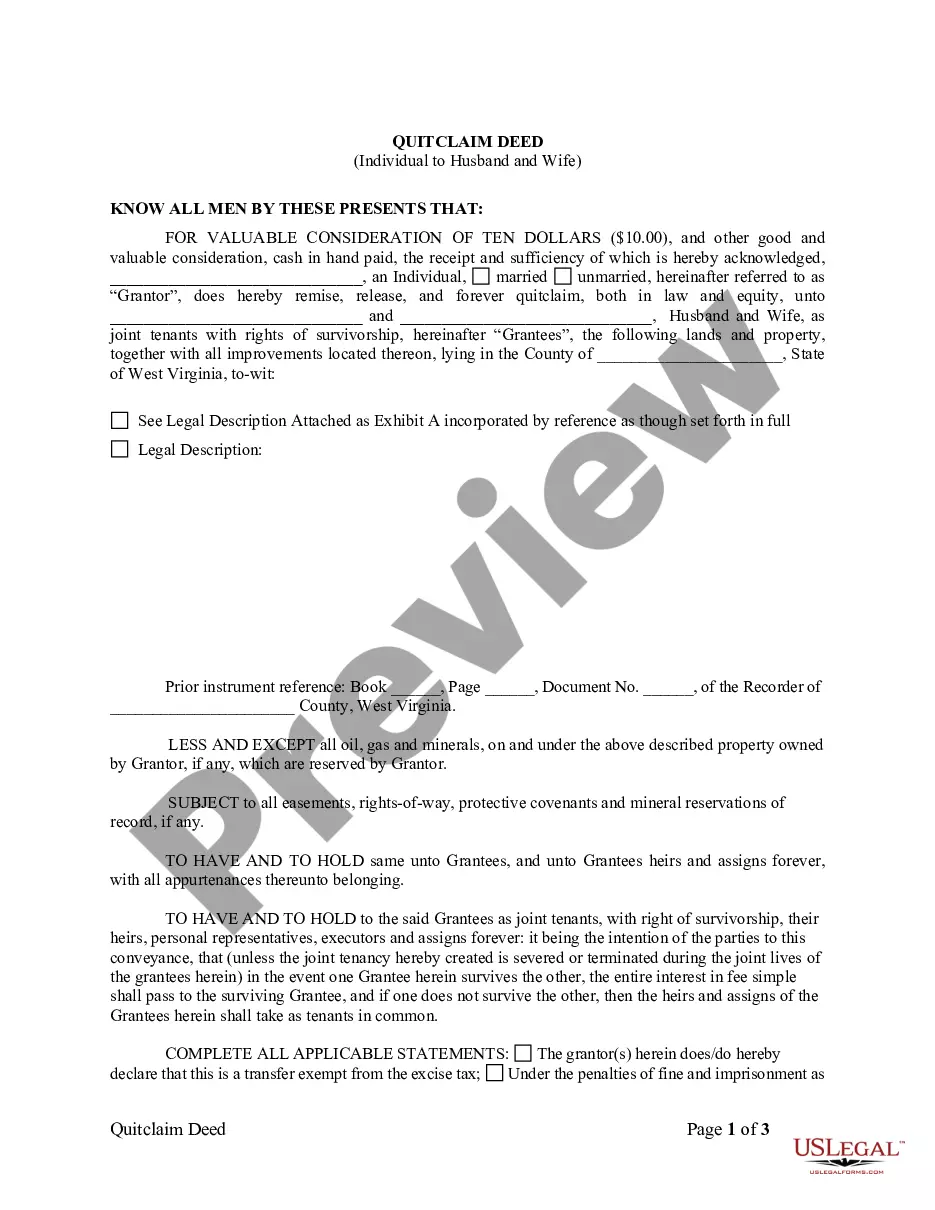
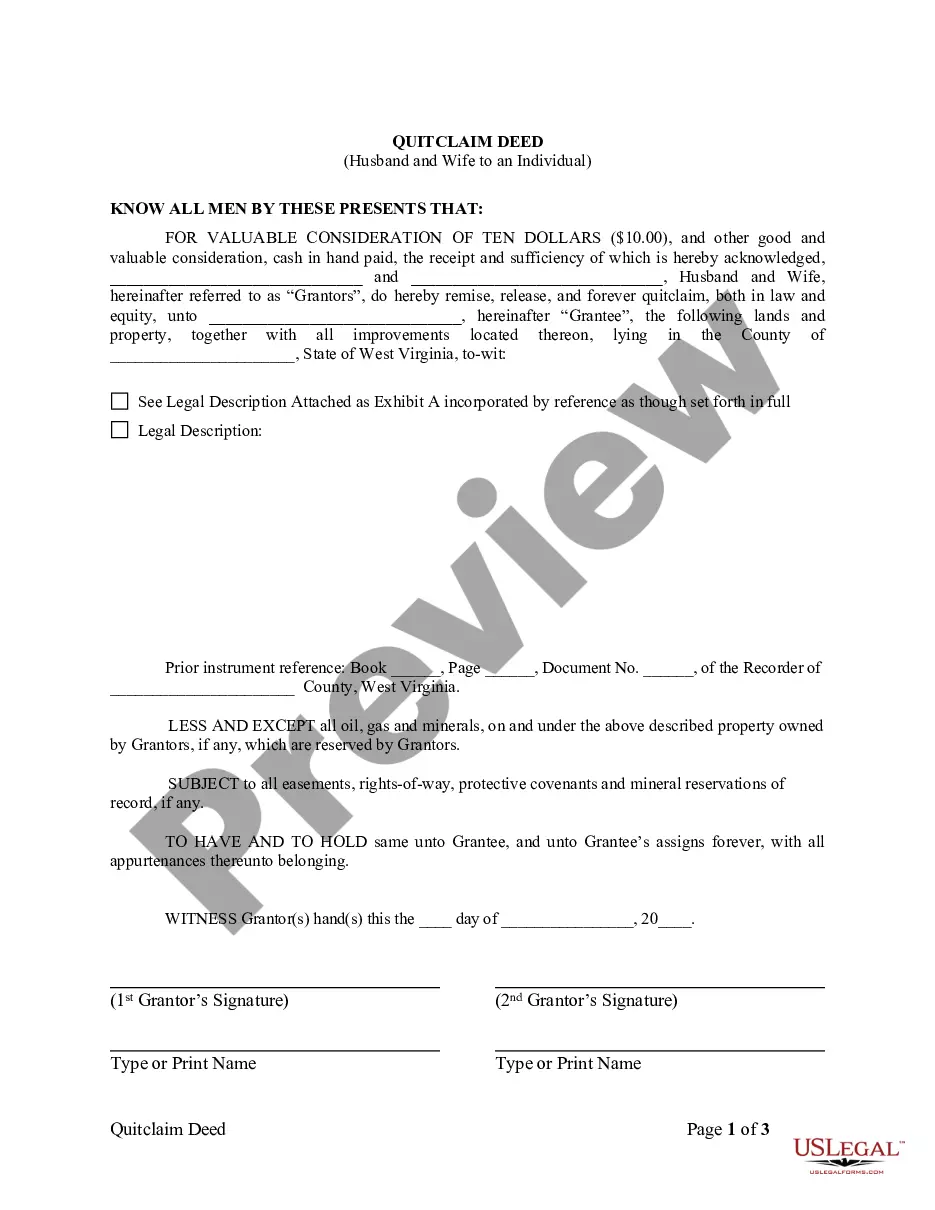
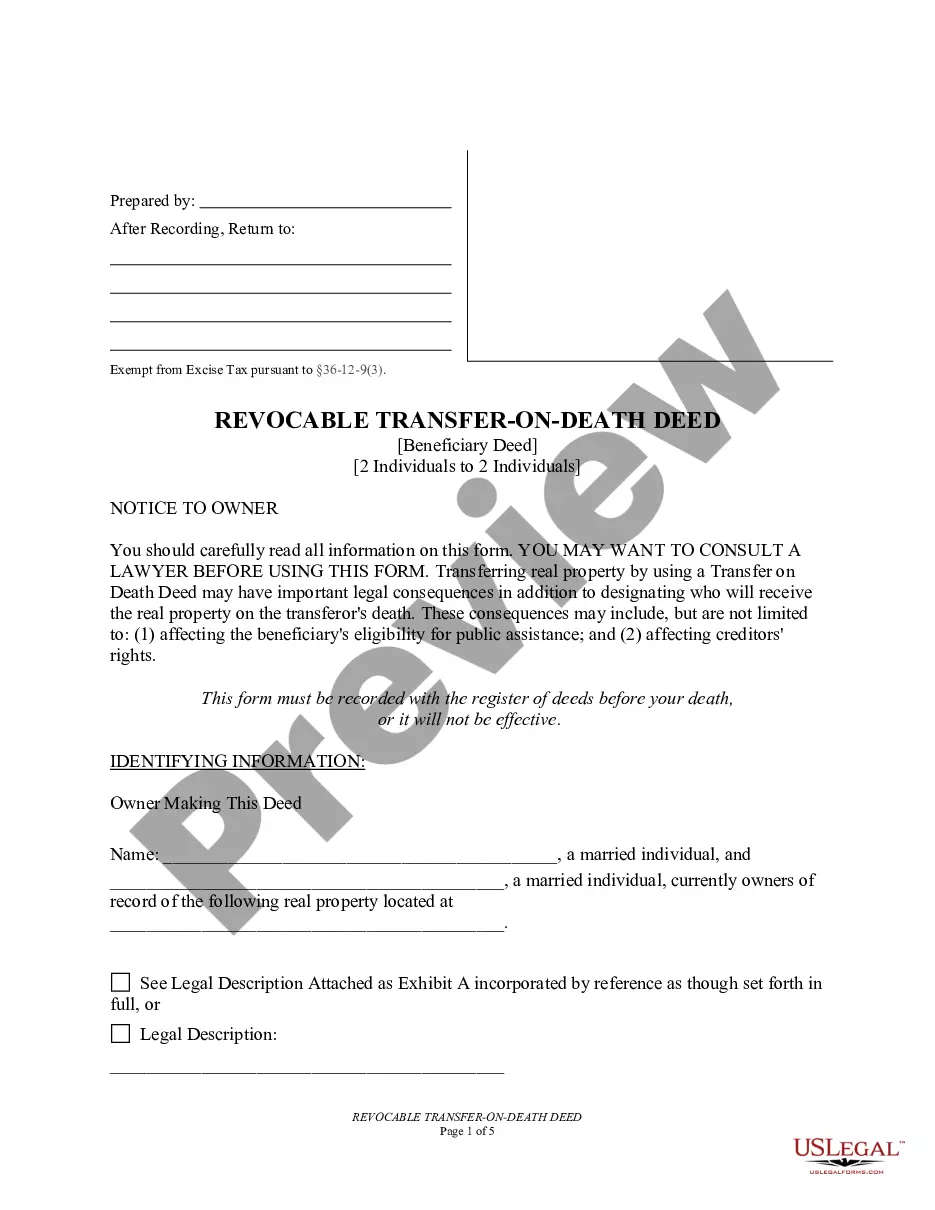
The Quitclaim Deed from Individual to Husband and Wife is a legal document that allows an individual (the grantor) to transfer ownership of property to a couple (the grantees) without confirming the title's validity. Unlike a warranty deed, a quitclaim deed does not guarantee that the grantor holds clear title to the property. This form explicitly conveys the property while reserving certain rights, such as oil, gas, and mineral interests, if applicable.
Form components explained
- Parties involved: identifies the grantor (individual) and the grantees (husband and wife).
- Property description: specifies the property being transferred, including improvements and any attachments.
- Consideration clause: states the value exchanged for the property, which is often nominal.
- Joint tenancy clause: outlines the rights of survivorship for the grantees.
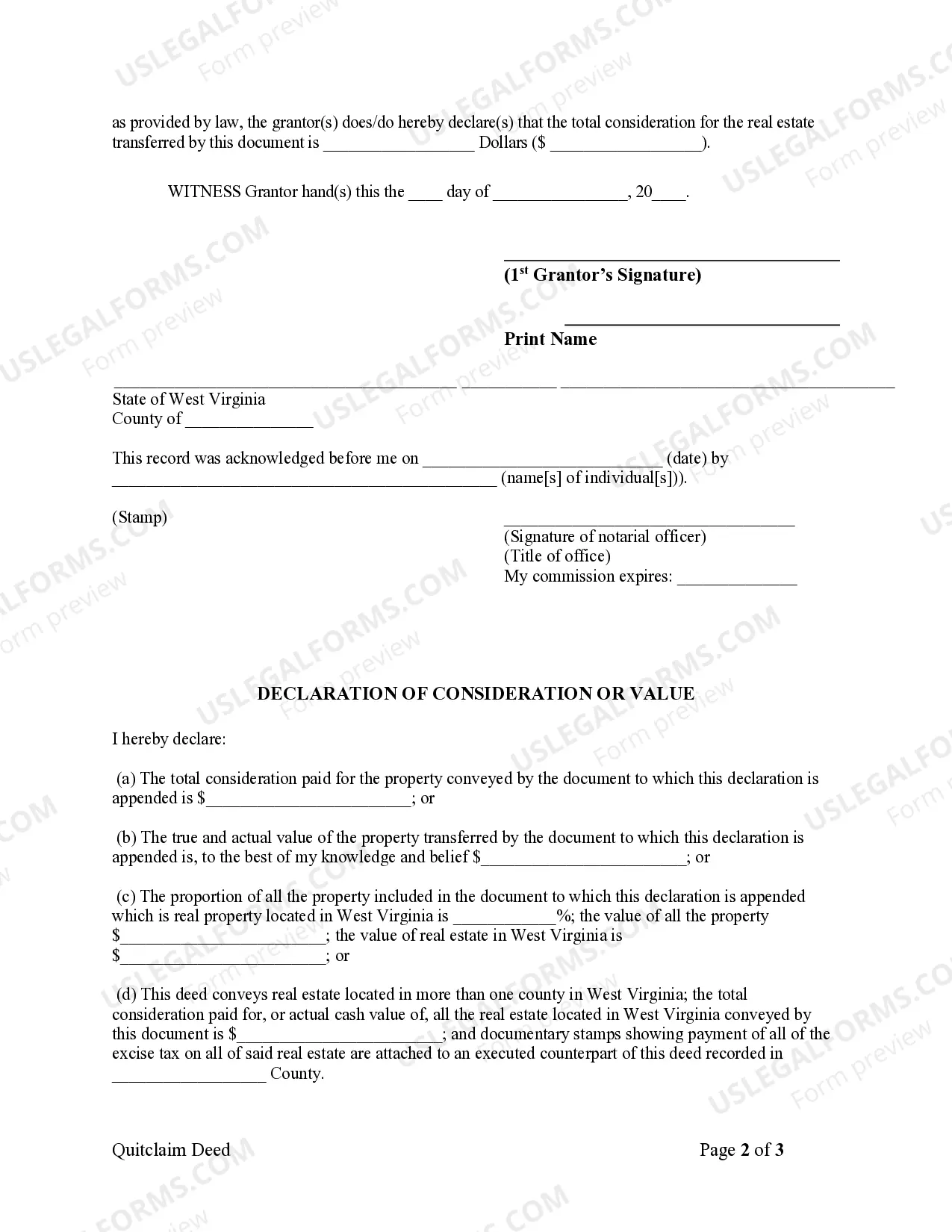
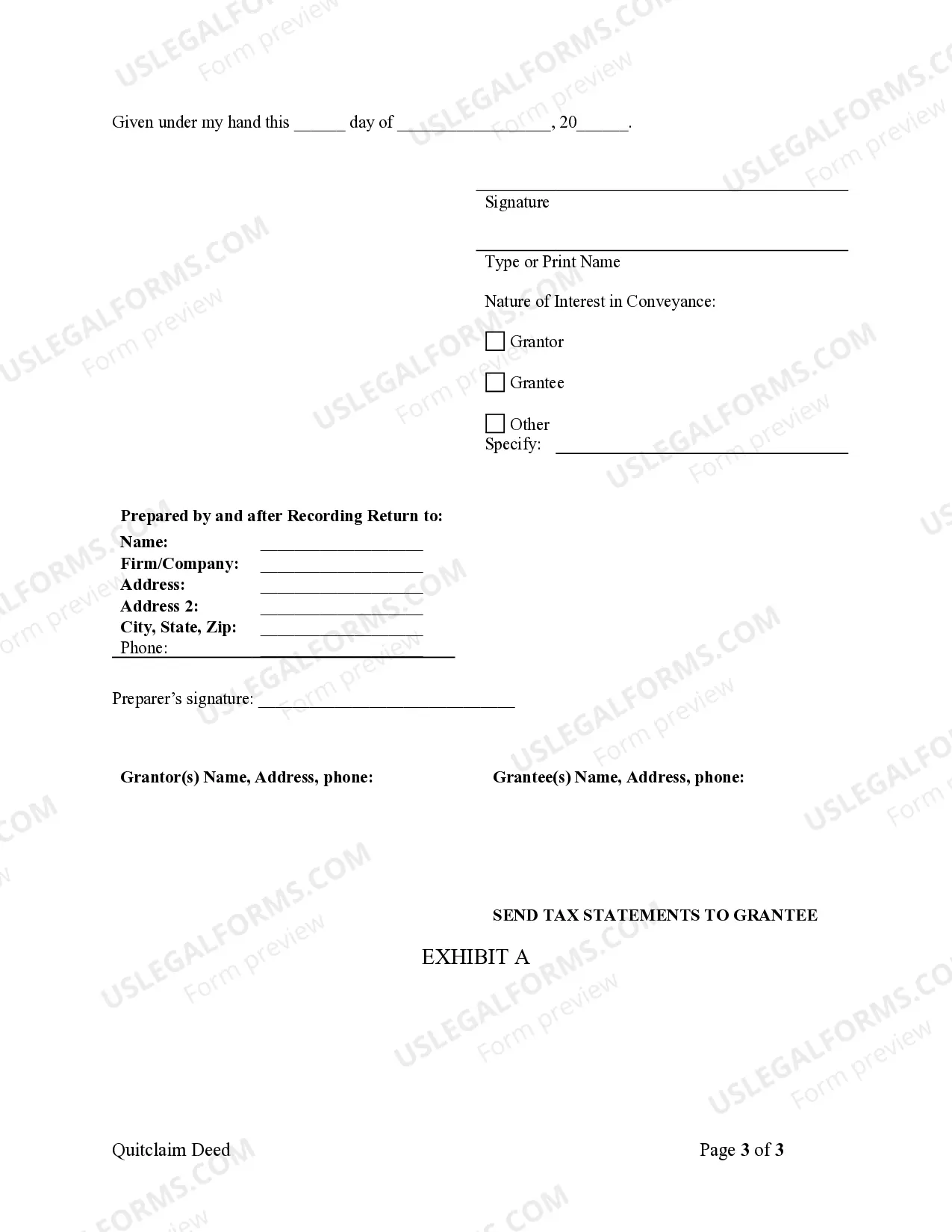
- Notary acknowledgment: requires validation by a notary public to ensure legal compliance.

Common use cases
This quitclaim deed is commonly used when an individual wishes to transfer their interest in a property to their spouse. It is appropriate in various situations, such as during marriage, divorce settlements, or when consolidating ownership into joint tenancy for estate planning purposes. This form can also be used when property ownership is being simplified among family members.
Intended users of this form
- Individuals who own property and wish to transfer ownership to their spouse.
- Couples looking to establish joint ownership of property.
- Individuals involved in divorce proceedings who need to transfer property interests.
- Family members consolidating property for estate planning purposes.
Steps to complete this form
- Identify the grantor by entering their full name and marital status.
- Specify the names of both grantees as husband and wife.
- Describe the property being transferred, including any legal descriptions required.
- State the consideration amount (usually ten dollars or nominal value).
- Sign and date the document in front of a notary public.
Notarization guidance
Notarization is required for this form to take effect. Our online notarization service, powered by Notarize, lets you verify and sign documents remotely through an encrypted video session, available 24/7.
Get your form ready online
Our built-in tools help you complete, sign, share, and store your documents in one place.
Make edits, fill in missing information, and update formatting in US Legal Forms—just like you would in MS Word.
Download a copy, print it, send it by email, or mail it via USPS—whatever works best for your next step.
Sign and collect signatures with our SignNow integration. Send to multiple recipients, set reminders, and more. Go Premium to unlock E-Sign.
If this form requires notarization, complete it online through a secure video call—no need to meet a notary in person or wait for an appointment.
We protect your documents and personal data by following strict security and privacy standards.

Make edits, fill in missing information, and update formatting in US Legal Forms—just like you would in MS Word.

Download a copy, print it, send it by email, or mail it via USPS—whatever works best for your next step.

Sign and collect signatures with our SignNow integration. Send to multiple recipients, set reminders, and more. Go Premium to unlock E-Sign.

If this form requires notarization, complete it online through a secure video call—no need to meet a notary in person or wait for an appointment.

We protect your documents and personal data by following strict security and privacy standards.
Mistakes to watch out for
- Failing to provide a complete and accurate property description.
- Not having the document notarized, when required.
- Leaving out the consideration amount.
- Neglecting to ensure both names of the grantees are correctly included.
Why complete this form online
- Quick access to a legally vetted template drafted by licensed attorneys.
- Editable and downloadable format that allows for customization before printing.
- Convenience of completing the form online from home, without the need for legal advice.
Looking for another form?







Form popularity
FAQ
Two of the most common ways to transfer property in a divorce are through an interspousal transfer deed or quitclaim deed. When spouses own property together, but then one spouse executes an interspousal transfer or a quitclaim deed, this is known as transmutation.
To use a Quitclaim Deed to add someone to a property deed or title, you would need to create a Quitclaim Deed and list all of the current owners in the grantor section. In the grantee section, you would list all of the current owners as well as the person you would like to add.
It is possible to be named on the title deed of a home without being on the mortgage. However, doing so assumes risks of ownership because the title is not free and clear of liens and possible other encumbrances.If a mortgage exists, it's best to work with the lender to make sure everyone on the title is protected.
The drawback, quite simply, is that quitclaim deeds offer the grantee/recipient no protection or guarantees whatsoever about the property or their ownership of it. Maybe the grantor did not own the property at all, or maybe they only had partial ownership.
To record a quitclaim deed with a county clerk in West Virginia, the instrument must meet state and county requirements of form and content for documents pertaining to an interest in real property. All recorded deeds must be accompanied by a Sales Listing Form.
A quitclaim deed is dangerous if you don't know anything about the person giving you the property. You should be sure that a person actually has rights to a property before signing it over with a quitclaim deed.
In California, all property bought during the marriage with income that was earned during the marriage is deemed "community property." The law implies that both spouses own this property equally, regardless of which name is on the title deed.
No law forbids adding someone to your mortgaged home's deed or in signing your home over to others through one. Mortgage lenders understand deeds, though, and use loan due-on-sale clauses to prevent unauthorized property sales or transfers.
One of the simplest ways to add your wife to the home title is by using an interspousal deed. You can transfer the property from your sole and separate property to mutual tenancy, such as joint tenants with right of survivorship, with your wife.