Wisconsin Mutual Wills or Last Will and Testaments for Man and Woman living together, not Married with Minor Children
Understanding this form
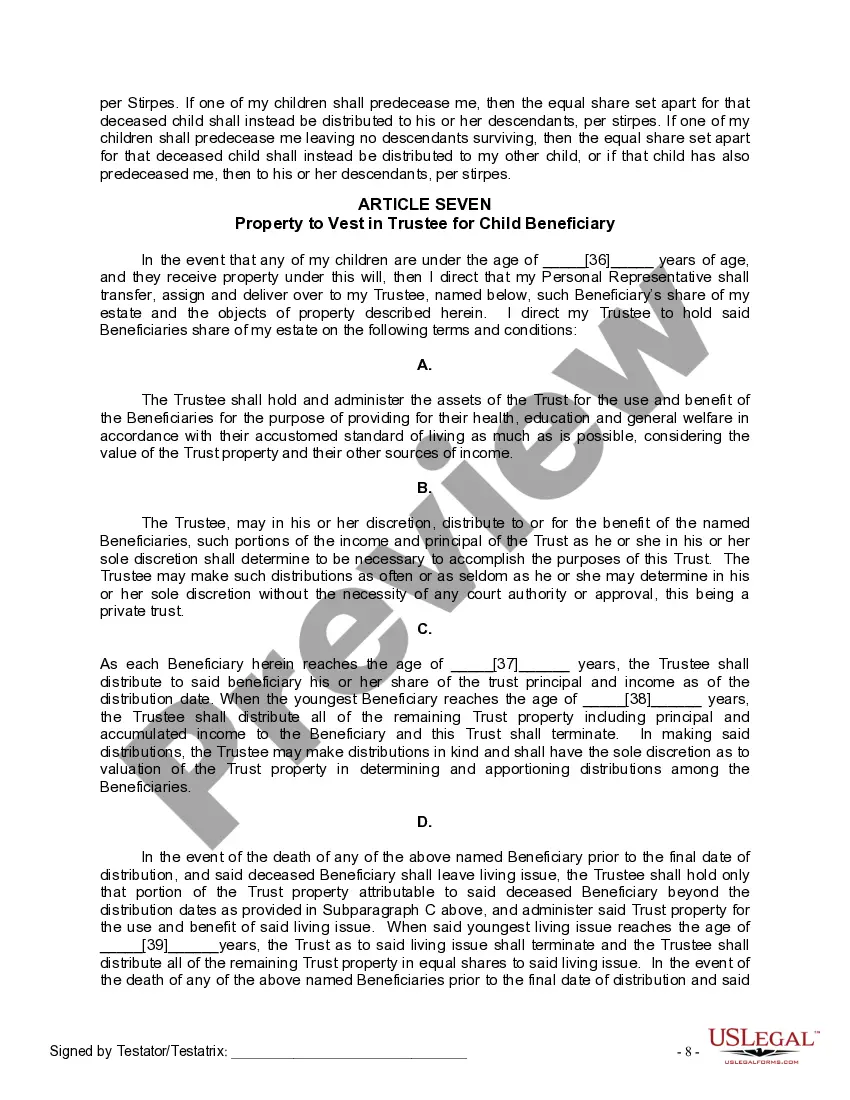
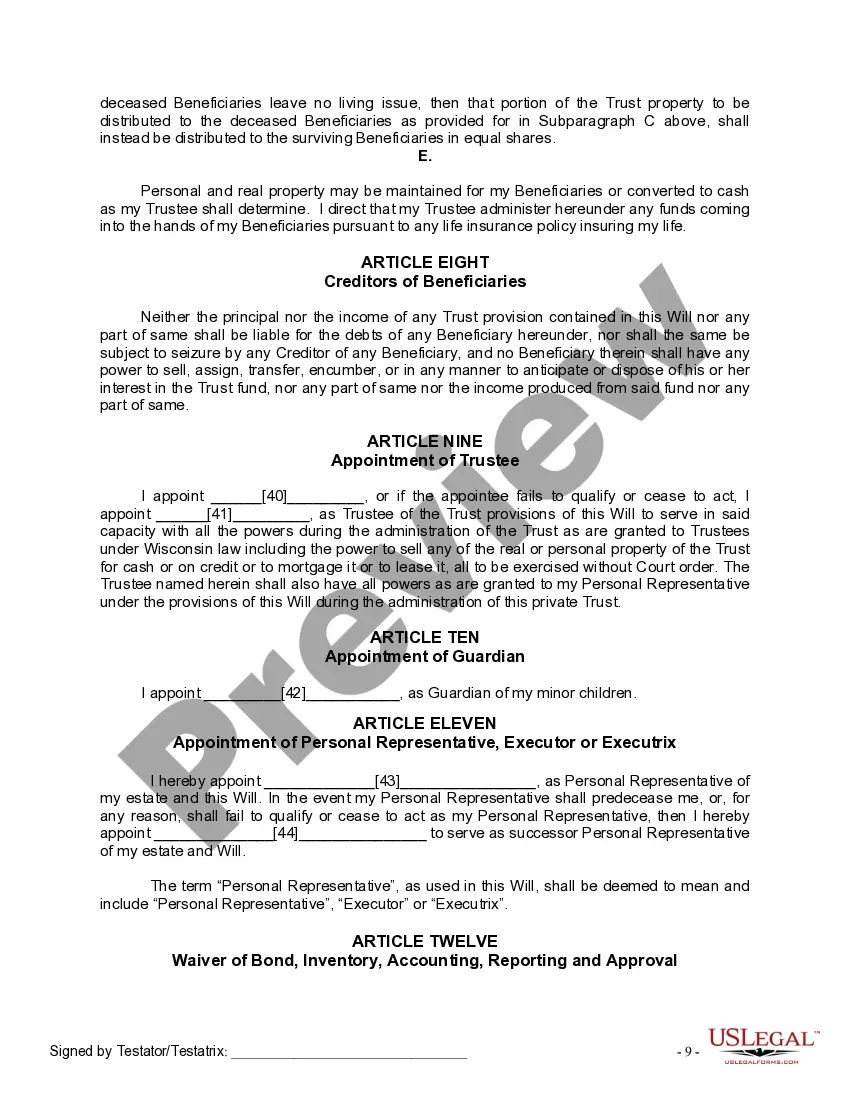
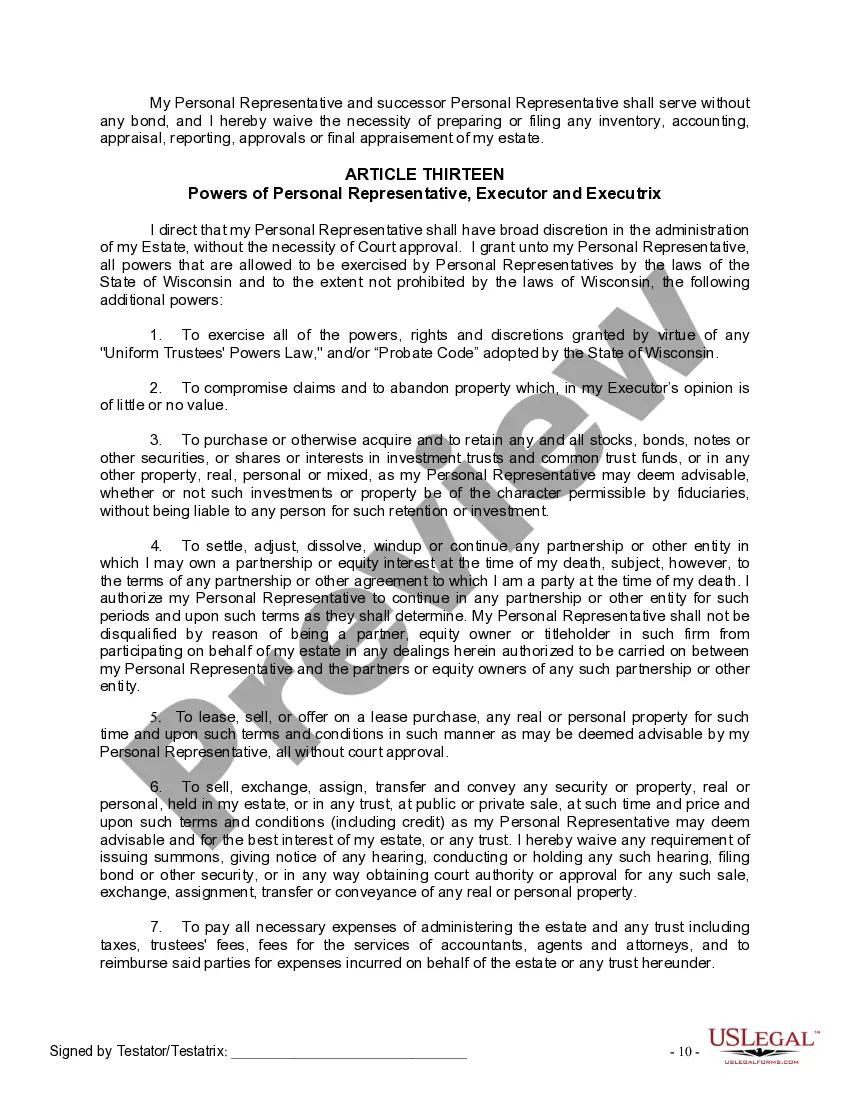
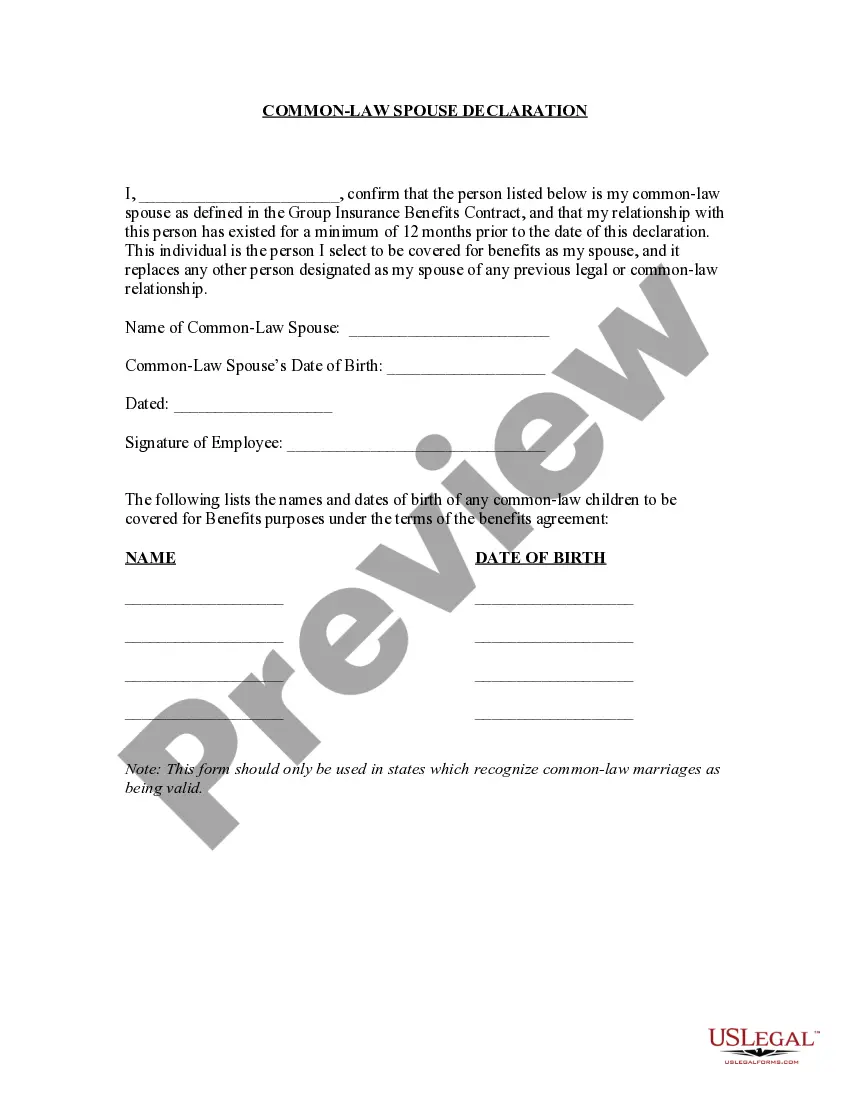
This form is a mutual will designed for a man and woman who are living together but are not married and have minor children. It enables them to create last wills and testaments that leave property to each other, while also considering the well-being of their children. This set of mutual wills is particularly important for unmarried couples who wish to have legal protection regarding their assets and guardianship of their children in the event of their death.
Key components of this form
- Identification of the testators (the individuals making the wills).
- Provisions for minor childrenâs needs and guardianship.
- Specifications on how property will be distributed among beneficiaries.
- Clauses addressing debts and expenses related to the estate.
- Designation of a trustee to manage assets for minor beneficiaries.
- Self-proving affidavit options for simplifying the probate process.
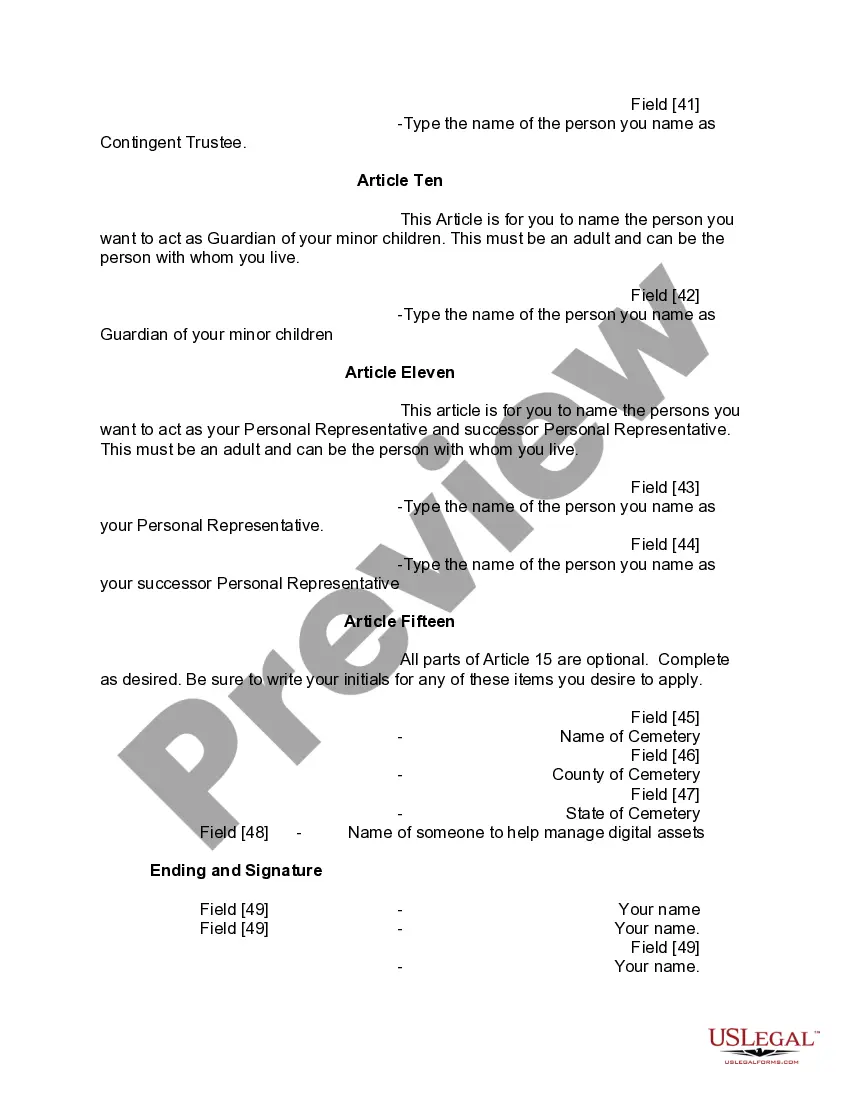
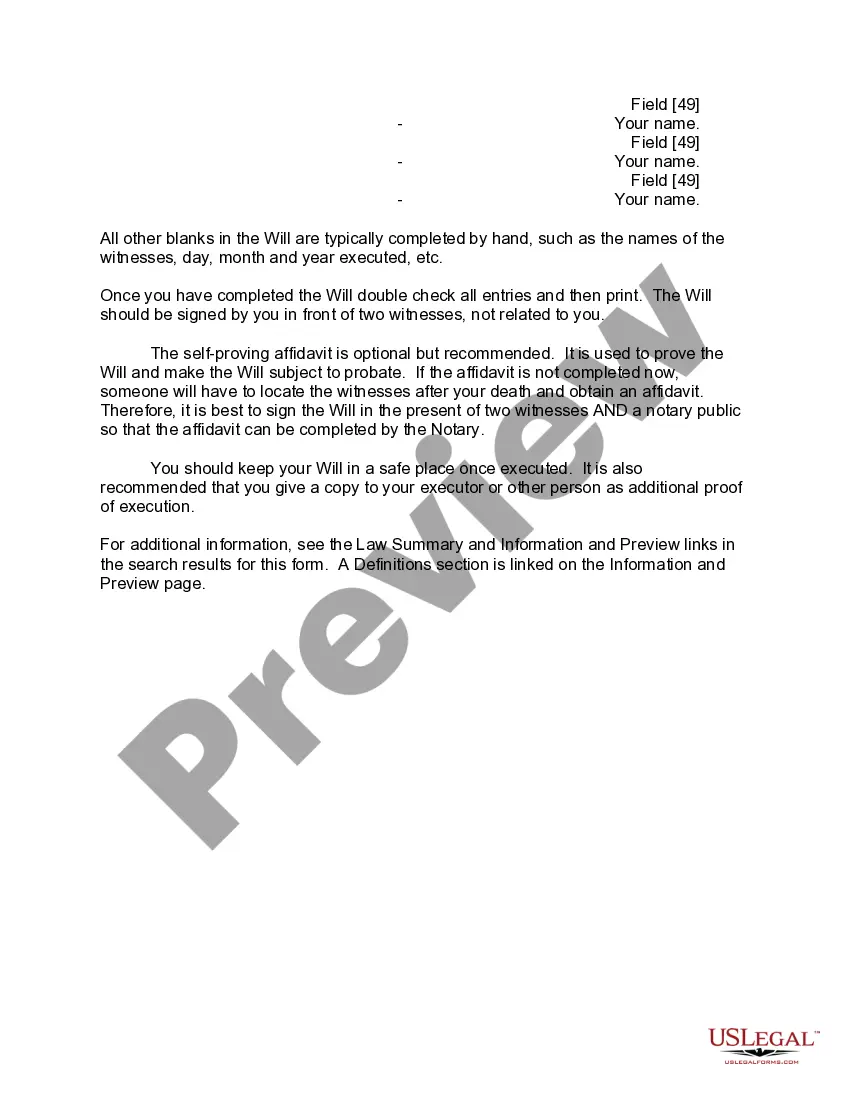
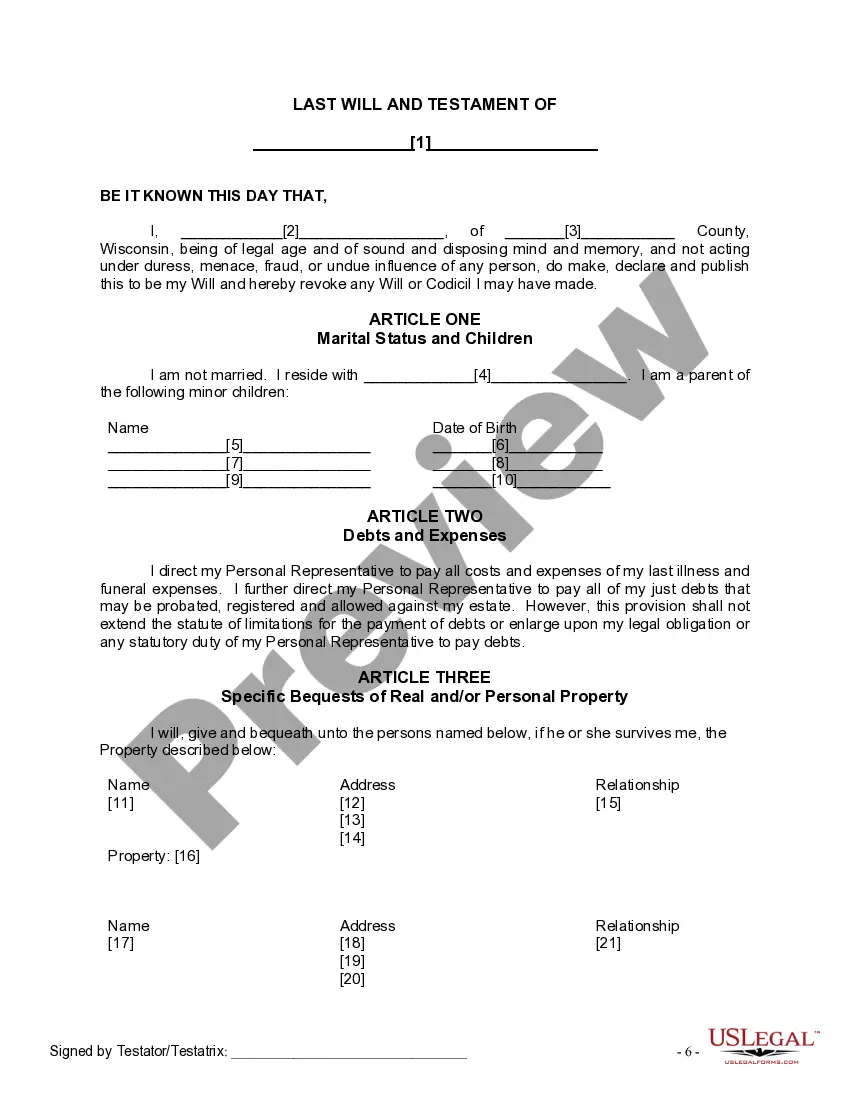
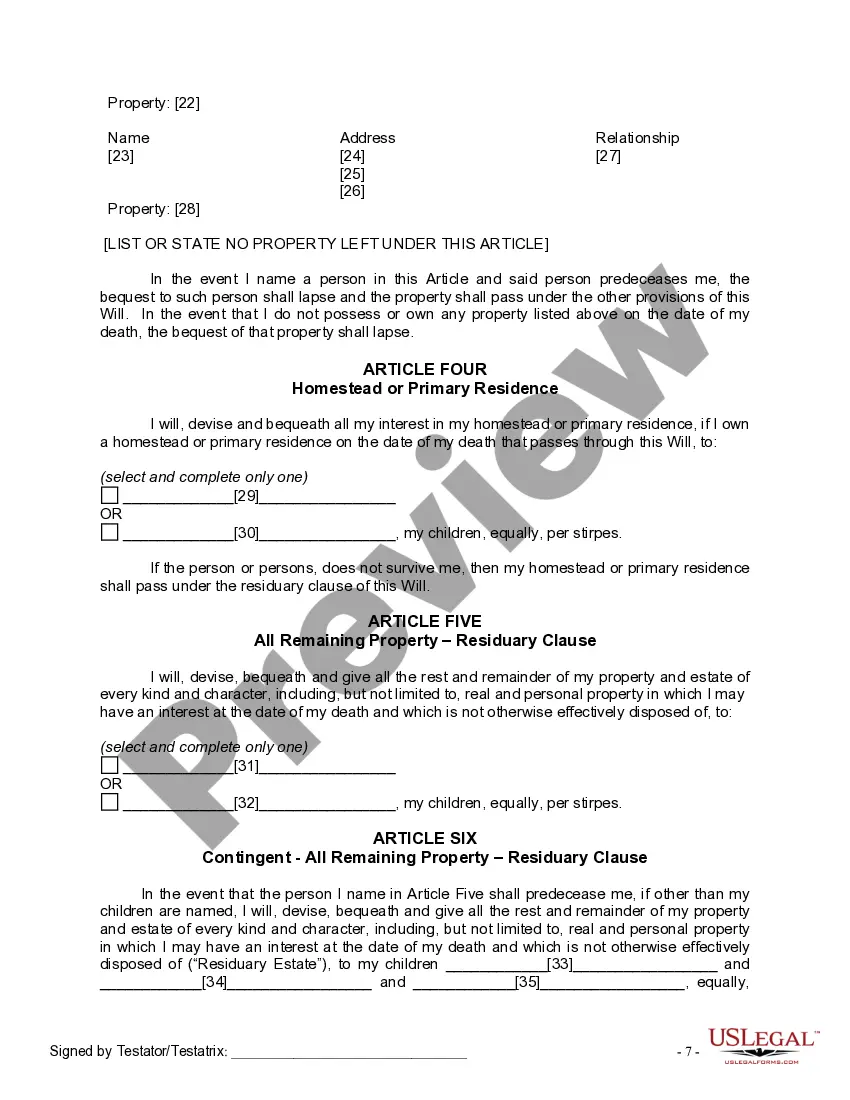



Situations where this form applies
This form is essential when unmarried couples want to establish clear legal documents outlining their wishes regarding property distribution and guardianship of minor children. It is particularly useful in situations where there are joint assets or when one partner wants to ensure that their estate is managed according to their wishes after their passing.
Who this form is for
- Unmarried couples living together and sharing a household.
- Parents with minor children who wish to outline their responsibilities and wishes in the event of death.
- Partners wanting to ensure their mutual property is left to the surviving partner.
- Individuals seeking to establish legal documents that provide clarity in estate management.
Instructions for completing this form
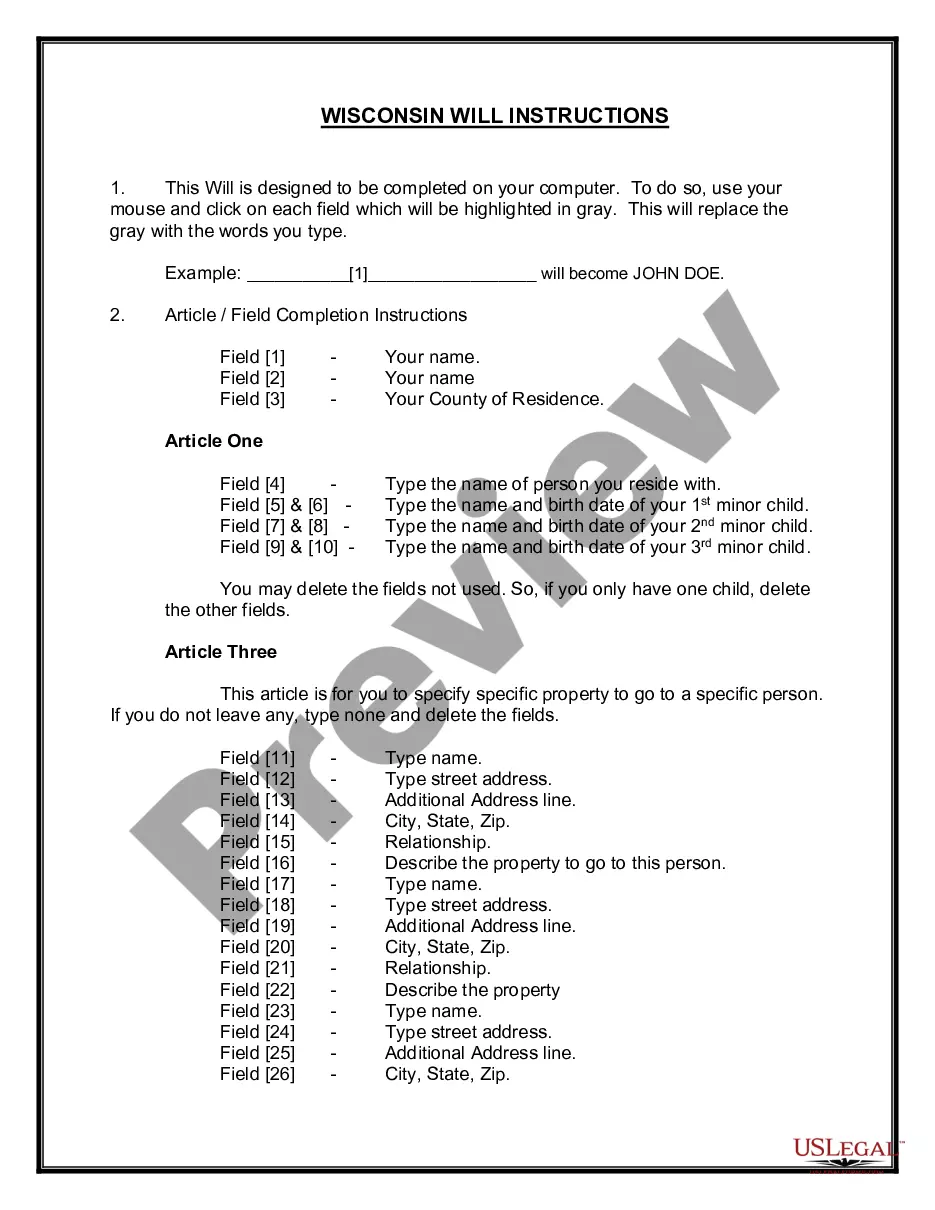
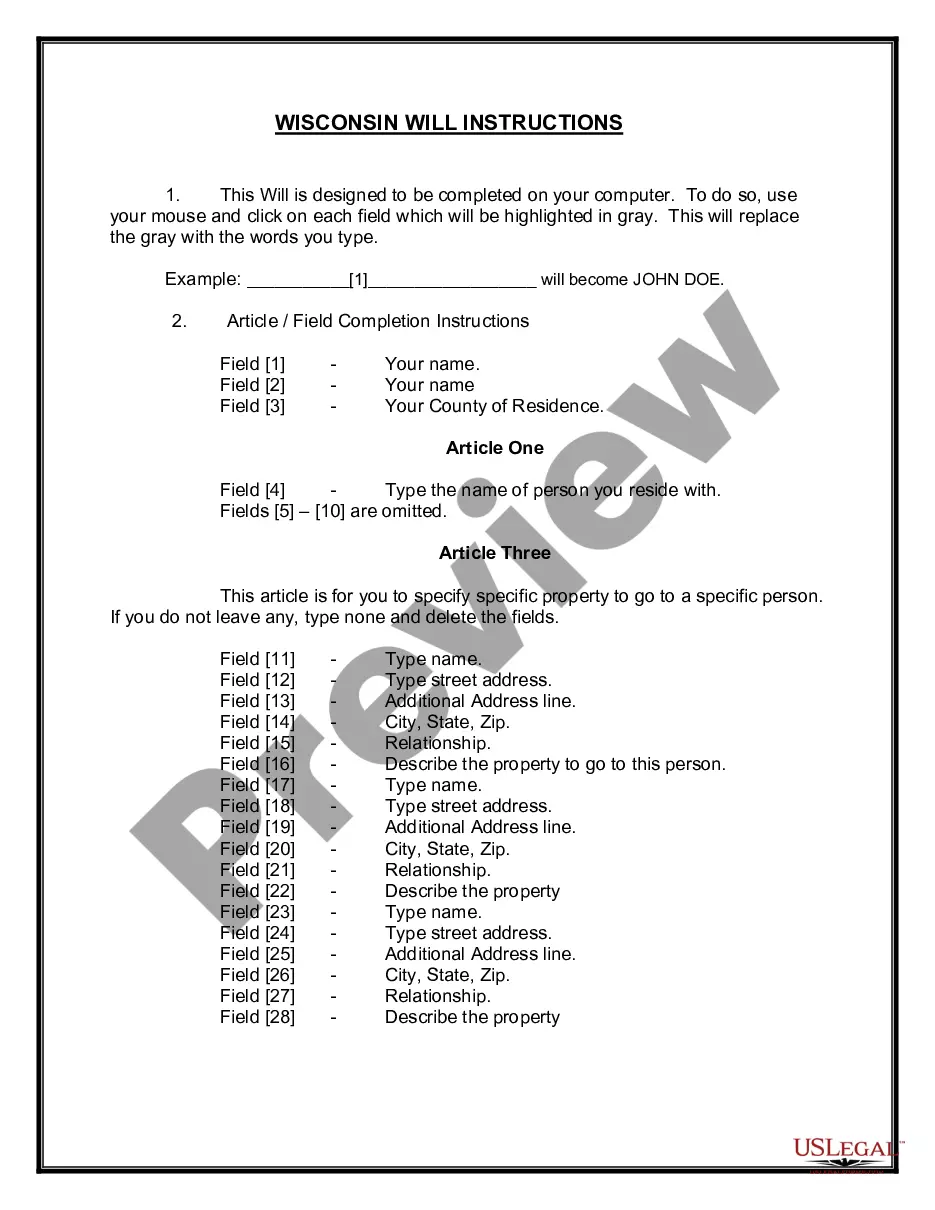
- Input your name and county of residence in the designated fields.
- Provide the names and birthdates of your minor children.
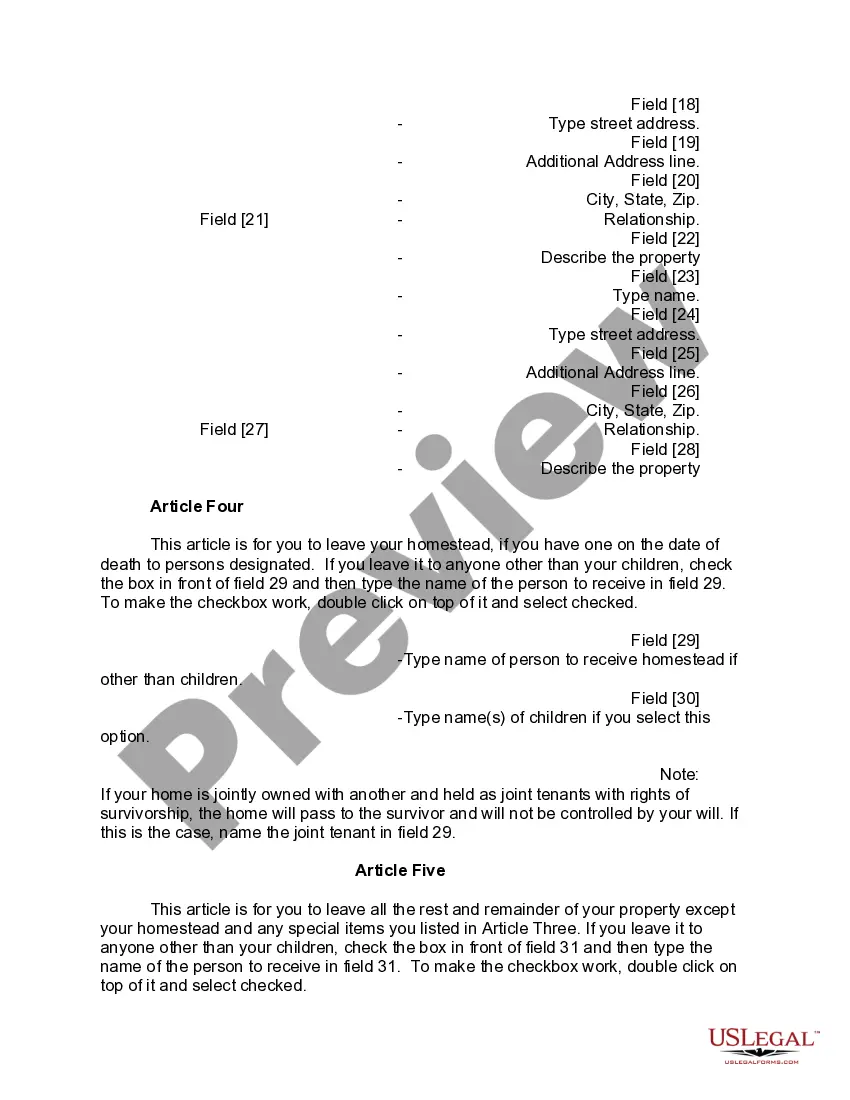
- Specify the property you wish to leave to specific individuals, ensuring to detail each item.
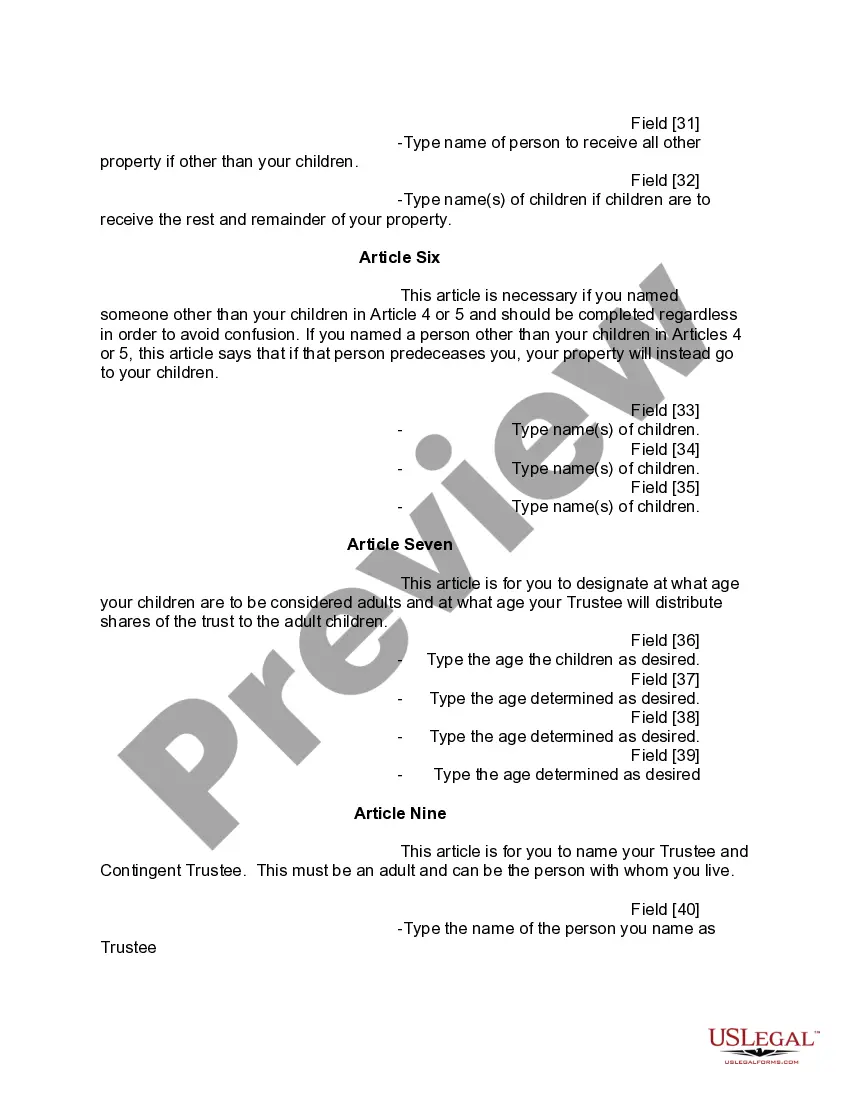
- Designate a guardian for your minor children and a trustee for their shares of the estate.
- Ensure the wills are signed in the presence of two witnesses and a notary public as applicable.
Is notarization required?
Yes, this form must be notarized to be legally valid. A notary public must witness the signing of the wills to facilitate the self-proving affidavit process, which helps simplify the probate process after death. US Legal Forms offers integrated online notarization services for convenience and security.
Get your form ready online
Our built-in tools help you complete, sign, share, and store your documents in one place.
Make edits, fill in missing information, and update formatting in US Legal Forms—just like you would in MS Word.
Download a copy, print it, send it by email, or mail it via USPS—whatever works best for your next step.
Sign and collect signatures with our SignNow integration. Send to multiple recipients, set reminders, and more. Go Premium to unlock E-Sign.
If this form requires notarization, complete it online through a secure video call—no need to meet a notary in person or wait for an appointment.
We protect your documents and personal data by following strict security and privacy standards.

Make edits, fill in missing information, and update formatting in US Legal Forms—just like you would in MS Word.

Download a copy, print it, send it by email, or mail it via USPS—whatever works best for your next step.

Sign and collect signatures with our SignNow integration. Send to multiple recipients, set reminders, and more. Go Premium to unlock E-Sign.

If this form requires notarization, complete it online through a secure video call—no need to meet a notary in person or wait for an appointment.

We protect your documents and personal data by following strict security and privacy standards.
Common mistakes to avoid
- Failing to have the wills signed in front of the required witnesses.
- Not specifying guardianship for minor children, leading to uncertainties.
- Omitting important assets from the list of bequests.
- Not keeping copies of the executed wills in a safe place accessible to your designated personal representative.
Advantages of online completion
- Convenient: Download and complete the forms from the comfort of your home.
- Editability: Modify the documents as your situation changes, without the need for legal counsel each time.
- Reliability: Forms are developed by licensed attorneys to ensure compliance with legal standards.
Summary of main points
- This form is designed for unmarried partners living together with minor children.
- It allows both partners to make mutual provisions for each other's estates and for their children's welfare.
- Proper signing and notarization are crucial for enforceability.
- Specific bequests and clear appointment of guardians are essential for protecting your children's interests.
Looking for another form?
Form popularity
FAQ
Age: The testator must be at least 18 years old. Capacity: The testator must be of sound mind. Signature: The will must be signed by the testator or by someone else in the testator's name in his conscious presence, by his direction.
Decide what to include in your will. Be specific about where all of your stuff goes. Select your beneficiaries. Choose an executor for your will. Name guardians for your children. Sign your will in front of witnesses. Let everyone know beforehand. Store your will in a legacy drawer.
While you can write your own last will and testament, it's very important to follow your state's requirements. If the court finds it invalid, someone other than your chosen executor could handle your estate and distribute your assets differently than you intended.
A will is a document made by a testator (a person making a will) before his death, where he expresses how he wishes his property to be distributed after his death.The testator can also choose to keep the will in safe custody. The will can be withdrawn at any time.
Contrary to popular belief, you do not need to have an attorney draft a will for you. Anyone can write this document on their own, and as long as it meets all of the legal requirements of the state, courts will recognize one you wrote yourself.
No, in Wisconsin, you do not need to notarize your will to make it legal. However, Wisconsin allows you to make your will "self-proving" and you'll need to go to a notary if you want to do that. A self-proving will speeds up probate because the court can accept the will without contacting the witnesses who signed it.
Notarizing your will is good practice and beneficial in the probate process. Notarize your will! It makes the probate process much easier to handle. Make your will self-proving means the court will accept it without further verification from the witnesses who signed it.
In order for a will to be valid, Wisconsin law requires that it be written. There are some states that allow holographic wills, which are handwritten and signed without witnesses present.In Wisconsin, you must sign a will in the conscious presence of two witnesses in order for the will to be valid.
Create the initial document. Start by titling the document Last Will and Testament" and including your full legal name and address. Designate an executor. Appoint a guardian. Name the beneficiaries. Designate the assets. Ask witnesses to sign your will. Store your will in a safe place.