Software Evaluation License Agreement
What this document covers
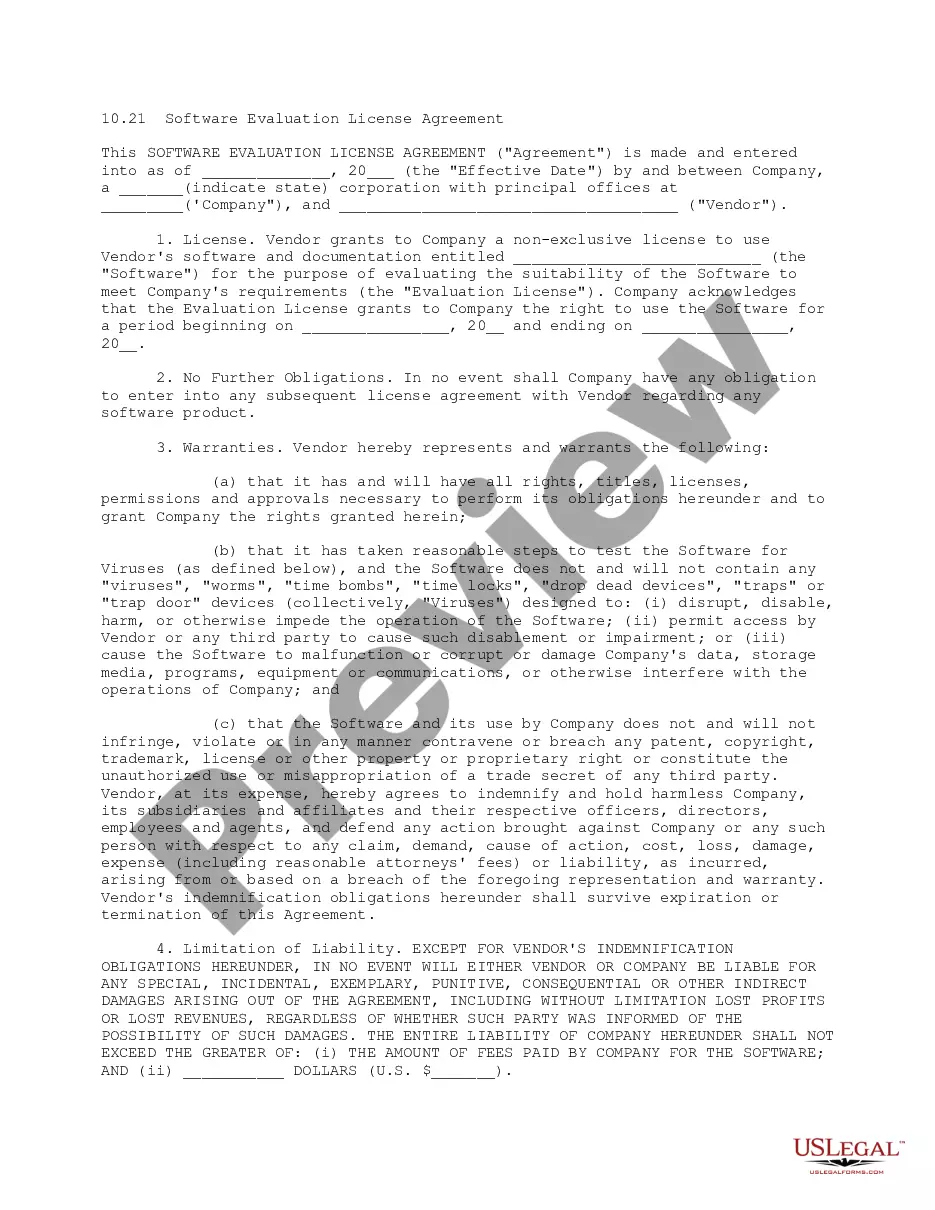
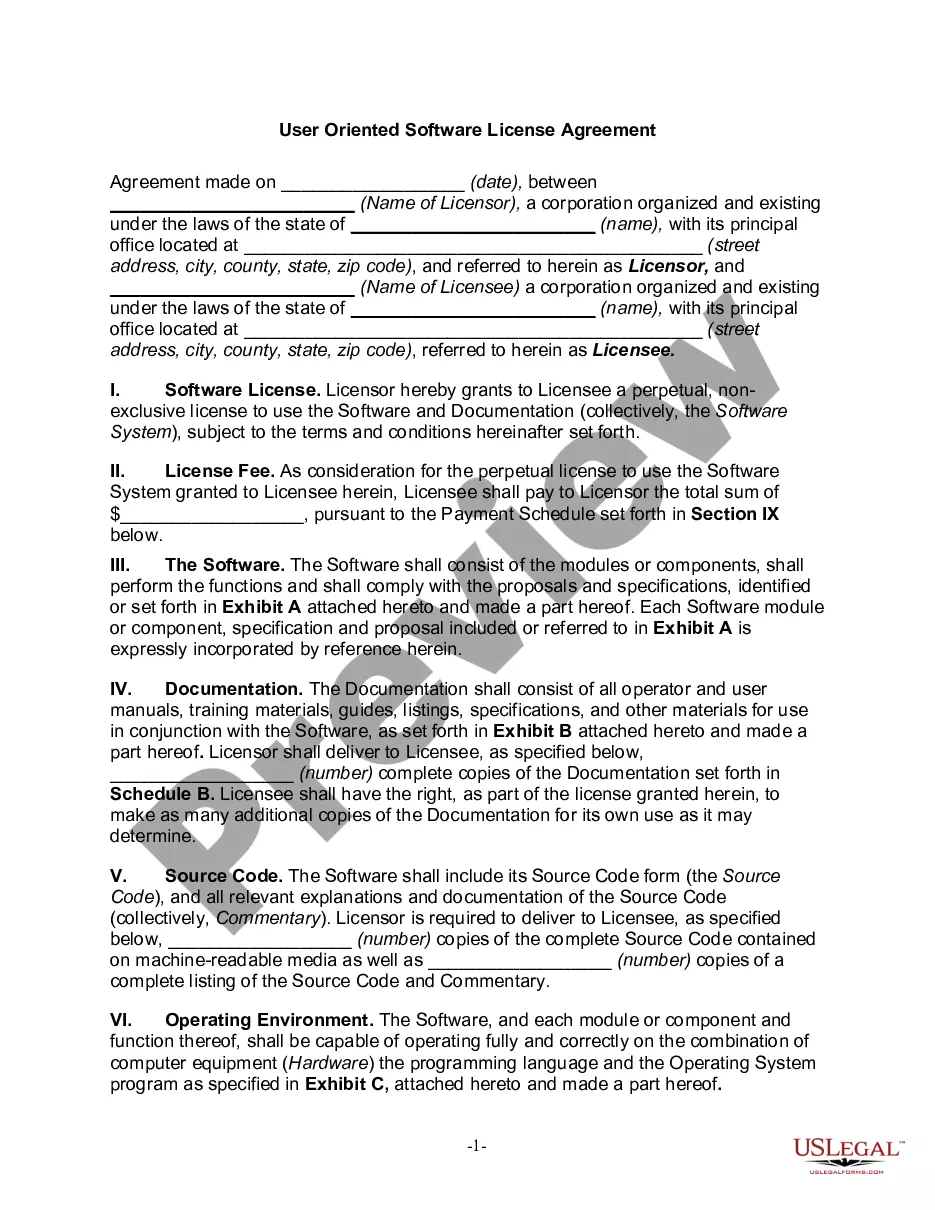
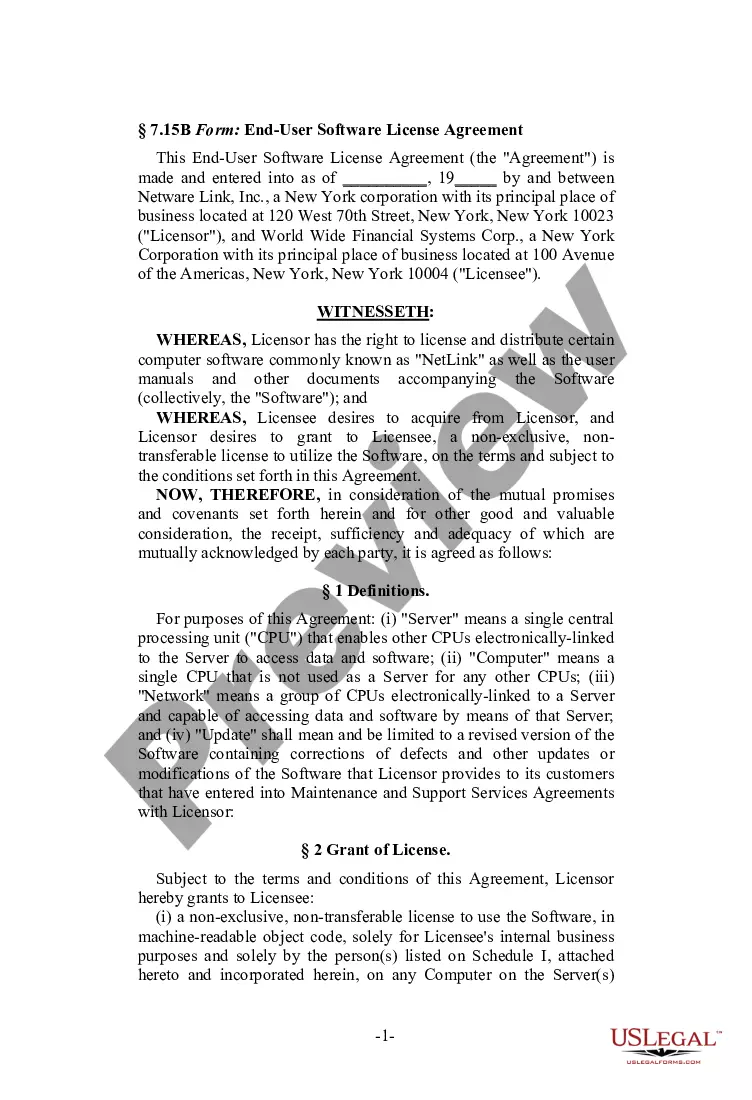
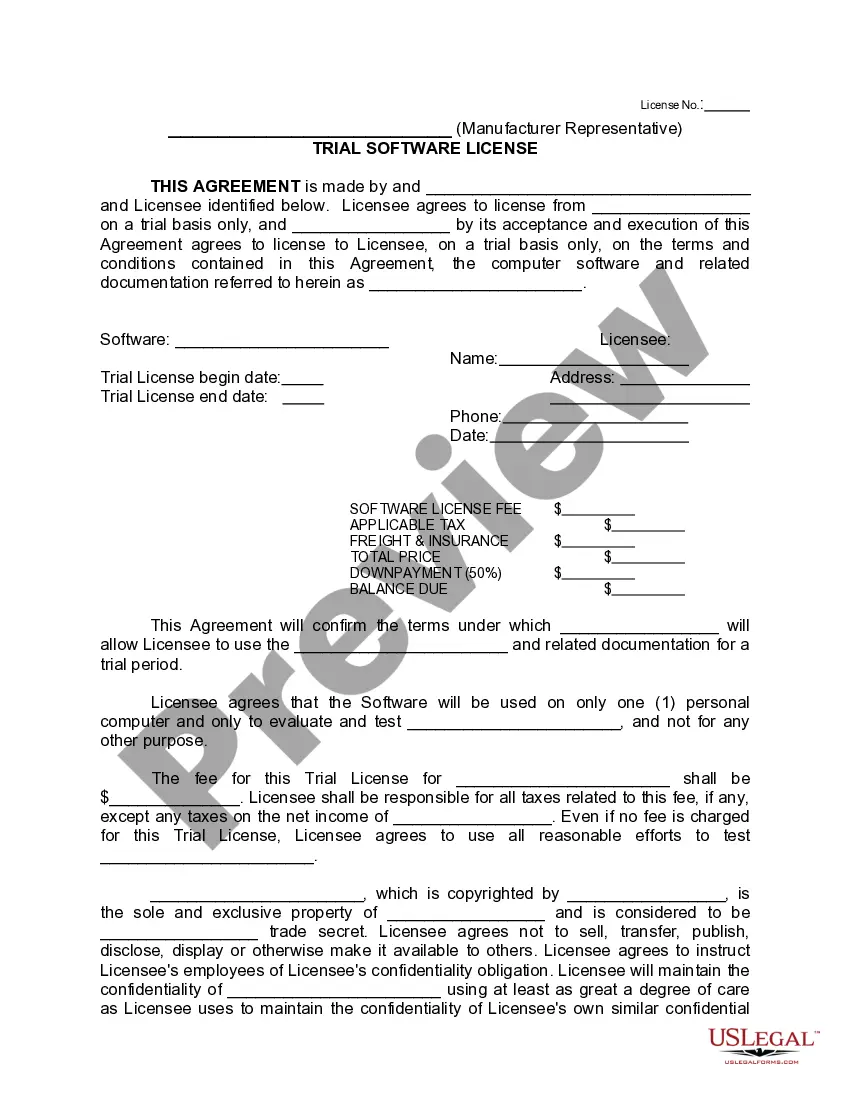
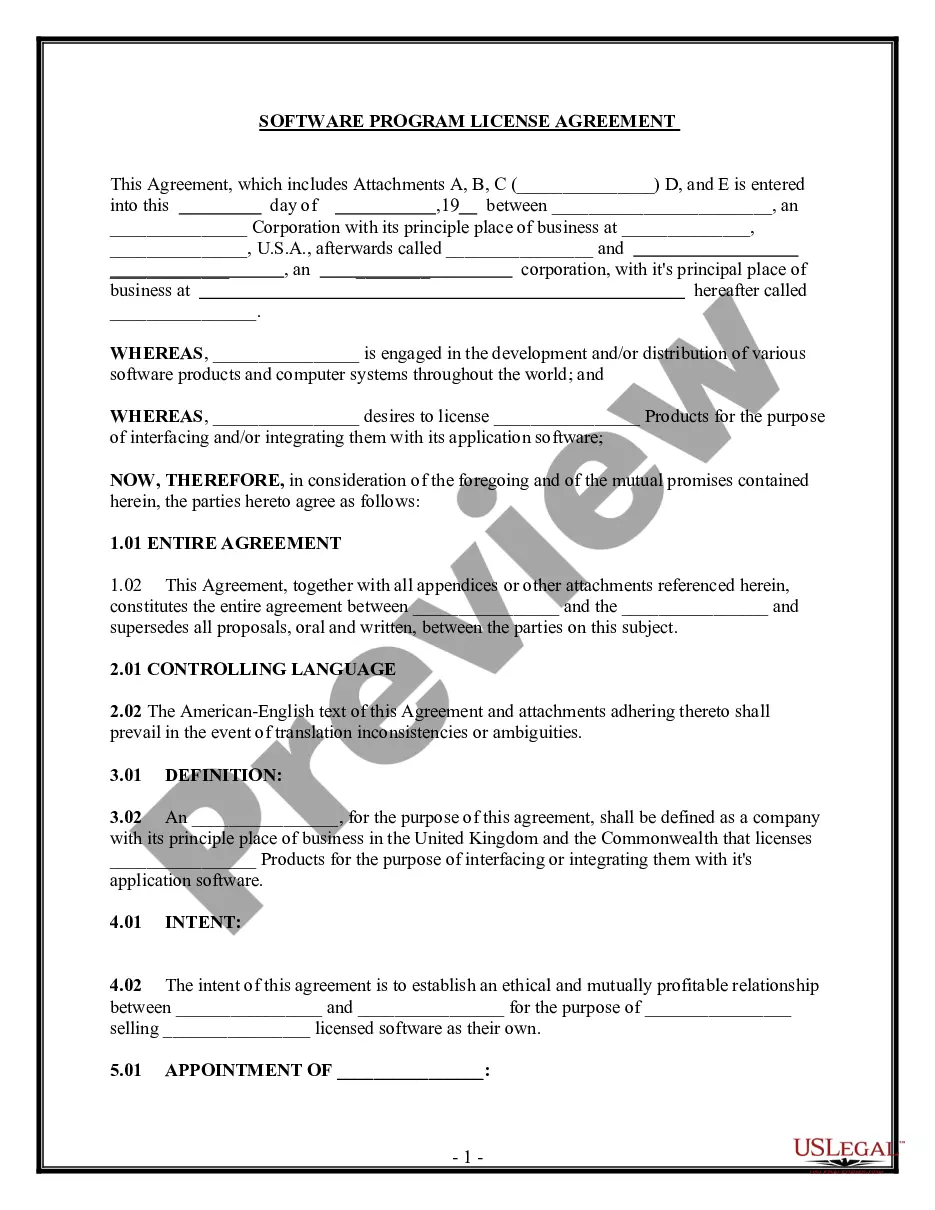
The Software Evaluation License Agreement is a legal document that grants a company the right to use a vendor's software and accompanying documentation for evaluation purposes. This form is designed for companies assessing whether the software meets their requirements before committing to purchase. It differs from standard software licensing agreements, as it does not bind the company to any further obligations post-evaluation.
Form components explained
- Identification of the parties involved (Company and Vendor).
- Grant of a non-exclusive license for a specified evaluation period.
- Warranties provided by the vendor concerning software functionality and rights.
- Limitation of liability between the parties.
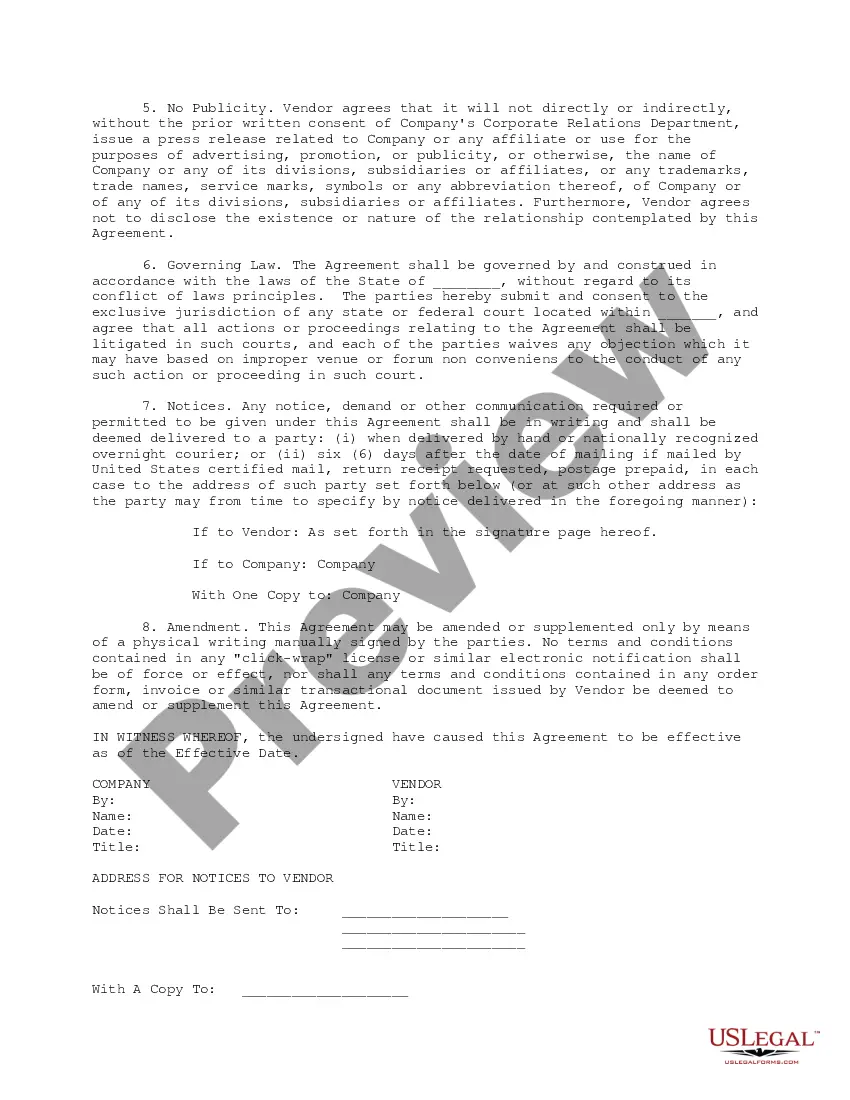
- Conditions regarding publicity and confidentiality.
- Governing law and jurisdiction stipulations.

When to use this document
This form is useful when a company needs to assess a software product's functionality and compatibility with its operational needs. It should be used when a vendor is willing to provide trial access to their software, allowing the company to make an informed decision without immediate financial commitment.
Who can use this document
This agreement is intended for:
- Companies seeking to evaluate software solutions for their business needs.
- Vendors providing trial software to interested companies.
- Legal representatives of both parties who need to protect their interests during the evaluation.
Steps to complete this form
- Identify the parties by entering the Company name and Vendor name.
- Specify the software name to be evaluated in the designated field.
- Enter the start and end dates for the evaluation period.
- Review and complete the warranty section, confirming vendor obligations.
- Ensure that both parties sign and date the agreement at the end.
Does this form need to be notarized?
This form usually doesn’t need to be notarized. However, local laws or specific transactions may require it. Our online notarization service, powered by Notarize, lets you complete it remotely through a secure video session, available 24/7.
Get your form ready online
Our built-in tools help you complete, sign, share, and store your documents in one place.
Make edits, fill in missing information, and update formatting in US Legal Forms—just like you would in MS Word.
Download a copy, print it, send it by email, or mail it via USPS—whatever works best for your next step.
Sign and collect signatures with our SignNow integration. Send to multiple recipients, set reminders, and more. Go Premium to unlock E-Sign.
If this form requires notarization, complete it online through a secure video call—no need to meet a notary in person or wait for an appointment.
We protect your documents and personal data by following strict security and privacy standards.

Make edits, fill in missing information, and update formatting in US Legal Forms—just like you would in MS Word.

Download a copy, print it, send it by email, or mail it via USPS—whatever works best for your next step.

Sign and collect signatures with our SignNow integration. Send to multiple recipients, set reminders, and more. Go Premium to unlock E-Sign.

If this form requires notarization, complete it online through a secure video call—no need to meet a notary in person or wait for an appointment.

We protect your documents and personal data by following strict security and privacy standards.
Typical mistakes to avoid
- Failing to clearly identify the parties involved in the agreement.
- Not specifying the evaluation period, leaving it open-ended.
- Neglecting to execute the agreement with both signatures.
- Ignoring state-specific regulations or requirements.
Why use this form online
- Convenience of downloading and printing the form at any time.
- Editability allows customization to meet specific needs before completion.
- Reliability, as the form is drafted by licensed attorneys to ensure legal compliance.
Looking for another form?


Form popularity
FAQ
A software license agreement gives a licensee a non-exclusive, non-transferable right to use software. A software license agreement defines how that software can be used and what happens in the event of breach.
As a general rule, companies do not own the software that they license. The corollary is that they then do not, unless expressly agreed, possess the right to transfer or assign the licensed software they use to a new entity when later involved in a merger, acquisition or internal corporate restructuring.
Due Diligence-General. Due Diligence-Cost. Due Diligence-Performance. Due Diligence-Know Your Counterparty. Source Code Escrow and Escrow Agreements. Installation, Implementation and Training. Customizations. Entire Agreement; Changes to the Terms.
A software license is a contract between the entity that created and supplied an application, underlying source code, or related product and its end user.
In general, it is the most restrictive type of licensing agreement wherein the original code was written by the programmers are not available to the users. Thus they can use the software but they cannot modify it or redistribute it.
Perhaps the key difference between a EULA and a software license agreement is that a EULA is often meant for scenarios where many users could be using the software on a continuous basis and a software license agreement is more often used for business-to-business, often times for finite engagements.
A software license agreement typically has broad-form confidentiality provisions that also provide that certain items fall into the bucket of one or the other party (e.g., the software for a licensor, certain data for a licensee, etc.).
A contract in which one party promises to submit an idea and the other party promises to evaluate it. After the evaluation, the evaluator will either enter into an agreement to exploit the idea or promise not to use or disclose the idea. business law.
User agreements like EULAs are legally binding contracts between the software author and the end-user. End User License Agreements are enforceable as long as it is clear that it is a contract and both parties can understand the terms.