Counterfeit Notes: Possession of Notes Made after the Similitude of Genuine Notes
Overview of this form
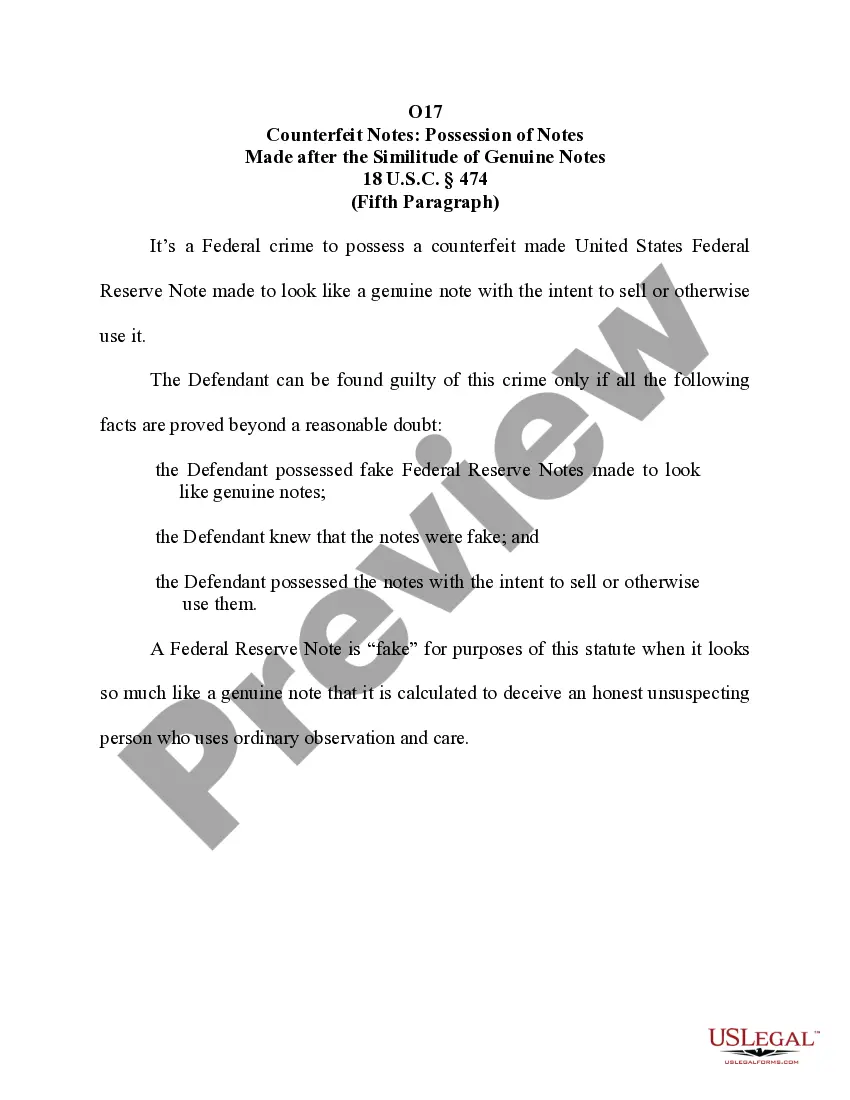
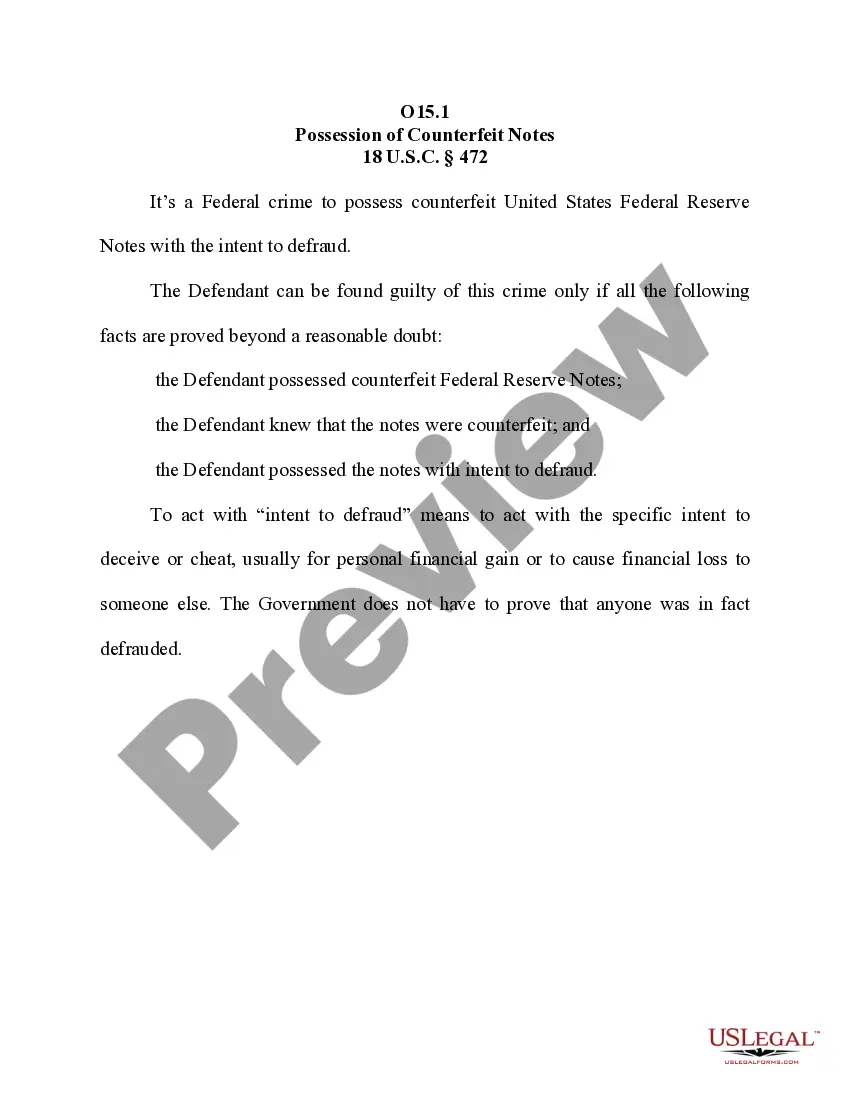
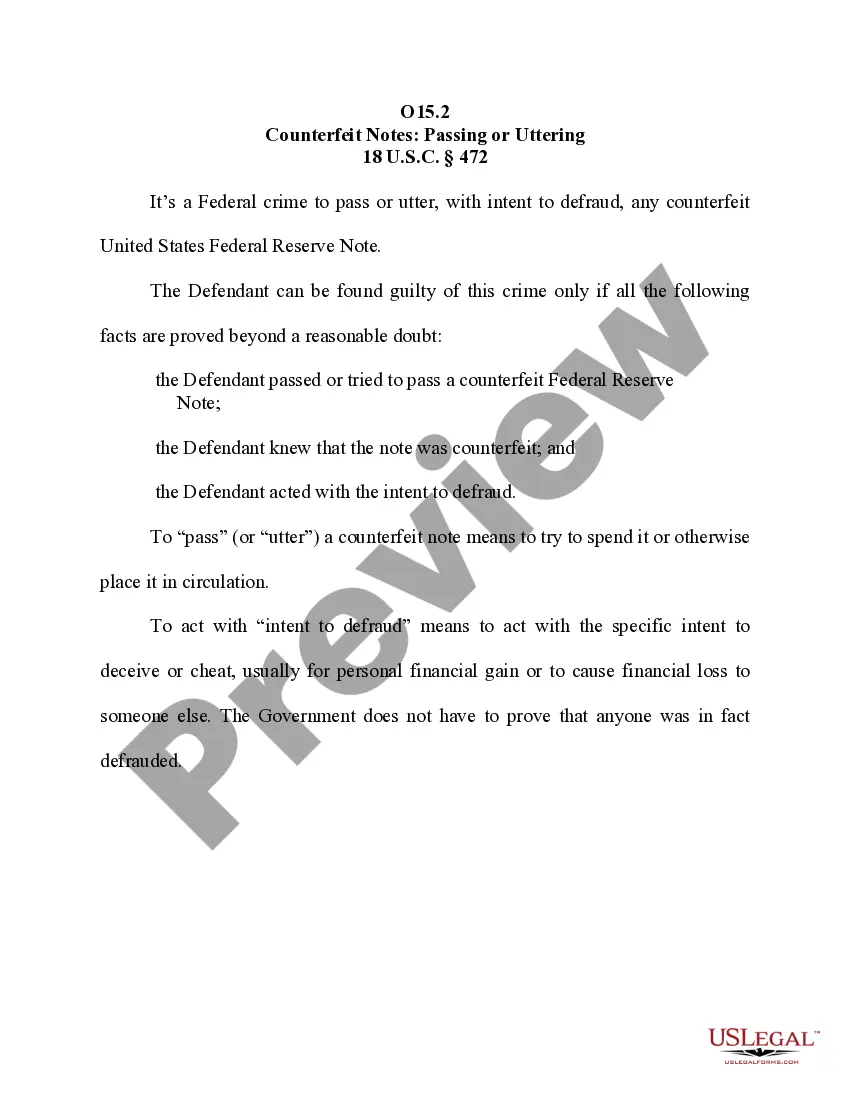
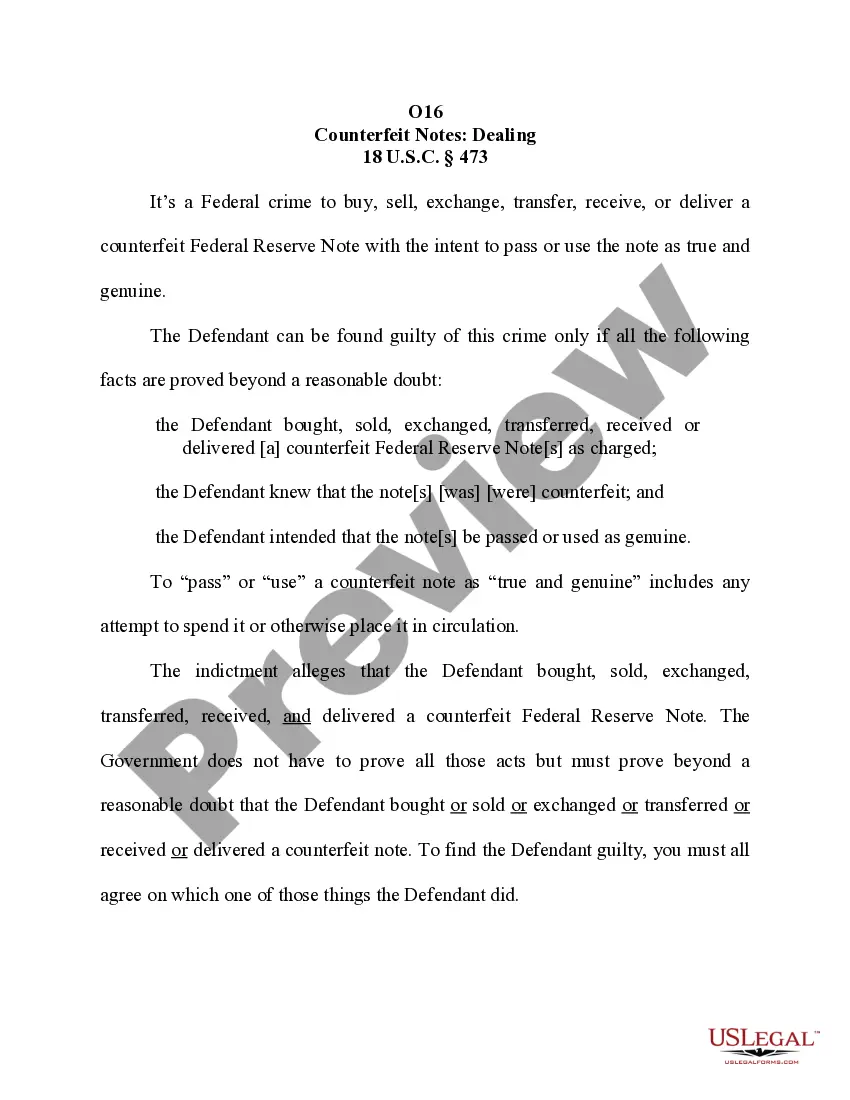
This form addresses the legal implications of possessing counterfeit notes made to resemble genuine Federal Reserve Notes. Specifically, it outlines the criteria under which an individual can be charged with a federal crime for having such counterfeit notes with the intent to sell or use them. Understanding this form can help users recognize the seriousness of counterfeit currency offenses and the legal requirements that must be established for a conviction, distinct from other forms regarding money or fraud.
Key components of this form
- Definition of counterfeit notes made to look like genuine Federal Reserve Notes.
- Explanation of the legal criteria for possession, including knowledge and intent.
- Details regarding the necessity of proving that the notes are intended for sale or usage.
When to use this document
This form is needed in legal situations involving the possession of counterfeit currency. It is particularly relevant if an individual faces charges for possessing counterfeit Federal Reserve Notes and needs to understand the legal framework surrounding the offense. It can also be useful for legal representatives preparing a defense or advising a client regarding allegations of counterfeit note possession.
Who can use this document
This form is for:
- Individuals charged with possession of counterfeit notes.
- Legal professionals representing clients in counterfeit currency cases.
- Anyone needing to understand the legal requirements regarding the possession of counterfeit money.
Steps to complete this form
- Read and understand the definition of counterfeit notes as outlined in the form.
- Make sure to clarify the facts surrounding the possession of the notes.
- Gather evidence to confirm whether the defendant knew that the notes were counterfeit.
- Document the intent behind possessing the notes, whether for sale or use.
- Consult with a legal professional if necessary to ensure all aspects are covered.
Is notarization required?
This form usually doesn’t need to be notarized. However, local laws or specific transactions may require it. Our online notarization service, powered by Notarize, lets you complete it remotely through a secure video session, available 24/7.
Get your form ready online
Our built-in tools help you complete, sign, share, and store your documents in one place.
Make edits, fill in missing information, and update formatting in US Legal Forms—just like you would in MS Word.
Download a copy, print it, send it by email, or mail it via USPS—whatever works best for your next step.
Sign and collect signatures with our SignNow integration. Send to multiple recipients, set reminders, and more. Go Premium to unlock E-Sign.
If this form requires notarization, complete it online through a secure video call—no need to meet a notary in person or wait for an appointment.
We protect your documents and personal data by following strict security and privacy standards.

Make edits, fill in missing information, and update formatting in US Legal Forms—just like you would in MS Word.

Download a copy, print it, send it by email, or mail it via USPS—whatever works best for your next step.

Sign and collect signatures with our SignNow integration. Send to multiple recipients, set reminders, and more. Go Premium to unlock E-Sign.

If this form requires notarization, complete it online through a secure video call—no need to meet a notary in person or wait for an appointment.

We protect your documents and personal data by following strict security and privacy standards.
Common mistakes
- Underestimating the seriousness of counterfeit possession charges.
- Failing to thoroughly document circumstances of possession.
- Inadequately preparing evidence to demonstrate intent behind possession.
Why complete this form online
- Convenience of accessing the form whenever needed without visiting a physical location.
- Editable format allows you to tailor the details to your specific situation.
- Reliable legal information crafted by licensed attorneys to ensure accuracy.
Looking for another form?
Form popularity
FAQ
Write your initials and the date in the white border areas of the suspect note. Limit the handling of the note. Carefully place it in a protective covering, such as an envelope. Surrender the note or coin only to a properly identified police officer or a U.S. Secret Service special agent.
No credit to customer's account is to be given for Counterfeit Notes, if any, detected in the tender received over the counter or at the back-office / currency chest. In no case, the Counterfeit Notes should be returned to the tenderer or destroyed by the bank branches / treasuries.
Federal Reserve Banks do not accept deposits of counterfeit or unlawfully altered currency or coin.
You could face jail time. Depending on your state, you can face criminal penalties for a misdemeanor or even a felony for depositing checks with the intent to defraud. However, if you're the victim of a scam, you're unlikely to face fines or jail time.
The banks use their counterfeit currency detection measures and technologies to determine whether or not the note is genuine. Any money encountered is confiscated, and the Secret Service is called in. This keeps the counterfeit money out of circulation.
Write your initials and the date in the white border areas of the note, and surrender the note to a police officer or U.S. Secret Service special agent. If the note is genuine, it will be returned to you.
Conclusion. All ATMs are equipped with an electronic sensing eye and other scanning devices in order to detect bogus money. Besides, they record transaction details, personal activity and the user's face using in-built cameras.
Write your initials and the date in the white border areas of the suspect note. Limit the handling of the note. Carefully place it in a protective covering, such as an envelope. Surrender the note or coin only to a properly identified police officer or a U.S. Secret Service special agent.