Passing Counterfeit Securtities of Obligations
What this document covers
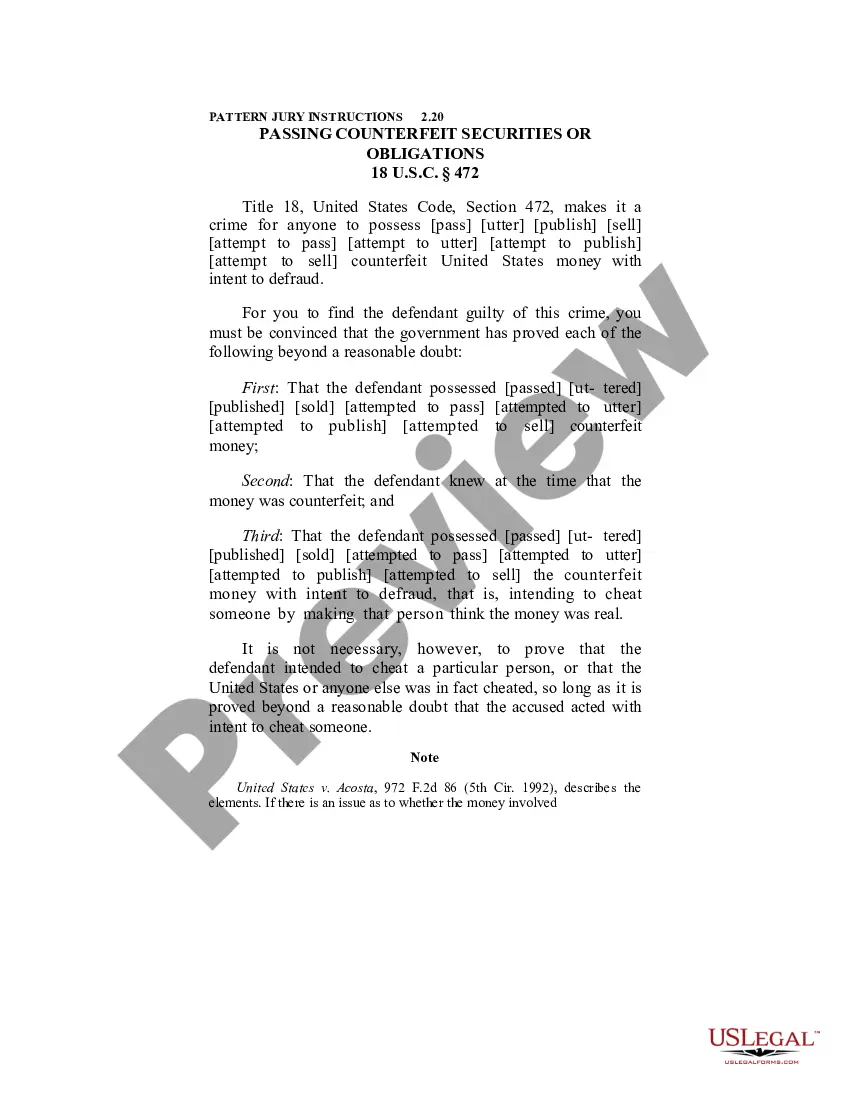
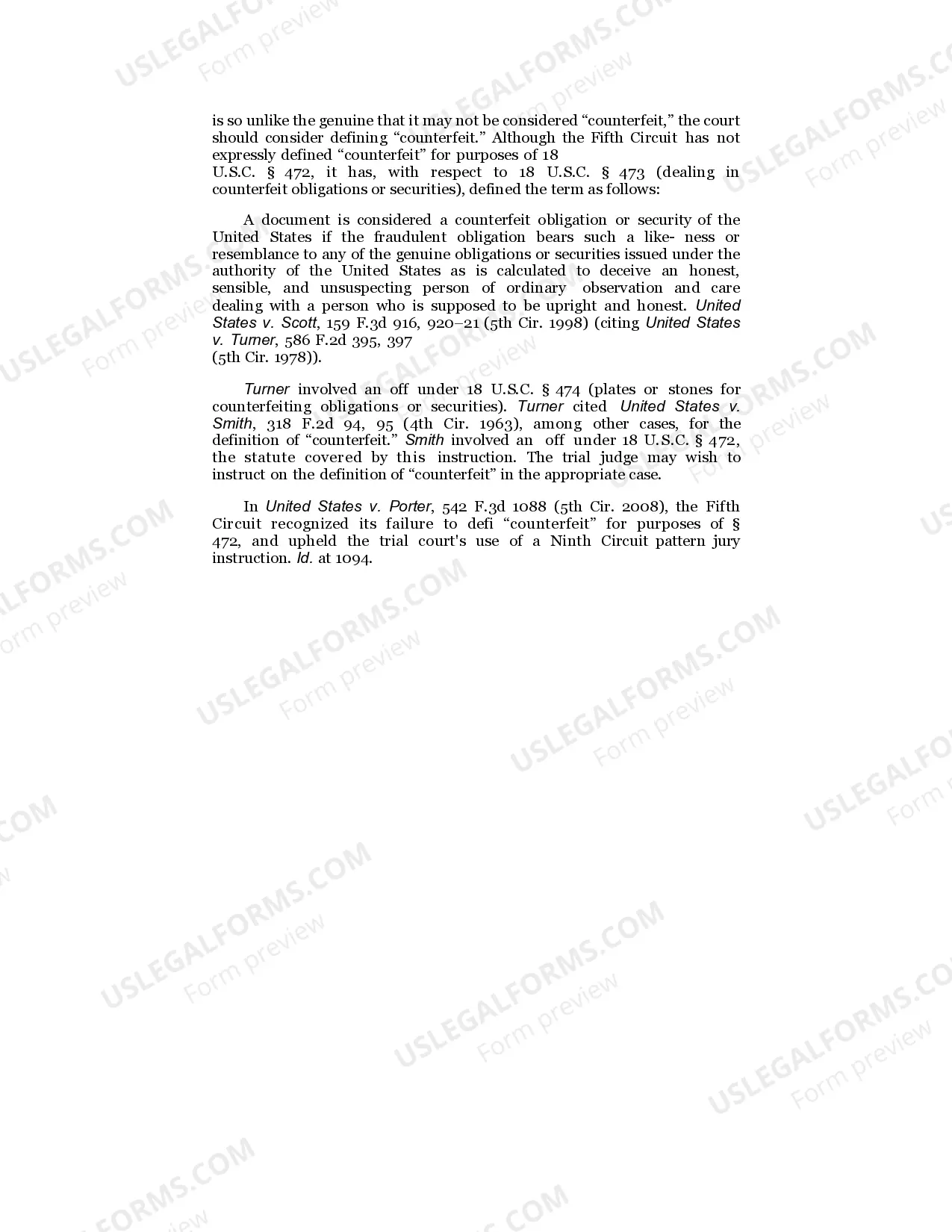
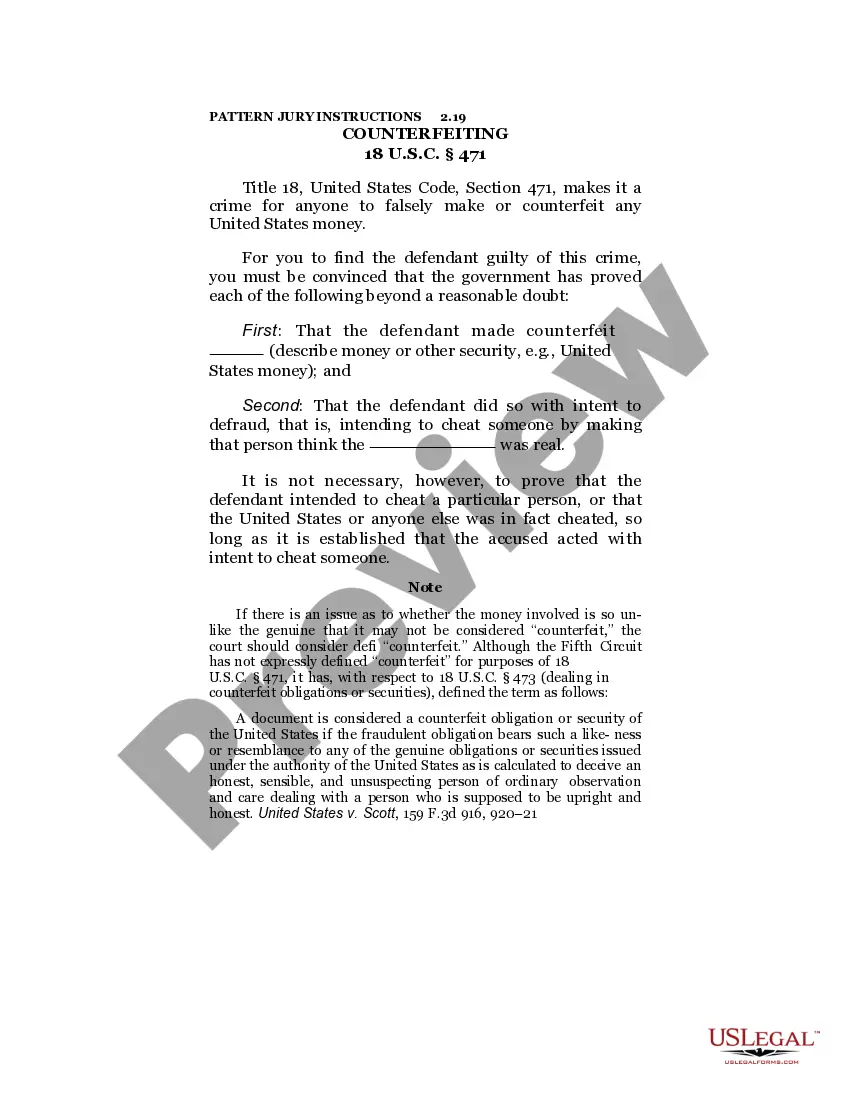
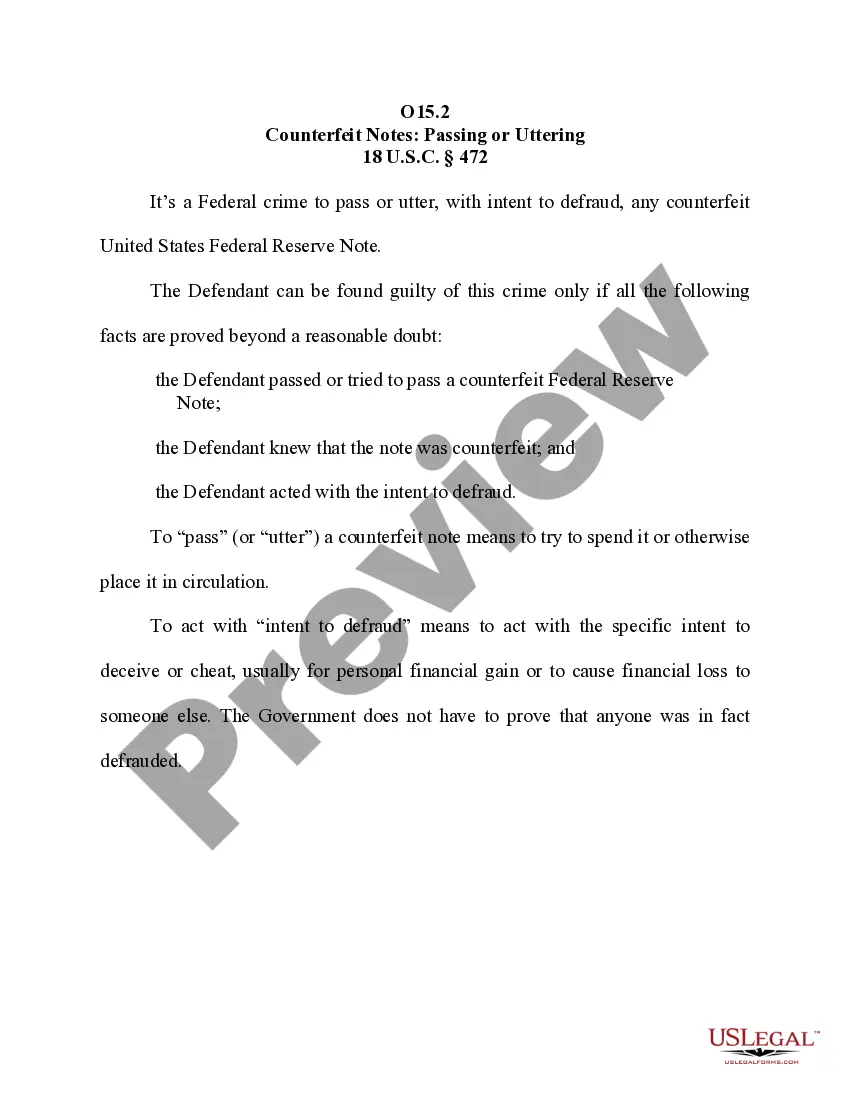
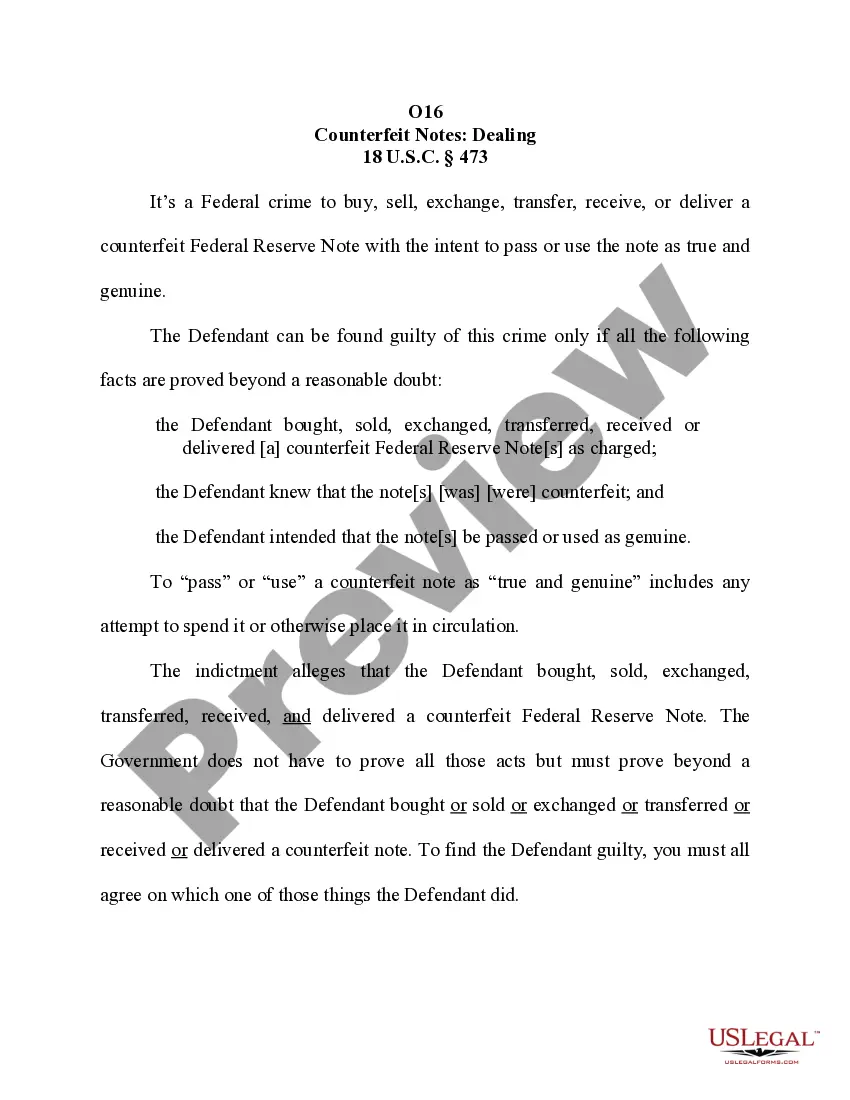
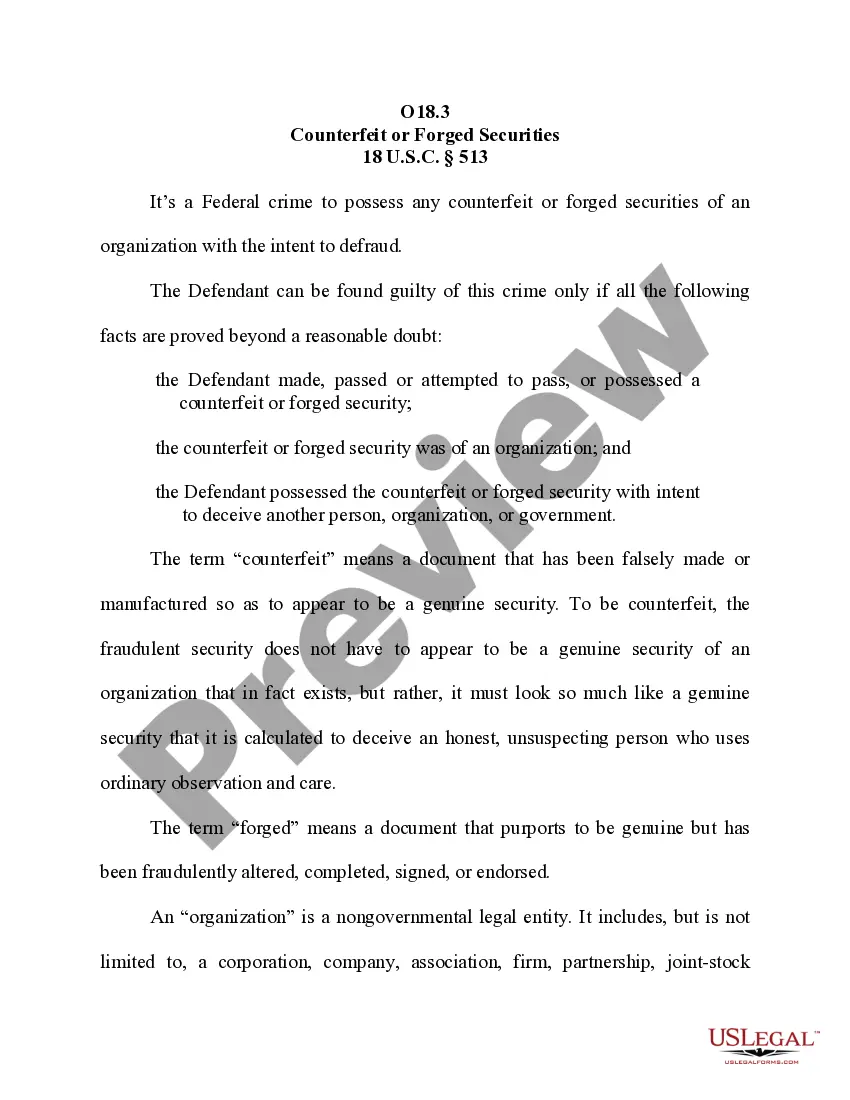
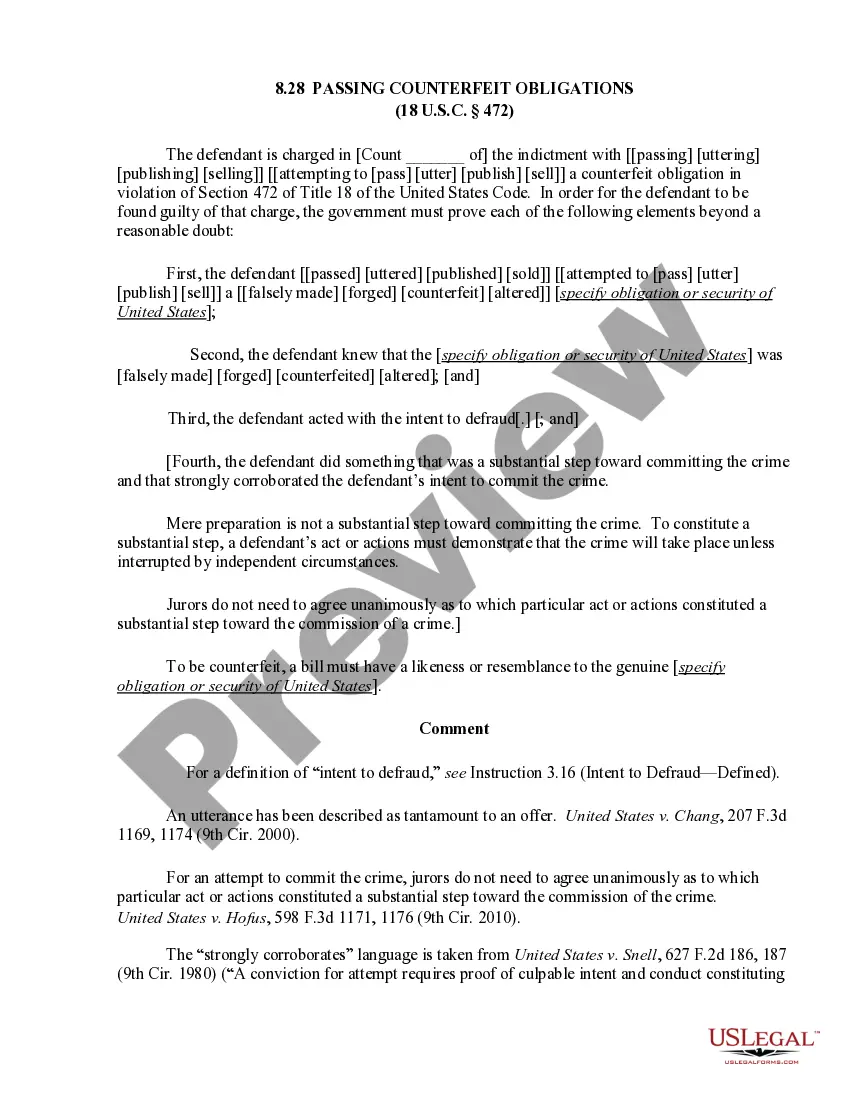
The Passing Counterfeit Securities of Obligations form is a legal document related to the crime of possessing, passing, or attempting to sell counterfeit U.S. money or obligations. This form outlines the offenses defined under Title 18, United States Code, Section 472, which includes the necessary elements that must be proven for a conviction. It is important to note that while this form addresses federal regulations, it differs from state laws surrounding similar offenses.
What’s included in this form
- Definition of counterfeit money and obligations.
- Legal standards for proving intent to defraud.
- List of actions that constitute passing counterfeit securities.
- Clarification of what constitutes knowledge of counterfeiting.
- Jurisprudence references for definitions and standards.
Common use cases
This form is necessary in cases involving allegations of counterfeiting where the defendant needs to understand the legal implications of possessing or passing counterfeit obligations. It is relevant in criminal proceedings where the government must prove intent to defraud through actions related to counterfeit money or securities.
Intended users of this form
- Defendants facing charges related to counterfeit securities.
- Attorneys representing clients accused of counterfeiting.
- Individuals or entities involved in discussions about counterfeiting legal standards.
How to complete this form
- Clearly identify the parties involved in the counterfeiting case.
- Note the specific actions taken regarding the counterfeit securities.
- Document the intent to defraud during the actions mentioned.
- Reference applicable case law to support legal arguments regarding intent and definition.
- Include signatures of relevant parties where necessary.
Notarization guidance
Notarization is generally not required for this form. However, certain states or situations might demand it. You can complete notarization online through US Legal Forms, powered by Notarize, using a verified video call available anytime.
Get your form ready online
Our built-in tools help you complete, sign, share, and store your documents in one place.
Make edits, fill in missing information, and update formatting in US Legal Forms—just like you would in MS Word.
Download a copy, print it, send it by email, or mail it via USPS—whatever works best for your next step.
Sign and collect signatures with our SignNow integration. Send to multiple recipients, set reminders, and more. Go Premium to unlock E-Sign.
If this form requires notarization, complete it online through a secure video call—no need to meet a notary in person or wait for an appointment.
We protect your documents and personal data by following strict security and privacy standards.

Make edits, fill in missing information, and update formatting in US Legal Forms—just like you would in MS Word.

Download a copy, print it, send it by email, or mail it via USPS—whatever works best for your next step.

Sign and collect signatures with our SignNow integration. Send to multiple recipients, set reminders, and more. Go Premium to unlock E-Sign.

If this form requires notarization, complete it online through a secure video call—no need to meet a notary in person or wait for an appointment.

We protect your documents and personal data by following strict security and privacy standards.
Common mistakes
- Failing to clearly articulate the intent behind the actions taken.
- Omitting specific details regarding the nature of the counterfeit securities.
- Confusing counterfeit with legal tender; not understanding the definitions fully.
Advantages of online completion
- Convenience of completing the form at any time and from anywhere.
- Editability allows users to tailor the content to their specific needs.
- Access to templates drafted by licensed attorneys for accuracy and compliance.
Looking for another form?
Form popularity
FAQ
Counterfeiting -- 18 U.S.C. 489. Section 489 of Title 18 prohibits the making of any , disc, or device in the likeness or similitude of coins in the United States, except under the authority of the Secretary of the Treasury.
Counterfeit money is currency that is produced without the legal sanction of the state or government to resemble some official form of currency closely enough that it may be confused for genuine currency. Producing or using counterfeit money is a form of fraud.
Whoever, with intent to defraud, passes, utters, publishes, or sells, or attempts to pass, utter, publish, or sell, or with like intent brings into the United States or keeps in possession or conceals any falsely made, forged, counterfeited, or altered obligation or other security of the United States, shall be fined
Counterfeiting, manufacture of false money for gain, a kind of forgery in that something is copied so as to defraud by passing it for the original or genuine article.
Obligations or securities of United States. Whoever, with intent to defraud, falsely makes, forges, counterfeits, or alters any obligation or other security of the United States, shall be fined under this title or imprisoned not more than 20 years, or both.
Counterfeiting occurs when someone copies or imitates an item without having been authorized to do so and passes the copy off for the genuine or original item. While counterfeiting is most often associated with money it can also be applied to designer clothing, handbags and watches and other consumer goods.
Here are some likely consequences of counterfeiting money: Legal Penalties: If caught, counterfeiters can face significant legal penalties, including imprisonment and hefty fines. For example, counterfeiting is punishable in the United States by up to 25 years in prison and a $250,000 fine.
Forgery is the crime of producing, making, or adapting objects or documents with the intent to defraud another. When forgery leads to someone being deceived out of money, additional charges may be added. Counterfeiting is making or creating an unauthorized imitation of a genuine article with the intent to defraud.