Counterfeit or Forged Securities
About this form
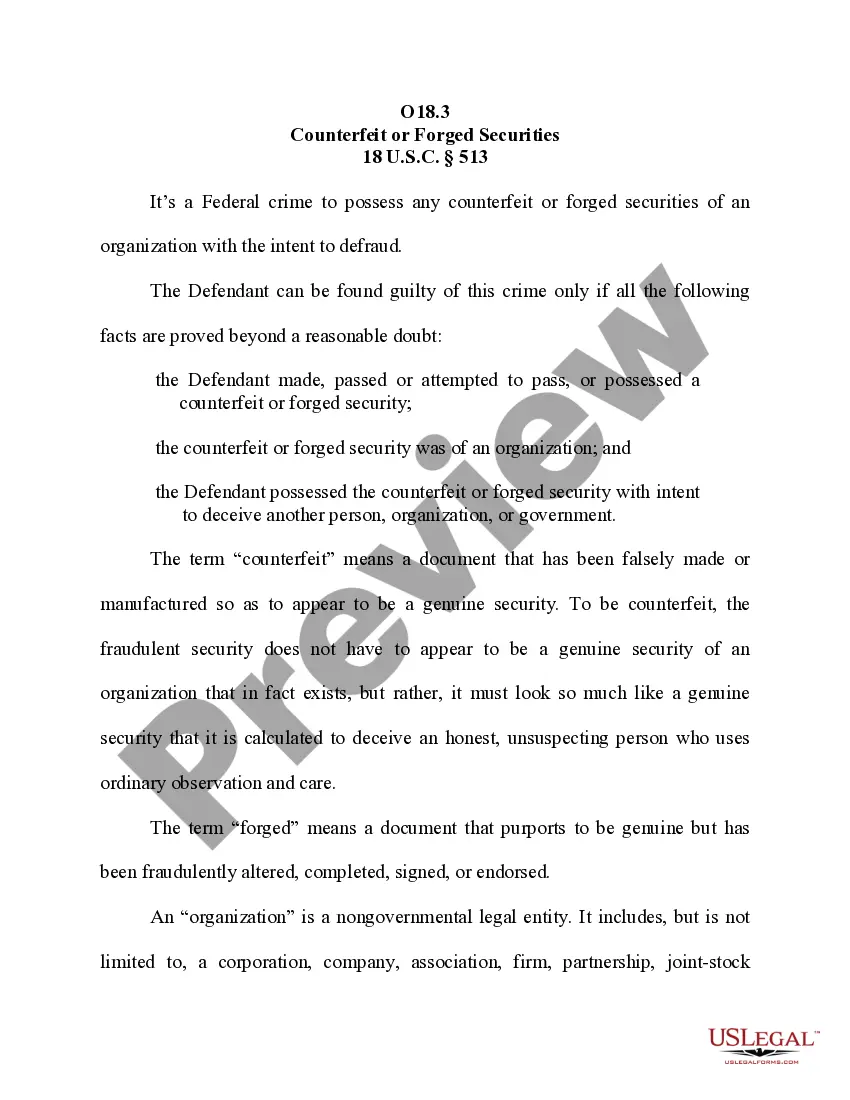
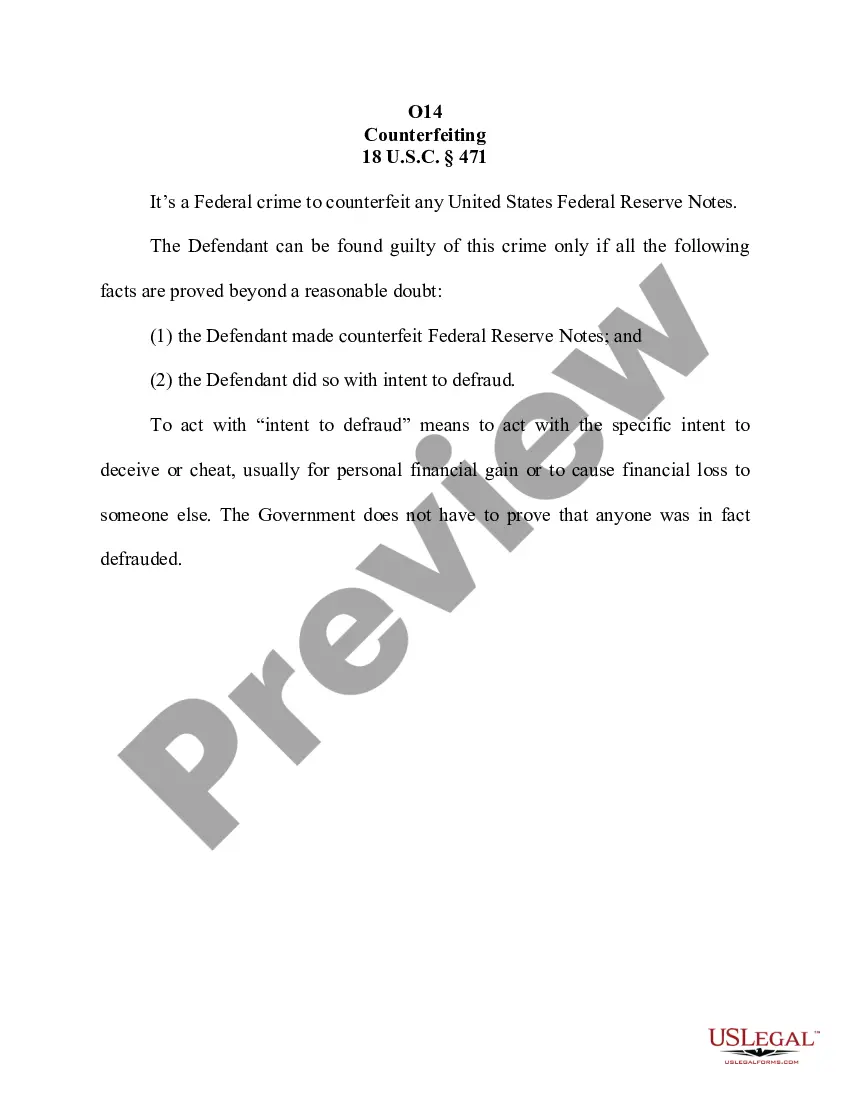
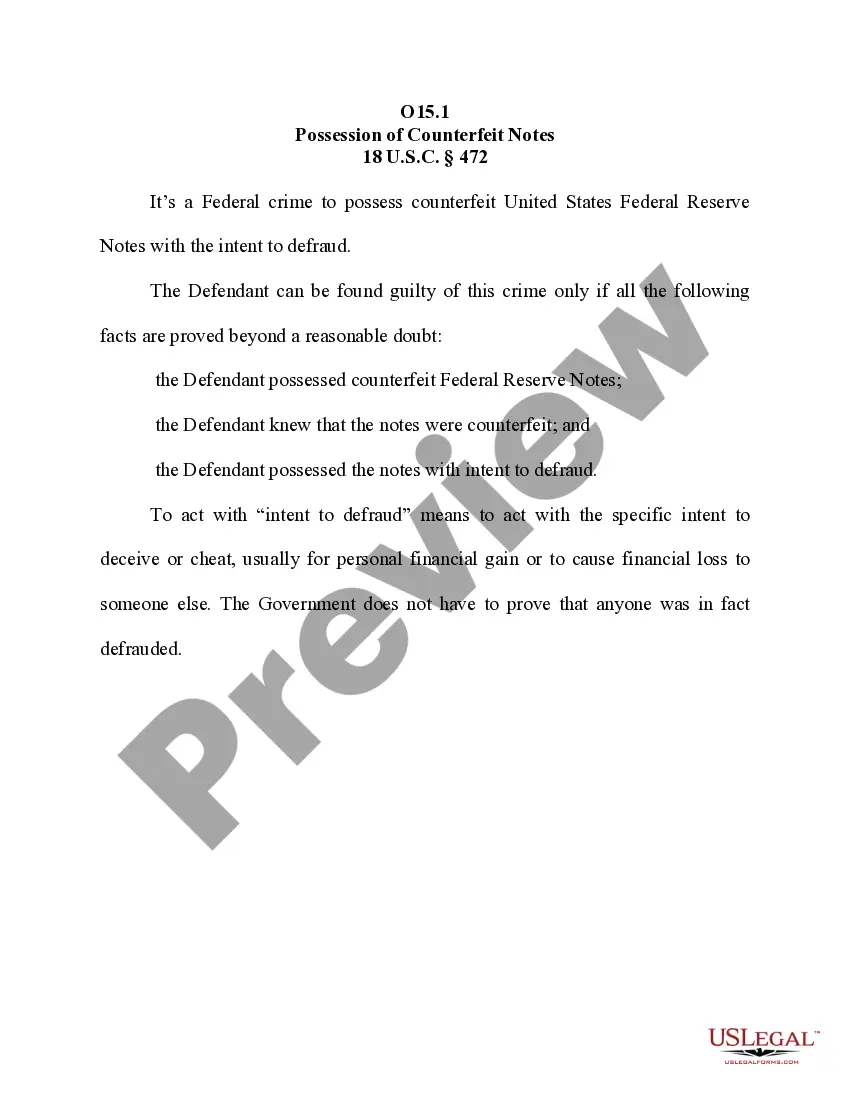
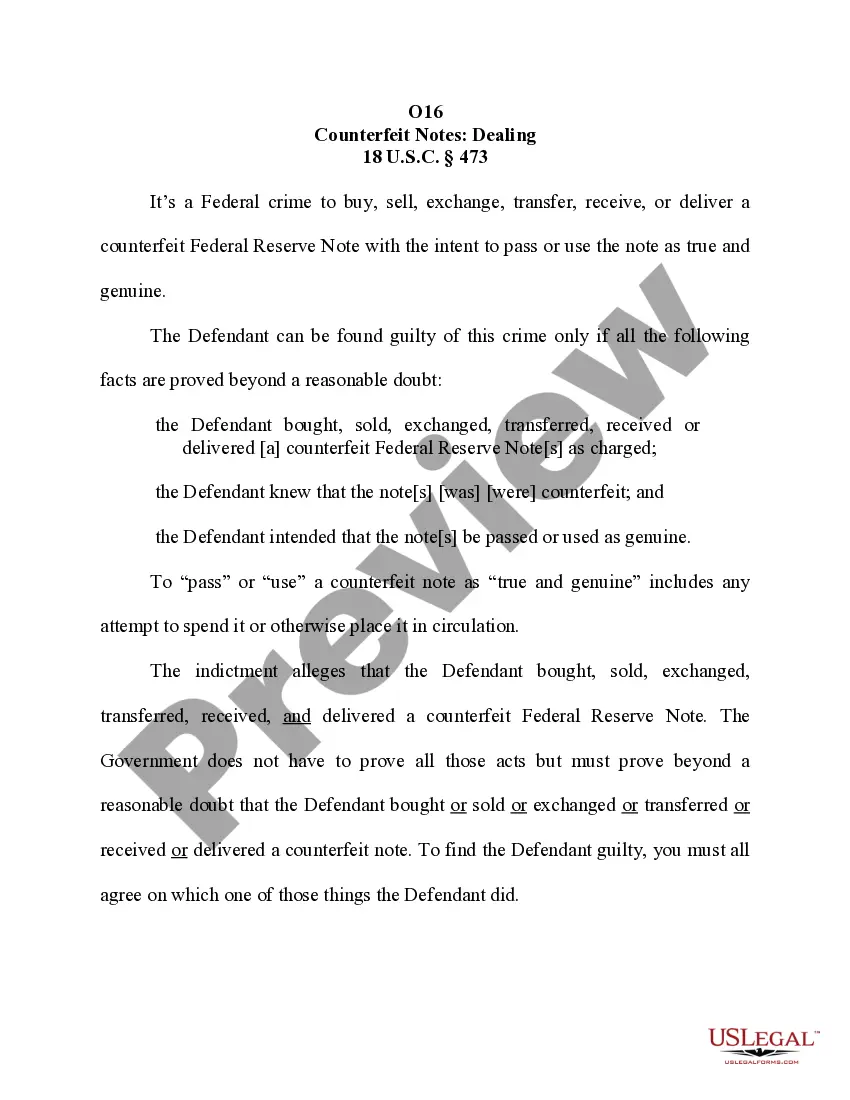
The Counterfeit or Forged Securities form is a legal document that outlines the elements necessary to prove a federal crime related to counterfeit or forged securities. This form is distinct in its focus on the possession and intent to defraud using counterfeit or forged securities of an organization. It serves as a guideline for understanding the legal implications and definitions associated with such acts, helping users navigate the complexities of relevant legislation.
Key components of this form
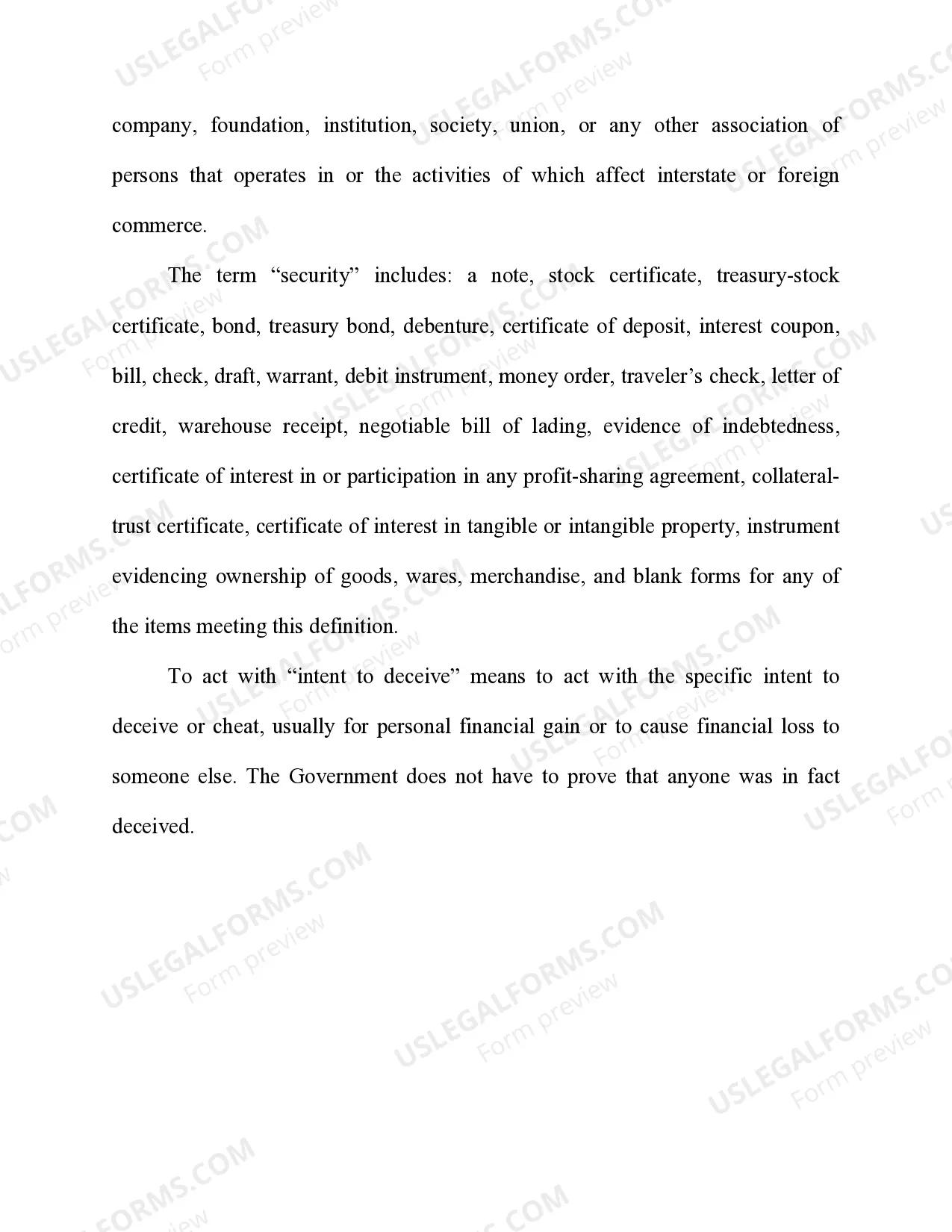
- Definition of counterfeit and forged securities.
- Criteria for determining intent to deceive.
- Explanation of what constitutes an organization.
- List of various types of securities included in the definition.
- Standard requirements to prove guilt in these cases.
When to use this form
This form is essential when there is suspicion of possession or trading of counterfeit or forged securities. It can be used in situations where individuals need to understand the legal consequences of such actions, whether in a legal defense context or for educational purposes about financial fraud laws.
Who should use this form
- Individuals potentially facing accusations of financial fraud.
- Legal practitioners seeking to understand federal standards for securities fraud.
- Entities needing clarity on financial documentation and fraud prevention.
- Educators and students of law looking for case study materials.
Steps to complete this form
- Review the definitions of counterfeit and forged securities to ensure understanding.
- Identify the specific security in question and gather all pertinent documentation.
- Document any intention to deceive, including statements or actions indicative of fraud.
- Ensure all information reflects the details of the organization associated with the securities.
- Consult a legal professional if there are any uncertainties regarding the process.
Is notarization required?
This form usually doesn’t need to be notarized. However, local laws or specific transactions may require it. Our online notarization service, powered by Notarize, lets you complete it remotely through a secure video session, available 24/7.
Get your form ready online
Our built-in tools help you complete, sign, share, and store your documents in one place.
Make edits, fill in missing information, and update formatting in US Legal Forms—just like you would in MS Word.
Download a copy, print it, send it by email, or mail it via USPS—whatever works best for your next step.
Sign and collect signatures with our SignNow integration. Send to multiple recipients, set reminders, and more. Go Premium to unlock E-Sign.
If this form requires notarization, complete it online through a secure video call—no need to meet a notary in person or wait for an appointment.
We protect your documents and personal data by following strict security and privacy standards.

Make edits, fill in missing information, and update formatting in US Legal Forms—just like you would in MS Word.

Download a copy, print it, send it by email, or mail it via USPS—whatever works best for your next step.

Sign and collect signatures with our SignNow integration. Send to multiple recipients, set reminders, and more. Go Premium to unlock E-Sign.

If this form requires notarization, complete it online through a secure video call—no need to meet a notary in person or wait for an appointment.

We protect your documents and personal data by following strict security and privacy standards.
Typical mistakes to avoid
- Failing to accurately define the type of security involved.
- Misunderstanding the intent required to prove guilt.
- Not thoroughly documenting all relevant facts associated with the securities.
- Overlooking the specific characteristics that distinguish counterfeit from forged securities.
Why use this form online
- Convenience of accessing legal forms from any location at any time.
- Editability allows users to customize forms to fit their specific situations.
- Reliable templates drafted by licensed attorneys, ensuring legal accuracy.
Legal use & context
- This form provides a legal framework for understanding and analyzing fraud cases related to securities.
- It helps users to comprehend their legal standing should they encounter allegations related to counterfeit securities.
- Understanding this form is crucial for compliance with federal regulations regarding securities.
Looking for another form?

Form popularity
FAQ
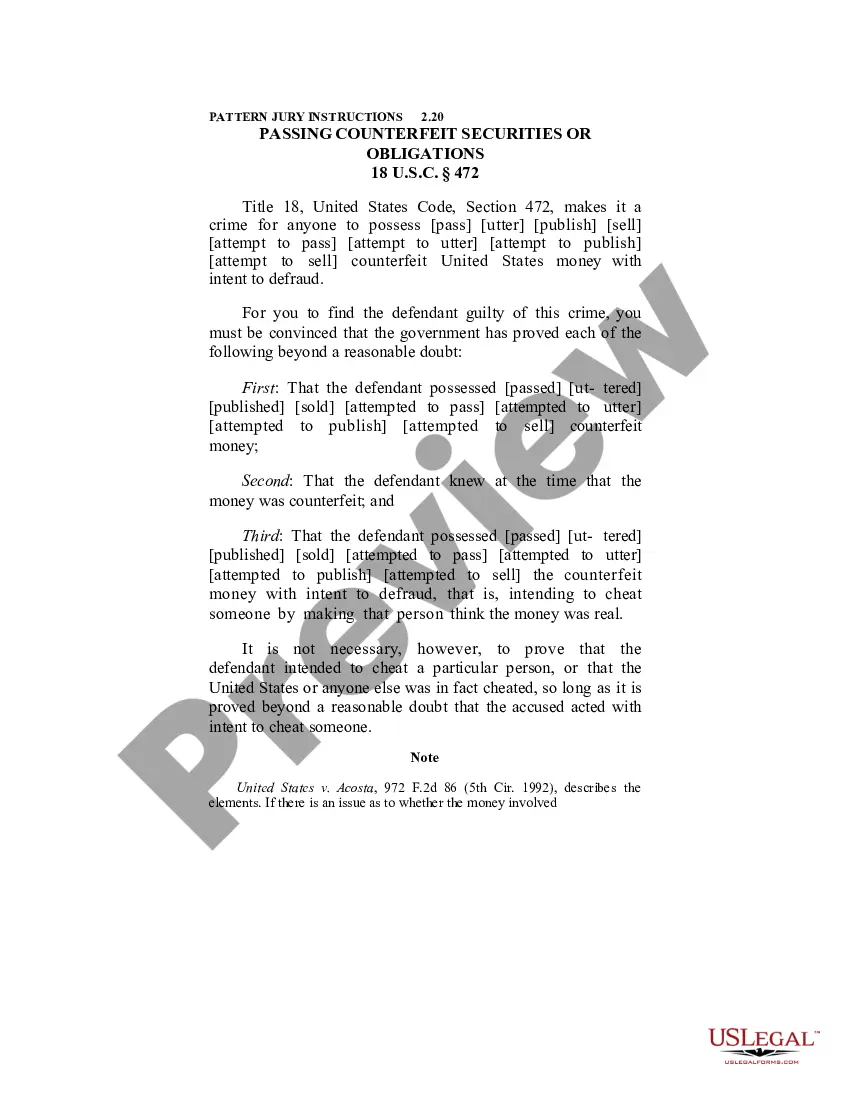
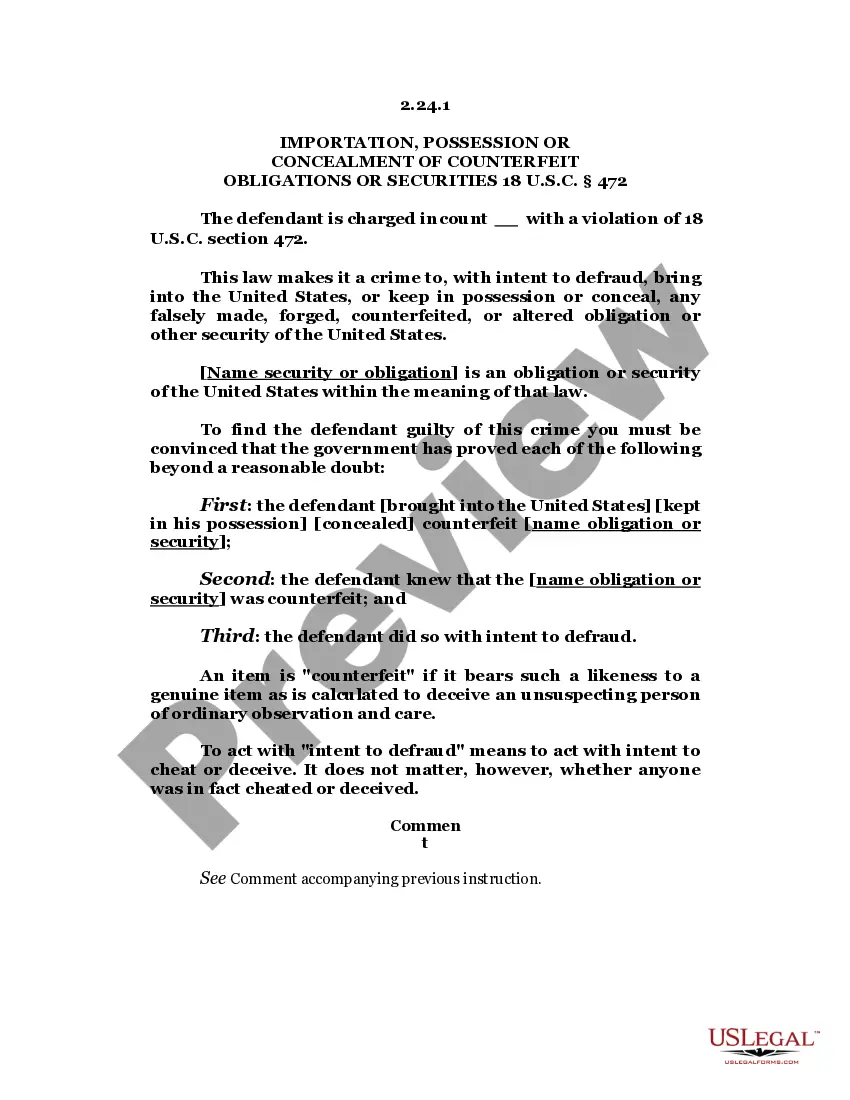
Obligations or securities of United States. Whoever, with intent to defraud, falsely makes, forges, counterfeits, or alters any obligation or other security of the United States, shall be fined under this title or imprisoned not more than 20 years, or both.
Counterfeiting normally means making false money, securities, and, sometimes, consumer products. Forgery usually means falsifying documents such as checks, passports, driver's licenses, credit cards, birth certificates, Social Security cards, wills, theater tickets, or identification cards.
Forgery is the crime of producing, making, or adapting objects or documents with the intent to defraud another. When forgery leads to someone being deceived out of money, additional charges may be added. Counterfeiting is making or creating an unauthorized imitation of a genuine article with the intent to defraud.
: made in imitation of something else with intent to deceive : forged. counterfeit money.
Forgery. noun. forg·?ery. plural forgeries. : the act of falsely making, altering, or imitating (as a document or signature) with intent to defraud.
A counterfeit is the fraudulent copy of money, documents, designer pieces, or other valuable items. The counterfeiter often provides these goods to others with an intent to defraud.
Counterfeiting, manufacture of false money for gain, a kind of forgery in that something is copied so as to defraud by passing it for the original or genuine article.
A , by definition, is a copy, a replica or a misattributed piece of art. A forgery, on the other hand, is a work that was created with misleading (and sometimes criminal) intent.