New Mexico Letter from Tenant to Landlord for Failure of Landlord to return all prepaid and unearned rent and security recoverable by Tenant
What is this form?
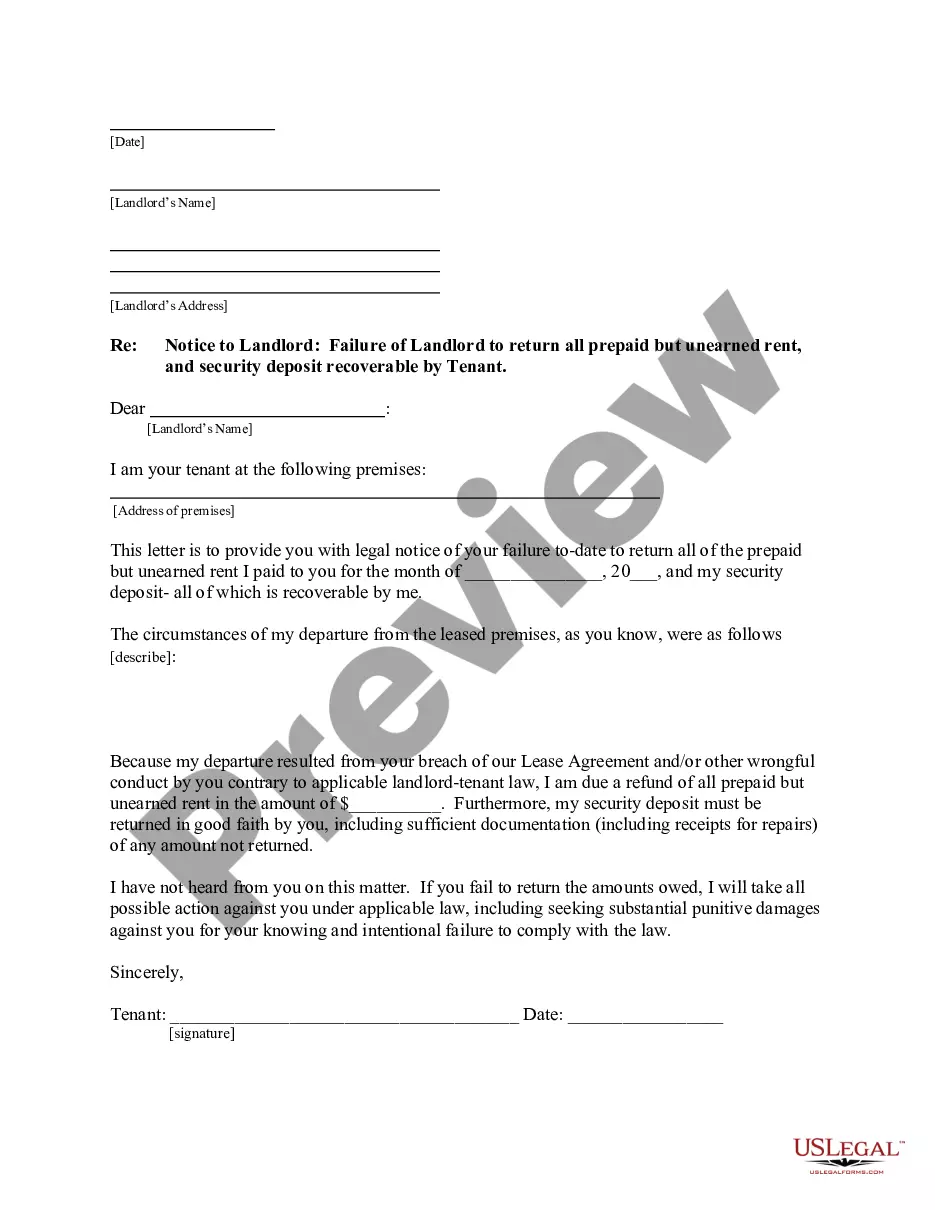
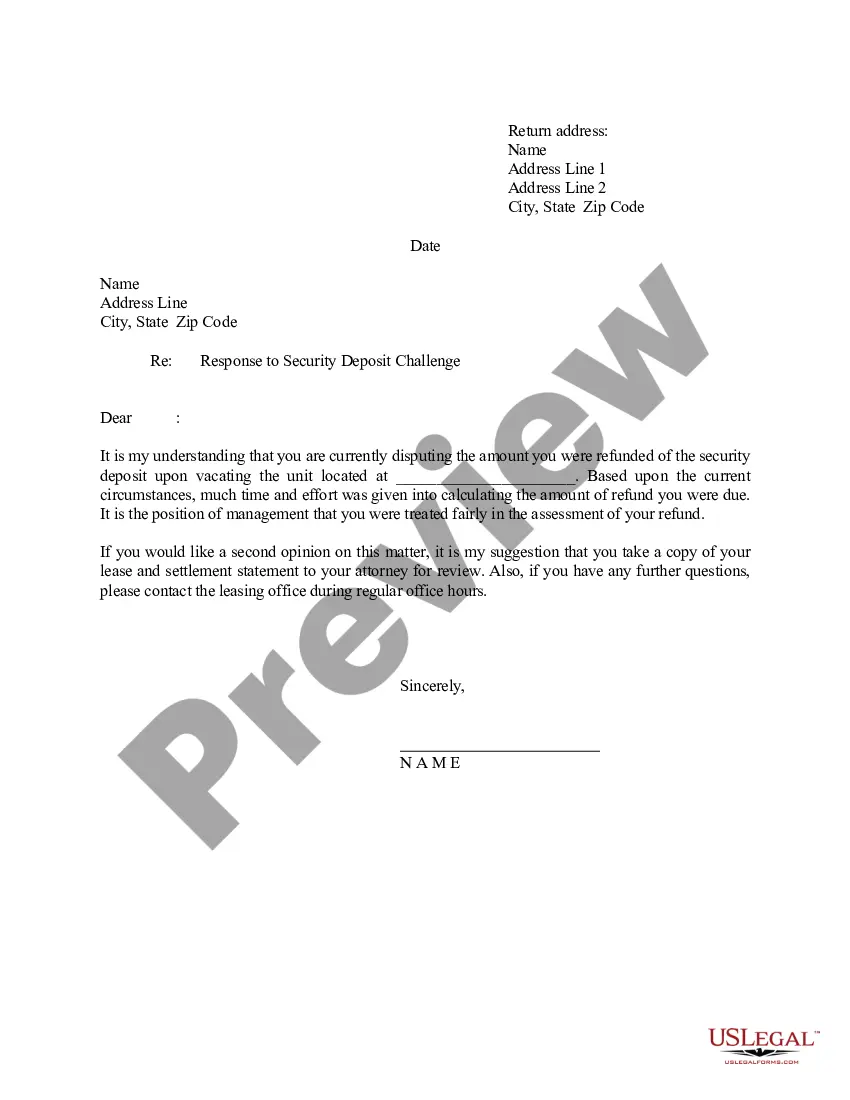
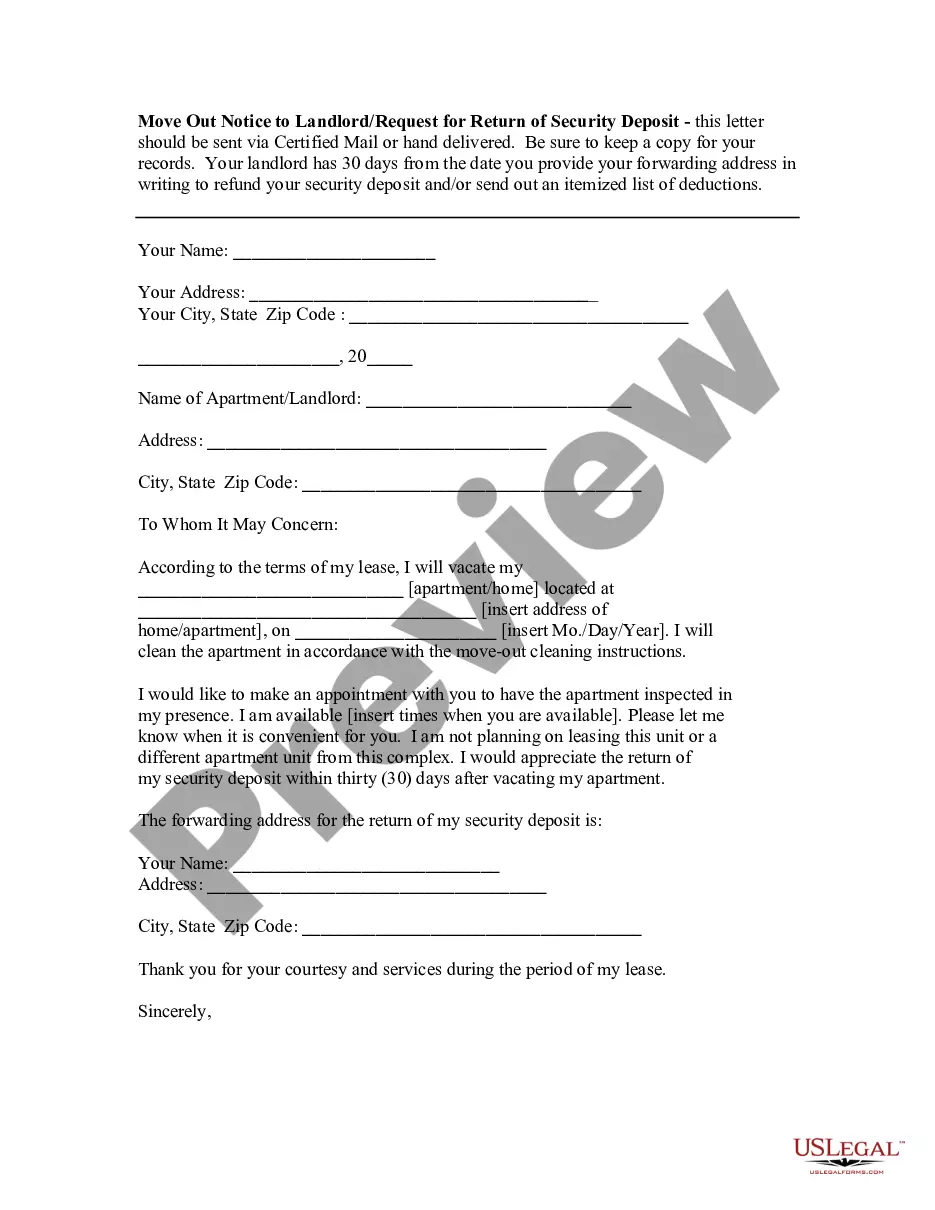
This form is a formal letter from a tenant to a landlord, addressing the landlord's failure to return all prepaid and unearned rent. It serves as legal notice that the tenant is demanding a refund because the tenant's departure was due to the landlord's breach of the lease agreement or other wrongful conduct. This form is important for tenants seeking to assert their rights and recover funds they are legally entitled to, differentiating it from other general notice forms which may not address specific financial claims.
What’s included in this form
- Details of the circumstances surrounding the tenant's departure from the property.
- A statement expressing that the tenant has not received a response from the landlord regarding the refund.
- A warning that if the refund is not processed, the tenant may pursue legal action for punitive damages.
- Signature and date fields to confirm the tenant's identity and the letter's authenticity.
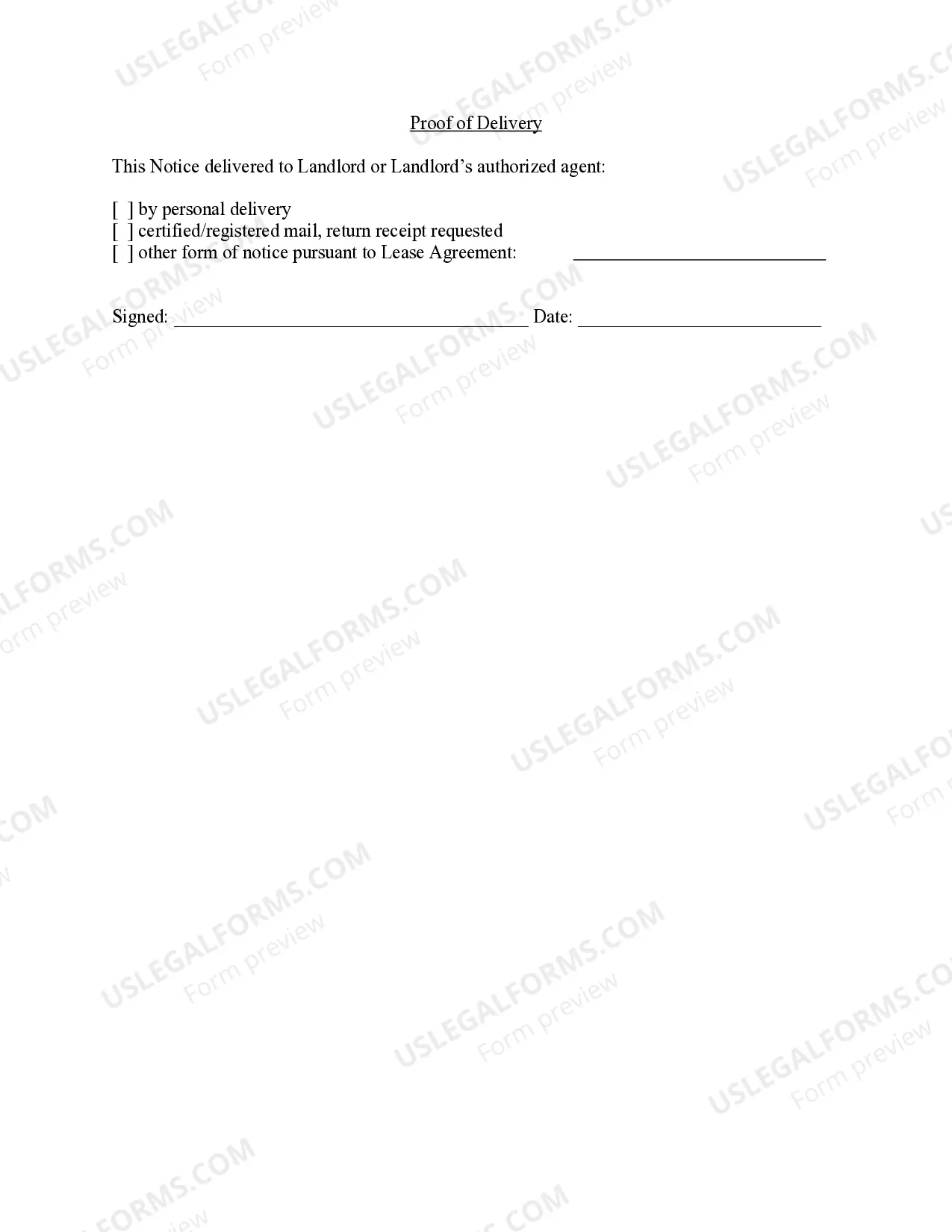
- Proof of delivery options, offering a method to document when the notice was sent.


When to use this document
This form should be used when a tenant has moved out of a rental property due to the landlord's breach of the rental agreement and has not received a refund for prepaid and unearned rent or security deposits. It is crucial in instances where the landlord has failed to communicate or comply with legal obligations regarding the return of such funds. Using this letter helps to document the tenant's demand and sets the stage for potential legal action, if necessary.
Who should use this form
- Tenants who have vacated a rental property due to landlord misconduct.
- Individuals looking to recover unearned rent or security deposits from their former landlords.
- Tenants seeking to formally document their claims with legal notice to the landlord.
How to prepare this document
- Identify the parties involved, including the tenant's name and address, and the landlord's name and address.
- Clearly describe the circumstances of your departure from the leased premises.
- State the amount of prepaid but unearned rent you expect to be refunded.
- Indicate that you have not received a reply from the landlord regarding the matter.
- Sign and date the letter to validate your claim.
- Choose an appropriate method for proof of delivery to ensure the landlord receives your notice.
Notarization guidance
This form does not typically require notarization unless specified by local law. However, it is advisable to check local regulations to ensure compliance.
Get your form ready online
Our built-in tools help you complete, sign, share, and store your documents in one place.
Make edits, fill in missing information, and update formatting in US Legal Forms—just like you would in MS Word.
Download a copy, print it, send it by email, or mail it via USPS—whatever works best for your next step.
Sign and collect signatures with our SignNow integration. Send to multiple recipients, set reminders, and more. Go Premium to unlock E-Sign.
If this form requires notarization, complete it online through a secure video call—no need to meet a notary in person or wait for an appointment.
We protect your documents and personal data by following strict security and privacy standards.

Make edits, fill in missing information, and update formatting in US Legal Forms—just like you would in MS Word.

Download a copy, print it, send it by email, or mail it via USPS—whatever works best for your next step.

Sign and collect signatures with our SignNow integration. Send to multiple recipients, set reminders, and more. Go Premium to unlock E-Sign.

If this form requires notarization, complete it online through a secure video call—no need to meet a notary in person or wait for an appointment.

We protect your documents and personal data by following strict security and privacy standards.
Typical mistakes to avoid
- Failing to include specific details about the lease and the situation leading to the departure.
- Not providing sufficient documentation to support the claim for unearned rent.
- Neglecting to send the letter using a method that provides proof of delivery.
- Not keeping a copy of the letter for personal records.
Benefits of completing this form online
- Convenient access to legal form templates from anywhere.
- The ability to fill out the form at your own pace and customize it as needed.
- Reliable and professionally drafted content that minimizes legal risk.
Legal use & context
- The letter serves as an official request for the return of funds and may be used in potential legal proceedings.
- It is important to adhere to state-specific landlord-tenant laws regarding notice and demands for payment.
- Using this letter establishes a formal communication trail, which can be valuable in disputes.
Summary of main points
- This form is essential for tenants seeking a refund of unearned rent and security deposits.
- Clear documentation and prompt communication are crucial for protecting your rights.
- Utilizing this form can pave the way for legal recourse if necessary to recover funds.
Looking for another form?
Form popularity
FAQ
New Mexico state law limits how much a landlord can charge for a security deposit (one month's rent), when it must be returned (within 30 days after a tenant moves), and sets other restrictions on deposits.
If your deposit didn't need to be protected and your landlord refuses to give it back, you might have to take them to court. Going to court can be expensive and stressful.You'll need to take your landlord to the small claims court to get your money back.
Injury at Rental Property: You could have a case for a lawsuit against your landlord if you are injured at the rental property due to a landlord's neglect. Filing an Illegal Eviction: You can countersue your landlord if you feel your landlord is trying to evict you illegally.
1-800-340-9771. Se habla espanol. Hours: a.m. to p.m. Landlord & Tenant Hotline.
State law regulates several rent-related issues, including late fees, the amount of notice (at least 30 days in New Mexico) landlords must give tenants to raise the rent, and how much time (three days in New Mexico) a tenant has to pay overdue rent or move before a landlord can file for eviction.
If you're seeking damages for emotional distress caused by a landlord's discrimination, or punitive damages for especially blatant and intentional discrimination, a lawsuit may well be your best bet. Understand what's involved in suing your landlord. You may file a lawsuit in either federal or state court.
Step 1: make a formal complaint. You can make a formal complaint by writing a letter to your landlord. Step 2: complain to your local council. If making a formal complaint to your landlord doesn't solve your problem you might be able to complain to your local council.
Your Landlord is legally obligated to return your deposit within 10 days of you both agreeing how much you'll get back (after the tenancy has ended, of course).
Landlord Rights When Tenant Destroys PropertyIf the tenant is evicted or already abandoned the property the landlord can deduct money from the security deposit. If the damages exceed the funds in the security deposit the landlord can sue the tenant in small claims court.