New Mexico Letter from Tenant to Landlord for Failure of Landlord to return all prepaid and unearned rent and security recoverable by Tenant
Understanding this form
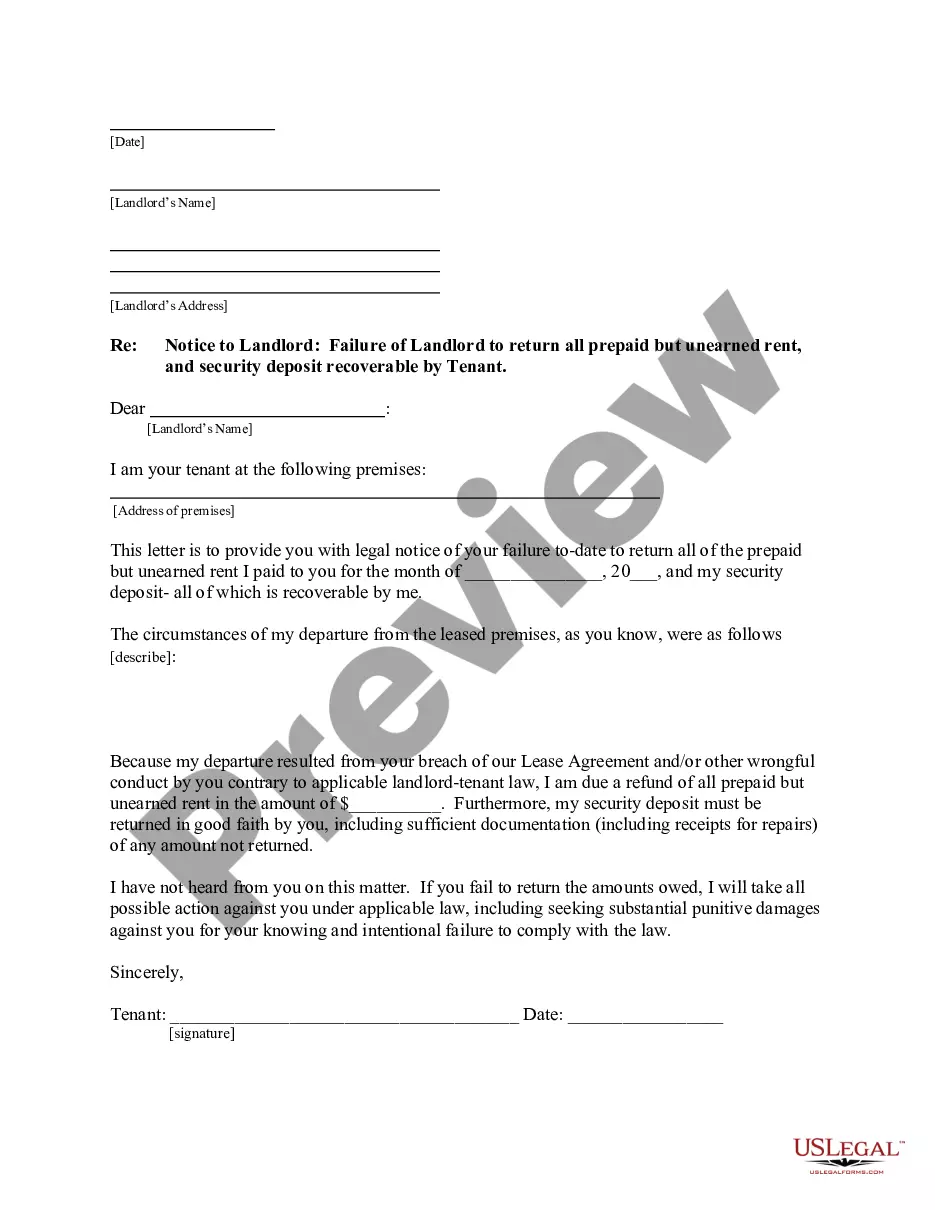
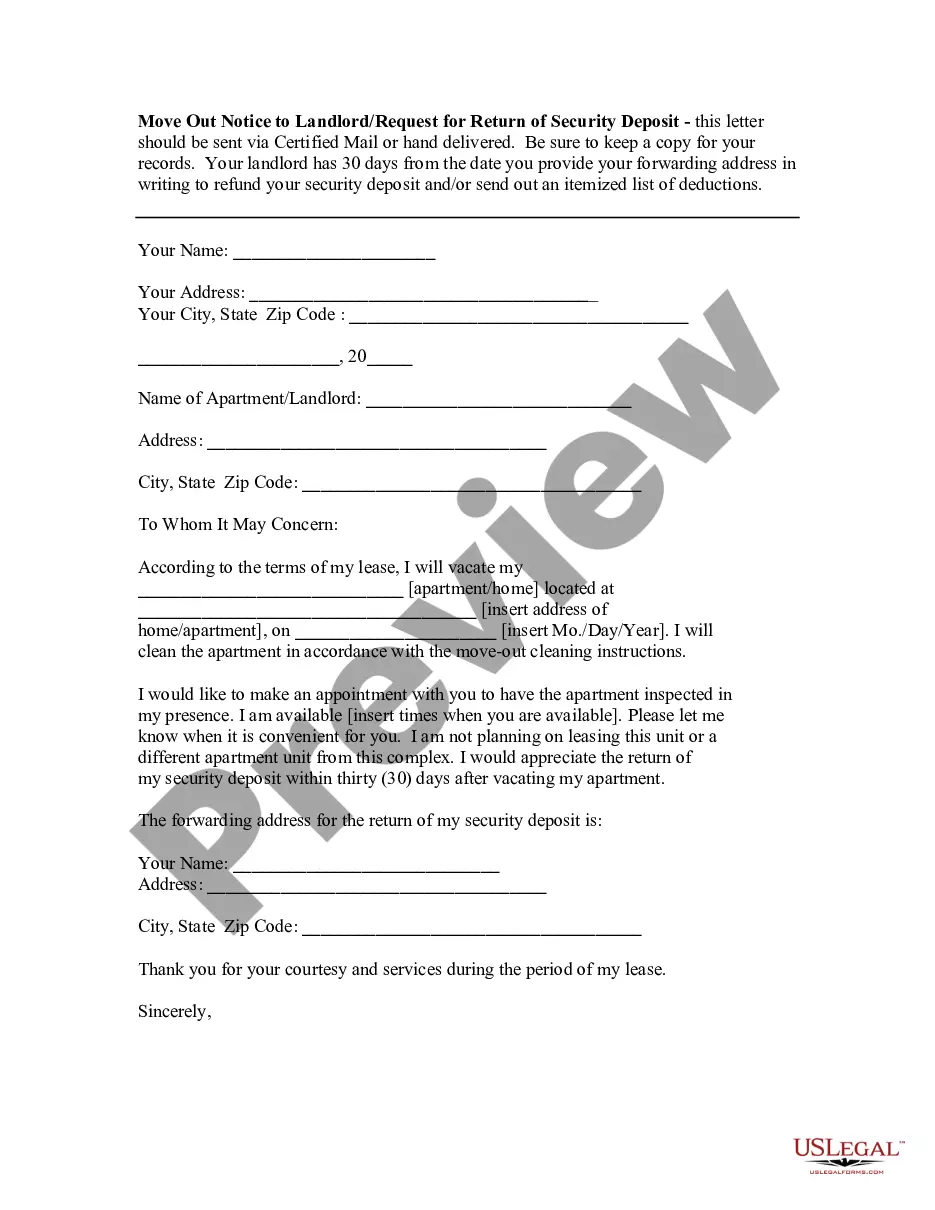
This form is a Letter from Tenant to Landlord regarding the failure to return prepaid and unearned rent and security deposits. Its primary purpose is to serve as legal notice to the landlord about their non-compliance following the tenant's departure due to a breach of the lease agreement. This letter demands the return of all prepaid but unearned rent, differing from general complaint notices by specifically targeting financial recovery for the tenant.
Main sections of this form
- Details of the tenant's departure from the leased property.
- A clear statement indicating the landlord's failure to return the prepaid rent.
- A demand for the refund of unearned rent and security deposits.
- A warning about potential legal actions if the landlord does not comply.
- Signature and date fields for the tenant's confirmation of the notice.
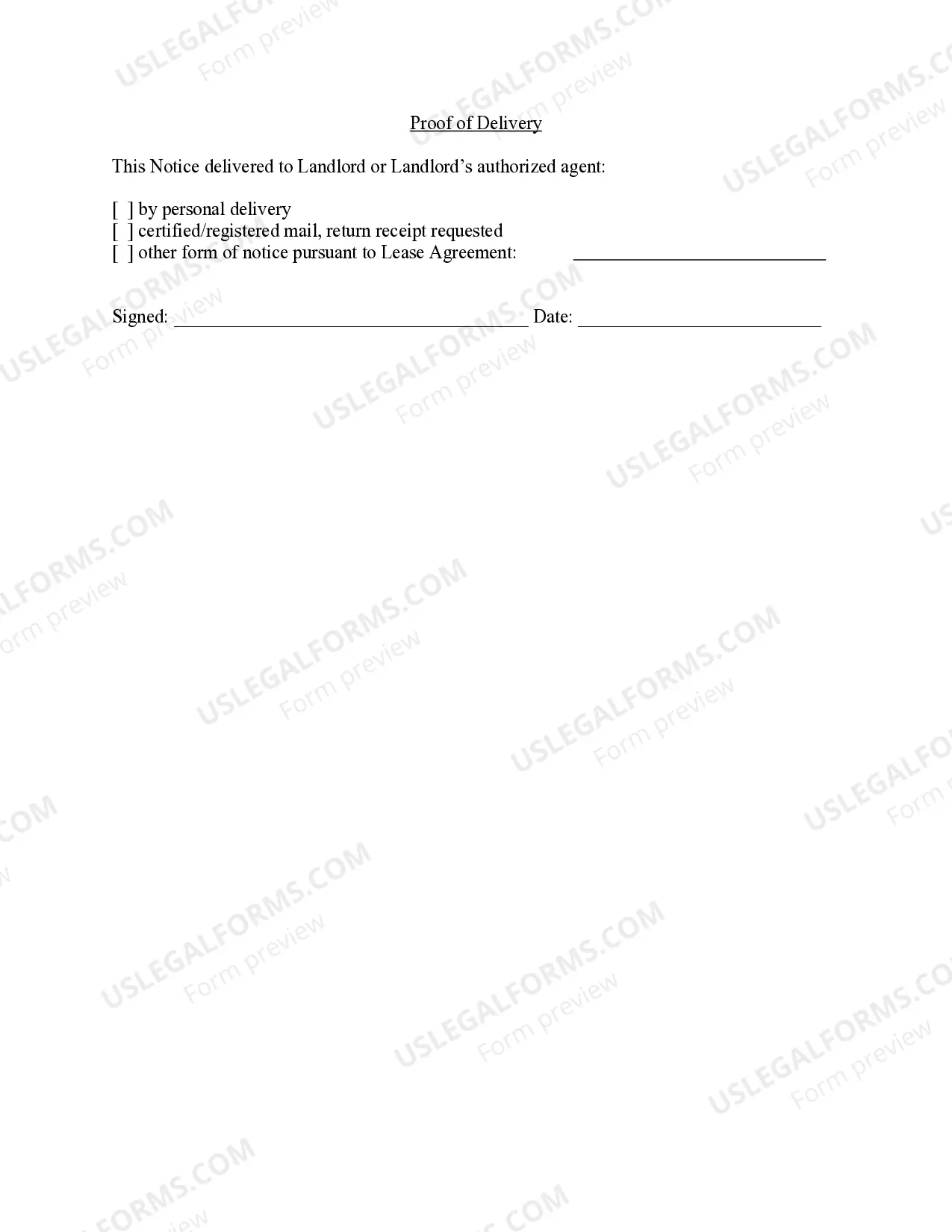
- Proof of delivery options for serving the notice to the landlord.


Situations where this form applies
This form should be used when a tenant has vacated a rental property and has not received a refund for any prepaid and unearned rent. It is particularly applicable when the tenant's departure was due to issues such as the landlord breaching the lease agreement or engaging in wrongful conduct according to local landlord-tenant laws. If a tenant feels that they are owed money after moving out, this letter formalizes their request for payment and provides a record of their communications regarding the matter.
Who can use this document
- Tenants who have recently moved out of a rental property.
- Tenants who have prepaid rent or security deposits that they believe are owed back to them.
- Individuals seeking a legal and formal way to address landlord non-compliance.
- Anyone interested in pursuing legal action against a landlord for failure to return funds.
Completing this form step by step
- Identify the tenant and landlord by providing their names and addresses.
- Describe the circumstances of your departure from the leased property.
- State the amount of prepaid and unearned rent and security deposits owed.
- Include a clear demand for the return of the specified funds.
- Sign and date the letter to formalize the request.
- Deliver the letter using a method that provides proof of delivery, such as certified mail.
Notarization requirements for this form
This form does not typically require notarization to be legally valid. However, some jurisdictions or document types may still require it. US Legal Forms provides secure online notarization powered by Notarize, available 24/7 for added convenience.
Get your form ready online
Our built-in tools help you complete, sign, share, and store your documents in one place.
Make edits, fill in missing information, and update formatting in US Legal Forms—just like you would in MS Word.
Download a copy, print it, send it by email, or mail it via USPS—whatever works best for your next step.
Sign and collect signatures with our SignNow integration. Send to multiple recipients, set reminders, and more. Go Premium to unlock E-Sign.
If this form requires notarization, complete it online through a secure video call—no need to meet a notary in person or wait for an appointment.
We protect your documents and personal data by following strict security and privacy standards.
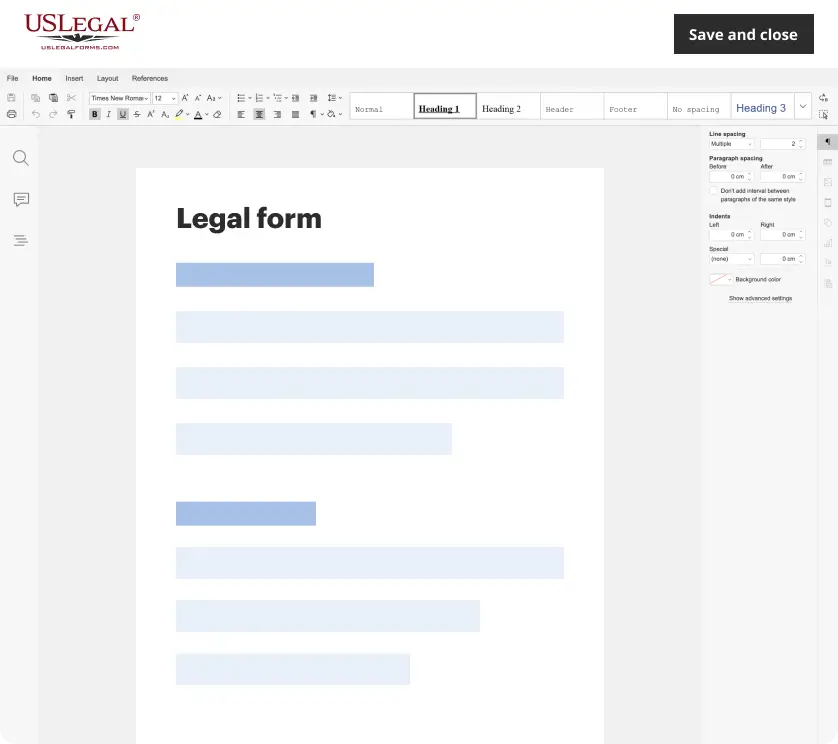
Make edits, fill in missing information, and update formatting in US Legal Forms—just like you would in MS Word.
Download a copy, print it, send it by email, or mail it via USPS—whatever works best for your next step.
Sign and collect signatures with our SignNow integration. Send to multiple recipients, set reminders, and more. Go Premium to unlock E-Sign.

If this form requires notarization, complete it online through a secure video call—no need to meet a notary in person or wait for an appointment.
We protect your documents and personal data by following strict security and privacy standards.
Typical mistakes to avoid
- Not including essential details about the circumstances of the departure.
- Failing to specify the exact amount of money being claimed.
- Neglecting to sign or date the letter.
- Using an informal delivery method that lacks proof of receipt.
- Ignoring state-specific legal requirements when drafting the letter.
Why use this form online
- Convenient access to the template and easy downloading.
- Editable format allows customization to fit your specific situation.
- Assured reliability, as the forms are drafted by licensed attorneys.
- Time-saving compared to drafting a letter from scratch.
Looking for another form?
Form popularity
FAQ
New Mexico state law limits how much a landlord can charge for a security deposit (one month's rent), when it must be returned (within 30 days after a tenant moves), and sets other restrictions on deposits.
If your deposit didn't need to be protected and your landlord refuses to give it back, you might have to take them to court. Going to court can be expensive and stressful.You'll need to take your landlord to the small claims court to get your money back.
Injury at Rental Property: You could have a case for a lawsuit against your landlord if you are injured at the rental property due to a landlord's neglect. Filing an Illegal Eviction: You can countersue your landlord if you feel your landlord is trying to evict you illegally.
1-800-340-9771. Se habla espanol. Hours: a.m. to p.m. Landlord & Tenant Hotline.
State law regulates several rent-related issues, including late fees, the amount of notice (at least 30 days in New Mexico) landlords must give tenants to raise the rent, and how much time (three days in New Mexico) a tenant has to pay overdue rent or move before a landlord can file for eviction.
If you're seeking damages for emotional distress caused by a landlord's discrimination, or punitive damages for especially blatant and intentional discrimination, a lawsuit may well be your best bet. Understand what's involved in suing your landlord. You may file a lawsuit in either federal or state court.
Step 1: make a formal complaint. You can make a formal complaint by writing a letter to your landlord. Step 2: complain to your local council. If making a formal complaint to your landlord doesn't solve your problem you might be able to complain to your local council.
Your Landlord is legally obligated to return your deposit within 10 days of you both agreeing how much you'll get back (after the tenancy has ended, of course).
Landlord Rights When Tenant Destroys PropertyIf the tenant is evicted or already abandoned the property the landlord can deduct money from the security deposit. If the damages exceed the funds in the security deposit the landlord can sue the tenant in small claims court.