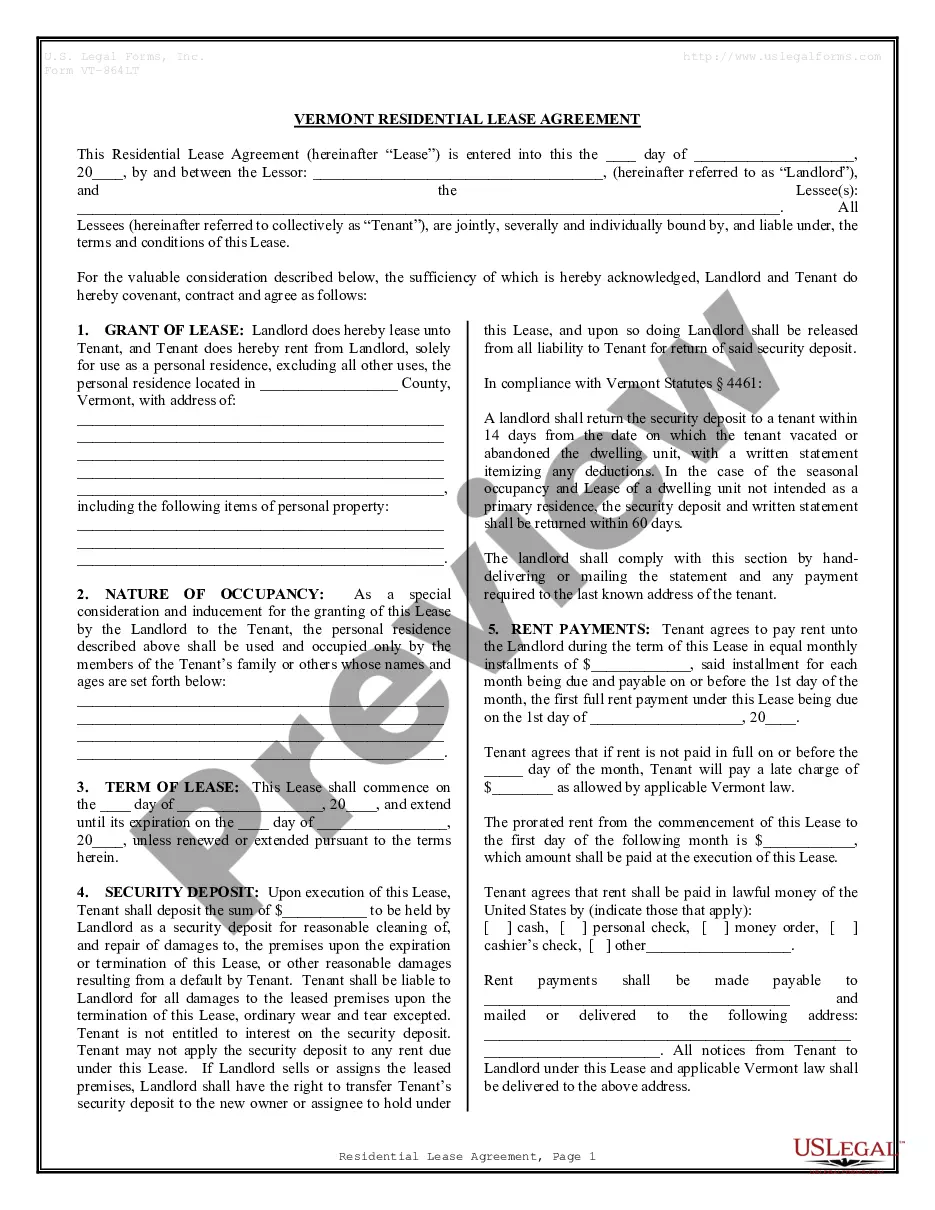
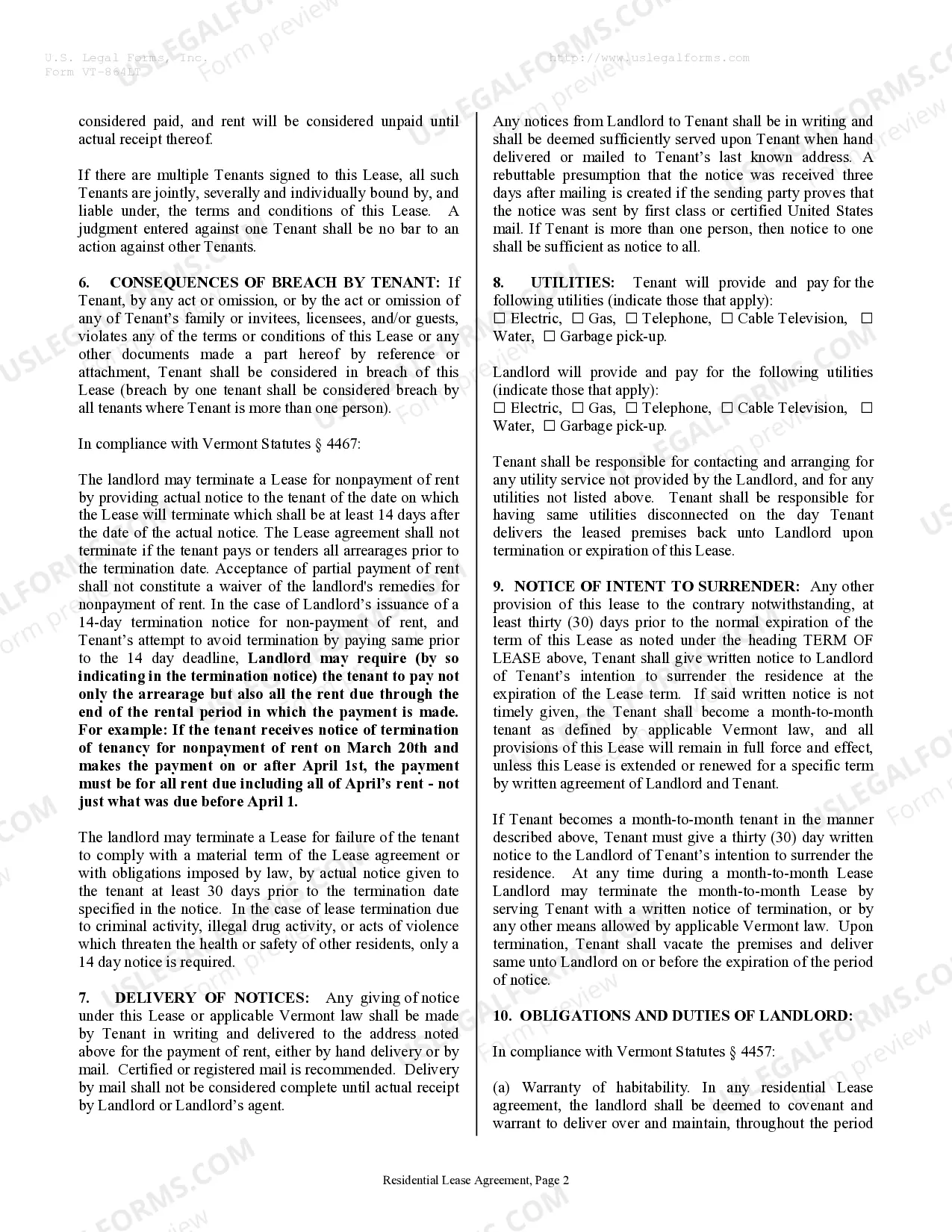
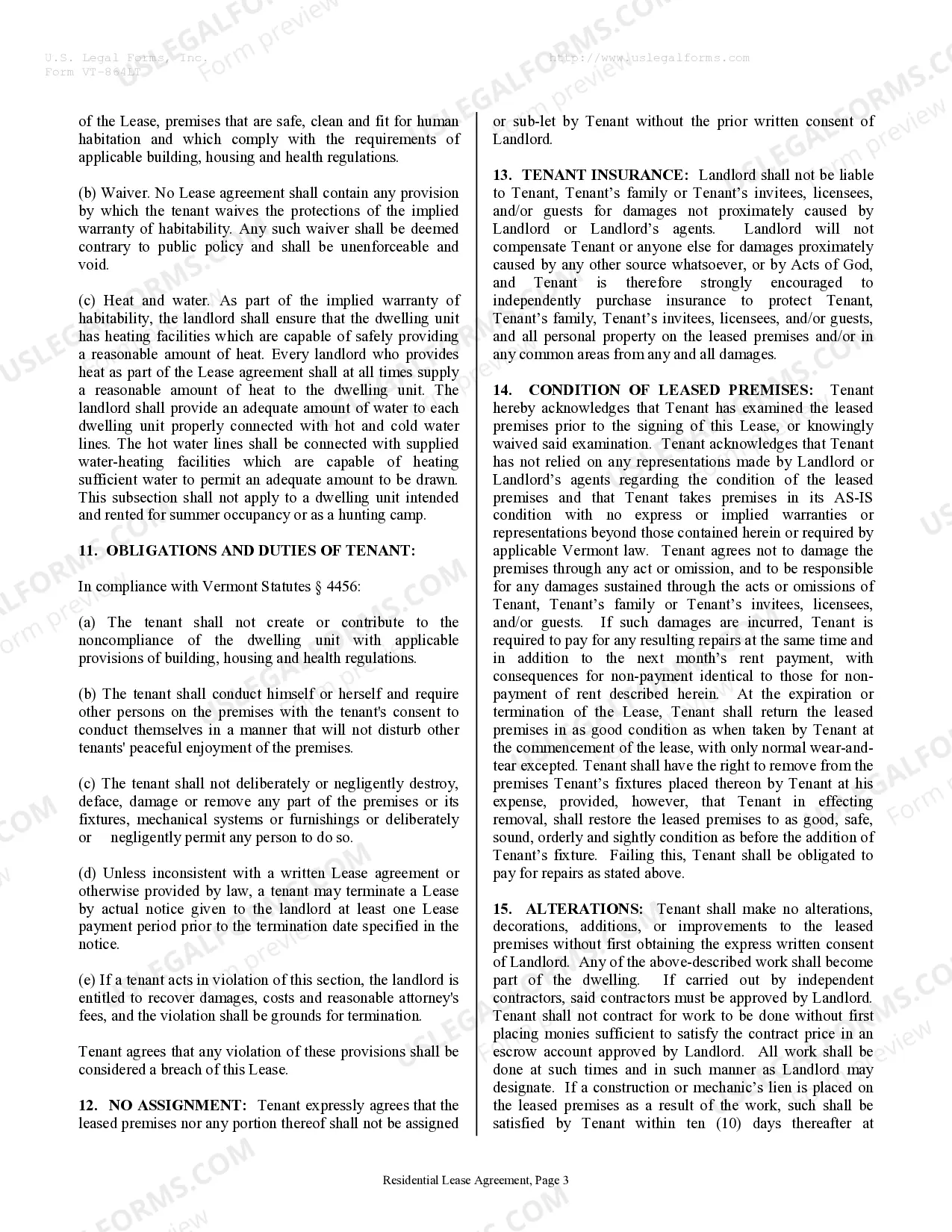
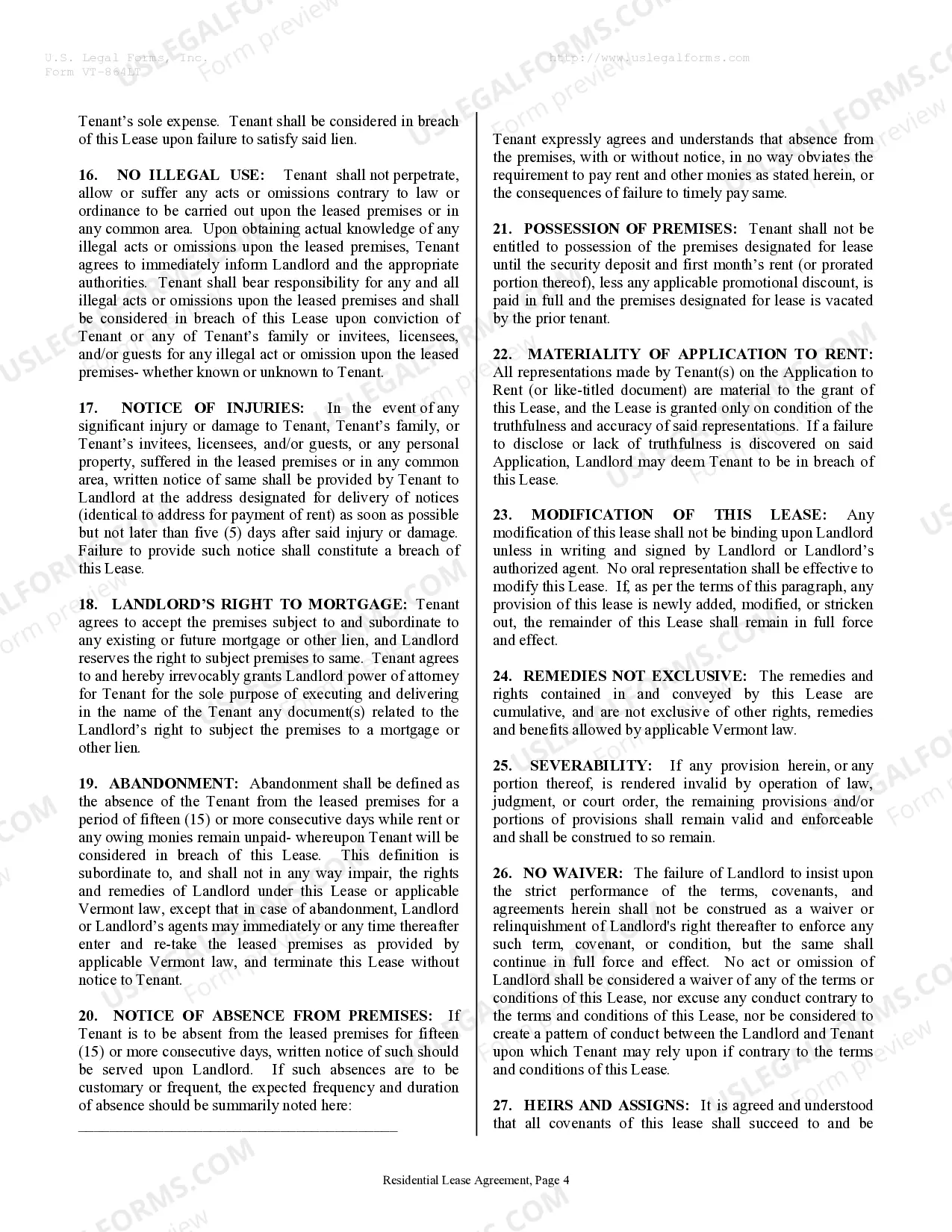
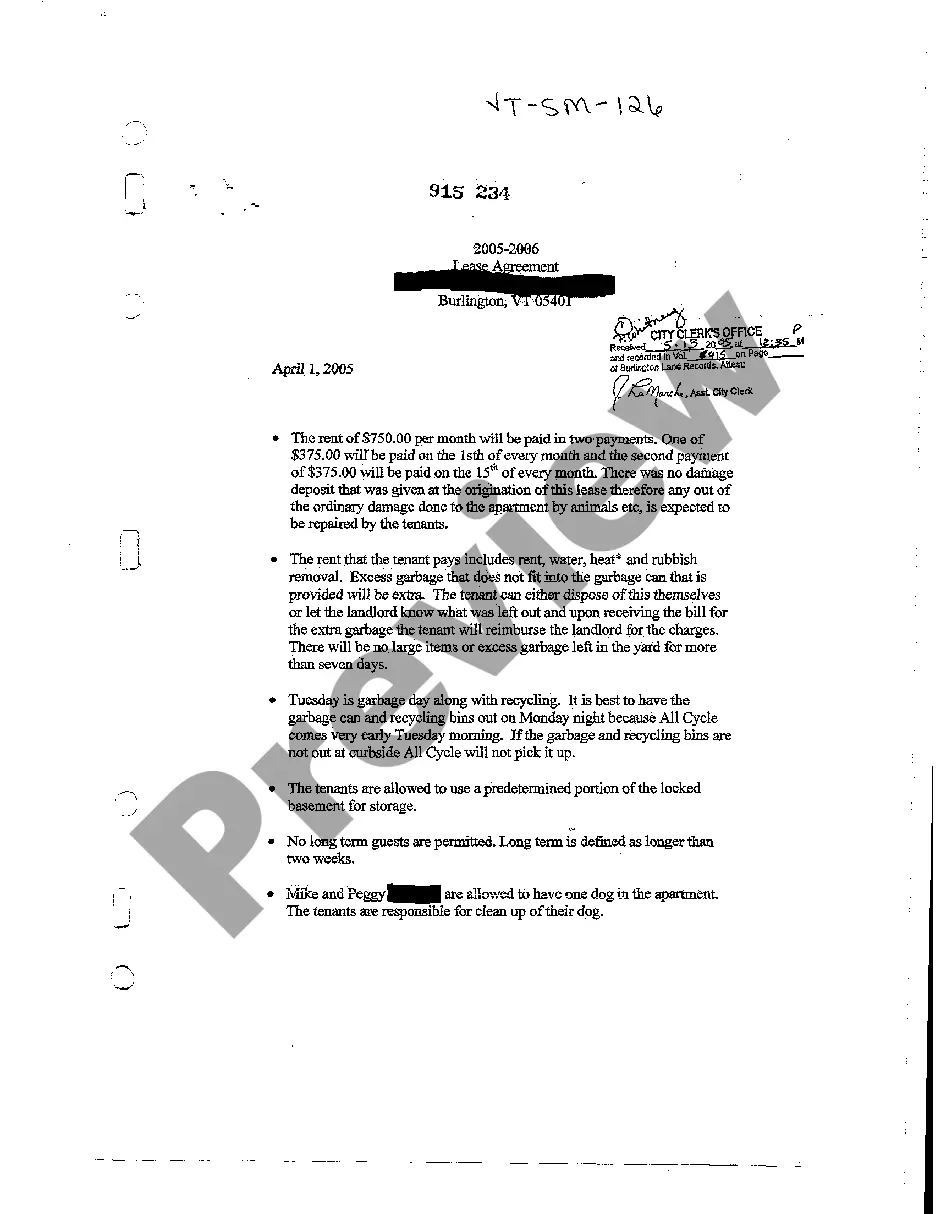
Residential Rental Lease Agreement
PART VII: Landlord and Tenant
CHAPTER 137: RESIDENTIAL RENTAL AGREEMENTS
Definitions:
As used in this chapter:
(1) "Actual notice" means written notice hand-delivered or mailed
to the last known address.
(2) "Building, housing and health regulations" means any law, ordinance
or governmental regulation concerning health, safety, sanitation or fitness
for habitation, or concerning the construction, maintenance, operation,
occupancy, use or appearance of any premises or dwelling unit.
(3) "Dwelling unit" means a building or the part of a building
that is used as a home, residence or sleeping place by one or more persons
who maintain a household.
(4) "Landlord" means the owner, lessor, or where applicable, the
sublessor of a residential dwelling unit or the building of which it is
a part.
(5) "Normal wear and tear" means the deterioration which occurs,
based upon the reasonable use for which the rental unit is intended, without
negligence, carelessness, accident or abuse of the premises or equipment
or chattels by the tenant or members of his or her household or their invitees
or guests.
(6) "Premises" means a dwelling unit, its appurtenances and the
building, and the grounds, areas and facilities held out for the use of
tenants generally or whose use is promised to the tenant.
(7) "Rent" means all consideration to be made to or for the benefit
of the landlord under the rental agreement, not including security deposits.
(8) "Rental agreement" means all agreements, written or oral, embodying
terms and conditions concerning the use and occupancy of a dwelling unit
and premises. "Tenant" means a person entitled under a rental agreement
to occupy a residential dwelling unit to the exclusion of others. Part
VII, Chap. 137, § 4451
Exclusions:
Unless created to avoid the application of this chapter, this chapter
does not apply to:
(1) occupancy at a public or private institution, operated for
the purpose of providing medical, geriatric, educational, counseling, religious
or similar service;
(2) occupancy under a contract of sale of a dwelling unit or the
property of which it is a part, if the occupant is the purchaser or a person
who succeeds to the interest of the purchaser;
(3) occupancy by a member of a fraternal, social or religious organization
in the portion of a building operated for the benefit of the organization;
(4) transient occupancy in a hotel, motel or lodgings during the
time the occupancy is subject to a tax levied under chapter 225 of Title
32;
(5) occupancy by the owner of a condominium unit or the holder
of a proprietary lease in a cooperative;
(6) rental of a mobile home lot governed by chapter 153 of TITLE
10: Part VII, Chap. 137, § 4452
Obligations implied:
Obligations imposed on landlords and tenants under this chapter
shall be implied in all rental agreements. § 4453, Part VII, Chap.
137,
Attempt to circumvent:
No rental agreement shall contain any provision which attempts
to circumvent or circumvents obligations and remedies established by this
chapter and any such provision shall be unenforceable and void. Part VII,
Chap. 137, § 4454
Tenant obligations; payment of rent
(a) Rent is payable without demand or notice at the time and place
agreed upon by the parties.
(b) An increase in rent shall take effect on the first day of the
rental period following no less than 60 days' actual notice to the tenant.
Part VII, Chap. 137, § 4455.
(Added 1985, No. 175 (Adj.Sess.), § 1.)
Tenant obligations; use and maintenance of dwelling unit:
(a) The tenant shall not create or contribute to the noncompliance
of the dwelling unit with applicable provisions of building, housing and
health regulations.
(b) The tenant shall conduct himself or herself and require other
persons on the premises with the tenant's consent to conduct themselves
in a manner that will not disturb other tenants' peaceful enjoyment of
the premises.
(c) The tenant shall not deliberately or negligently destroy, deface,
damage or remove any part of the premises or its fixtures, mechanical systems
or furnishings or deliberately or negligently permit any person to do so.
(d) Unless inconsistent with a written rental agreement or otherwise
provided by law, a tenant may terminate a tenancy by actual notice given
to the landlord at least one rental payment period prior to the termination
date specified in the notice.
(e) If a tenant acts in violation of this section, the landlord
is entitled to recover damages, costs and reasonable attorney's fees, and
the violation shall be grounds for termination under section 4467(b) of
this title. Part VII, Chap. 137, § 4456
Residential rental application fees; prohibited:
A landlord or a landlord's agent shall not charge an application
fee to any individual in order to apply to enter into a rental agreement
for a residential dwelling unit. This section shall not be construed to
prohibit a person from charging a fee to a person in order to apply to
rent commercial or nonresidential property. Part VII, Chap. 137, §
4456a.
Landlord obligations; habitability:
(a) Warranty of habitability. In any residential rental agreement,
the landlord shall be deemed to covenant and warrant to deliver over and
maintain, throughout the period of the tenancy, premises that are safe,
clean and fit for human habitation and which comply with the requirements
of applicable building, housing and health regulations.
(b) Waiver. No rental agreement shall contain any provision by
which the tenant waives the protections of the implied warranty of habitability.
Any such waiver shall be deemed contrary to public policy and shall be
unenforceable and void.
(c) Heat and water. As part of the implied warranty of habitability,
the landlord shall ensure that the dwelling unit has heating facilities
which are capable of safely providing a reasonable amount of heat. Every
landlord who provides heat as part of the rental agreement shall at all
times supply a reasonable amount of heat to the dwelling unit. The landlord
shall provide an adequate amount of water to each dwelling unit properly
connected with hot and cold water lines. The hot water lines shall be connected
with supplied water-heating facilities which are capable of heating sufficient
water to permit an adequate amount to be drawn. This subsection shall not
apply to a dwelling unit intended and rented for summer occupancy or as
a hunting camp. Part VII, Chap. 137, § 4457
Habitability; tenant remedies:
(a) If the landlord fails to comply with the landlord's obligations
for habitability and, after receiving actual notice of the noncompliance
from the tenant, a governmental entity or a qualified independent inspector,
the landlord fails to make repairs within a reasonable time and the noncompliance
materially affects health and safety, the tenant may:
(3) recover damages, costs and reasonable attorney's fees; and
(b) Tenant remedies under this section are not available if the
noncompliance was caused by the negligent or deliberate act or omission
of the tenant or a person on the premises with the tenant's consent. Part
VII, Chap. 137, § 4458
Minor defects; repair and deduct:
(a) If within 30 days of notice, the landlord fails to repair a
minor defect in order to comply with this chapter or a material provision
of the rental agreement, the tenant may repair the defect and deduct from
the rent the actual and reasonable cost of the work, not to exceed one-half
of one month's rent. The tenant shall provide the landlord with actual
notice of the cost of the repair, when the cost is deducted from the rent.
(b) The tenant remedies under this section are not available if
the noncompliance was caused by the negligent or deliberate act or omission
of the tenant or a person on the premises with the tenant's consent. Part
VII, Chap. 137, § 4459
Access:
(a) A landlord may enter the dwelling unit with the tenant's consent,
which shall not be unreasonably withheld.
(b) A landlord may also enter the dwelling unit for the following
purposes between the hours of 9:00 A.M. and 9:00 P.M. on no less than 48
hours' notice:
(2) to make necessary or agreed repairs, alterations or improvements;
(4) to exhibit the dwelling unit to prospective or actual purchasers,
mortgagees, tenants, workers or contractors.
(c) A landlord may only enter the dwelling unit without consent
or notice when the landlord has a reasonable belief that there is imminent
danger to any person or to property. Part VII, Chap. 137, § 4460
Security deposits:
(a) A security deposit is any advance, deposit or prepaid rent,
however named, which is refundable to the tenant at the termination or expiration
of the tenancy. The function of a security deposit is to secure the performance
of a tenant's obligations to pay rent and to maintain a dwelling unit.
(b) The landlord may retain all or a portion of the security deposit
for:
(2) damage to property of the landlord, unless the damage is the
result of normal wear and tear or the result of actions or events beyond
the control of the tenant;
(3) nonpayment of utility or other charges which the tenant was
required to pay directly to the landlord or to a utility; and
(c) A landlord shall return the security deposit to a tenant within
14 days from the date on which the tenant vacated or abandoned the dwelling
unit, with a written statement itemizing any deductions. In the case of
the seasonal occupancy and rental of a dwelling unit not intended as a
primary residence, the security deposit and written statement shall be
returned within 60 days.
(d) The landlord shall comply with this section by hand-delivering
or mailing the statement and any payment required to the last known address
of the tenant.
(e) If a landlord fails to return the security deposit with a statement
within 14 days, the landlord forfeits the right to withhold any portion
of the security deposit. If the failure is wilful, the landlord shall be
liable for double the amount wrongfully withheld, plus reasonable attorney's
fees and costs.
(f) Upon termination of the landlord's interest in the dwelling
unit, the security deposit shall be transferred to the new landlord. The
new landlord shall give the tenant actual notice of the new landlord's
name and address with a statement that the security deposit has been transferred
to the new landlord.
(g) A town or municipality may adopt an ordinance governing security
deposits on dwellings. The ordinance shall be supplemental to and not inconsistent
with the minimum protections of the provisions of this section. The ordinance
may not limit how a security deposit is held. The ordinance may authorize
the payment of interest on a security deposit. The ordinance may provide
that a housing board of review constituted pursuant to section 5005 of
TITLE 24 may hear and decide disputes related to security deposits upon
request for a hearing by a landlord or tenant: The board's actions shall
be reviewable under section 5006 of TITLE 24: Part VII, Chap. 137, §
4461
Abandonment; unclaimed property:
(a) A tenant has abandoned a dwelling unit if:
(1) there are circumstances which would lead a reasonable person
to believe that the dwelling unit is no longer occupied as a full-time
residence;
(b) If the tenant abandons the dwelling unit the tenant shall remain
liable for rent until the expiration of the rental agreement. However,
if the landlord rents the dwelling unit before the expiration of the rental
agreement, the agreement terminates on the date of the new tenancy.
(c) If any property, except trash, garbage or refuse, is unclaimed
by a tenant who has abandoned a dwelling unit, the landlord shall give
written notice to the tenant mailed to the tenant's last known address
that the landlord intends to dispose of the property after 60 days if the
tenant has not claimed the property and paid any reasonable storage and
other fees incurred by the landlord. The landlord shall place the property
in a safe, dry, secured location, but may dispose of any trash, garbage
or refuse left by the tenant. The tenant may claim the property by providing
the landlord with the following within 60 days after the date of the notice:
(2) Payment of the fair and reasonable cost of storage and any
related reasonable expenses incurred by the landlord. If the tenant does
not claim the property within the required time, the property shall become
the property of the landlord. If the tenant claims the property within
the required time, the landlord shall immediately make the property available
to the tenant at a reasonable place and the tenant shall take possession
of the property at that time and place. Part VII, Chap. 137, § 4462
Illegal evictions:
(a) No landlord may willfully cause, directly or indirectly, the
interruption or termination of any utility service being supplied to the
tenant, except for temporary interruptions for emergency repairs.
(b) No landlord may directly or indirectly deny a tenant access
to and possession of the tenant's rented or leased premises, except through
proper judicial process.
(c) No landlord may directly or indirectly deny a tenant access
to and possession of the tenant's property, except through proper judicial
process. Part VII, Chap. 137, § 4463
(Added 1985, No. 175 (Adj. Sess.), § 1.)
Remedies for illegal evictions:
(a) Any tenant who sustains damage or injury as a result of an
illegal eviction may bring an action for injunctive relief, damages, costs
and reasonable attorney's fees.
(b) A court may award reasonable attorney's fees to the landlord
if, upon motion and hearing, it is determined that the action was not brought
in good faith and was frivolous or intended for harassment only. Part VII,
Chap. 137, § 4464
Retaliatory conduct prohibited:
(a) A landlord of a residential dwelling unit may not retaliate
by establishing or changing terms of a rental agreement or by bringing
or threatening to bring an action against a tenant who:
(1) has complained to a governmental agency charged with responsibility
for enforcement of a building, housing or health regulation of a violation
applicable to the premises materially affecting health and safety;
(b) If the landlord acts in violation of this section, the tenant
is entitled to recover damages and reasonable attorney's fees and has a
defense in any retaliatory action for possession. Part VII, Chap.
137, § 4465
Termination of tenancy; notice:
(a) Termination for nonpayment of rent. Termination for nonpayment
of rent. The landlord may terminate a tenancy for nonpayment of rent by
providing actual notice to the tenant of the date on which the tenancy
will terminate which shall be at least 14 days after the date of the actual
notice. The rental agreement shall not terminate if the tenant pays or
tenders all arrearages prior to the termination date. A tenant may not
defeat a notice to terminate by payment of arrearages more than three times
in 12 months. Acceptance of partial payment of rent shall not constitute
a waiver of the landlord's remedies for nonpayment of rent.
(b) Termination for breach of rental agreement. The landlord may
terminate a tenancy for failure of the tenant to comply with a material
term of the rental agreement or with obligations imposed under this chapter,
by actual notice given to the tenant at least 30 days prior to the termination
date specified in the notice.
(c) Termination for no cause. In the absence of a written rental
agreement, the landlord may terminate a tenancy for no cause as follows:
(1) if rent is payable on a monthly basis, by providing actual
notice to the tenant of the date on which the tenancy will terminate which
shall be:
(2) if rent is payable on a weekly basis, by providing actual notice
to the tenant of the date on which the tenancy will terminate which shall
be at least 21 days after the date of the actual notice.
(d) Termination of rental agreement when property is sold. In the
absence of a written rental agreement a landlord who has contracted to
sell the building may terminate a tenancy by providing actual notice to
the tenant of the date on which the tenancy will terminate which shall
be at least 30 days after the date of the actual notice.
(e) Termination by landlord under terms of written rental agreement.
If the landlord terminates a tenancy in accordance with the terms of a
written rental agreement, the notice to terminate shall be at least 30
days, if rent is payable on a monthly basis and the tenancy has continued
for two years or less. The notice to terminate for no cause shall be at
least 60 days if the rent is paid on a monthly basis and the tenancy has
continued for more than two years. The notice to terminate shall be at
least seven days, if rent is payable on a weekly basis; however, a notice
to terminate for nonpayment of rent shall be as provided in subsection
(a) of this section.
(f) In all cases the termination date shall be specifically stated
in the notice.
(g) If the building is being converted to condominiums, notice
shall be given in accordance with subchapter 2 of chapter 15 of TITLE 27:
(h) A rental arrangement whereby a person rents to another individual
one or more rooms in his or her personal residence that includes the shared
use of any of the common living spaces, such as the living room, kitchen
or bathroom, may be terminated by either party by providing actual notice
to the other of the date the rental agreement shall terminate, which shall
be at least 15 days after the date of actual notice if the rent is payable
monthly and at least seven days after the date of actual notice if the
rent is payable weekly. Part VII, Chap. 137, § 4467
Termination of tenancy; action for possession:
If the tenant remains in possession after termination of the rental
agreement, without the express consent of the landlord, the landlord may
bring an action for possession, damages and costs under subchapter 3 of
chapter 169 of TITLE 12: Part VII, Chap. 137, § 4468.
Termination of occupancy of farm employee housing:
(a) For the purposes of this section:
(1) "Farm employer" means an individual who earns at least one-half
of his or her annual gross income from the business of farming as that
term is defined in Section 1.175-3 of the regulations issued by the United
States Department of the Treasury under the Internal Revenue Code of the
United States, as amended.
(3) "Housing provided as a benefit of farm employment" means housing
owned or controlled by the farm employer, whether located on or off the
farm premises, and provided for the occupancy of the farm employee and
his or her family or household members for no consideration other than
the farm employee's labor. Payment of utility and fuel charges paid by the farm employee does not affect
the designation of housing provided as a benefit of farm employment.
(b) Unless otherwise provided in a written employment contract,
a farm employer who provides housing to a farm employee and his or her
family or household members as a benefit of the employment may terminate
that benefit and all rights of the employee and the employee's family or
household members to occupy the housing when the employee's employment
is terminated.
(c) The termination of the housing benefit shall be by written
notice served upon the former farm employee by a law enforcement officer
in accordance with Rule 4 of the Vermont Rules of Civil Procedure. The
notice shall be served together with a summons and complaint seeking a
writ of possession under this section to remove the former farm employee
from occupancy of the farm housing. The notice shall include the following
statements, in boldface print:
(2) YOUR EMPLOYER HAS FILED A LEGAL PROCEEDING IN _____ COUNTY
SUPERIOR COURT TO OBTAIN A COURT ORDER DIRECTING YOU AND ANY FAMILY OR
HOUSEHOLD MEMBER COHABITATING IN THE DWELLING TO VACATE AND LEAVE THE DWELLING
AND REMOVE ALL OF YOUR POSSESSIONS. THE ADDRESS AND TELEPHONE NUMBER OF
THE COURT ARE AS FOLLOWS:_____.
(3) THE COURT WILL HOLD A HEARING ON YOUR FORMER EMPLOYER'S REQUEST
FOR A COURT ORDER DIRECTING YOU TO LEAVE AND VACATE THE DWELLING. THE HEARING
WILL BE HELD ON ___ at ___ in the ___ AM/PM AT THE COURTHOUSE AT THE ADDRESS
LISTED ABOVE. YOU HAVE THE RIGHT TO BE SERVED WITH NOTICE OF THE HEARING
AT LEAST TEN DAYS PRIOR TO THE HEARING DATE. YOU HAVE THE RIGHT TO APPEAR
AT THIS HEARING. AT THE HEARING, YOUR FORMER EMPLOYER MUST PROVE THAT THE
DWELLING IS NEEDED FOR HOUSING A REPLACEMENT EMPLOYEE AND THAT YOUR FAILURE
TO VACATE IS CAUSING ACTUAL HARDSHIP.
(4) IF YOU BELIEVE THAT YOUR EMPLOYMENT WAS TERMINATED WRONGFULLY,
THAT YOUR DWELLING HOUSE WAS NOT HABITABLE OR IF YOU HAVE ANY OTHER CLAIM
AGAINST YOUR FORMER EMPLOYER, YOU MAY FILE A COUNTERCLAIM AGAINST YOUR
FORMER EMPLOYER AS EXPLAINED IN THE SUMMONS AND COMPLAINT THAT ARE BEING
SERVED UPON YOU WITH THIS NOTICE.
(5) FILING A COUNTERCLAIM AGAINST YOUR FORMER EMPLOYER WILL NOT
DELAY OR STOP THE COURT FROM ORDERING YOU TO LEAVE AND VACATE THE DWELLING.
(6) YOU MAY WISH TO SEEK LEGAL ADVICE FROM A LICENSED ATTORNEY.
IF YOU BELIEVE YOU CANNOT AFFORD AN ATTORNEY, YOU MAY CONTACT THE CLERK
OF THE COURT LISTED ABOVE FOR INFORMATION ABOUT THE AVAILABILITY OF AN
ATTORNEY AT PUBLIC EXPENSE, ALTHOUGH YOU MAY NOT BE ENTITLED TO AN ATTORNEY
AT PUBLIC EXPENSE.
(d) A farm employer shall be entitled to a show cause hearing on
an expedited basis for the purpose of demonstrating that the failure of
the former farm employee to vacate the farm housing is causing an actual
hardship to the farm employer. The show cause hearing shall be held not
less than 10 calendar days after service on the former employee of the
notice described in subsection (c) of this section. The issue before the
court at the hearing shall be whether the farm employer has suffered actual
hardship because of the unavailability of the farm housing for a replacement
employee.
(e) If the court finds that the farm employer has suffered actual
hardship because of the unavailability of the farm housing for a replacement
employee, the court shall enter an order approving a writ of possession
which shall be executed no sooner than five days nor later than 30 days
after the writ is served, to put the plaintiff into possession.
(f) If the court does not make a finding on behalf of the farm
employer, the farm employer may seek an eviction pursuant to sections 4467
and 4468 of this chapter and subchapter 3 of chapter 169 of TITLE 12: In
any action pursuant to this section, the farm employer may file a motion
for payment of the reasonable rental value of the premises into court pursuant
to 12 V.S.A. § 4853a.
(g) The right of a former farm employee to pursue any claim that
he or she may have against the former farm employer by way of a counterclaim
in a civil action brought pursuant to this section is expressly preserved.
The assertion of a counterclaim shall not have the effect of delaying or
preventing the removal of the employee from the housing, nor shall the
employee be entitled to obtain injunctive relief in the form of repossession
of farm housing. A former employee who prevails on a counterclaim shall
be entitled to relief as provided by applicable law.
(h) Sections 4455, 4461 and 4467 of this chapter shall not apply
to housing provided to a farm employee as a benefit of the employment. Part
VII, Chap. 137, § 4469