Money Laundering - Interstate Commerce Defined
Overview of this form
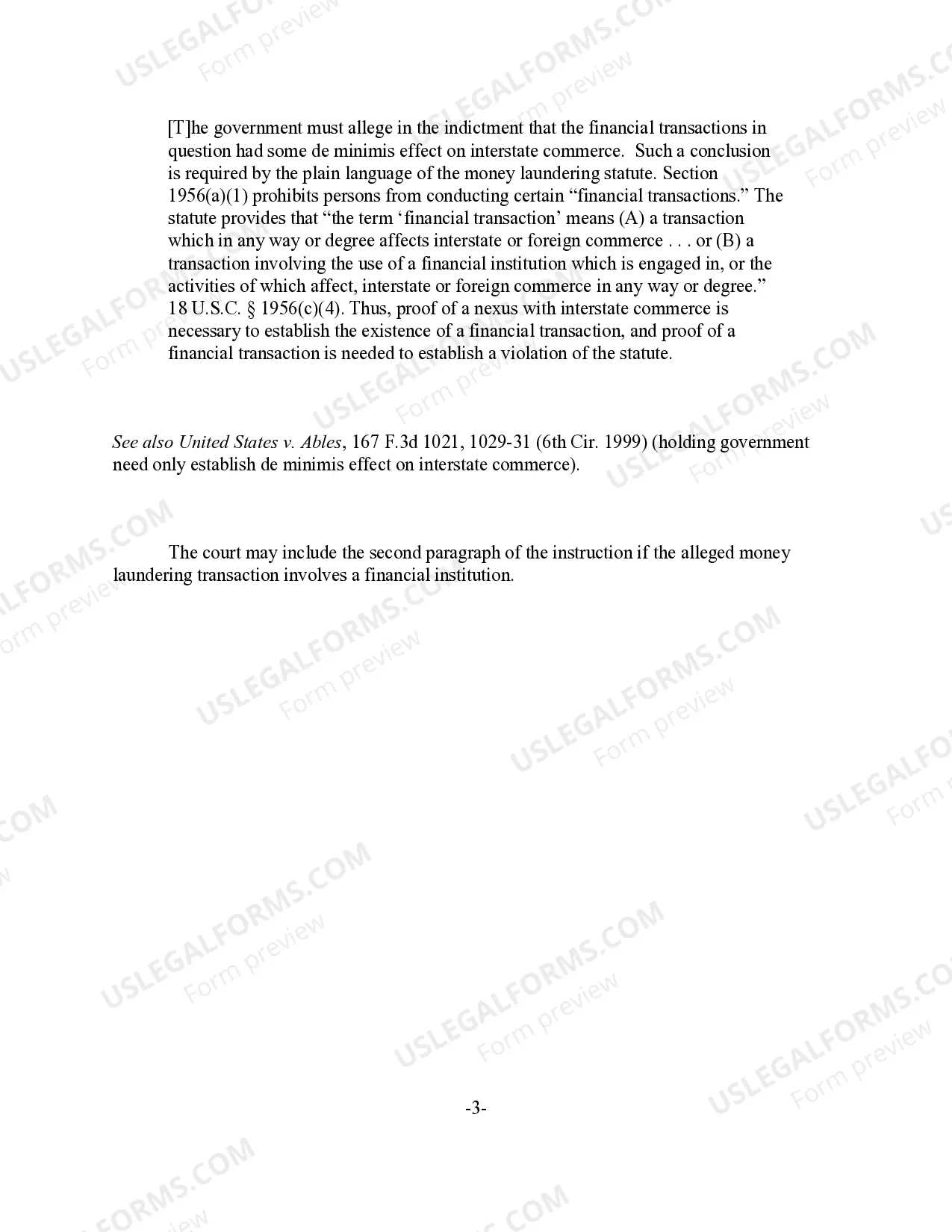
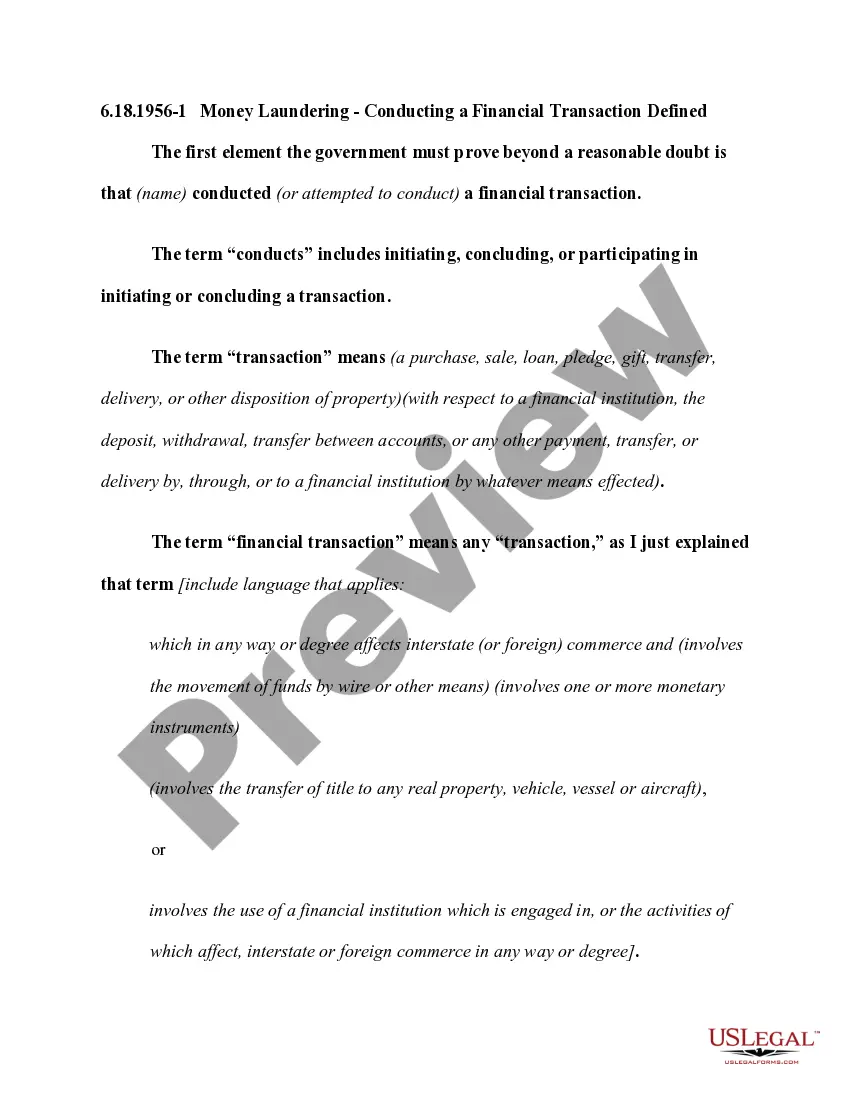
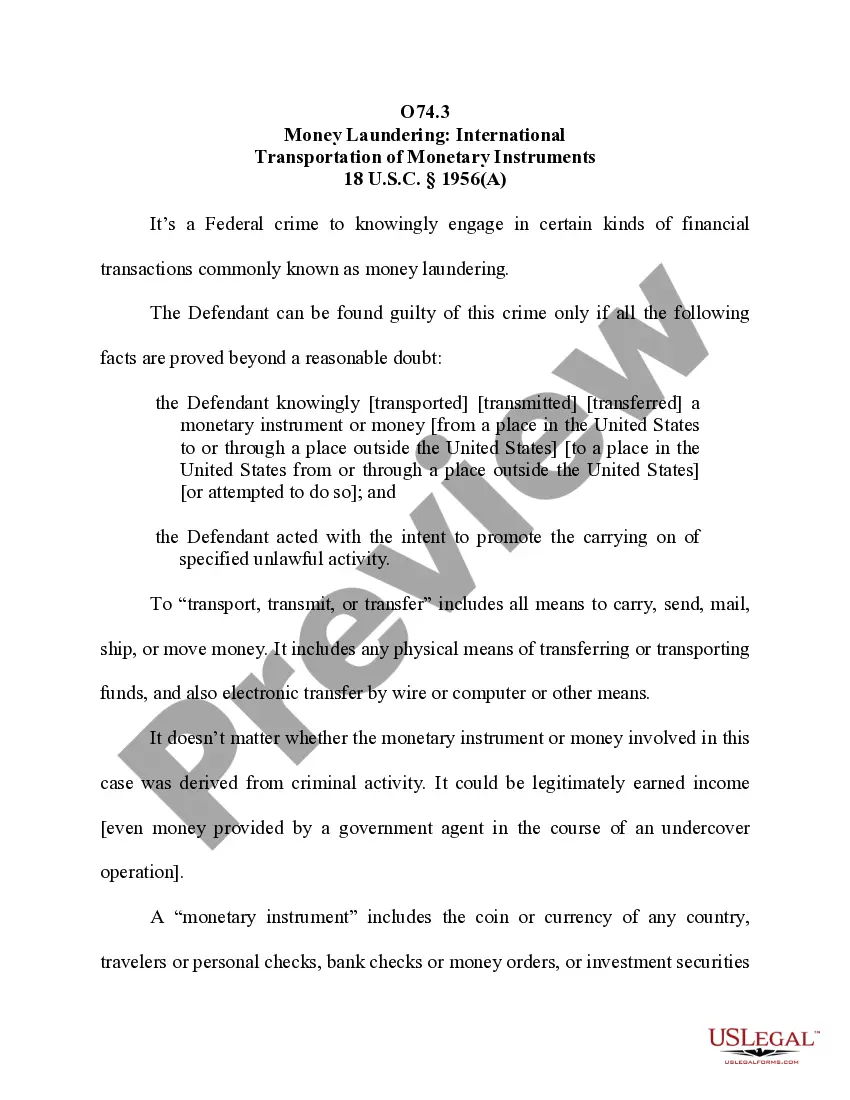
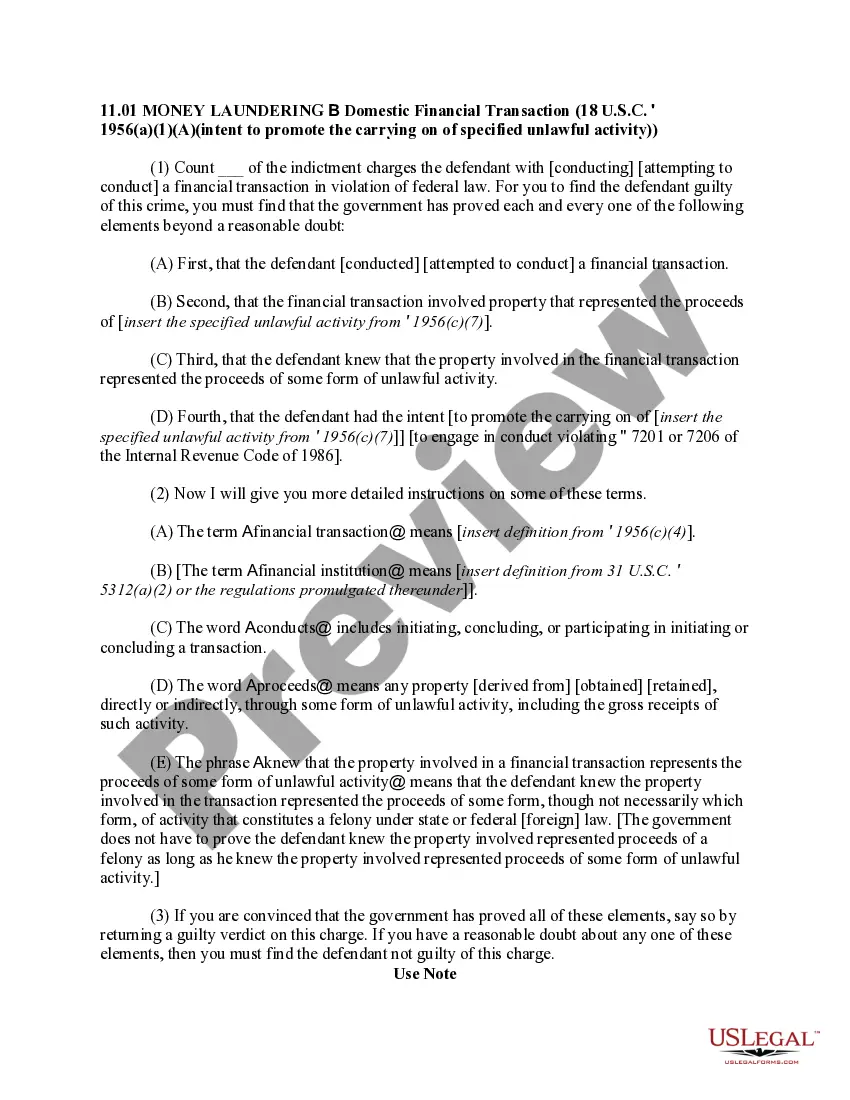
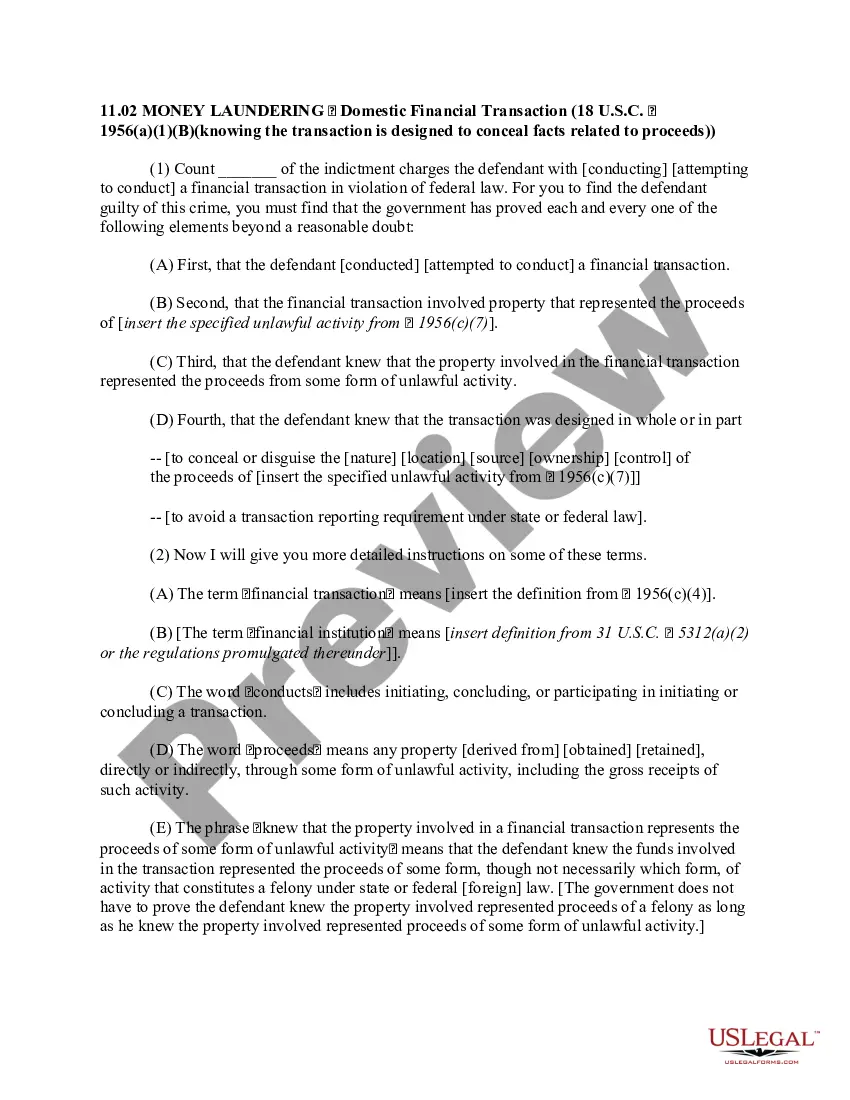
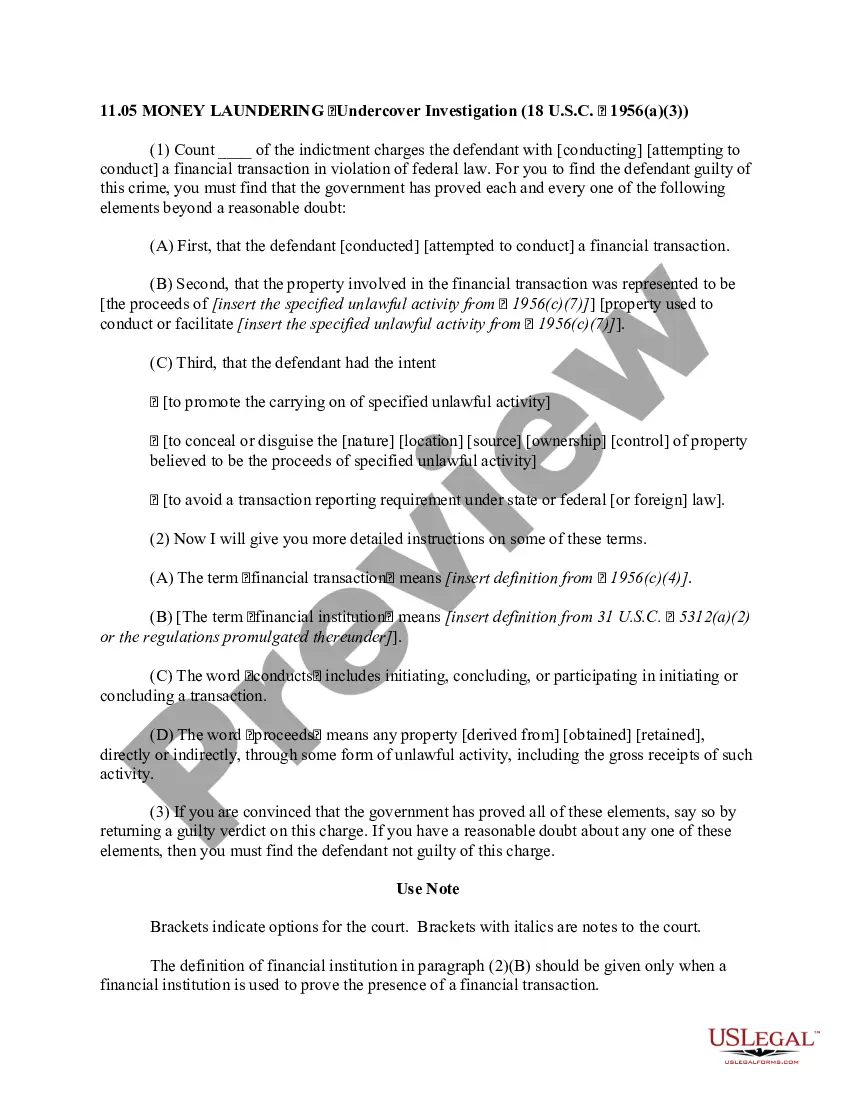
The Money Laundering - Interstate Commerce Defined form provides a clear framework for understanding the legal standards related to financial transactions that affect interstate commerce. Unlike other legal forms, this document specifically outlines how issues of money laundering are connected to interstate commerce within the United States. The form serves to establish the necessary elements required for a successful prosecution under the money laundering statute.
Main sections of this form
- Definition of "interstate commerce" relating to money laundering cases.
- Clarification that the government only needs to prove the involvement of financial institutions in interstate commerce.
- Explanation that intent or knowledge of the effects on interstate commerce is not necessary for prosecution.
- Details on the legal precedents that guide the application of the money laundering statute.

When to use this form
This form is necessary when individuals or entities are involved in financial transactions that may be subjected to scrutiny under money laundering laws. It is particularly relevant in cases where the legality of financial dealings is questioned, and proof of an effect on interstate commerce is required for the prosecution. If facing allegations of money laundering, this form can assist legal professionals in understanding the pertinent legal standards.
Who this form is for
This form is intended for:
- Legal professionals managing cases related to financial crimes.
- Individuals facing accusations of money laundering.
- Students or researchers studying financial law and criminal justice.
Completing this form step by step
Steps to complete this form:
- Review the provided legal definitions and instructions carefully.
- Consult legal counsel if necessary to interpret any complex terms.
- Ensure all necessary information regarding financial institutions involved is included.
- Document any relevant case law that supports your position on interstate commerce.
- Prepare to submit the form in accordance with local court requirements.
Does this form need to be notarized?
This form does not typically require notarization unless specified by local law.
Get your form ready online
Our built-in tools help you complete, sign, share, and store your documents in one place.
Make edits, fill in missing information, and update formatting in US Legal Forms—just like you would in MS Word.
Download a copy, print it, send it by email, or mail it via USPS—whatever works best for your next step.
Sign and collect signatures with our SignNow integration. Send to multiple recipients, set reminders, and more. Go Premium to unlock E-Sign.
If this form requires notarization, complete it online through a secure video call—no need to meet a notary in person or wait for an appointment.
We protect your documents and personal data by following strict security and privacy standards.

Make edits, fill in missing information, and update formatting in US Legal Forms—just like you would in MS Word.

Download a copy, print it, send it by email, or mail it via USPS—whatever works best for your next step.

Sign and collect signatures with our SignNow integration. Send to multiple recipients, set reminders, and more. Go Premium to unlock E-Sign.

If this form requires notarization, complete it online through a secure video call—no need to meet a notary in person or wait for an appointment.

We protect your documents and personal data by following strict security and privacy standards.
Mistakes to watch out for
- Failing to understand the necessity of demonstrating an effect on interstate commerce.
- Not referencing current legal precedents that support claims.
- Omitting important details about financial institutions involved in the transactions.
Advantages of online completion
- Convenient online access allows users to download and complete the form at any time.
- Forms are editable, making it easy to customize based on specific legal circumstances.
- Access to expert-drafted templates ensures reliability and legal compliance.
- The form serves to guide legal professionals in outlining cases related to interstate commerce and money laundering.
- It is crucial for the prosecution to establish a minimal effect on interstate commerce to adhere to legal standards.
- Misinterpretation of interstate commerce can lead to legal complications in financial cases.
Summary of main points
- The Money Laundering - Interstate Commerce Defined form clarifies the federal requirement of establishing an effect on interstate commerce.
- Understanding this form is essential for those involved in financial transactions that may face legal scrutiny.
- Legal precedents support the need for proof of a connection to interstate commerce in money laundering cases.
Looking for another form?




Form popularity
FAQ
Integration. This is the final stage of the money laundering process. This involves the process to get the funds back to the criminal from what seems to be a reputable source. After placing and layering the cash into the financial system, the funds become integrated.
To be sure, 18 U.S.C. §1956 criminalizes financial transactions that satisfy the conventional understanding of money laundering-namely, transactions intended ?to conceal or disguise the nature, the location, the source, the ownership, or the control of the proceeds of specified unlawful activity.? 18 U.S.C.
Money laundering generally refers to financial transactions in which criminals, including terrorist organizations, attempt to disguise the proceeds, sources or nature of their illicit activities.
These three stages of money laundering are: Placement. Layering. Integration/extraction.
Money laundering schemes vary in their complexity and methods, but there are three common phases for successful laundering: Placement, Layering and Integration.
Each individual money laundering stage can be extremely complex due to the criminal activity involved. Placement. Layering. Integration. Examples of the Money Laundering Stages.
Structuring and smurfing examples Let's say that someone has $90,000 in cash. If they want to avoid reporting requirements, they can split this into 10 transactions of $9,000. This is an example of structuring. Remember, structuring transactions in this way is illegal.
There are three stages introducing laundered funds into the financial system: Placement. Layering. Integration/extraction.