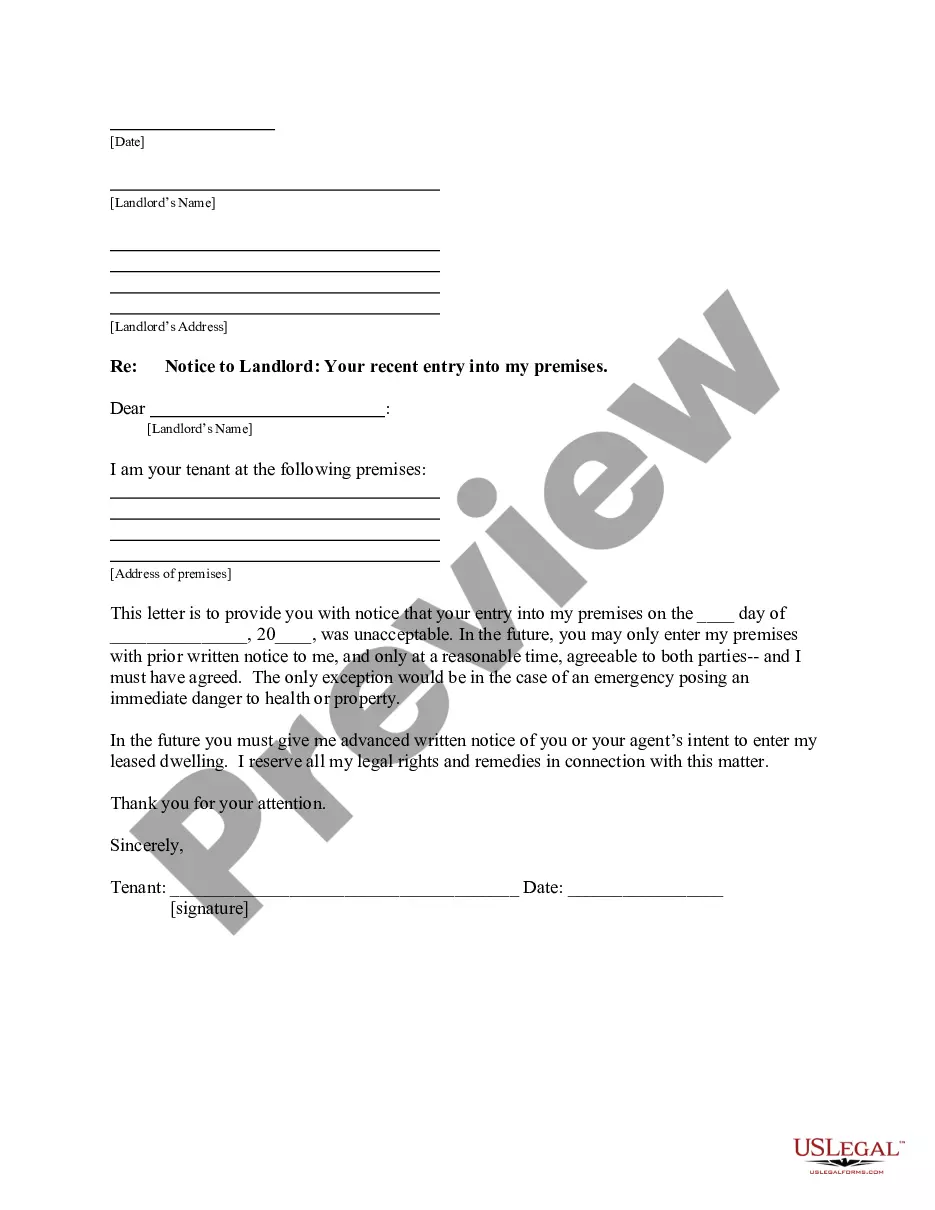
Confidentiality Agreement Between Parties Contemplating A Transaction
What this document covers
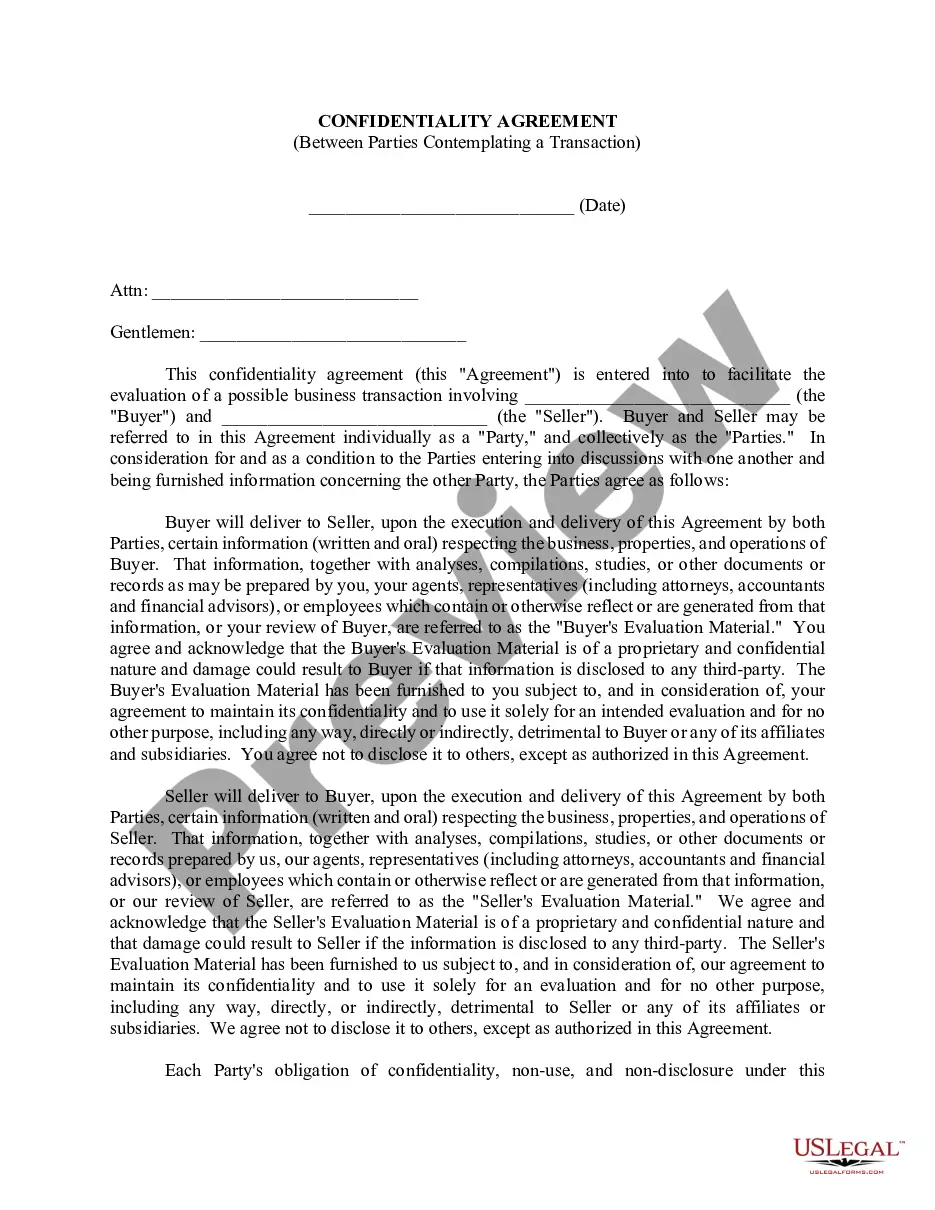
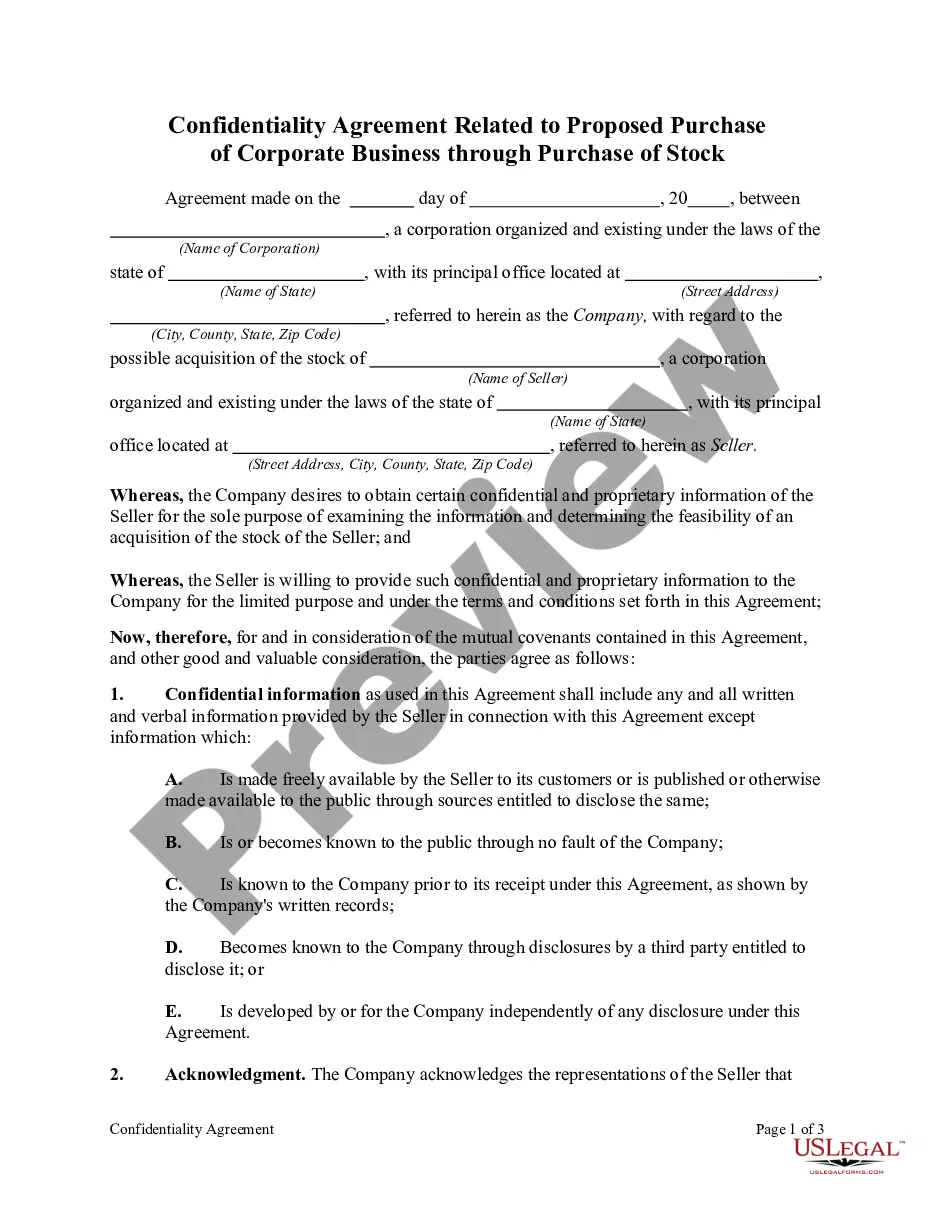
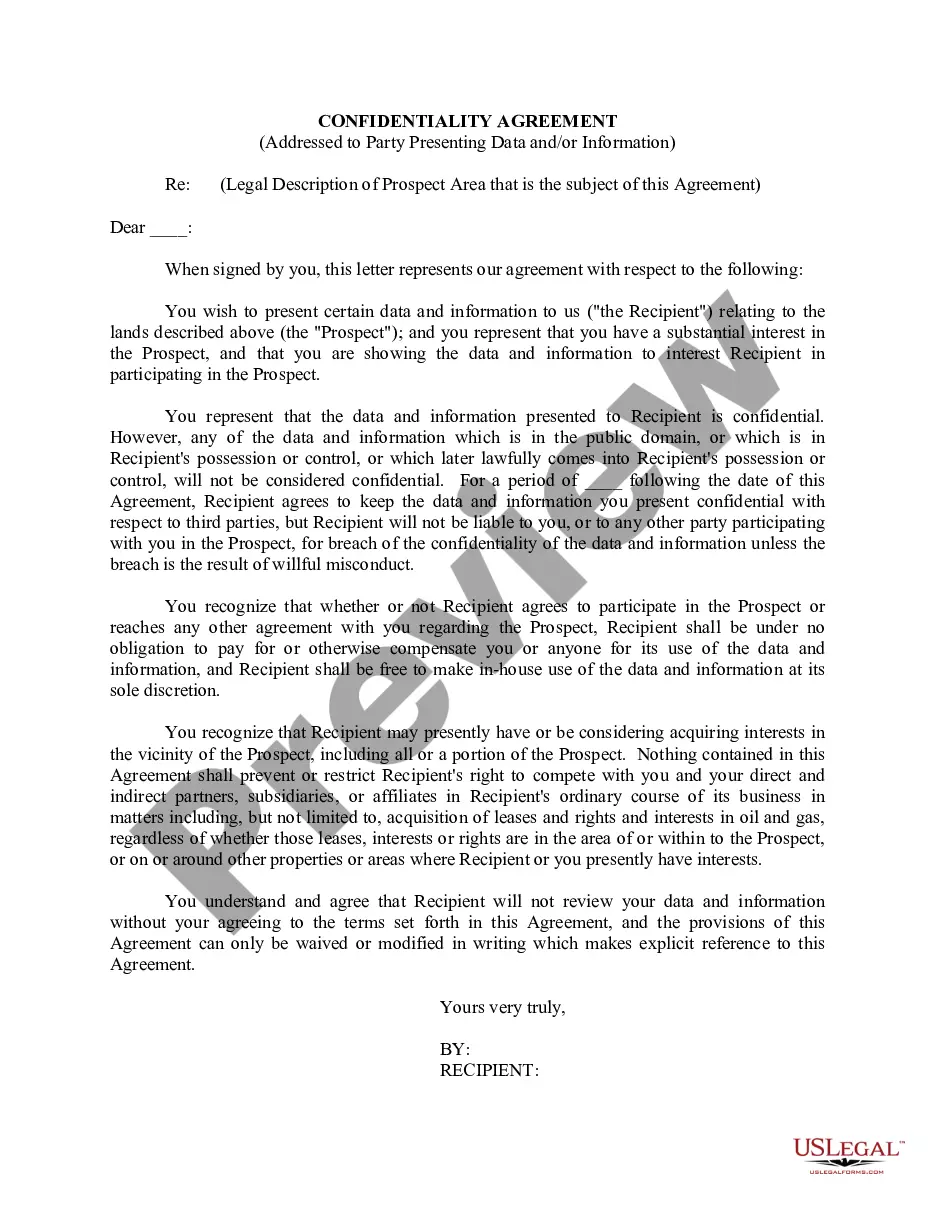
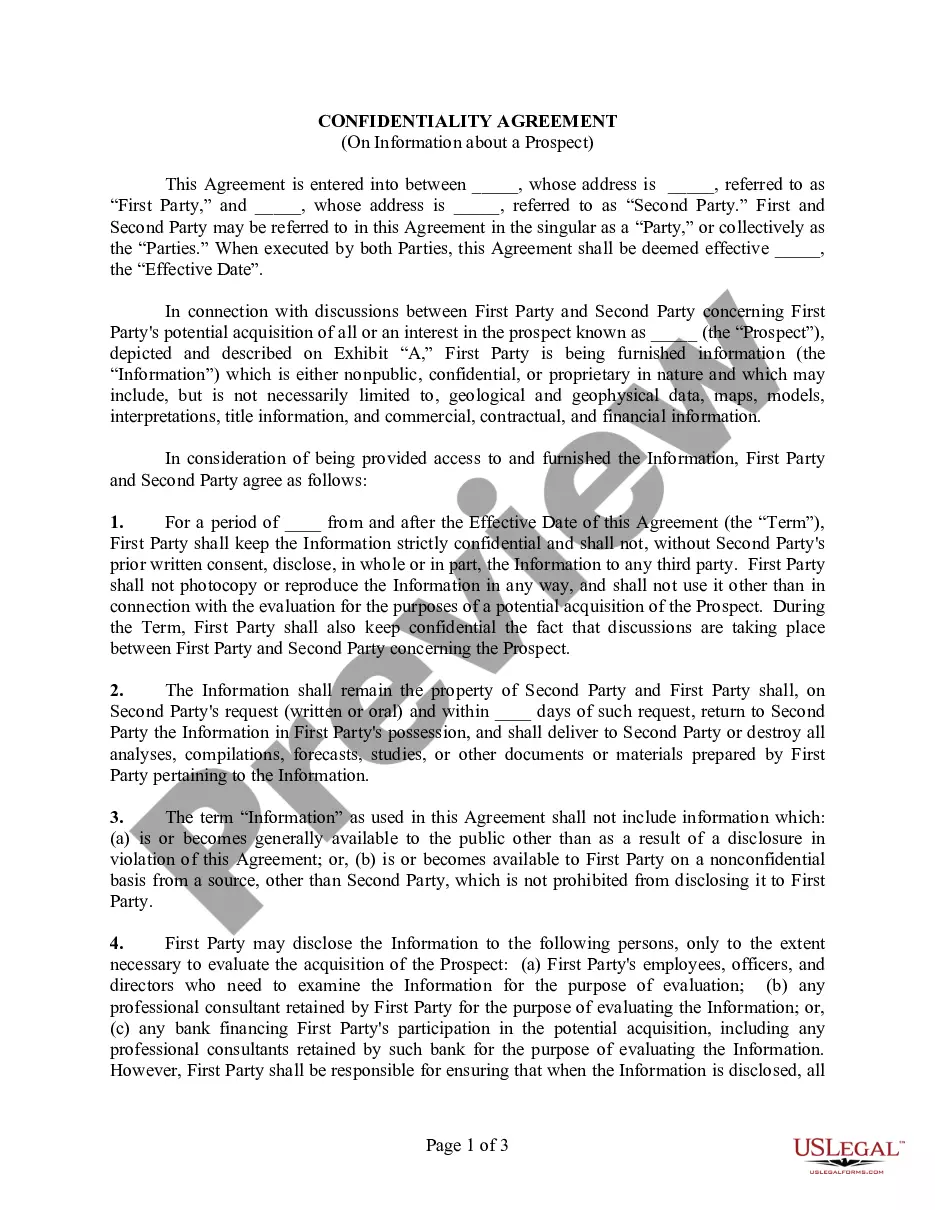
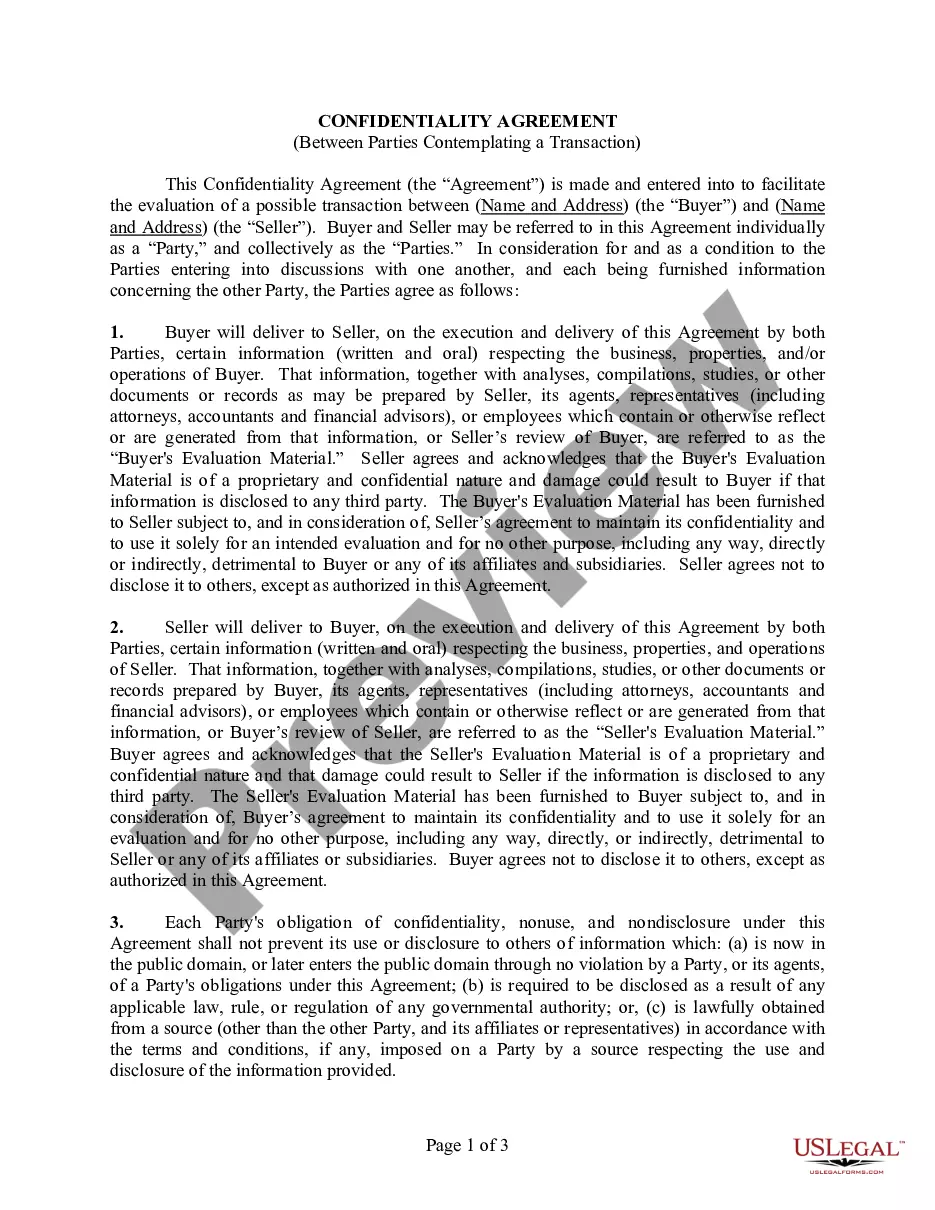
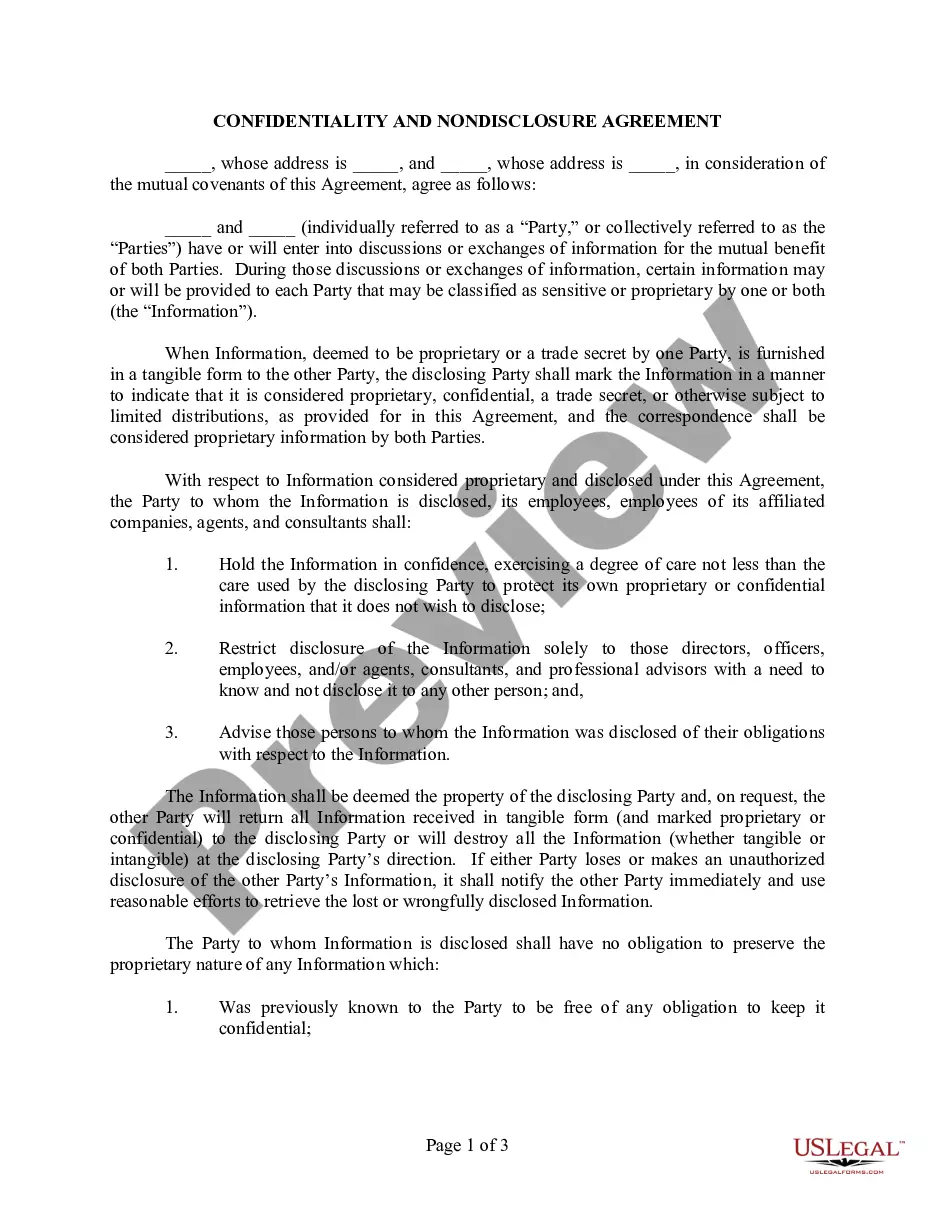
This Confidentiality Agreement Between Parties Contemplating A Transaction is a legal document that establishes a mutual understanding between the "Buyer" and the "Seller" regarding the confidentiality of sensitive information shared during the evaluation of a business transaction. This form ensures that proprietary information, whether written or oral, remains confidential between the parties involved, differentiating it from non-disclosure agreements that may not include specific transaction contexts.
What’s included in this form
- Identification of the parties involved: Buyer and Seller
- Definition of the confidential information as "Buyer's Evaluation Material" and "Seller's Evaluation Material"
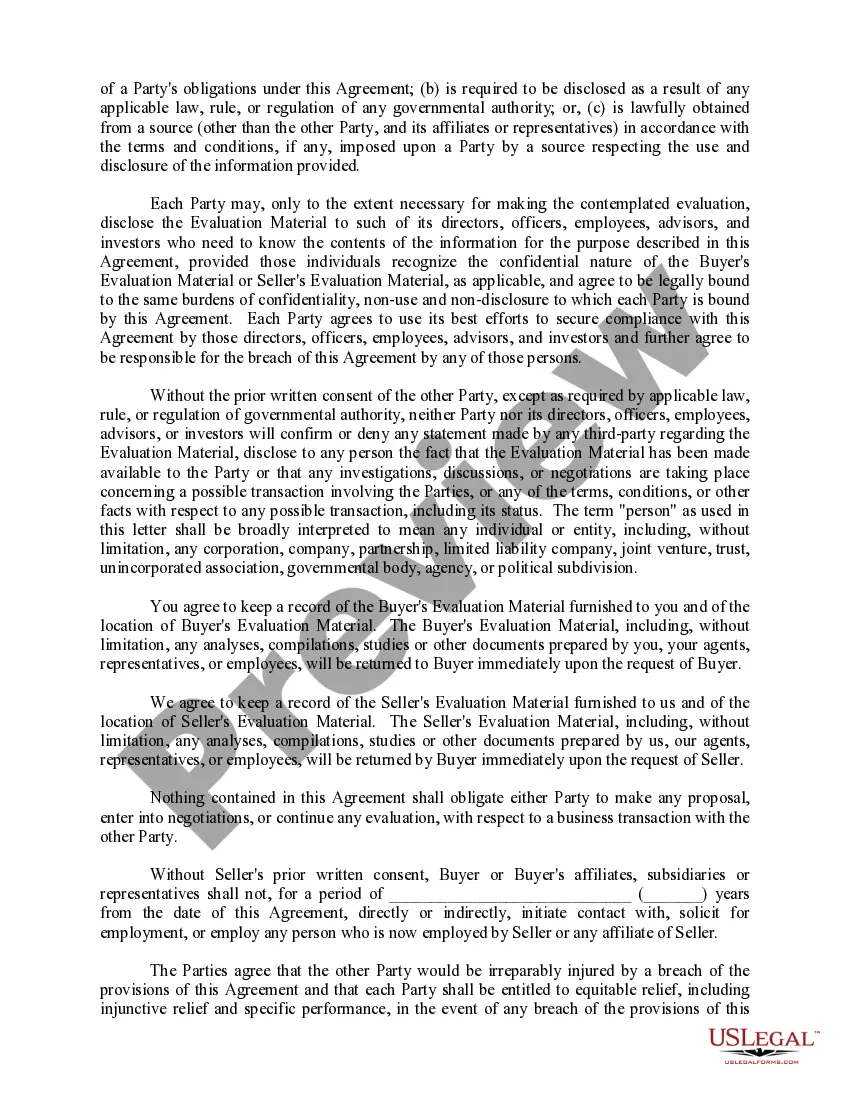
- Obligations of confidentiality and non-disclosure for both parties
- Conditions under which the confidential information can be disclosed
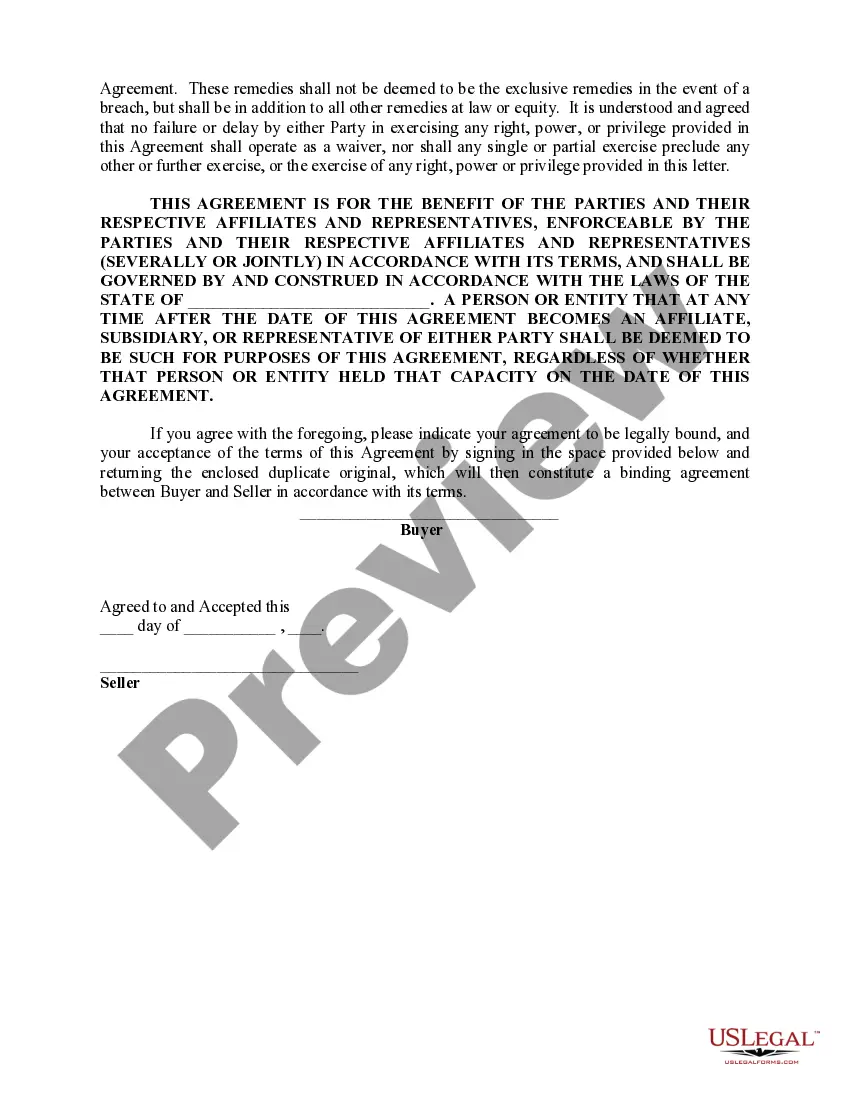
- Terms regarding the return of information upon request
- Duration of confidentiality obligations
When to use this document
This form is typically used when two businesses are considering a transaction and need to exchange sensitive information. It is crucial when the Buyer and Seller intend to discuss operational details, financial records, or proprietary information that must remain confidential to protect their interests during negotiations.
Who can use this document
- Businesses involved in potential mergers or acquisitions
- Startups seeking investment from potential investors
- Companies negotiating joint ventures or partnerships
- Consultants or advisors facilitating business discussions
How to complete this form
- Identify and enter the names of the Buyer and Seller at the beginning of the document.
- Specify the date of the agreement's execution.
- Clearly outline what constitutes "Buyer's Evaluation Material" and "Seller's Evaluation Material."
- Fill in the duration of the confidentiality obligations as needed.
- Ensure both parties sign the agreement in the designated areas to acknowledge acceptance of the terms.
Notarization requirements for this form
This form usually doesn’t need to be notarized. However, local laws or specific transactions may require it. Our online notarization service, powered by Notarize, lets you complete it remotely through a secure video session, available 24/7.
Get your form ready online
Our built-in tools help you complete, sign, share, and store your documents in one place.
Make edits, fill in missing information, and update formatting in US Legal Forms—just like you would in MS Word.
Download a copy, print it, send it by email, or mail it via USPS—whatever works best for your next step.
Sign and collect signatures with our SignNow integration. Send to multiple recipients, set reminders, and more. Go Premium to unlock E-Sign.
If this form requires notarization, complete it online through a secure video call—no need to meet a notary in person or wait for an appointment.
We protect your documents and personal data by following strict security and privacy standards.

Make edits, fill in missing information, and update formatting in US Legal Forms—just like you would in MS Word.

Download a copy, print it, send it by email, or mail it via USPS—whatever works best for your next step.

Sign and collect signatures with our SignNow integration. Send to multiple recipients, set reminders, and more. Go Premium to unlock E-Sign.

If this form requires notarization, complete it online through a secure video call—no need to meet a notary in person or wait for an appointment.

We protect your documents and personal data by following strict security and privacy standards.
Typical mistakes to avoid
- Failing to clearly define what information is considered confidential.
- Not specifying the duration of confidentiality obligations.
- Neglecting to include signatures, which might render the agreement unenforceable.
- Overlooking the need for compliance with state-specific regulations.
Why use this form online
- Convenience of downloading and completing the form at any time.
- Editability allows customization to fit specific transaction needs.
- Reliability through documents drafted by licensed attorneys, ensuring legal accuracy.
Legal use & context
- The agreement serves as a legal basis to protect confidential information during negotiations.
- It helps prevent unauthorized disclosures that could harm either party's interests.
- Enforcement of this agreement can lead to legal remedies in case of breach.
Main things to remember
- A Confidentiality Agreement is vital for protecting sensitive negotiations.
- Both parties must clearly define what information is confidential.
- This agreement is adaptable for use in various states with minimal changes.
Looking for another form?



Form popularity
FAQ
"Confidential Information" means all material, non-public, business-related information, written or oral, whether or not it is marked as such, that is disclosed or made available to the receiving party, directly or indirectly, through any means of communication or observation.
The party to be charged must have signed the contract. Since the NDAs benefit you, so long as the other party has signed, that ishould be sufficient.
An employee can be required to sign an NDA or NDA-like agreement with an employer, protecting trade secrets. In fact, some employment agreements include a clause restricting employees' use and dissemination of company-owned confidential information.
Depending on the complexity of what you need protected and the number of parties involved, the cost of having an NDA drafted can vary significantly. When you hire a lawyer in the Priori network, drafting an NDA typically costs anywhere from $175-$1,500.
A definition of confidential information. Who is involved. Why the recipient knows the information. Exclusions or limits on confidential information. Receiving party's obligations. Time frame or term. Discloser to the recipient.
A confidentiality agreement (also called a nondisclosure agreement or NDA) is a legally binding contract in which a person or business promises to treat specific information as a trade secret and promises not to disclose the secret to others without proper authorization.
Set the date of the agreement. Describe the two parties, sometimes called the Disclosing Party and the Receiving Party.7feff Include names and identification, so there can be no misunderstanding about who signed the agreement.
It is a contract through which the parties agree not to disclose information covered by the agreement. An NDA creates a confidential relationship between the parties, typically to protect any type of confidential and proprietary information or trade secrets. As such, an NDA protects non-public business information.