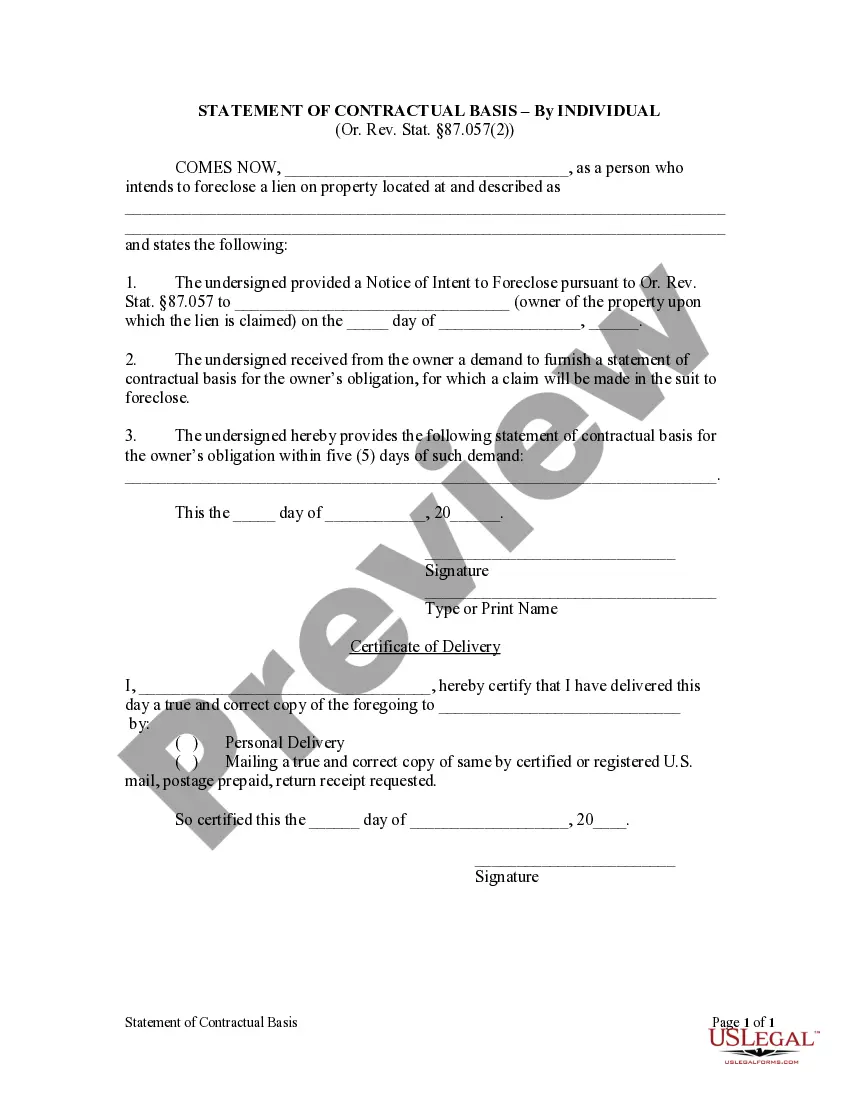
Confidentiality Agreement Addressed to Party Presenting Data and / or Information
What this document covers
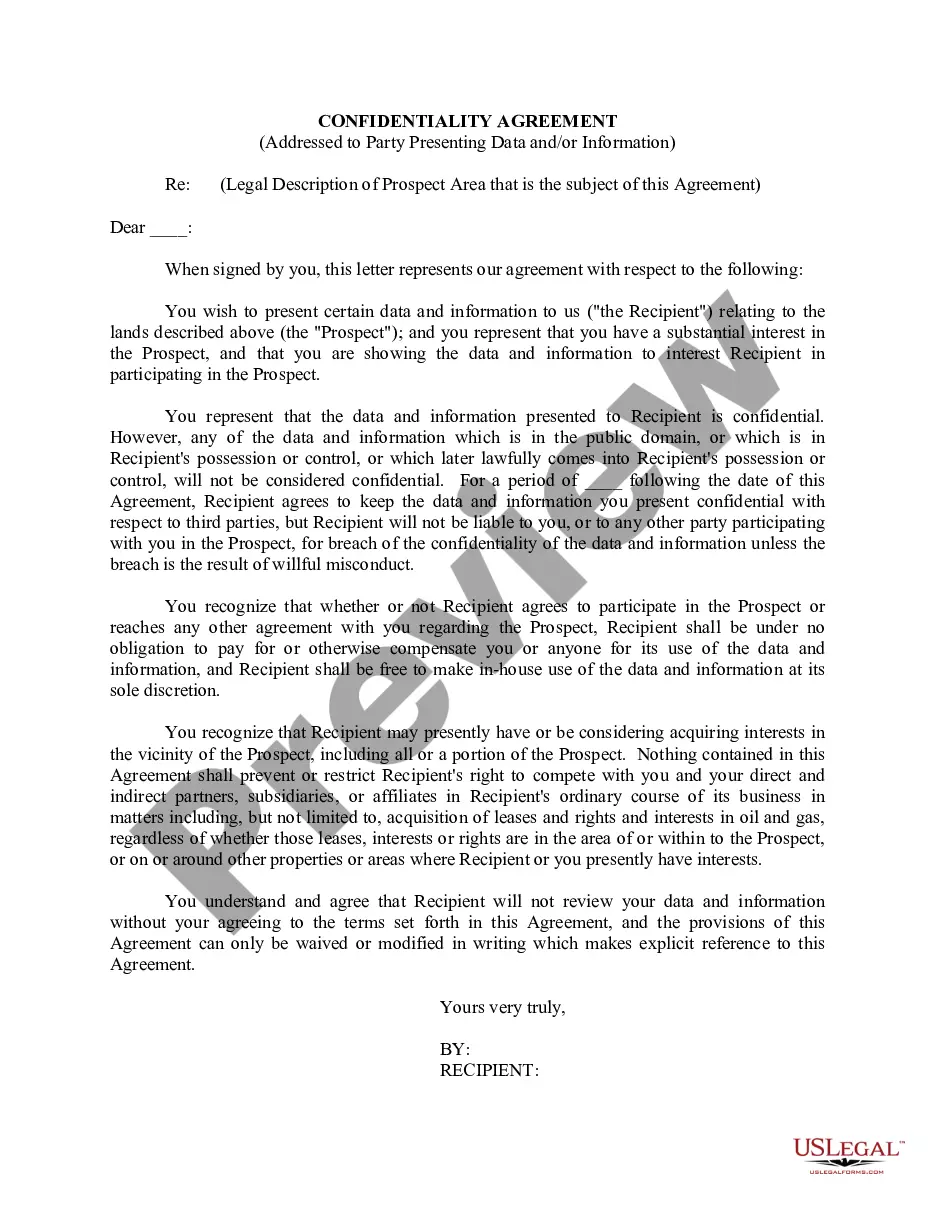
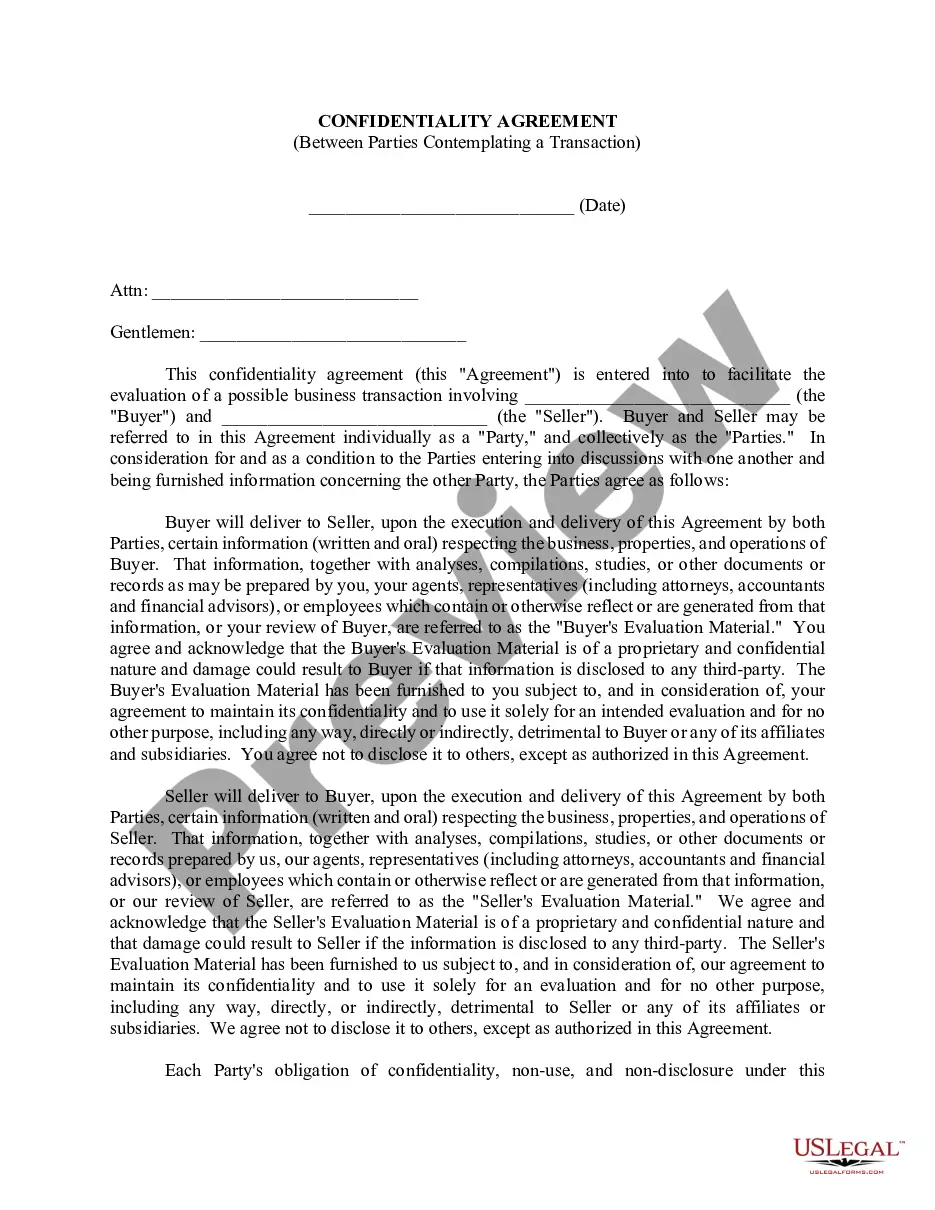
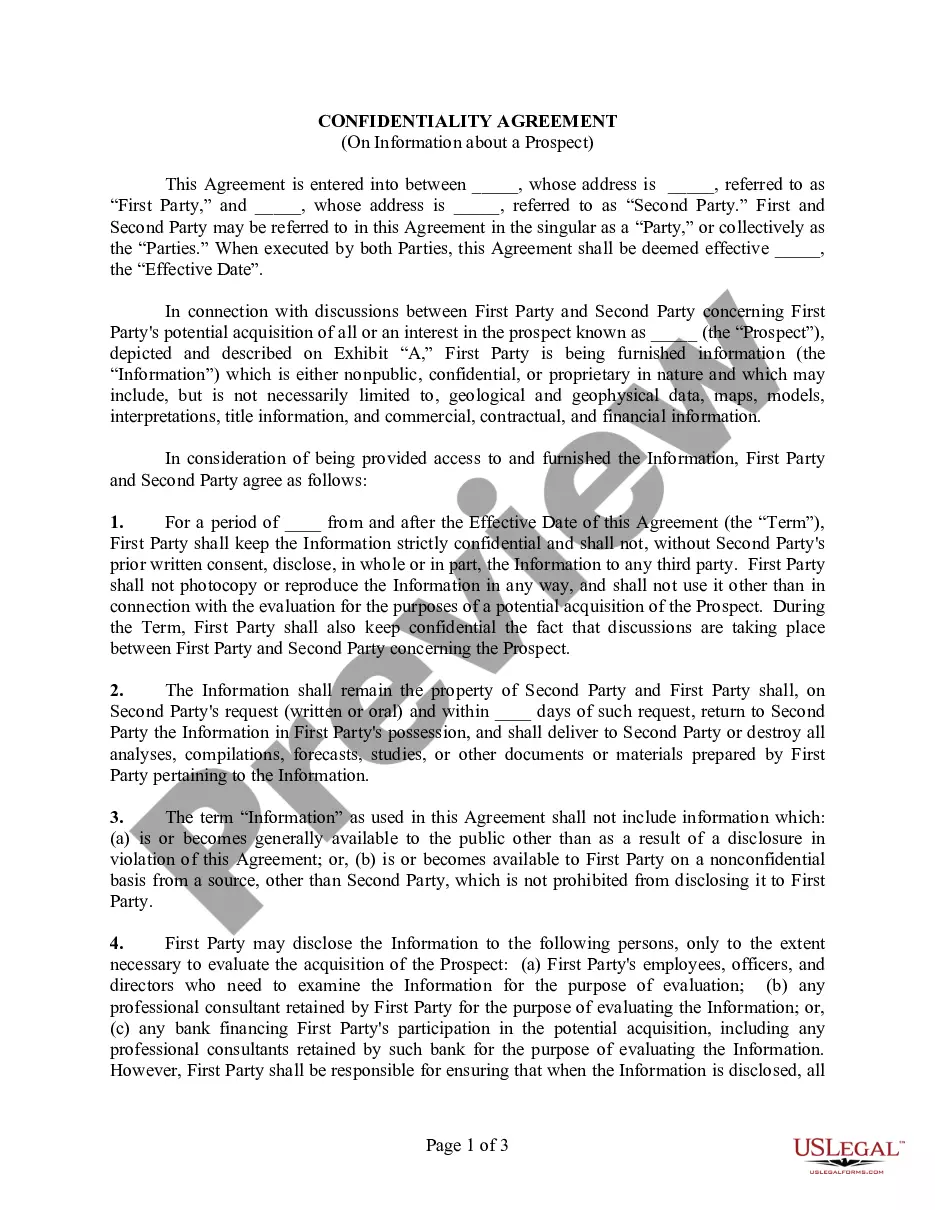
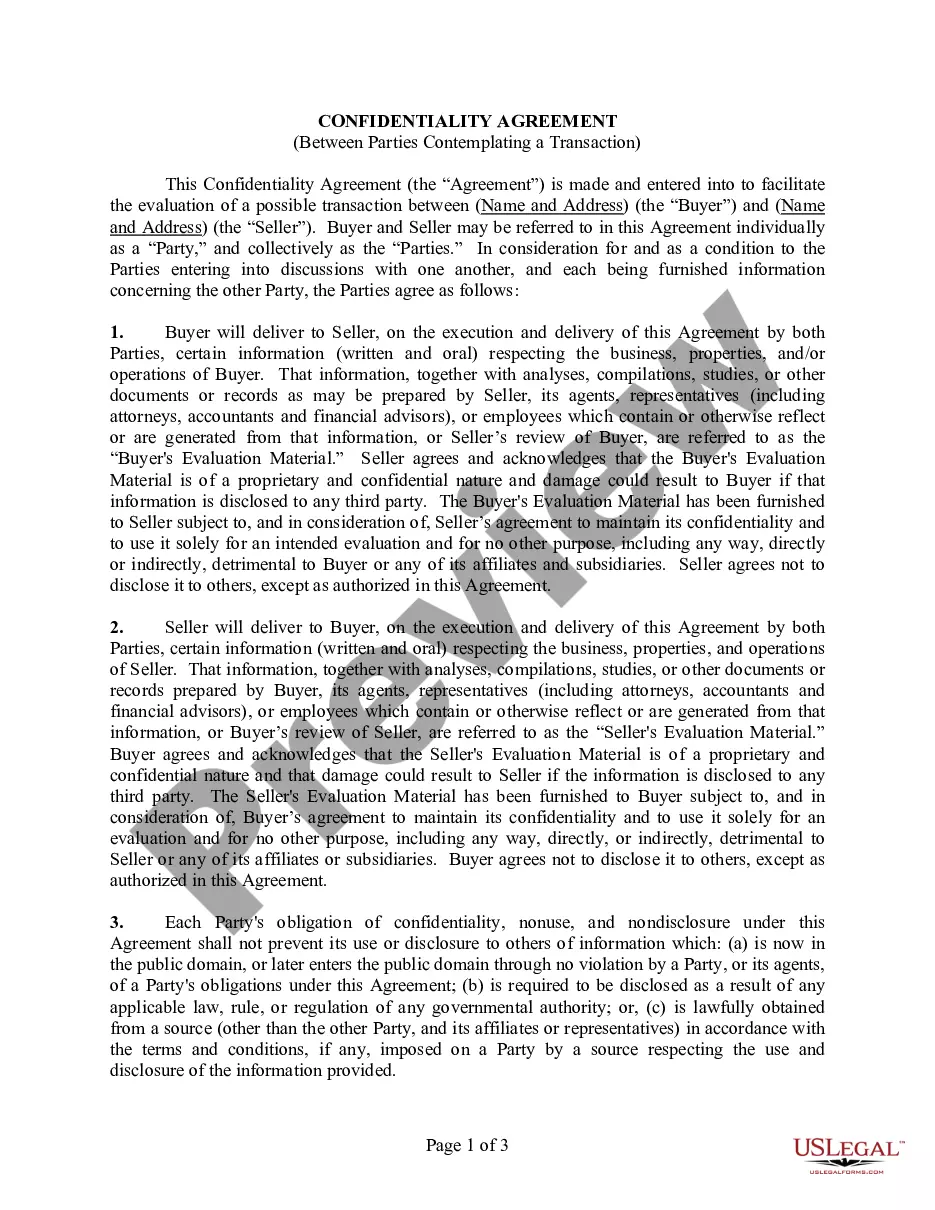
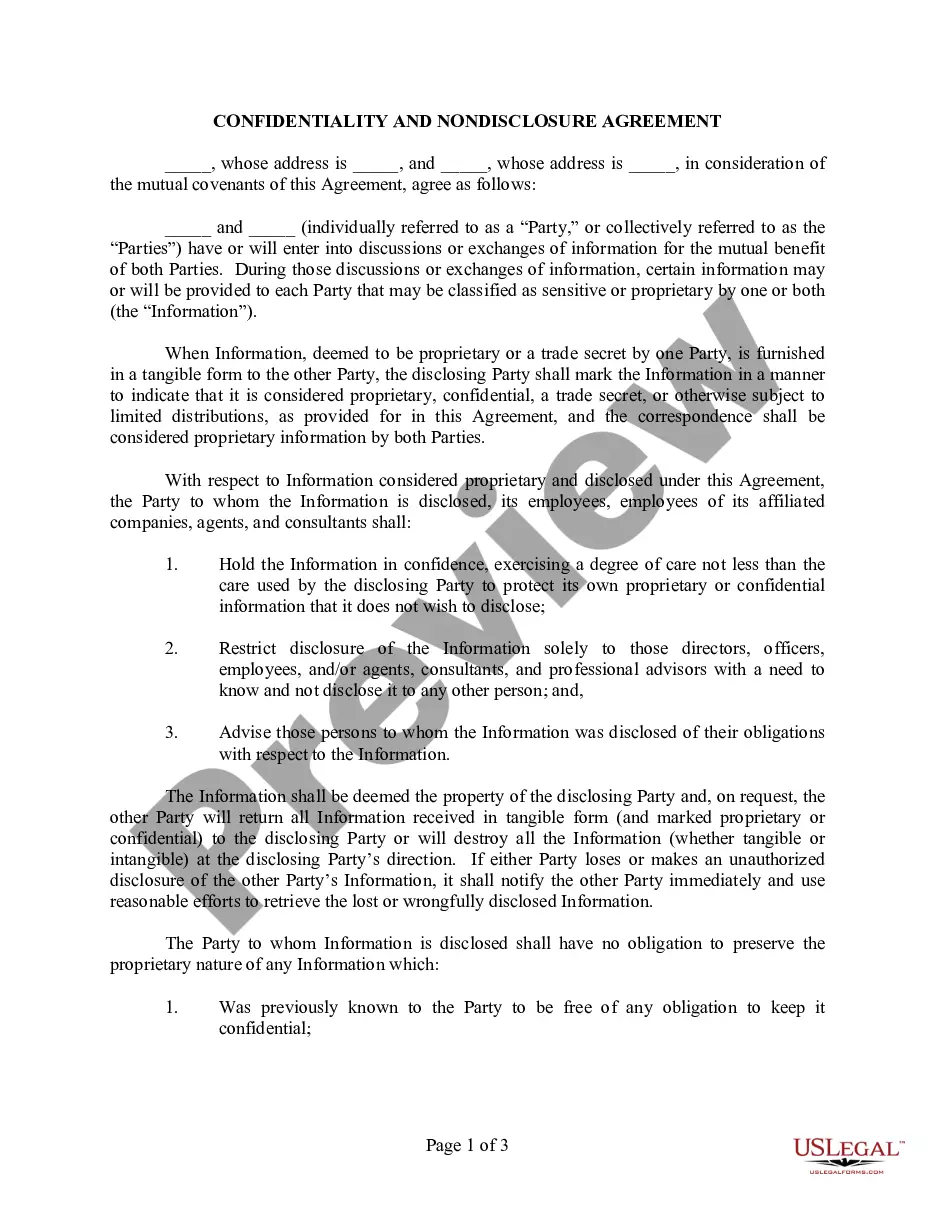
The Confidentiality Agreement Addressed to Party Presenting Data and/or Information is a legal document designed to establish confidentiality obligations between parties sharing sensitive information. This agreement protects against unauthorized disclosure, ensuring that the recipient handles the provided data with care. Unlike other standard non-disclosure agreements, this form specifically addresses situations where one party is presenting confidential data with the intent to engage another party's interest in a project or venture.
Main sections of this form
- Identification of the parties involved: Clearly outlines who is presenting the data and who is the recipient.
- Description of the confidential information: Specifies what data and information are considered confidential.
- Duration of confidentiality: States the time period during which the information must remain confidential.
- Exemptions from confidentiality: Clarifies what information does not fall under the confidentiality obligation.
- Non-compete clause: Includes language reminding the presenting party that the recipient may pursue similar interests without obligation.
- Signatures and acceptance: Requires signatures from both parties to confirm their agreement to the terms.
When this form is needed
This confidentiality agreement is useful in scenarios where one party intends to share important, sensitive information with another party to explore potential business opportunities. It is commonly used in fields such as real estate, technology, and resource exploration, where one entity may require details about projects, plans, or proprietary data to assess collaboration or investment possibilities.
Who needs this form
- Businesses seeking to share confidential information with potential partners or investors.
- Individuals or companies presenting data related to land or resource opportunities.
- Startups needing to protect sensitive intellectual property when approaching investors or collaborators.
- Real estate entities dealing with land prospects or development plans.
How to complete this form
- Identify the parties involved by filling in names and roles of the presenting party and the recipient.
- Provide a clear legal description of the prospect area associated with the confidential information.
- Specify the duration for maintaining confidentiality by entering the agreed-upon time period.
- Ensure both parties review the terms and provide their signatures and titles, including the date of acceptance.
- Keep a copy of the signed agreement for your records and future reference.
Notarization guidance
This form does not typically require notarization to be legally valid. However, some jurisdictions or document types may still require it. US Legal Forms provides secure online notarization powered by Notarize, available 24/7 for added convenience.
Get your form ready online
Our built-in tools help you complete, sign, share, and store your documents in one place.
Make edits, fill in missing information, and update formatting in US Legal Forms—just like you would in MS Word.
Download a copy, print it, send it by email, or mail it via USPS—whatever works best for your next step.
Sign and collect signatures with our SignNow integration. Send to multiple recipients, set reminders, and more. Go Premium to unlock E-Sign.
If this form requires notarization, complete it online through a secure video call—no need to meet a notary in person or wait for an appointment.
We protect your documents and personal data by following strict security and privacy standards.

Make edits, fill in missing information, and update formatting in US Legal Forms—just like you would in MS Word.

Download a copy, print it, send it by email, or mail it via USPS—whatever works best for your next step.

Sign and collect signatures with our SignNow integration. Send to multiple recipients, set reminders, and more. Go Premium to unlock E-Sign.

If this form requires notarization, complete it online through a secure video call—no need to meet a notary in person or wait for an appointment.

We protect your documents and personal data by following strict security and privacy standards.
Mistakes to watch out for
- Failing to clearly define what constitutes confidential information.
- Neglecting to specify the duration of confidentiality, leading to uncertainties.
- Not including all necessary parties' signatures, which can void the agreement.
- Underestimating the implications of the non-compete clause.
Why complete this form online
- Convenience of accessing a legally vetted template from anywhere.
- Editable format allows for quick customization to suit specific needs.
- Reliable source ensuring compliance with legal standards.
Legal use & context
- This agreement is enforceable in a court of law if properly executed.
- Confidentiality agreements protect sensitive information but do not provide immunity from legal obligations.
- Limitations may vary based on jurisdiction; specific terms should align with local statutes.
Quick recap
- The Confidentiality Agreement is essential for safeguarding sensitive information shared between parties.
- It outlines key elements such as the definition of confidential data and timeframes for maintaining confidentiality.
- Using this form can prevent misunderstandings and establish trust between parties engaged in business discussions.
Looking for another form?
Form popularity
FAQ
It is a contract through which the parties agree not to disclose information covered by the agreement. An NDA creates a confidential relationship between the parties, typically to protect any type of confidential and proprietary information or trade secrets. As such, an NDA protects non-public business information.
A confidentiality agreement, which is also known as non-disclosure agreement or simply as an NDA, is simply a contract between two or more parties where the subject of the agreement is a promise that information conveyed will be maintained in secrecy.
A definition of confidential information. This should state what specific information or types of information are protected by the agreement.An explanation of why the recipient will know the confidential information, such as to perform work duties, should be included. Exclusions or limits on confidential information.
A confidentiality agreement (also called a nondisclosure agreement or NDA) is a legally binding contract in which a person or business promises to treat specific information as a trade secret and promises not to disclose the secret to others without proper authorization.
The HIPAA employee confidentiality agreement is a form used to ensure that an employee of a health organization (or other organization with access to medical records) will maintain the secrecy of the personal information they are given access to through their association with the organization.
The purpose of confidentiality agreement is to protect business information you share with employees from being shared with people outside of the contract for a designated period. For a confidentiality agreement to take effect, your employee must sign it.
Confidentiality agreements usually allow the recipient to disclose confidential information if required to do so by court order or other legal process.
The cold hard truth is that most NDAs do not hold up in court. Non-Disclosure Agreements are most effective in establishing a paper trail of confidential information as it relates to partnerships, and discouraging partners from misappropriating proprietary information.
The party to be charged must have signed the contract. Since the NDAs benefit you, so long as the other party has signed, that ishould be sufficient.