Wisconsin Warranty Deed from Corporation to Husband and Wife
About this form
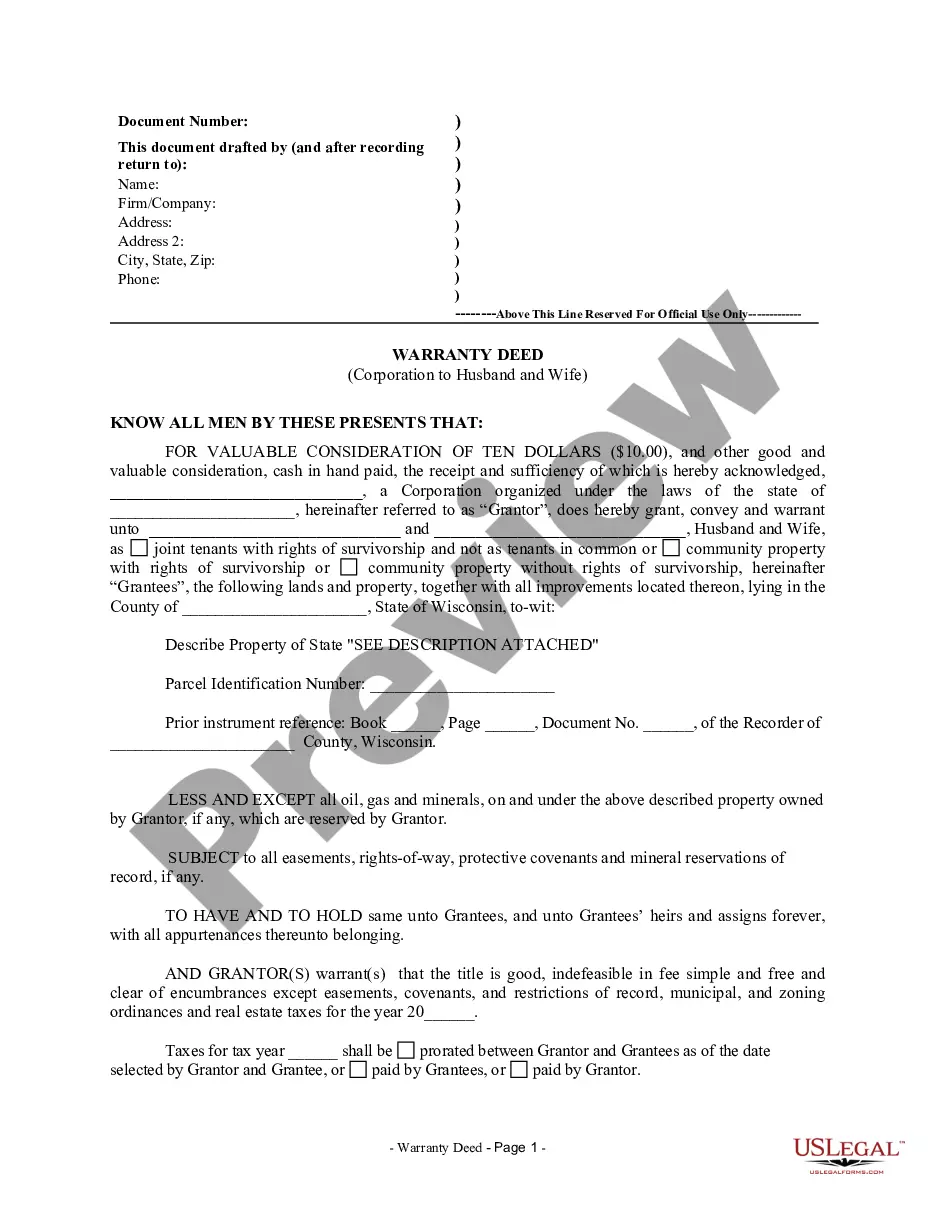
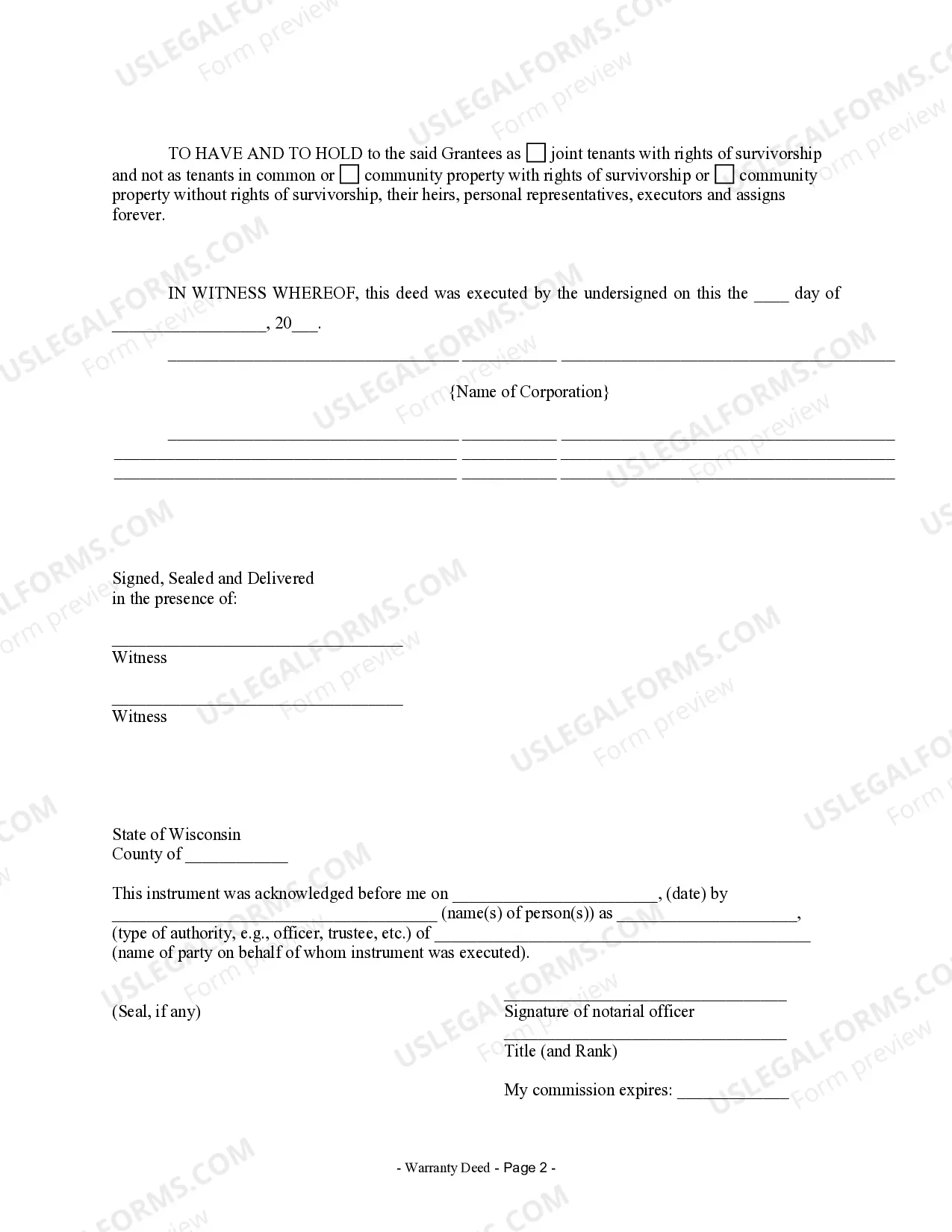
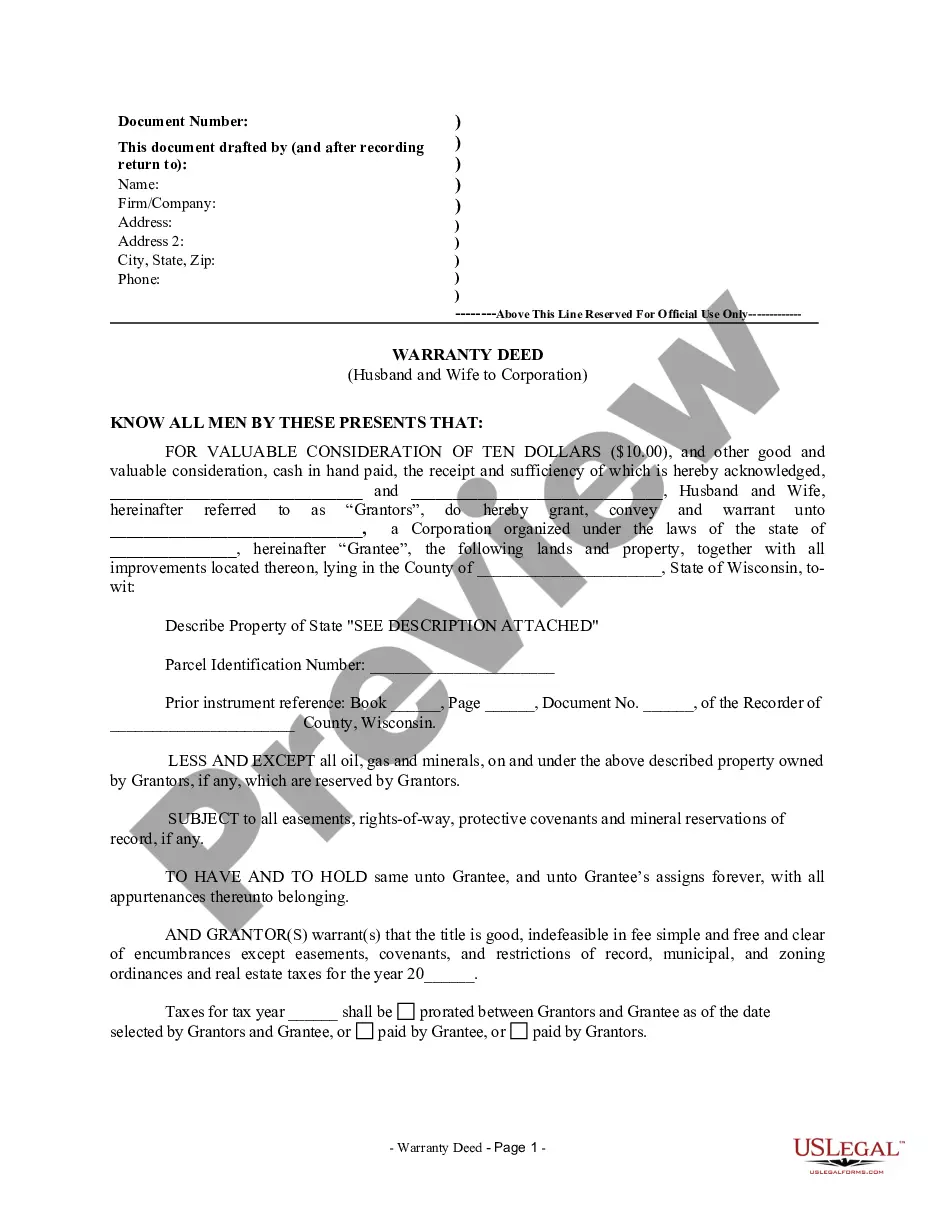
The Warranty Deed from Corporation to Husband and Wife is a legal document used for transferring property ownership from a corporation to a married couple. This deed not only conveys the property rights but also includes warranties regarding the title's validity, ensuring that the property is free from encumbrances, except for specific rights. Unlike other deeds, this form explicitly communicates that the property transfer involves a corporation as the seller and a husband and wife as the buyers.
Key parts of this document
- Property description: Includes details about the property being transferred.
- Parcel Identification Number: A unique identifier for the property.
- Grantor and Grantees: Specifies the corporation (grantor) and the husband and wife (grantees).
- Warranties of title: Assures that the title is valid and free of any claims against it.
- Tax prorations: Indicates how real estate taxes are handled between the parties.
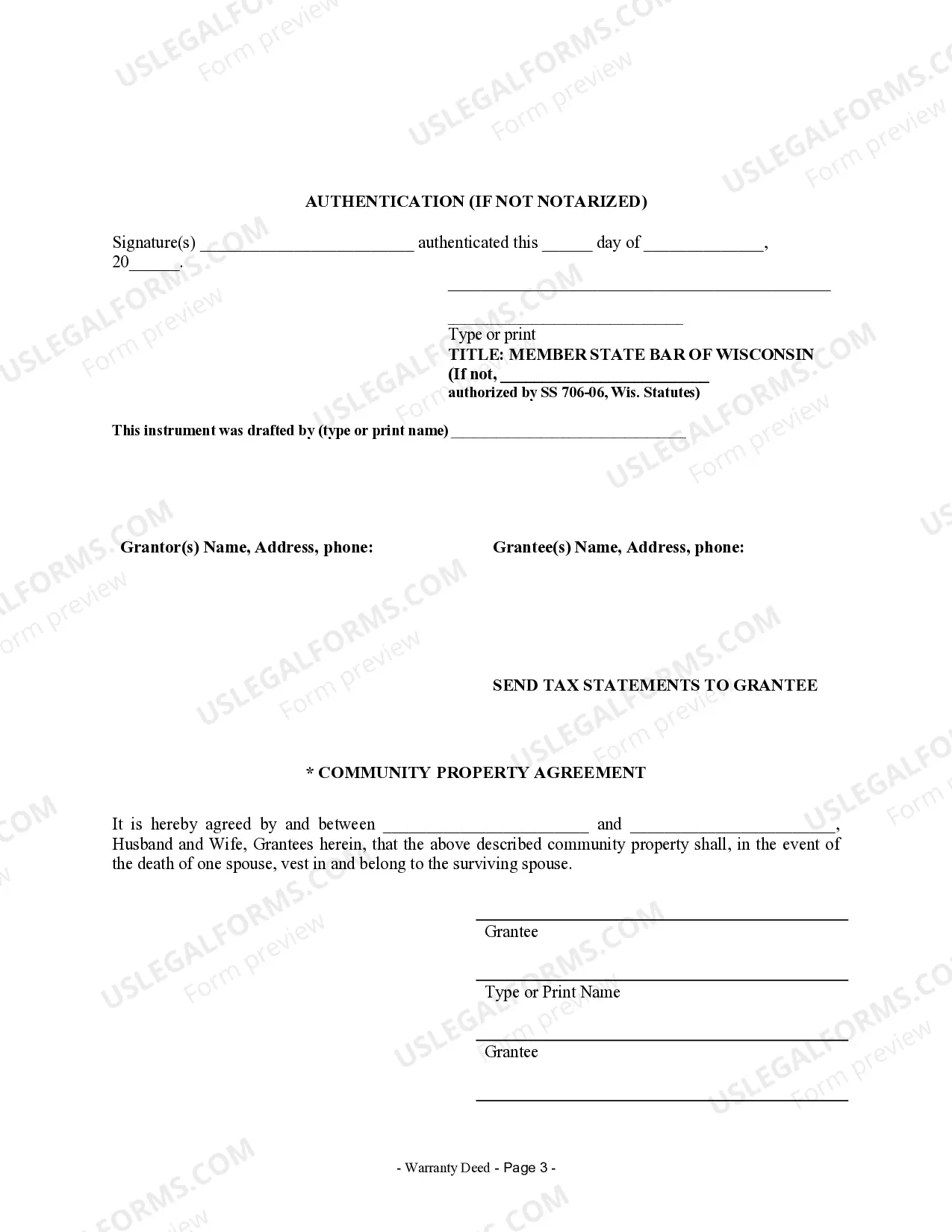
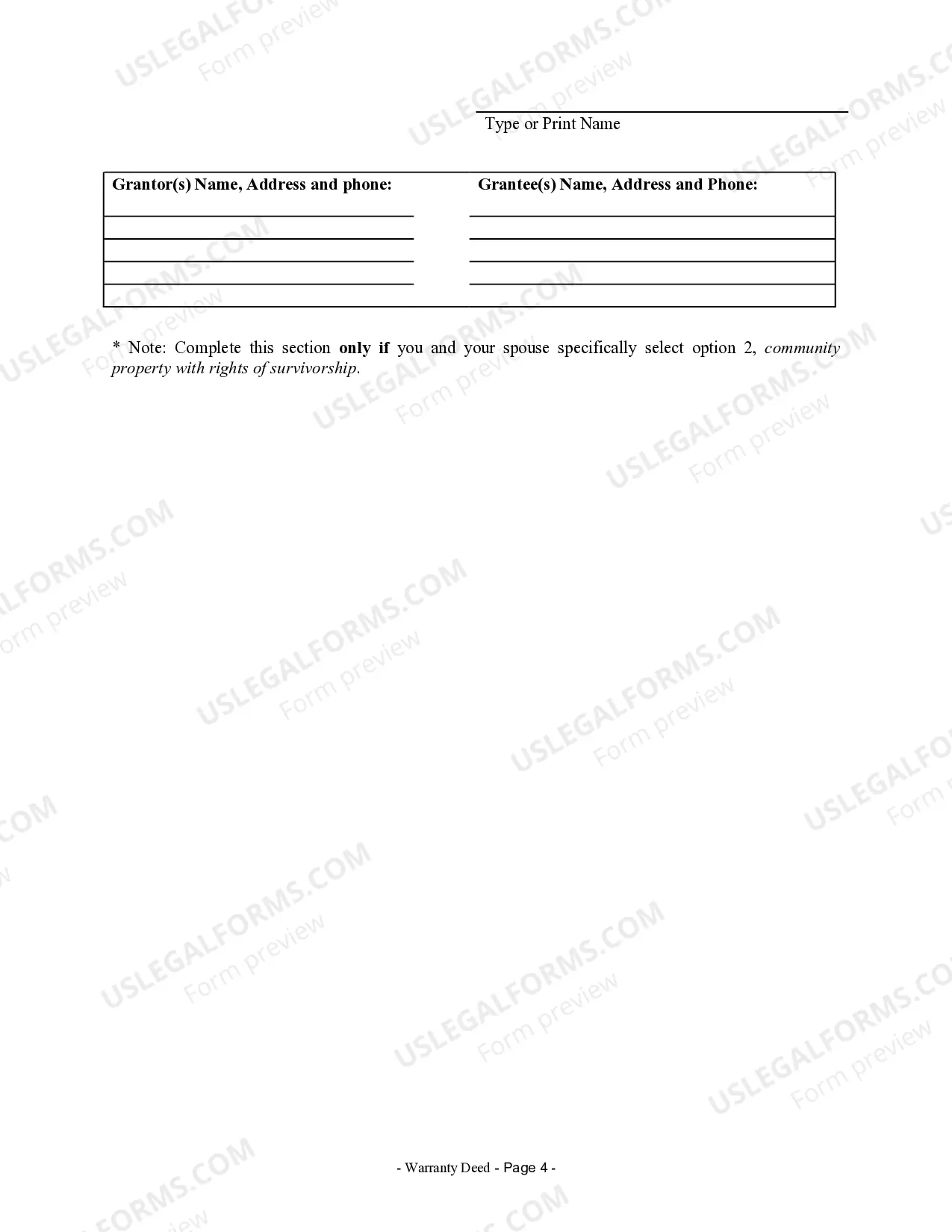
- Survivorship option: Addresses property rights in the event of one spouse's death.
- Notary acknowledgement: Required to validate the deed with a signature from a notary public.



Situations where this form applies
This form should be used when a corporation wishes to transfer ownership of real estate to a married couple. It is applicable in various scenarios, such as when the couple is purchasing a property from a business entity or when a corporation decides to give the property as a gift. The deed also accommodates specific stipulations regarding ownership rights by including survivorship options, which can be valuable for estate planning purposes.
Who should use this form
- Corporations transferring property to individuals.
- Married couples acquiring real estate from a corporation.
- Individuals or businesses involved in commercial real estate transactions.
- Legal representatives handling property transfers on behalf of corporations.
Completing this form step by step
- Identify the parties: Enter the names of the corporation as the grantor and the husband and wife as grantees.
- Specify the property: Provide a detailed description of the property and its Parcel Identification Number.
- Enter prior instrument reference: Fill out any prior legal references related to the property transfer.
- Complete tax information: Indicate how real estate taxes will be divided or addressed.
- Include signatures: Ensure the necessary signatures are collected, including a notary public acknowledgment.
Notarization requirements for this form
This form needs to be notarized to ensure legal validity. US Legal Forms provides secure online notarization powered by Notarize, allowing you to complete the process through a verified video call, available anytime.
Get your form ready online
Our built-in tools help you complete, sign, share, and store your documents in one place.
Make edits, fill in missing information, and update formatting in US Legal Forms—just like you would in MS Word.
Download a copy, print it, send it by email, or mail it via USPS—whatever works best for your next step.
Sign and collect signatures with our SignNow integration. Send to multiple recipients, set reminders, and more. Go Premium to unlock E-Sign.
If this form requires notarization, complete it online through a secure video call—no need to meet a notary in person or wait for an appointment.
We protect your documents and personal data by following strict security and privacy standards.

Make edits, fill in missing information, and update formatting in US Legal Forms—just like you would in MS Word.

Download a copy, print it, send it by email, or mail it via USPS—whatever works best for your next step.

Sign and collect signatures with our SignNow integration. Send to multiple recipients, set reminders, and more. Go Premium to unlock E-Sign.

If this form requires notarization, complete it online through a secure video call—no need to meet a notary in person or wait for an appointment.

We protect your documents and personal data by following strict security and privacy standards.
Mistakes to watch out for
- Failing to provide a complete property description.
- Not including the Parcel Identification Number.
- Omitting necessary signatures from the notarization process.
- Incorrectly stating or failing to address tax prorations.
- Neglecting to discuss and indicate survivorship options if applicable.
Benefits of using this form online
- Convenience: Easily accessible for download and completion from anywhere.
- Editability: Customize the form to meet specific needs before printing.
- Reliability: Templates drafted by licensed attorneys ensure legal compliance.
Looking for another form?
Form popularity
FAQ
A warranty deed, also known as a general warranty deed, is a legal real estate document between the seller (grantor) and the buyer (grantee). The deed protects the buyer by pledging that the seller holds clear title to the property and there are no encumbrances, outstanding liens, or mortgages against it.
In a Non-Warranty Deed, the seller gives no warranties.In a Non-Warranty or Quitclaim Deed, the seller merely is giving the buyer whatever rights, if any, that the seller has in the property and the seller makes no warranties of any nature about the seller's rights in the property.
A warranty deed is a higher level of protection produced by the seller upon the real estate closing. It includes a full legal description of the property, and confirms the title is clear and free from all liens, encumbrances, or title defects. Most property sales make use of a warranty deed.Our title agents can help.
A quitclaim deed is dangerous if you don't know anything about the person giving you the property. You should be sure that a person actually has rights to a property before signing it over with a quitclaim deed.
As defined in section 706.10(5) of the Wisconsin Statutes, a warranty deed conveys real property in fee simple to the grantee and contains covenants by the grantor that he or she holds title to the property and has "good right to convey the same land or its title." The grantor guarantees that the property is "free from
Key Takeaways. A property deed is a legal document that transfers the ownership of real estate from a seller to a buyer.General warranty deeds give the grantee the most protection, special warranty deeds give the grantee more limited protection, and a quitclaim deed gives the grantee the least protection under the law
A Wisconsin (WI) quitclaim deed is a legal document that allows a property's owner to transfer that property to a buyer quickly.In a quitclaim deed in Wisconsin, the buyer and seller agree that there is no guarantee or warranty to the title being clear and free.
Wisconsin. When recording a property conveyance deed and other instruments, a seller of real estate is required to file a Real Estate Transfer Return (RETR) with the county Register of Deeds. Since July 1, 2009, a seller must electronically file (e-file) a return under state law.
Contact a Real Estate Attorney A Wisconsin attorney will be able to prepare the deed to meet recording requirements for the state.