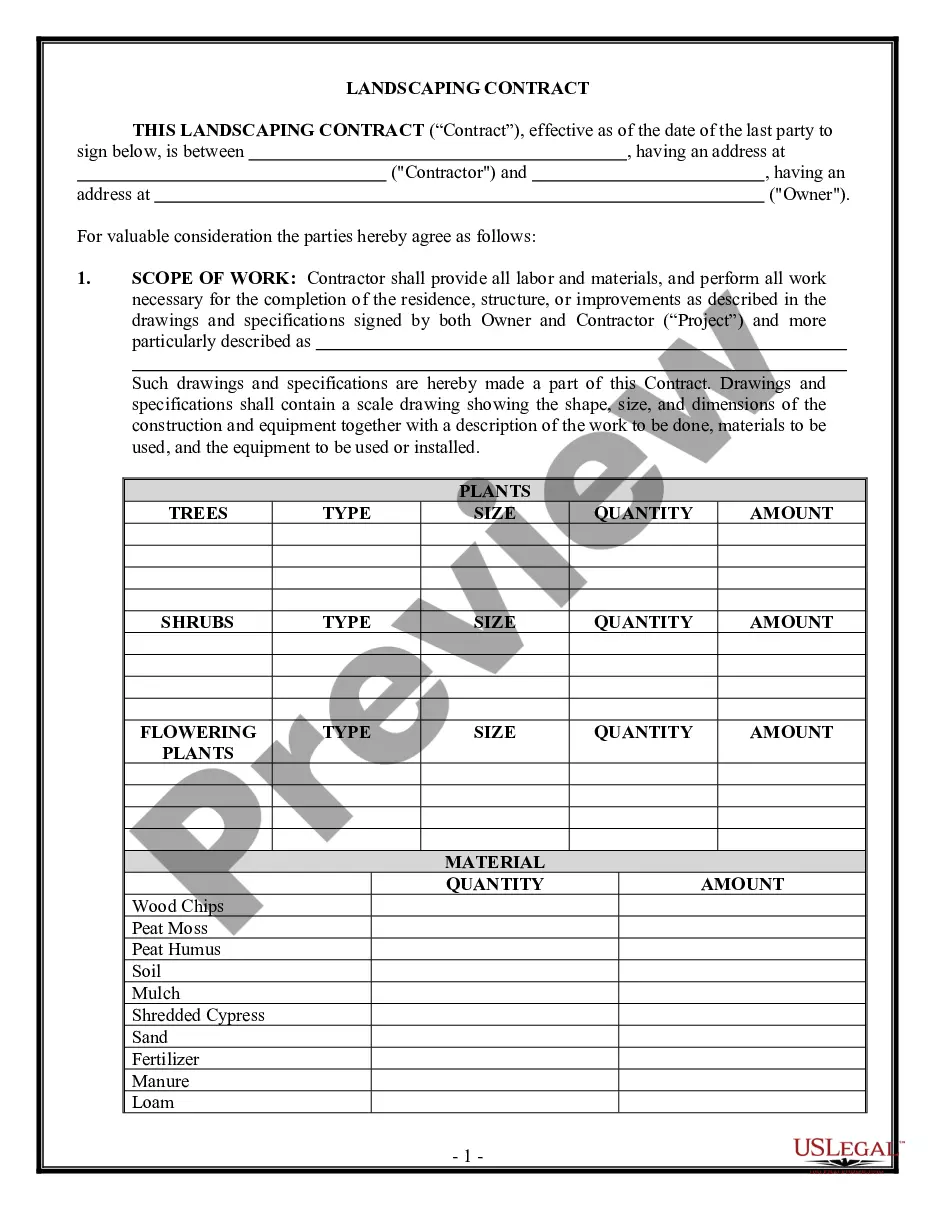
Washington Employment Employee Personnel File Package
What this form package covers
The Washington Employment Employee Personnel File Package provides essential forms to help employers maintain accurate records of personnel matters. This package distinguishes itself by offering a comprehensive set of legally compliant forms that protect employers from potential disputes and ensure adherence to federal regulations. It is designed to assist companies in organizing employee information effectively.
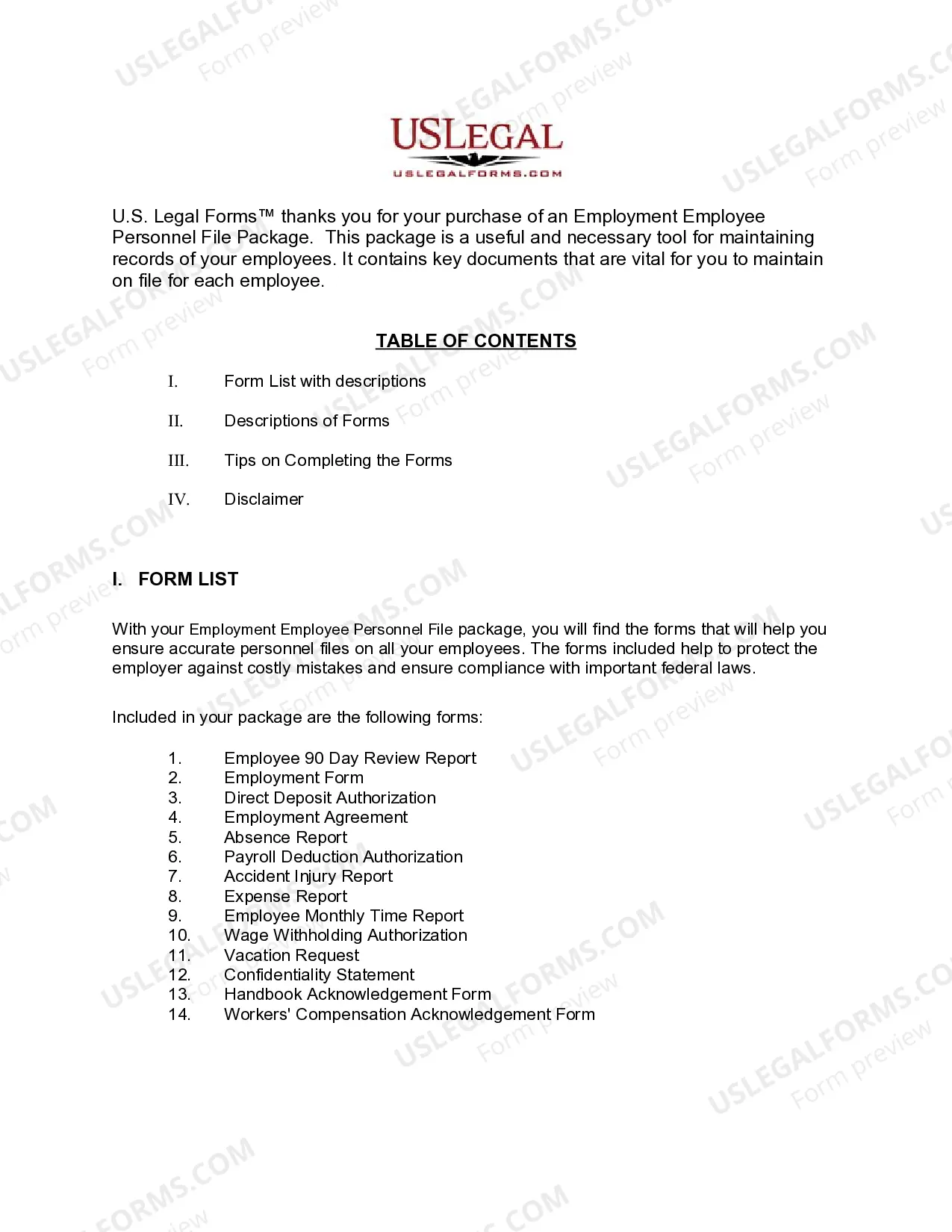
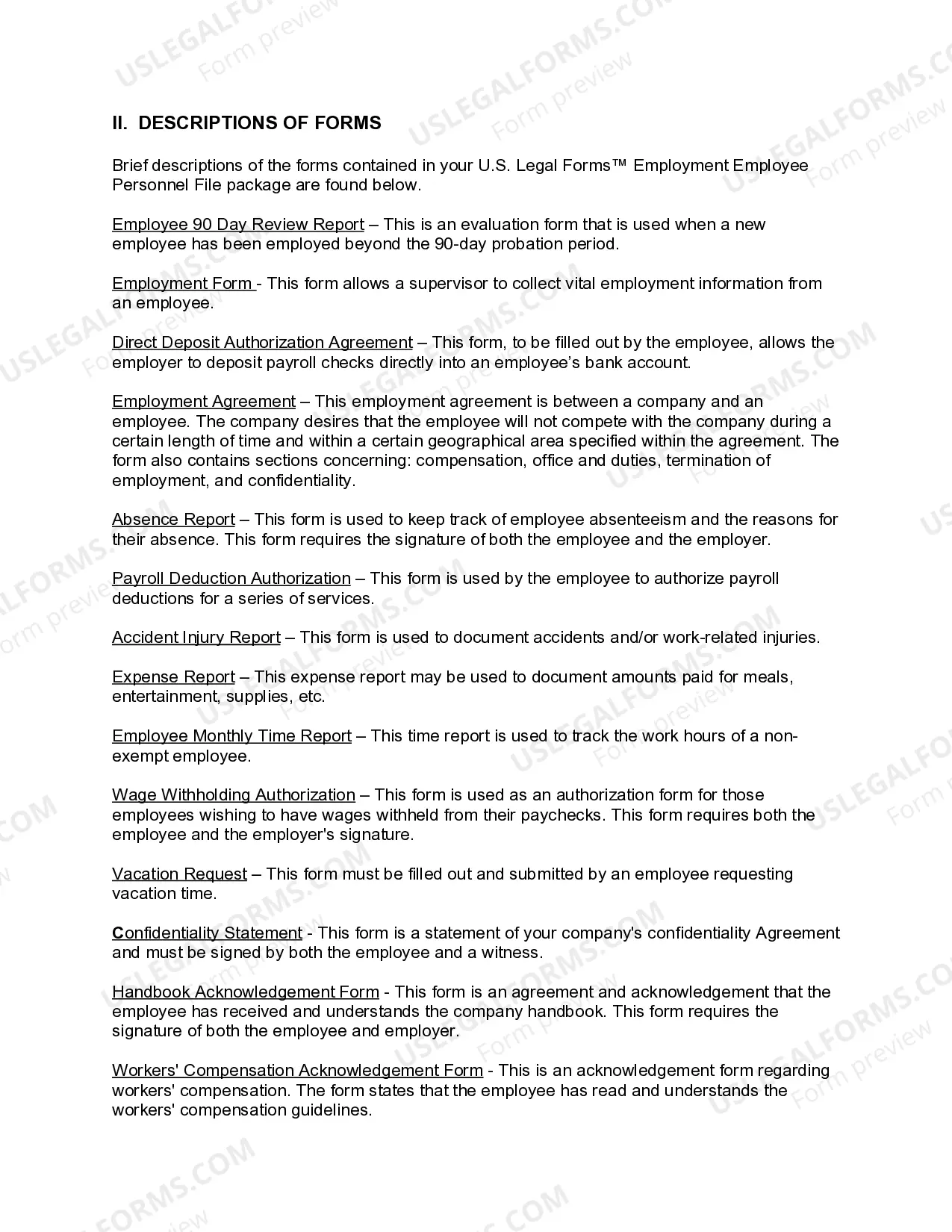
Forms you’ll find in this package
- Employment Agreement between a company and an employee
- Absence Report
- Payroll Deduction Authorization Form
- Accident - Injury Report
- Direct Deposit Authorization
- Nonexempt Employee Time Report
- Employee 90 day Review Report
- Wage Withholding Authorization
- Confidentiality Statement and Agreement for an Employee
- Employee Agreement and Handbook Acknowledgment Form
- Workers' Compensation Acknowledgment Form
- Employment Form
- Vacation Request Form
When this form package is needed
This form package is useful in various situations, including:
- During the hiring process to collect necessary employment information.
- When evaluating new employees after their initial 90-day probation period.
- To manage employee absences and vacation requests effectively.
- To document work-related injuries and maintain compliance with safety regulations.
- For managing payroll deductions and direct deposits.
Who can use this document
- Business owners and employers in Washington State.
- Human resources professionals seeking to streamline personnel record keeping.
- Managers responsible for employee evaluations and compliance.
- Companies of all sizes aiming to maintain accurate employee records.
Steps to complete these forms
- Review all included forms to understand each one's purpose.
- Identify the parties involved for each form, including employer and employee information.
- Enter the required information in the appropriate fields, ensuring accuracy.
- Collect the necessary signatures, where applicable, before filing the documents.
- Keep the completed forms in a secure and organized personnel file for future reference.
Notarization details for included forms
Forms in this package typically do not require notarization unless required by local law. It is advisable to review each form to determine if any particular legal nuances in Washington apply.
Get your form ready online
Our built-in tools help you complete, sign, share, and store your documents in one place.
Make edits, fill in missing information, and update formatting in US Legal Forms—just like you would in MS Word.
Download a copy, print it, send it by email, or mail it via USPS—whatever works best for your next step.
Sign and collect signatures with our SignNow integration. Send to multiple recipients, set reminders, and more. Go Premium to unlock E-Sign.
If this form requires notarization, complete it online through a secure video call—no need to meet a notary in person or wait for an appointment.
We protect your documents and personal data by following strict security and privacy standards.

Make edits, fill in missing information, and update formatting in US Legal Forms—just like you would in MS Word.

Download a copy, print it, send it by email, or mail it via USPS—whatever works best for your next step.

Sign and collect signatures with our SignNow integration. Send to multiple recipients, set reminders, and more. Go Premium to unlock E-Sign.

If this form requires notarization, complete it online through a secure video call—no need to meet a notary in person or wait for an appointment.

We protect your documents and personal data by following strict security and privacy standards.
Avoid these common issues
- Failing to collect signatures from both parties on key forms.
- Not keeping an up-to-date employee file, leading to compliance issues.
- Ignoring local regulations or updates in labor laws.
- Completing forms without verifying the accuracy of entered information.
Benefits of completing this package online
- Convenience of downloading and printing forms at any time.
- Editability allows for customization to fit specific business needs.
- Reliability of documents drafted by licensed attorneys.
What to keep in mind
- The Washington Employment Employee Personnel File Package is essential for compliance and effective employee record management.
- Utilizing proper forms can protect employers from potential legal challenges.
- All forms are designed with Washington state regulations in mind, ensuring adherence to local employment laws.
Looking for another form?

Form popularity
FAQ
Confidential Files Normally personnel records are kept within a locked file cabinet that only certain people have access to.By setting up such a policy, you will protect the confidentiality of these files, your employee's privacy and also limit the opportunities for false documents to get into the files.
Job description for the position. job application and/or resume. offer of employment. IRS Form W-4 (the Employee's Withholding Allowance Certificate) receipt or signed acknowledgment of employee handbook. performance evaluations. forms relating to employee benefits.
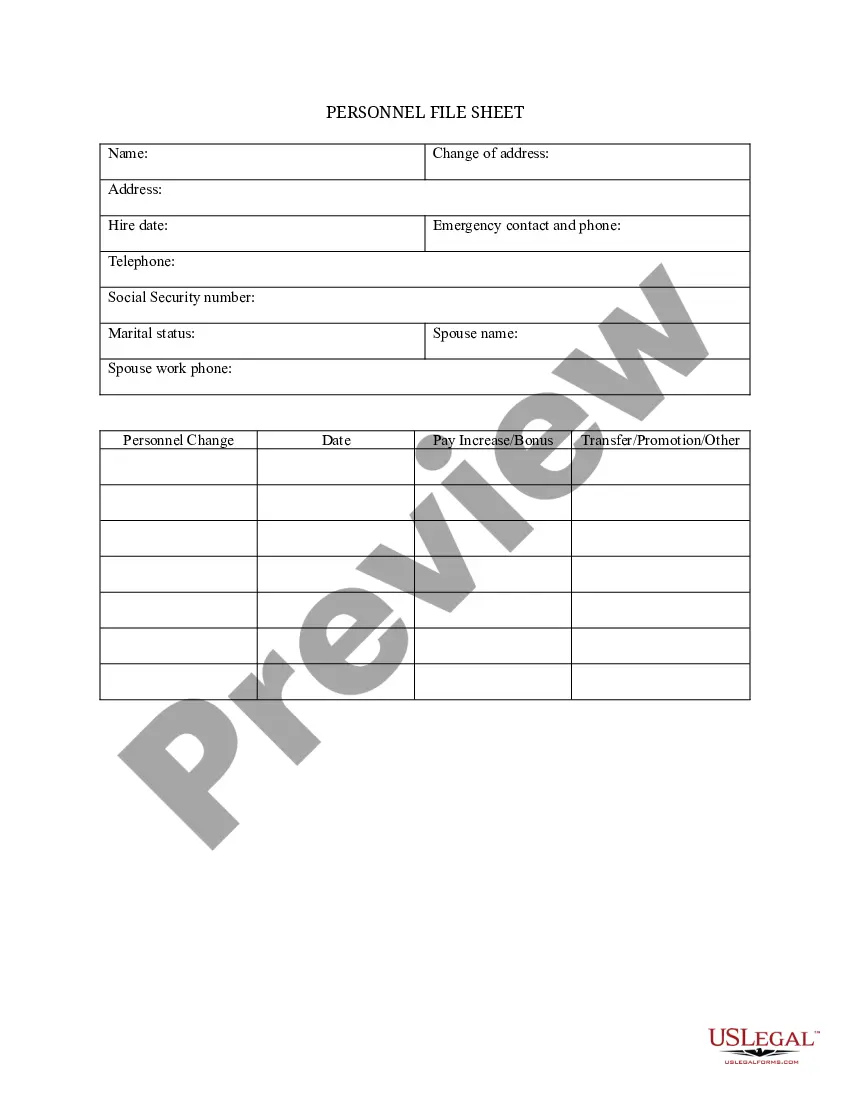
A personnel file is a paper or electronic folder for storing HR and payroll documents related to new, existing, or past employees. It should include basic employee and compensation information in compliance with federal and state labor laws.
The personnel file is the employees and the employers complete record of their relationship together. It contains a history from job application right the way through to the exit interview, termination of employment or even retirement. Needless to say, the personnel file is highly confidential.
Take an inventory. First, you will need to take an inventory of what you already have for each employee. Figure out what you are missing and from whom. Hold a meeting. Give each employee a personal list of documents you need from them. Follow up and secure files within one week.
Current and former employees have a right to their personnel records under Labor Code section 1198.5. Under California Labor Code section 1198.5(a) provides that every current and former employee, or their representative, has the right to inspect and receive a copy of their personnel records.
Job description for the position. job application and/or resume. offer of employment. IRS Form W-4 (the Employee's Withholding Allowance Certificate) receipt or signed acknowledgment of employee handbook. performance evaluations.
Examples of items that should not be included in the personnel file are: Pre-employment records (with the exception of the application and resume) Monthly attendance transaction documents. Whistleblower complaints, notes generated from informal discrimination complaint investigations, Ombuds, or Campus Climate.
As an employee, do I have a right to see my personnel files? The short answer is 'yes'. You have a right to make a SAR to your employer, asking to see your personnel files, at any time. Your employer has the right to ask why you want to see your files, but must then provide all your records to you.