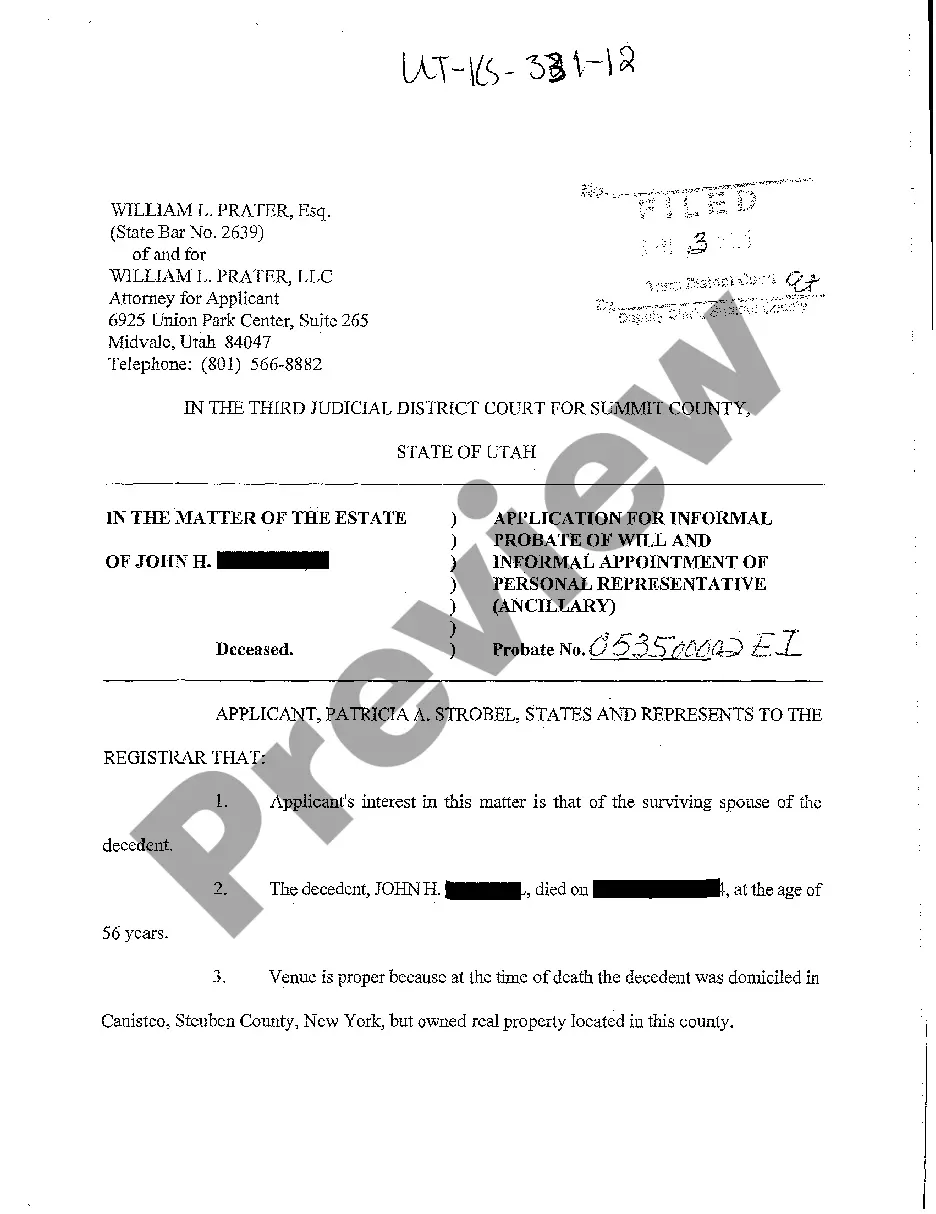
Washington Renovation Contract for Contractor
Overview of this form
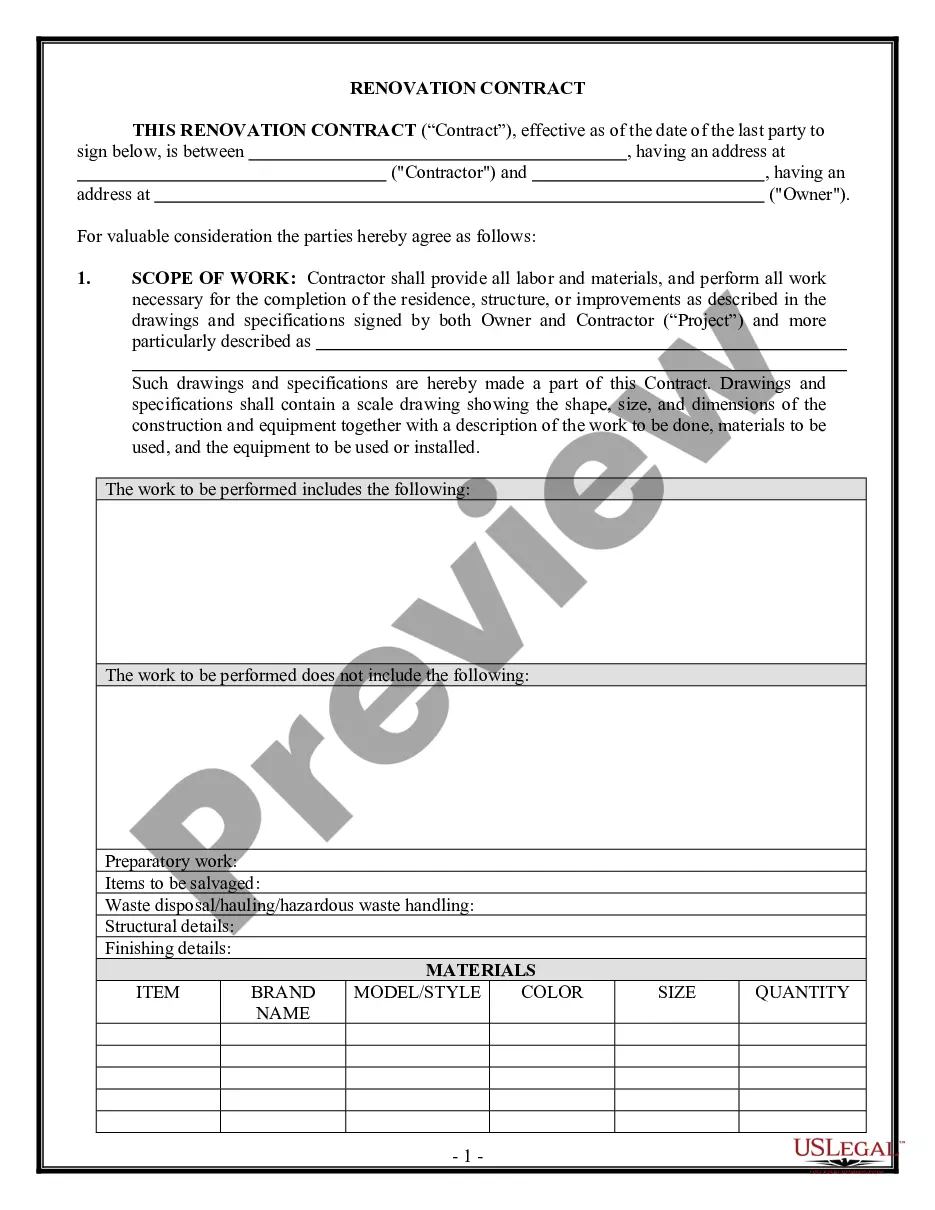
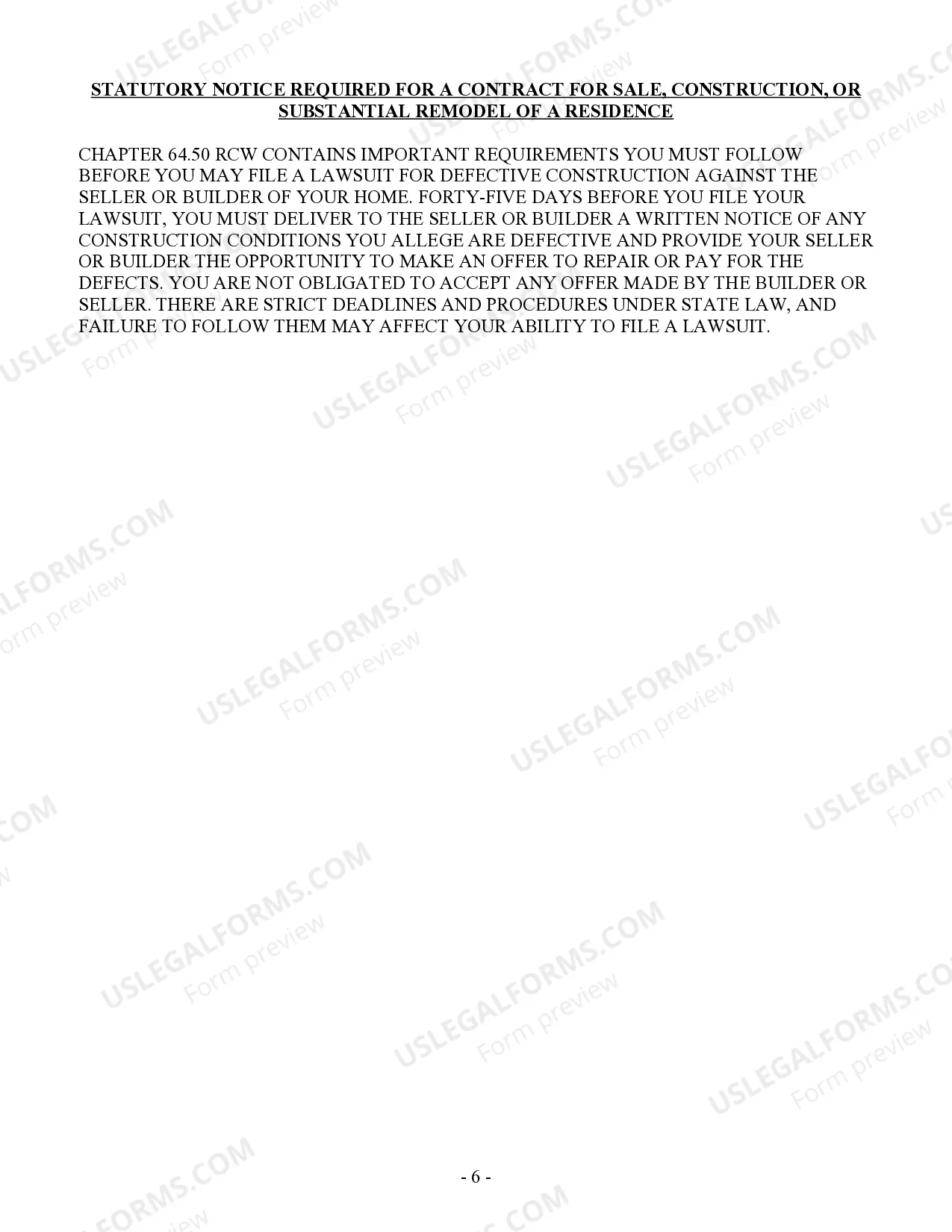
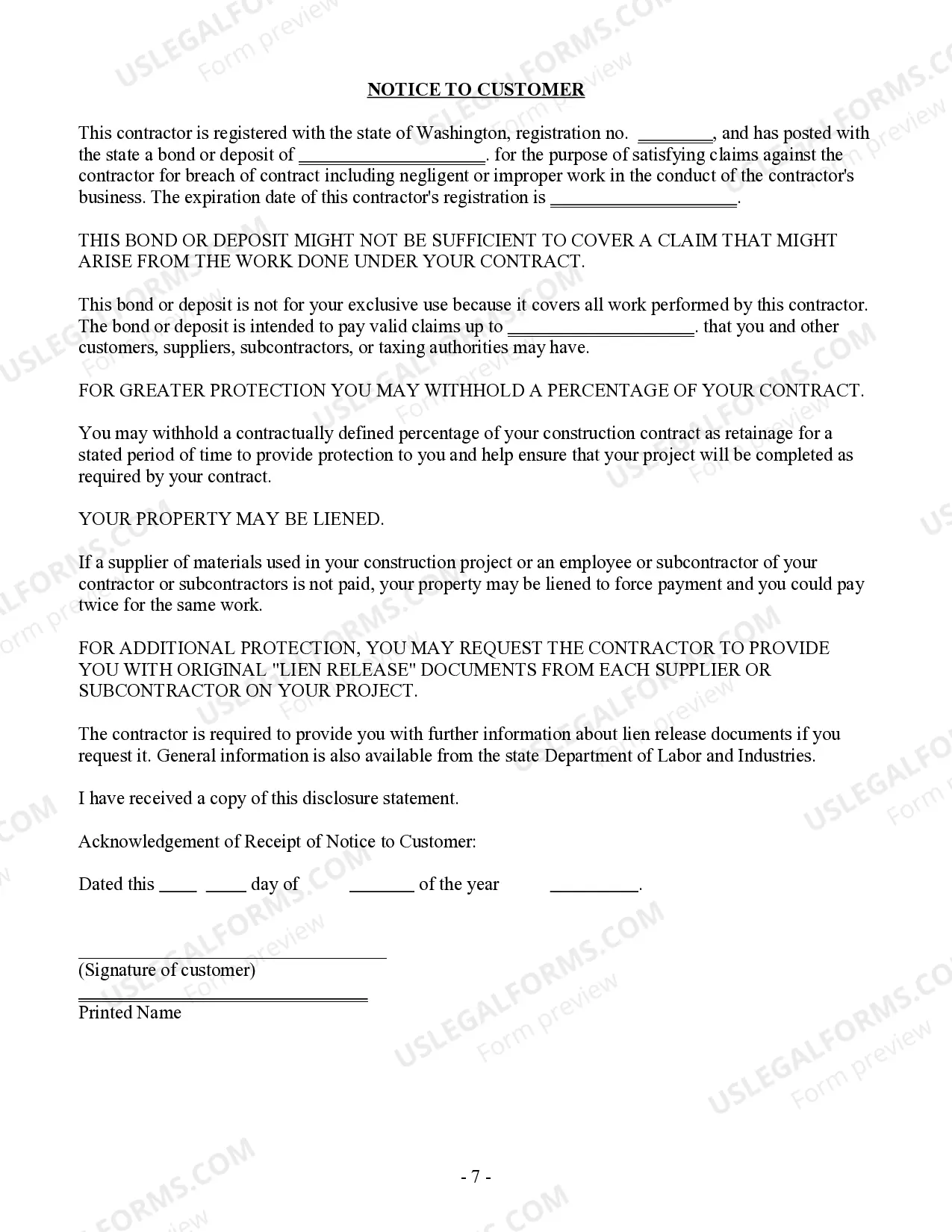
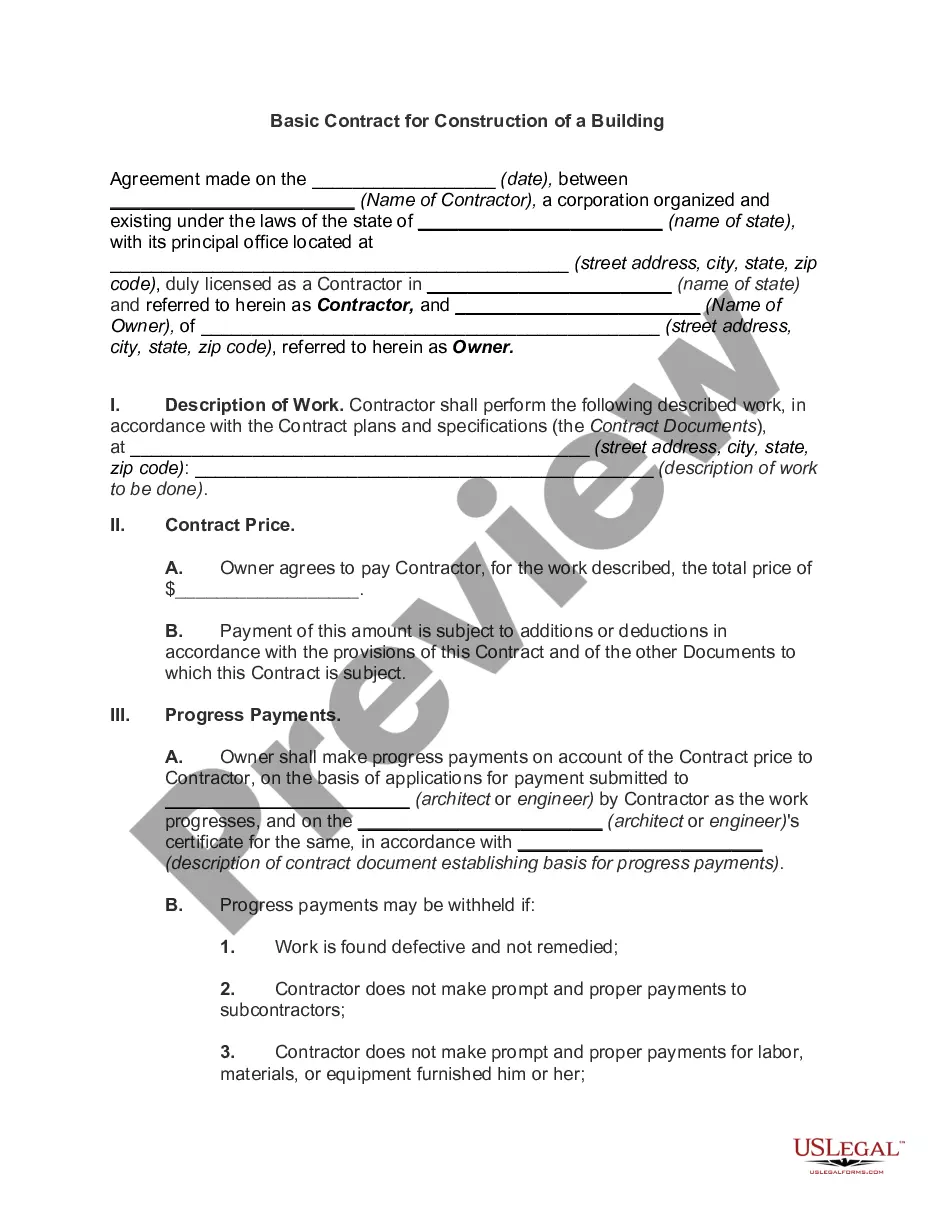
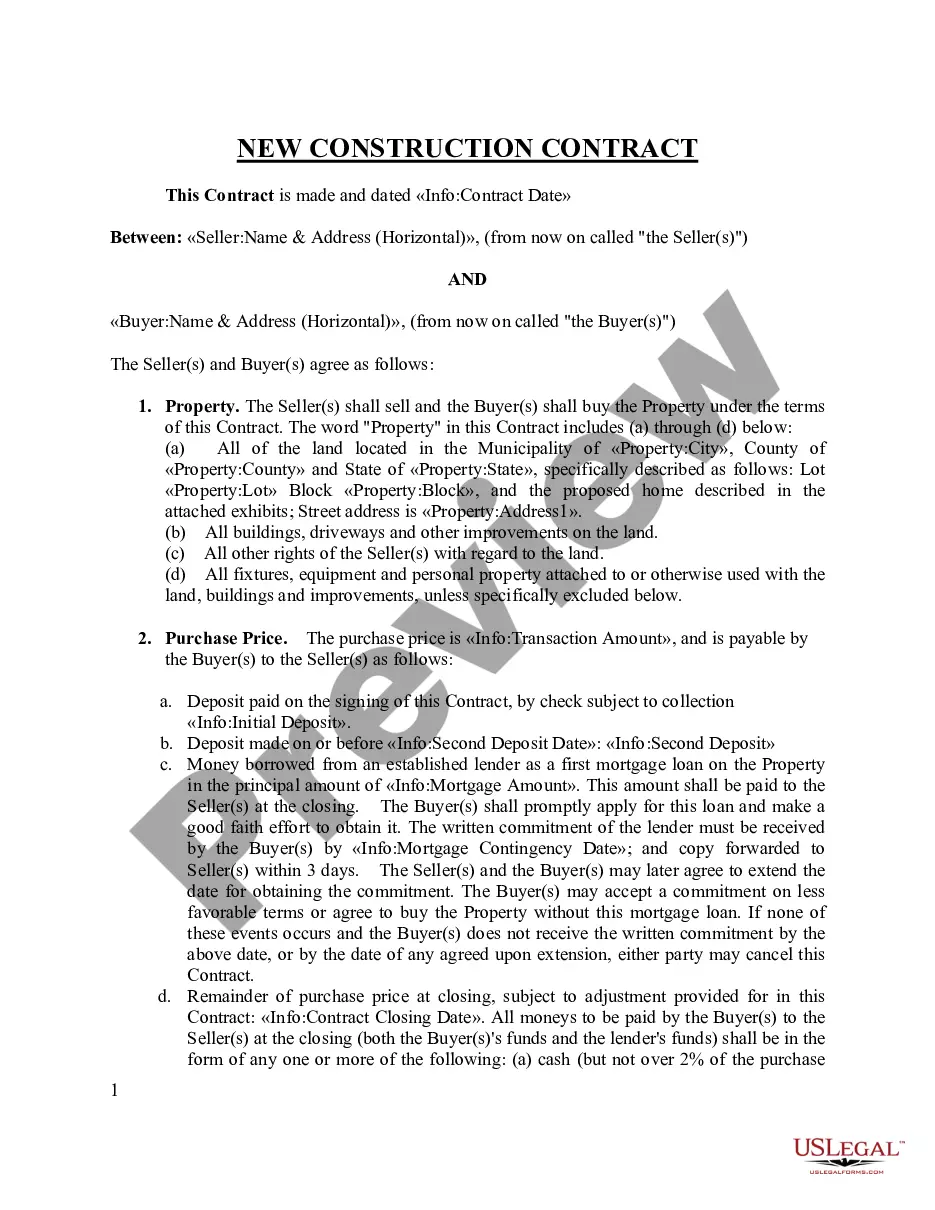
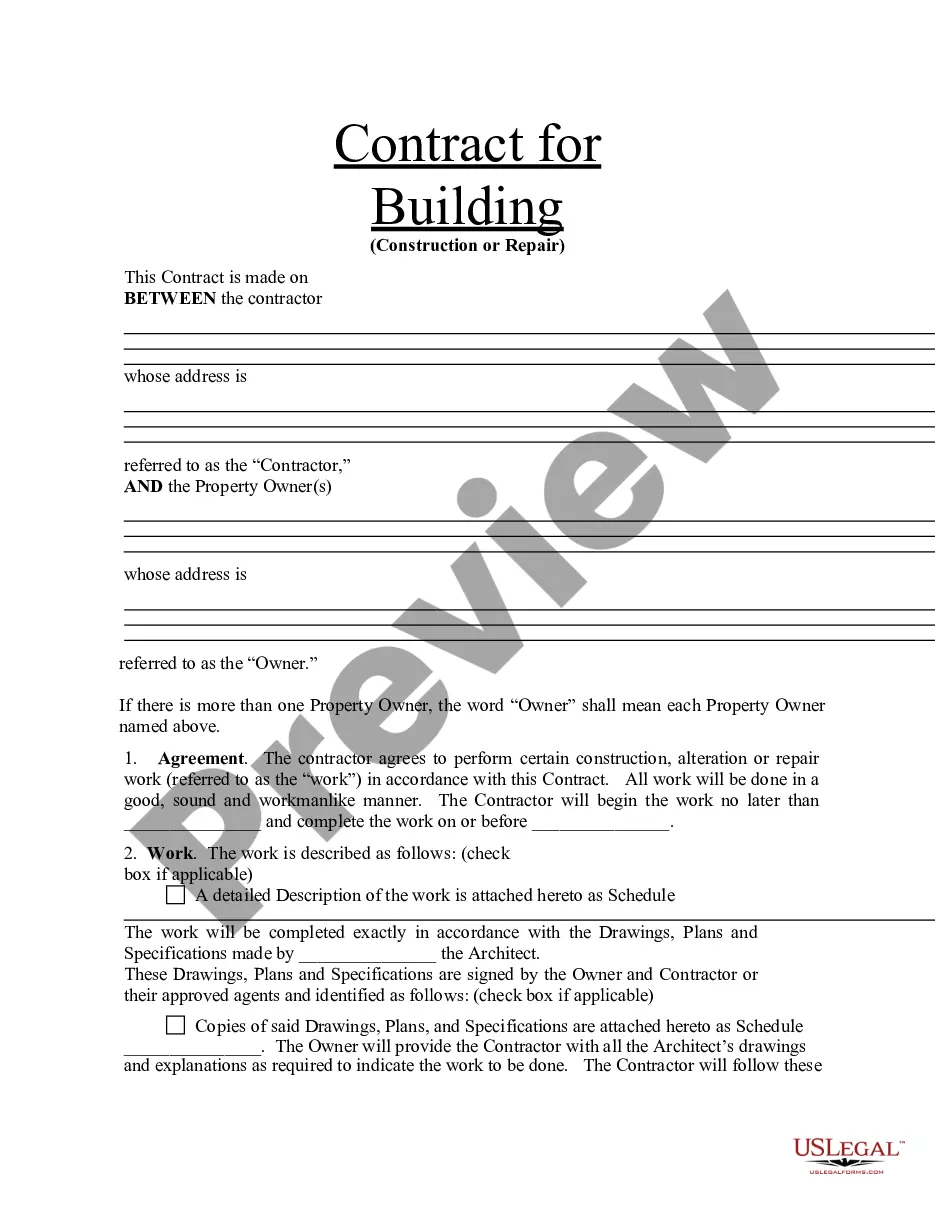
The Renovation Contract for Contractor is a legal document specifically designed for agreements between renovation contractors and property owners. It outlines the terms and conditions of the renovation project, including payment arrangements, responsibilities, and rights of both parties. This contract is distinct in that it accommodates both cost plus and fixed fee arrangements, ensuring clarity regarding costs, work site conditions, insurance, and change orders. It complies with the laws of the State of Washington, making it essential for local projects.
Main sections of this form
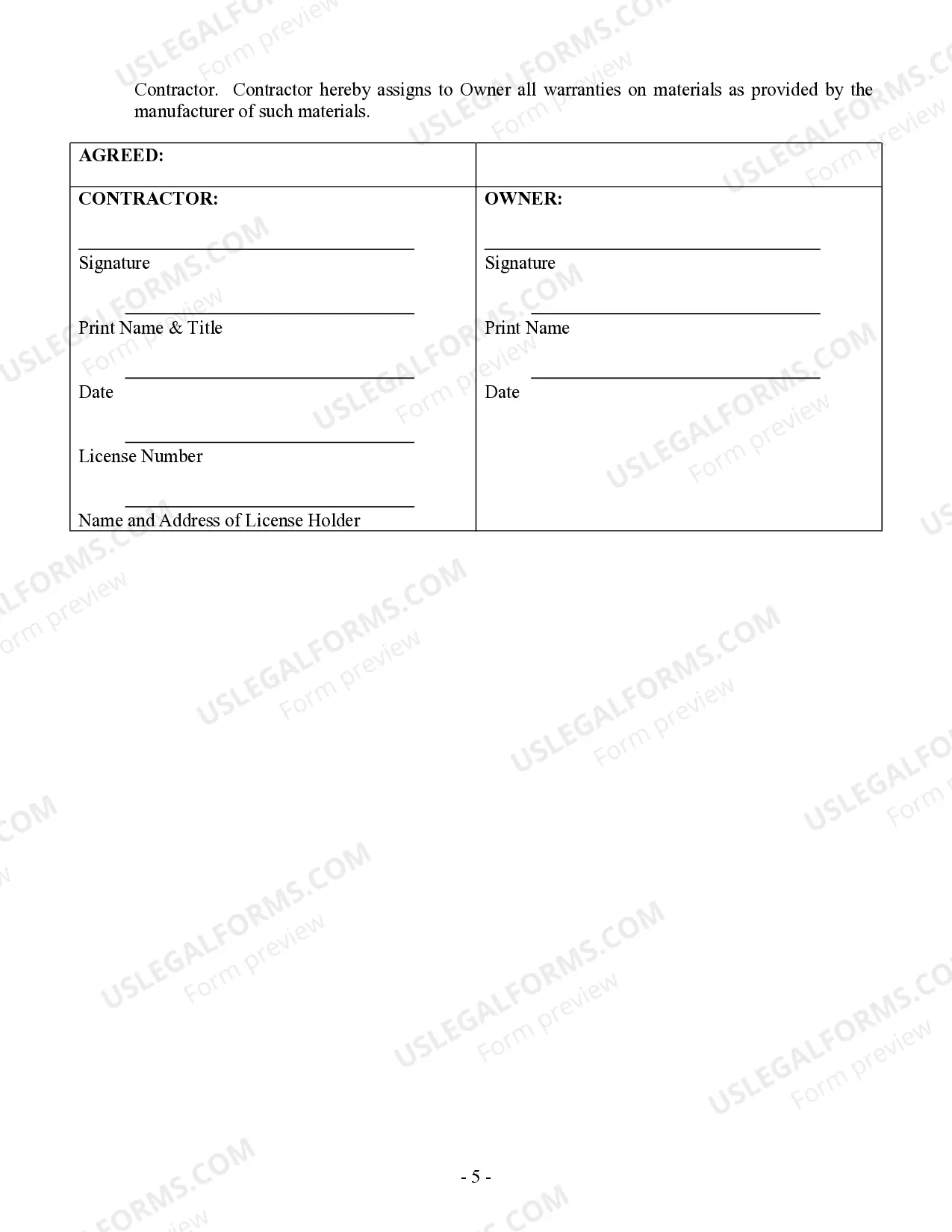
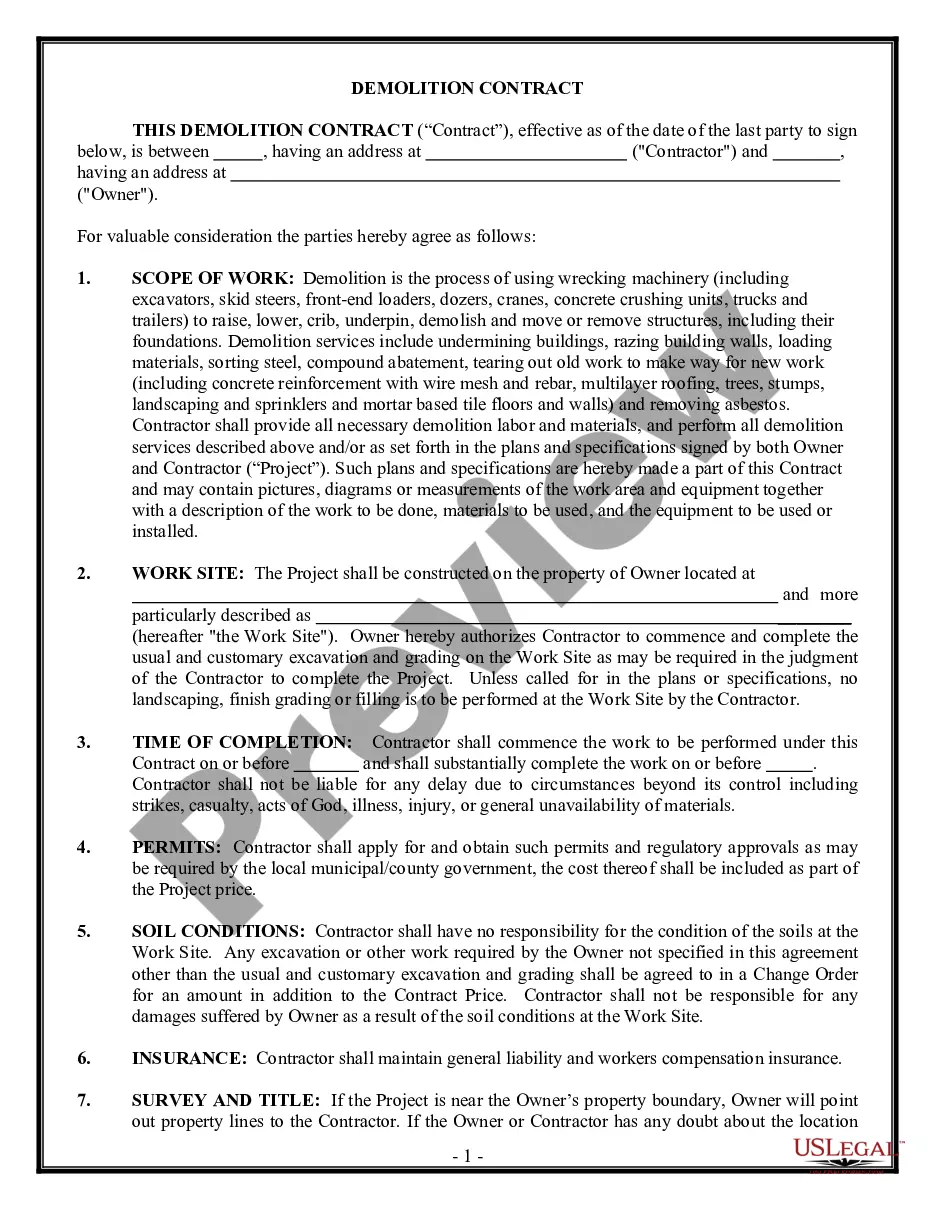
- Permits: Contractor is responsible for obtaining necessary permits and approvals.
- Soil Conditions: Contractor is not liable for soil conditions at the work site.
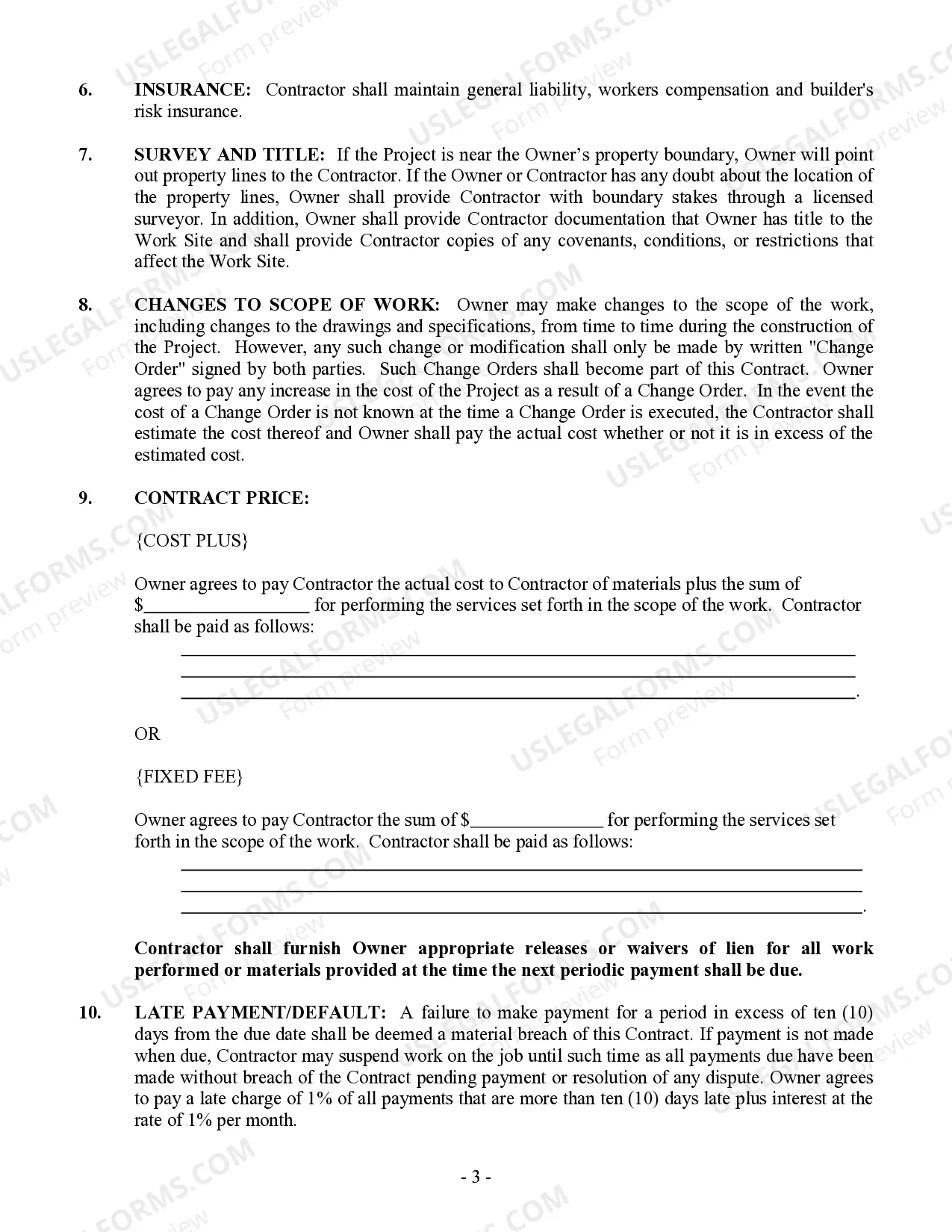
- Insurance: Contractor must maintain specific types of insurance coverage.
- Changes to Scope of Work: Modifications must be documented and agreed upon via written Change Orders.
- Payment Terms: Includes details on late payments and default conditions.
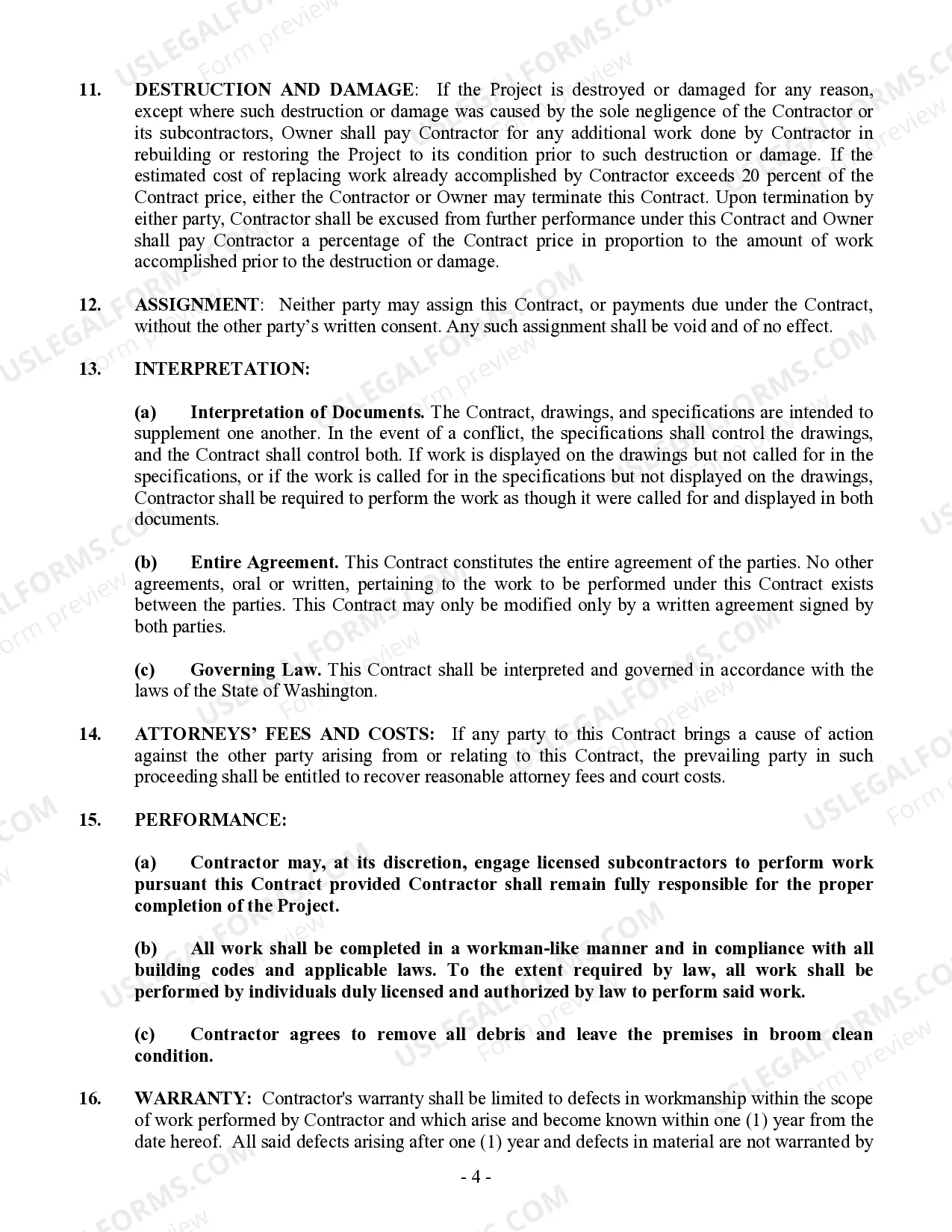
- Warranty: Covers defects in workmanship for one year.

Common use cases
This form should be used when a property owner hires a contractor for renovation work. It is essential for defining the scope of work, payment terms, and the responsibilities of each party. Use this contract when multiple changes to the project scope are anticipated, ensuring that all modifications are documented and agreed upon. It is particularly useful for renovation projects in Washington state to ensure compliance with local regulations.
Who should use this form
- Property owners who plan to renovate their property.
- Renovation contractors who require a clear contract for projects.
- Parties involved in construction projects seeking to establish formal agreements.
- Individuals unfamiliar with legal contracts who want to ensure proper legal compliance.
How to prepare this document
- Identify the parties involved: Fill in the names and contact information of the contractor and property owner.
- Specify the work: Clearly define the scope of renovation work to be performed.
- Enter payment details: Select whether the payment will be a fixed fee or cost plus, and document terms.
- Include change order procedures: Outline how any changes to the project will be documented and agreed upon.
- Sign and date the form: Ensure both parties sign the contract to make it legally binding.
Does this document require notarization?
Notarization is generally not required for this form. However, certain states or situations might demand it. You can complete notarization online through US Legal Forms, powered by Notarize, using a verified video call available anytime.
Get your form ready online
Our built-in tools help you complete, sign, share, and store your documents in one place.
Make edits, fill in missing information, and update formatting in US Legal Forms—just like you would in MS Word.
Download a copy, print it, send it by email, or mail it via USPS—whatever works best for your next step.
Sign and collect signatures with our SignNow integration. Send to multiple recipients, set reminders, and more. Go Premium to unlock E-Sign.
If this form requires notarization, complete it online through a secure video call—no need to meet a notary in person or wait for an appointment.
We protect your documents and personal data by following strict security and privacy standards.

Make edits, fill in missing information, and update formatting in US Legal Forms—just like you would in MS Word.

Download a copy, print it, send it by email, or mail it via USPS—whatever works best for your next step.

Sign and collect signatures with our SignNow integration. Send to multiple recipients, set reminders, and more. Go Premium to unlock E-Sign.

If this form requires notarization, complete it online through a secure video call—no need to meet a notary in person or wait for an appointment.

We protect your documents and personal data by following strict security and privacy standards.
Avoid these common issues
- Neglecting to document changes through formal Change Orders.
- Not specifying the payment terms clearly, which may lead to disputes.
- Failing to address soil conditions that could affect project costs.
- Overlooking necessary insurance documents required to protect both parties.
Why complete this form online
- Convenient access: Download and fill the contract from anywhere.
- Editability: Customize the contract to fit specific project needs.
- Reliability: Use a form drafted by licensed attorneys to ensure legal soundness.
Legal use & context
- This contract is enforceable in Washington State and adheres to its construction law regulations.
- It helps prevent legal disputes by clearly outlining terms regarding payment, changes, and responsibilities.
What to keep in mind
- The Renovation Contract is essential for formalizing agreements between contractors and property owners.
- Proper completion of the contract minimizes potential disputes during renovation projects.
- This form ensures compliance with Washington State laws, protecting both parties involved.
Looking for another form?
Form popularity
FAQ
Check Contract Basics. The basic job of a contractor agreement is to spell out the scope of the project's work. Set a Payment Schedule. Schedule Start and End Dates. Specify Change Orders. Research Your Arbitration Options. Turn Down the Contractor's Warranty.
Detailed Description of the Job. How Payments Will Be Made. Start and End Dates of the Project. How Changes to the Project Will Be Dealt With. Lien Waivers. Written Notice of Your Right to Cancel Without Penalty. Warranty. Signatures.
Avoid companies that require an upfront deposit of more than 10 percent. Try to include language in the contract that holds back a percentage of the total price, called a retainage, until you're sure the work was done well. A 10 percent retainage is common for residential remodeling work.
Check Contract Basics. The basic job of a contractor agreement is to spell out the scope of the project's work. Set a Payment Schedule. Schedule Start and End Dates. Specify Change Orders. Research Your Arbitration Options. Turn Down the Contractor's Warranty.
A general contractor provides a strong background in framing and carpentry along with many other skills. Because remodeling jobs typically involve several specialty areas, the general contractor serves as a project manager who coordinates the entire job.
Identifying/Contact Information. Title and Description of the Project. Projected Timeline and Completion Date. Cost Estimate and Payment Schedule. Stop Work Clause and Stop Payment Clause. Act of God Clause. Change Order Agreement. Warranty.
Step 1: File Suit. Unfortunately, there is no simple claim process. Step 2: Serve L&I. Under RCW 18.27. Step 3: Show the Surety. This step is not mandatory, but extremely helpful. Step 4: Obtain Judgment. Step 5: Collect Disbursed Funds.
Scope of Work, Selection Sheet and Drawings. License Number and Insurance. Description of Change Orders. Warranty information. Subcontractor Agreements. Payment schedule. Completion Schedule / Timeline. Clauses Required by Law.
Define and describe the project in detail. Include what materials must be used; be as specific as possible. Include weight, brand name and other identifying features. Specify the work being performed and all equipment being used or installed.