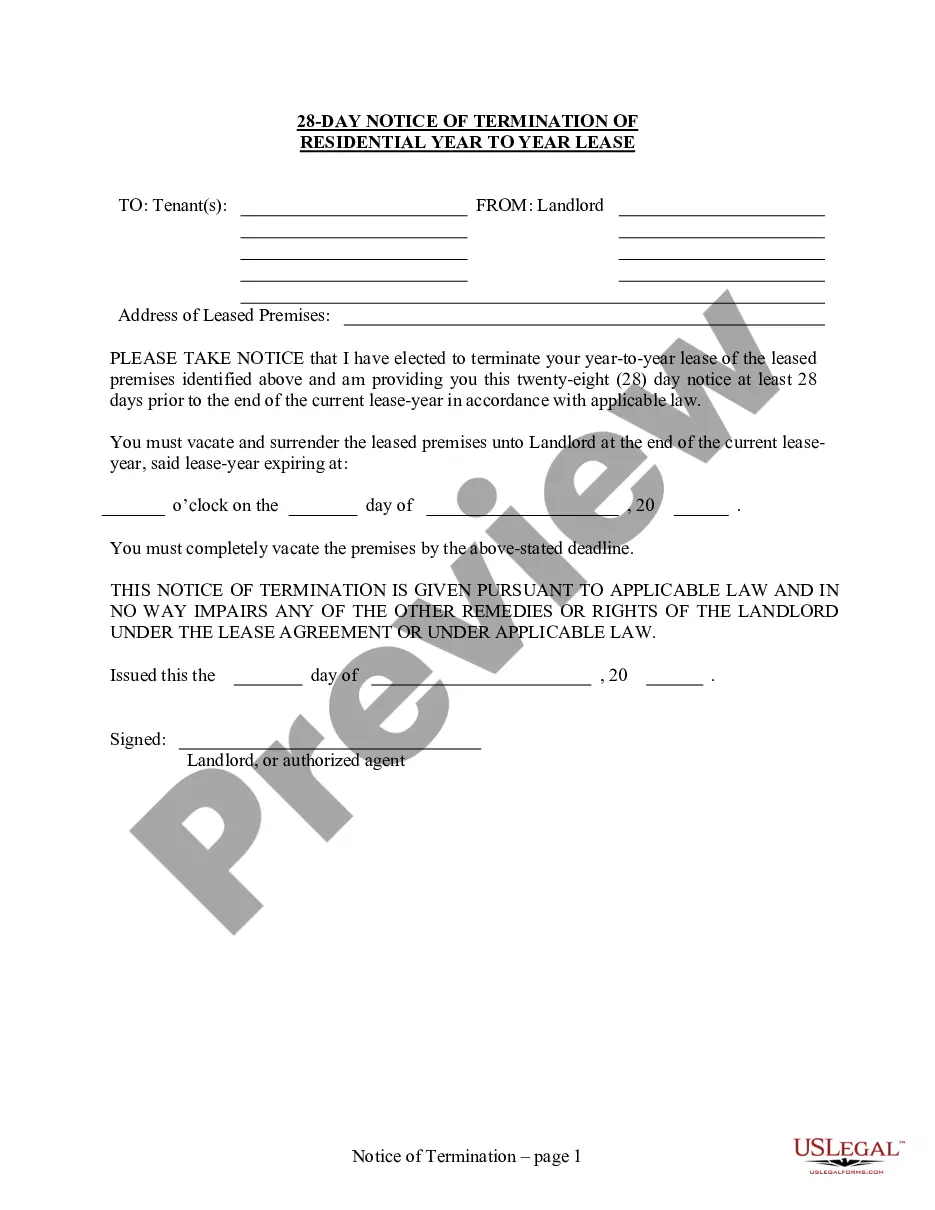
Vermont Last Will and Testament for Married Person with Adult and Minor Children
Overview of this form
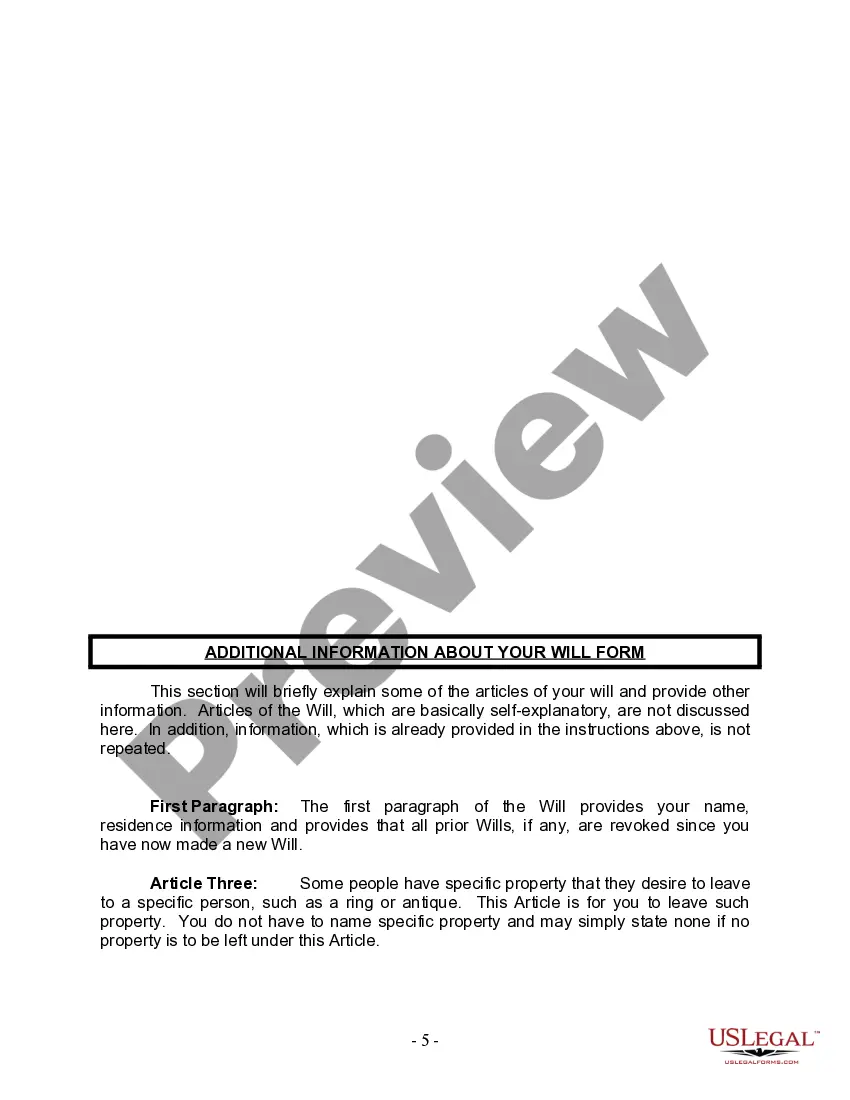
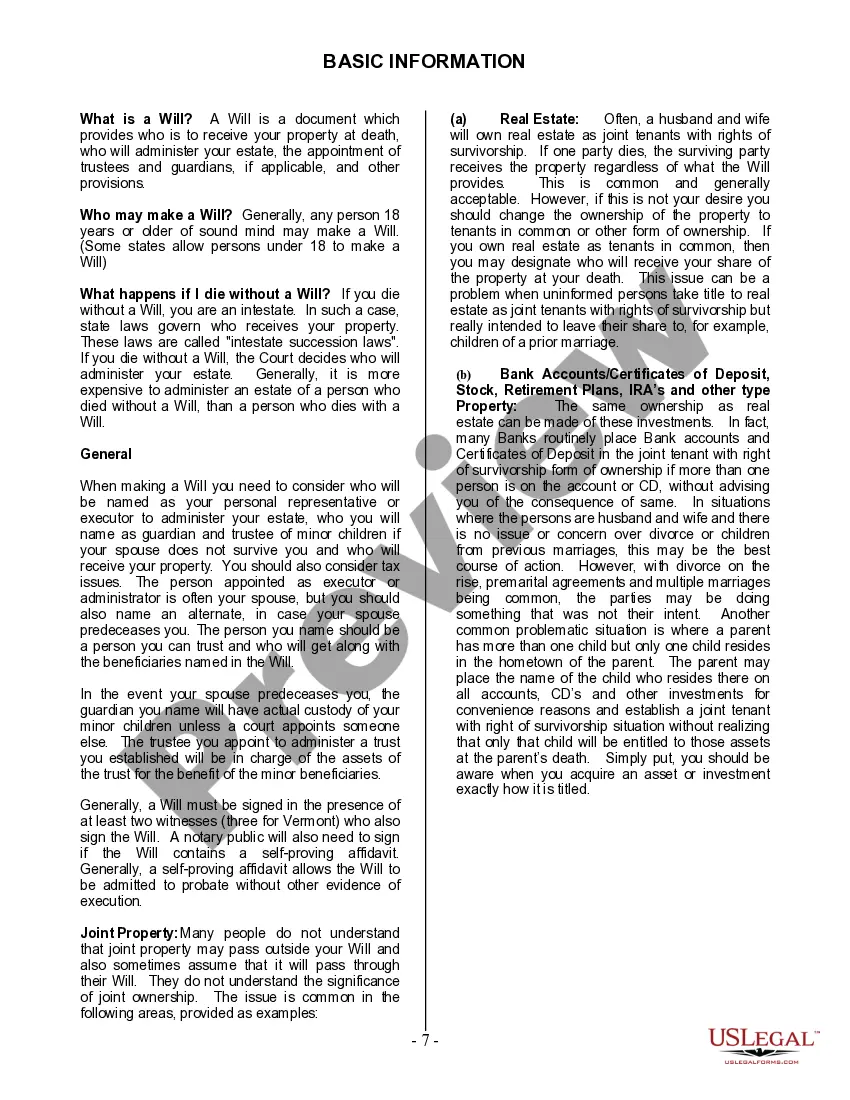
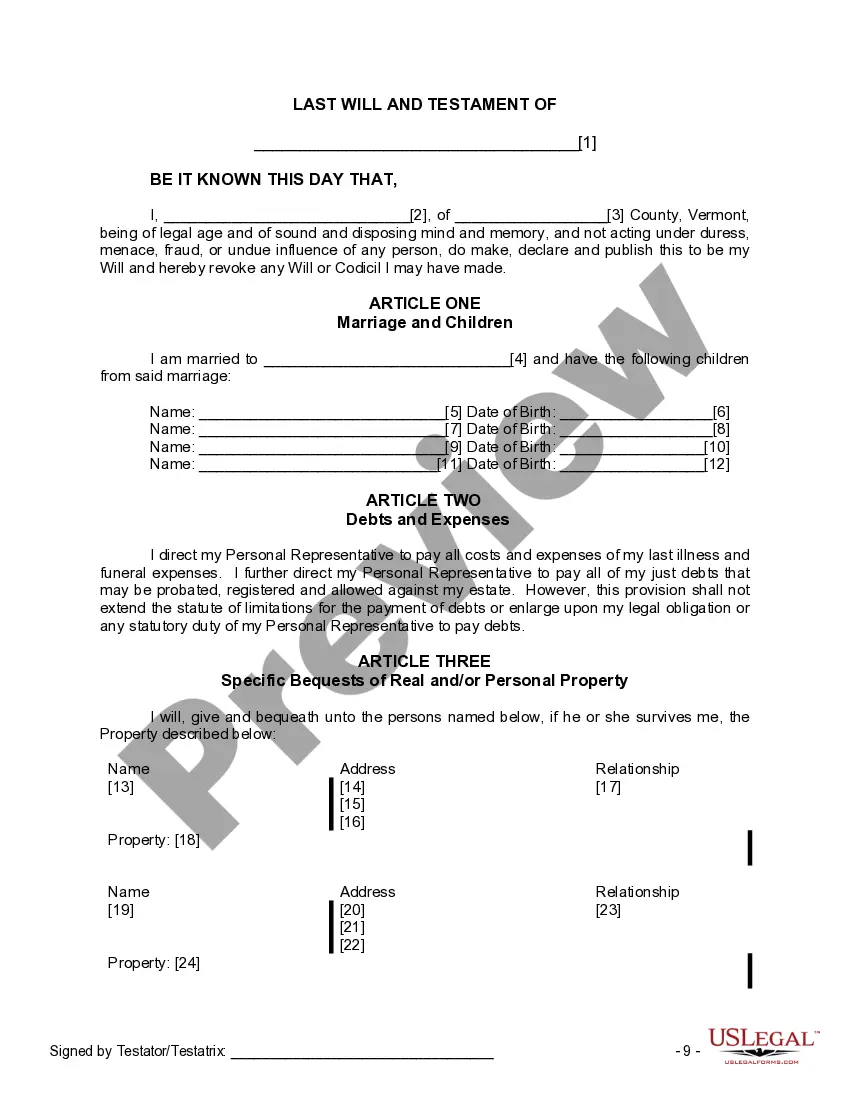
The Last Will and Testament for Married Person with Adult and Minor Children is a legal document that outlines how a married individual's estate will be distributed upon their death. This form specifically addresses the needs of individuals with both adult and minor children, allowing them to designate personal representatives, guardians, and trustees for their children. Unlike simpler wills that may not consider minor children or blended families, this form includes provisions that can protect a spouse and ensure minor beneficiaries are cared for according to the testator's wishes.
Main sections of this form
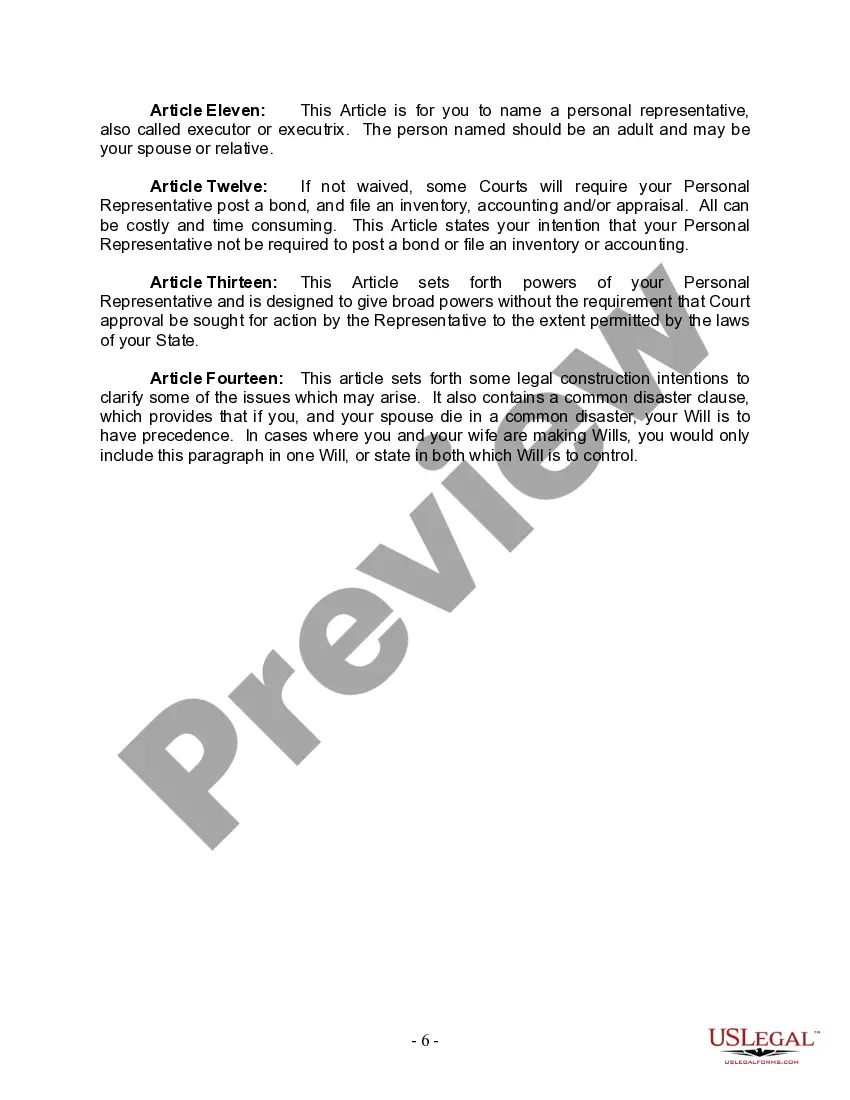
- Appointment of a personal representative or executor.
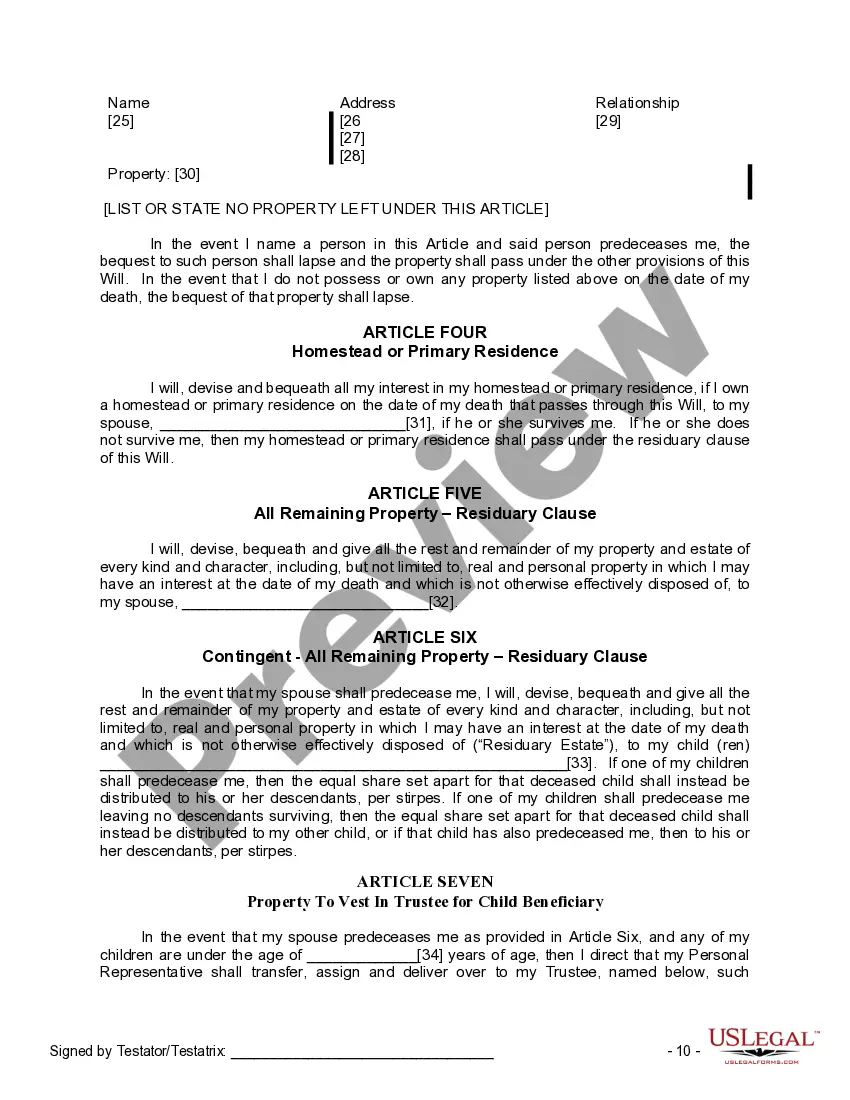
- Clear designation of who will inherit specific property.
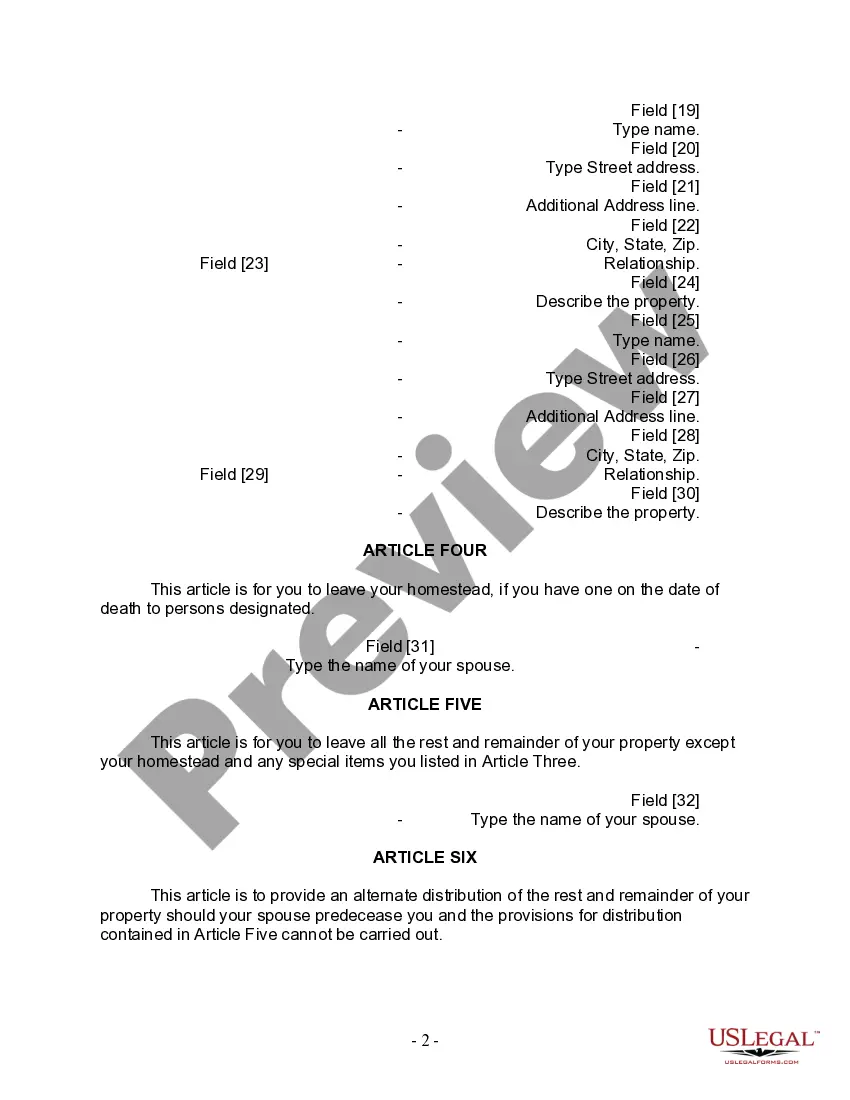
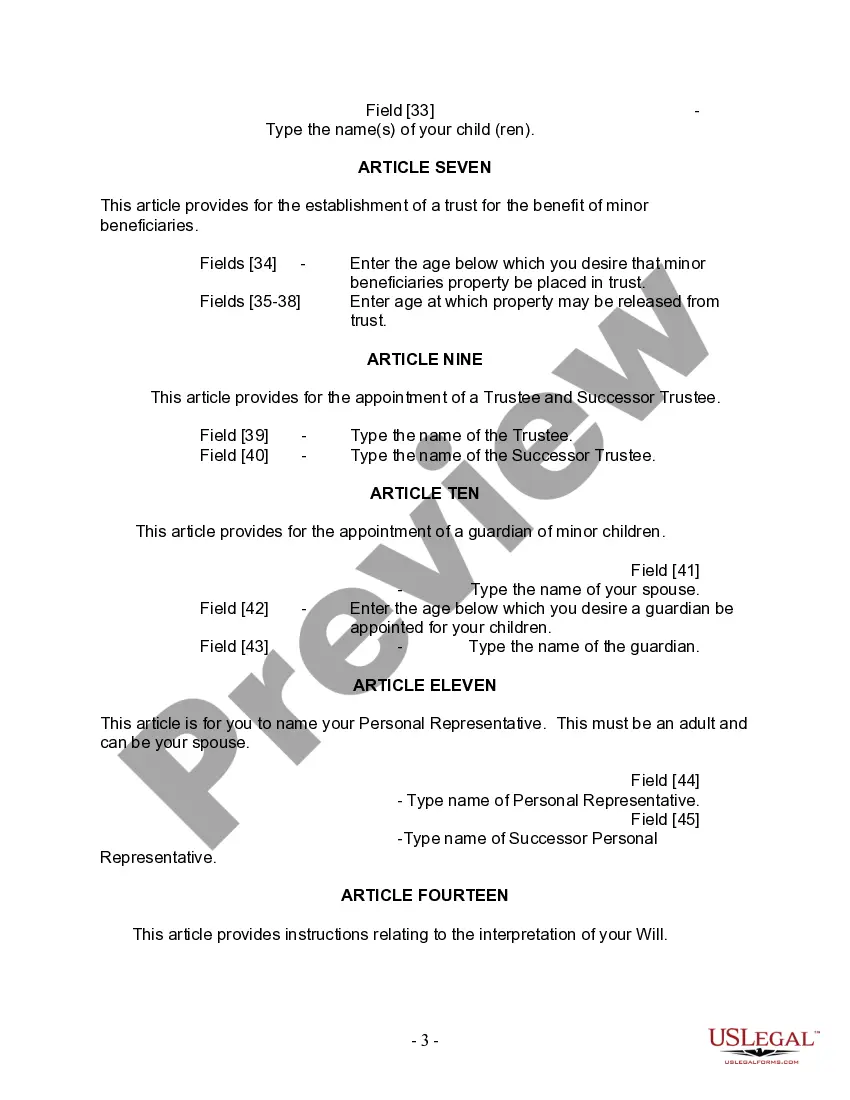
- Establishment of a trust for minor children.
- Designations for guardianship of minor children.
- Residuary clause for remaining property not specifically bequeathed.





When to use this document
This form is typically used when a married individual wants to formalize their wishes regarding estate distribution, particularly when they have children of different ages. Use this form if you want to ensure that your spouse and children are financially supported after your passing, and if you wish to set up trusts for any minor children to manage their inheritance until they reach adulthood.
Who can use this document
- Married individuals with children, both adults and minors.
- Parents who want to establish guardianship for their minor children.
- Individuals who wish to ensure specific property is passed to designated heirs.
- Anyone who desires to set up a trust for minor beneficiaries to manage funds responsibly.
Completing this form step by step
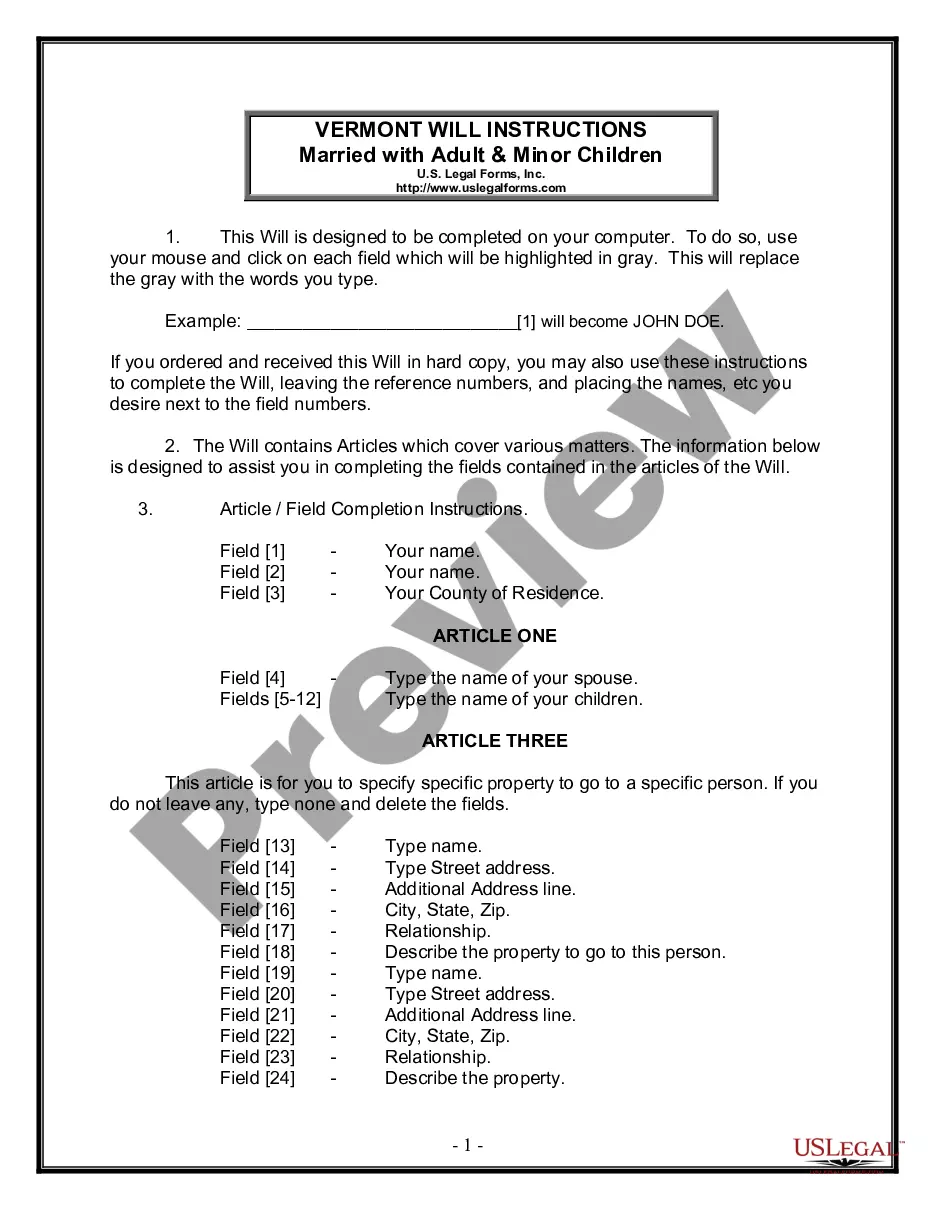
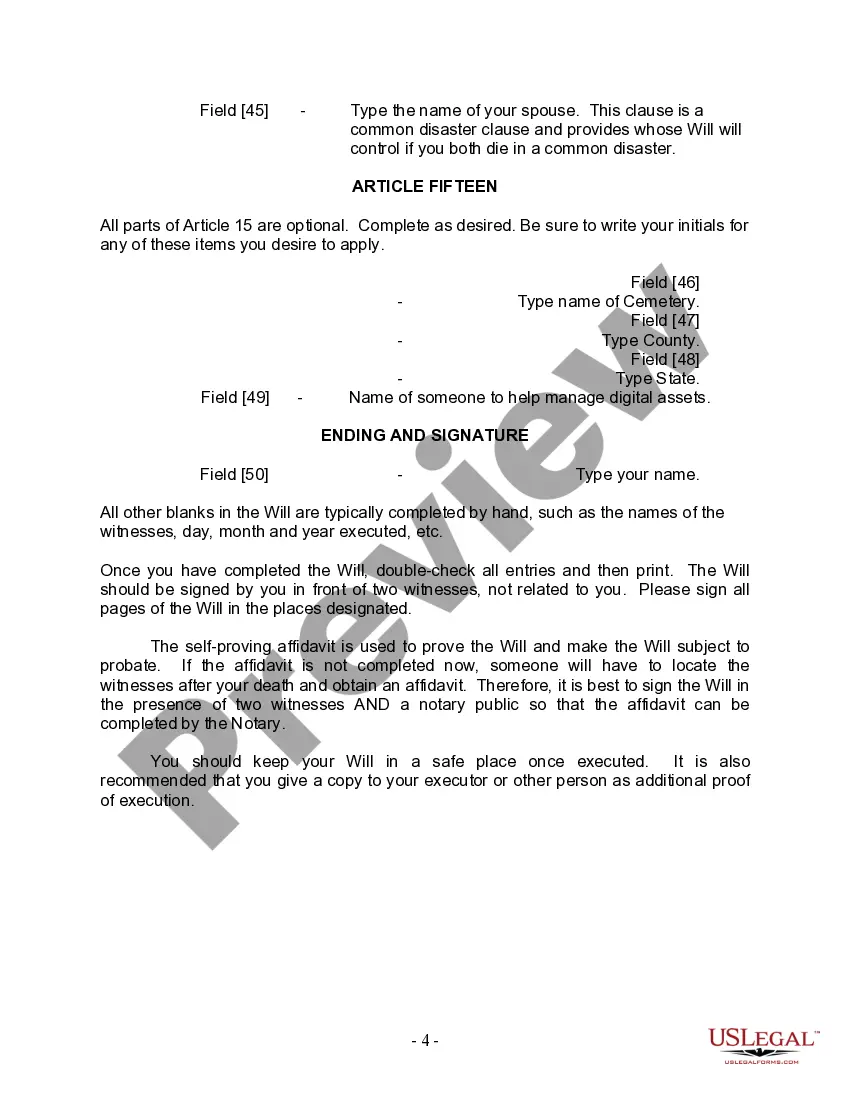
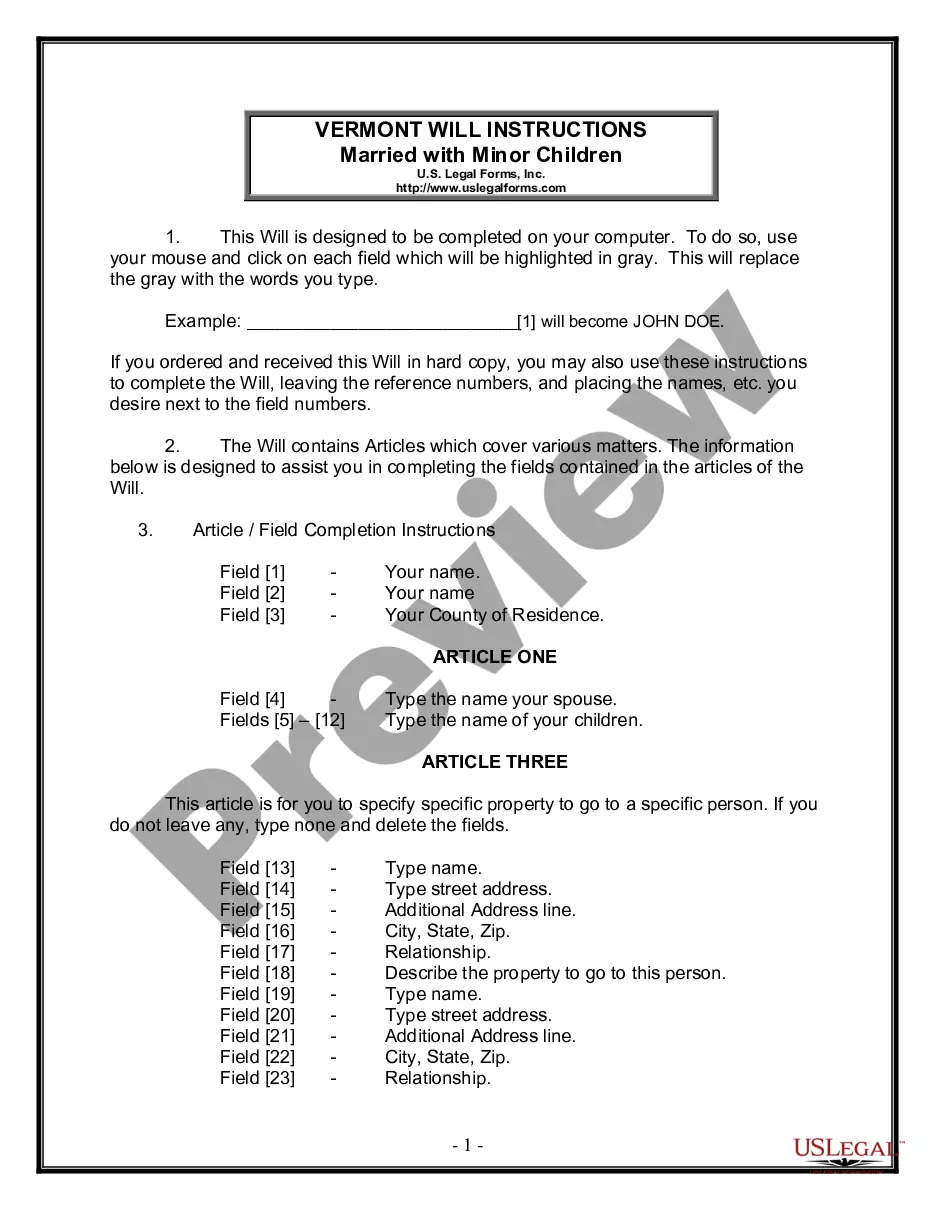
- Begin by entering your full name and county of residence at the beginning of the form.
- Identify your spouse and list your children, entering their names and birthdates in the designated fields.
- Clearly specify any specific property you wish to bequeath to named individuals in the appropriate sections.
- Designate a personal representative and an alternate to manage your estate after your passing.
- Ensure the form is signed and dated in the presence of two witnesses and, if applicable, notary public for validation.
Notarization guidance
This form needs to be notarized to ensure legal validity. US Legal Forms provides secure online notarization powered by Notarize, allowing you to complete the process through a verified video call, available anytime.
Get your form ready online
Our built-in tools help you complete, sign, share, and store your documents in one place.
Make edits, fill in missing information, and update formatting in US Legal Forms—just like you would in MS Word.
Download a copy, print it, send it by email, or mail it via USPS—whatever works best for your next step.
Sign and collect signatures with our SignNow integration. Send to multiple recipients, set reminders, and more. Go Premium to unlock E-Sign.
If this form requires notarization, complete it online through a secure video call—no need to meet a notary in person or wait for an appointment.
We protect your documents and personal data by following strict security and privacy standards.

Make edits, fill in missing information, and update formatting in US Legal Forms—just like you would in MS Word.

Download a copy, print it, send it by email, or mail it via USPS—whatever works best for your next step.

Sign and collect signatures with our SignNow integration. Send to multiple recipients, set reminders, and more. Go Premium to unlock E-Sign.

If this form requires notarization, complete it online through a secure video call—no need to meet a notary in person or wait for an appointment.

We protect your documents and personal data by following strict security and privacy standards.
Common mistakes
- Failing to have the form signed by the proper number of witnesses.
- Not including provisions for minor children or assuming property will be distributed as intended without proper documentation.
- Neglecting to review or modify the will after major life changes, such as the birth of a new child or the acquisition of significant assets.
Advantages of online completion
- Convenient: Access and complete the form from anywhere at any time.
- Editability: Easily make changes as needed without starting over.
- Reliability: The form is created by licensed attorneys to ensure legal compliance.
What to keep in mind
- This form is specifically designed for married individuals with children.
- It allows for the clear designation of asset distribution and guardianship.
- Proper execution according to state law is essential for validity.
Looking for another form?


Form popularity
FAQ
Create the initial document. Start by titling the document Last Will and Testament" and including your full legal name and address. Designate an executor. Appoint a guardian. Name the beneficiaries. Designate the assets. Ask witnesses to sign your will. Store your will in a safe place.
The testator or person making the will must be at least 18 years of age; 2022 the testator must be of sound mind; 2022 the will must be in writing; 2022 the will must be signed by the testator or the testator's name is written by another person in the testator's presence and at the testator's express direction; 2022 the
Write a Living Trust. The most straightforward way to avoid probate is simply to create a living trust. Name Beneficiaries on Your Retirement and Bank Accounts. For some, a last will is often a better fit than a trust because it is a more straightforward estate planning document. Hold Property Jointly.
Fraud or Undue Influence A nonfamily caregiver forcing the testator to leave them an inheritance. A family member getting the testator to sign a will by pretending it is just a general legal document that needs a signature.
Every financial institution will have a different threshold as to the amount they will transfer without a Grant of Probate. To provide you some guidance, a balance of somewhere in the vicinity of $20,000.00 $50,000.00 will not require a Grant of Probate.
Retirement accountsIRAs or 401(k)s, for examplefor which a beneficiary was named. Life insurance proceeds (unless the estate is named as beneficiary, which is rare) Property held in a living trust. Funds in a payable-on-death (POD) bank account.
In Vermont, you can make a living trust to avoid probate for virtually any asset you own -- real estate, bank accounts, vehicles, and so on. You need to create a trust document (it's similar to a will), naming someone to take over as trustee after your death (called a successor trustee).
In California, estates valued over $150,000, and that don't qualify for any exemptions, must go to probate.If a person dies and owns real estate, regardless of value, either in his/her name alone or as a "tenant in common" with another, a probate proceeding is typically required to transfer the property.
No, in Vermont, you do not need to notarize your will to make it legal. However, Vermont allows you to make your will "self-proving" and you'll need to go to a notary if you want to do that. A self-proving will speeds up probate because the court can accept the will without contacting the witnesses who signed it.