Vermont Last Will and Testament for a Married Person with No Children
What is this form?
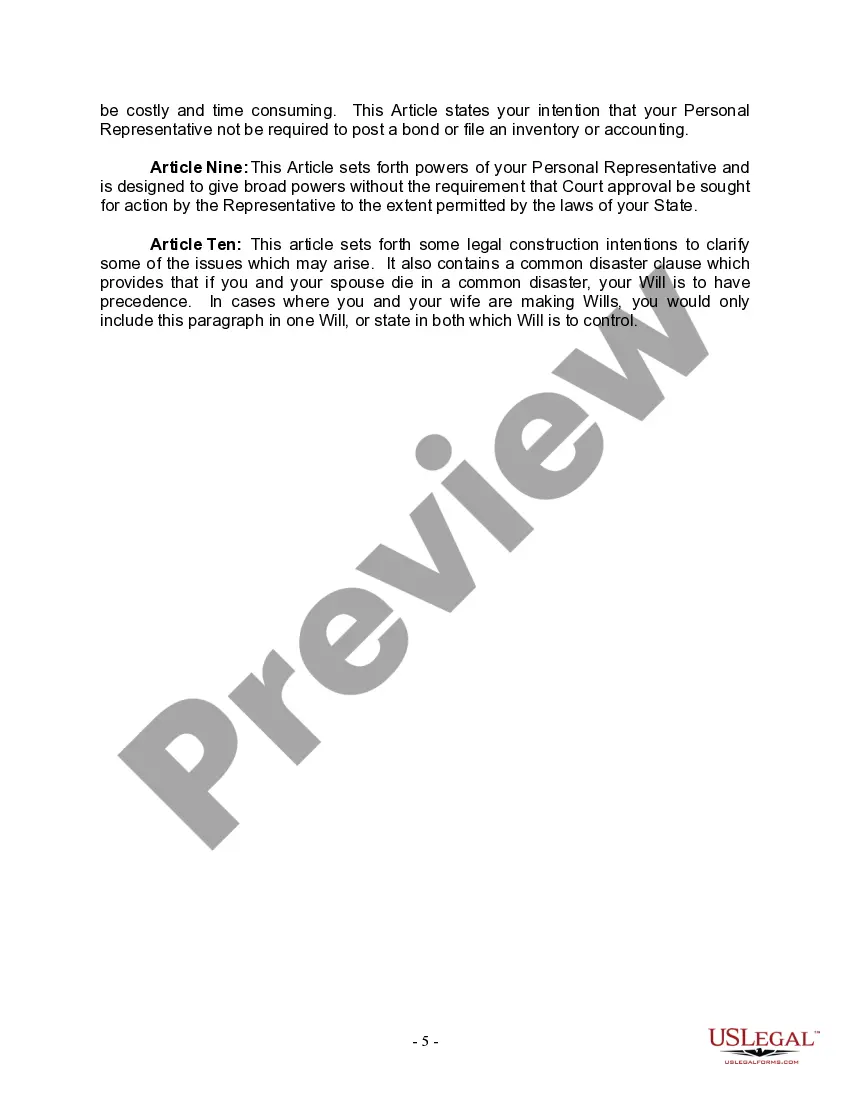
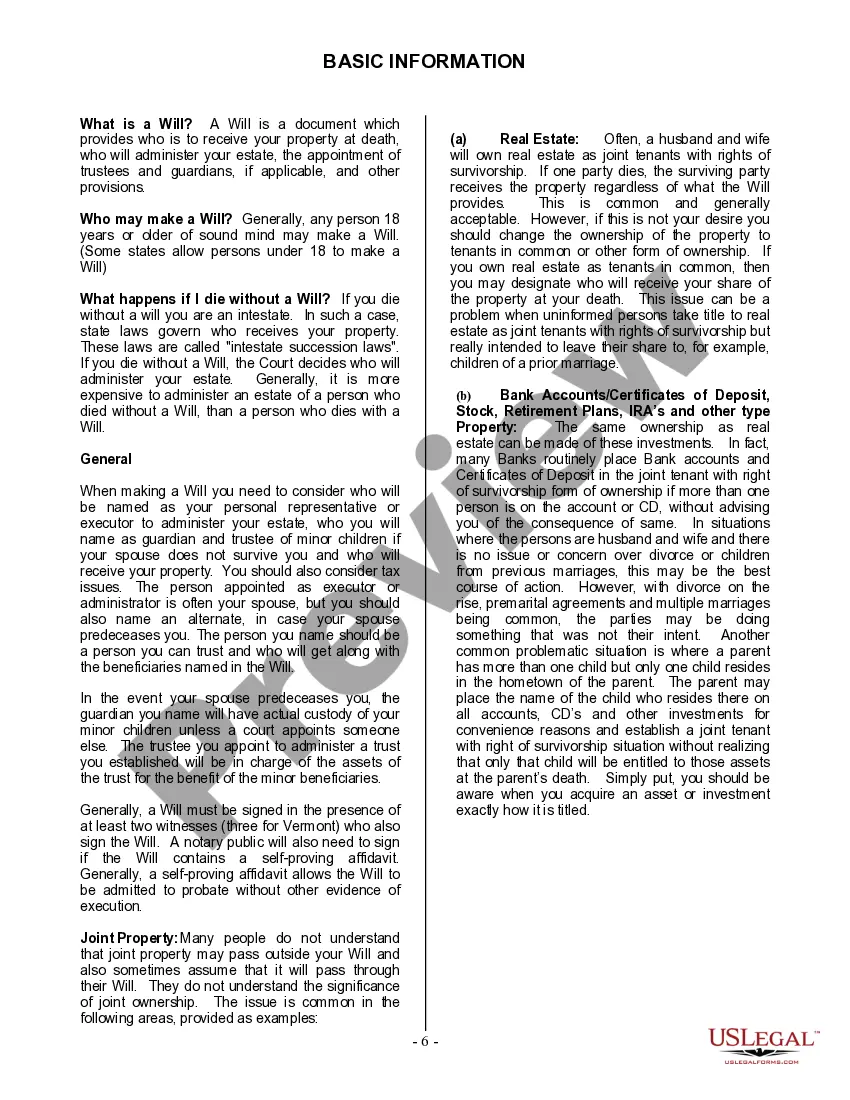
This Last Will and Testament for a Married Person with No Children is a legal document that outlines how a married individual wishes to distribute their assets after death. It differs from other wills by specifically addressing the situation of individuals without children, ensuring that provisions are made primarily for the spouse. This will helps to prevent potential disputes and provides clarity on the testator's wishes regarding property and finances.
Key components of this form
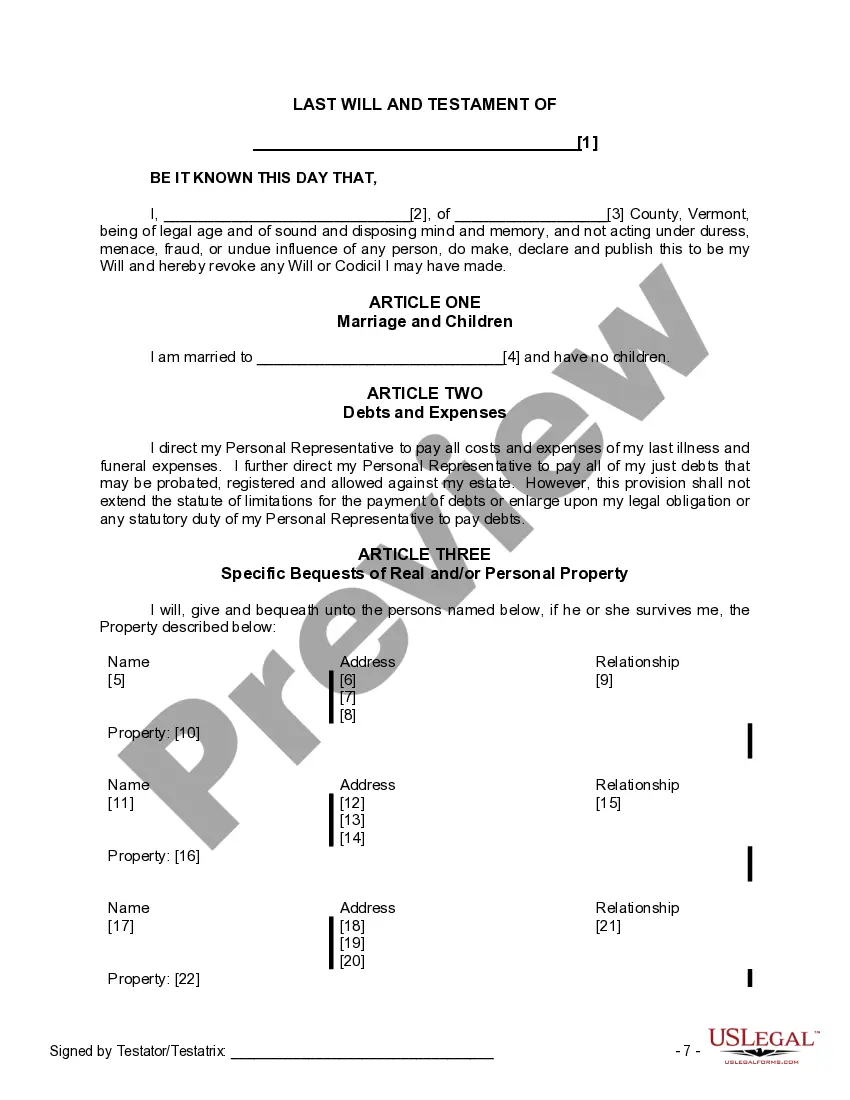
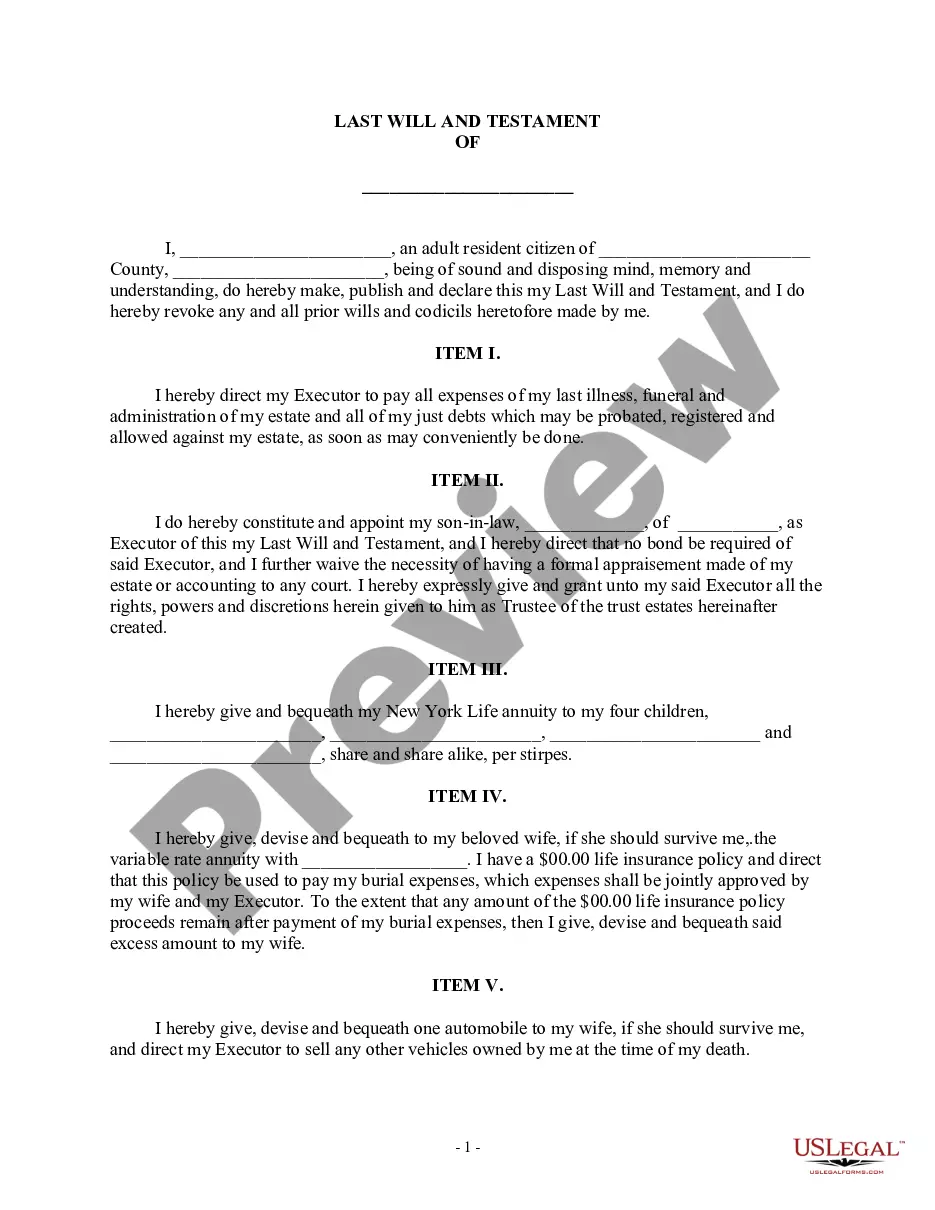
- Personal Details: Includes the name and residence of the testator.
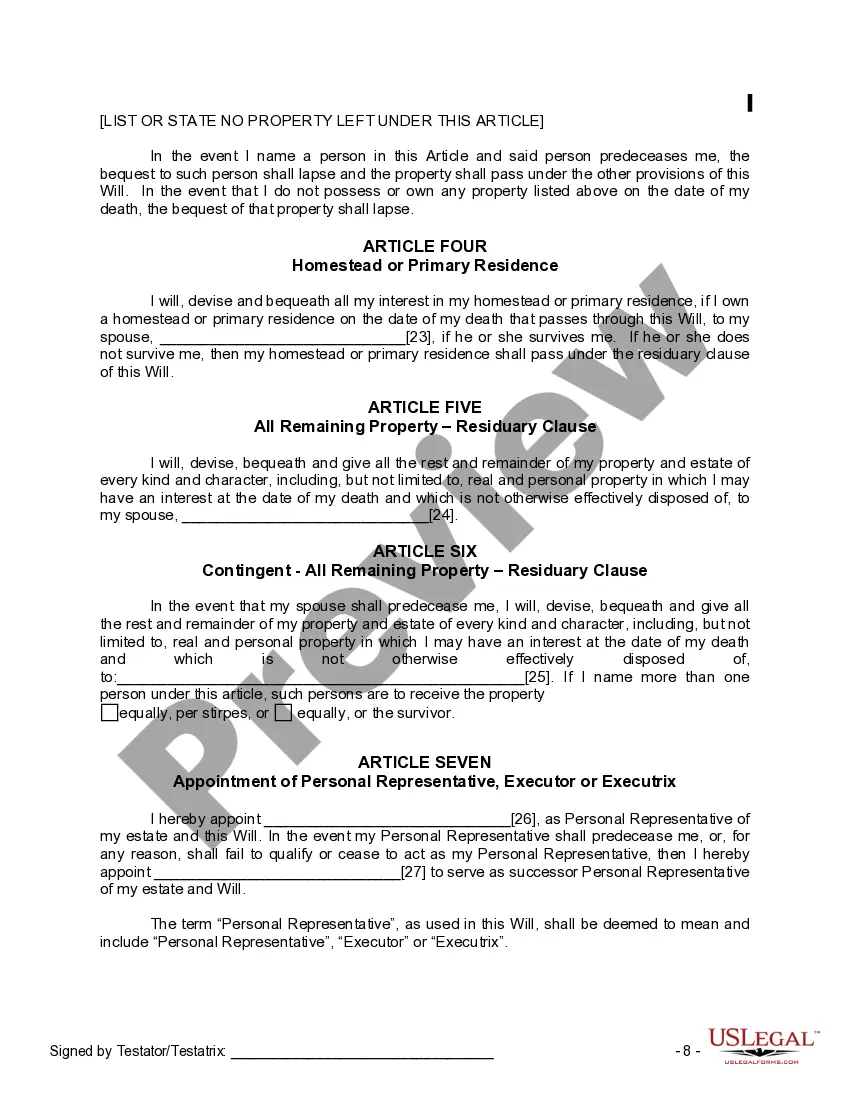
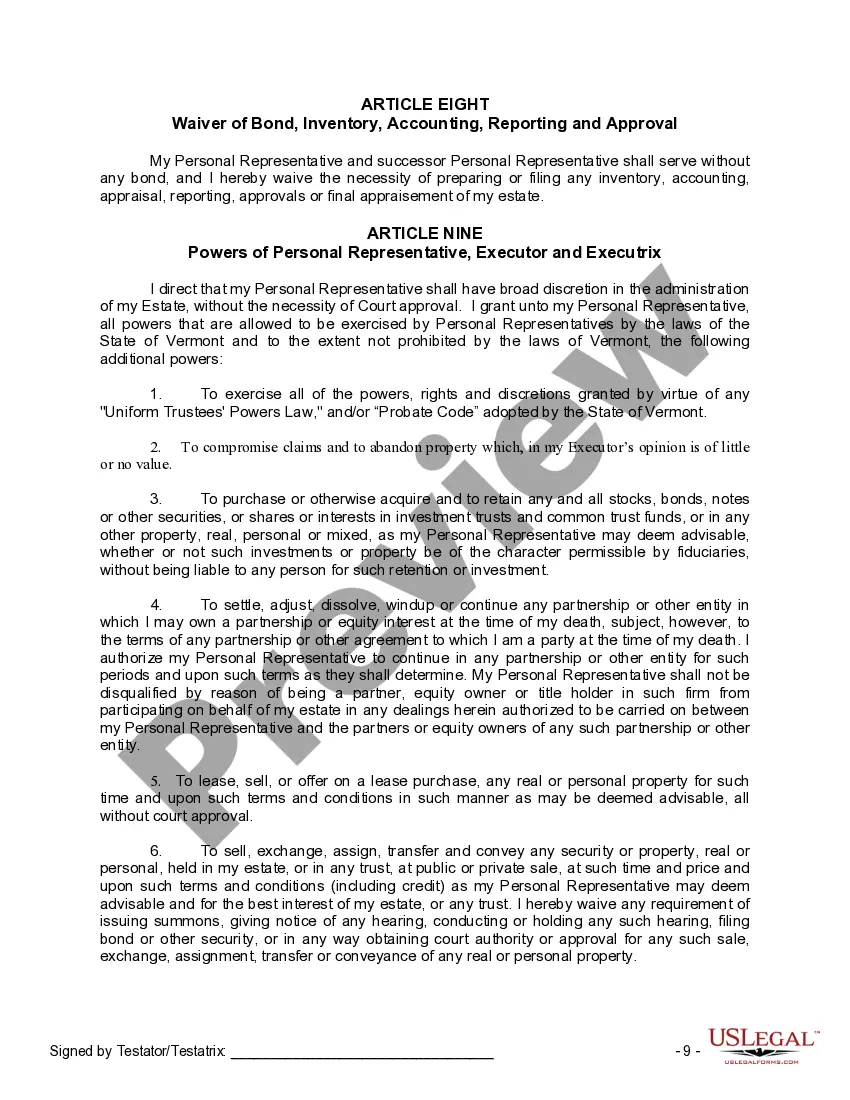
- Appointment of Executor: Designates a personal representative to manage the estate.
- Specific Bequests: Allows the testator to leave specific items to specific individuals.
- Residuary Clause: Distributes all remaining assets to the chosen beneficiary, usually the spouse.
- Homestead Provision: Specifies how the primary residence will be distributed.
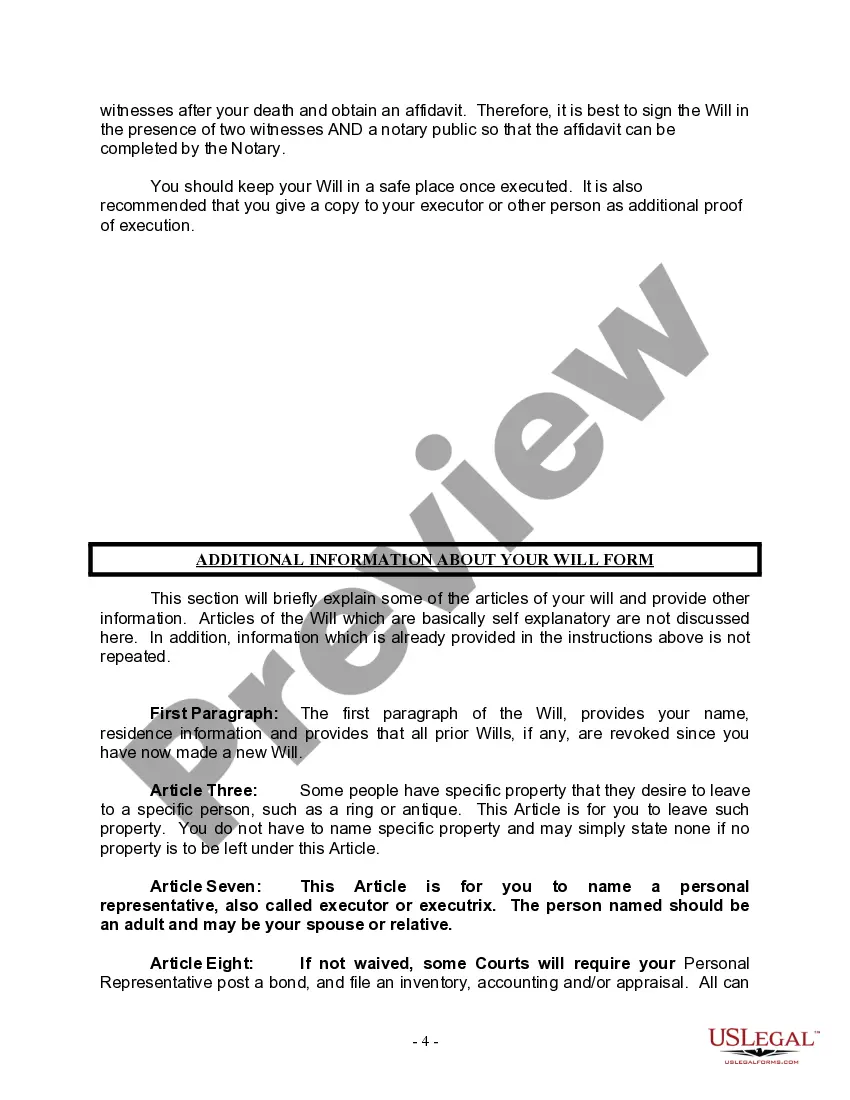
- Signature and Witness Requirements: Outlines the necessity for signing in front of witnesses to validate the will.





Situations where this form applies
This form should be used by married individuals who do not have children and wish to establish their wishes for asset distribution after their death. It is helpful in scenarios where a spouse needs to be the primary beneficiary, ensuring that all legal requirements are met to provide peace of mind and clarity for family members.
Who needs this form
- Married Individuals without children
- Those looking to ensure their spouse inherits their estate
- People wanting to avoid intestate succession laws
- Anyone needing a clear legal declaration of asset distribution
How to complete this form
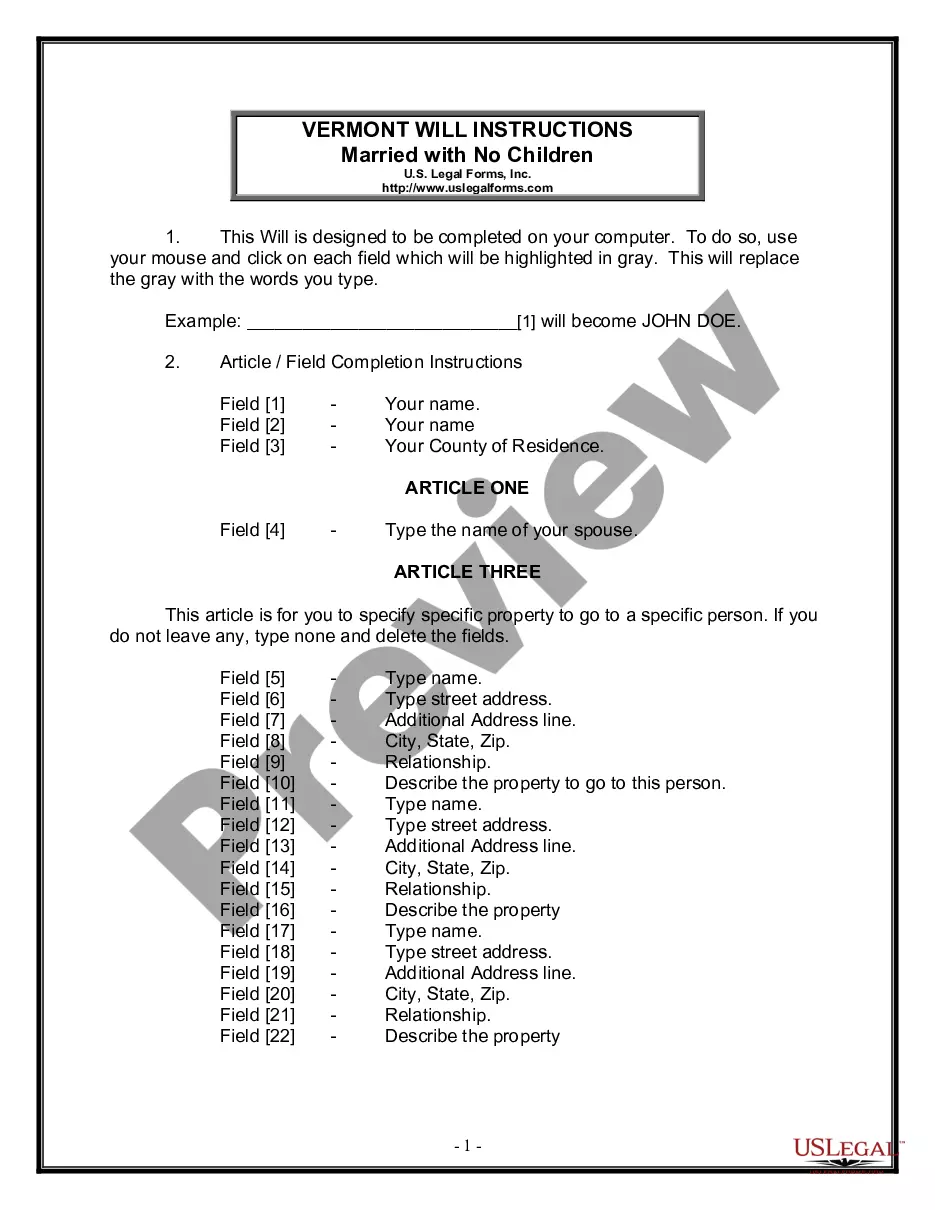
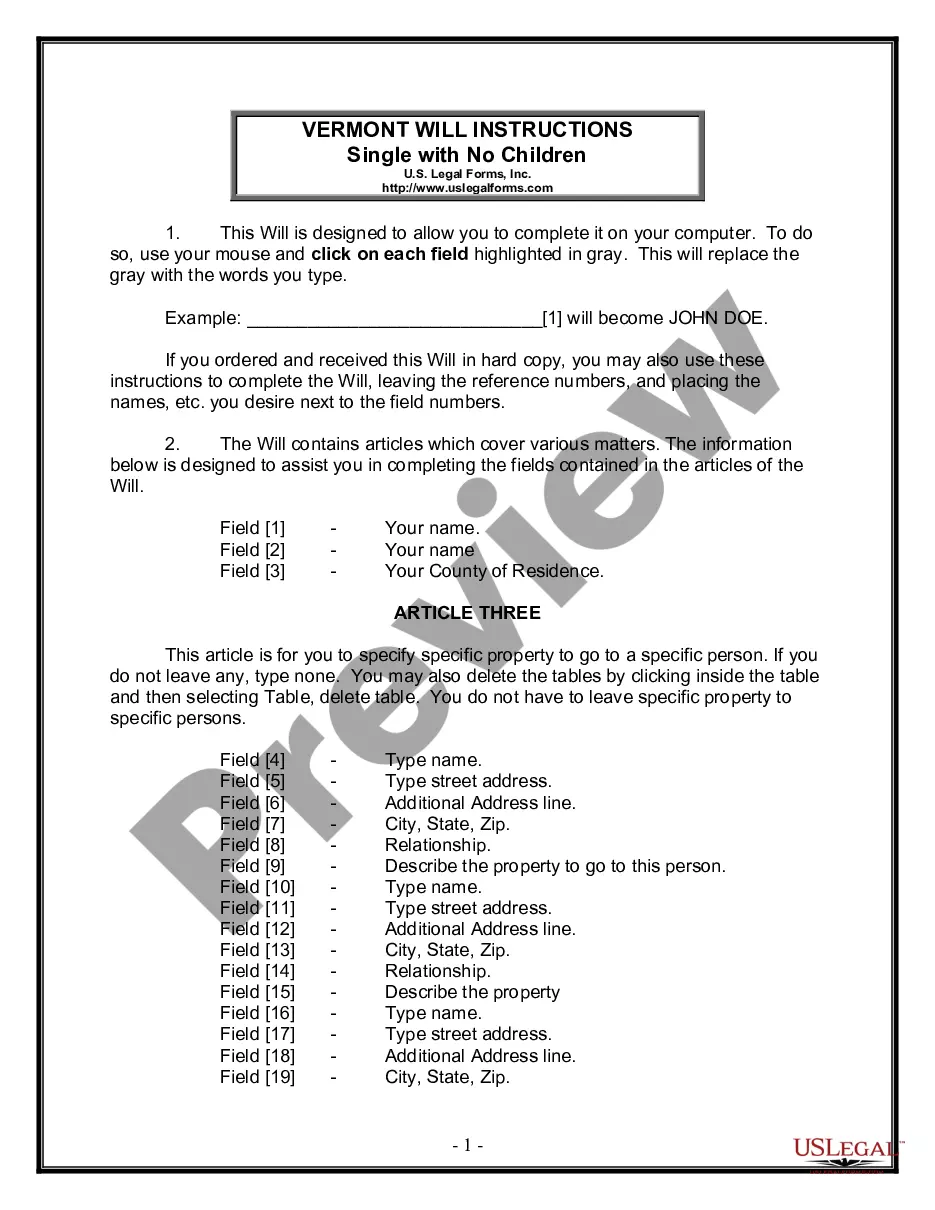
- Begin by entering your full name and county of residence at the top of the document.
- In Article One, specify your spouse's name.
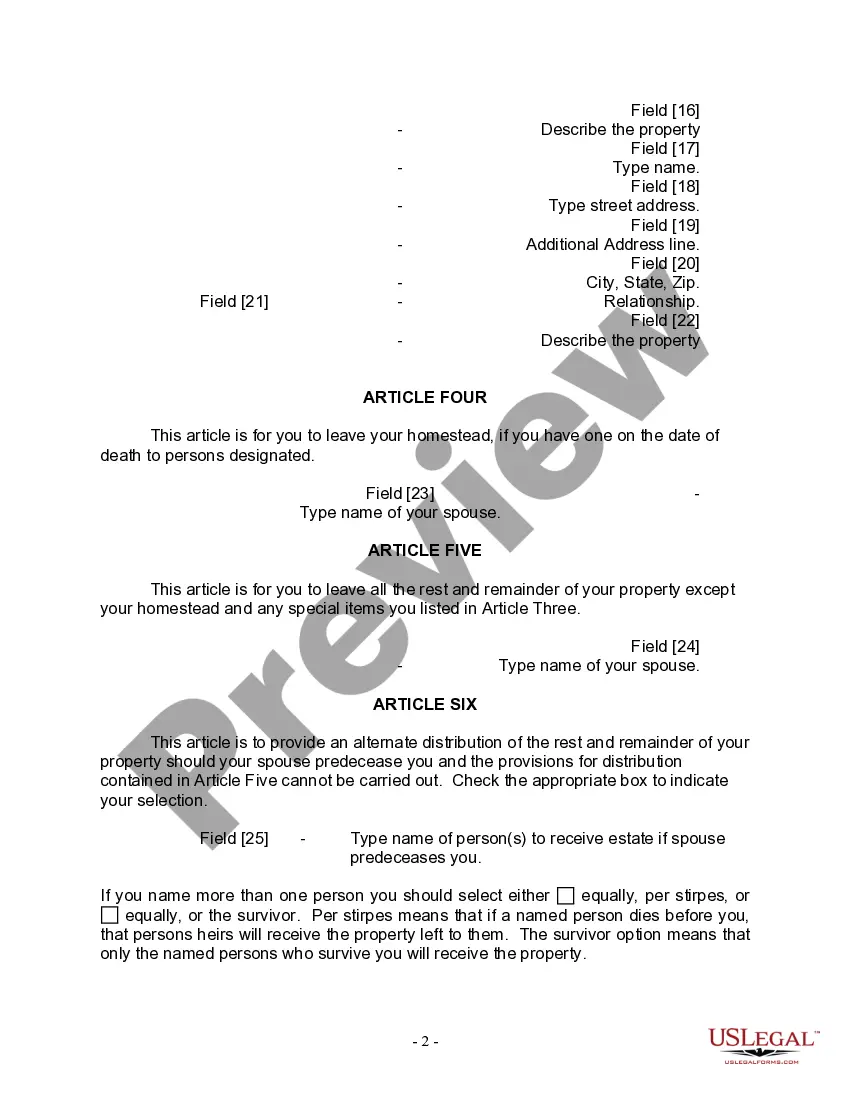
- Complete Sections for any specific bequests you wish to make in Article Three, outlining properties or items to be bequeathed.
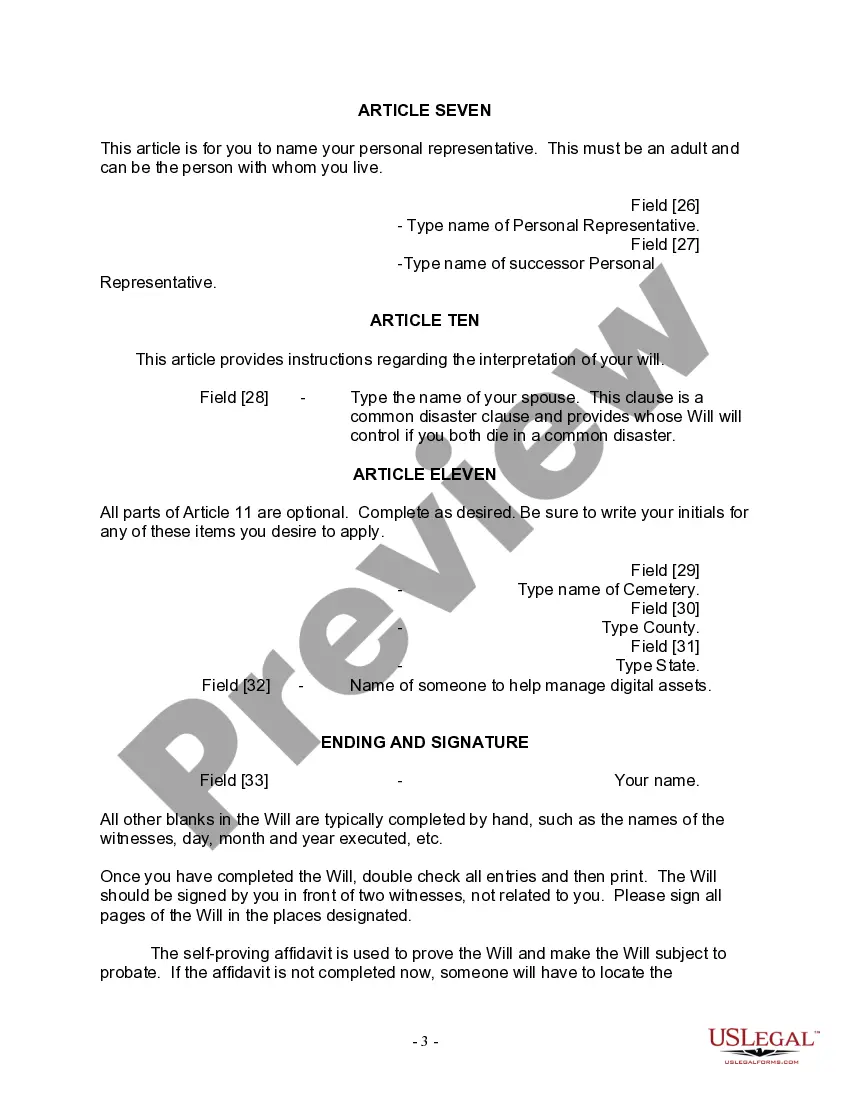
- Designate a personal representative to manage your estate in Article Seven.
- After filling in the required information, several fields will need to be signed in front of witnesses for the will to be legally binding.
Is notarization required?
Notarization is required for this form to take effect. Our online notarization service, powered by Notarize, lets you verify and sign documents remotely through an encrypted video session, available 24/7.
Get your form ready online
Our built-in tools help you complete, sign, share, and store your documents in one place.
Make edits, fill in missing information, and update formatting in US Legal Forms—just like you would in MS Word.
Download a copy, print it, send it by email, or mail it via USPS—whatever works best for your next step.
Sign and collect signatures with our SignNow integration. Send to multiple recipients, set reminders, and more. Go Premium to unlock E-Sign.
If this form requires notarization, complete it online through a secure video call—no need to meet a notary in person or wait for an appointment.
We protect your documents and personal data by following strict security and privacy standards.

Make edits, fill in missing information, and update formatting in US Legal Forms—just like you would in MS Word.

Download a copy, print it, send it by email, or mail it via USPS—whatever works best for your next step.

Sign and collect signatures with our SignNow integration. Send to multiple recipients, set reminders, and more. Go Premium to unlock E-Sign.

If this form requires notarization, complete it online through a secure video call—no need to meet a notary in person or wait for an appointment.

We protect your documents and personal data by following strict security and privacy standards.
Mistakes to watch out for
- Failing to properly sign the will in front of the required witnesses.
- Not designating an alternate executor in case the primary executor cannot serve.
- Leaving out essential information regarding specific bequests or distribution methods.
- Assuming the form meets all state-specific requirements without verification.
Why complete this form online
- Convenience of completing the form from home at your own pace.
- Editability to customize provisions according to personal wishes.
- Reliability of using a professionally drafted template by licensed attorneys.
Summary of main points
- This Last Will and Testament is specifically designed for married individuals without children.
- The form outlines clear provisions for asset distribution to ensure the wishes of the deceased are followed.
- Proper execution of the will, including notarization, helps avoid legal complications.
- Using an online form offers convenience and access to professionally drafted templates.
Looking for another form?

Form popularity
FAQ
As long as it was properly signed and witnessed by two adult independent witnesses who are present at the time you sign your will, it should be legally binding.Using the wrong wording could mean that your instructions aren't followed, or even that your will isn't valid.
A will can also be declared invalid if someone proves in court that it was procured by undue influence. This usually involves some evil-doer who occupies a position of trust -- for example, a caregiver or adult child -- manipulating a vulnerable person to leave all, or most, of his property to the manipulator instead
As long as it was properly signed and witnessed by two adult independent witnesses who are present at the time you sign your will, it should be legally binding. But that doesn't mean it's a good idea.Using the wrong wording could mean that your instructions aren't followed, or even that your will isn't valid.
No, in Vermont, you do not need to notarize your will to make it legal. However, Vermont allows you to make your will "self-proving" and you'll need to go to a notary if you want to do that. A self-proving will speeds up probate because the court can accept the will without contacting the witnesses who signed it.
It must be in writing. Generally, of course, wills are composed on a computer and printed out. The person who made it must have signed and dated it. A will must be signed and dated by the person who made it. Two adult witnesses must have signed it. Witnesses are crucial.
You don't need a lawyer to create a will if you have a straightforward financial situation.You can use online templates or software to write a will yourself. In order to legalize the will, it needs to be signed and dated by you and at least two other witnesses.
There are strict legal requirements under the Wills Act for a will to be valid.A will must be properly witnessed to be valid. All signatures in the will must be witnessed by at least two (2) other people. Your signature as testator (one who makes the will) of the will must be made in the presence of the two witnesses.
A Will Kit is also less likely to be legally binding and executed correctly. It is important to note that a Will must conform to strict legal requirements otherwise the Courts may decide it is not valid.
The following are the key requirements of a valid Will: It must be in writing; It must be signed by the testator; It must be attested to by witnesses.