Assignment of Life Insurance as Collateral
Overview of this form
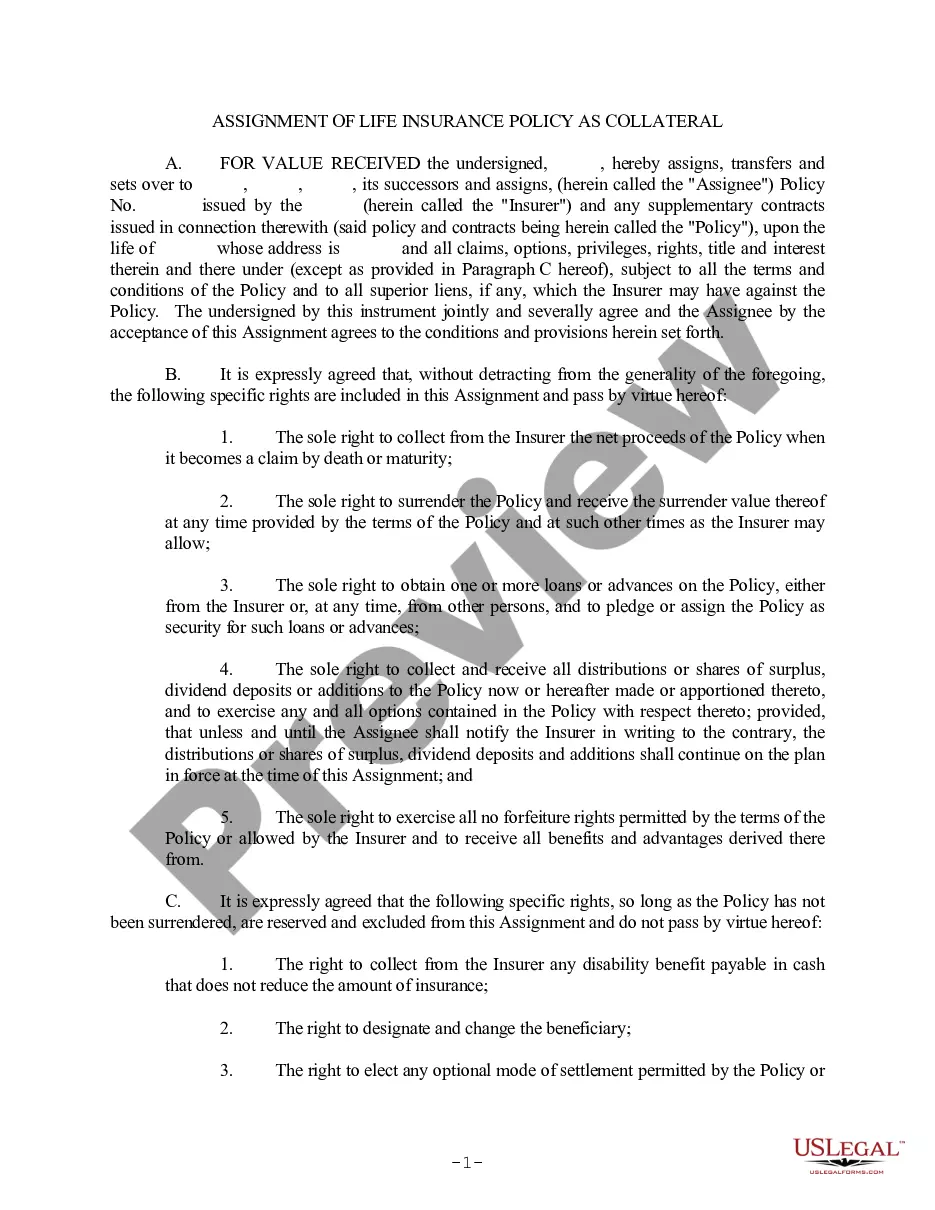
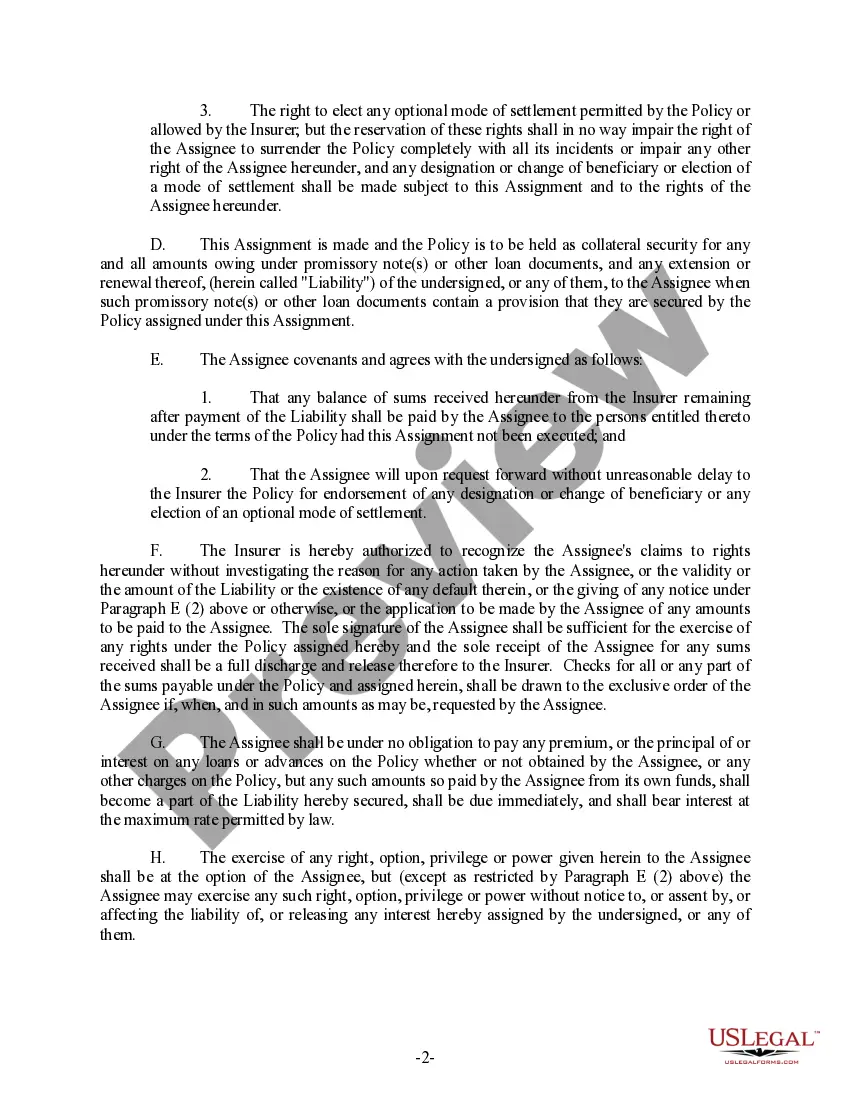
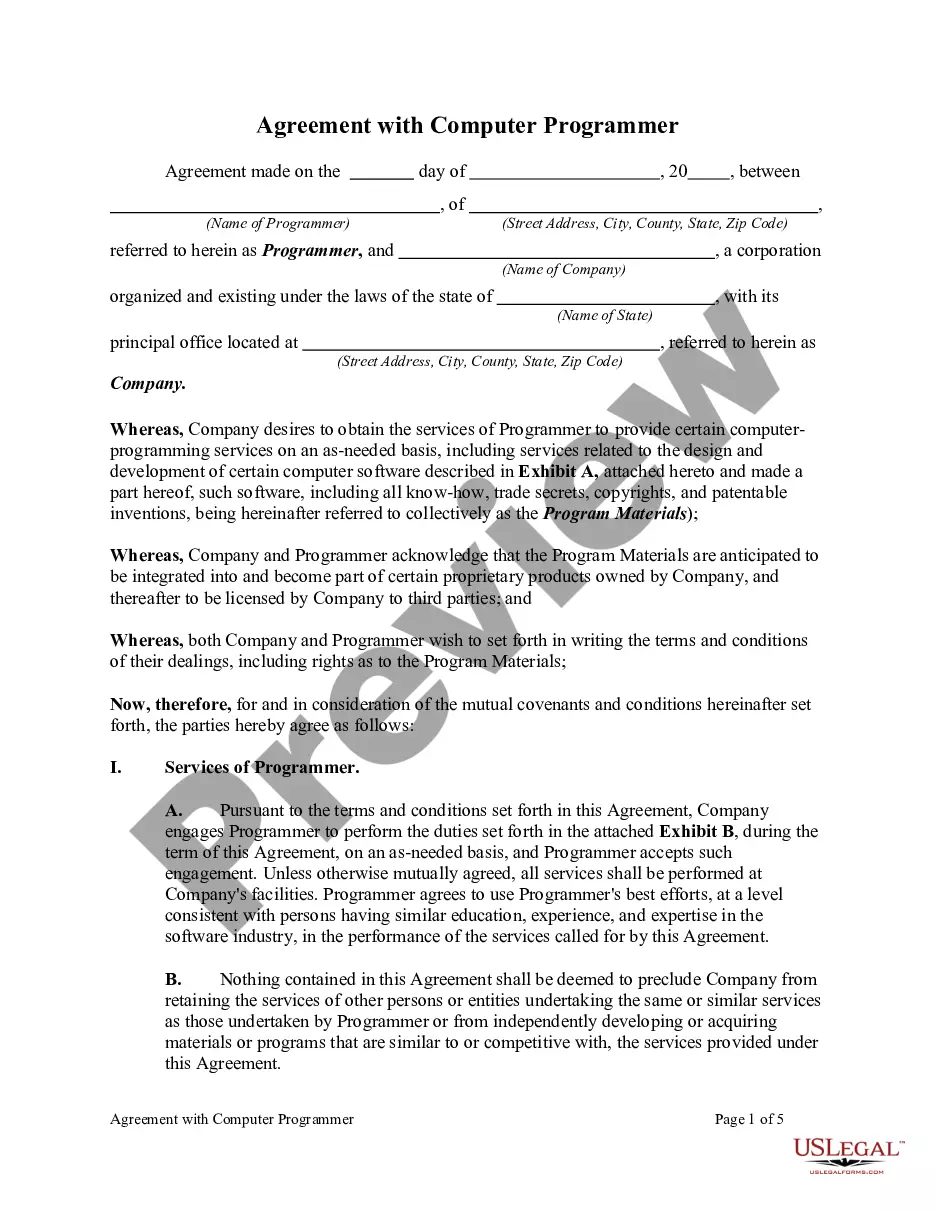
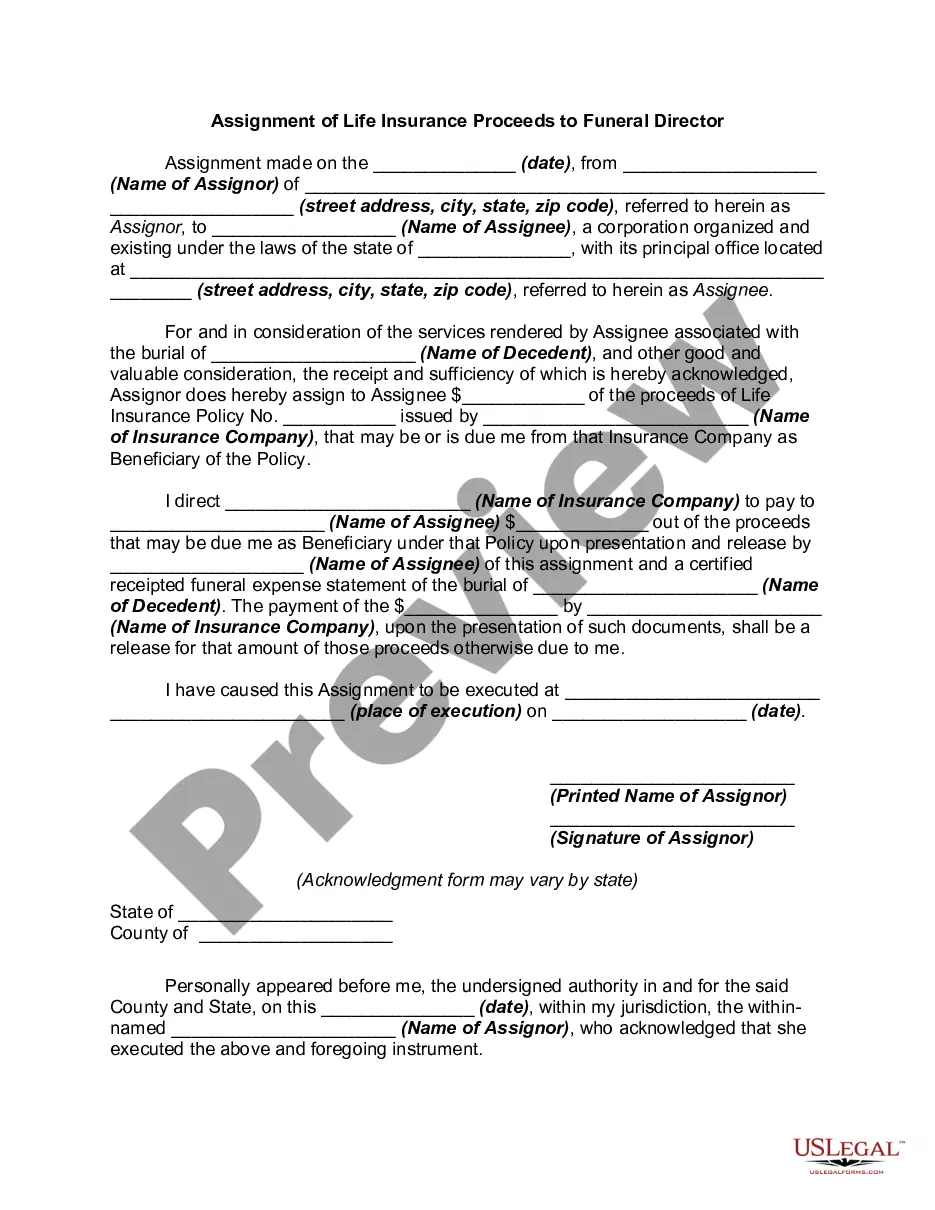
The Assignment of Life Insurance as Collateral is a legal document used to secure a loan or obligation by assigning a life insurance policy as collateral. This form outlines the rights transferred to the lender, known as the Assignee, such as the right to collect death benefits and the ability to surrender the policy. Unlike standard life insurance forms, this assignment specifically details the collateral context, establishing the life insurance policyâs role in securing financial obligations.
Key components of this form
- Identification of the insured party and policy information.
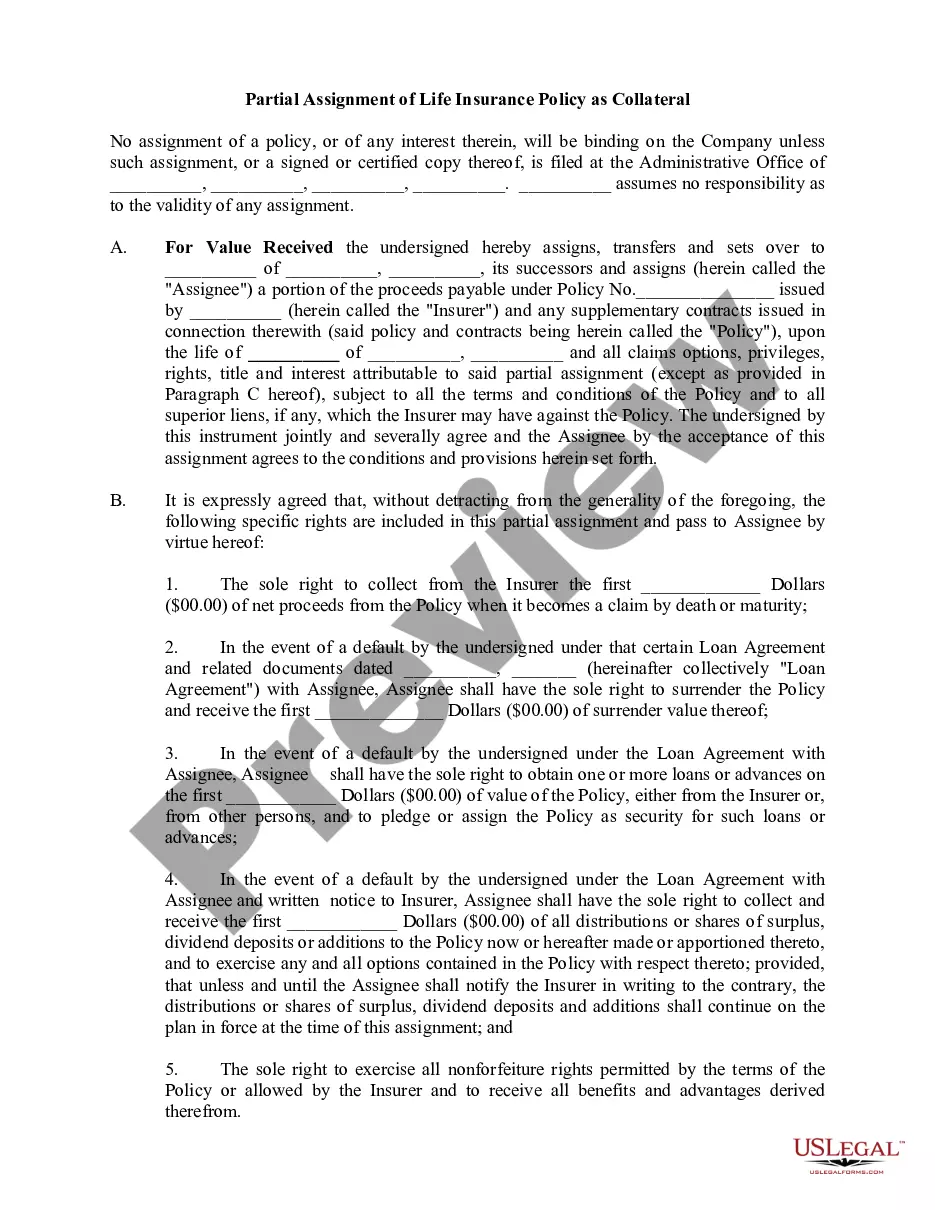
- Specific rights assigned to the Assignee, including collection of benefits and surrender rights.
- Reserved rights for the Insured, such as beneficiary designation and disability benefits.
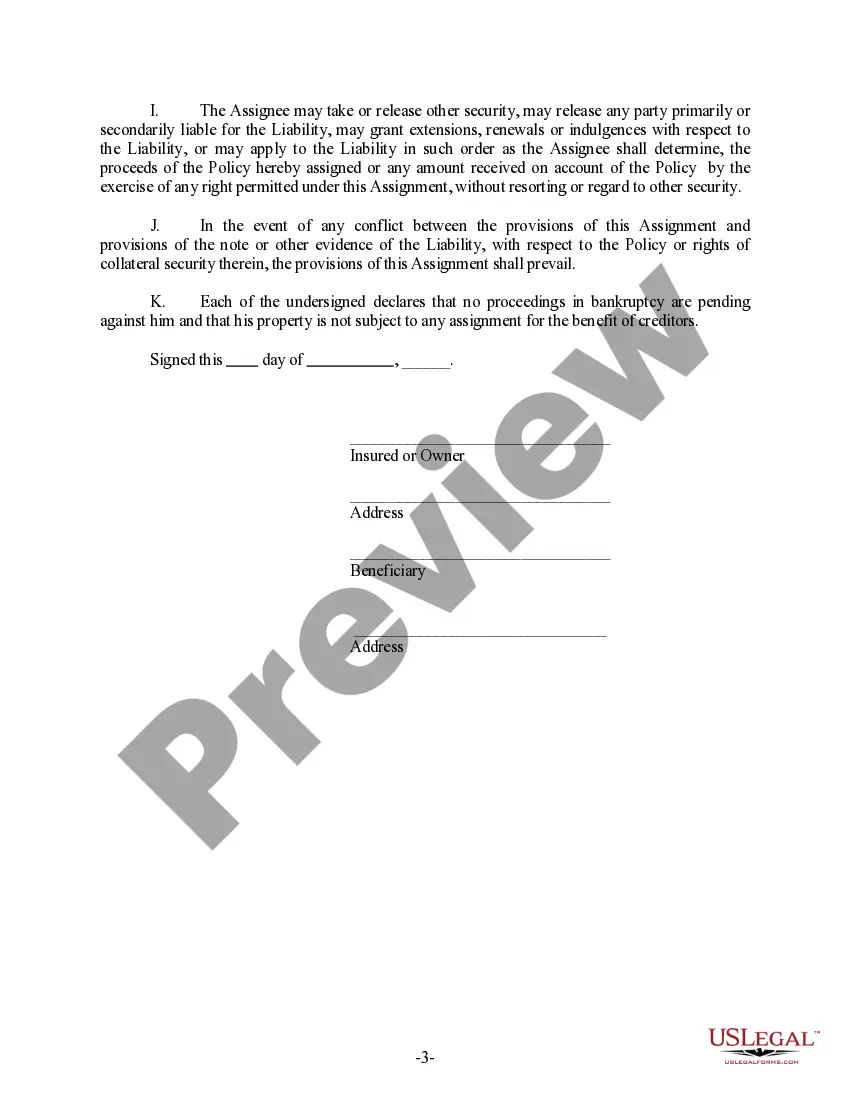
- Clauses regarding the agreementâs enforceability and recourse for the Assignee.
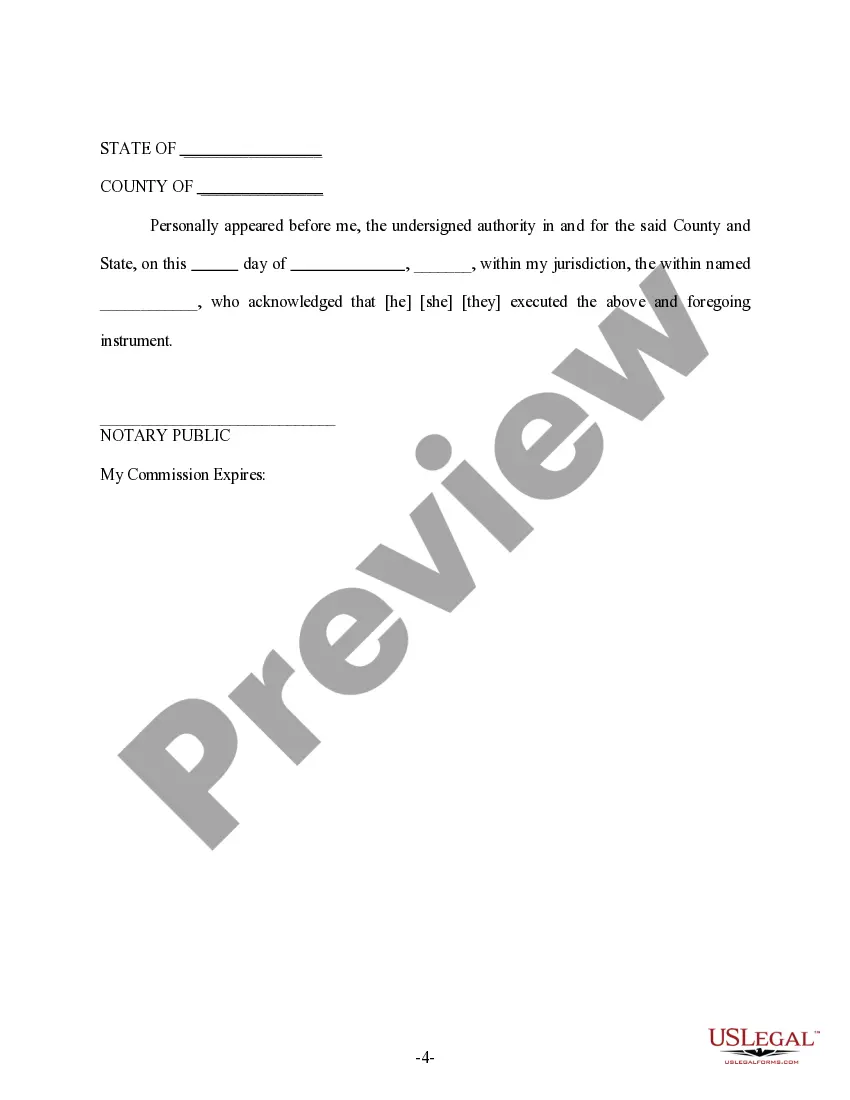
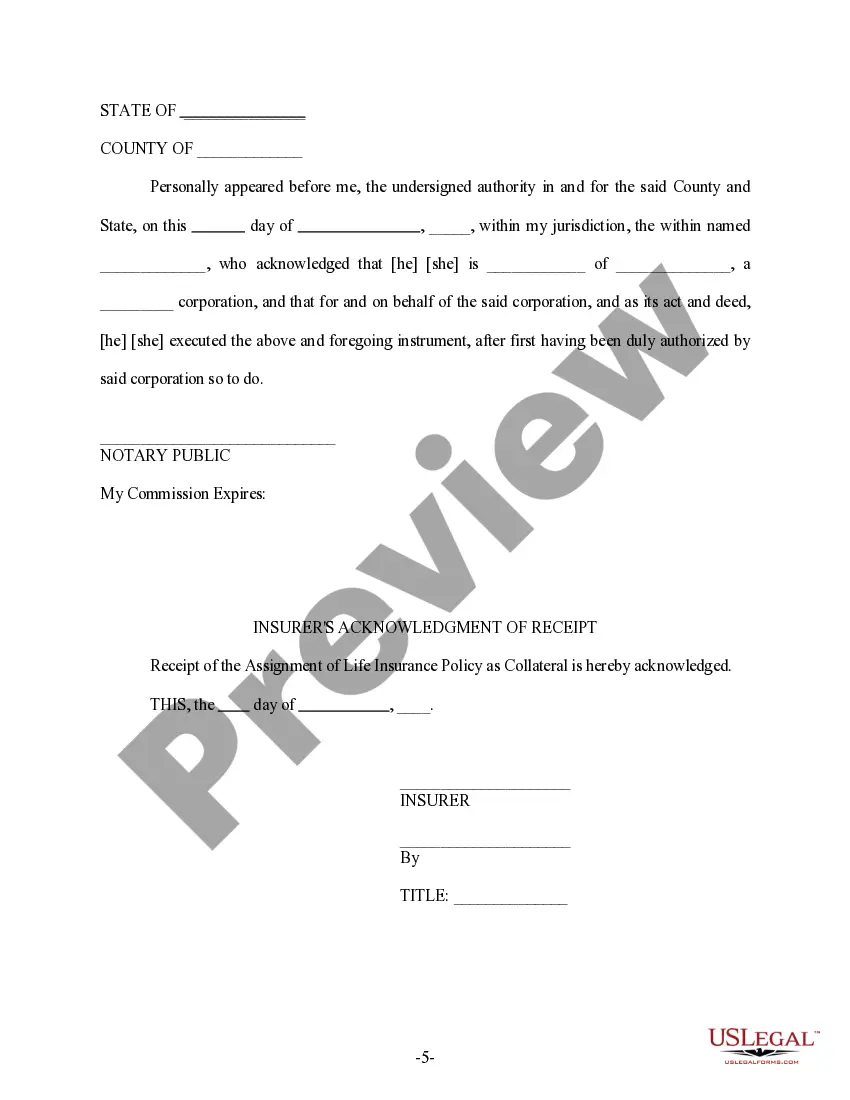
- Signatures from all relevant parties and acknowledgment of a notary public.
When to use this form
This form is necessary when an individual wishes to secure a loan using their life insurance policy as collateral. It can be useful in various scenarios, including personal loans, business financing, or when looking to leverage existing assets to obtain better loan terms. By assigning the life insurance policy, the borrower provides the lender with assurance that they will be compensated in case of default.
Who needs this form
- Individuals who have a life insurance policy they want to use as collateral for a loan.
- Lenders or financial institutions that require security for loans.
- Business owners looking to secure financing against their life insurance assets.
How to complete this form
- Identify the parties involved, including the Insured, Assignee, and any Beneficiaries.
- Provide specific information about the life insurance policy being assigned, including the policy number.
- Fill in the details regarding any loans or obligations secured by this assignment.
- Sign and date the form where indicated, ensuring all required parties sign.
- Have the document notarized, if required, and obtain an acknowledgment from the Insurer.
Does this document require notarization?
Yes, this form must be notarized to be legally valid. US Legal Forms offers integrated online notarization services, providing secure access to a notary via video call, ensuring your document meets legal requirements without the need for travel.
Get your form ready online
Our built-in tools help you complete, sign, share, and store your documents in one place.
Make edits, fill in missing information, and update formatting in US Legal Forms—just like you would in MS Word.
Download a copy, print it, send it by email, or mail it via USPS—whatever works best for your next step.
Sign and collect signatures with our SignNow integration. Send to multiple recipients, set reminders, and more. Go Premium to unlock E-Sign.
If this form requires notarization, complete it online through a secure video call—no need to meet a notary in person or wait for an appointment.
We protect your documents and personal data by following strict security and privacy standards.

Make edits, fill in missing information, and update formatting in US Legal Forms—just like you would in MS Word.

Download a copy, print it, send it by email, or mail it via USPS—whatever works best for your next step.

Sign and collect signatures with our SignNow integration. Send to multiple recipients, set reminders, and more. Go Premium to unlock E-Sign.

If this form requires notarization, complete it online through a secure video call—no need to meet a notary in person or wait for an appointment.

We protect your documents and personal data by following strict security and privacy standards.
Typical mistakes to avoid
- Failing to include all parties involved in the assignment.
- Not providing complete information about the life insurance policy.
- Omitting signatures or not having the form properly notarized.
- Not specifying the obligations or loans secured by the policy.
Benefits of using this form online
- Easy access: Download and fill out the form at your convenience from anywhere.
- Editability: Modify the form fields as needed to match your specific situation.
- Reliability: Forms created and reviewed by licensed attorneys ensure legal validity.
Legal use & context
- This form establishes a formal agreement, giving the assignee legal rights to the policy benefits.
- Ensures that the insurer recognizes the assignment without questioning the validity of the underlying loan agreement.
- Protects the rights of borrowers and lenders regarding life insurance policies utilized as collateral.
Key takeaways
- The Assignment of Life Insurance as Collateral is essential for securing loans against life insurance policies.
- It details rights and obligations of the assignee and policy owner, thus protecting both parties.
- This form is suitable for various financial scenarios, from personal to business financing needs.
Looking for another form?
Form popularity
FAQ
You can freely assign your life insurance policy unless some limitation is specified in your contract (your insurance company can furnish the required assignment forms).Through an assignment, you can transfer your rights to all or a portion of the policy proceeds to an assignee.
An absolute assignment is typically intended to transfer all your interests, rights and ownership in the policy to an assignee. A collateral assignment is a more limited type of transfer.
Assignment of benefits, widely referred to as AOB, is a contractual agreement signed by a policyholder, which enables a third party to file an insurance claim, make repair decisions, and directly bill an insurer on the policyholder's behalf.
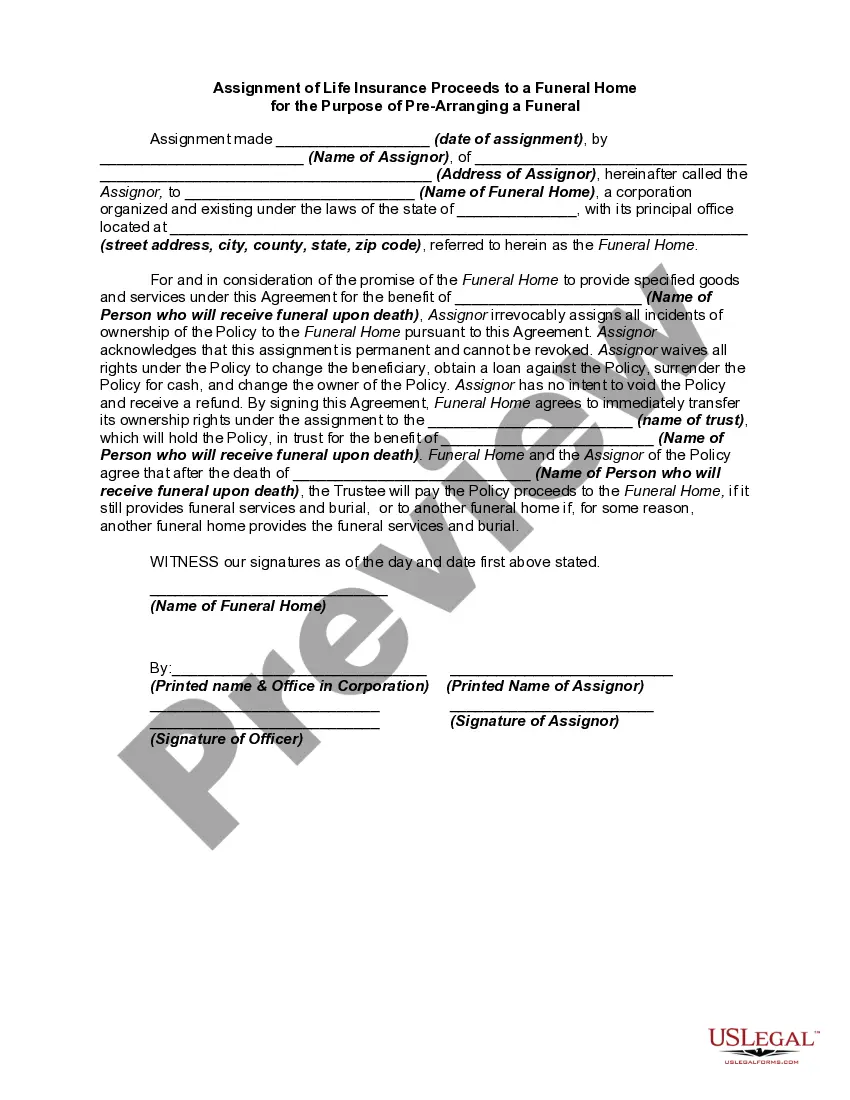
Make Sure the Policy is Assignable.Funeral homes generally accept a life insurance policy in lieu of payment for a funeral, though it's best not to assume that they will. Remember, if they do accept a policy as payment, it must be assignable. Retirement benefits and 401(k) benefits are not assignable.
Assignment a transfer of legal rights under, or interest in, an insurance policy to another party. In most instances, the assignment of such rights can only be effected with the written consent of the insurer.
The process of transferring rights of a Life Insurance Policy is called Assignment. There are 2 types of Assignment. Absolute Assignment means complete Transfer of Rights. The person who transfers the rights is called the Assignor and the person to whom the rights are being transferred is called the Assignee.
Glossary. Assignment of Benefits (AOB) is an agreement that transfers the insurance claims rights or benefits of the policy to a third-party. An AOB gives the third-party authority to file a claim, make repair decisions, and collect insurance payments without the involvement of the homeowner.
Any type of life insurance policy is acceptable for collateral assignment, provided the insurance company allows assignment for the policy. A permanent life insurance policy with a cash value allows the lender access to the cash value to use as loan payment if the borrower defaults.
An absolute assignment is typically intended to transfer all your interests, rights and ownership in the policy to an assignee. A collateral assignment is a more limited type of transfer.