Affidavit of Paternity by Mother of Child
What this document covers
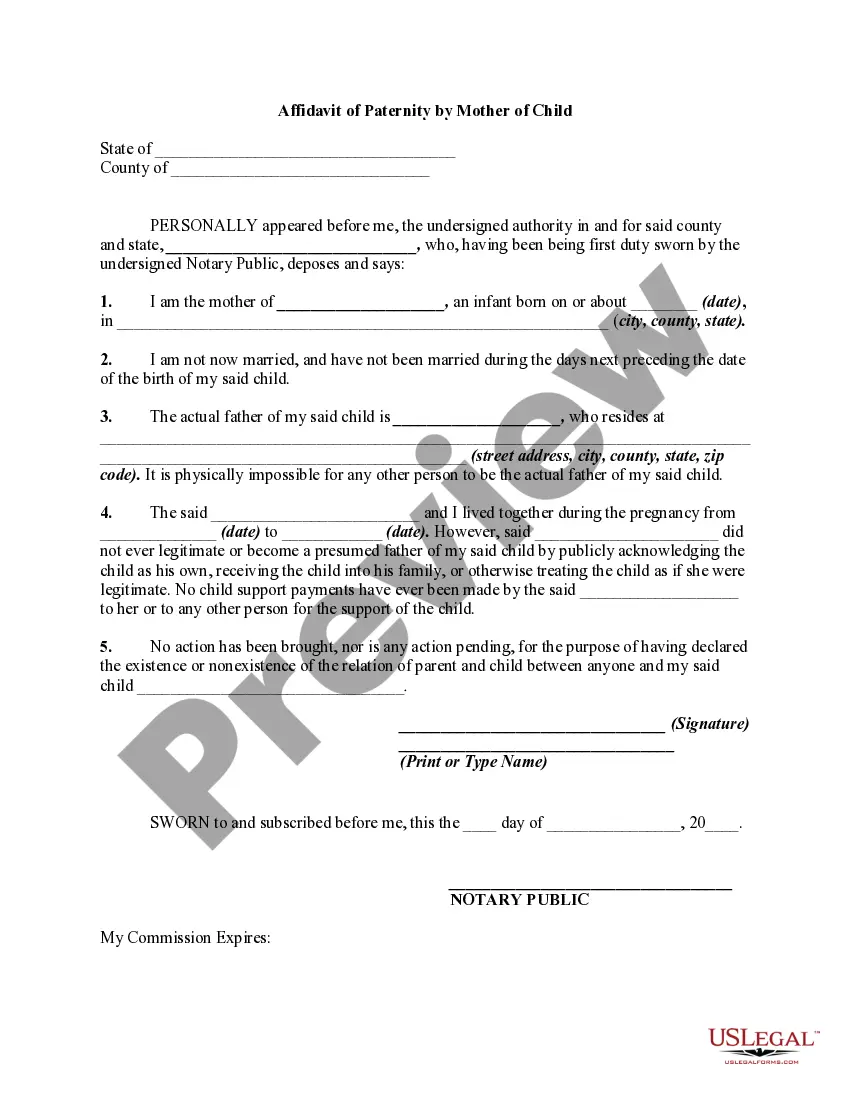
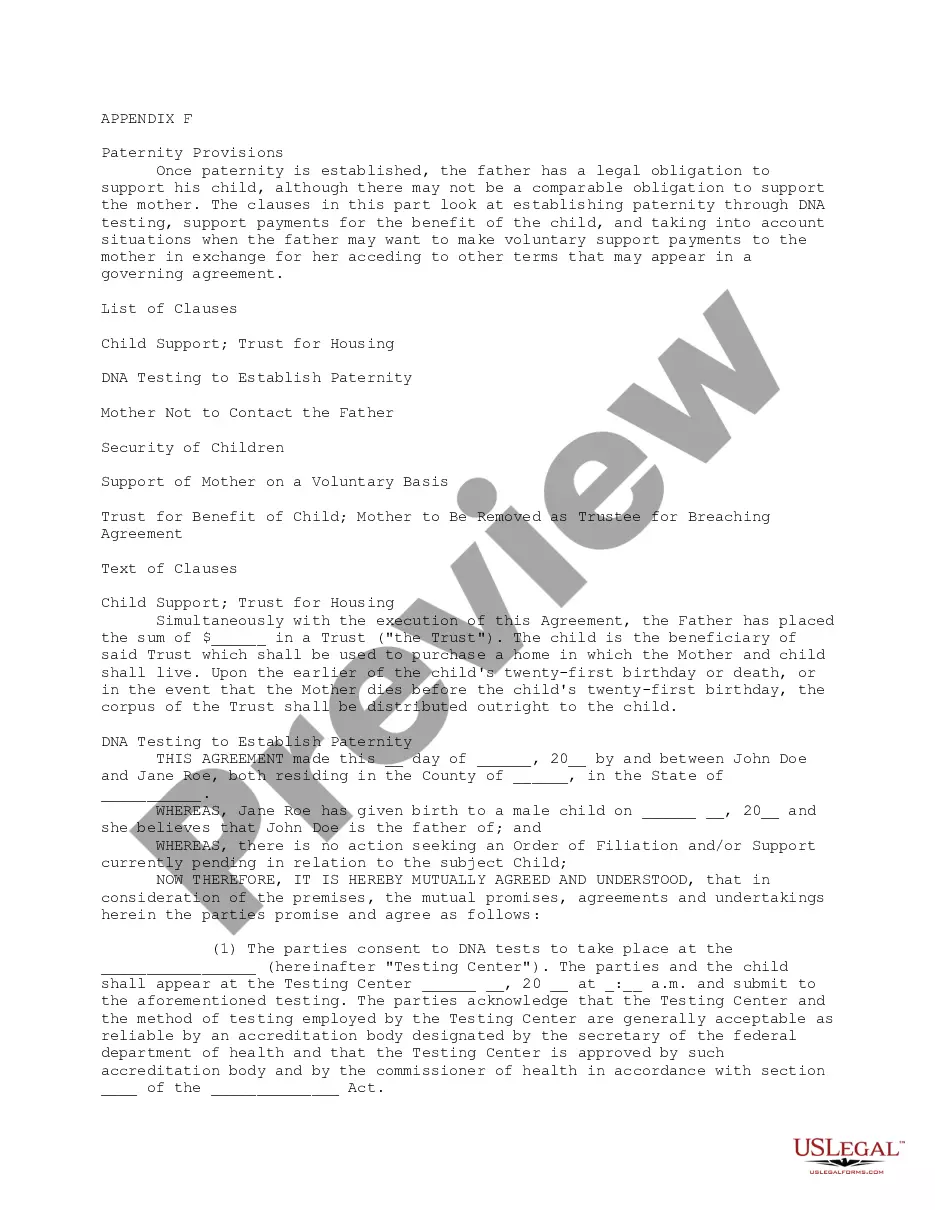
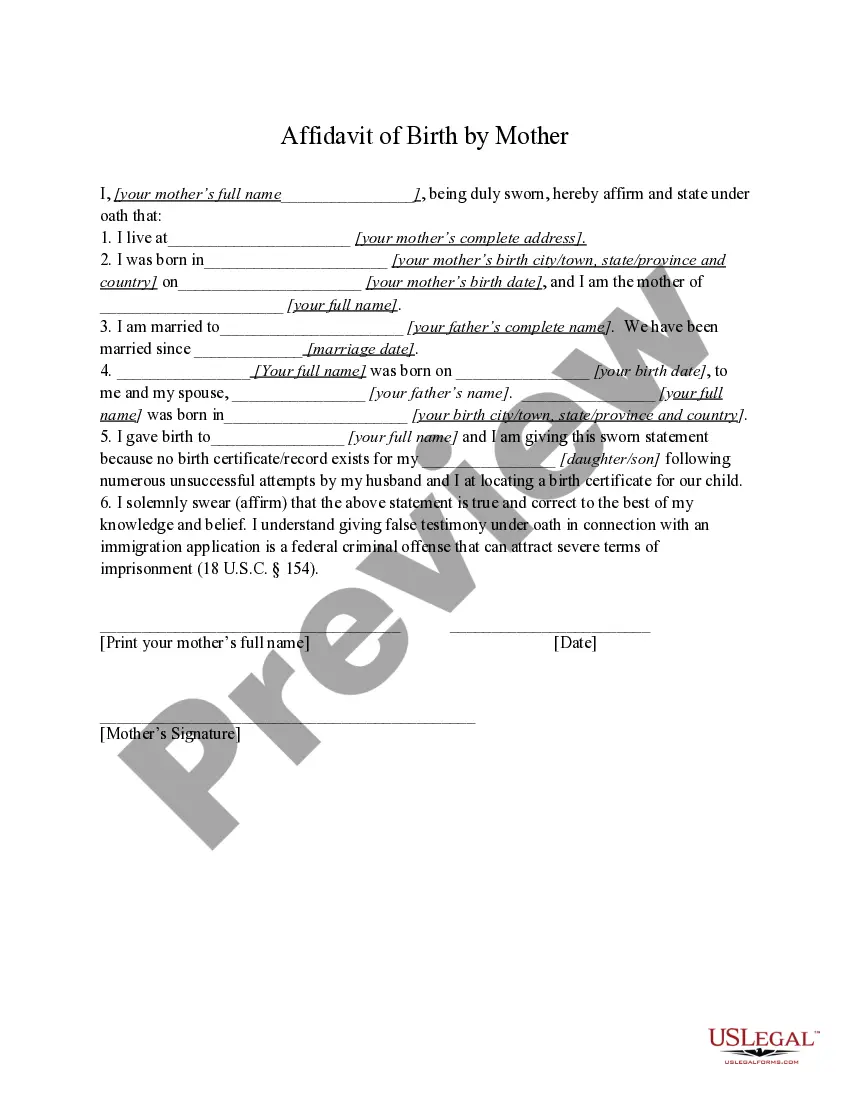
The Affidavit of Paternity by Mother of Child is a legal document that establishes the identity of the child's natural father as affirmed by the child's mother. This form is crucial in clarifying paternity for purposes such as custody, child support, or inheritance. Unlike other affidavits that may address different aspects of family law, this affidavit focuses specifically on maternal declarations of paternity.
Key components of this form
- Identification of the mother and child, including birth details.
- Assertion of the mother's marital status during the child's conception and birth.
- Declaration of the child's father and his residence.
- Details of the mother's relationship with the father during pregnancy.
- Statement regarding any legal actions related to the paternity of the child.
When to use this form
This affidavit is commonly used when a mother wishes to formally declare the paternity of her child, particularly when there is no marriage between her and the father. It is essential in cases where establishing legal parentage is necessary for child support, custody arrangements, or for legal rights concerning inheritance and medical decisions.
Who should use this form
This form is intended for:
- Mothers of children born out of wedlock seeking to clarify paternity.
- Parents needing to establish legal fatherhood for child support purposes.
- Individuals involved in custody disputes that require proof of paternity.
- Persons looking to ensure inheritance rights for their child.
Steps to complete this form
- Identify yourself as the mother and provide your childâs details, including the child's name and date of birth.
- Indicate your marital status and any relevant relationship history with the child's father.
- Specify the father's name and complete address, ensuring accuracy in details provided.
- Confirm that no other legal actions regarding paternity are pending.
- Sign the form in the presence of a notary to validate it legally.
Notarization guidance
Notarization is required for this form to take effect. Our online notarization service, powered by Notarize, lets you verify and sign documents remotely through an encrypted video session, available 24/7.
Common mistakes
- Failing to provide complete and accurate information about the father's identity.
- Not entering the correct dates for pregnancy or the child's birth.
- Signing the affidavit without a notary, leading to potential legal issues.
- Overlooking the necessity to disclose any relevant previous legal claims regarding paternity.
Why complete this form online
- Conveniently fill out the form from home at any time.
- Edit and customize the document as needed before saving.
- Access reliable documents drafted by licensed attorneys.
State-specific requirements
This form is a general form that can be adapted for use in different states. Since each state has its own laws, make any needed updates before completing it.
Main things to remember
- The Affidavit of Paternity is essential for establishing the legal father of a child born out of wedlock.
- This form requires accurate details from both the mother and the father, and must be notarized for legal validity.
- It is crucial in various legal scenarios, including custody and child support matters.
Form popularity
FAQ
Signing a paternity affidavit allows a father to put his name on the child's birth certificate and, if both parents agree, give the child his surname. A paternity affidavit makes a man who signs it the legal father of the child.
When the presumed father of a child denies parentage, the mother may choose to file a paternity lawsuit. The filing typically compels the presumed father to submit to a DNA test in order to make that determination. It also lays the groundwork for child support and, depending on the circumstances visitation rights.
For example, in a paternity fraud case, the judge may hold a person in contempt for lying or falsifying information about the paternity test. When this occurs, the judge may issue a contempt order, which can result in criminal charges.
Birth certificate. If a birth certificate declares the father and he signs it, this is a legally binding qualification of paternity. DNA test. Court order.
If you wish to challenge paternity, the process begins when the legal father files a Petition to Disestablish Paternity. In a court of law, disestablishment of paternity may be granted under these circumstances: If the child's mother, biological father and legal father voluntarily consent to change the status.
Chadwick Hodge, that a man may sue a woman for paternity fraud. A man who has been told by the mother that he is the father of her child can sue her if she is lying.He may also bring a civil action for paternity fraud against the mother to recover damages and any emotional distress.
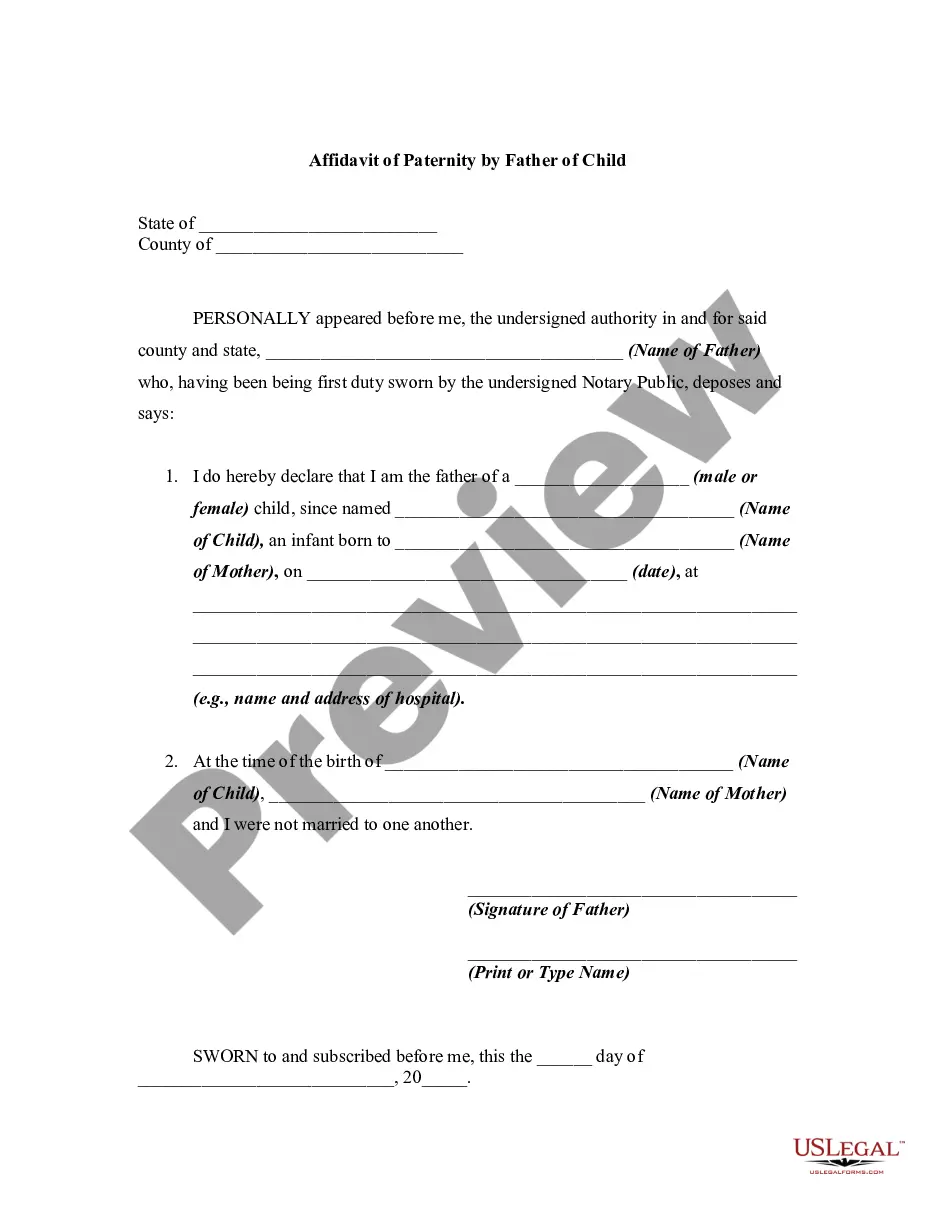
An Affidavit of Admission of Paternity is a document wherein the person signing the affidavit acknowledges that he is the father of an illegitimate child. An illegitimate child is a child whose parents are not legally married to each other.
Knowingly making a false statement on a public document is a criminal offence, including naming someone who is not the biological father. As of 2008, no individual has been prosecuted in a case involving paternity fraud. A mother is permitted to not state the name of the biological father if she does not know it.
An Affidavit of Admission of Paternity is a document wherein the person signing the affidavit acknowledges that he is the father of an illegitimate child. An illegitimate child is a child whose parents are not legally married to each other.