Motion to Dismiss or Transfer - Civil Trial
Overview of this form
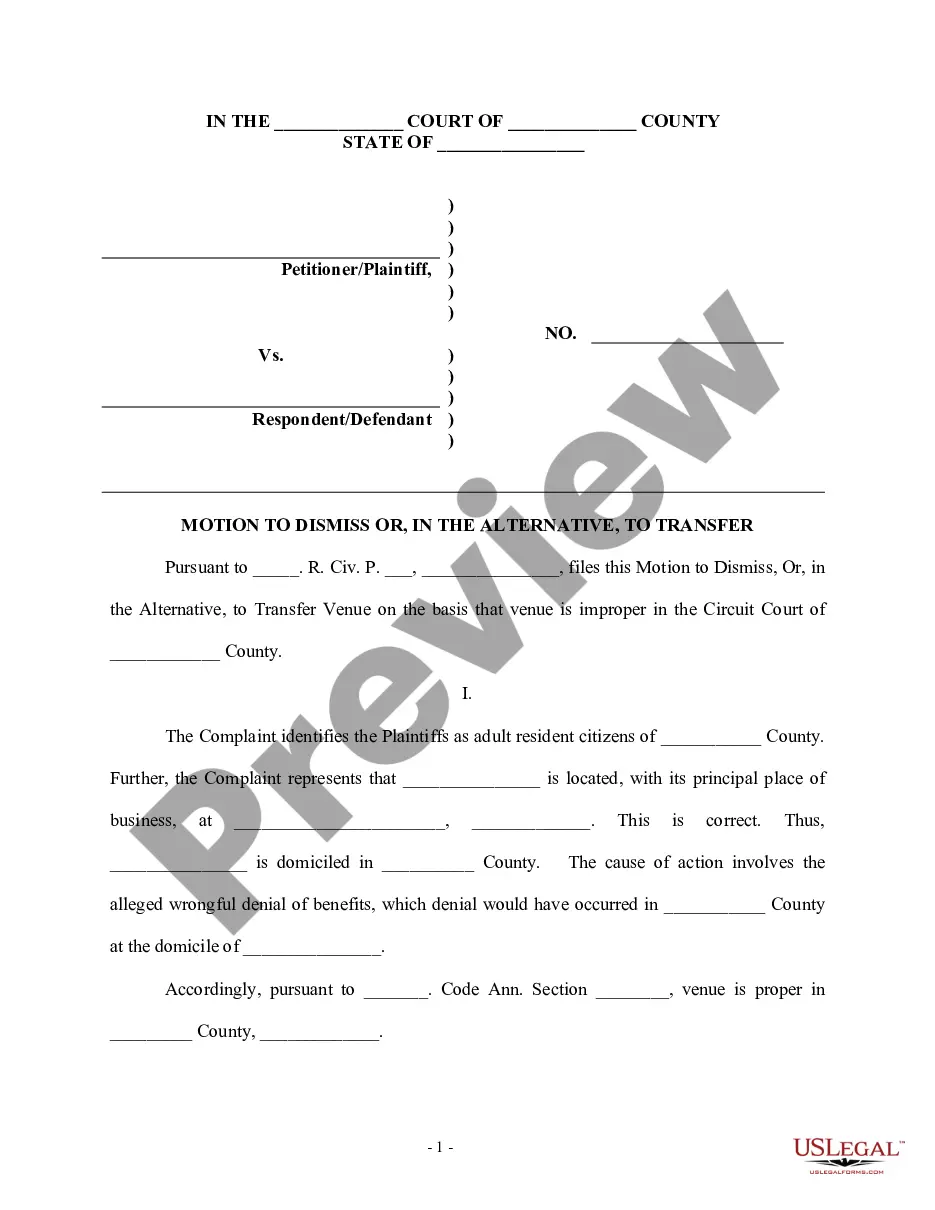
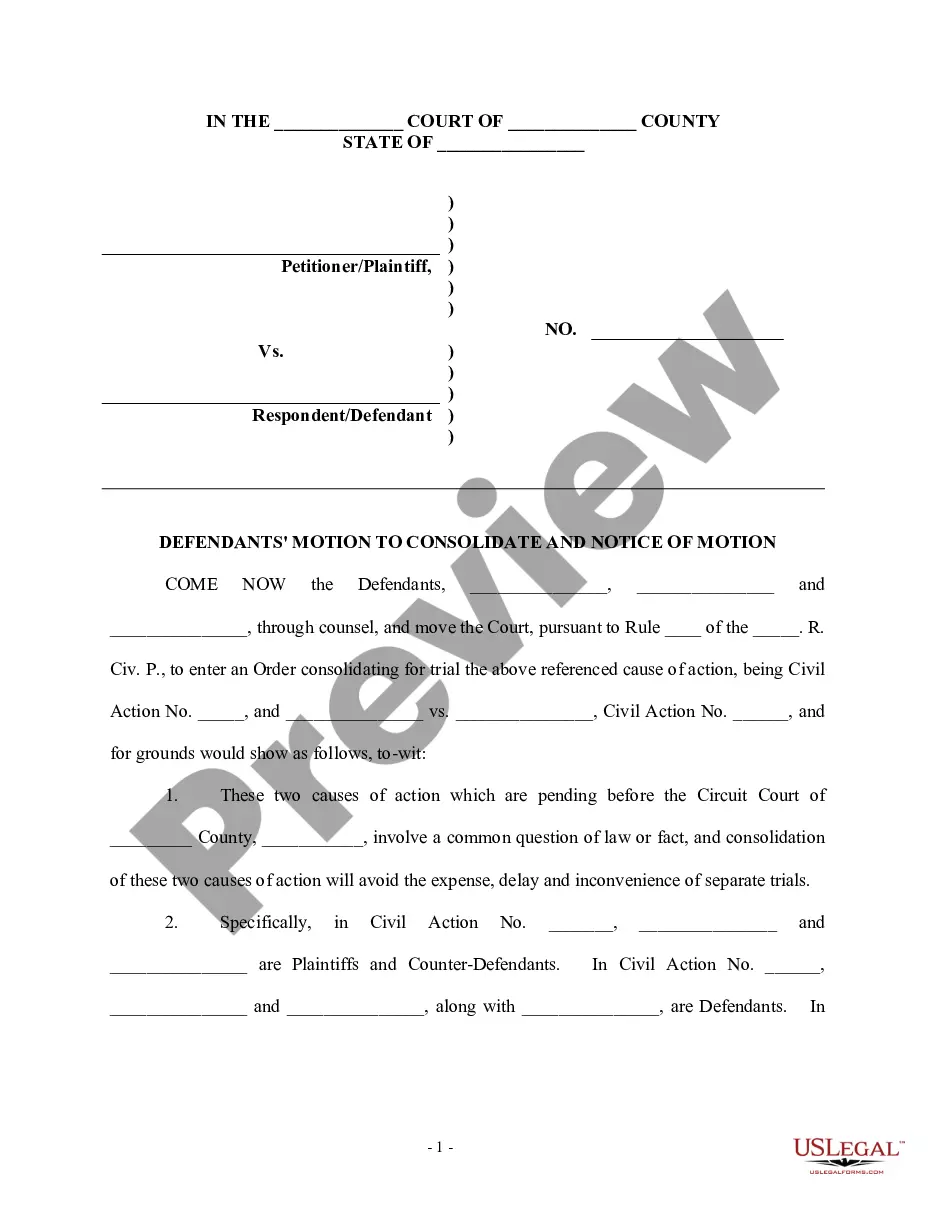
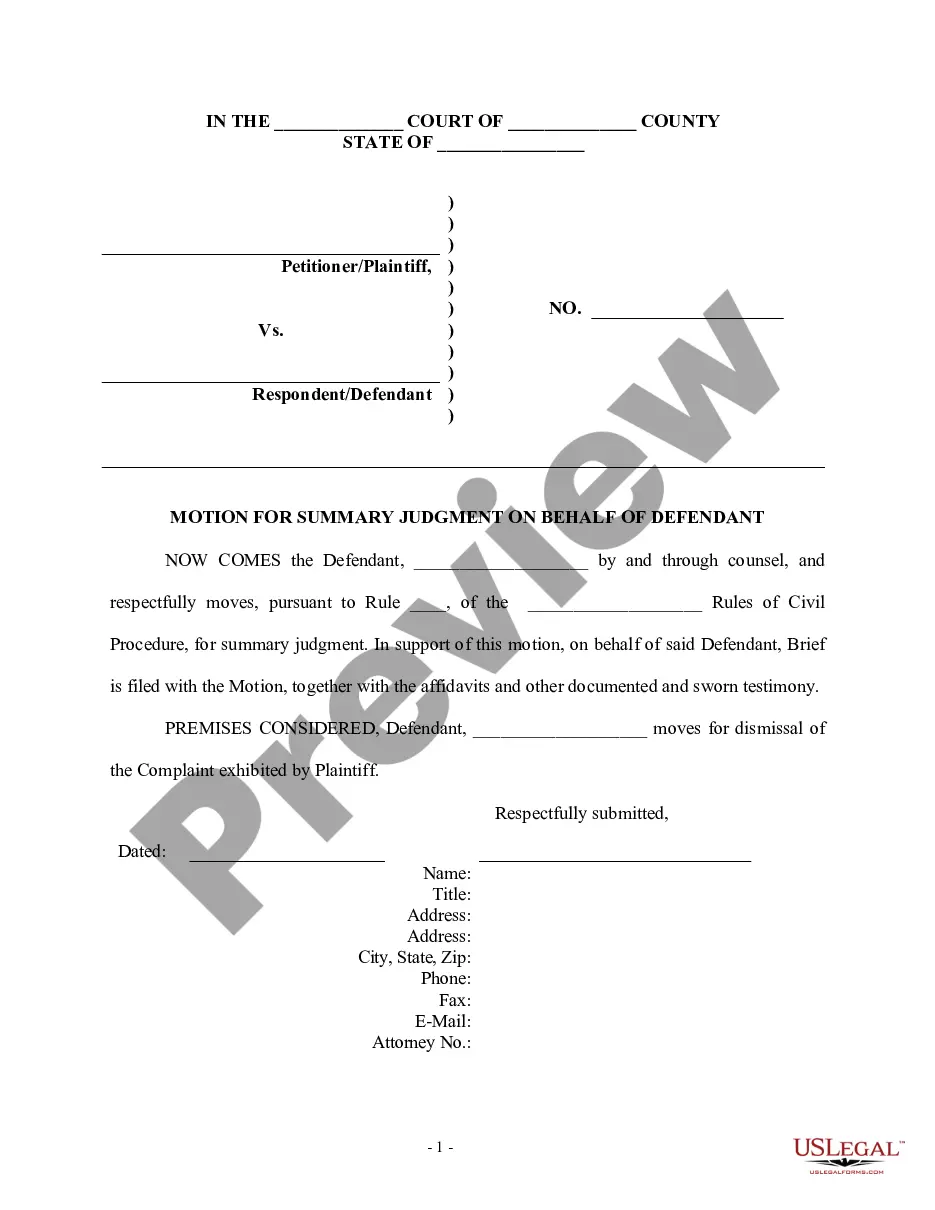
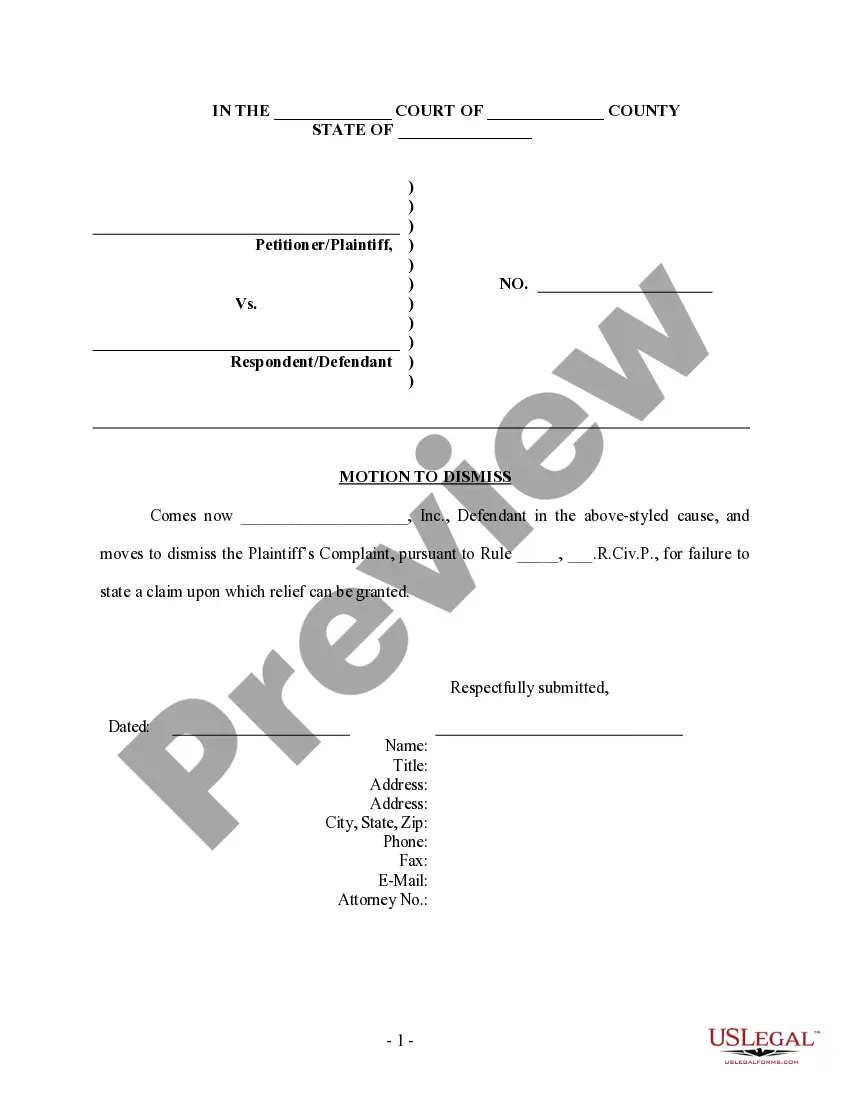
The Motion to Dismiss or Transfer - Civil Trial is a legal document filed by a defendant in a personal injury action. Its purpose is to request the court to dismiss the plaintiff's complaint or to transfer the case to federal court. This motion is vital for defendants who believe the current court is not the appropriate venue for the case, distinguishing it from other motions that may address different legal issues.
Main sections of this form
- Identification of the parties involved, including the plaintiffs and their county of residence.
- Details regarding the principal place of business of the defendant.
- Assertion of proper venue based on the location of the cause of action.
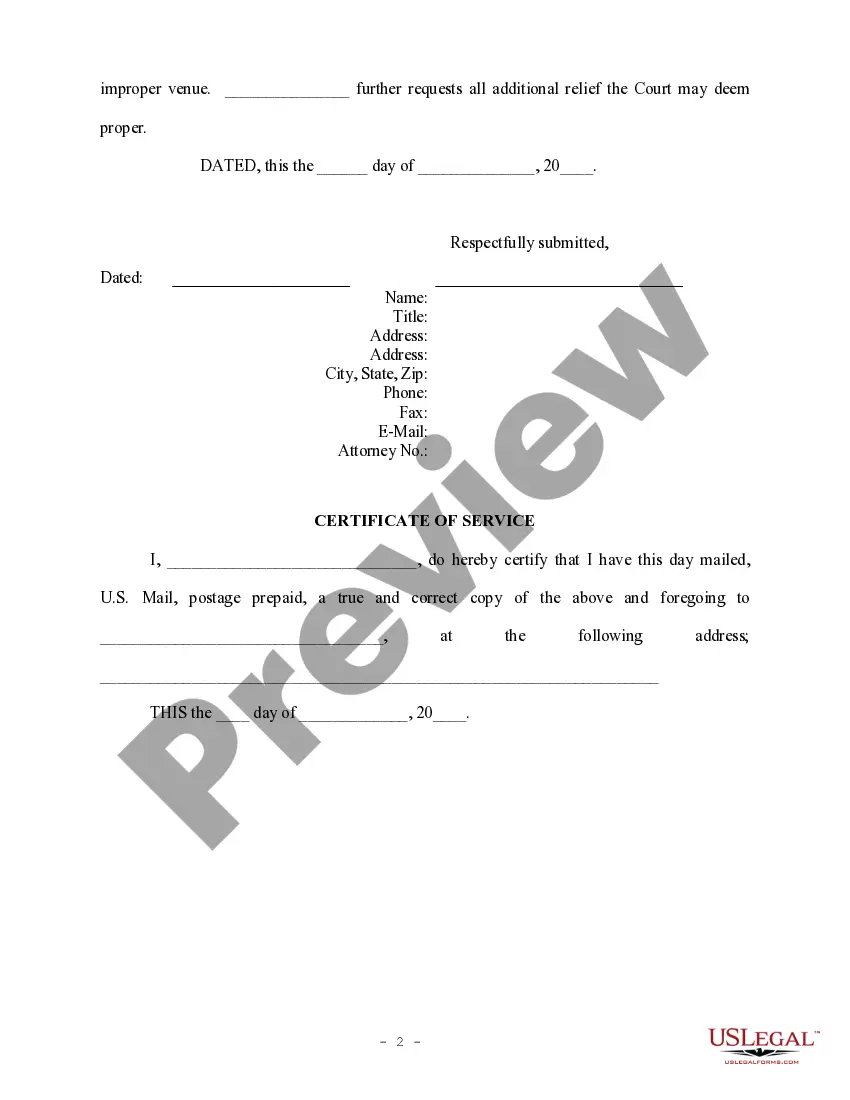
- Request for dismissal or transfer of the case.
- Certificate of service to confirm the motion has been mailed to relevant parties.
Common use cases
This form is used when a defendant believes that the case has been filed in the wrong court, typically due to improper venue. It is applicable in personal injury claims where jurisdictional issues arise, or when defendants wish to shift the trial to a federal court for reasons such as there being no basis for a state-level claim.
Who can use this document
- Defendants in personal injury lawsuits who want to challenge the court's jurisdiction.
- Individuals or organizations needing to assert that a case should be transferred to a federal court.
- Legal representatives preparing motions on behalf of clients in similar situations.
Completing this form step by step
- Identify the parties by providing their names and addresses, including the plaintiffs' county of residence.
- Specify the location of the defendant's principal place of business.
- Explain the basis for your claim regarding the improper venue.
- Indicate your request for dismissal or transfer of the case to the appropriate court.
- Sign and date the motion to confirm it is filed correctly.
- Complete the certificate of service to notify other parties of your filing.
Is notarization required?
Notarization is not commonly needed for this form. However, certain documents or local rules may make it necessary. Our notarization service, powered by Notarize, allows you to finalize it securely online anytime, day or night.
Get your form ready online
Our built-in tools help you complete, sign, share, and store your documents in one place.
Make edits, fill in missing information, and update formatting in US Legal Forms—just like you would in MS Word.
Download a copy, print it, send it by email, or mail it via USPS—whatever works best for your next step.
Sign and collect signatures with our SignNow integration. Send to multiple recipients, set reminders, and more. Go Premium to unlock E-Sign.
If this form requires notarization, complete it online through a secure video call—no need to meet a notary in person or wait for an appointment.
We protect your documents and personal data by following strict security and privacy standards.

Make edits, fill in missing information, and update formatting in US Legal Forms—just like you would in MS Word.

Download a copy, print it, send it by email, or mail it via USPS—whatever works best for your next step.

Sign and collect signatures with our SignNow integration. Send to multiple recipients, set reminders, and more. Go Premium to unlock E-Sign.

If this form requires notarization, complete it online through a secure video call—no need to meet a notary in person or wait for an appointment.

We protect your documents and personal data by following strict security and privacy standards.
Mistakes to watch out for
- Failing to correctly identify the parties involved in the motion.
- Neglecting to provide the proper legal basis for dismissing or transferring the case.
- Omitting the certificate of service, which can lead to issues with notification.
- Not checking for state-specific requirements before filing.
Why complete this form online
- Convenient access to downloadable forms available anytime from anywhere.
- Editability of the document allows tailored entries relevant to your case.
- Reliability as all forms are drafted by licensed attorneys to ensure legal compliance.
Looking for another form?
Form popularity
FAQ
The plaintiff can't refile the case without first asking the court to vacate or set aside (cancel) the dismissal with prejudice. A judge is most likely to dismiss a case with prejudice if the plaintiff doesn't show up in court and doesn't file a written request for postponement before the court date.
WHAT IS A DISMISSED CASE? A dismissed criminal case is one in which you were not convicted. When a criminal charge is dismissed, you are not guilty and the case is concluded.
N. application by a defendant in a lawsuit or criminal prosecution asking the judge to rule that the plaintiff (the party who filed the lawsuit) or the prosecution has not and cannot prove its case.
Generally, however, a defendant must file a motion to dismiss before filing an "answer" to the complaint. If the motion to dismiss is denied, the defendant must still file their answer, usually within a shortened amount of time.The motion to dismiss must be filed with the court and served on the other party.
Under section 526, Criminal Procedure Code, the High Court has power to transfer any case from one Court, subordinate to it to another on any of the grounds specified therein. This power of transfer extends to all classes of cases. In view of the amendments made in sections 526 and 528 of the Code by Act No.
It is otherwise, if the motion is granted. A final judgment for the moving party follows. Denial of the motion is not a final judgment; it is not a final decision on the merits." The motion to dismiss the appeal is granted and the appeal is dismissed.
When a defendant files a motion to dismiss, he asks the Court to throw out all or part of the plaintiff's case.The parties (well, their lawyers) will come to court, explain their positions on the motion to dismiss, and answer any questions posed by the judge. Finally, the judge will decide to grant or deny the motion.