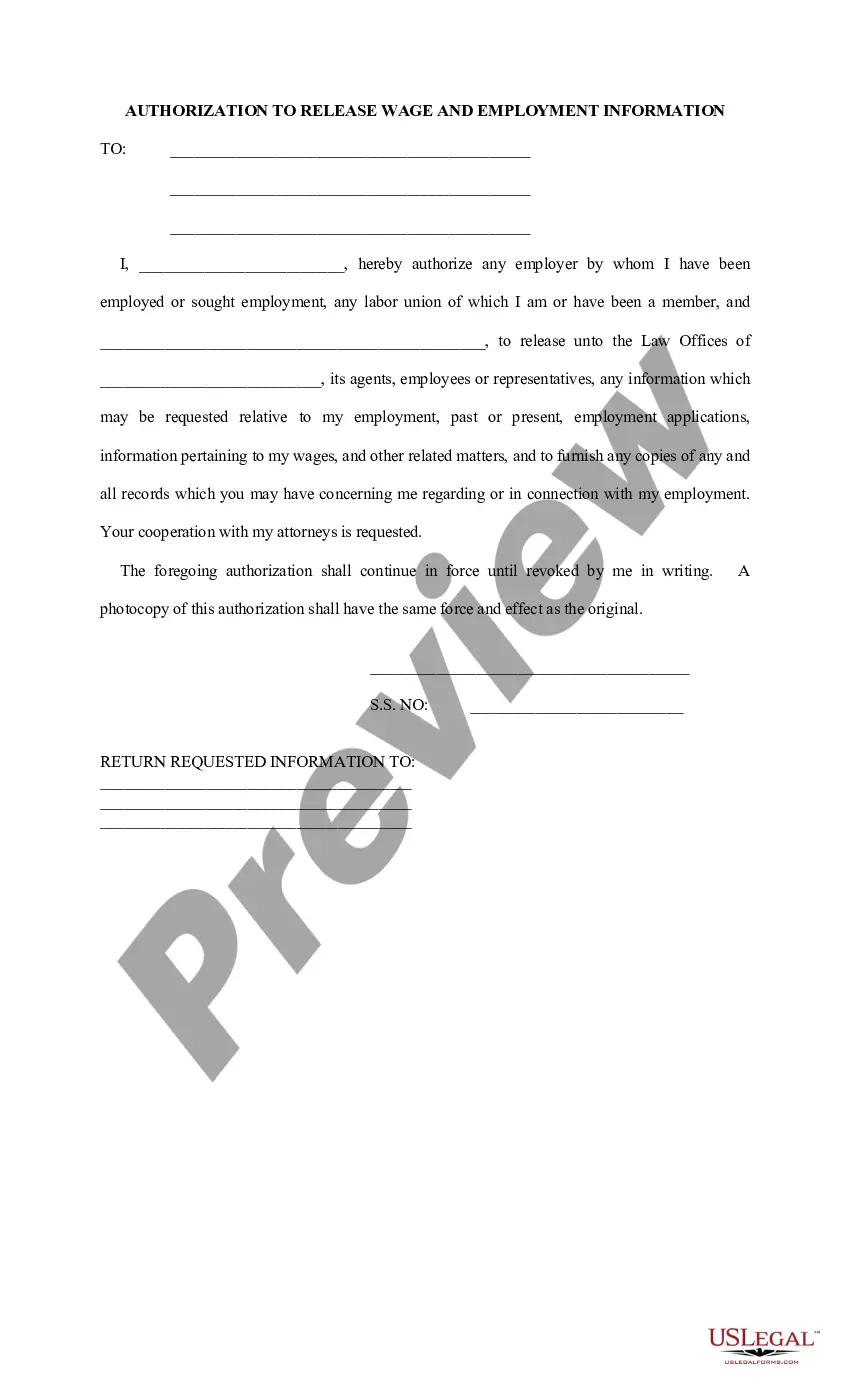
Authorization to Release Wage and Employment Information
What is this form?
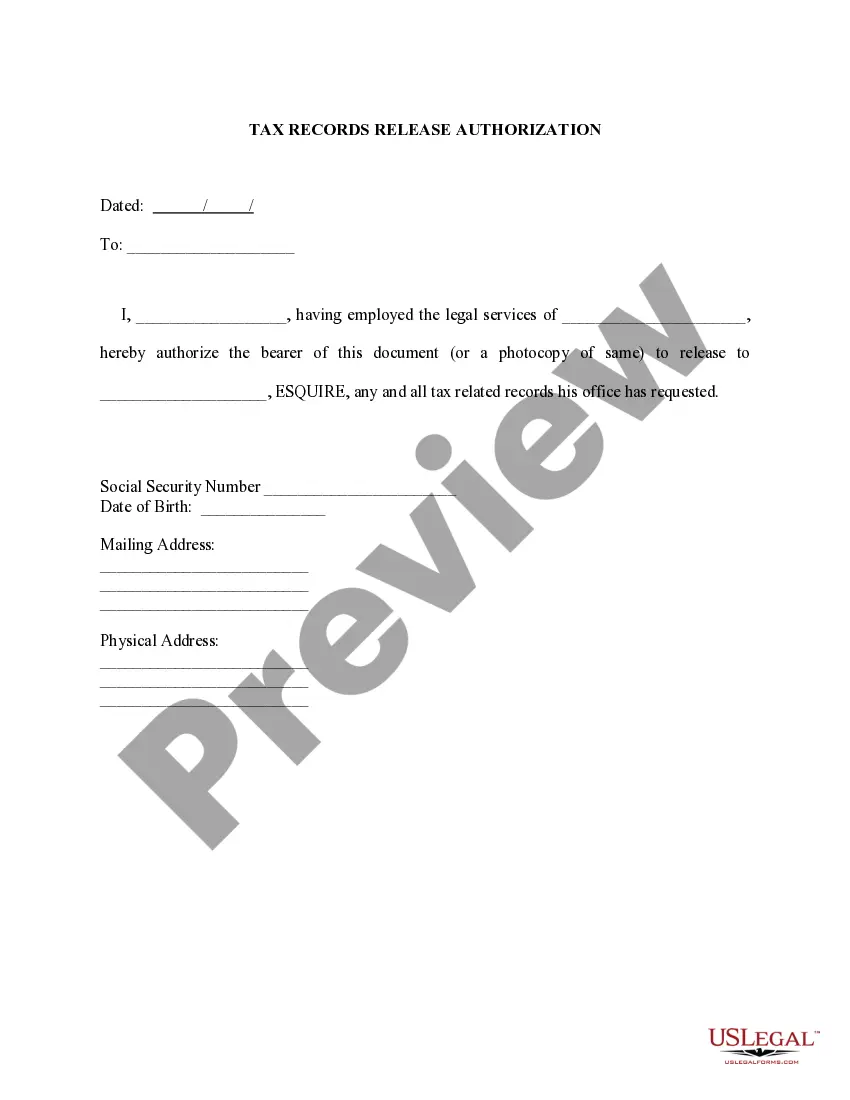
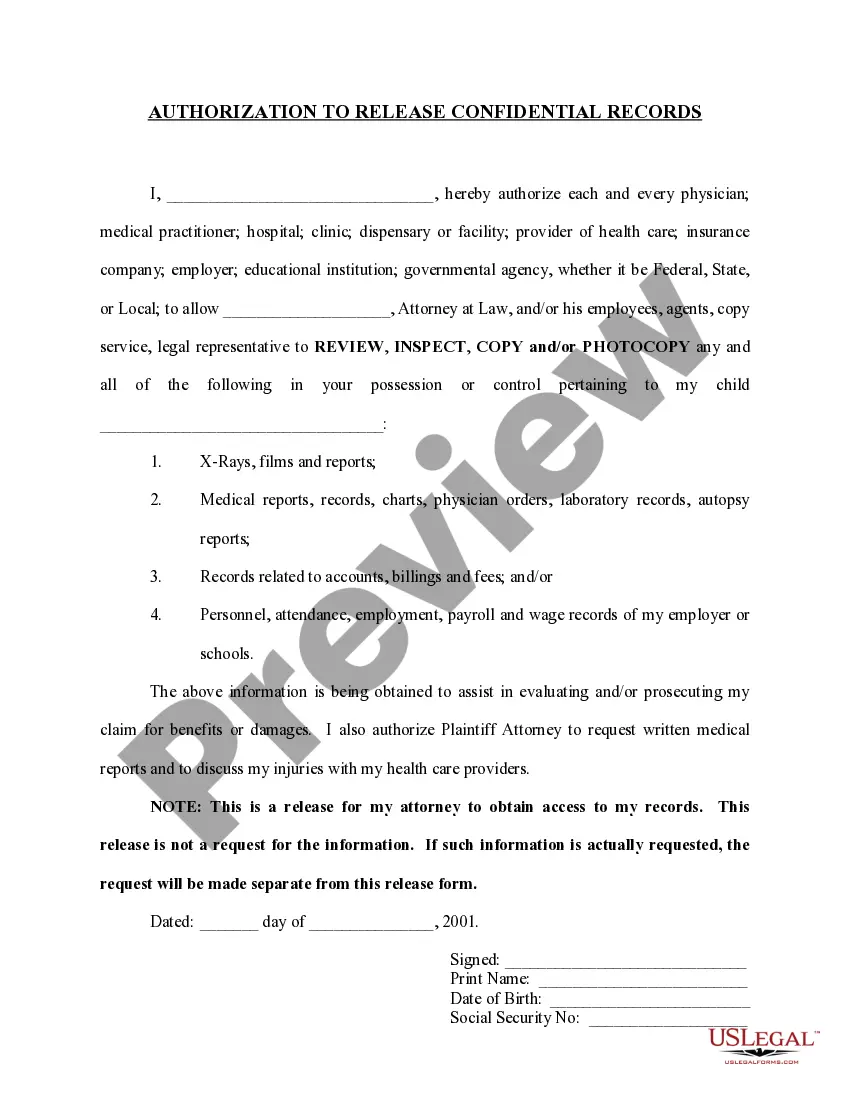
The Authorization to Release Wage and Employment Information is a legal document that allows individuals to give their employers and associated parties permission to disclose their employment history and related wage information to a designated attorney. This form is particularly important when an individual needs assistance in legal matters related to employment, as it streamlines communication between parties and facilitates the collection of necessary information.
Main sections of this form
- Identification of the client providing authorization.
- Names and details of employers and labor unions involved.
- Authorization clause allowing the release of employment and wage information.
- Signature and social security number of the client.
- Instructions for where to send the requested information.
Situations where this form applies
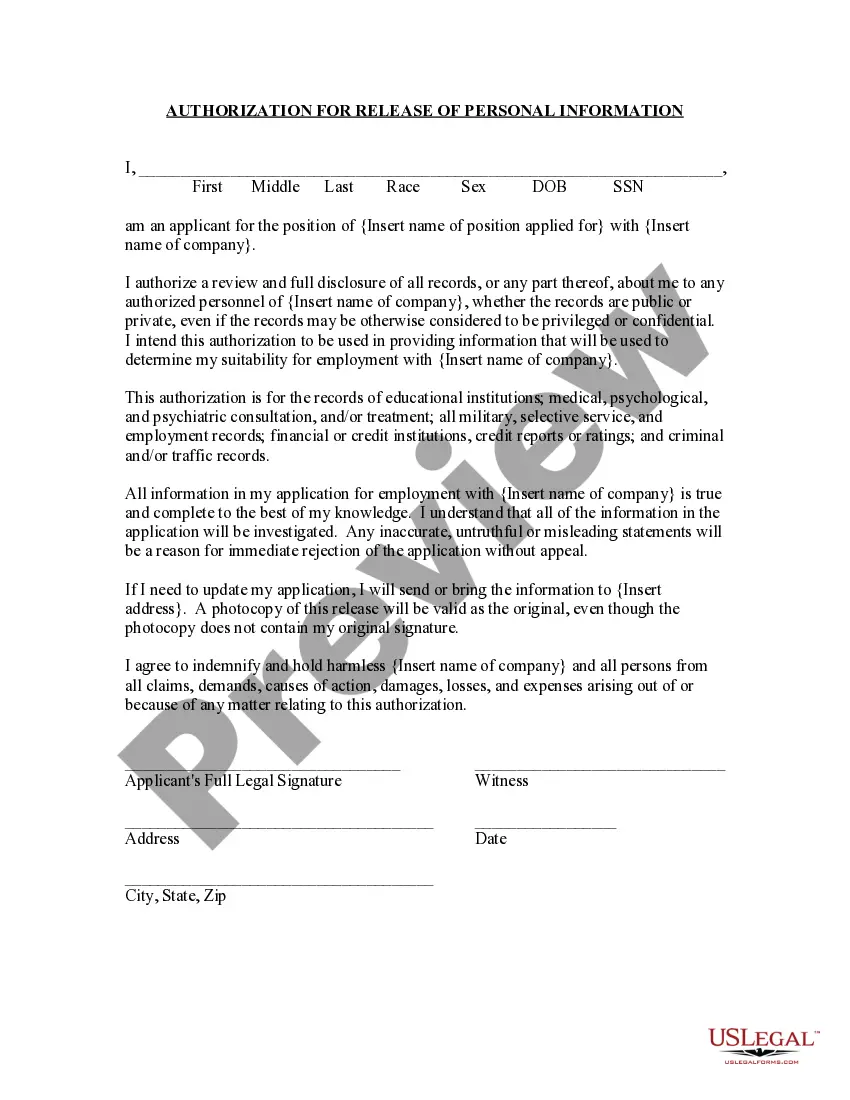
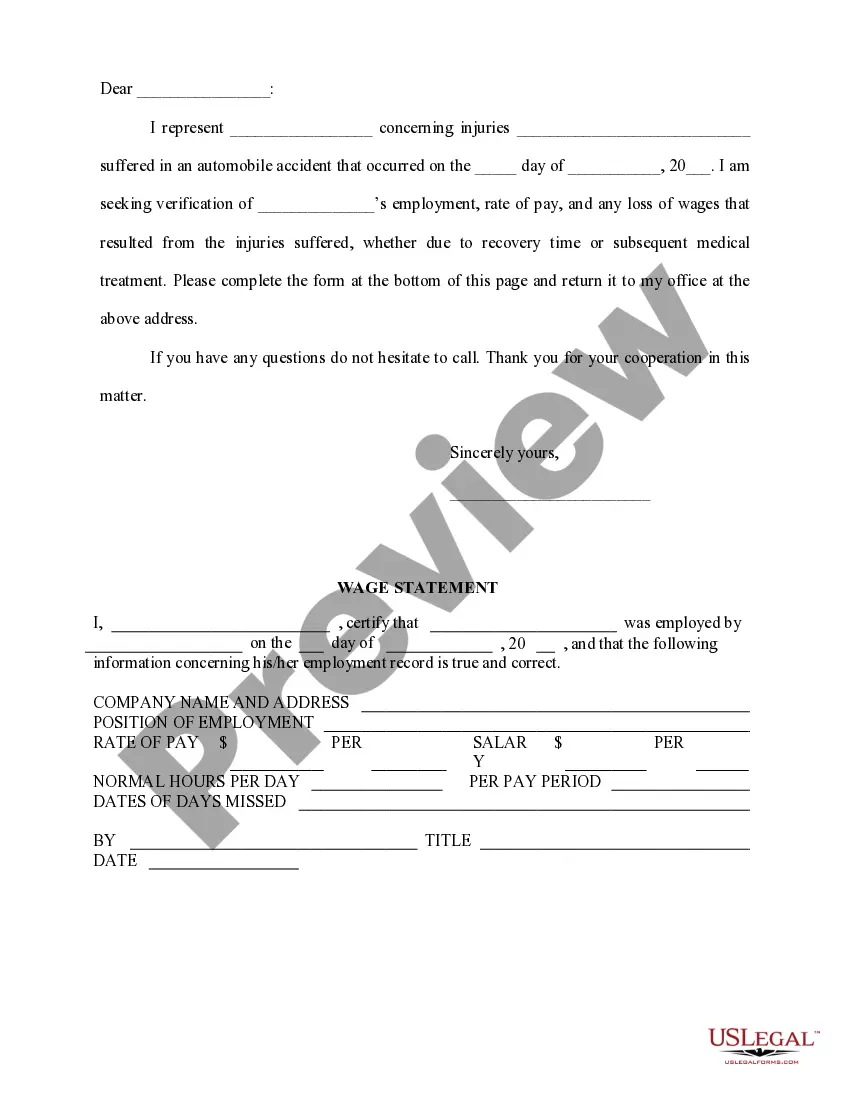
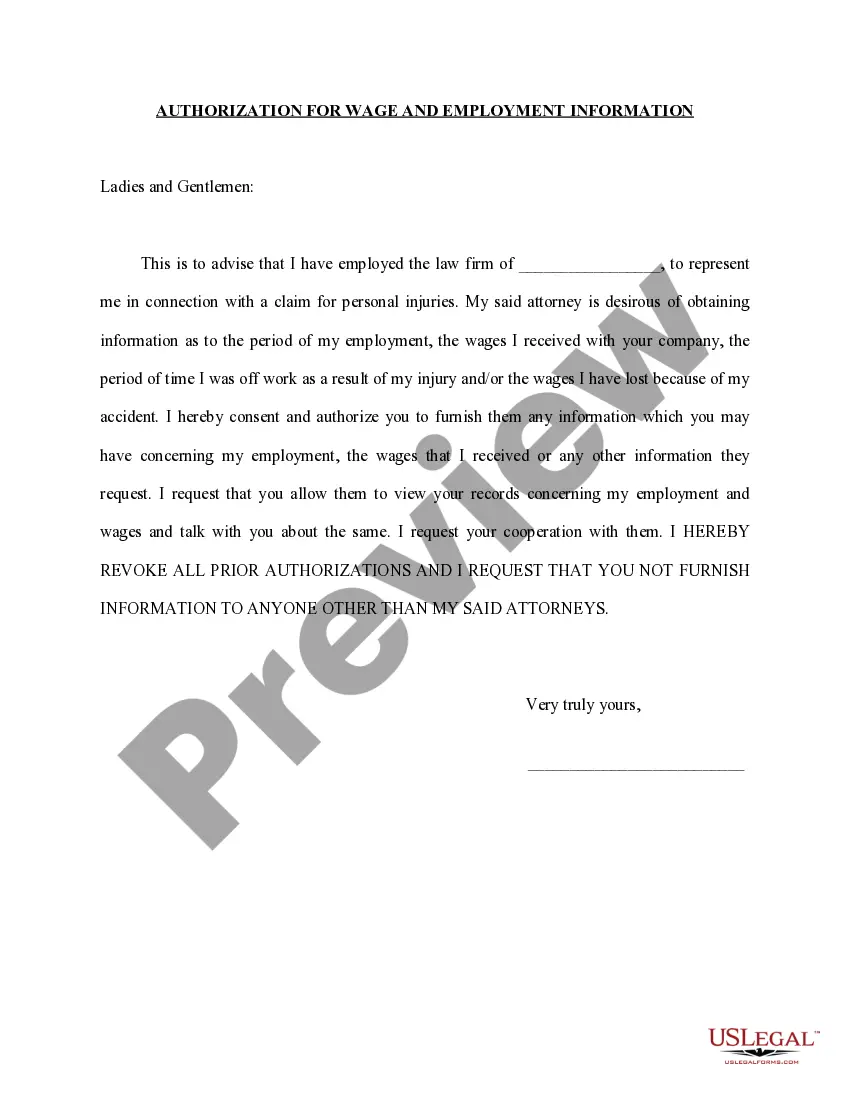
This form should be used when an individual is seeking legal representation and needs to provide their attorney access to their employment records, including past employment, wages, and related information. Scenarios for using this form may include filing a workers' compensation claim, pursuing wage disputes, or addressing employment-related legal issues.
Who can use this document
- Individuals involved in legal disputes regarding employment or wages.
- Clients seeking to provide their attorneys with necessary employment history.
- Employees or former employees needing to clarify information with an attorney.
Instructions for completing this form
- Identify and enter your name and personal details at the top of the form.
- List all employers and labor unions that you have been associated with.
- Fill in the name and details of the attorney or law office to whom the information will be sent.
- Sign the authorization section and provide your social security number.
- Clearly indicate the address where the requested information is to be sent.
Does this document require notarization?
In most cases, this form does not require notarization. However, some jurisdictions or signing circumstances might. US Legal Forms offers online notarization powered by Notarize, accessible 24/7 for a quick, remote process.
Get your form ready online
Our built-in tools help you complete, sign, share, and store your documents in one place.
Make edits, fill in missing information, and update formatting in US Legal Forms—just like you would in MS Word.
Download a copy, print it, send it by email, or mail it via USPS—whatever works best for your next step.
Sign and collect signatures with our SignNow integration. Send to multiple recipients, set reminders, and more. Go Premium to unlock E-Sign.
If this form requires notarization, complete it online through a secure video call—no need to meet a notary in person or wait for an appointment.
We protect your documents and personal data by following strict security and privacy standards.

Make edits, fill in missing information, and update formatting in US Legal Forms—just like you would in MS Word.

Download a copy, print it, send it by email, or mail it via USPS—whatever works best for your next step.

Sign and collect signatures with our SignNow integration. Send to multiple recipients, set reminders, and more. Go Premium to unlock E-Sign.

If this form requires notarization, complete it online through a secure video call—no need to meet a notary in person or wait for an appointment.

We protect your documents and personal data by following strict security and privacy standards.
Common mistakes to avoid
- Failing to include the attorney's correct contact information.
- Not signing the form, which makes it invalid.
- Leaving out important employers or unions that should be listed.
Why use this form online
- Immediate access to the form, allowing for faster completion and submission.
- Convenience of filling it out from home without needing to visit a lawyer.
- Editable fields make it easy to customize the form as needed.
Legal use & context
- The authorization must be signed to be legally binding.
- This form serves as a legal mechanism to facilitate communication between employers and legal representatives.
- Non-compliance by the employer could lead to legal consequences under applicable employment laws.
What to keep in mind
- The Authorization to Release Wage and Employment Information is essential for facilitating communication with your attorney.
- Accurate completion of the form ensures clarity and legality in the release of information.
- Notarization is generally not required, simplifying the process.
Looking for another form?
Form popularity
FAQ
Injuries and illnesses that occur while an employee is working at home, including work in a home office, will be considered work-related if the injury or illness occurs while the employee is performing work for pay or compensation in the home, and the injury or illness is directly related to the performance of work
First Aid Treatment is Usually Not Enough. Injuries Outside the Office Are Covered. Injuries Outside the Scope of Employment. Cumulative Events and Injuries. Mental Health Conditions.
Under the NJ workers' compensation law, the employer and/or their insurance carrier can select the physician(s) to treat injured workers for work related injuries.If time out of work extends beyond 7 days, they will also provide the injured worker temporary disability benefits during the period of rehabilitation.
According to OSHA Standard 1904.5, an injury is defined as work-related if an event or exposure in the work environment either caused or contributed to the injury or significantly aggravated a pre-existing injury or illness.
The First Hurdle: The Work-Related Requirement. Occupational Illnesses. Repetitive Motion and Overuse Injuries. Pre-Existing Conditions. Hearing Loss. Stress-Related Injuries. Stress Resulting from Work-Related Physical Injuries. When Employees Are Partly at Fault for Work-Related Injuries and Illnesses.
The general rule is that all injuries and illnesses which result from events or exposures on the employer's premises are presumed to be work related. Furthermore, if it seems likely that an event or exposure in the work environment either caused or contributed to the case, the case is considered work related.
If you are injured at work, you are likely entitled to New Jersey workers' compensation benefits.New Jersey's workers compensation laws protect you from being fired in retaliation for claiming workers' compensation or for testifying in a workers' compensation case.
Do you need workers' compensation if you are self-employed? A self-employed person does not need workers' comp insurance. New Jersey requirements do not mandate this coverage for sole proprietors with no employees, freelancers, or independent contractors.
In New Jersey, it is calculated as: Seventy percent of your average weekly wage for a temporary or total disability with minimum and maximum rates set at $216 and $810, respectively; or. a minimum of $35 and a maximum of $810 for a permanent partial disability, depending on your injury's severity and type.