Music Legal Documents Package for Musicians, Agents, Composers, and Producers
About this form package
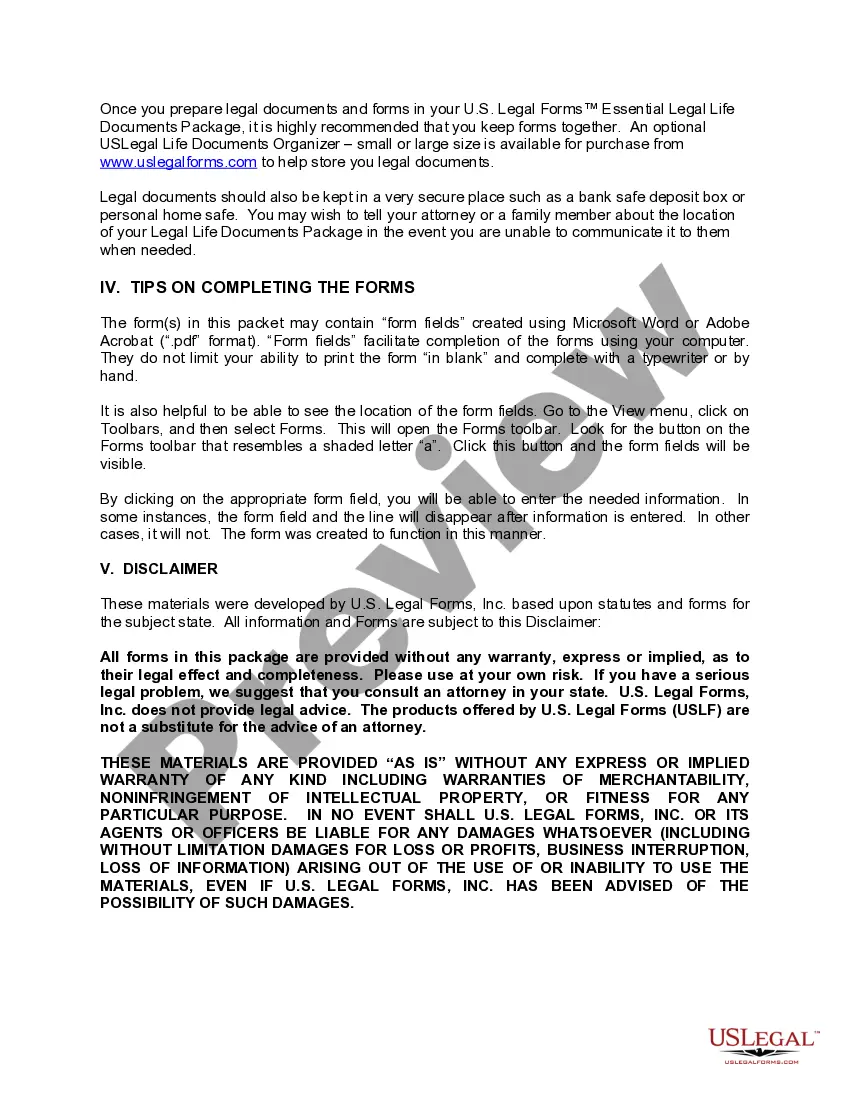
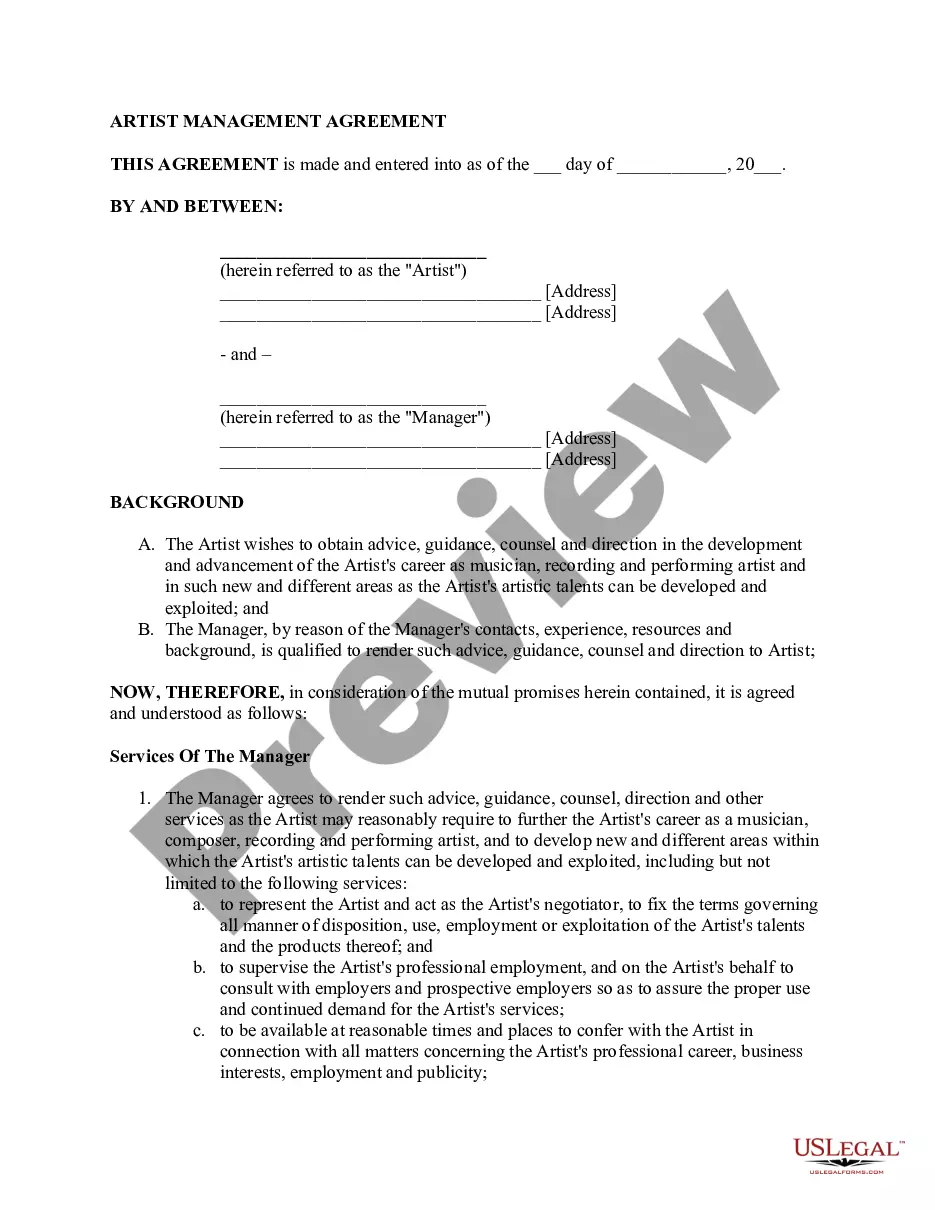
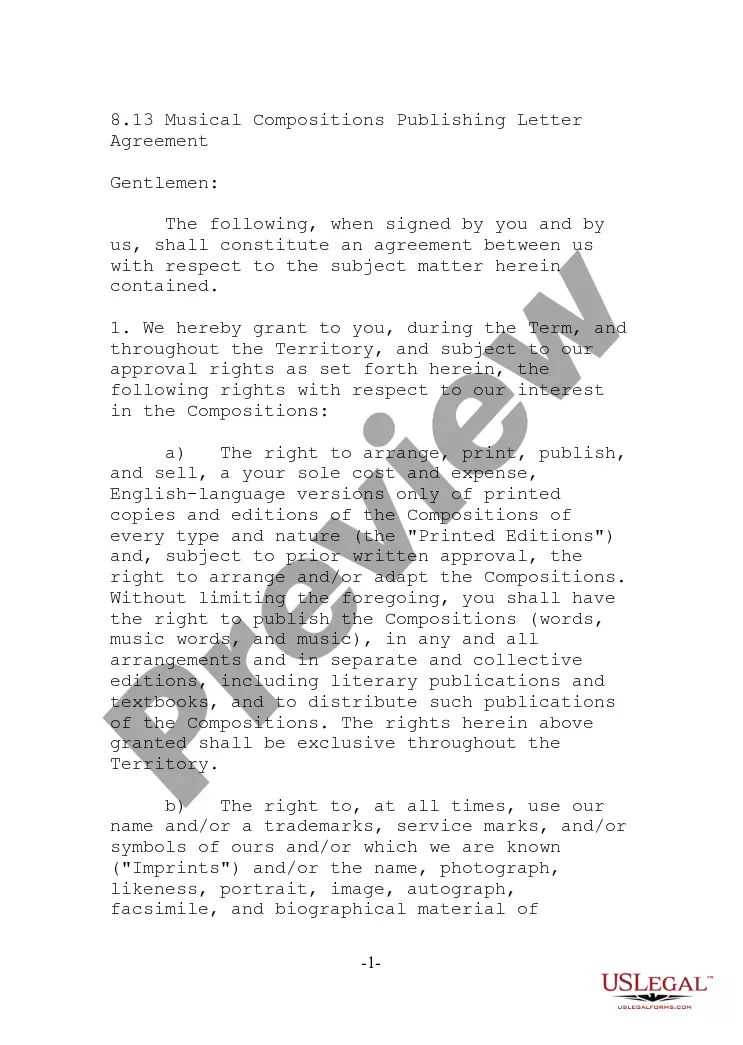
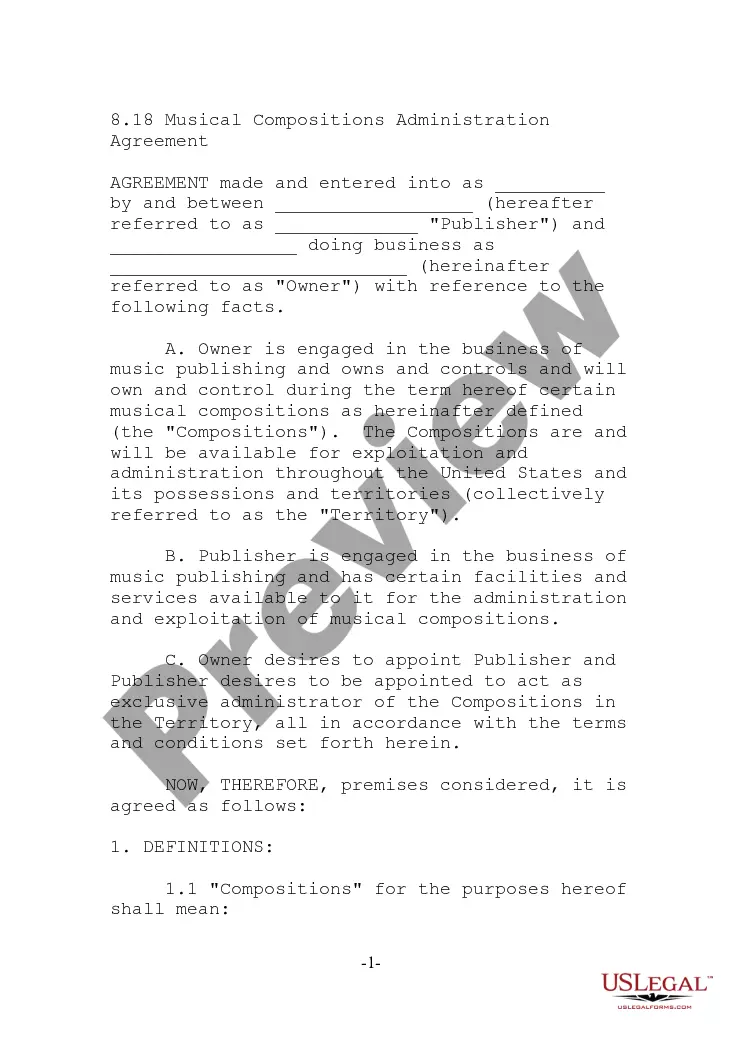
The Music Legal Documents Package for Musicians, Agents, Composers, and Producers is a comprehensive collection of legal forms designed to protect the rights and responsibilities of everyone involved in creating and distributing musical works. This package is particularly beneficial for those in the music industry, such as musicians, agents, composers, and producers. Unlike other legal form packages that may focus only on contracts or performance agreements, this package encompasses a wide range of necessary documents for various aspects of music production and distribution, ensuring thorough legal protection.
What’s included in this form package
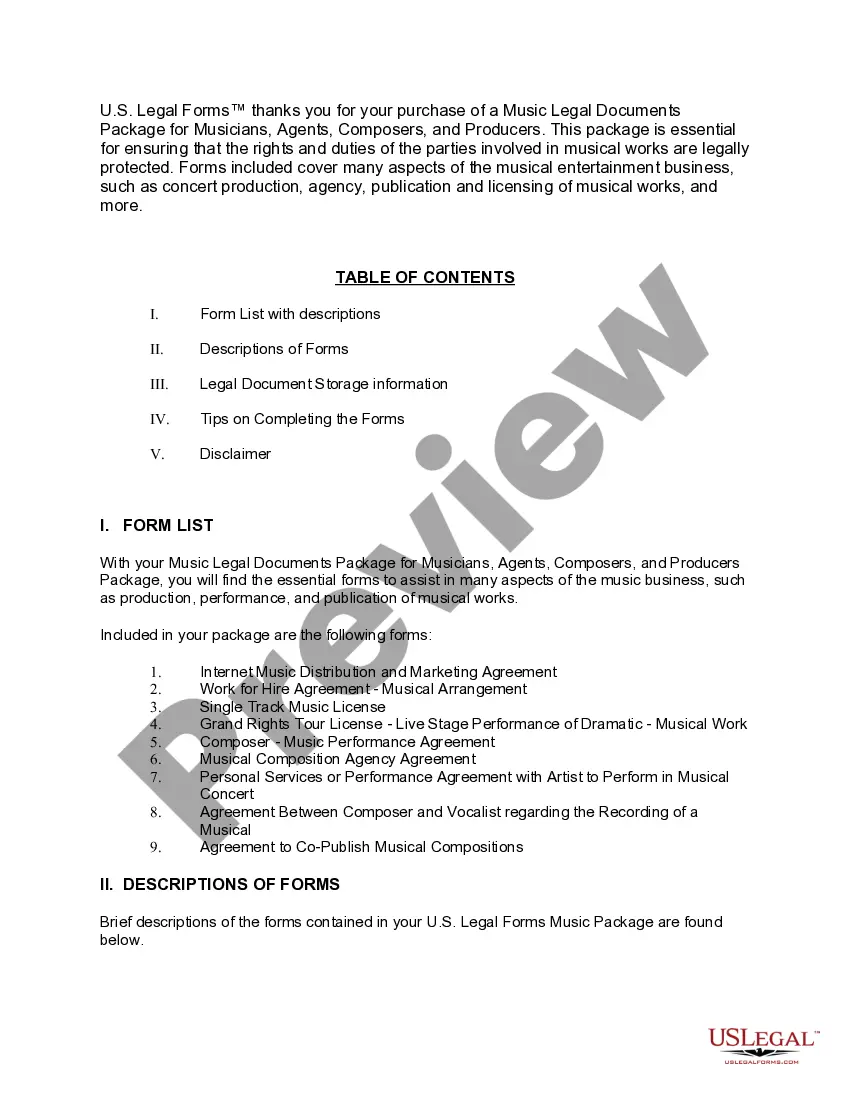
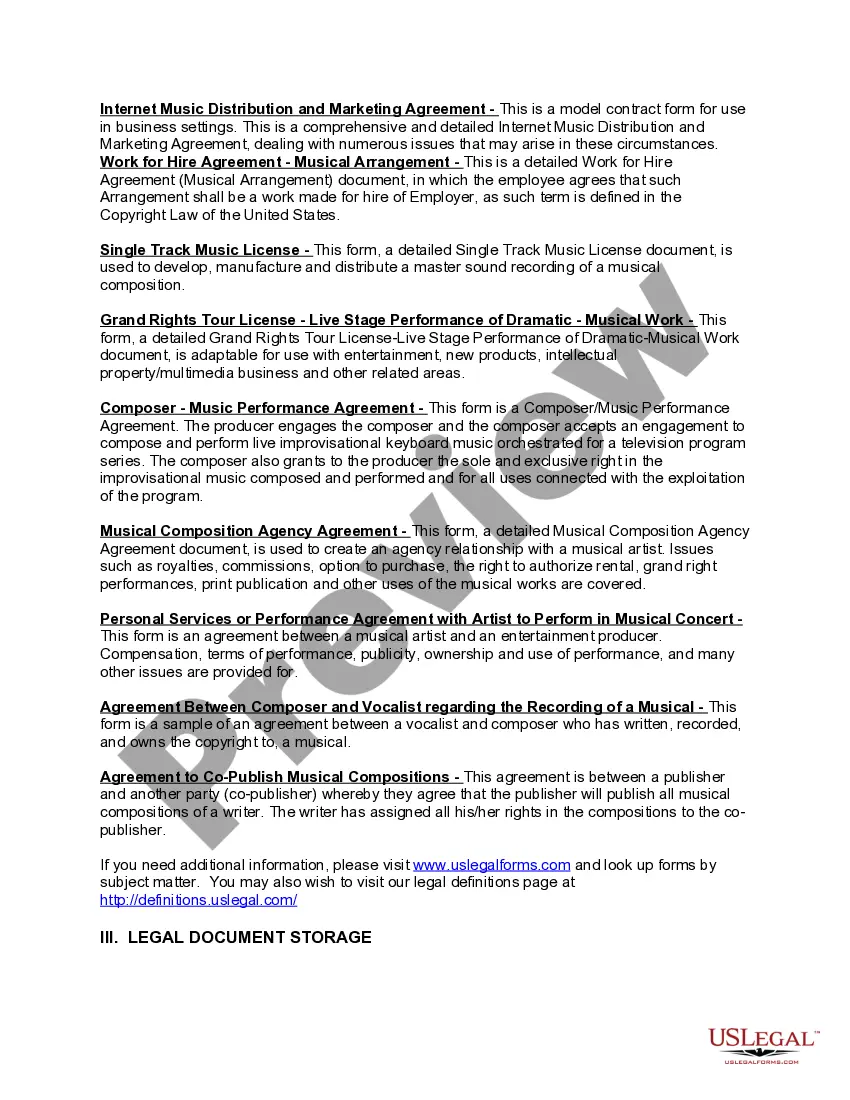
- Agreement to Co-Publish Musical Compositions
- Agreement Between Composer and Vocalist regarding the Recording of a Musical
- Personal Services or Performance Agreement with Artist to Perform in Musical Concert
- Internet Music Distribution and Marketing Agreement
- Composer - Music Performance Agreement
- Form - Work for Hire Agreement - Musical Arrangement
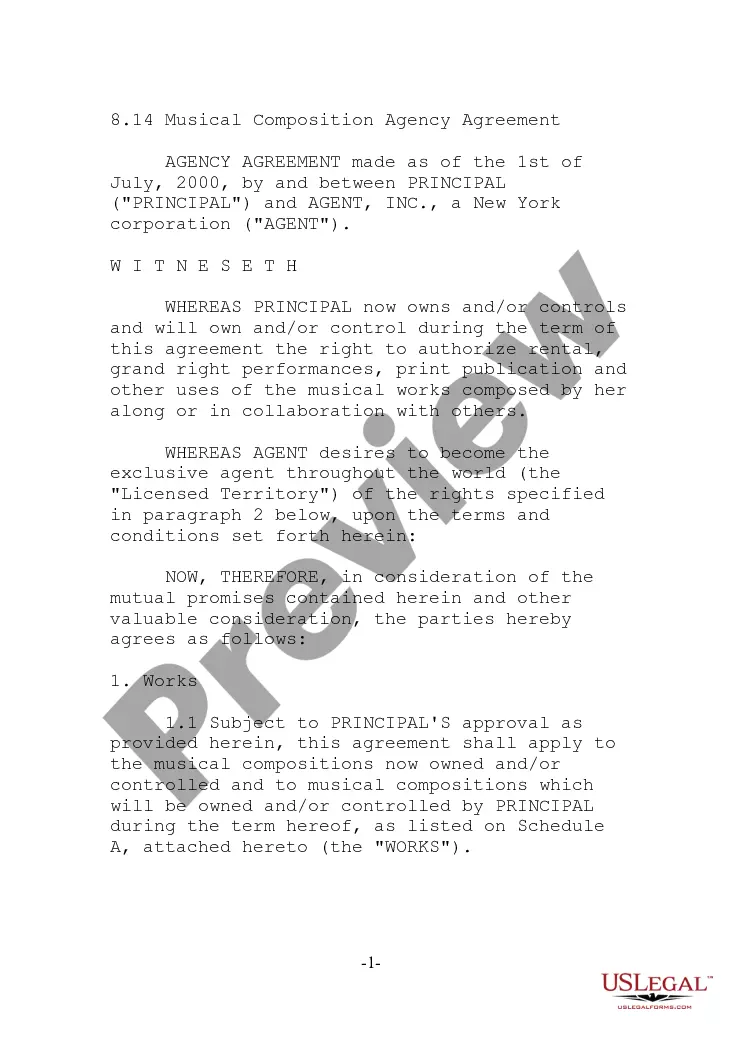
- Musical Composition Agency Agreement
- Single Track Music License
- Grand Rights Tour License - Live Stage Performance of Dramatic - Musical Work

When this form package is needed
This form package is essential in several real-world scenarios, including:
- When entering into agreements with producers or record labels.
- During the creation of music compositions needing copyright protection.
- When organizing live performances or concert tours.
- In establishing agency relationships with musical artists.
- For licensing musical works for Internet distribution.
Who this form package is for
- Musicians seeking to protect their compositions.
- Agents managing contracts for musical artists.
- Composers engaged in creating original musical works.
- Producers organizing live performances or recording sessions.
- Publishers collaborating with composers and musicians.
How to prepare this document
- Review all included forms to understand your legal needs.
- Identify all parties involved in each agreement.
- Enter the required information, including names, dates, and other pertinent details.
- Ensure all relevant terms, such as compensation and rights, are clearly defined.
- Sign and date the forms as necessary, adhering to any state-specific requirements.
Do forms in this package need to be notarized?
Forms in this package typically do not require notarization. However, certain states or document types may still need it. US Legal Forms provides online notarization powered by Notarize, available 24/7 for your convenience.
Get your form ready online
Our built-in tools help you complete, sign, share, and store your documents in one place.
Make edits, fill in missing information, and update formatting in US Legal Forms—just like you would in MS Word.
Download a copy, print it, send it by email, or mail it via USPS—whatever works best for your next step.
Sign and collect signatures with our SignNow integration. Send to multiple recipients, set reminders, and more. Go Premium to unlock E-Sign.
If this form requires notarization, complete it online through a secure video call—no need to meet a notary in person or wait for an appointment.
We protect your documents and personal data by following strict security and privacy standards.

Make edits, fill in missing information, and update formatting in US Legal Forms—just like you would in MS Word.

Download a copy, print it, send it by email, or mail it via USPS—whatever works best for your next step.

Sign and collect signatures with our SignNow integration. Send to multiple recipients, set reminders, and more. Go Premium to unlock E-Sign.

If this form requires notarization, complete it online through a secure video call—no need to meet a notary in person or wait for an appointment.

We protect your documents and personal data by following strict security and privacy standards.
Common mistakes to avoid
- Failing to include all parties in the agreements.
- Not specifying important terms, such as payment timelines or rights granted.
- Overlooking the need for signatures from all involved parties.
- Using outdated forms that do not reflect current laws.
- Neglecting to keep copies of signed agreements for future reference.
Why complete this package online
- Convenience of downloading forms instantly from anywhere.
- Editable forms that allow for customization based on specific needs.
- Access to comprehensive legal form templates drafted by licensed attorneys.
- Cost savings of over 50% compared to purchasing individual forms.
- No need for a physical visit to a legal office, saving time and resources.
Looking for another form?







Form popularity
FAQ
Heather McDonald wrote about music careers for The Balance Careers. It really comes down to what music industry job you want to get and what your goals are.If you want to be a performer or a technical type, you probably won't need an educational degree.
Target Specific Agents And Agencies. There are all sorts of agents out there. Put Together Good Bills And Play Live Regularly. Wherever the agents are is where you should be playing. Send A Good Email. Follow Up Once Or Twice. Keep People In The Loop. Don't Get Discouraged.
Music agents work with artists to schedule concerts, tours, and in-person appearances, and to negotiate fees and contracts for those bookings. For up-and-coming clients, this may mean working the phones to book a string of club dates or secure an opening slot with a more established act.
Target Specific Agents And Agencies. There are all sorts of agents out there. Put Together Good Bills And Play Live Regularly. Wherever the agents are is where you should be playing. Send A Good Email. Follow Up Once Or Twice. Keep People In The Loop. Don't Get Discouraged.
Music agents typically earn a percentage of the proceeds from a tour or performance.The most common arrangement gives the agent 10-15% of the money paid to a band for a gig, though 18% or even 20% is not unheard of.
One main difference between a manager and agent is that an agent has to be licensed by the state and a manager does not.The practical result is that in the music business an agent's job is to book tours and appearances, and in the motion picture business an agent's job is to get their clients roles in movies.
A booking agent will generally charge around 10% commission on your earning from any given show. They may sometimes charge less or more, but it's unusual for them to go higher than 15%.
Music agents may start their careers by pursuing a degree in music management, marketing or accounting. Music or arts management programs often include courses in contract negotiation, copyright law, product development and music technology. Some may also include coursework in finance, sales and marketing.