Composer - Music Performance Agreement
Overview of this form
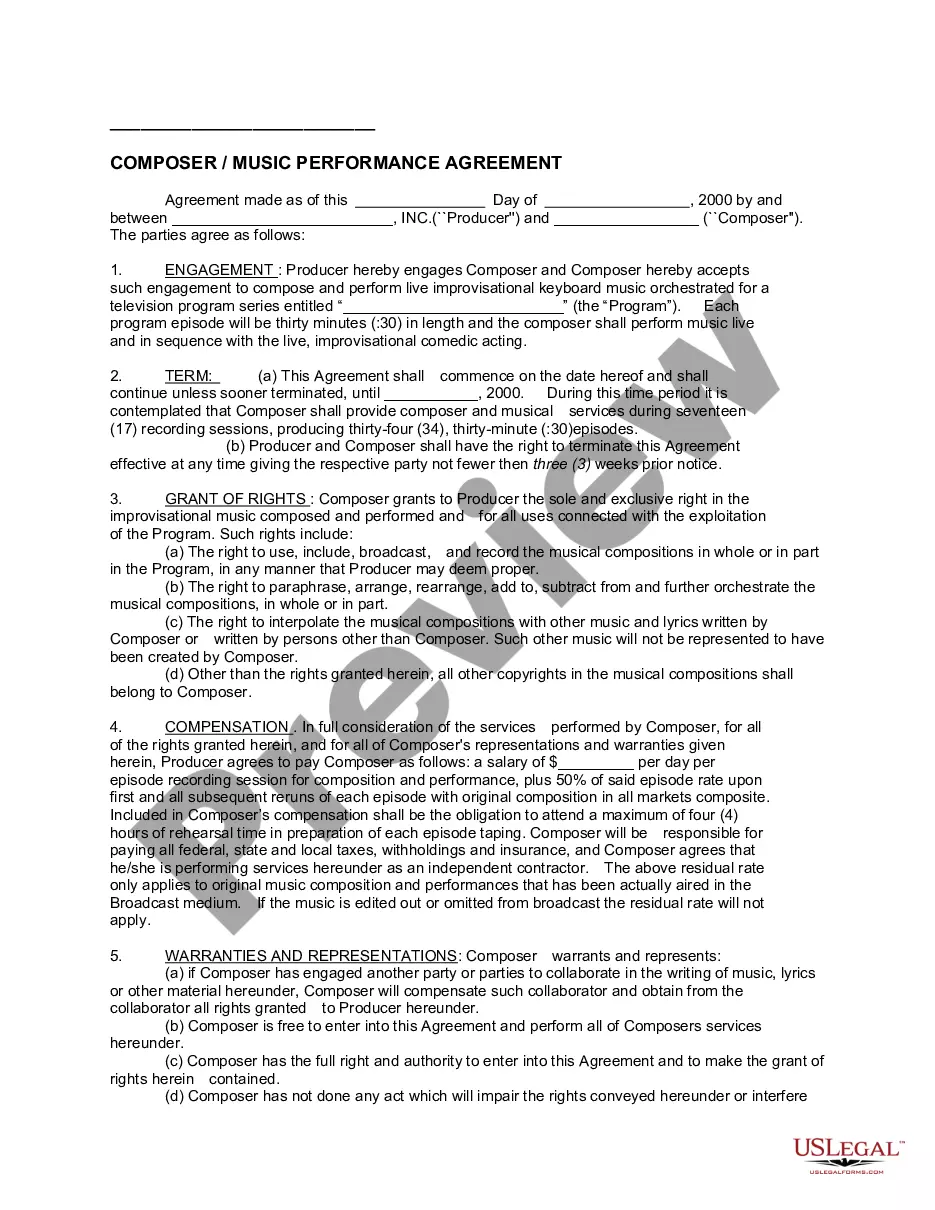
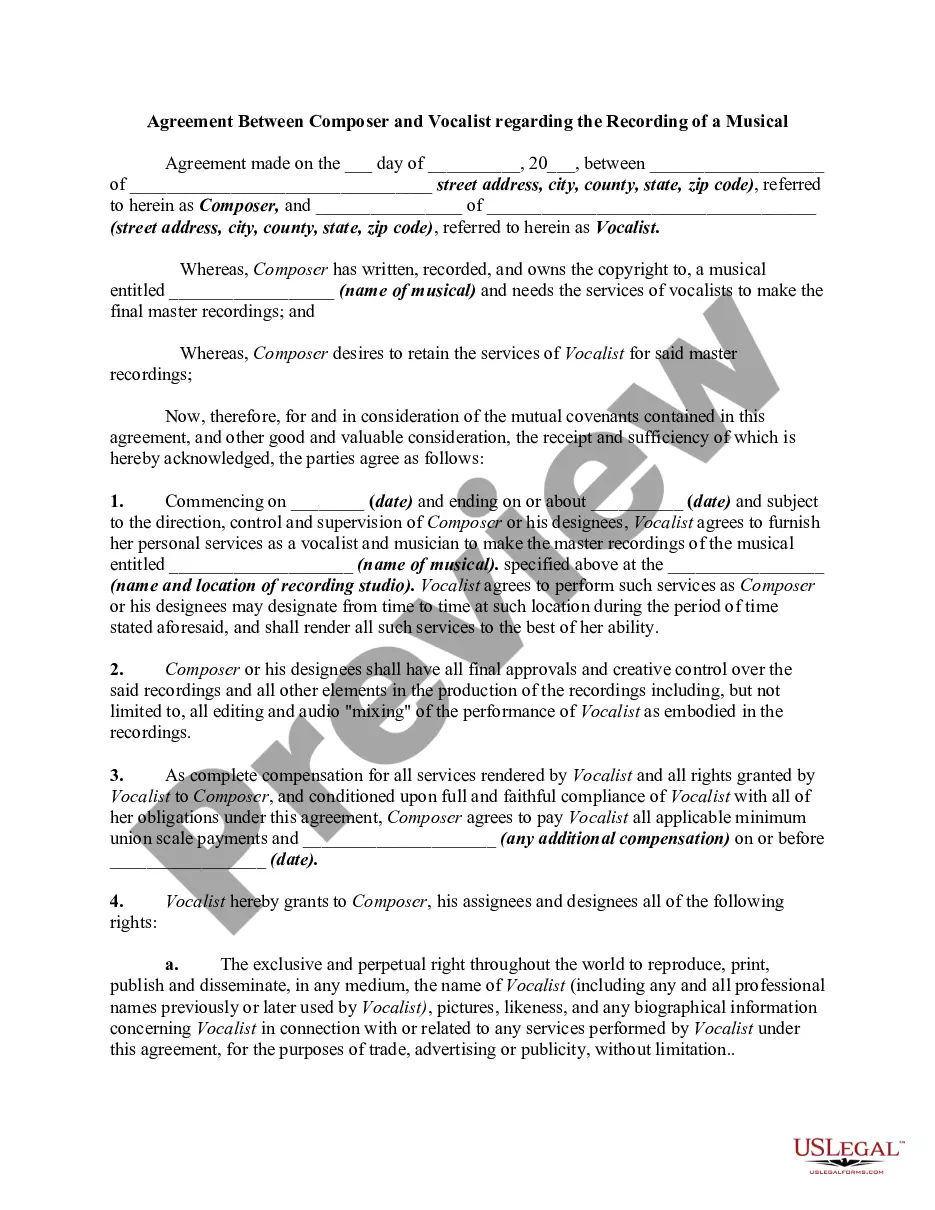
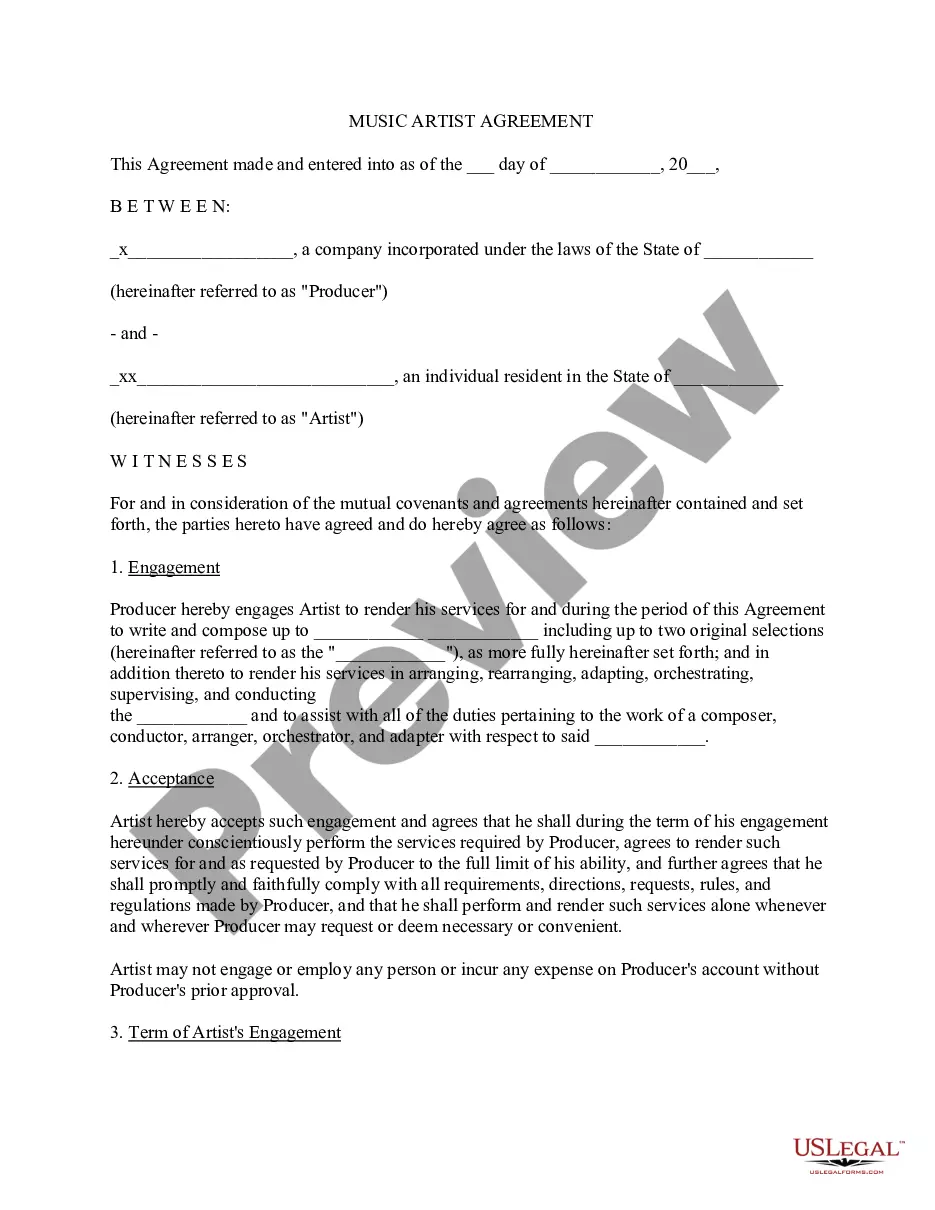
The Composer - Music Performance Agreement is a legal document that establishes the terms between a producer and a composer for the creation and performance of live improvisational keyboard music. This agreement outlines the responsibilities of the composer, the rights granted to the producer, and the compensation structure for the musical services provided. It is specifically tailored for musical compositions intended for television programs, setting it apart from general performance agreements.
Key components of this form
- Engagement: Specifies the producer's engagement of the composer to perform and compose music for a defined television program.
- Term: Details the duration of the agreement and the composerâs commitment to recording sessions.
- Grant of Rights: Defines the rights granted to the producer regarding the use of the composed music.
- Compensation: Outlines the payment terms for the composerâs services and potential residuals from reruns.
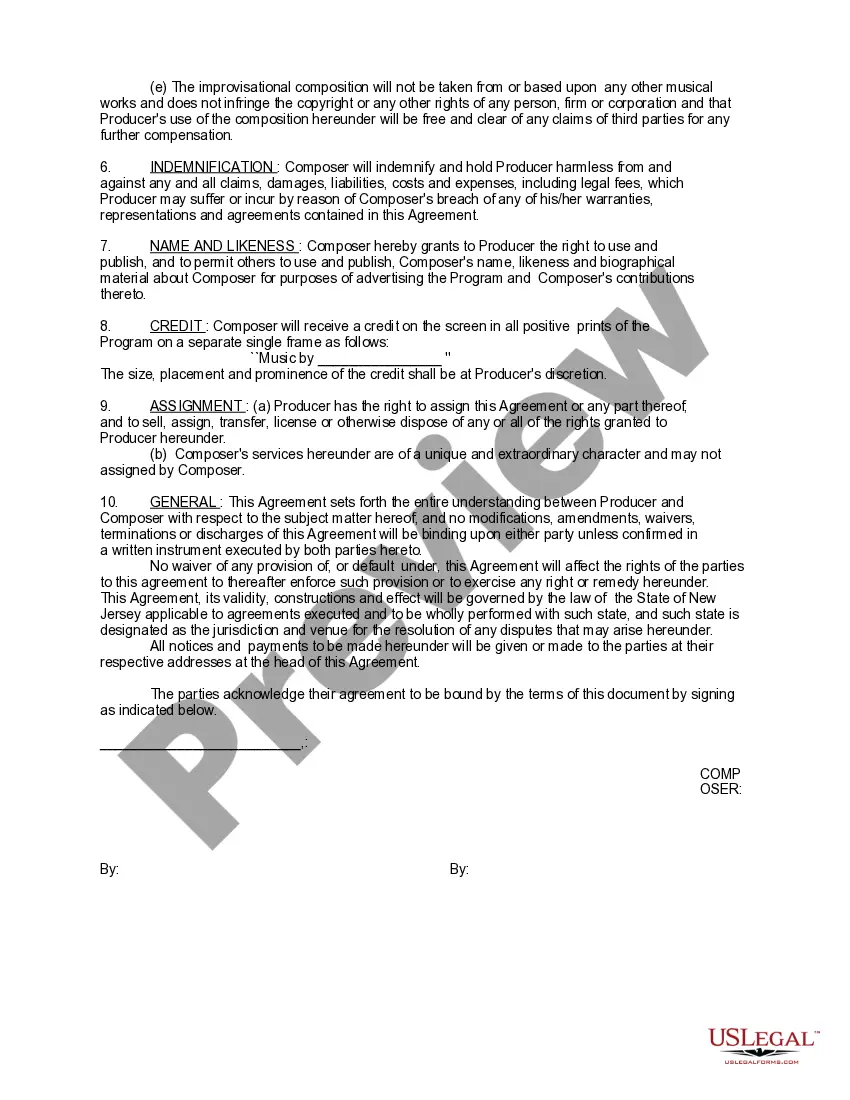
- Warranties and Representations: Ensures that the composer has the authority to enter the agreement and that the music is original.
- Indemnification: Protects the producer against any claims resulting from the composerâs breach of the agreement.

Common use cases
This form is essential when a producer wishes to formally engage a composer to create and perform music specifically for a television program. It is particularly useful in scenarios where live improvisational music is integral to the show, ensuring both parties understand their rights, responsibilities, and compensation terms. Use this agreement to clarify expectations and protect both the producer and the composer in the creative process.
Who needs this form
- Producers looking to hire a composer for television programs.
- Composers who create live music for broadcast and need to formalize their engagement with producers.
- Entertainment lawyers seeking to establish clear terms for music performance agreements.
Instructions for completing this form
- Identify the parties involved by entering the names of the producer and composer.
- Specify the title of the television program for which the music will be composed.
- Fill in the start and end dates of the agreement's term.
- Detail the compensation structure, including daily rates and terms for residuals on re-airings.
- Ensure both parties sign the agreement to make it legally binding.
Notarization requirements for this form
This form does not typically require notarization unless specified by local law. However, having signatures notarized can add an extra layer of authenticity and legality to the agreement.
Get your form ready online
Our built-in tools help you complete, sign, share, and store your documents in one place.
Make edits, fill in missing information, and update formatting in US Legal Forms—just like you would in MS Word.
Download a copy, print it, send it by email, or mail it via USPS—whatever works best for your next step.
Sign and collect signatures with our SignNow integration. Send to multiple recipients, set reminders, and more. Go Premium to unlock E-Sign.
If this form requires notarization, complete it online through a secure video call—no need to meet a notary in person or wait for an appointment.
We protect your documents and personal data by following strict security and privacy standards.

Make edits, fill in missing information, and update formatting in US Legal Forms—just like you would in MS Word.

Download a copy, print it, send it by email, or mail it via USPS—whatever works best for your next step.

Sign and collect signatures with our SignNow integration. Send to multiple recipients, set reminders, and more. Go Premium to unlock E-Sign.

If this form requires notarization, complete it online through a secure video call—no need to meet a notary in person or wait for an appointment.

We protect your documents and personal data by following strict security and privacy standards.
Common mistakes to avoid
- Failing to specify the exact dates for the term of the agreement.
- Neglecting to detail the compensation terms clearly.
- Not including all parties' full names or business titles, leading to disputes later.
- Leaving out or misrepresenting the rights granted to the producer.
Benefits of completing this form online
- Convenient access to a professionally drafted agreement that saves time.
- Easy to customize the form according to specific production needs.
- Reliable templates that are crafted by licensed attorneys, ensuring legal compliance.
Legal use & context
- The agreement helps protect the rights of both the composer and the producer regarding created works.
- Ensures that any performance by the composer is legally recognized as a collaboration under the agreed terms.
- Helps resolve any potential disputes by providing legal clarity about the rights and obligations of both parties.
Main things to remember
- The Composer - Music Performance Agreement is essential for formalizing music rights in television productions.
- It protects both the composer and producer by clearly outlining rights, obligations, and compensation.
- Ensuring accuracy in the agreement's terms helps prevent future disputes.
Looking for another form?
Form popularity
FAQ
Composers write, direct, and create music for various genres. They may produce compositions, scores, and arrangements for theatre, film, television, and even video games. Composers have an excellent musical ear and often advise musicians. They are typically skilled in one or more instruments.
A composer (Latin comp014dn014d; literally "one who puts together") is a person who writes music, especially classical music in any form, including vocal music (for a singer or choir), instrumental music, electronic music, and music which combines multiple forms.Many composers are, or were, also skilled performers of music.
Max Richter. Eric Whitacre. David Lang. Lang's The Little Match Girl Passion, Via Amazon.com. John Corigliano. John Corigliano's Symphony No. Judd Greenstein. Judd Greenstein's Now Ensemble, Via Amazon.com.
Remember: You'll need an early exposure to music and a bachelor's degree in composition, songwriting, film scoring or another related major to work as a composer. Music composers and directors overall earn a median salary of $49,630, as of May 2018.