Agreement Between Composer and Vocalist regarding the Recording of a Musical
Overview of this form
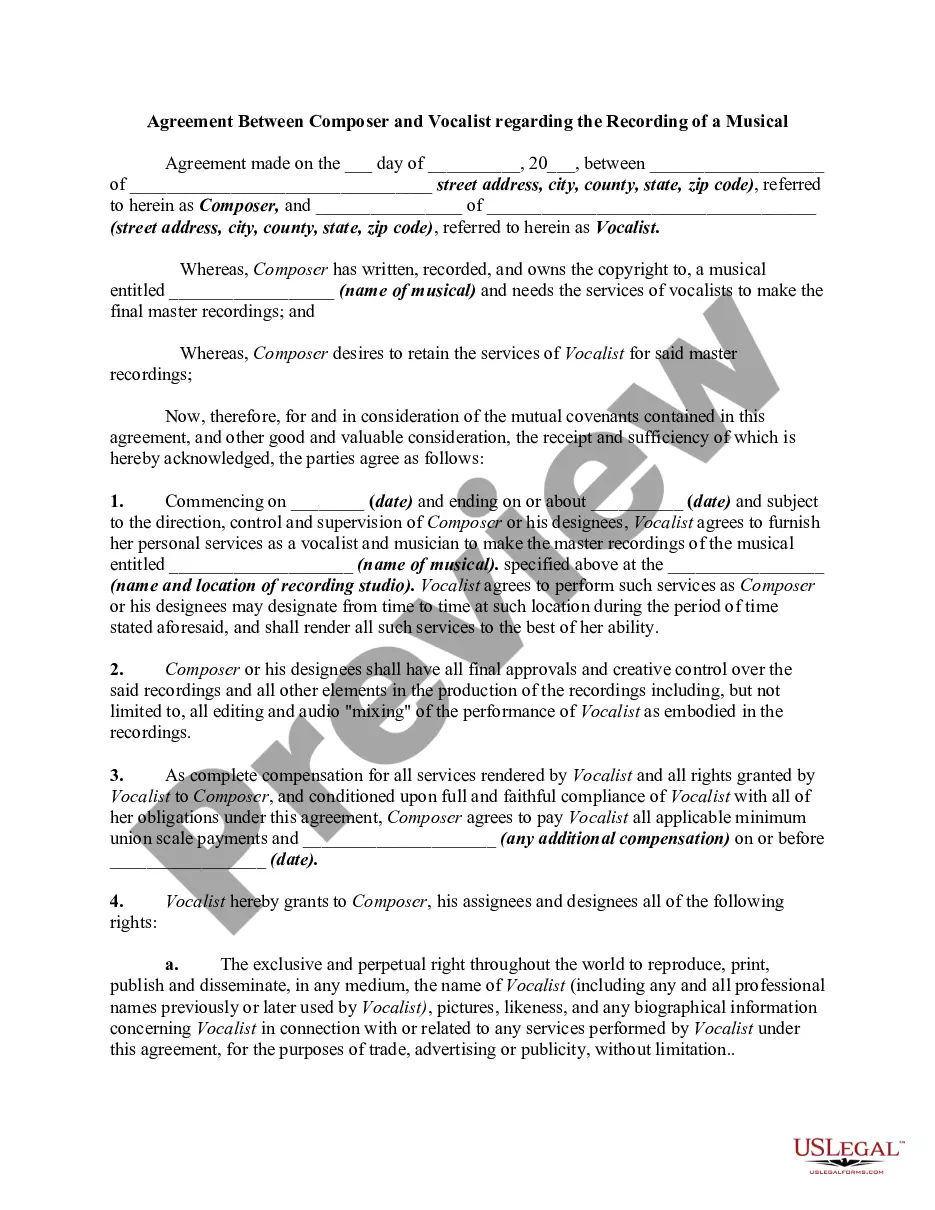
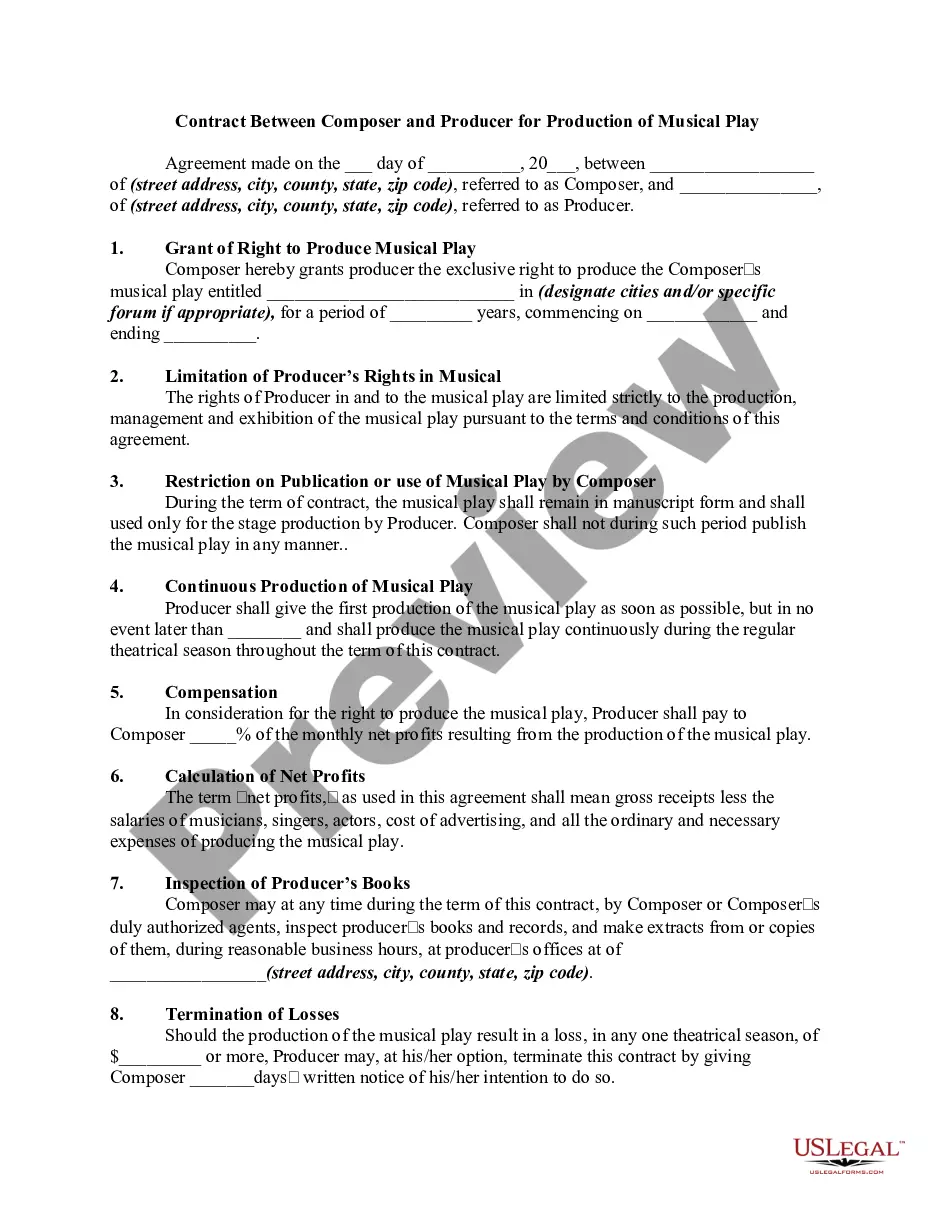
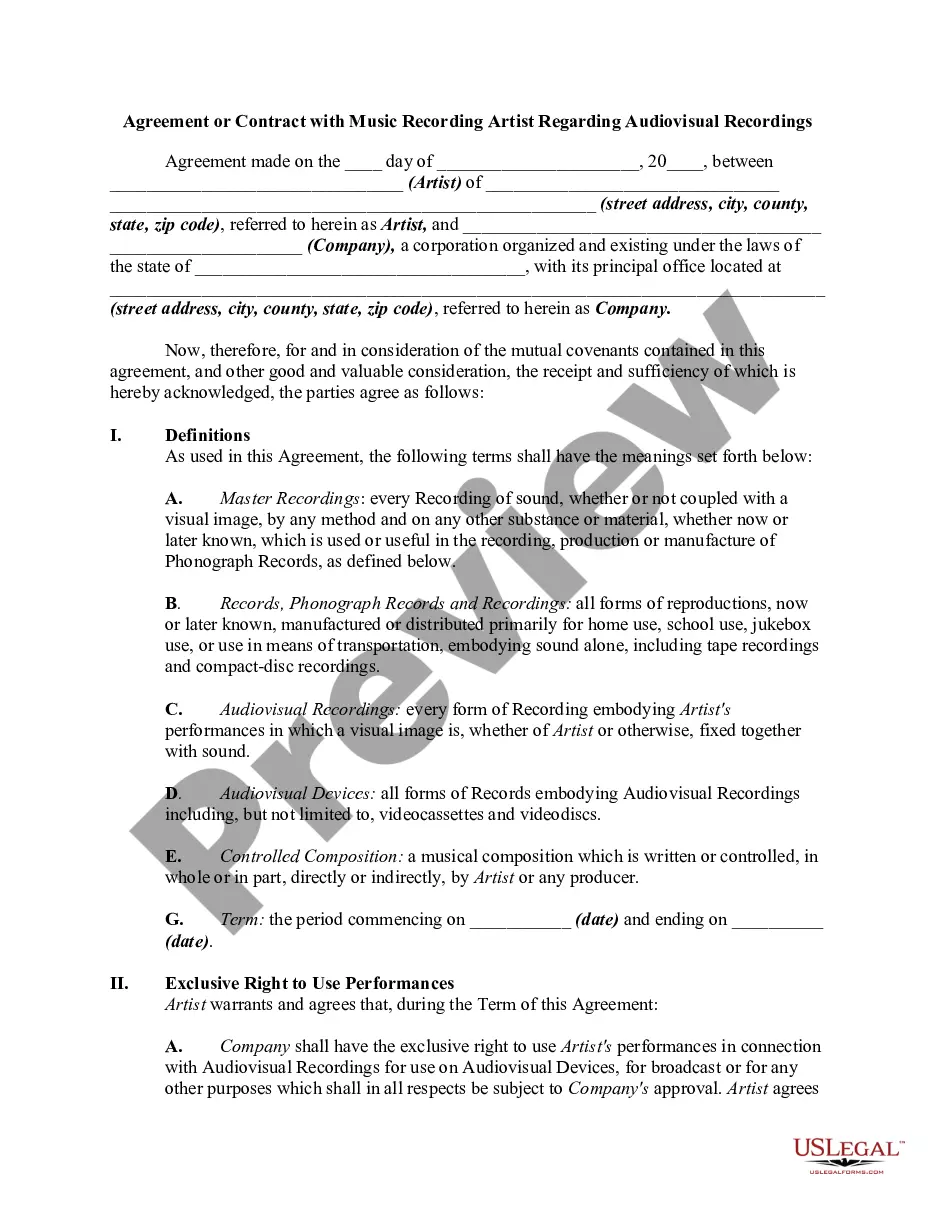
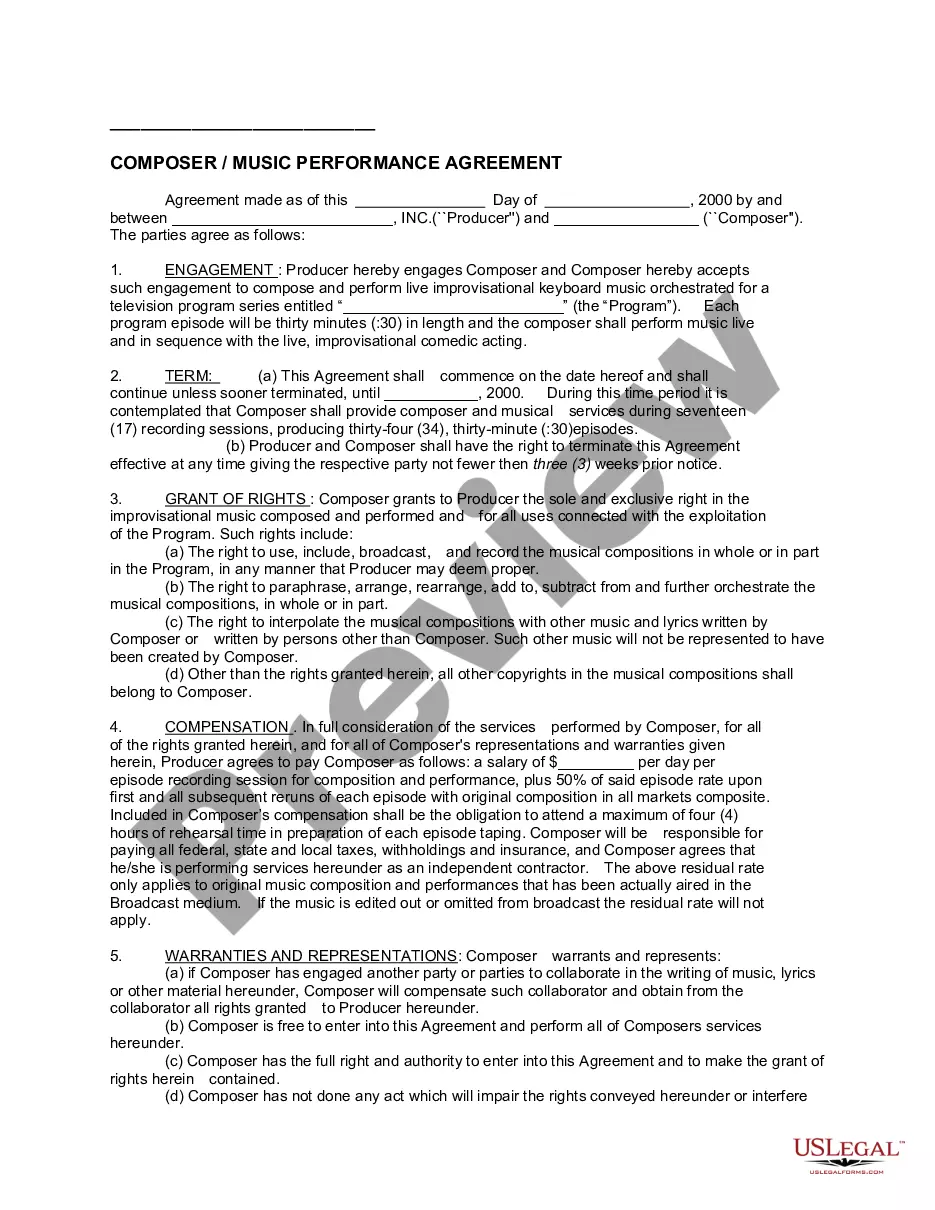
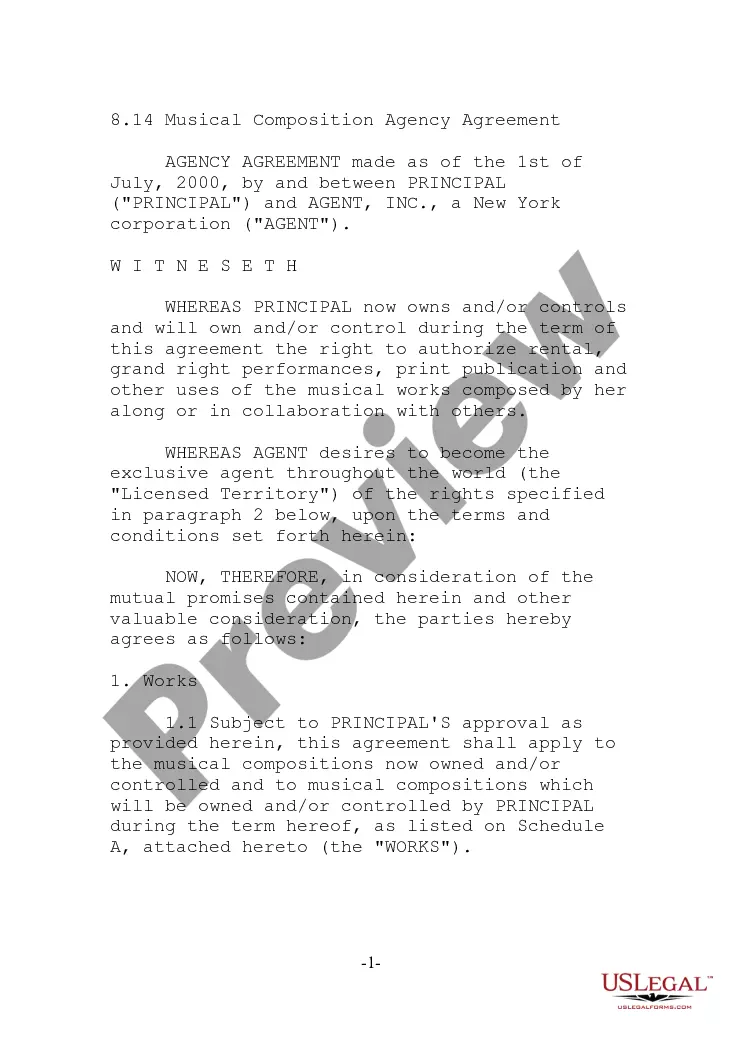
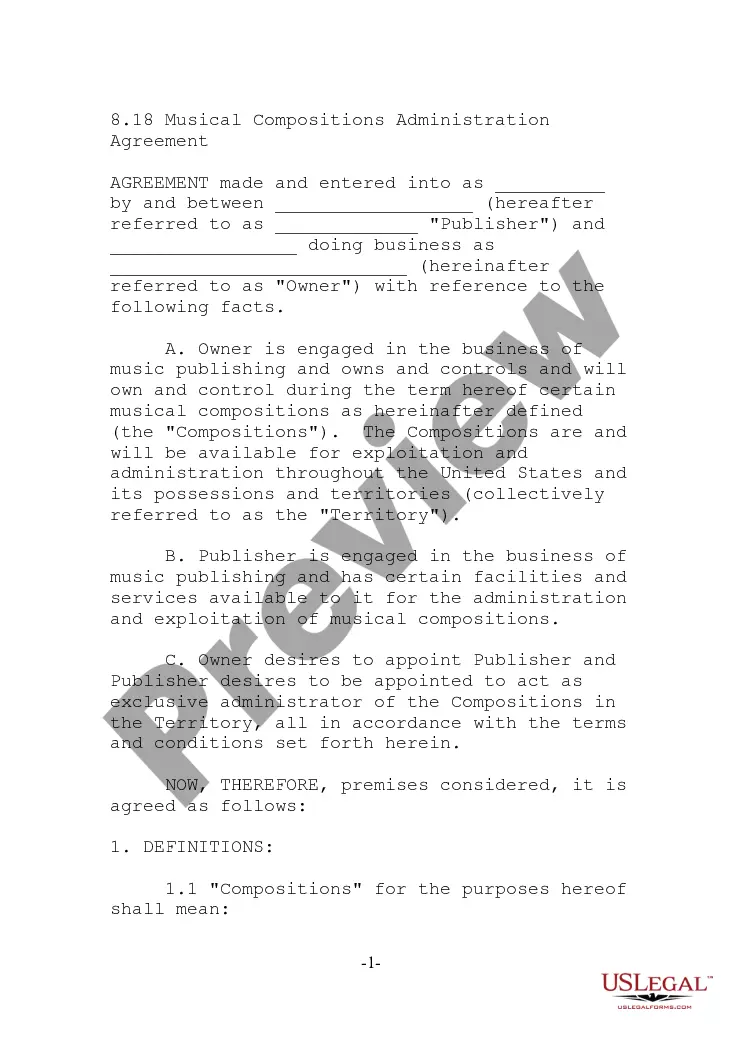
The Agreement Between Composer and Vocalist regarding the Recording of a Musical is a legal document that outlines the terms and conditions between a composer and a vocalist. This form is essential for ensuring that both parties understand their rights and responsibilities related to the recording of a musical. Unlike standard employment contracts, this agreement specifically addresses issues of copyright ownership and control over the creative process, making it vital for any musical collaboration.
Key parts of this document
- Parties involved: Identification of the Composer and Vocalist with their addresses.
- Scope of work: Details the services the Vocalist will provide and the duration of the agreement.
- Compensation: Specifies payment terms and additional compensation, if applicable.
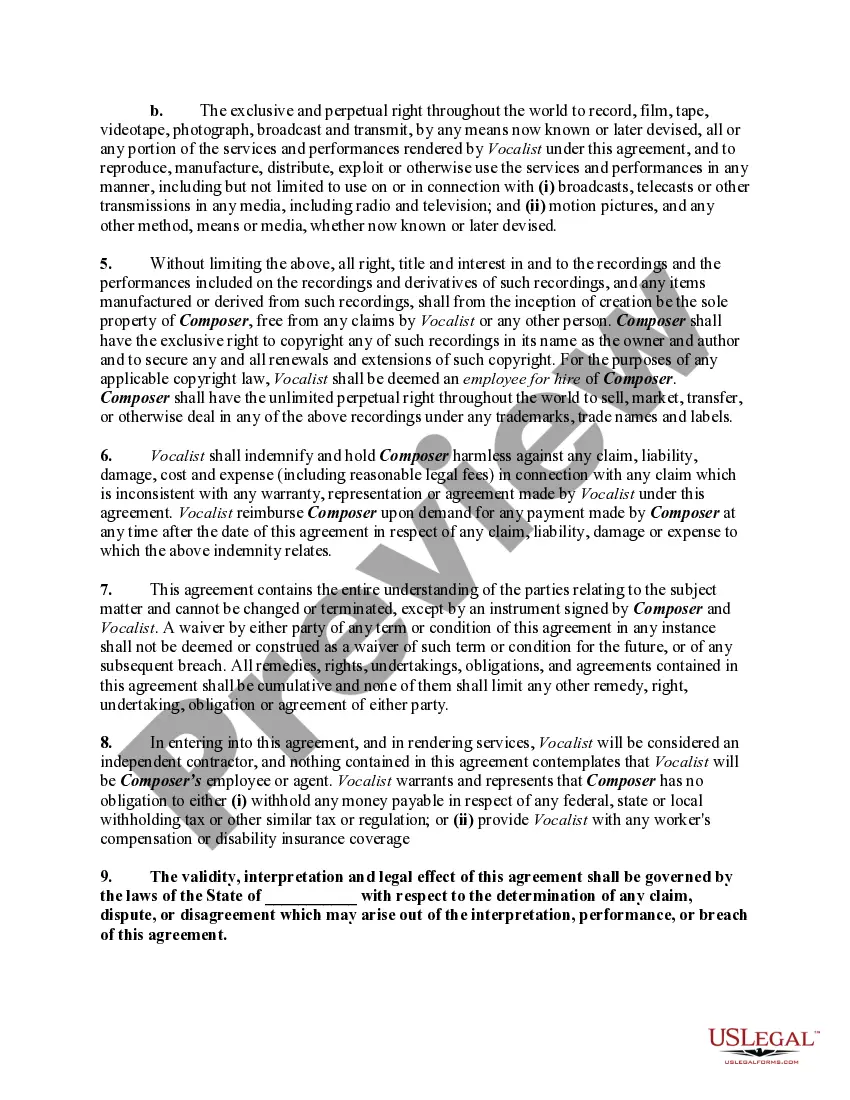
- Grant of rights: Outlines the rights granted by the Vocalist to the Composer, including copyright ownership.
- Indemnification: Describes the Vocalist's responsibilities regarding any claims that arise.
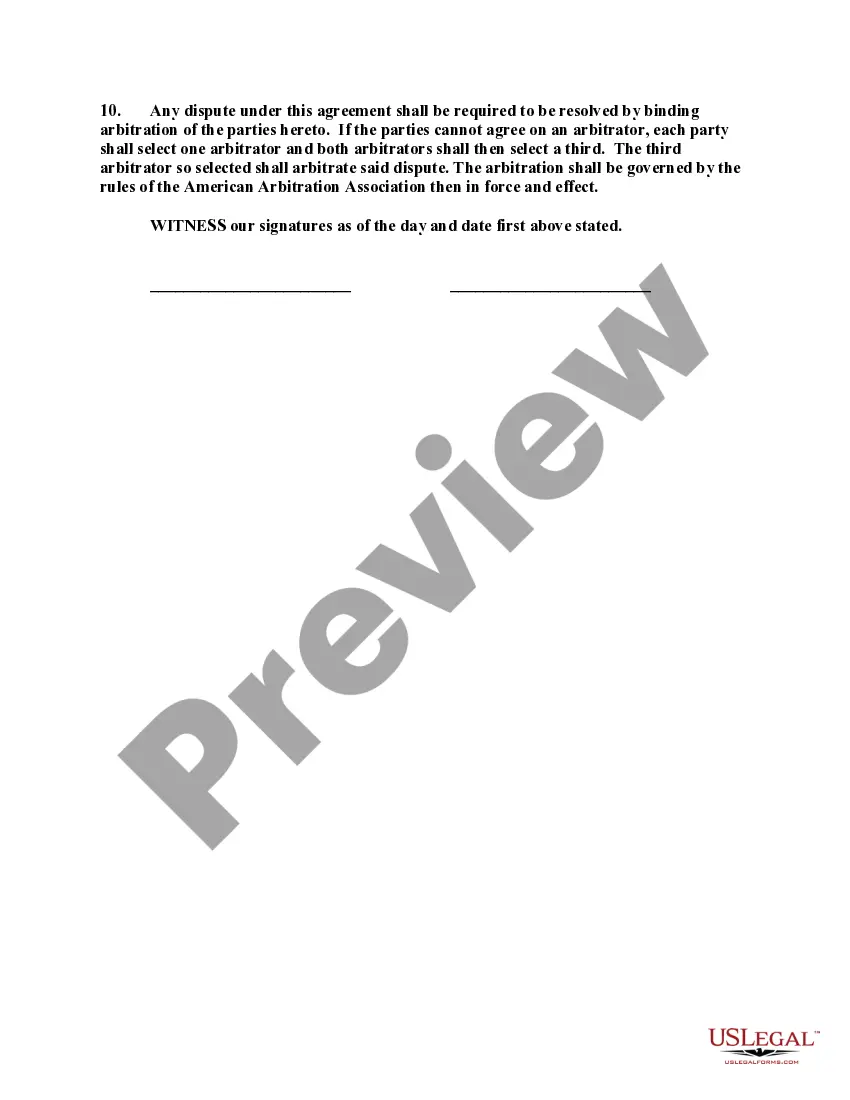
- Governing law: Indicates which state's laws govern the agreement.
Situations where this form applies
This form should be used when a composer seeks to hire a vocalist for recording purposes. It is ideal in scenarios where the composer has original musical content that requires vocal input and wants to establish clear terms for payment, rights, and responsibilities. This agreement ensures that both parties are on the same page and helps to avoid disputes over ownership and creative control.
Who needs this form
- Composers looking to hire vocalists for their musical projects.
- Vocalists who want to ensure they understand their rights and compensations when working with composers.
- Music producers requiring clarity in agreements with both composers and vocalists.
Steps to complete this form
- Identify the parties: Fill in the names and addresses of the Composer and Vocalist.
- Specify the musical title: Enter the name of the musical work in question.
- Outline the duration: Clearly state the start and end dates for the agreement.
- Detail compensation: Indicate the payment amount and terms for the Vocalist's services.
- Grant rights: Make sure the Vocalist understands and agrees to the rights being granted to the Composer.
Notarization requirements for this form
Notarization is generally not required for this form. However, certain states or situations might demand it. You can complete notarization online through US Legal Forms, powered by Notarize, using a verified video call available anytime.
Get your form ready online
Our built-in tools help you complete, sign, share, and store your documents in one place.
Make edits, fill in missing information, and update formatting in US Legal Forms—just like you would in MS Word.
Download a copy, print it, send it by email, or mail it via USPS—whatever works best for your next step.
Sign and collect signatures with our SignNow integration. Send to multiple recipients, set reminders, and more. Go Premium to unlock E-Sign.
If this form requires notarization, complete it online through a secure video call—no need to meet a notary in person or wait for an appointment.
We protect your documents and personal data by following strict security and privacy standards.

Make edits, fill in missing information, and update formatting in US Legal Forms—just like you would in MS Word.

Download a copy, print it, send it by email, or mail it via USPS—whatever works best for your next step.

Sign and collect signatures with our SignNow integration. Send to multiple recipients, set reminders, and more. Go Premium to unlock E-Sign.

If this form requires notarization, complete it online through a secure video call—no need to meet a notary in person or wait for an appointment.

We protect your documents and personal data by following strict security and privacy standards.
Avoid these common issues
- Leaving out critical details such as the names and addresses of the parties involved.
- Failing to specify the duration of the agreement or the terms of compensation.
- Neglecting to clarify the rights being granted, which can lead to disputes later.
Benefits of completing this form online
- Convenience: Easily fill out and download the form from any device.
- Editability: Make necessary changes before finalizing the document.
- Reliability: Access forms drafted by licensed attorneys to ensure legal compliance.
Legal use & context
- This agreement is legally binding, provided it is signed by both parties and complies with state laws.
- It protects both the Composer and Vocalist by clearly delineating rights and responsibilities.
Main things to remember
- Use this agreement to formalize the relationship between a composer and a vocalist.
- Clearly outline compensation and rights related to the musical work.
- Ensure mutual understanding to prevent future disputes over the recordings.
Looking for another form?

Form popularity
FAQ
MAKE THE BEST ALBUM OR DEMO THAT YOU CAN. The music industry is more competitive than ever, which means you can't just deliver a good song or a presentable demo. BUILD A FAN BASE AND BUILD MOMENTUM. CONSIDER A PUBLISHING DEAL FIRST. MAKE TONS OF CONNECTIONS.
Recording contract. Call it what you want, but it all equates to a legally binding agreement between the artist and label. Under the deal, a label generally pays for making, distributing and marketing the recordings.The label also agrees to pay you a set share of money from recording sales known as the royalty rate.
Per IFPI, a record label will typically invest anywhere from $500,000 to $2,000,000 in a newly signed artist. That's a wide spread to be sure, and a large amount of money from the perspective of most. Here's the basic breakdown of how these funds are allocated: Advance: $50,000 to $350,000.
Large labels pay about $0.50 to $0.55 per CD on orders of 100,000 or more. Labels that buy less than 10,000 CDs per year pay approximately $1.20 per CD. Record labels pay two royalties: one to artists, and another to composers & publishers. Artists can receive 10% 15% of suggested album retail minus packaging costs.
Recording company details (name, contact info) Artist details (group name, names of each artist, contact info) Production details, e.g. studio address, recording session dates, control over song selections on the recording, and control over album title.
The agreement or contract is the legal document between an artist or owner of an artwork and a borrowing institution, or between an exhibition organiser and the host venue.They are written to specify details about work to be undertaken and the expected outcomes.
Client Info. Begin your contract with each parties' name, business, address, email, and phone number to make it clear who is involved and how you can get in touch. Project Info and Terms. Project Timeline. Costs and Payment Terms. Itemization. Artist's Rights. Cancellation Terms. Acceptance of Agreement.
Recording company details (name, contact info) Artist details (group name, names of each artist, contact info) Production details, e.g. studio address, recording session dates, control over song selections on the recording, and control over album title.