Musical Composition Agency Agreement
Overview of this form
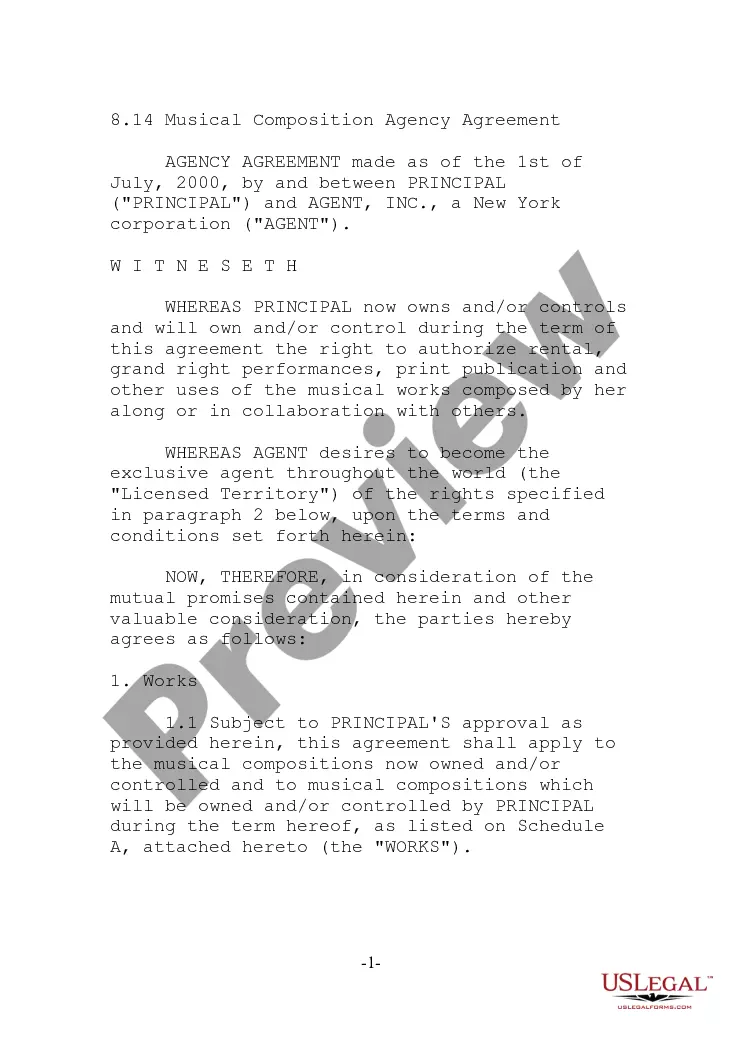
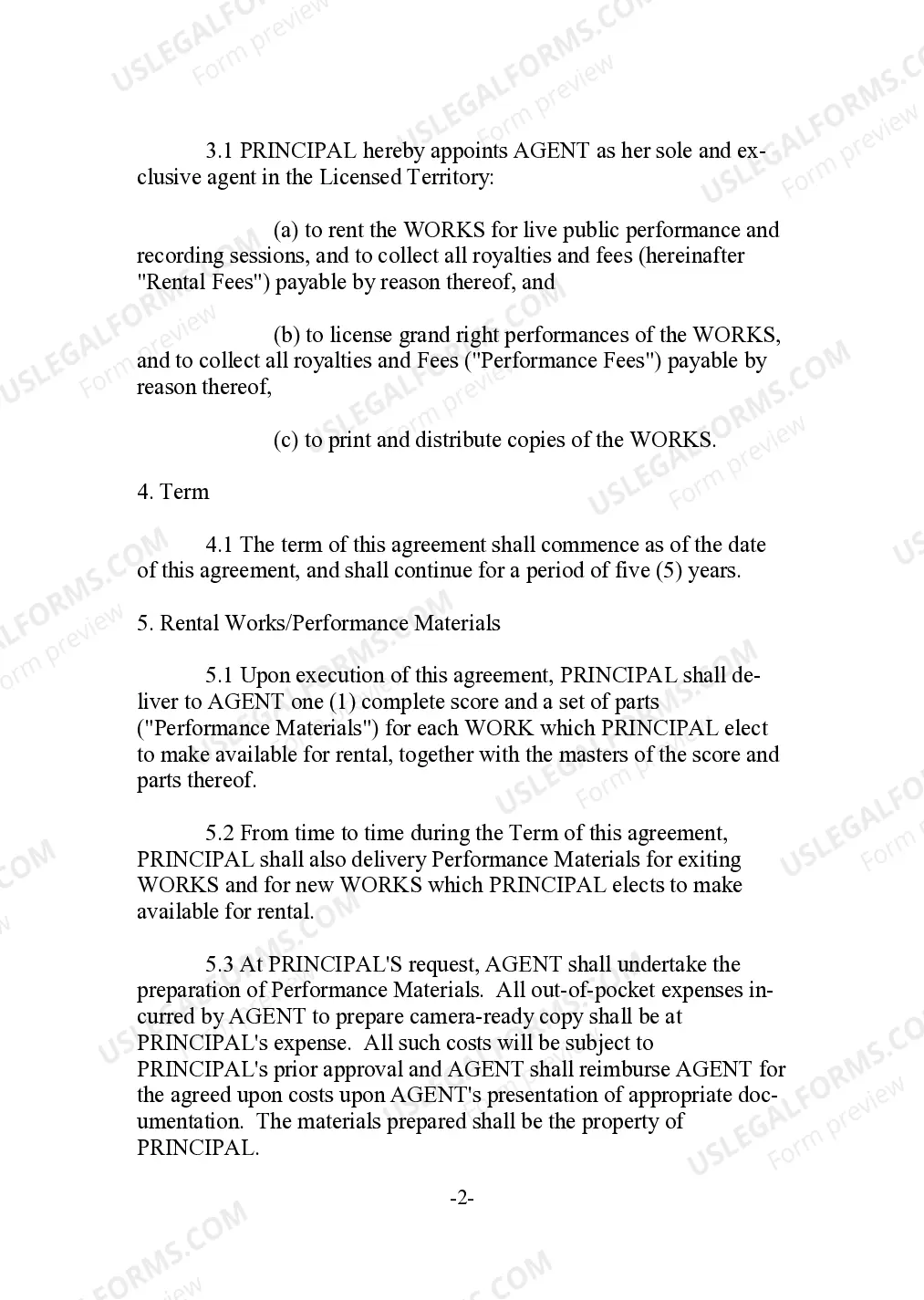
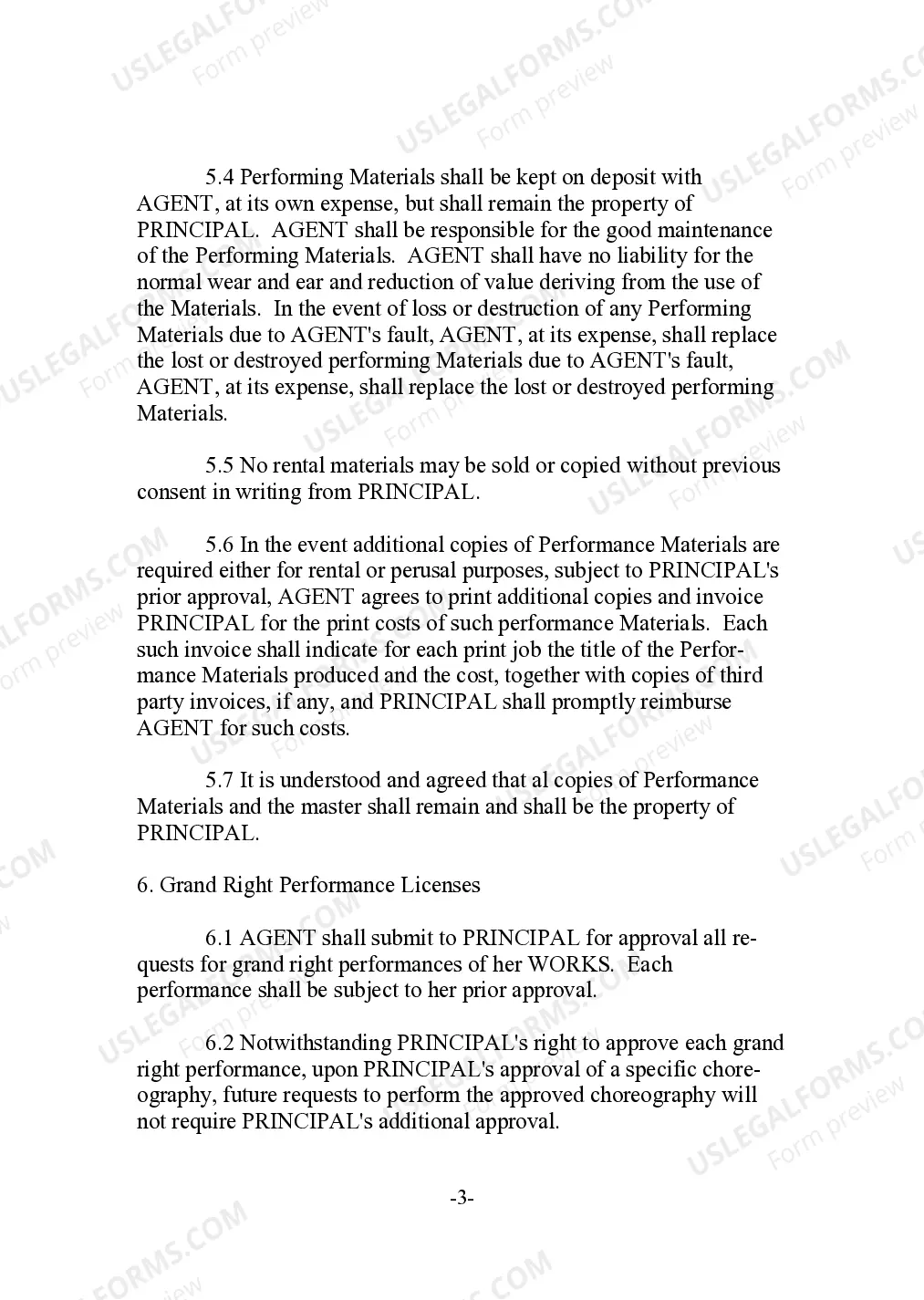
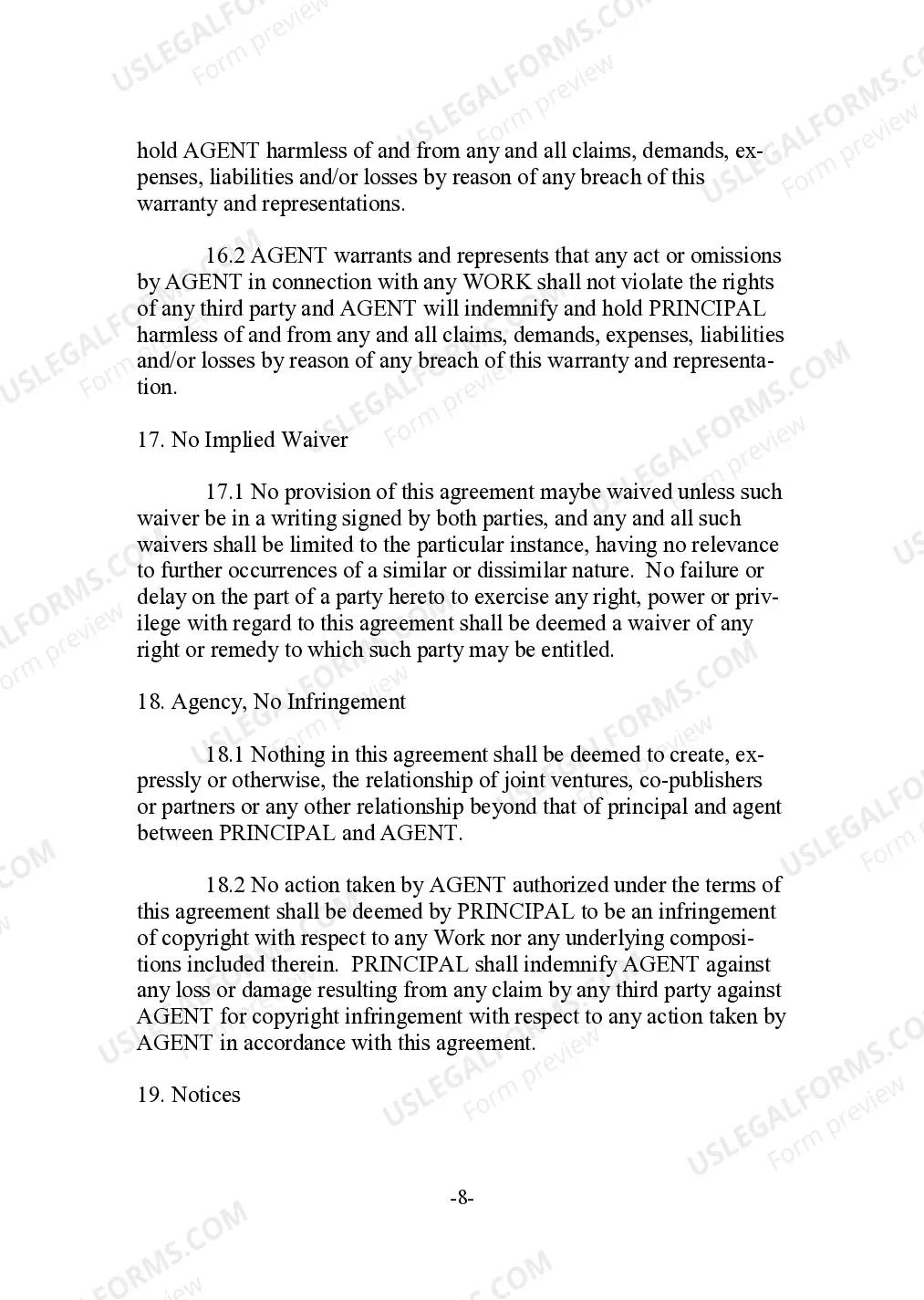
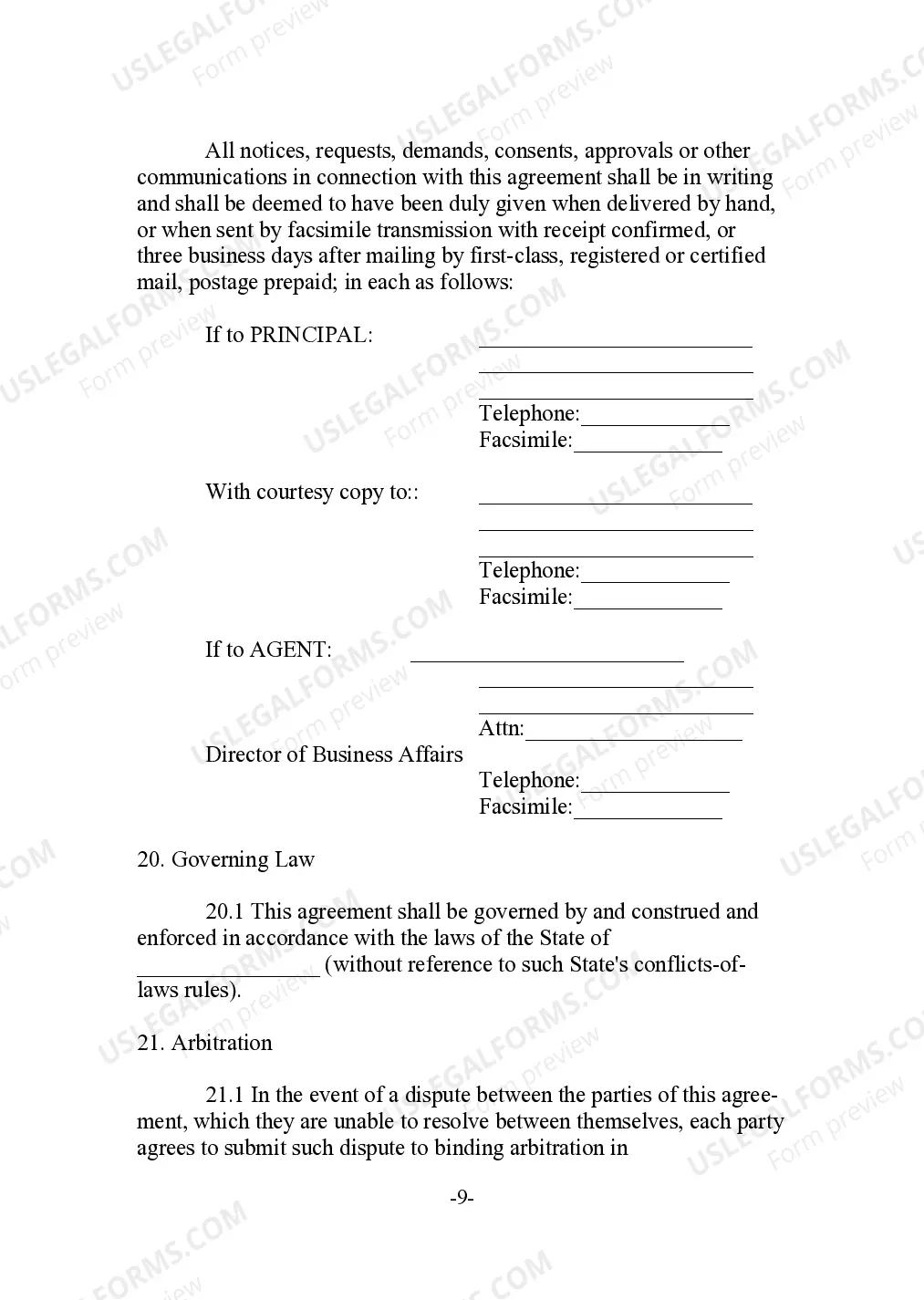
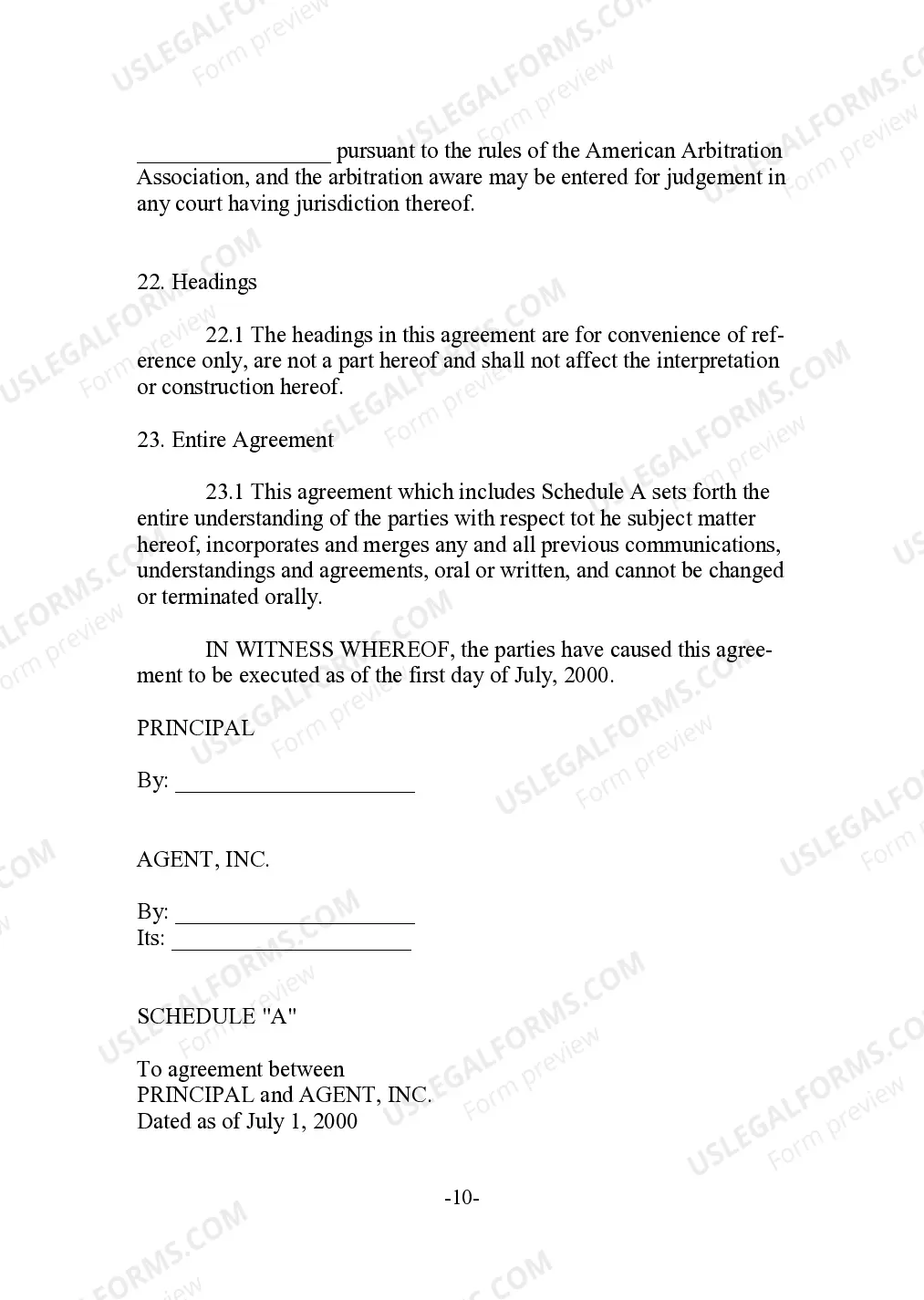
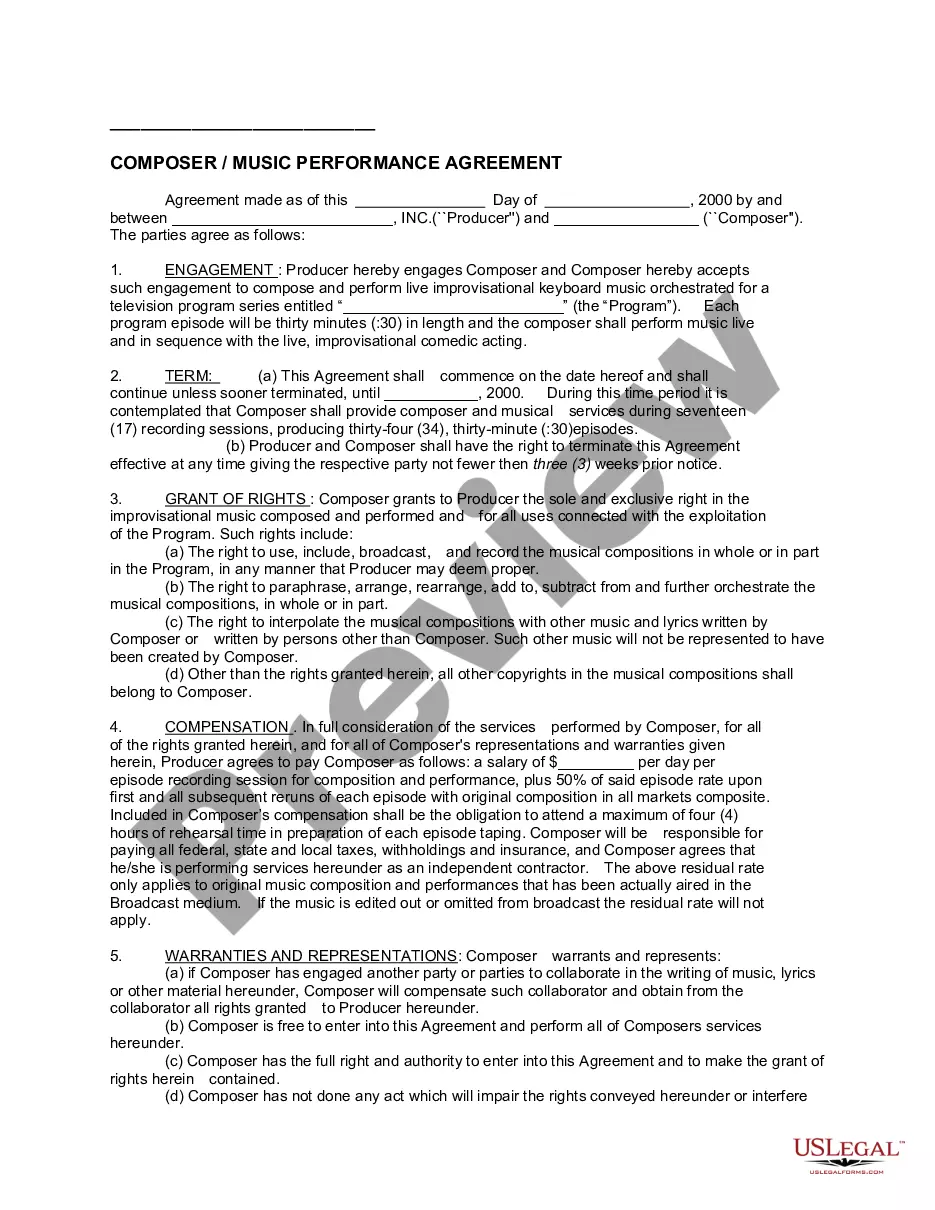
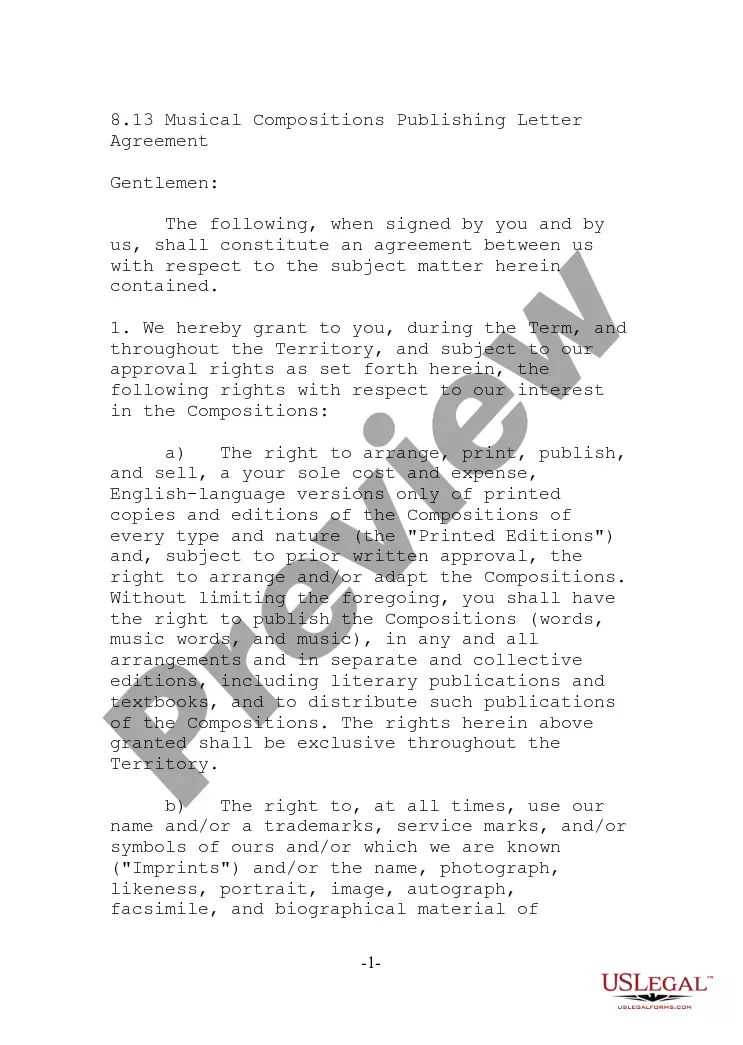
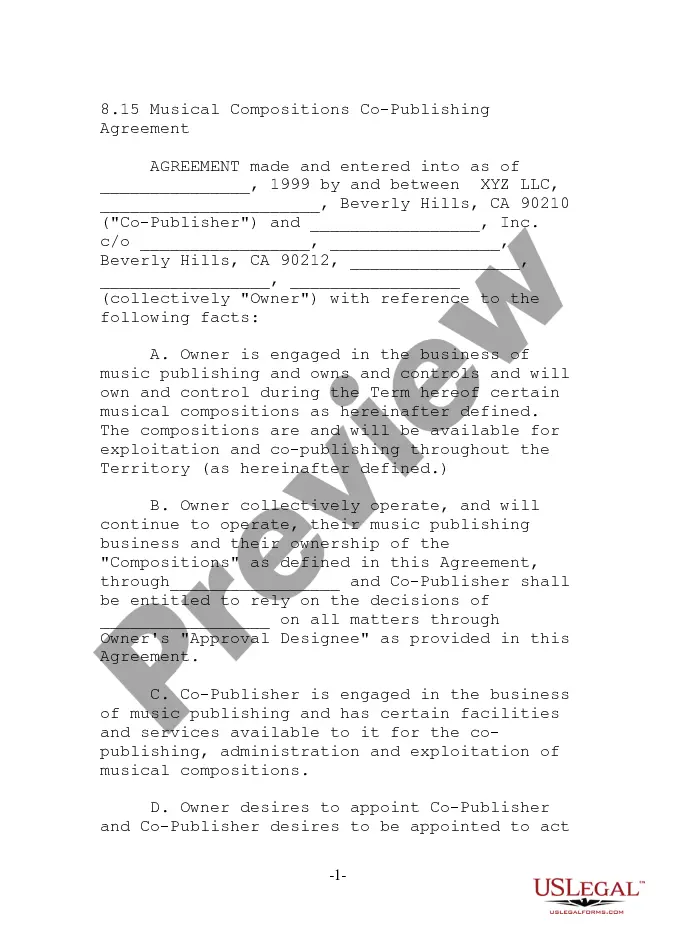
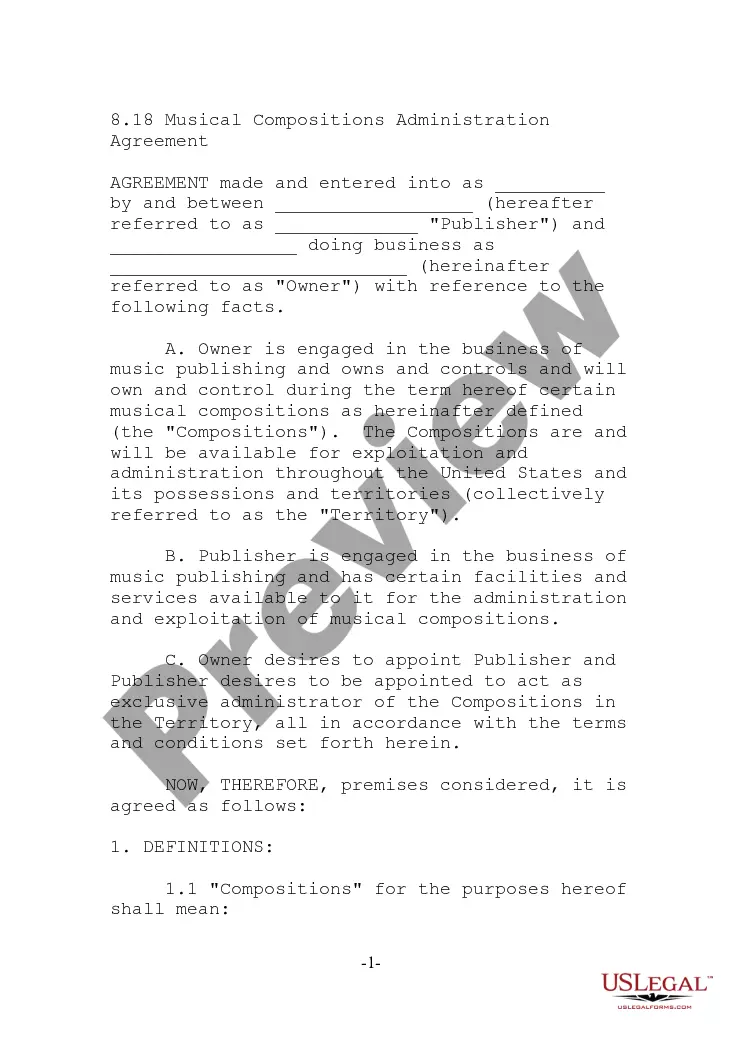
The Musical Composition Agency Agreement is a legally binding document that establishes the relationship between a musical principal and an agent. This agreement outlines the agent's rights and responsibilities concerning the management, licensing, and performance of the principal's musical works. It specifically deals with aspects such as royalties, performance fees, publication rights, and materials management. This agreement is essential for anyone in the music industry looking to ensure proper representation and management of their compositions.
Main sections of this form
- Works Covered: Details the musical compositions owned by the principal.
- Licensed Territory: Specifies that the agreement is worldwide.
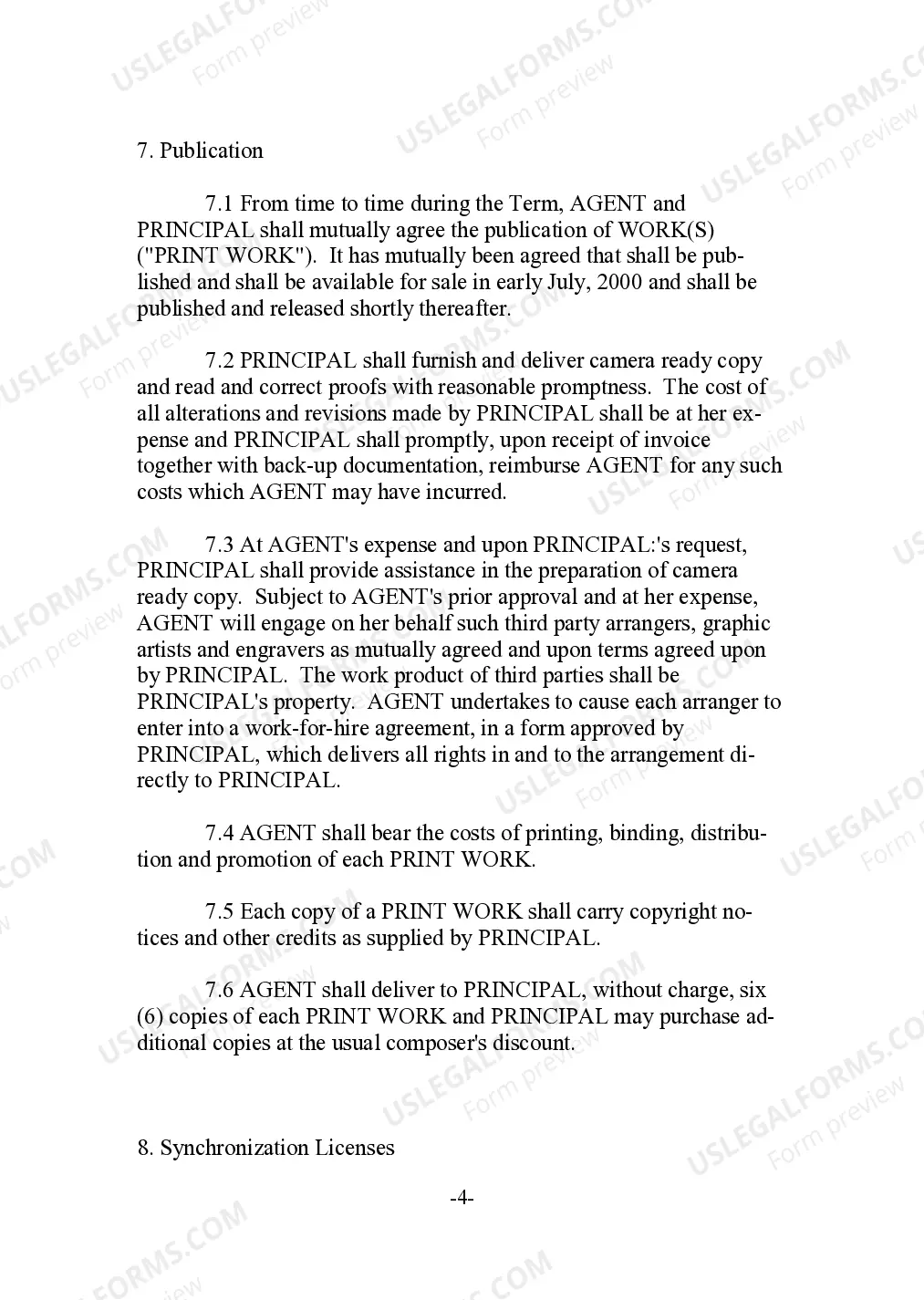
- Rights Granted: Outlines the exclusive rights given to the agent for rentals, performances, and publications.
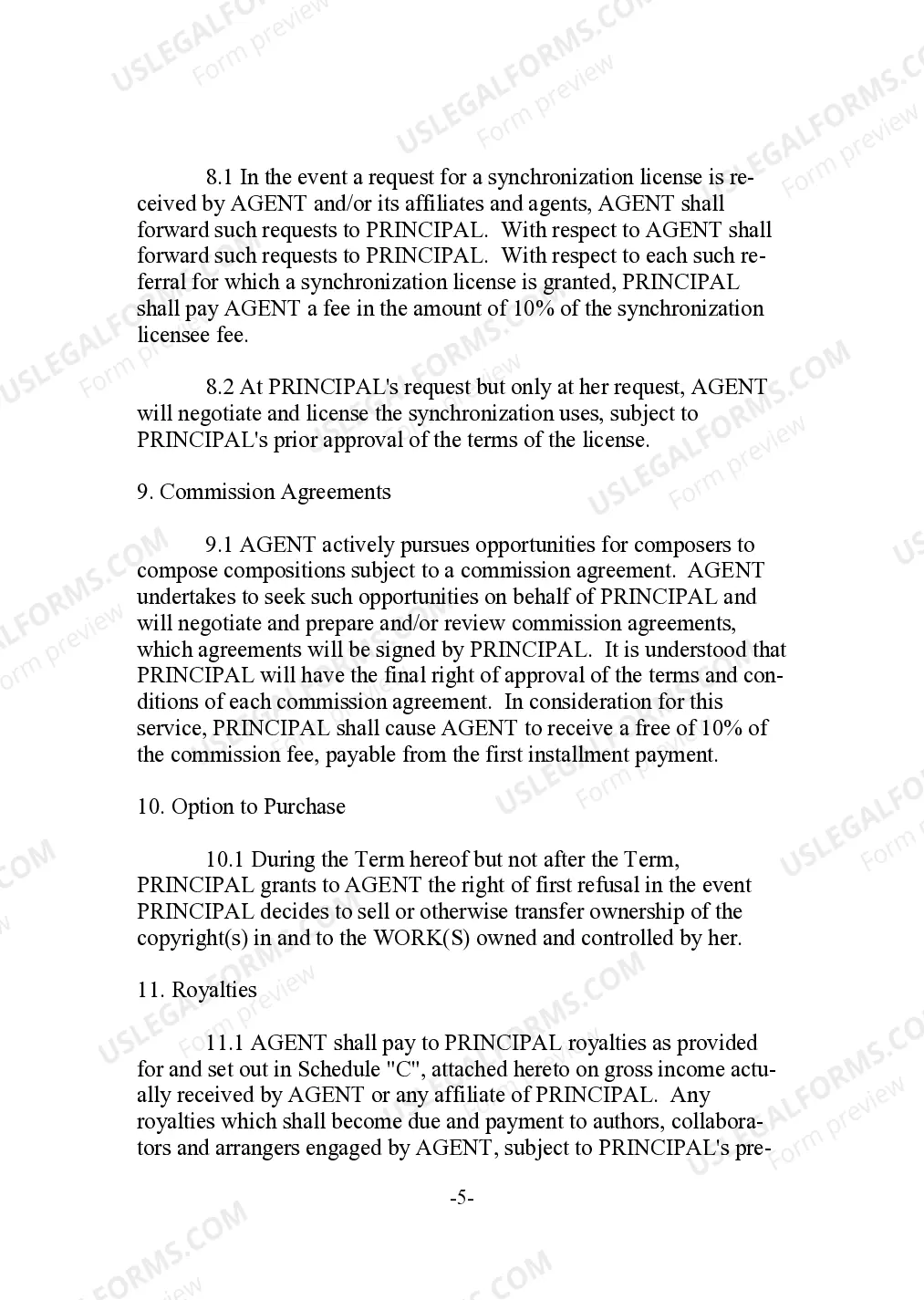
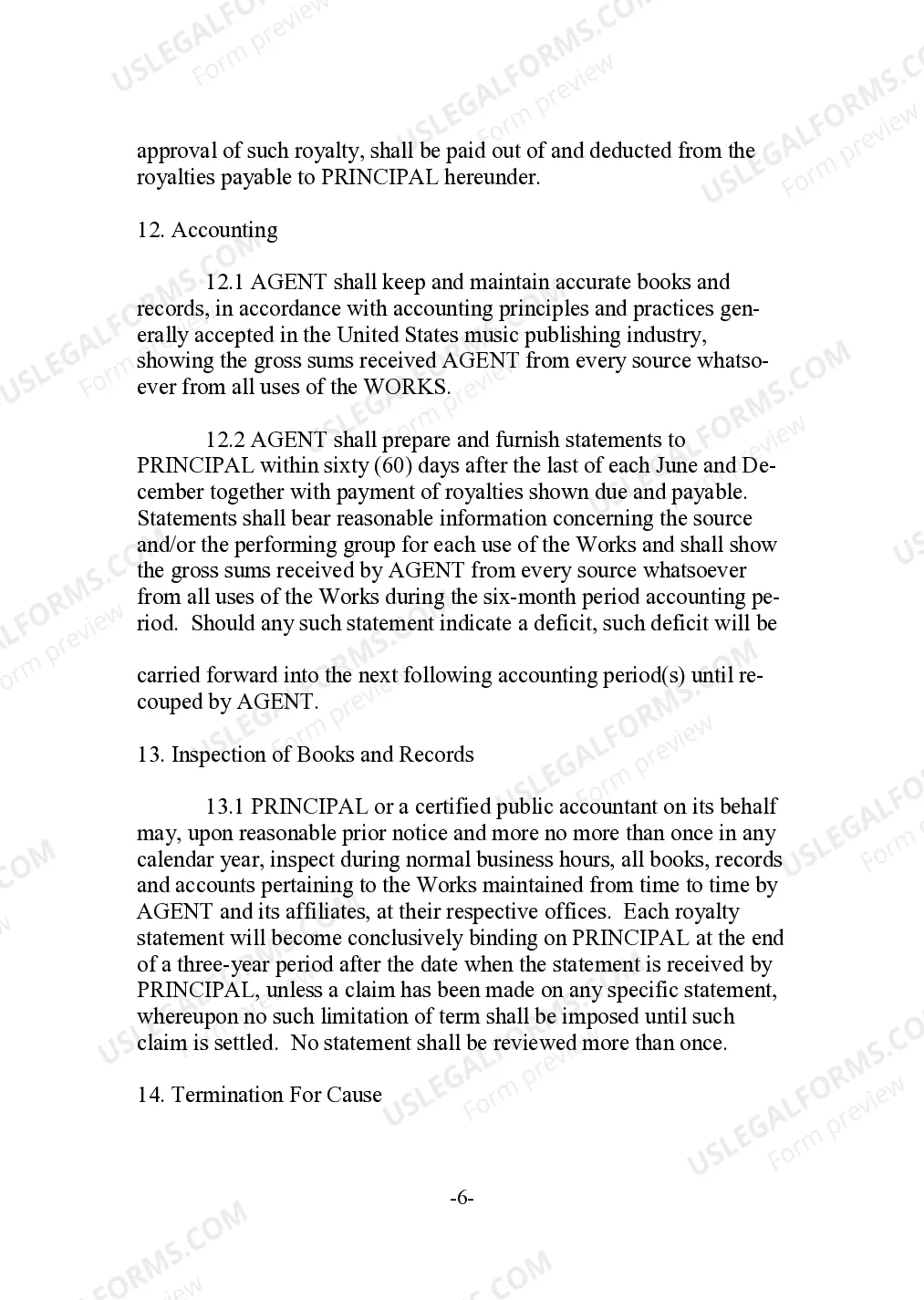
- Royalties: Describes how royalties are calculated and paid to the principal.
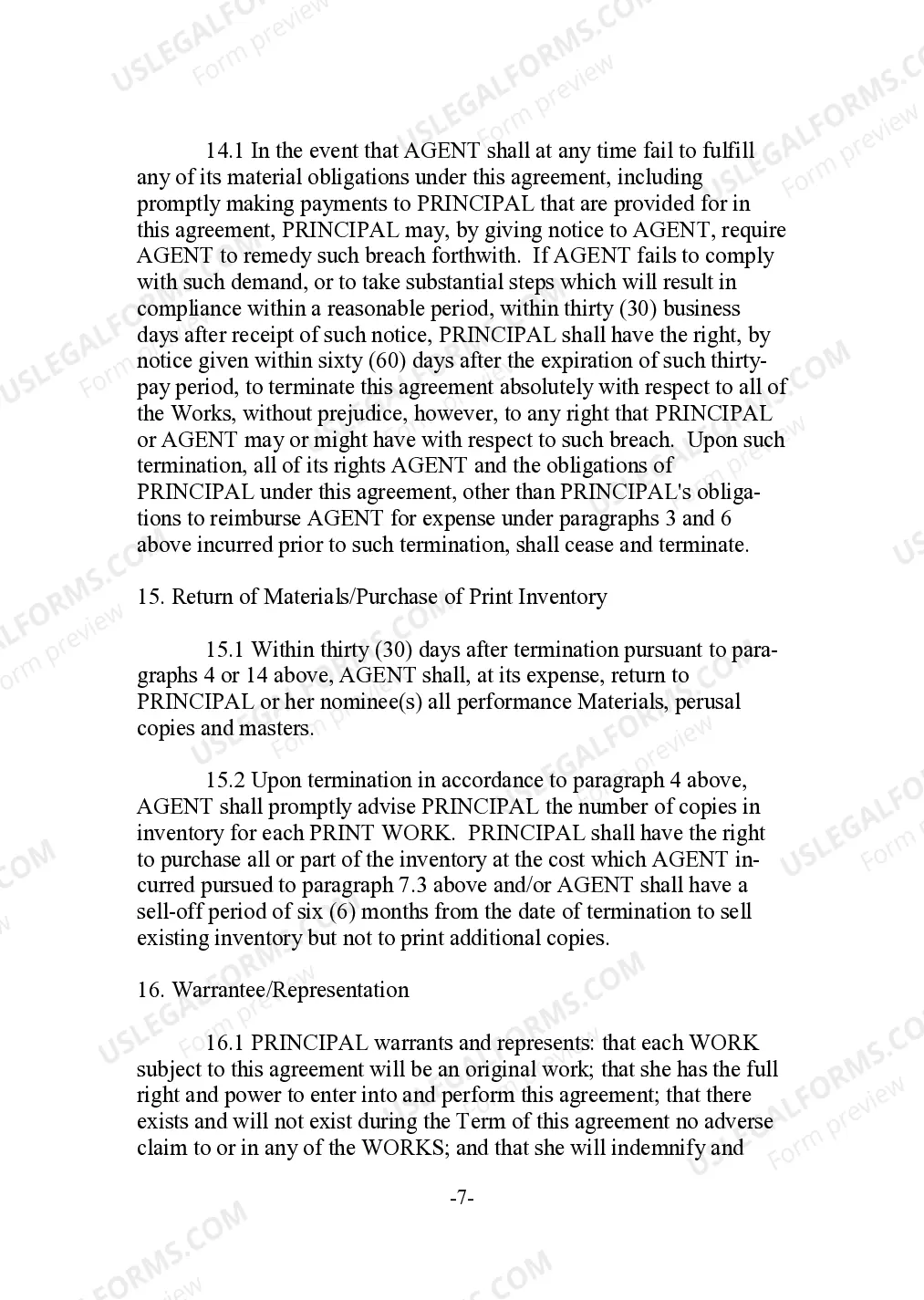
- Termination Clause: Provides conditions under which either party can terminate the agreement.

Situations where this form applies
This form should be used when a musical composer or copyright owner (the principal) wishes to engage an agent to manage their works. It is pertinent when entering into an exclusive agreement for performances, rentals, or publications of musical compositions. This agreement helps ensure that both parties understand their rights and obligations, facilitating a smoother collaboration in the music industry.
Who needs this form
- Musical artists looking to assign an agent for their works.
- Music publishers that need to establish agency relationships with composers.
- Agents seeking to represent musicians or composers in licensing and performance agreements.
- Composers wanting to ensure that their works are managed and monetized effectively by an agent.
Steps to complete this form
- Identify the principal and agent, including their contact information.
- List the musical works covered by the agreement in the attached Schedule A.
- Specify the licensed territory, typically indicating worldwide rights.
- Detail the terms concerning royalties and fees using Schedule B.
- Both parties should sign and date the agreement to validate it.
Notarization requirements for this form
In most cases, this form does not require notarization. However, some jurisdictions or signing circumstances might. US Legal Forms offers online notarization powered by Notarize, accessible 24/7 for a quick, remote process.
Get your form ready online
Our built-in tools help you complete, sign, share, and store your documents in one place.
Make edits, fill in missing information, and update formatting in US Legal Forms—just like you would in MS Word.
Download a copy, print it, send it by email, or mail it via USPS—whatever works best for your next step.
Sign and collect signatures with our SignNow integration. Send to multiple recipients, set reminders, and more. Go Premium to unlock E-Sign.
If this form requires notarization, complete it online through a secure video call—no need to meet a notary in person or wait for an appointment.
We protect your documents and personal data by following strict security and privacy standards.

Make edits, fill in missing information, and update formatting in US Legal Forms—just like you would in MS Word.

Download a copy, print it, send it by email, or mail it via USPS—whatever works best for your next step.

Sign and collect signatures with our SignNow integration. Send to multiple recipients, set reminders, and more. Go Premium to unlock E-Sign.

If this form requires notarization, complete it online through a secure video call—no need to meet a notary in person or wait for an appointment.

We protect your documents and personal data by following strict security and privacy standards.
Typical mistakes to avoid
- Failing to list all works covered under the agreement.
- Not specifying the percentage of royalties clearly.
- Overlooking the termination clause, leading to misunderstandings.
- Neglecting to have both parties sign the agreement in a timely manner.
Why use this form online
- Immediate access to a professionally drafted agreement tailored for the music industry.
- Edit and personalize the document easily to meet specific needs.
- Download and keep records securely and conveniently.
- Guidance is available for completing the form correctly to reduce potential errors.
Legal use & context
- This agreement is enforceable as it complies with contract law principles.
- Both parties must understand their obligations and rights as outlined in the document.
- Clear terms regarding royalties and rights can help minimize disputes in the future.
Summary of main points
- The Musical Composition Agency Agreement is essential for defining the relationship between a composer and an agent.
- Key components include works covered, territorial rights, and royalty structures.
- It is advisable for both parties to review the agreement carefully before signing.
Looking for another form?

Form popularity
FAQ
Your own e-commerce website. market platforms like iTunes, Google Play, SoundCloud, eBay, and Amazon Music. music-centric platforms BandCamp, Spotify, and Pandora.
Recording company details (name, contact info) Artist details (group name, names of each artist, contact info) Production details, e.g. studio address, recording session dates, control over song selections on the recording, and control over album title.
Recording contract. Call it what you want, but it all equates to a legally binding agreement between the artist and label. Under the deal, a label generally pays for making, distributing and marketing the recordings.The label also agrees to pay you a set share of money from recording sales known as the royalty rate.
Publisher advance. Bulk payment to songwriter/composer as part of a publishing deal. Mechanical Royalties. Royalties generated through the licensed reproduction of recordings of your songs either physical or digital. Commissions.
The agreement or contract is the legal document between an artist or owner of an artwork and a borrowing institution, or between an exhibition organiser and the host venue.They are written to specify details about work to be undertaken and the expected outcomes.
Get it in writing. Keep it simple. Deal with the right person. Identify each party correctly. Spell out all of the details. Specify payment obligations. Agree on circumstances that terminate the contract. Agree on a way to resolve disputes.
How Long is the Term? This is a good starting point: how long will you be tied to this record deal? What is the Territory? What is Your Royalty? How Much Will The Label Invest in You? Does the Label Participate in Non-Record Revenues?
Get it in writing. Keep it simple. Deal with the right person. Identify each party correctly. Spell out all of the details. Specify payment obligations. Agree on circumstances that terminate the contract. Agree on a way to resolve disputes.