Film Music Agreement with Composer
Understanding this form
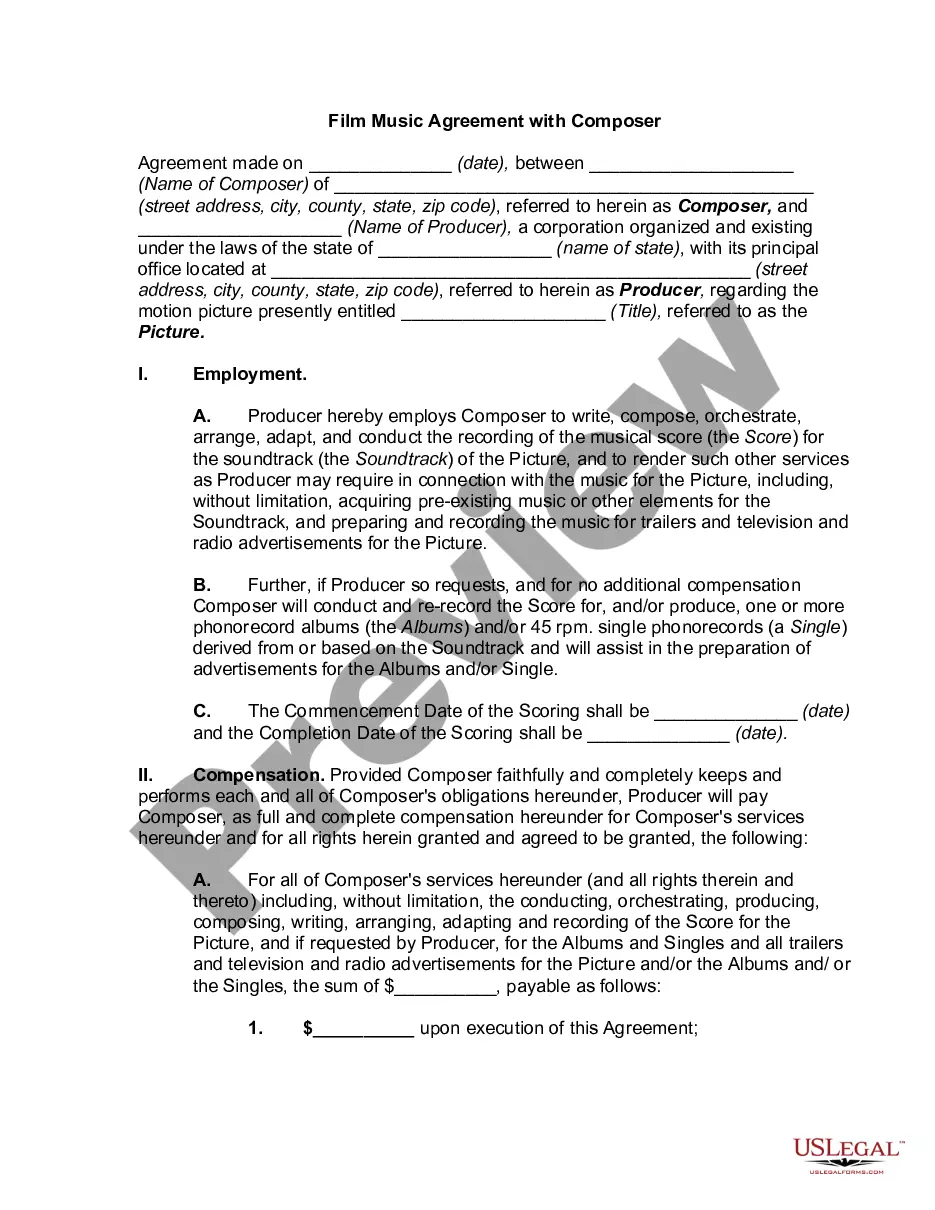
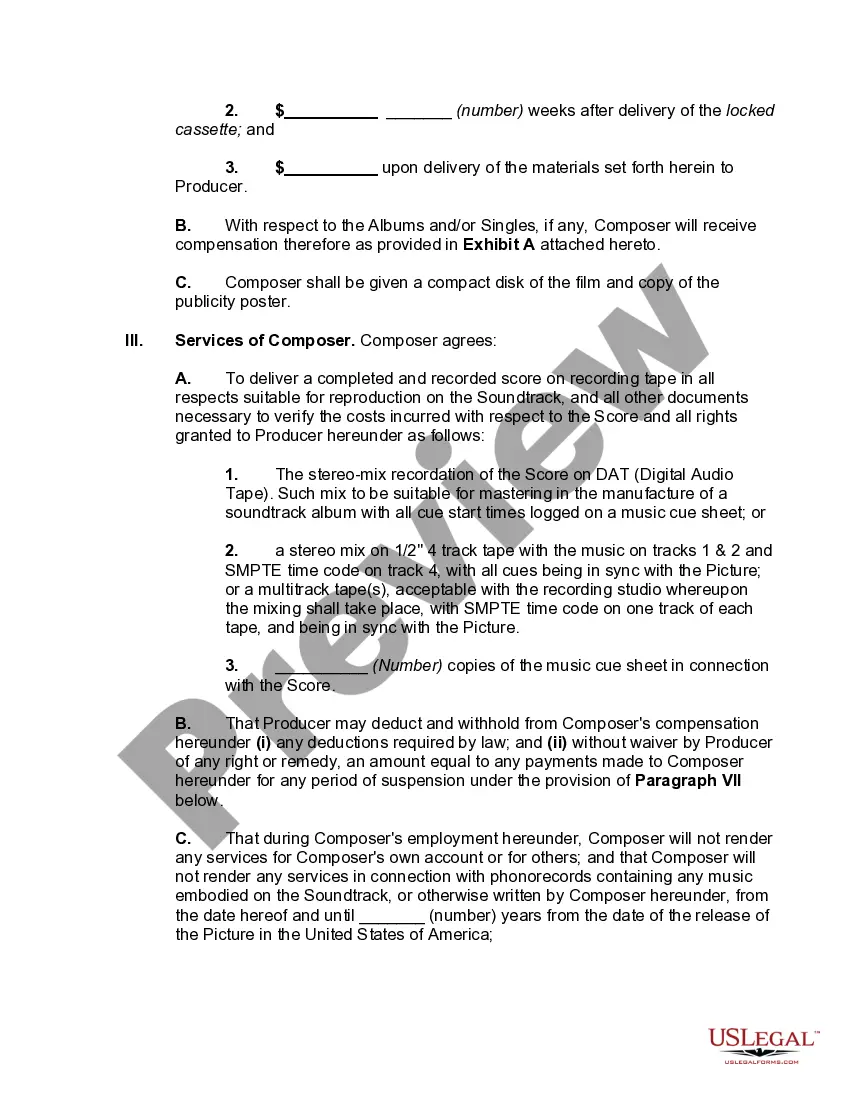
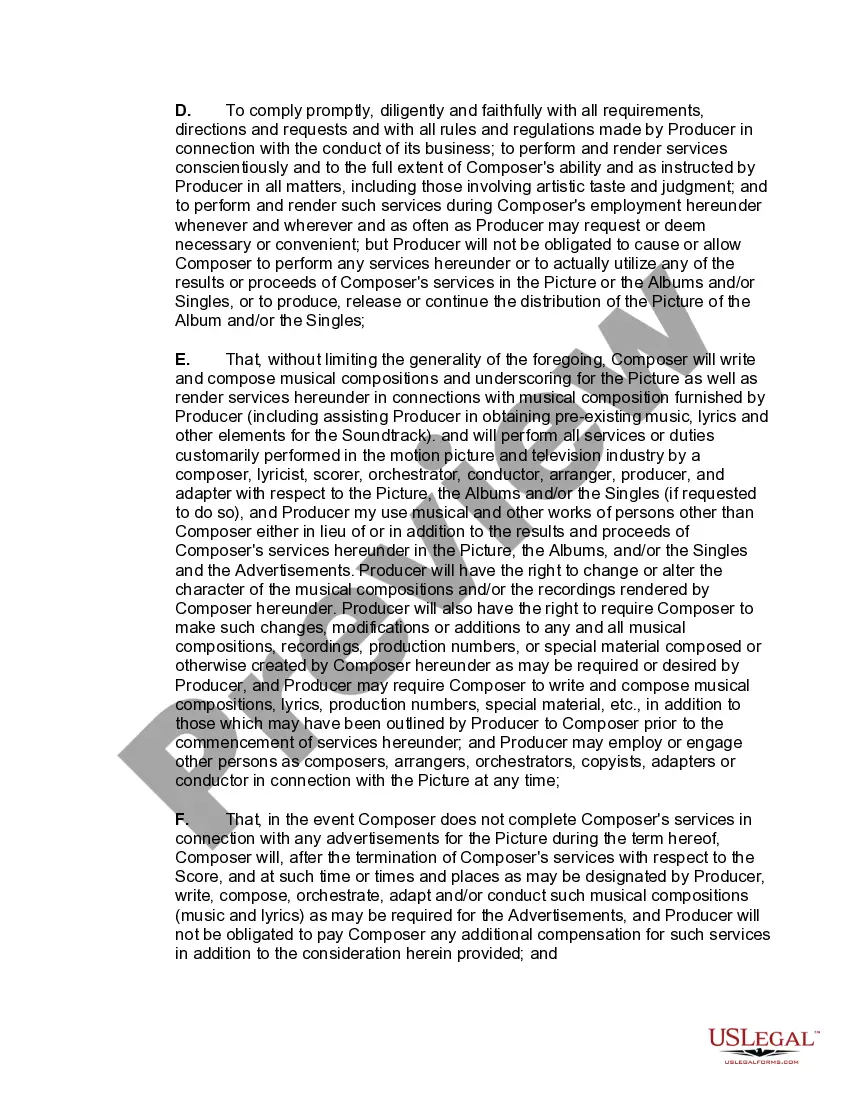
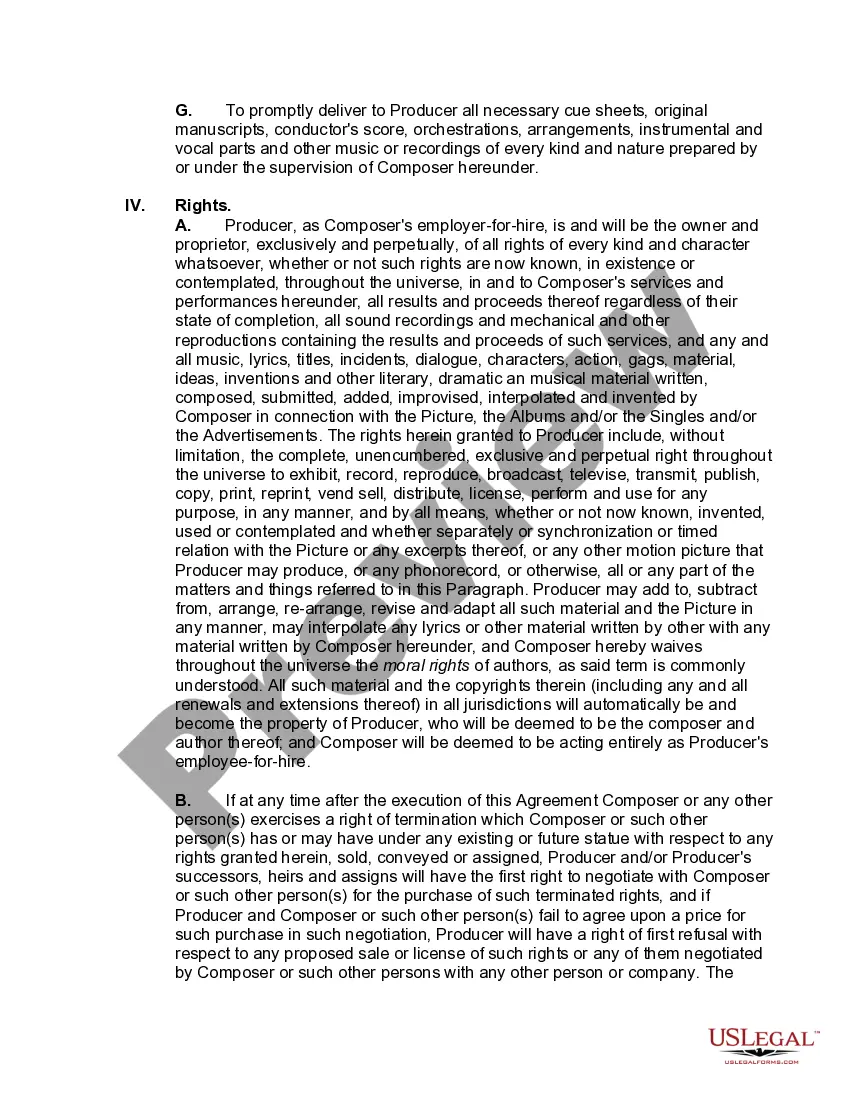
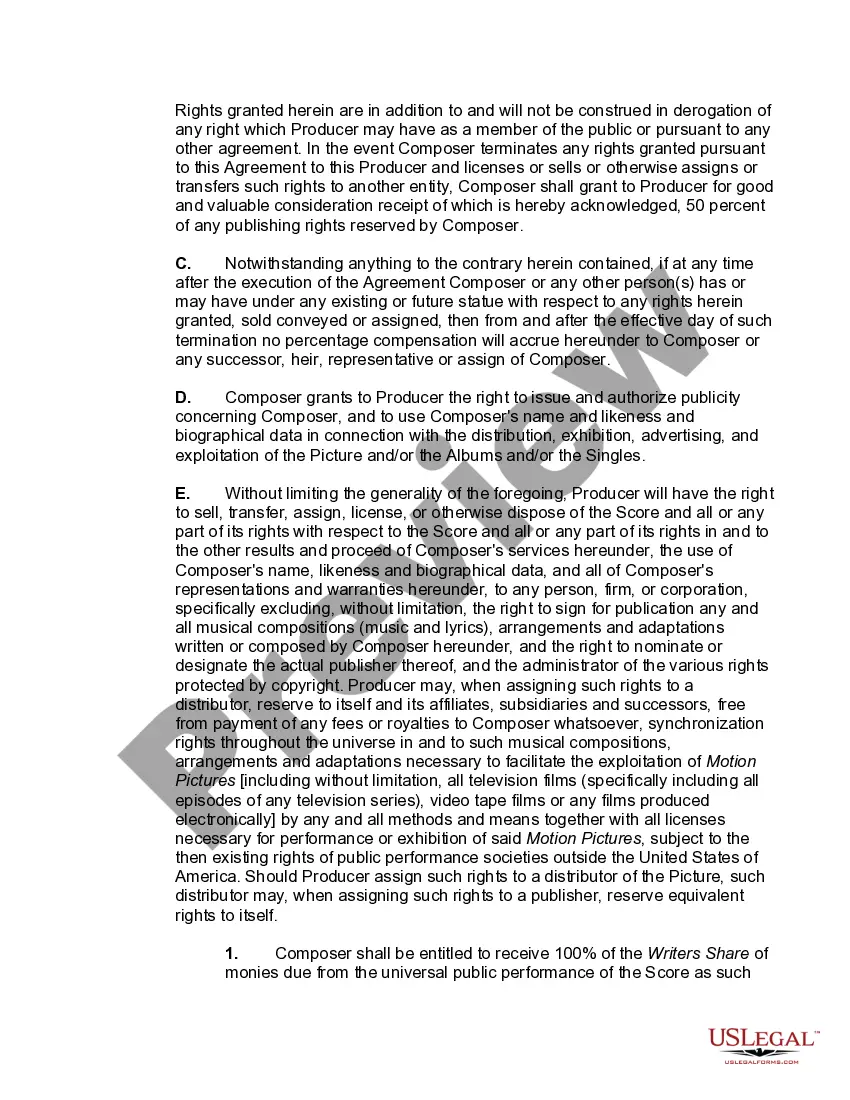
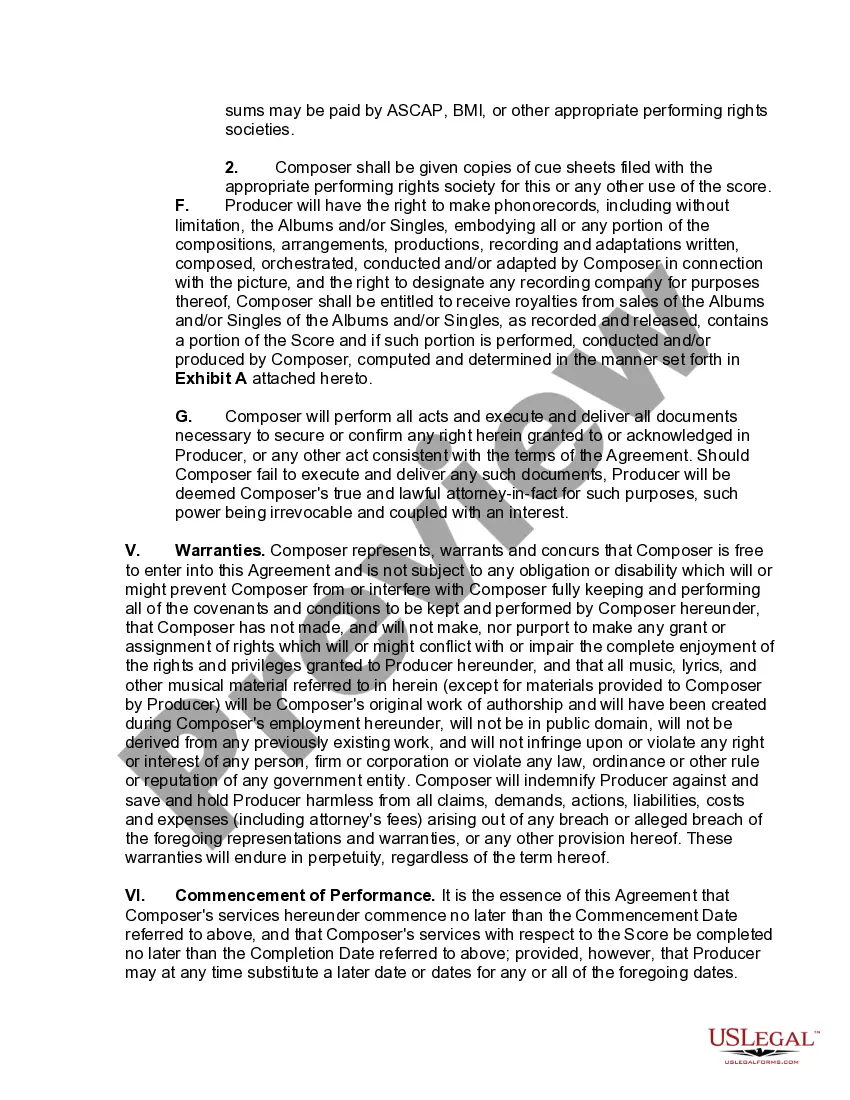
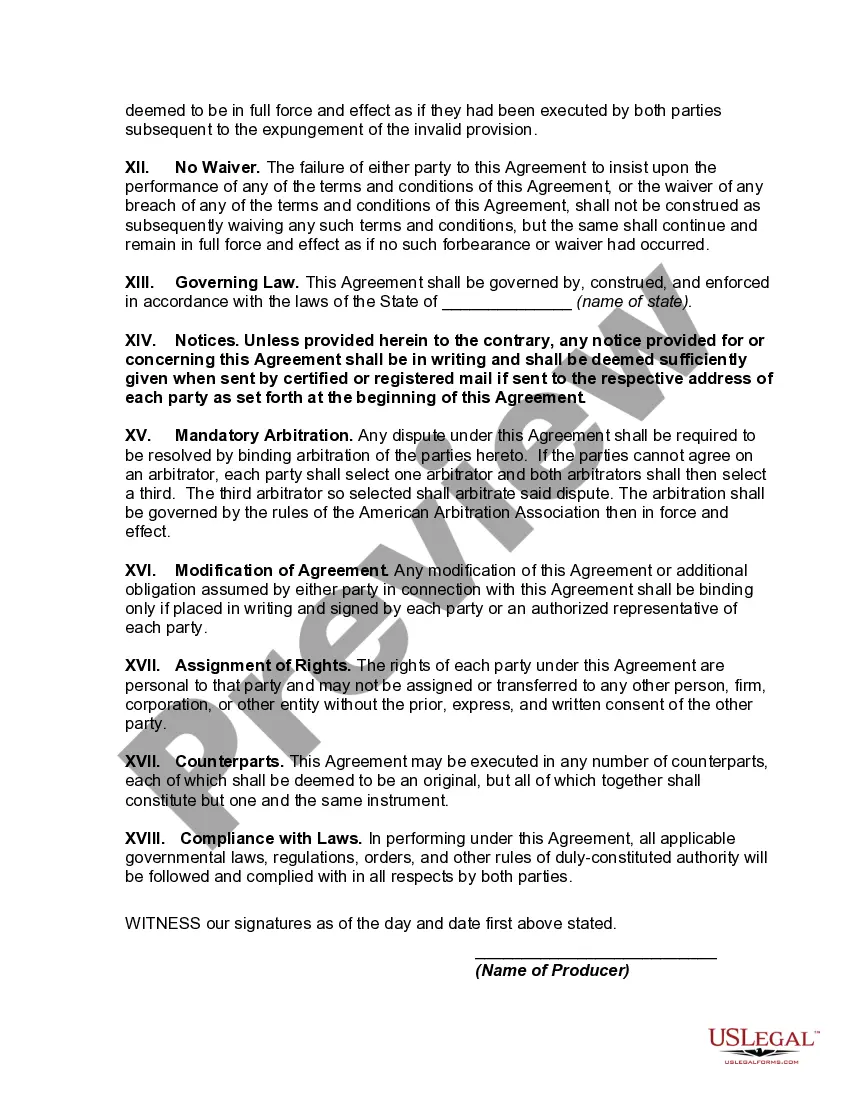
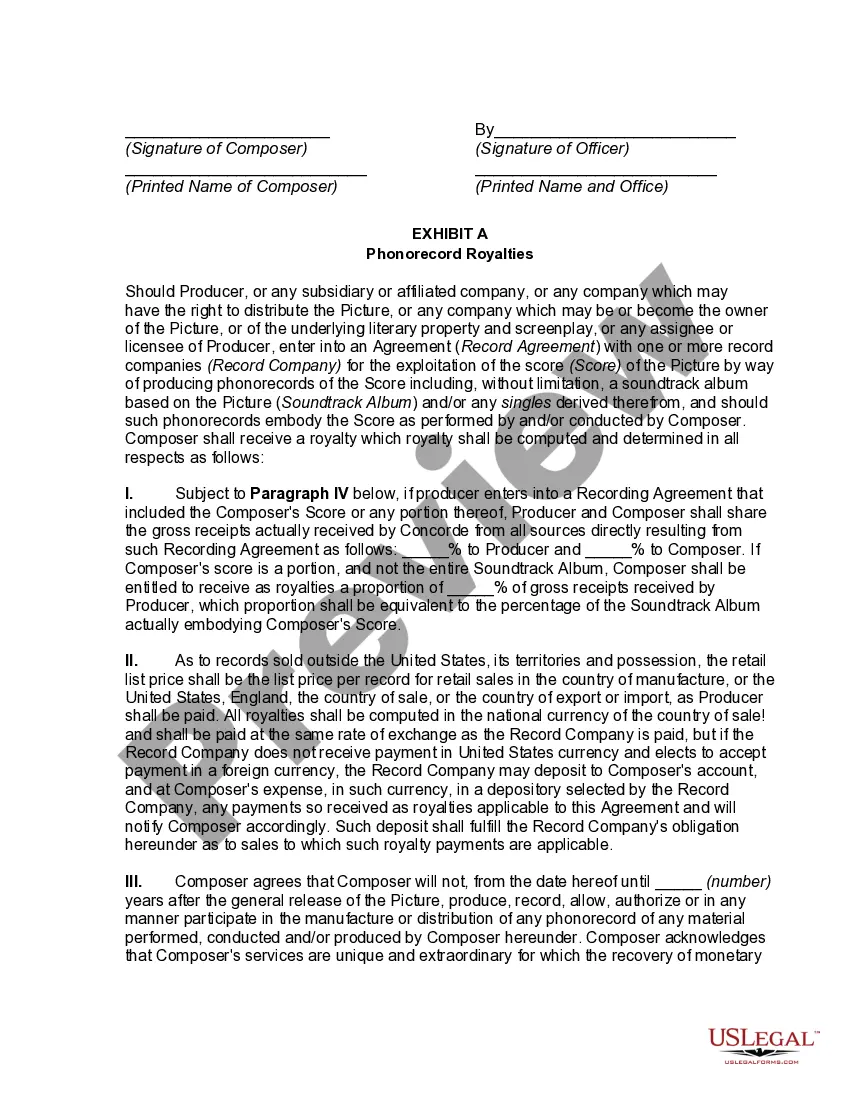
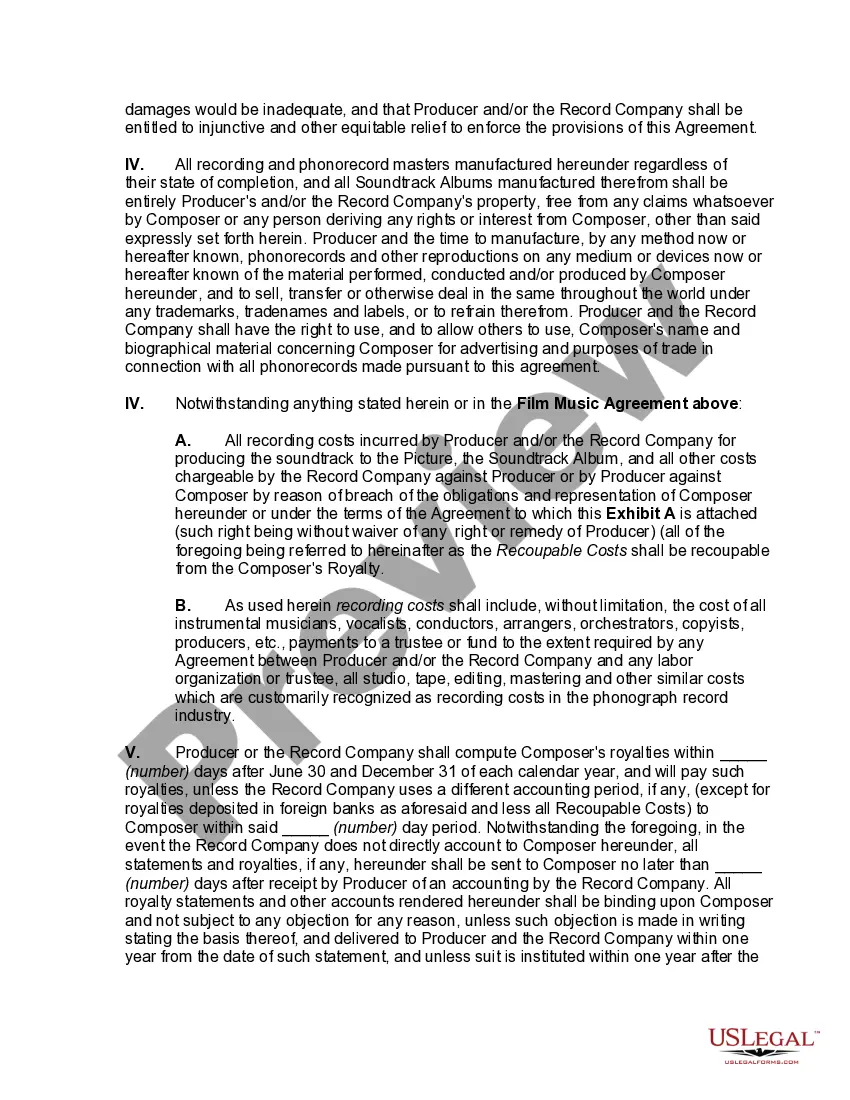
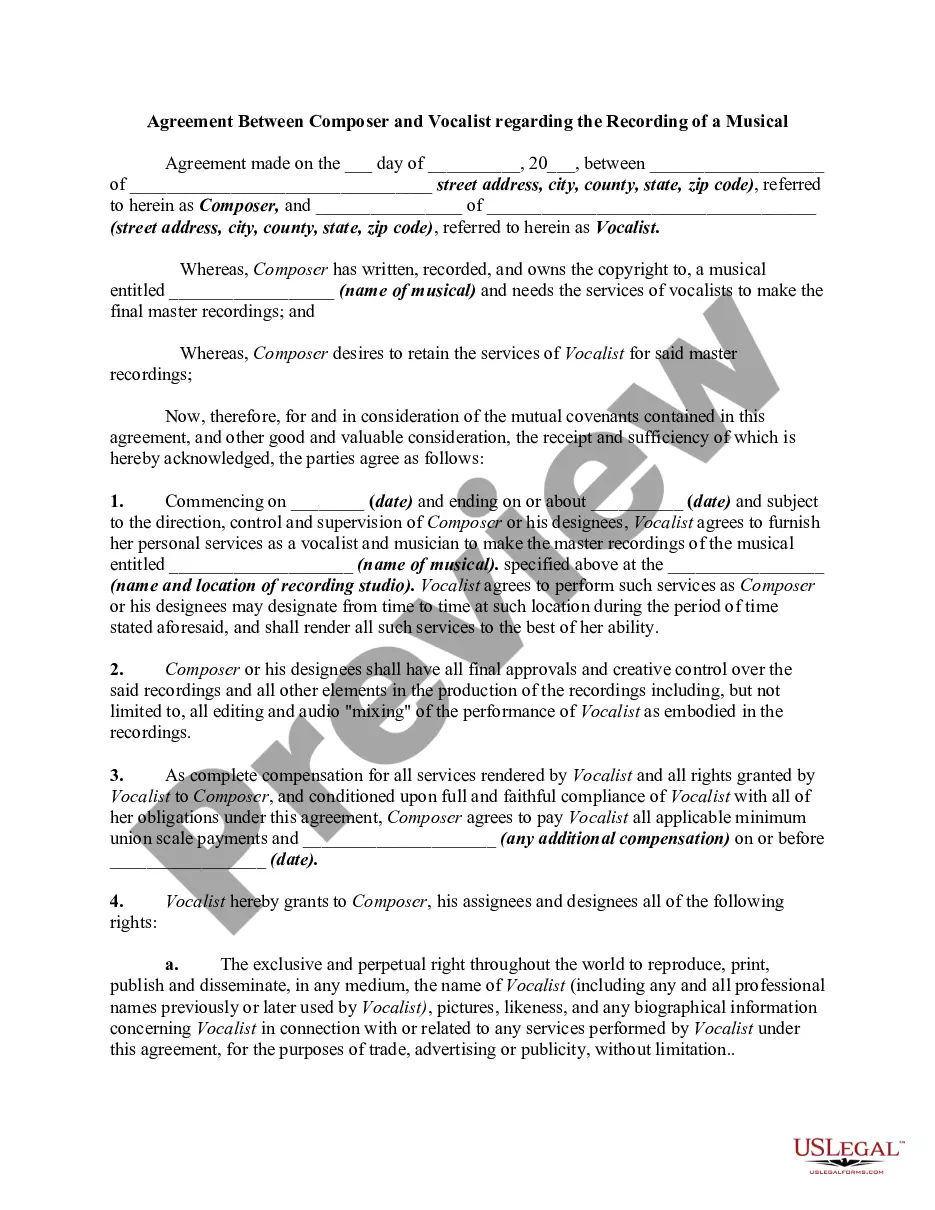
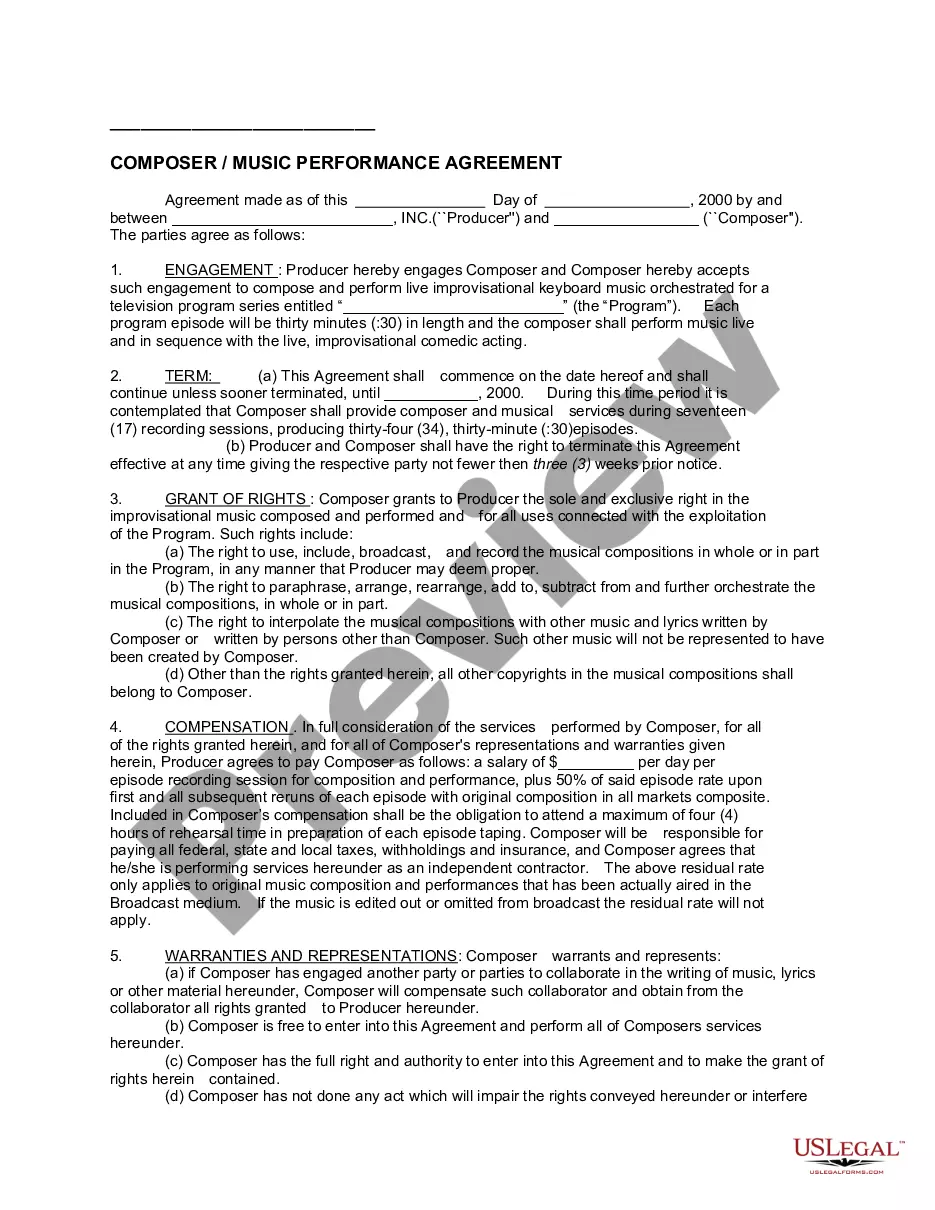
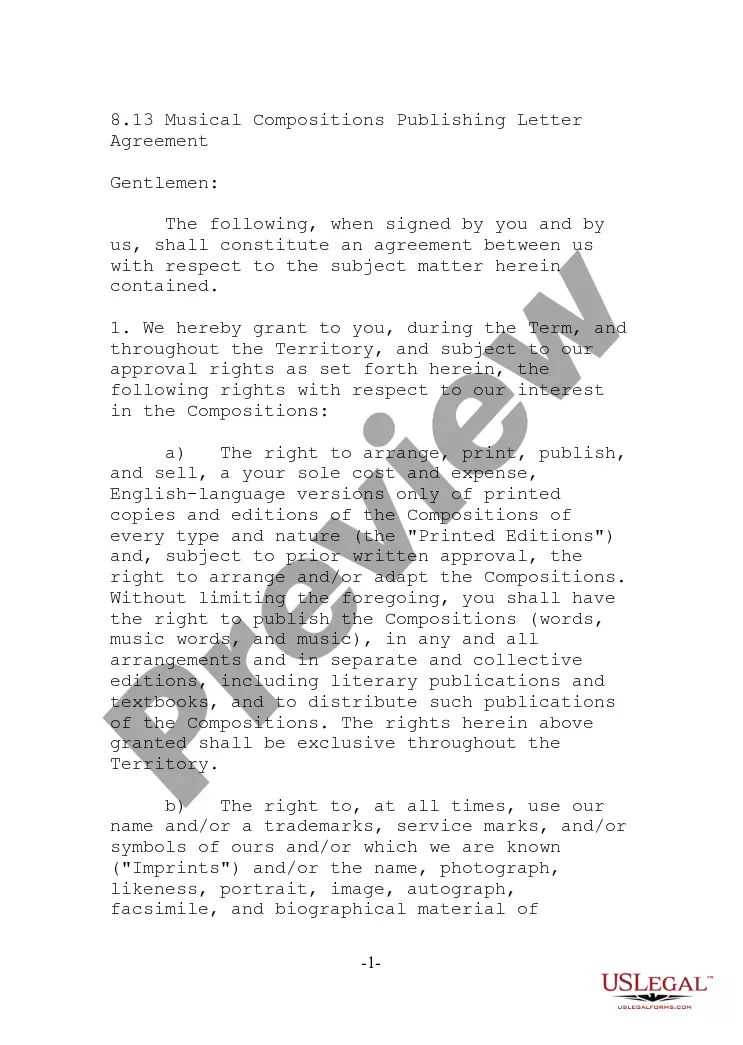
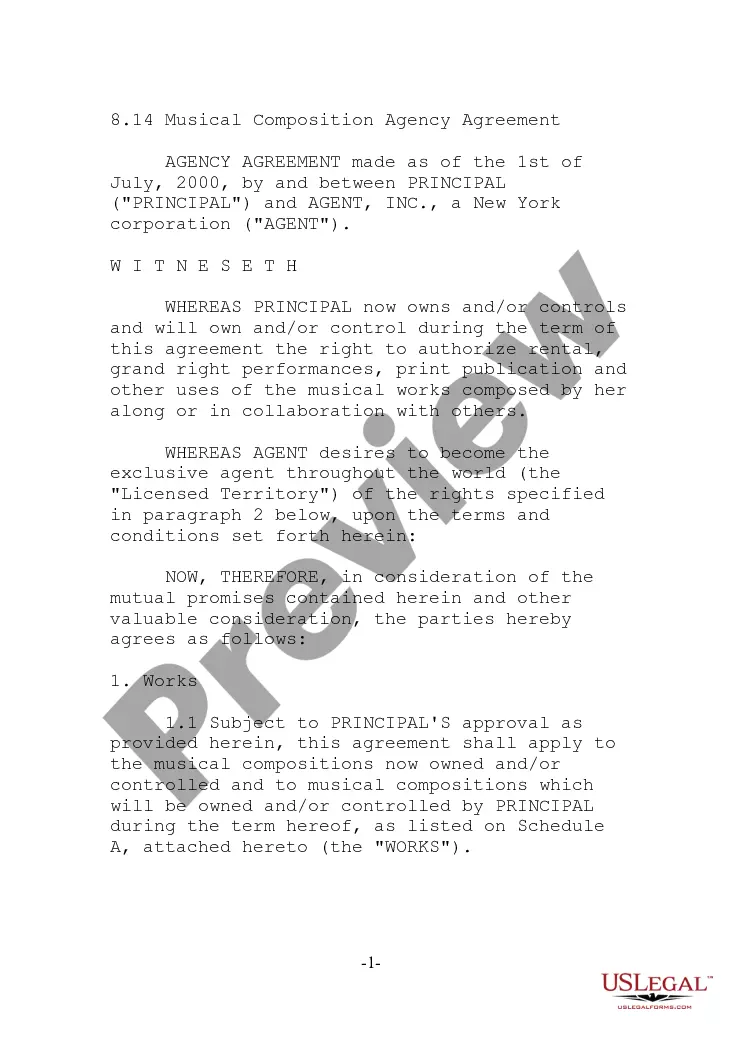
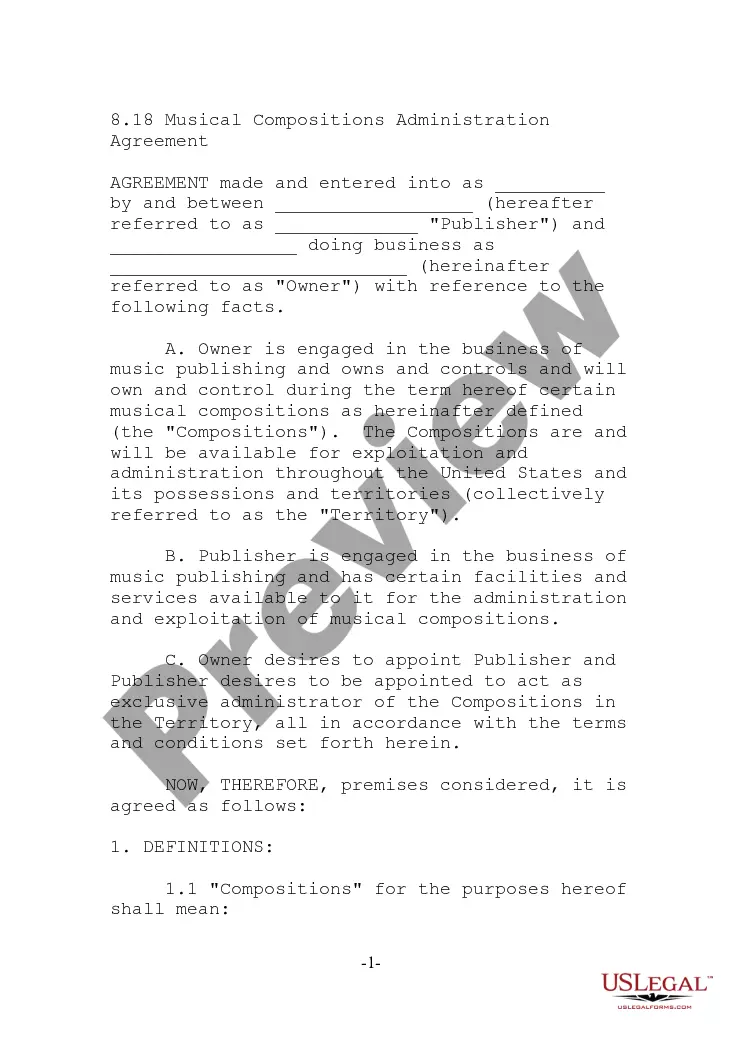
The Film Music Agreement with Composer is a legal document used by film producers to contract a music composer for creating music tailored for a specific film score and soundtrack. This form outlines the rights and responsibilities of both parties, including the employment terms for writing, composing, and recording music that will be synchronized with film visuals. Unlike standard contracts, this agreement encompasses various aspects such as compensation, services required, and ownership of rights related to the musical compositions.
Main sections of this form
- Employment terms detailing the services the Composer will provide, including writing and recording the soundtrack.
- Compensation clauses that specify payment amounts and schedules related to the completion of the musical score.
- Rights assignment that clarifies ownership of compositions and recordings produced under the agreement.
- Warranties that ensure the Composer is free to enter into the agreement and not infringing on any rights.
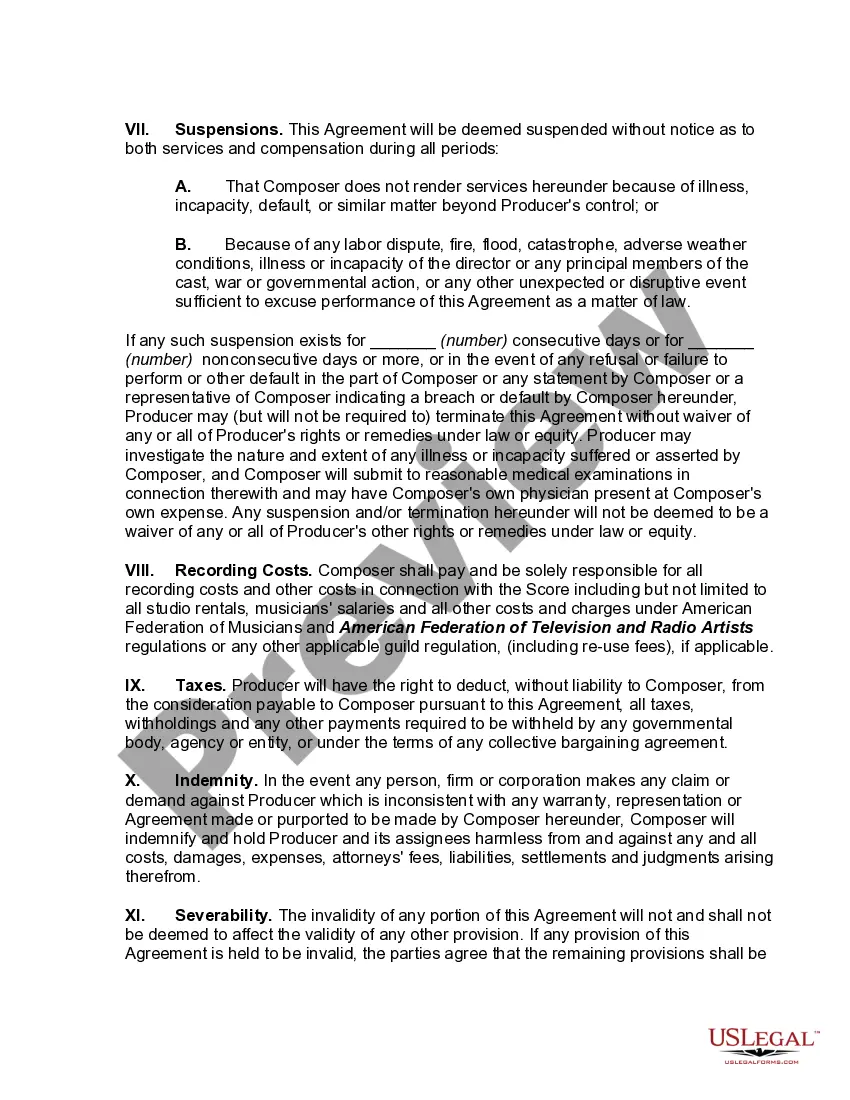
- Provisions for suspension of work and the potential for termination of the agreement.

When to use this document
This form is necessary when a film producer engages a composer to create original music for a film project. It should be utilized in scenarios such as: - Developing a new film score and soundtrack for an upcoming movie. - Collaborating with composers who will also assist in producing promotional materials for the film. - Structuring payment schedules and defining the scope of work required from the composer, especially if the project involves multiple phases or releases.
Who needs this form
- Film producers looking to hire composers for their projects.
- Music composers seeking clear terms regarding their compensation and rights in connection with film scores.
- Production companies that handle multiple aspects of film creation and need formal agreements in place for music contracts.
How to complete this form
- Identify the parties involved: fill in the names and addresses of the Producer and Composer.
- Specify the title of the film project and the dates for the commencement and completion of the music scoring.
- Detail the compensation structure, including payment amounts and timelines for delivery of services.
- Outline the specific services the Composer will provide regarding the soundtrack and any additional materials.
- Ensure all parties sign and date the agreement to formalize the contract.
Does this document require notarization?
This form does not typically require notarization unless specified by local law. It is recommended that all parties involved retain copies of the signed agreement for their records.
Get your form ready online
Our built-in tools help you complete, sign, share, and store your documents in one place.
Make edits, fill in missing information, and update formatting in US Legal Forms—just like you would in MS Word.
Download a copy, print it, send it by email, or mail it via USPS—whatever works best for your next step.
Sign and collect signatures with our SignNow integration. Send to multiple recipients, set reminders, and more. Go Premium to unlock E-Sign.
If this form requires notarization, complete it online through a secure video call—no need to meet a notary in person or wait for an appointment.
We protect your documents and personal data by following strict security and privacy standards.

Make edits, fill in missing information, and update formatting in US Legal Forms—just like you would in MS Word.

Download a copy, print it, send it by email, or mail it via USPS—whatever works best for your next step.

Sign and collect signatures with our SignNow integration. Send to multiple recipients, set reminders, and more. Go Premium to unlock E-Sign.

If this form requires notarization, complete it online through a secure video call—no need to meet a notary in person or wait for an appointment.

We protect your documents and personal data by following strict security and privacy standards.
Mistakes to watch out for
- Failing to specify payment schedules, which can lead to disputes over compensation.
- Overlooking to include necessary dates for the start and completion of services.
- Not clarifying the ownership of rights regarding the music, leading to potential legal complications.
- Neglecting to review the final document for completeness and accuracy before signing.
Why complete this form online
- Convenient access to legally vetted templates tailored to specific agreements.
- Editable format allows users to customize sections according to their particular needs.
- Quick download and secure storage options enhance reliability and ease of use.
Legal use & context
- The Film Music Agreement with Composer can help protect the legal rights of both the Producer and Composer regarding the music created.
- It establishes clear expectations and responsibilities, reducing the risk of misunderstandings during the production process.
- This contract is enforceable in court, providing both parties with legal recourse in case of non-compliance or breach.
Key takeaways
- The Film Music Agreement is essential for formalizing the relationship between a film producer and a music composer.
- It clearly outlines compensation, services, and rights, thereby minimizing potential disputes.
- Using this form online provides convenience and access to the latest legal standards for music agreements.
Looking for another form?
Form popularity
FAQ
For most film composers, performing right payments represent their main source of royalty income. There is a performing right organization (PRO) in every major country of the world with the largest in terms of revenue and royalties, ASCAP, located in the United States.
Writing and recording demos to audition various themes for the director's consideration. Composing the film's music, often using a variety of tempos and time signatures to sync with various action sequences within a scene. (Some genres, like action films and cartoons, require more sound/picture syncing than others.)
Major production companies typically own the copyright to an original score for a film or television series as part of a "work for hire" contract, but composers retain a financial interest in the copyright and share in the royalties, also called public performance fees."It's how composers put food on the table."
The current U.S. statutory rate per copy distributed is 9.1¢ for songs under five minutes long, 1.75A¢ per minute or fraction thereof for songs five minutes or longer. Other territories outside the U.S. pay mechanical royalties in varying ways, for instance, on a percentage basis.
John Williams, Hans Zimmer and Danny Elfman have net worths ranging from $75 million to $120 million and get paid scoring fees as high as $2 million per picture. But, for what it's worth, according to the Bureau of Labor Statistics, the average annual income for film composers is a little over $50,000 a year.
As you might expect, rates vary greatly by type of project, as well as the film budget. If the composer is hired to simply score the film, she's paid a creative fee. That can be anywhere from $2,000 to $10,000 for an ultra-low budget indie film, up to $300,000 for a mid-level feature, reports DIY Film Composer.