Indiana Quitclaim Deed from Husband and Wife, or Two Individuals, to Husband and Wife, or Two Individuals.
What this document covers
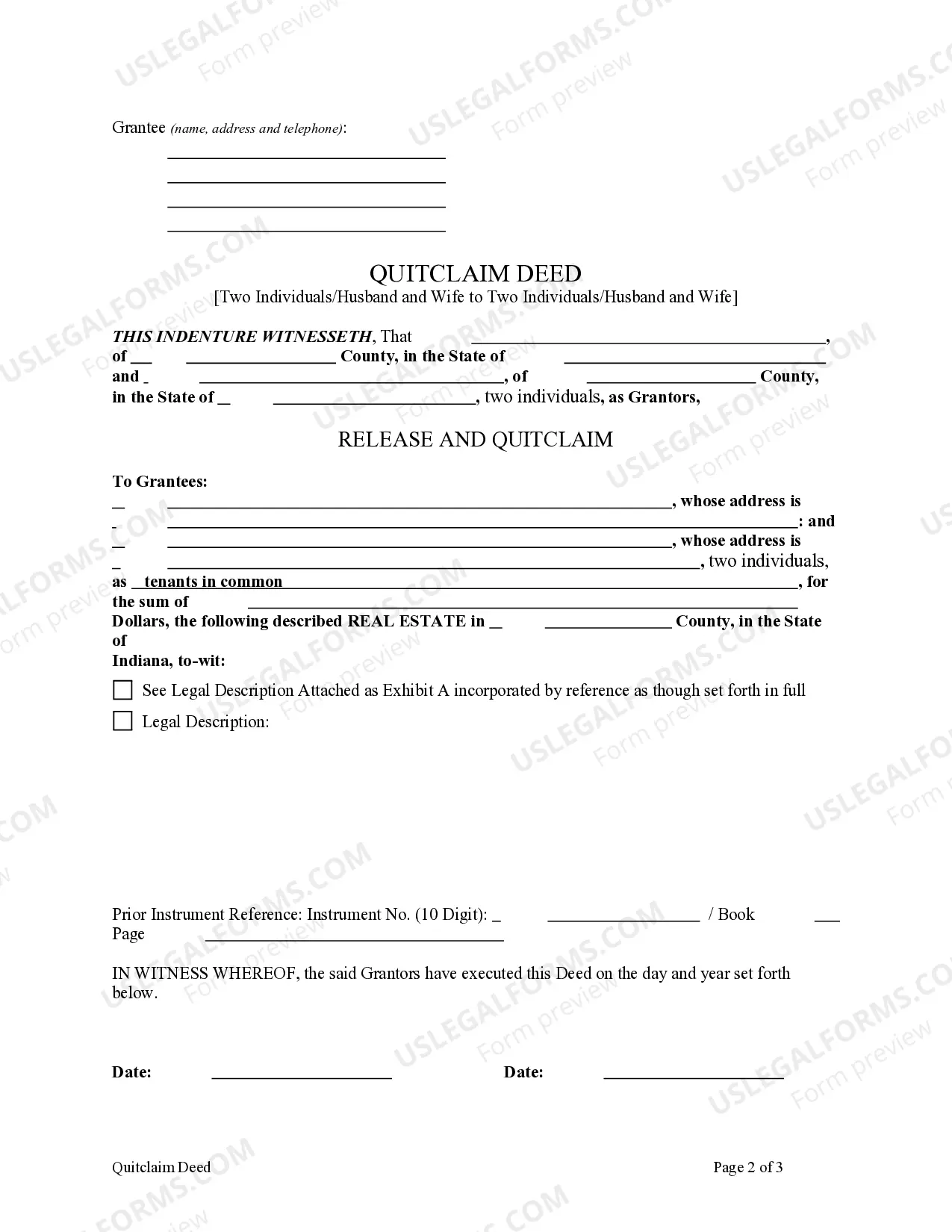
This Quitclaim Deed from Husband and Wife, or Two Individuals, to Husband and Wife, or Two Individuals is a legal document used to transfer property ownership. Unlike other property deeds, a quitclaim deed does not provide any warranty of title, meaning the Grantors aren't guaranteeing that they own the property free and clear. This form is useful for couples or individuals wishing to transfer their interest in a property to another couple or individual without the complexities involved in traditional property transfers.
Main sections of this form
- Identification of Grantors and Grantees.
- Description of the property being conveyed.
- Legal statement of conveyance and quitclaim.
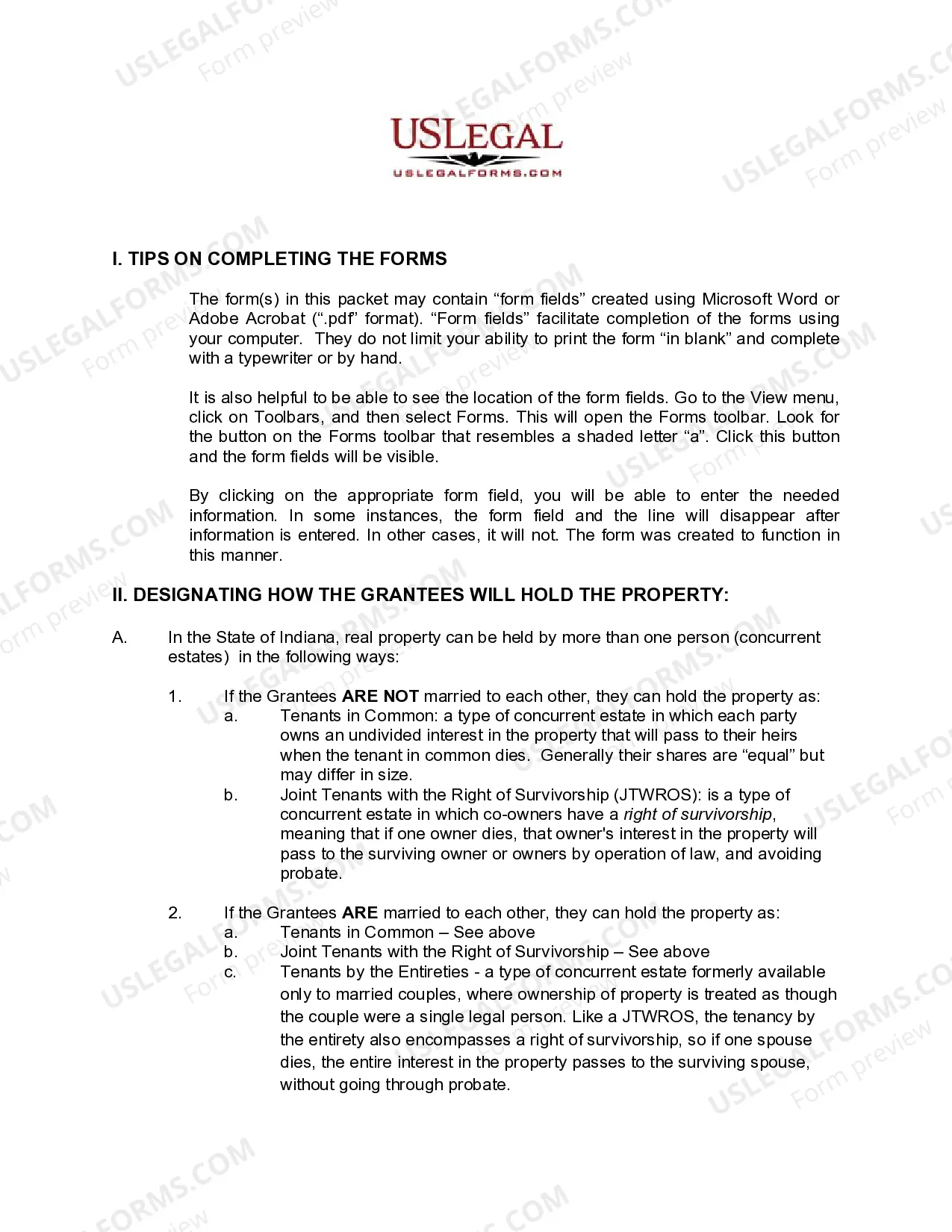
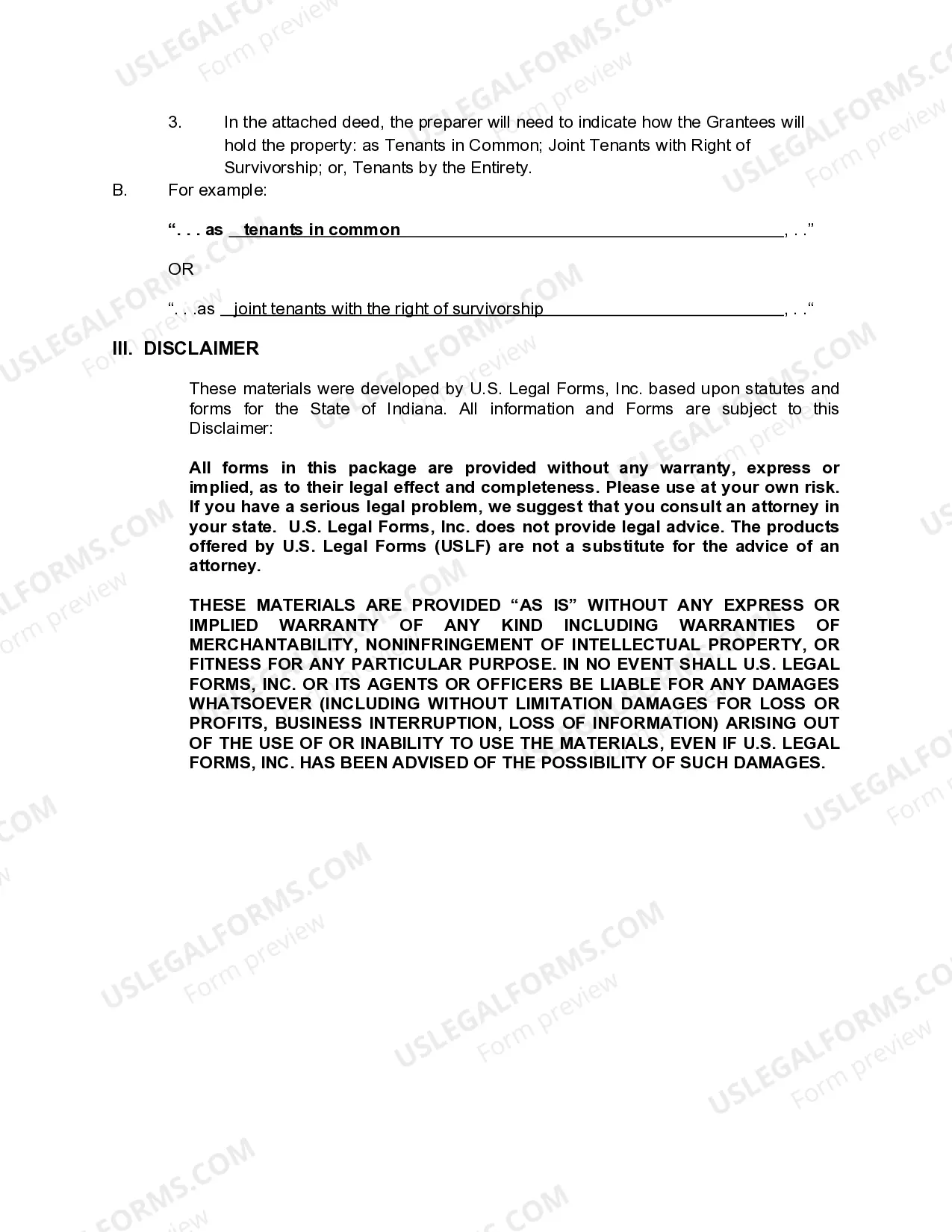
- Designating how Grantees will hold the property.
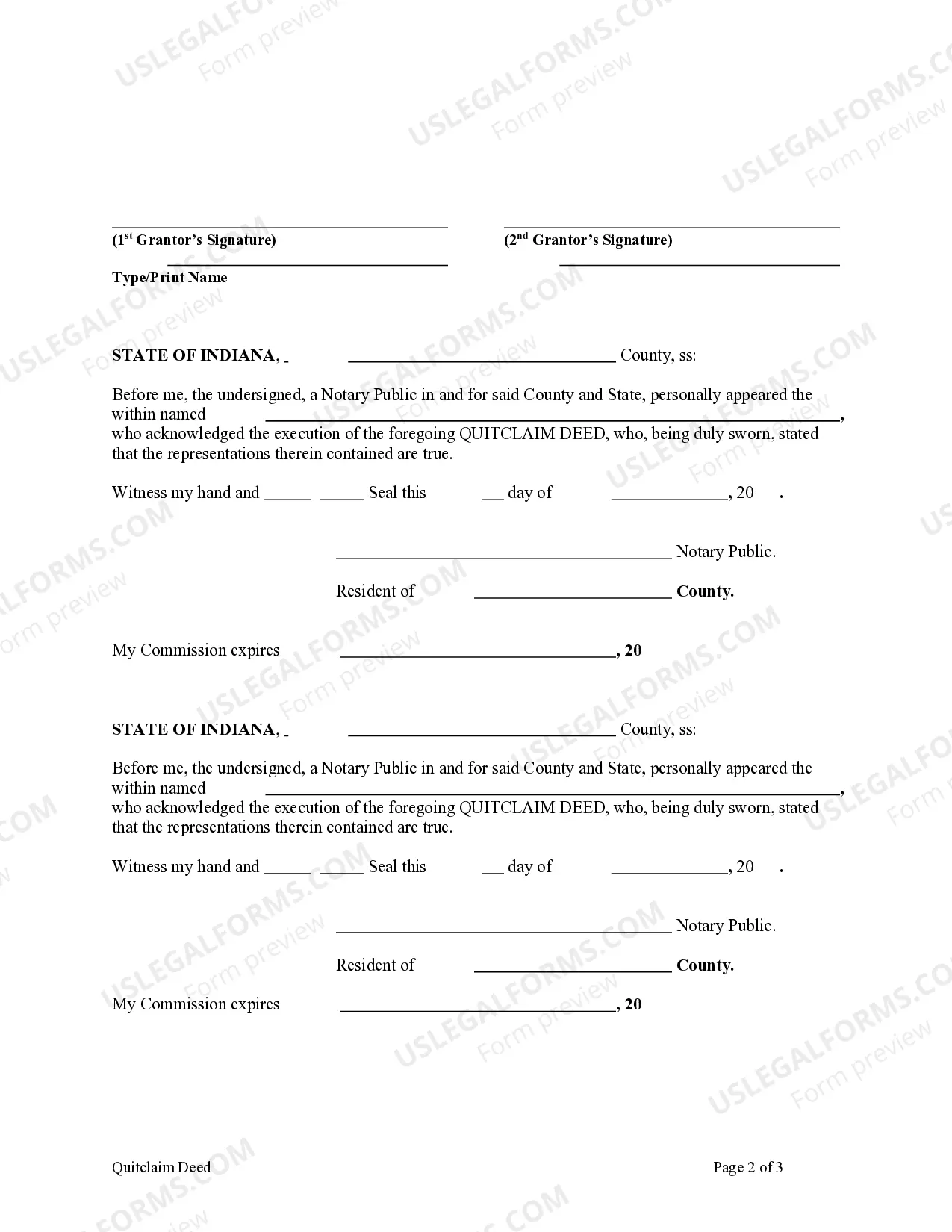
- Signatures of the Grantors, confirming the transfer.






When to use this document
This form is appropriate when: a couple or two individuals want to transfer their ownership of a property to another couple or two individuals. It is commonly used in scenarios such as divorce settlements, pooling resources in property ownership, or gifting property among family members. It can simplify the transfer process without the need for extensive legal maneuvers.
Who should use this form
- Married couples looking to transfer property to each other.
- Unmarried couples or two individuals transferring property to each other.
- Individuals simplifying property ownership between family members or friends.
How to complete this form
- Identify the parties involved: list the names of both Grantors and Grantees.
- Specify the property: include a detailed description of the property being transferred.
- Choose the property ownership type: select whether the Grantees will hold the property as Tenants in Common, Joint Tenants with Right of Survivorship, or Tenants by the Entirety.
- Collect signatures from all Grantors to finalize the transfer.
- Consider notarization if required by local laws.
Notarization guidance
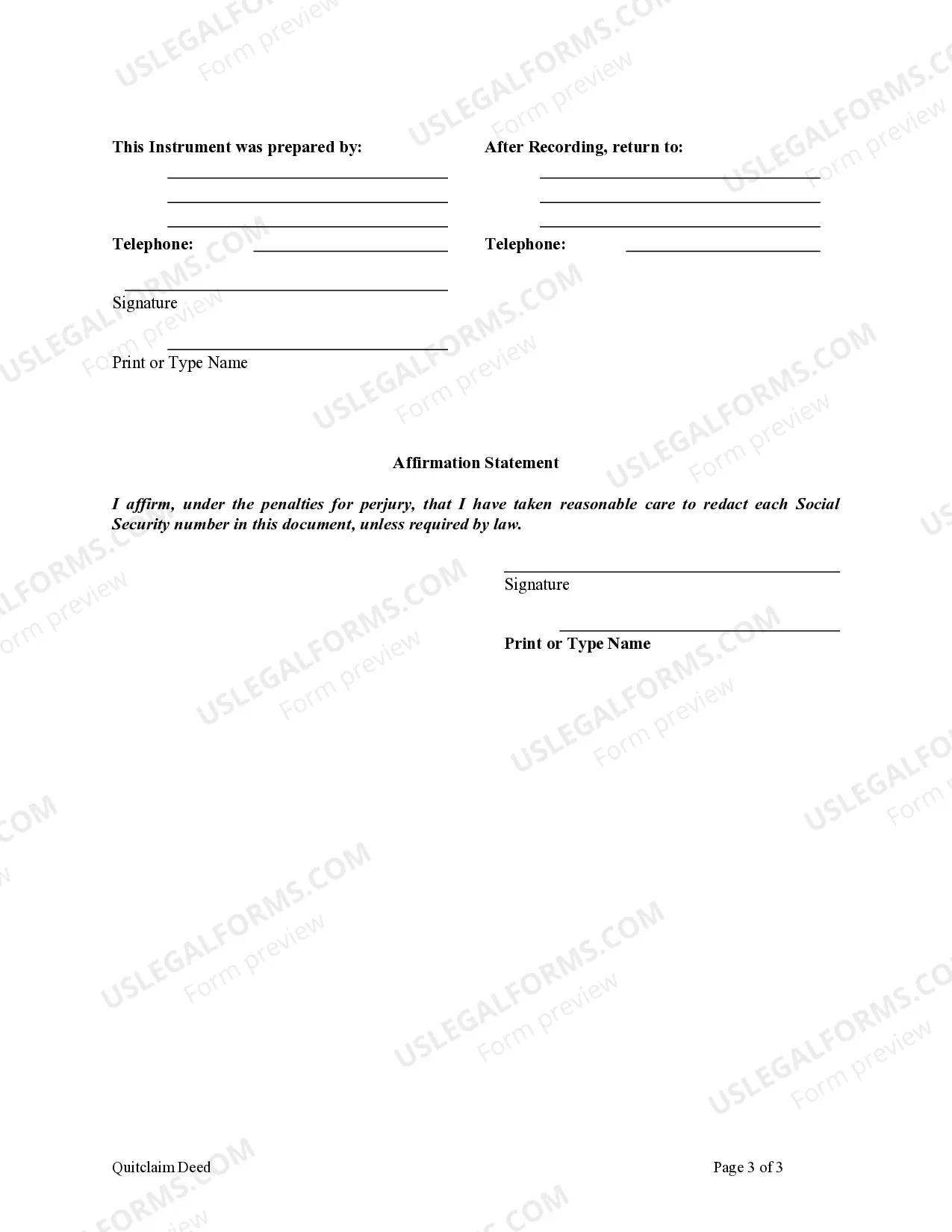
This form does not typically require notarization unless specified by local law. However, it is advisable to check local regulations to ensure legal validity.
Get your form ready online
Our built-in tools help you complete, sign, share, and store your documents in one place.
Make edits, fill in missing information, and update formatting in US Legal Forms—just like you would in MS Word.
Download a copy, print it, send it by email, or mail it via USPS—whatever works best for your next step.
Sign and collect signatures with our SignNow integration. Send to multiple recipients, set reminders, and more. Go Premium to unlock E-Sign.
If this form requires notarization, complete it online through a secure video call—no need to meet a notary in person or wait for an appointment.
We protect your documents and personal data by following strict security and privacy standards.

Make edits, fill in missing information, and update formatting in US Legal Forms—just like you would in MS Word.

Download a copy, print it, send it by email, or mail it via USPS—whatever works best for your next step.

Sign and collect signatures with our SignNow integration. Send to multiple recipients, set reminders, and more. Go Premium to unlock E-Sign.

If this form requires notarization, complete it online through a secure video call—no need to meet a notary in person or wait for an appointment.

We protect your documents and personal data by following strict security and privacy standards.
Common mistakes
- Failing to fully describe the property being transferred.
- Not indicating how Grantees will hold the property.
- Leaving out signatures from one or more Grantors.
- Assuming this form does not need notarization when local laws may require it.
Benefits of completing this form online
- Convenience of accessing the form anytime and anywhere.
- Editability allows users to fill out the form at their own pace.
- Reliable templates drafted by licensed attorneys ensure compliance with legal standards.
- Immediate download provides users with instant access to the necessary documents.
Key takeaways
- A quitclaim deed transfers property ownership without warranty.
- This form is suitable for transfers between individuals with a pre-existing relationship.
- Ensure all parties sign and the document is notarized for it to be valid.
- File the deed with your county recorderâs office to make the transfer official.
Looking for another form?

Form popularity
FAQ
Write the Deed Fill out the quit claim deed form, which can be obtained online, or write your own using the form as a guide. The person giving up the interest in the property is the grantor, and the person receiving the interest is the grantee.
Two of the most common ways to transfer property in a divorce are through an interspousal transfer deed or quitclaim deed. When spouses own property together, but then one spouse executes an interspousal transfer or a quitclaim deed, this is known as transmutation.
Adding someone to your house deed requires the filing of a legal form known as a quitclaim deed. When executed and notarized, the quitclaim deed legally overrides the current deed to your home. By filing the quitclaim deed, you can add someone to the title of your home, in effect transferring a share of ownership.
Step 1: Find your IN quitclaim deed form. Step 2: Gather the information you need. Step 3: Enter the information about the parties. Step 4: Enter the legal description of the property. Step 5: Have the grantor sign the document in the presence of a Notary Public.
In order to transfer ownership of the marital home pursuant to a divorce, one spouse is going to need to sign a quitclaim deed, interspousal transfer deed, or a grant deed, in order to convey the title to the property.
In most states you can file a disclaimer or deed of disclaimer that says specifically you were placed in title without your knowledge or consent and disclaim the deed.
Adding someone to your house deed requires the filing of a legal form known as a quitclaim deed. When executed and notarized, the quitclaim deed legally overrides the current deed to your home. By filing the quitclaim deed, you can add someone to the title of your home, in effect transferring a share of ownership.
The Quit Claim Deed form uses the terms of Grantor (Seller or Owner of said property) and Grantee (Buyer of said property) for the two parties involved. First, the parties must fill in the date. Then, write in the name of the county and state in which the property is located.
Documents must be notarized. Documents executed or acknowledged in Indiana must include a statement that includes: The names of all those signing or serving as a witness on the document must be identical throughout the document and must be printed or typewritten under each signature.