Clause for Grossing Up the Tenant Proportionate Share
What is this form?
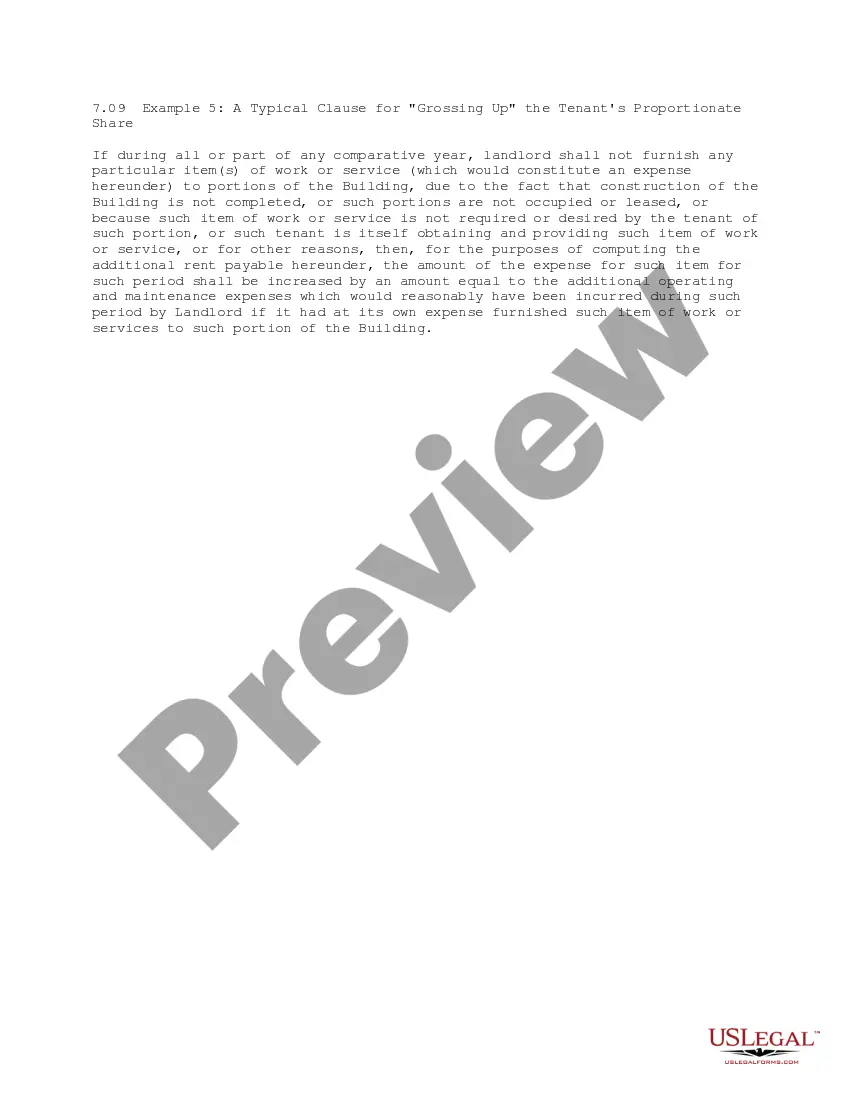
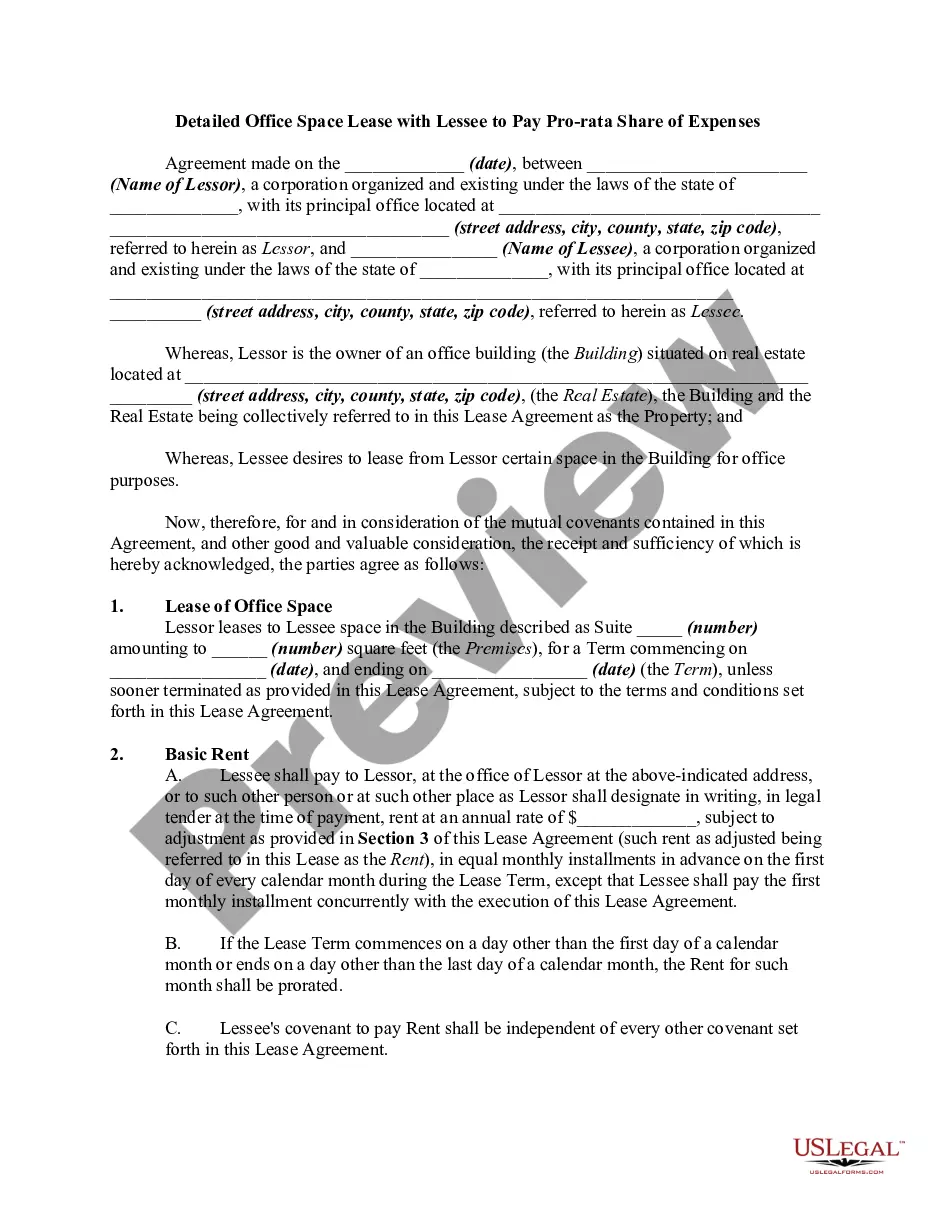
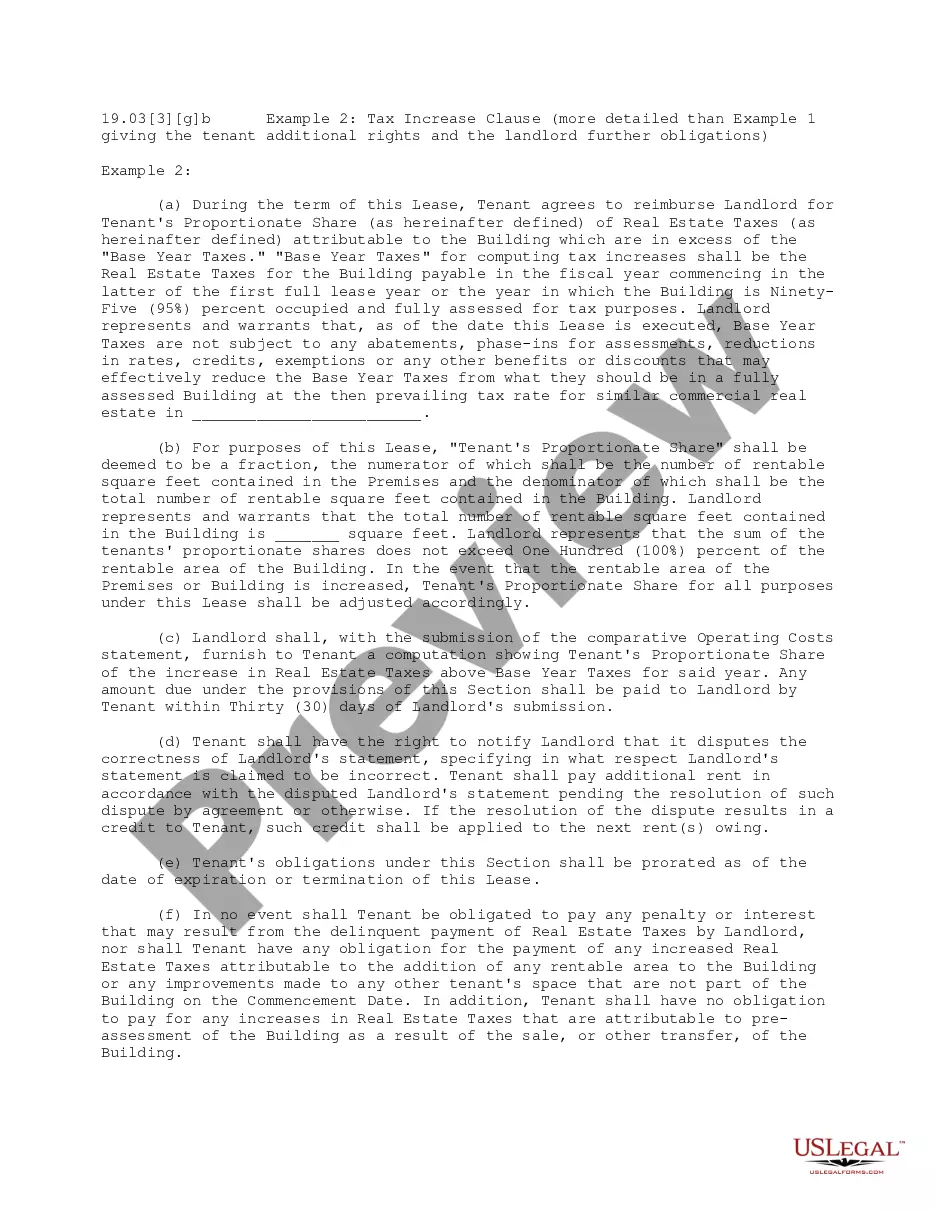
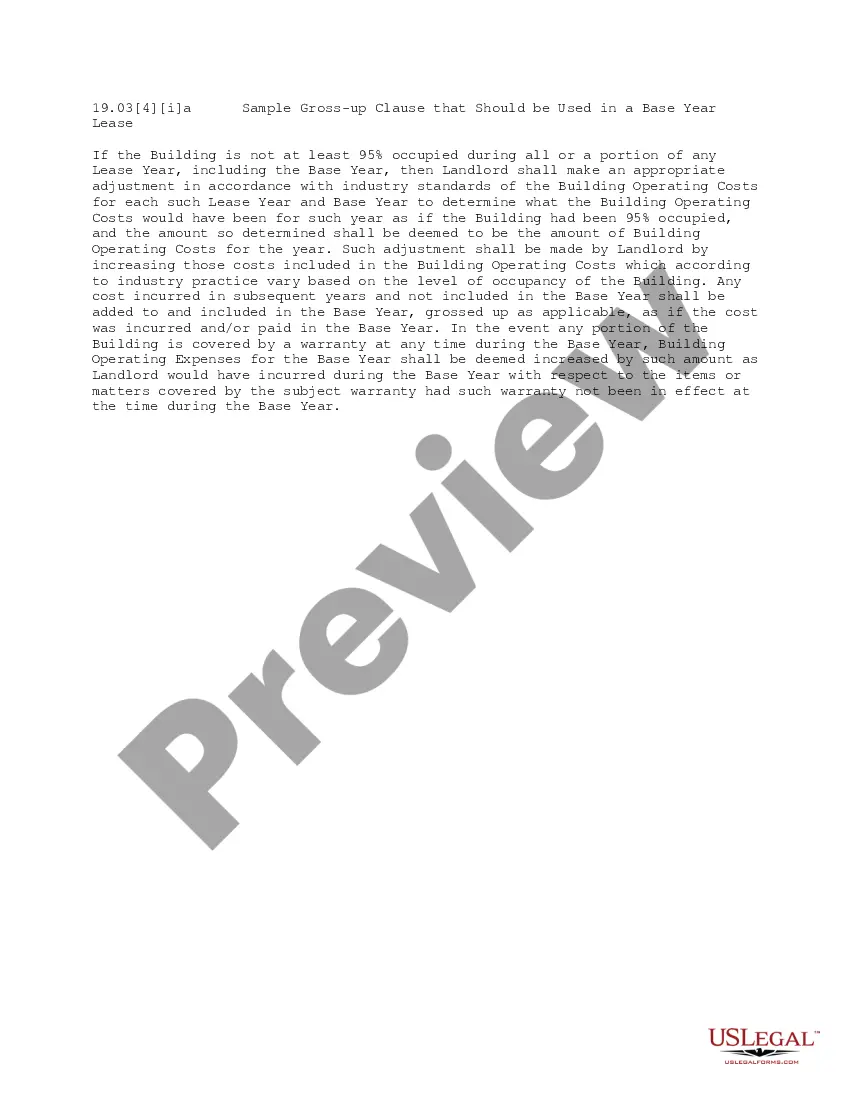
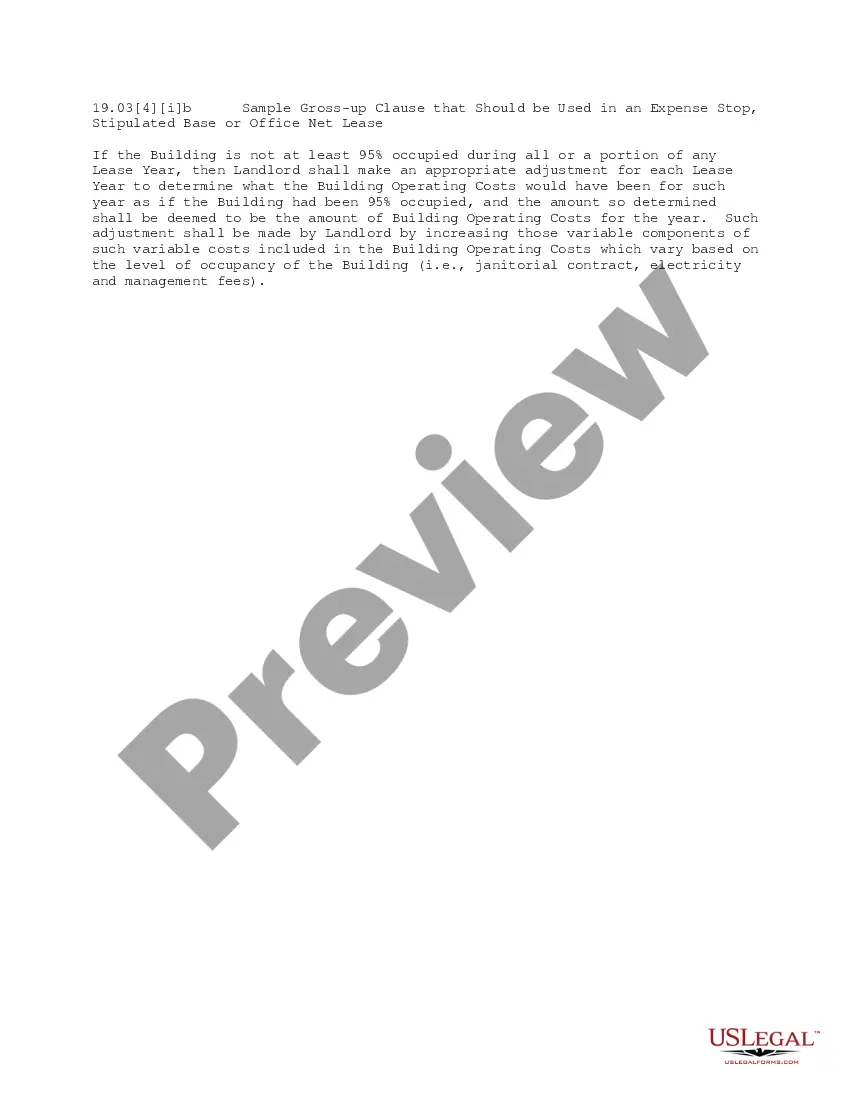
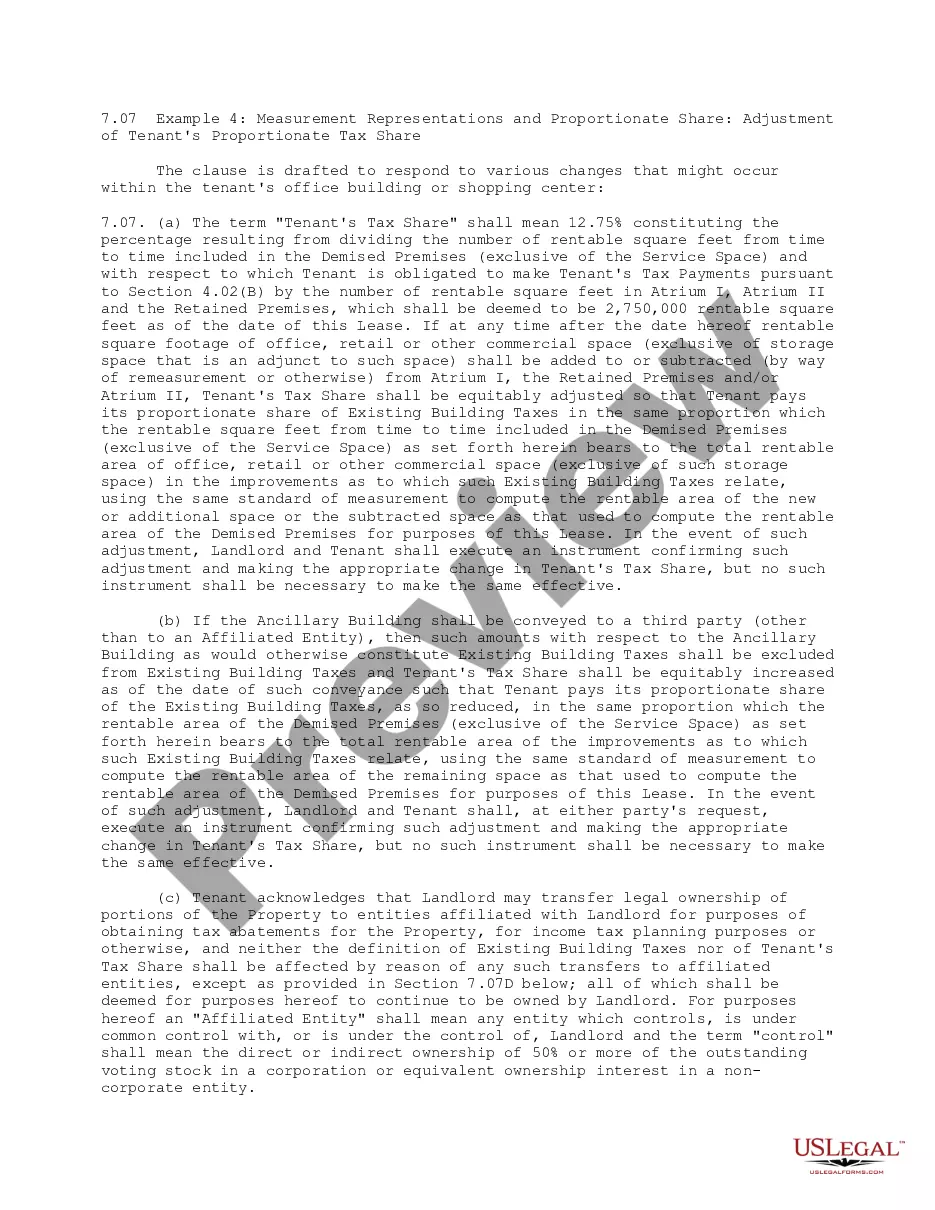
The clause for grossing up the tenant proportionate share is a specific provision in an office lease that outlines the conditions under which a landlord can adjust expenses related to common building services and items. This clause helps ensure that expenses are allocated fairly among tenants, even when certain services are not provided to all tenants during a given comparative year. Unlike other lease provisions, this clause focuses on adjustments based on occupancy and service availability, making it a vital part of any commercial lease agreement.
Key components of this form
- Definition of comparative year: Establishes the timeframe for calculating expenses.
- Conditions for grossing up expenses: Details the scenarios under which expenses can be adjusted.
- Responsibilities of the landlord: Outlines the landlord's obligations regarding service provision.
- Impact on tenant's rent: Specifies how adjusted expenses affect the overall rental costs.
Common use cases
This form is used when entering a commercial lease agreement for office space where there may be discrepancies in service provision. It is particularly relevant if the landlord does not provide certain services during specific times due to construction, lack of occupancy, or tenant decisions. Using this clause ensures a fair mechanism for adjusting costs, protecting both landlords and tenants from unexpected financial burdens.
Who needs this form
- Landlords seeking to prepare lease agreements that include provisions for expense adjustments.
- Tenants who want clarity on how their share of building expenses is calculated.
- Real estate professionals handling commercial leases for businesses.
Instructions for completing this form
- Identify the parties involved: Clearly state the names of the landlord and tenant.
- Specify the property: Provide details of the office space being leased.
- Define the comparative year: Indicate the relevant timeframes for expense calculations.
- Describe the conditions for expense adjustments: Outline the circumstances that warrant grossing up the expenses.
- Review and sign: Ensure both parties understand and agree to the terms before signing the lease.
Is notarization required?
This form usually doesn’t need to be notarized. However, local laws or specific transactions may require it. Our online notarization service, powered by Notarize, lets you complete it remotely through a secure video session, available 24/7.
Get your form ready online
Our built-in tools help you complete, sign, share, and store your documents in one place.
Make edits, fill in missing information, and update formatting in US Legal Forms—just like you would in MS Word.
Download a copy, print it, send it by email, or mail it via USPS—whatever works best for your next step.
Sign and collect signatures with our SignNow integration. Send to multiple recipients, set reminders, and more. Go Premium to unlock E-Sign.
If this form requires notarization, complete it online through a secure video call—no need to meet a notary in person or wait for an appointment.
We protect your documents and personal data by following strict security and privacy standards.

Make edits, fill in missing information, and update formatting in US Legal Forms—just like you would in MS Word.

Download a copy, print it, send it by email, or mail it via USPS—whatever works best for your next step.

Sign and collect signatures with our SignNow integration. Send to multiple recipients, set reminders, and more. Go Premium to unlock E-Sign.

If this form requires notarization, complete it online through a secure video call—no need to meet a notary in person or wait for an appointment.

We protect your documents and personal data by following strict security and privacy standards.
Mistakes to watch out for
- Failing to clearly define what constitutes a comparative year.
- Not specifying the conditions under which services may not be provided.
- Neglecting to detail how expenses will be calculated if services are not furnished.
- Overlooking the need for both parties to agree on terms before finalizing the lease.
Why use this form online
- Convenience: Easily download and customize the form from anywhere.
- Editability: Make necessary changes to fit your unique lease situation.
- Reliability: Use forms drafted by licensed attorneys to ensure legality.
Legal use & context
- This clause establishes clear boundaries and responsibilities for landlords and tenants regarding expense allocation.
- It helps prevent potential disputes about the tenant's financial obligations during lease periods.
- Understanding this clause is crucial for both parties to protect their rights under the lease agreement.
Main things to remember
- The clause helps clarify tenant responsibilities related to expenses when services are not provided.
- It is important for both landlords and tenants to review this form to avoid potential misunderstandings.
- The form is useful for ensuring that both parties clearly understand financial obligations in the lease agreement.
Looking for another form?



Form popularity
FAQ
The Base Year is a year that is tied to the actual amount of expenses for property taxes, insurance and operating expenses (sometimes called CAM) to run the property in a specified year. In a new lease, the Base Year is most often the year the lease is executed or the year in which the lease commences.
Simply stated, the concept of gross up provision stipulates that if a building has significant vacancy, the landlord can estimate what the variable operating expense would have been had the building been fully occupied, and charge the tenants their pro-rata share of that cost.
In general, the tenant's proportionate share is determined by taking the building's rentable square footage and dividing it by the tenant's rentable square footage.
AR usually indicates arrears (behind in rent). Base Rent AR seems to indicate 2 months' of rent in arrears. Retro may mean rent previous to the current month (money owed previously). This could be late fees or other fees owed.
Many commercial leases contain a gross-up provision to amplify the property's operating expenses to the amount of operating expenses that would be incurred if the building was fully occupied.This authorizes the landlord to restate the operating expenses as if the building was completely occupied for one year.
Correctly drafted, a gross up provision relates only to Operating Expenses that vary with occupancyso called variable expenses. Variable expenses are those expenses that will go up or down depending on the number of tenants in the Building, such as utilities, trash removal, management fees and janitorial services.
The amount of rent that gets paid as operating costs might be called additional rent or TMI (taxes, maintenance and insurance).
A gross-up is an additional amount of money added to a payment to cover the income taxes the recipient will owe on the payment.For example, a company may agree to pay an executive's relocation expenses plus a gross-up to offset the expected income taxes that will be owed on the salary payment.
Add up all federal, state, and local tax rates. Subtract the total tax rates from the number 1. 1 tax = net percent. Divide the net payment by the net percent. net payment / net percent = gross payment. Check your answer by calculating gross payment to net payment.