Measurement Representations and Proportionate Share Adjustment of Tenants Proportionate Tax Share
Understanding this form
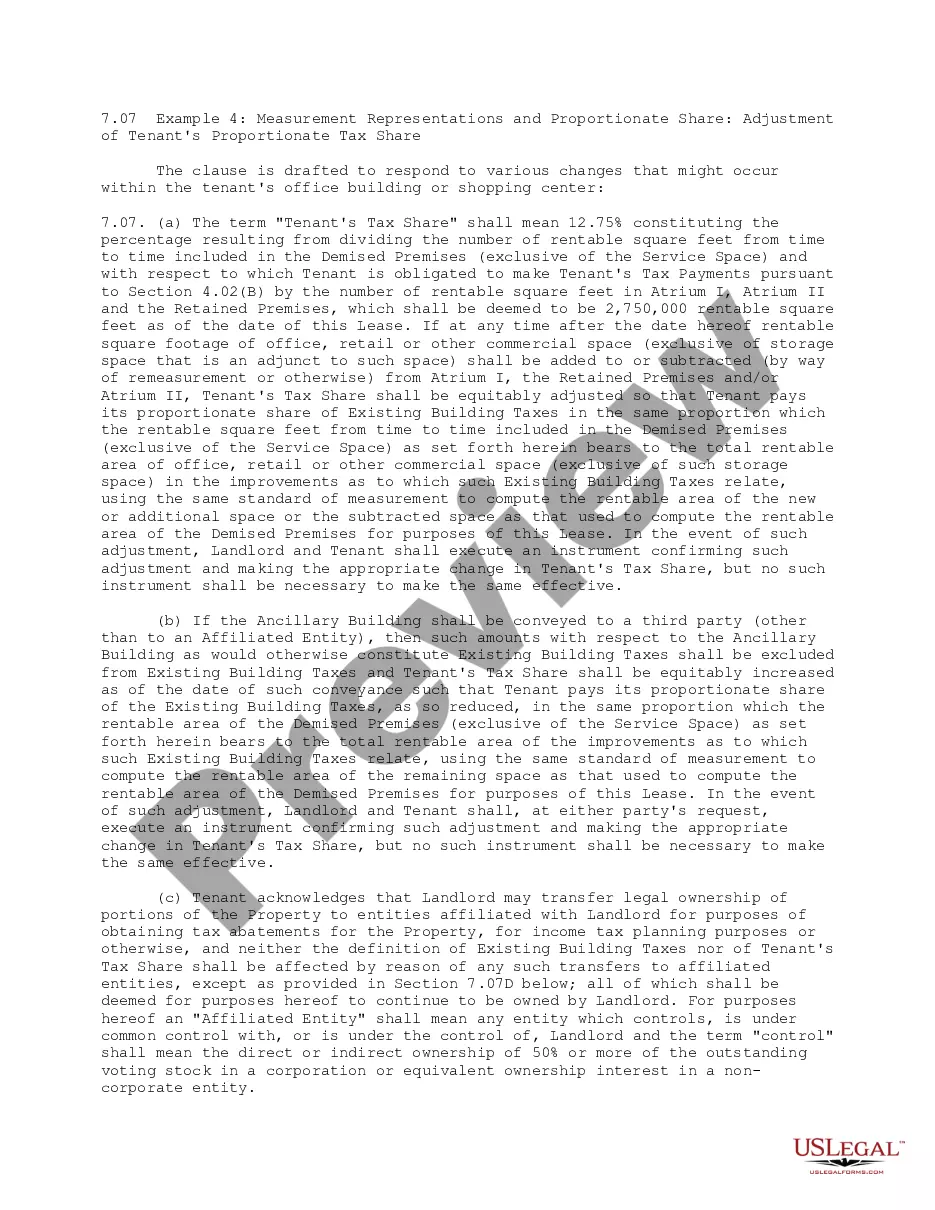
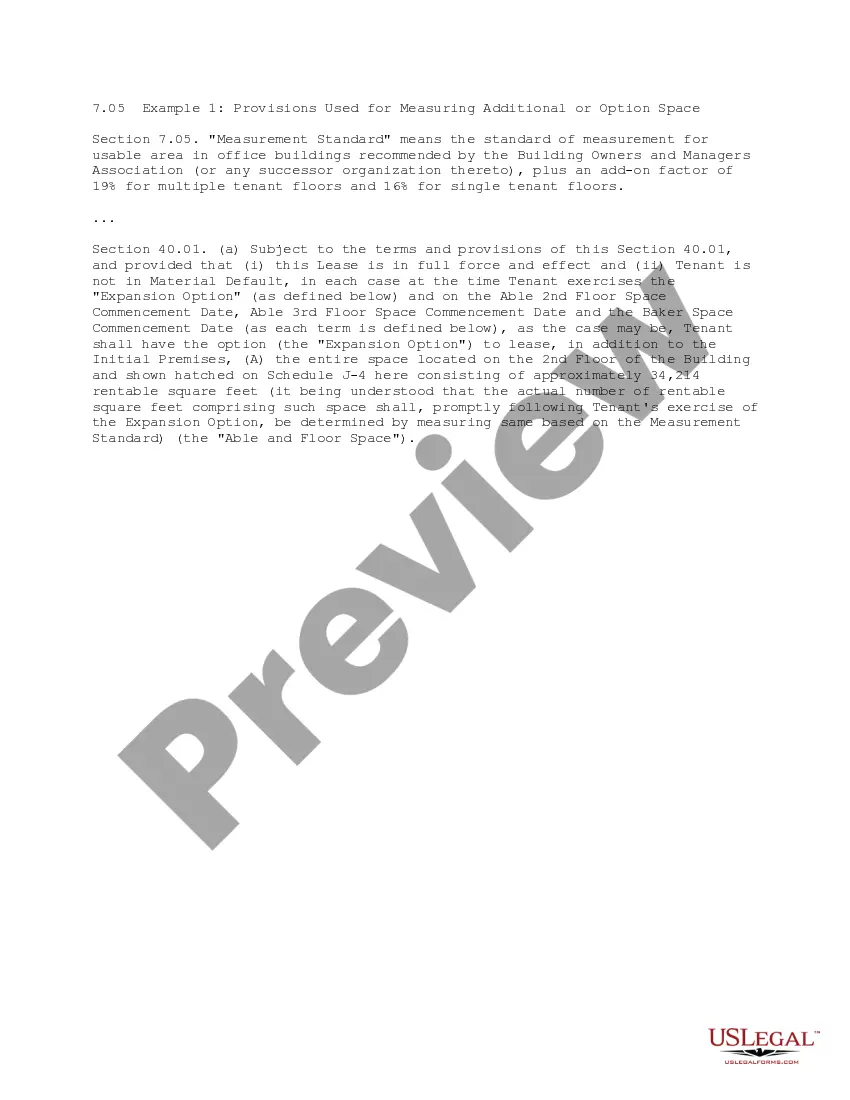
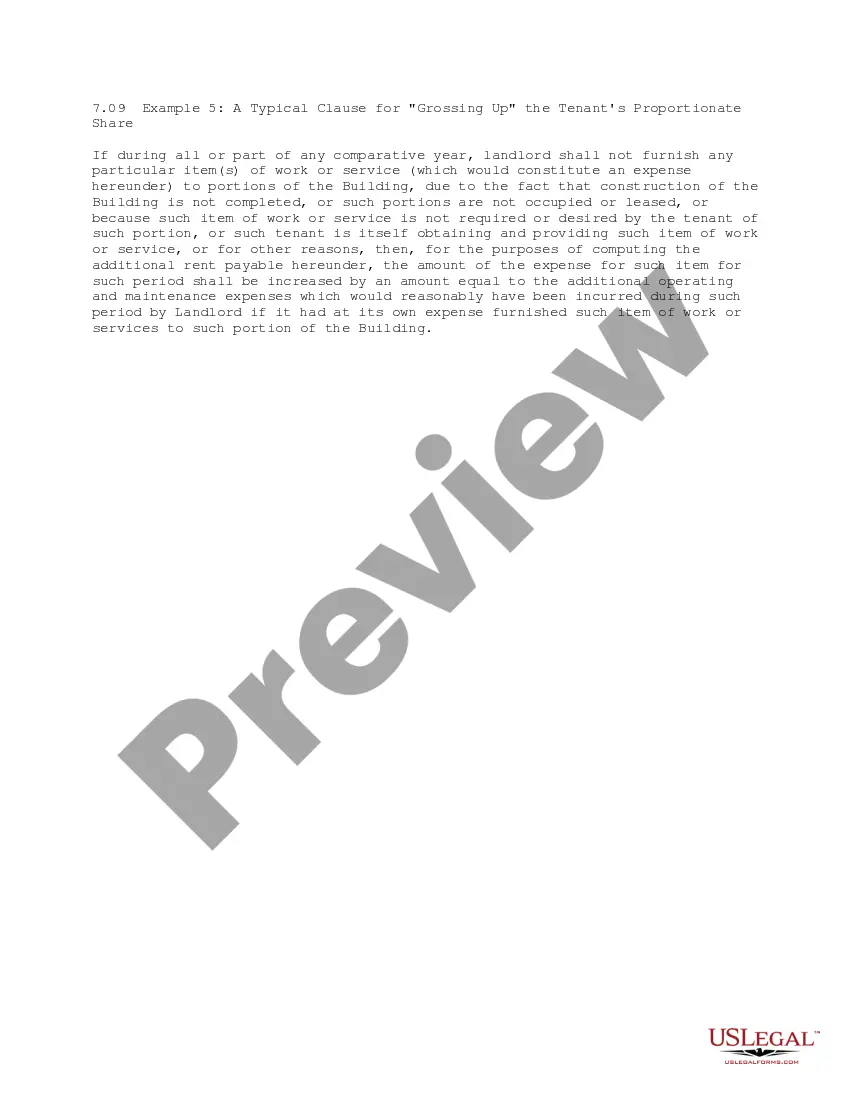
The Measurement Representations and Proportionate Share Adjustment of Tenant's Proportionate Tax Share is a legal clause used in office leases. This form addresses changes that may occur in the tenant's office building or shopping center, specifically related to how tenant tax payments are calculated. It ensures that the tenant contributes fairly based on their share of the space occupied in relation to the total space in the property.
What’s included in this form
- Definition of Tenant's Tax Share based on square footage.
- Adjustments to Tenant's Tax Share based on changes in rentable space.
- Exclusions of certain taxes related to transactions involving affiliated entities.
- Procedures for objections to adjustments within a specified timeframe.
- Dispute resolution through arbitration, if necessary.


When to use this form
This form should be used when there are changes in the rentable square footage of an office or retail space that affect the calculation of existing building taxes. This can happen during lease negotiations, property sales, or when physical alterations are made to the property. It is essential for ensuring that tenants pay their share accurately in line with these changes.
Who this form is for
- Tenants in office buildings or shopping centers.
- Landlords managing commercial properties.
- Real estate professionals involved in commercial leases.
- Property managers overseeing maintenance and financial obligations of the property.
How to complete this form
- Identify the parties involved in the lease agreement.
- Specify the total rentable square footage for the property.
- Note any changes in the leased space that require tax share adjustments.
- Document any objections to proposed tax share adjustments within the timeframe specified.
- Both parties should sign to confirm any agreed adjustments to the tax share.
Notarization guidance
This form does not typically require notarization unless specified by local law. Always check with local regulations to ensure compliance with any notarization requirements for your specific lease agreement.
Get your form ready online
Our built-in tools help you complete, sign, share, and store your documents in one place.
Make edits, fill in missing information, and update formatting in US Legal Forms—just like you would in MS Word.
Download a copy, print it, send it by email, or mail it via USPS—whatever works best for your next step.
Sign and collect signatures with our SignNow integration. Send to multiple recipients, set reminders, and more. Go Premium to unlock E-Sign.
If this form requires notarization, complete it online through a secure video call—no need to meet a notary in person or wait for an appointment.
We protect your documents and personal data by following strict security and privacy standards.

Make edits, fill in missing information, and update formatting in US Legal Forms—just like you would in MS Word.

Download a copy, print it, send it by email, or mail it via USPS—whatever works best for your next step.

Sign and collect signatures with our SignNow integration. Send to multiple recipients, set reminders, and more. Go Premium to unlock E-Sign.

If this form requires notarization, complete it online through a secure video call—no need to meet a notary in person or wait for an appointment.

We protect your documents and personal data by following strict security and privacy standards.
Common mistakes to avoid
- Failing to document changes in space accurately, leading to incorrect tax calculations.
- Not submitting objections to tax share adjustments within the specified period.
- Underestimating the impact of property modifications on tax responsibilities.
Why complete this form online
- Convenient download and completion from anywhere, anytime.
- Editability allows for quick updates based on property changes.
- Reliability ensures that the form adheres to standard legal formats and requirements.
Legal use & context
- This form is enforceable as part of a commercial lease agreement.
- Compliance with local tax laws is crucial for effectiveness.
- Properly documenting adjustments protects both landlord and tenant interests.
Looking for another form?
Form popularity
FAQ
An Annual Increase is a clause in a lease which provides for the base rent amount or operating expenses to be increased and/or to reflect changes in expenses paid by the landlord such as real estate taxes, insurance and operating expenses.
AR usually indicates arrears (behind in rent). Base Rent AR seems to indicate 2 months' of rent in arrears. Retro may mean rent previous to the current month (money owed previously). This could be late fees or other fees owed.
In general, the tenant's proportionate share is determined by taking the building's rentable square footage and dividing it by the tenant's rentable square footage.
Gross Lease/Full Service Lease In a gross lease, the tenant's rent covers all property operating expenses. These expenses can include, but aren't limited to, property taxes, utilities, maintenance, etc. The landlord pays these expenses using the tenant's rent to offset the costs.
The Base Year is a year that is tied to the actual amount of expenses for property taxes, insurance and operating expenses (sometimes called CAM) to run the property in a specified year. In a new lease, the Base Year is most often the year the lease is executed or the year in which the lease commences.
When prices rise, the landlord can raise monthly lease payments. A reappraisal clause. A lease agreement may also contain a reappraisal clause which allows for a hike in rent following an annual appraisal of the property. Again, this is likely only to result in an increase in rent.
A modified gross lease is a type of real estate rental agreement where the tenant pays base rent at the lease's inception, but it takes on a proportional share of some of the other costs associated with the property as well, such as property taxes, utilities, insurance, and maintenance.
The amount of rent that gets paid as operating costs might be called additional rent or TMI (taxes, maintenance and insurance).