Clauses Allowing Landlord Control Over and Access to the Demised Premises
What is this form?
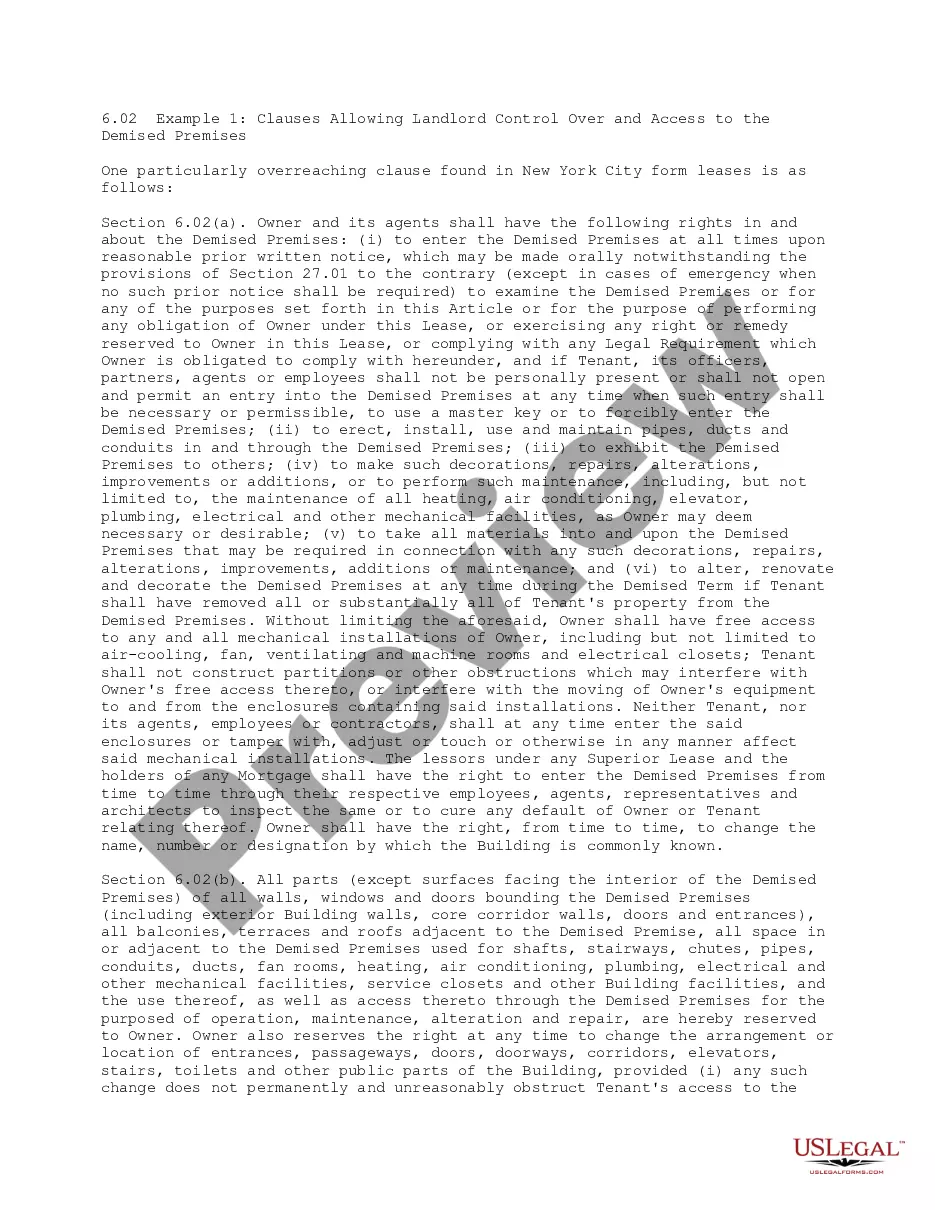
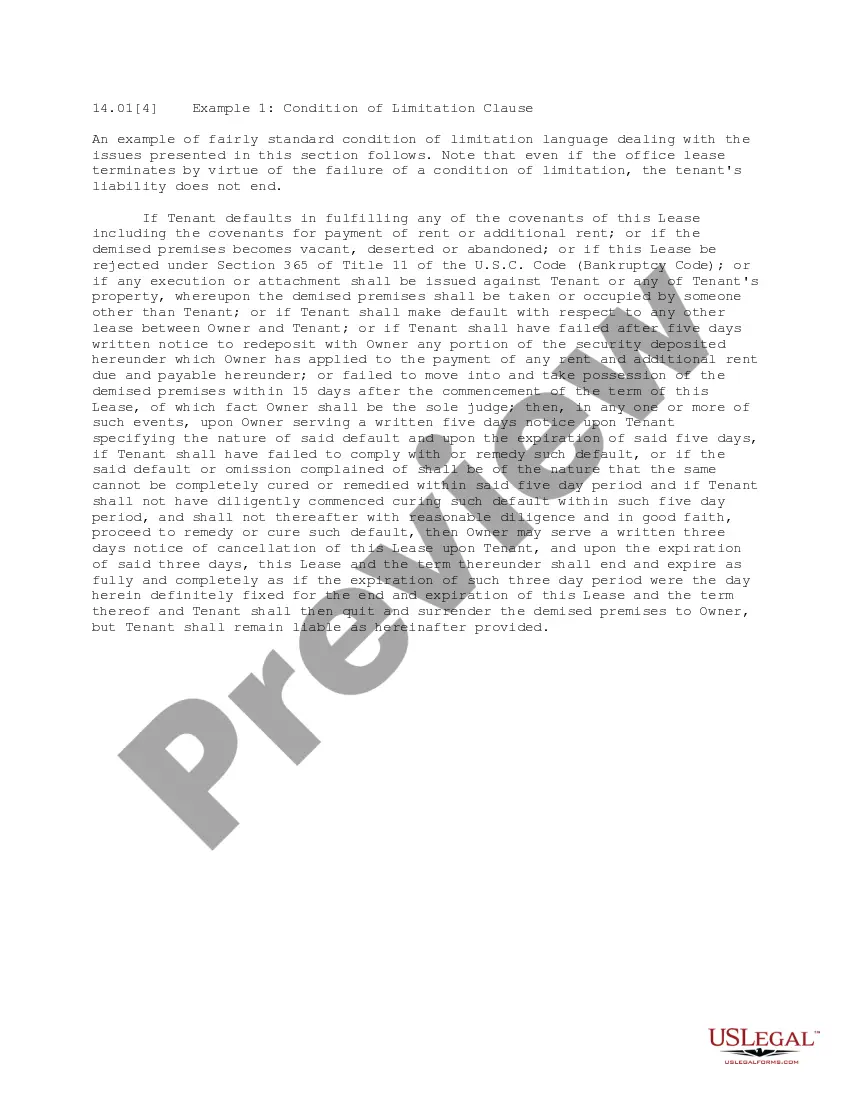
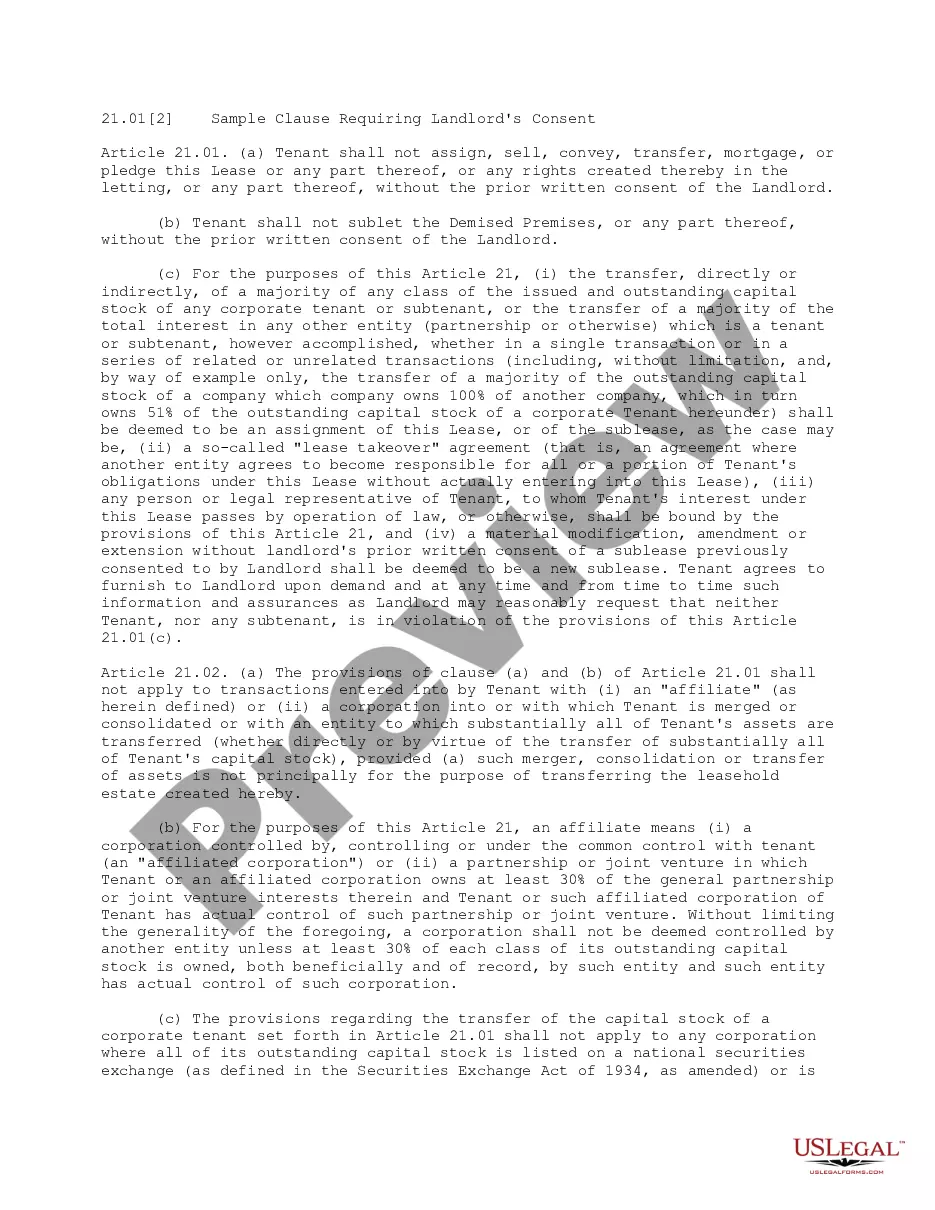
The Clauses Allowing Landlord Control Over and Access to the Demised Premises form is a legal document used in office leases to outline the circumstances under which a landlord may access and control the leased premises. This form explicitly defines the rights of the landlord regarding entry for inspections, repairs, and other management duties while also detailing the tenant's access rights. It helps prevent disputes by clearly stating the rights of both landlords and tenants, distinguishing it from standard lease agreements.
Key components of this form
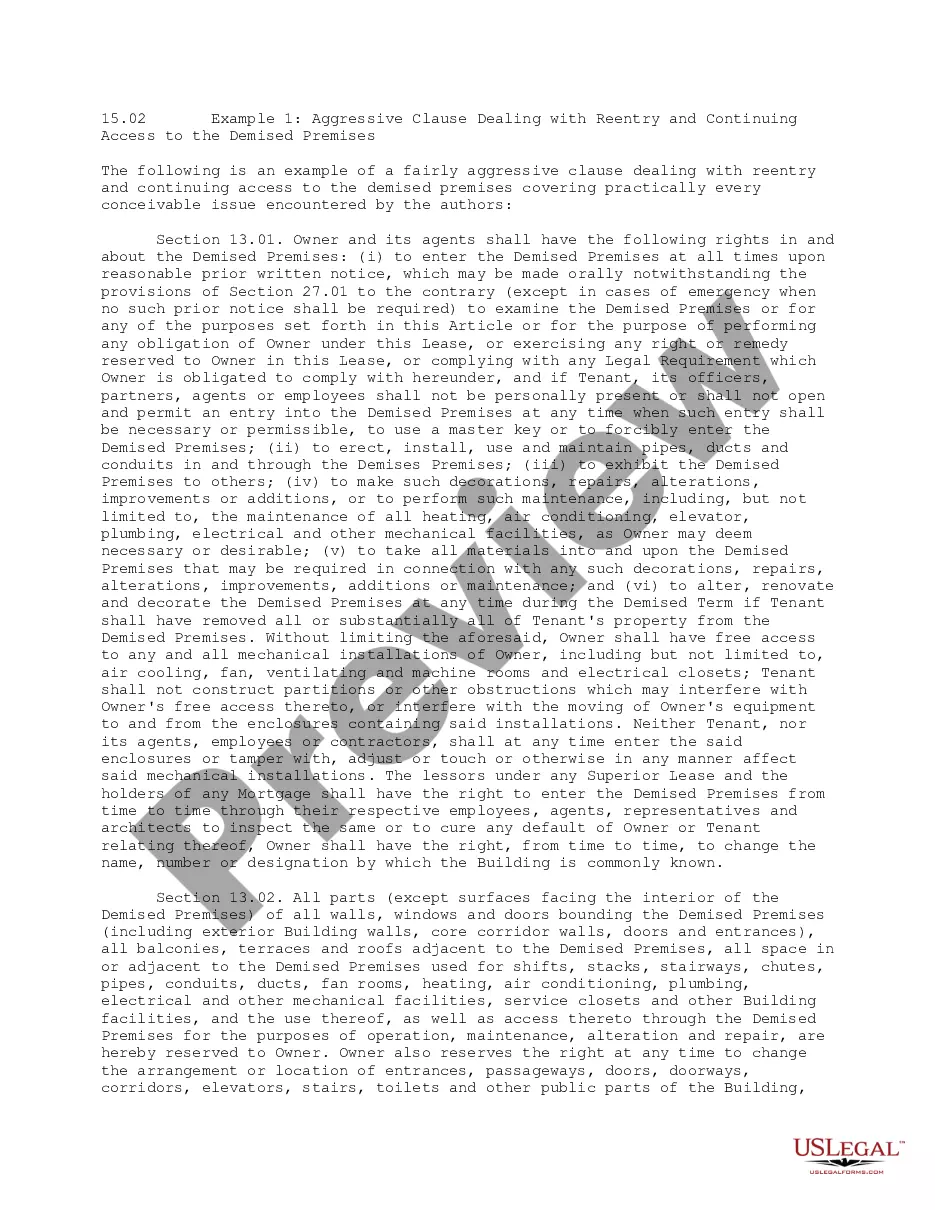
- Conditions for landlord access: Specifies when and how the landlord may enter the leased premises.
- Emergency access provisions: Allows for immediate access in case of emergencies without prior notice.
- Landlord's rights to perform maintenance: Details landlord's rights to make repairs and alterations within the premises.
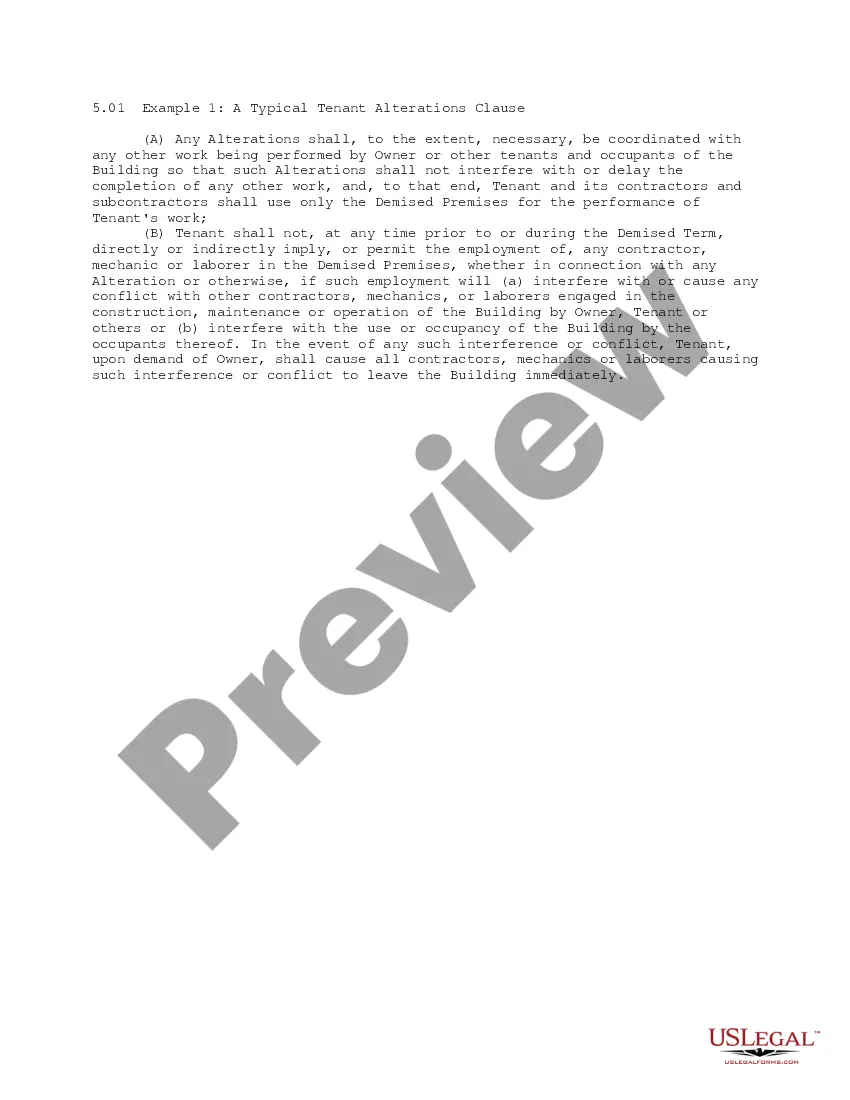
- Tenant's responsibilities: Outlines what the tenant must not do to hinder access to critical areas of the property.
- Rights regarding mechanical installations: Clarifies owner access to mechanical systems and related facilities.
- Changes to property structure: Discusses the landlord's ability to alter common areas and access points.
When to use this form
This form is typically used in commercial lease agreements when both landlords and tenants need a clear understanding of access rights. It is particularly beneficial in densely populated areas like New York City, where access can be a common source of dispute. Use this form if your lease requires specific terms regarding landlord access or if disputes over access have arisen in the past.
Who should use this form
- Landlords who want to establish clear terms for property access and control.
- Tenants who seek to understand and negotiate their rights concerning access to the demised premises.
- Property managers managing multiple rental properties requiring consistent access clauses.
- Attorneys drafting or reviewing commercial lease agreements on behalf of clients.
How to complete this form
- Identify the parties involved: Provide the names of the landlord and tenant.
- Specify the property: Include the address and description of the leased premises.
- Outline access rights: Clearly define the landlord's rights regarding access and maintenance.
- Detail tenant restrictions: Specify what the tenant is prohibited from doing that would obstruct access.
- Review and sign: Ensure both parties review the terms and sign to acknowledge agreement.
Notarization requirements for this form
This form usually doesn’t need to be notarized. However, local laws or specific transactions may require it. Our online notarization service, powered by Notarize, lets you complete it remotely through a secure video session, available 24/7.
Get your form ready online
Our built-in tools help you complete, sign, share, and store your documents in one place.
Make edits, fill in missing information, and update formatting in US Legal Forms—just like you would in MS Word.
Download a copy, print it, send it by email, or mail it via USPS—whatever works best for your next step.
Sign and collect signatures with our SignNow integration. Send to multiple recipients, set reminders, and more. Go Premium to unlock E-Sign.
If this form requires notarization, complete it online through a secure video call—no need to meet a notary in person or wait for an appointment.
We protect your documents and personal data by following strict security and privacy standards.

Make edits, fill in missing information, and update formatting in US Legal Forms—just like you would in MS Word.

Download a copy, print it, send it by email, or mail it via USPS—whatever works best for your next step.

Sign and collect signatures with our SignNow integration. Send to multiple recipients, set reminders, and more. Go Premium to unlock E-Sign.

If this form requires notarization, complete it online through a secure video call—no need to meet a notary in person or wait for an appointment.

We protect your documents and personal data by following strict security and privacy standards.
Common mistakes
- Failing to specify emergency access conditions, which may lead to disputes.
- Not clearly defining tenant restrictions, resulting in confusion regarding access rights.
- Neglecting to review local laws that may affect lease terms and specific access rights.
Benefits of using this form online
- Convenience: Access and download the form anytime from anywhere.
- Editability: Customize the form easily to fit specific lease agreements.
- Reliability: Forms are drafted by licensed attorneys, ensuring legal soundness.
Legal use & context
- This form is enforceable as part of a lease agreement, provided it complies with local regulations.
- Clear definitions in the form help prevent disputes related to landlord access during the lease term.
- Enforcement of these clauses is subject to local landlord-tenant laws that dictate access rights.
What to keep in mind
- The form clarifies access rights for landlords and ensures tenant understanding.
- It helps minimize conflicts over property access during the lease period.
- Properly completing and understanding the form can protect both parties legally.
Looking for another form?
Form popularity
FAQ
The right to collect rent. Simply by the fact that you are renting, your landlord has the right to collect rent and any prearranged late fees for overdue rent payments. The right to raise your rent according to your lease agreement.Your landlord has the right to evict you, especially if you do not pay your rent.
A landlord cannot evict a tenant without an adequately obtained eviction notice and sufficient time. A landlord cannot retaliate against a tenant for a complaint. A landlord cannot forego completing necessary repairs or force a tenant to do their own repairs.A landlord cannot remove a tenant's personal belongings.
Yes, your tenant is within their rights to refuse you access to the property. In a lot of cases, tenants will refuse because the date and time isn't convenient for them and will suggest an alternative date or ask you to rearrange. However, some tenants will persistently try to obstruct you from entering the property.
This includes keeping the property clean, safe and habitable. The landlord must adhere to all building codes, perform necessary repairs, maintain common areas, keep all vital services, such as plumbing, electricity, and heat, in good working order, must provide proper trash receptacles and must supply running water.
It is the landlord's responsibility to ensure that acceptable standards are maintained throughout the duration of the tenancy. Landlords must: Maintain the tenant's home in a good state of repair and fit for habitation and at the landlord's expense comply with health, safety, housing and maintenance standards.
Take good care of the property, for example turn off the water at the mains if you're away in cold weather. pay the agreed rent, even if repairs are needed or you're in dispute with your landlord. pay other charges as agreed with the landlord, for example Council Tax or utility bills.
Let's be clear, other than in emergency it's illegal for a landlord or agent to enter a property without agreement from the tenant. The golden rule to abide by is always to provide your tenants with written notice at least 24 hours before any planned visits.
Showing the premises to prospective tenants 'reasonable' notice / number of times. The law does not say what 'reasonable' means.If you refuse access, the landlord/agent can apply to the Tribunal for an order that authorises them or any other person to enter the premises.
If the tenant refuses, you are permitted to send them a notice to agree or quit the property. The tenant refusing you access constitutes a breach in the lease agreement, so they could be evicted if they continue to deny access.