Condemnation Clause
What this document covers
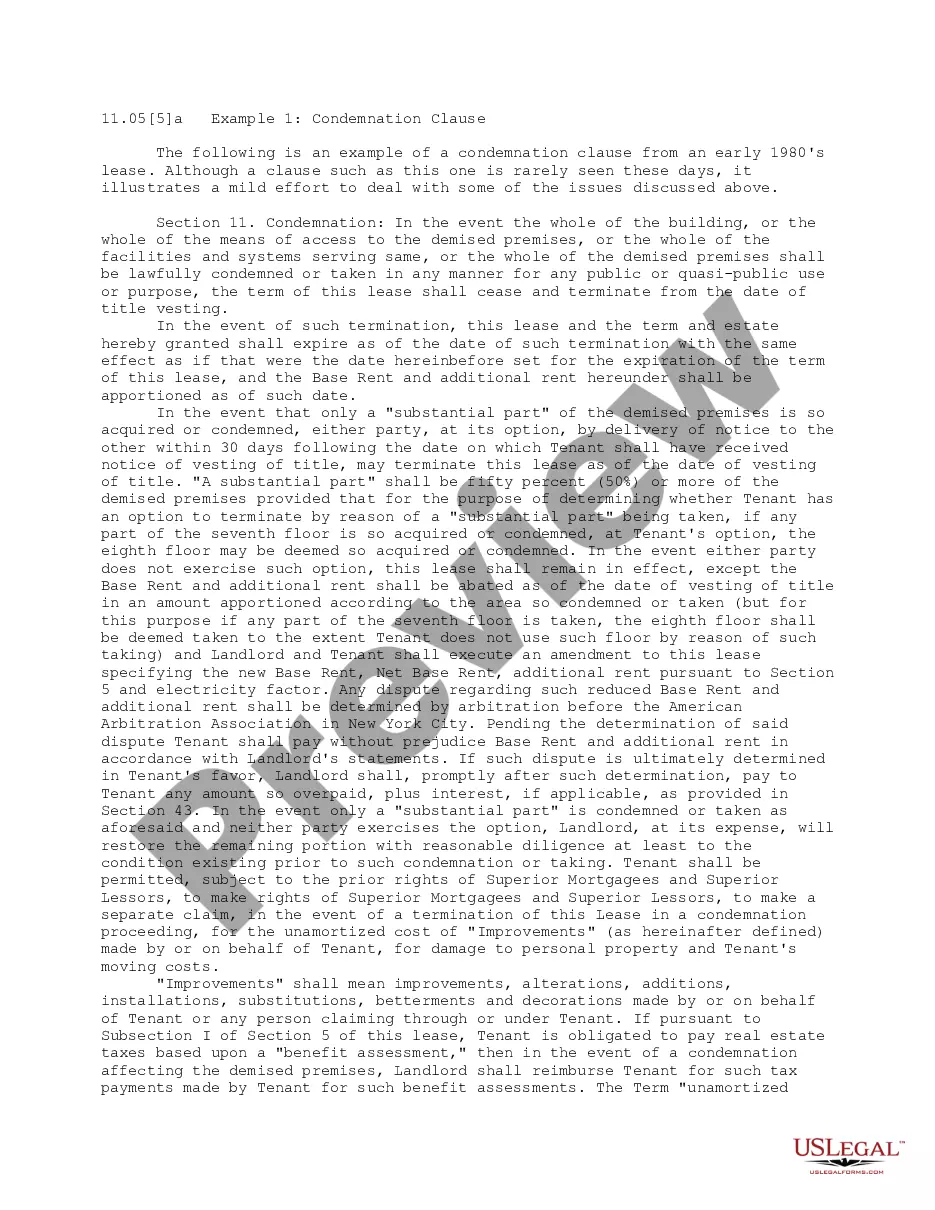
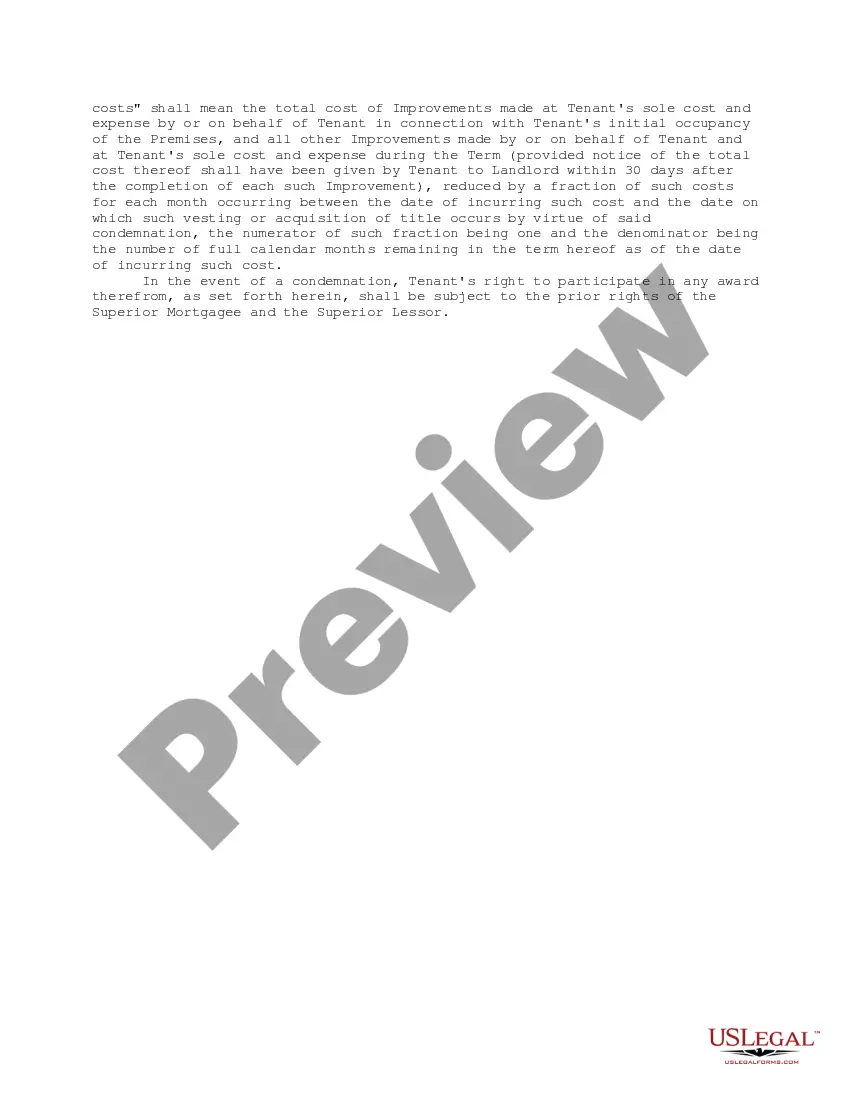
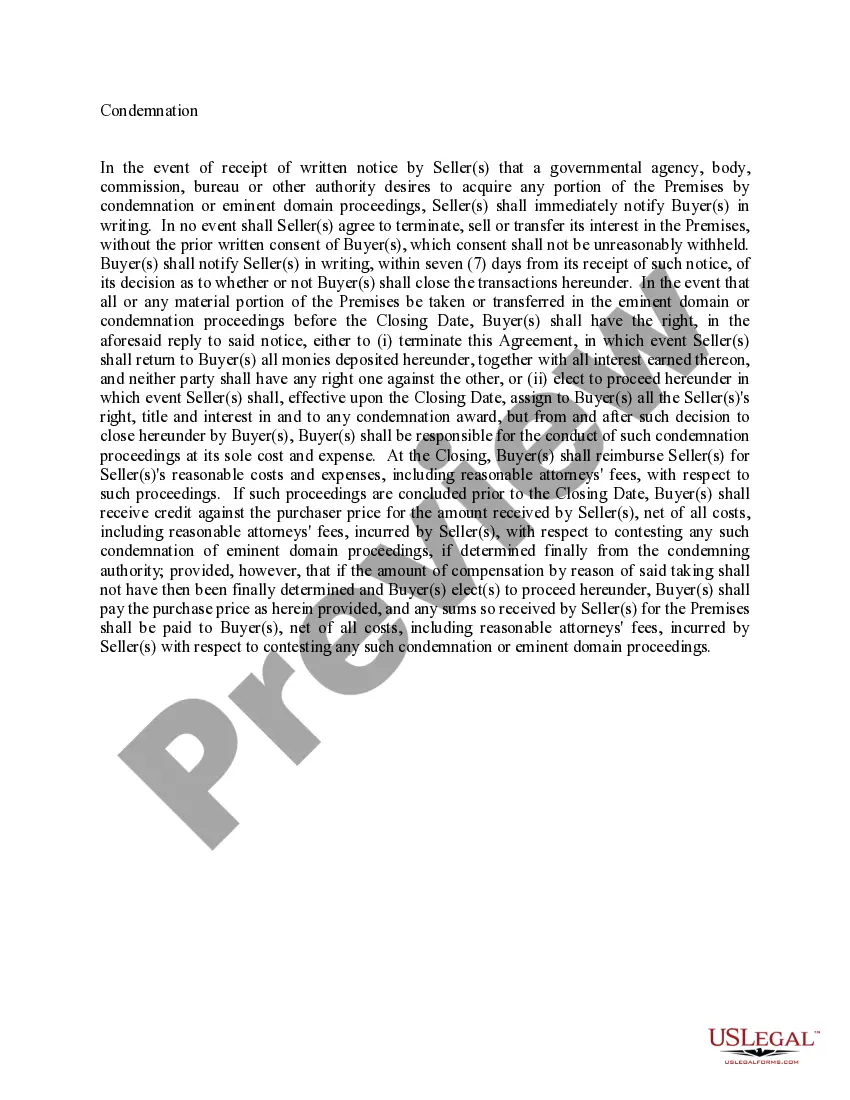
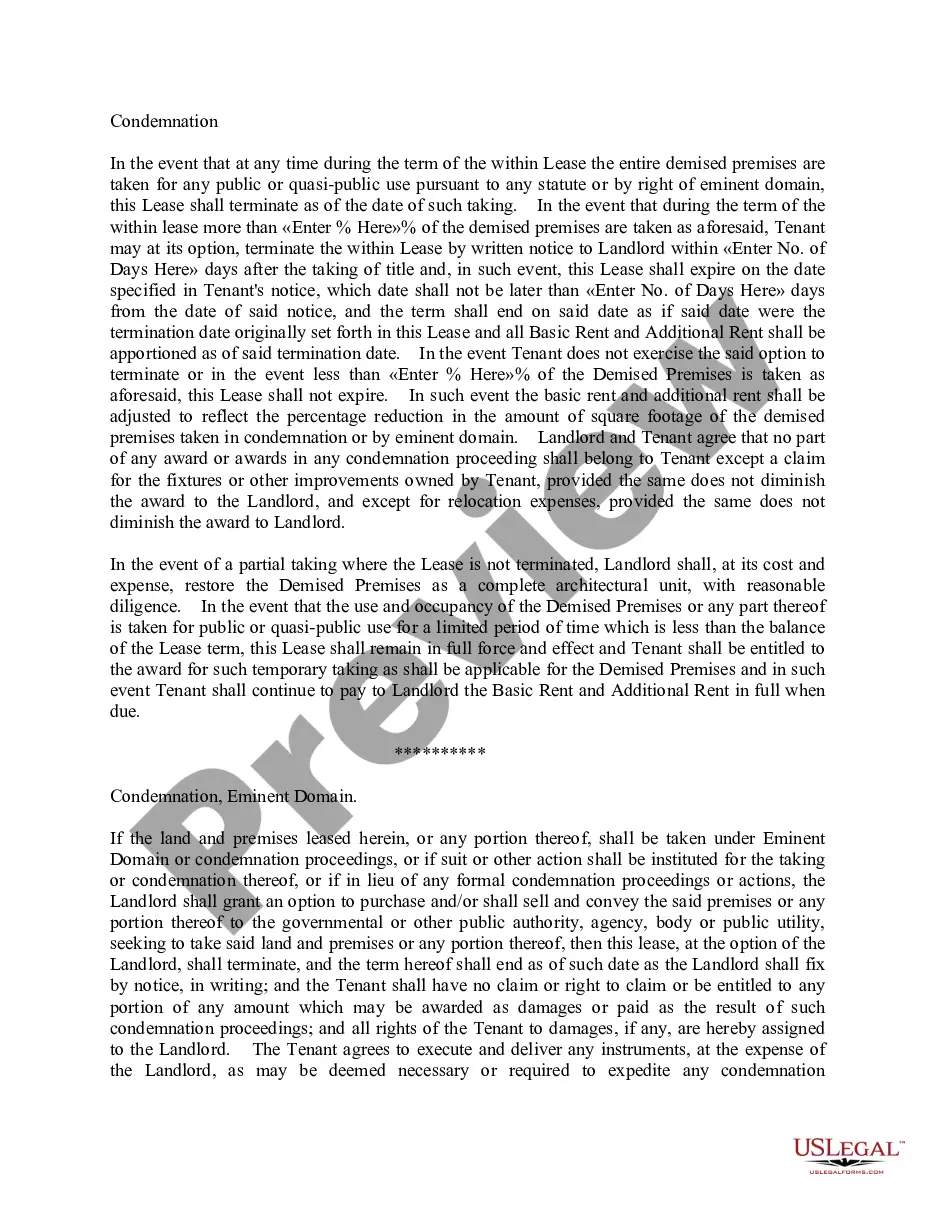
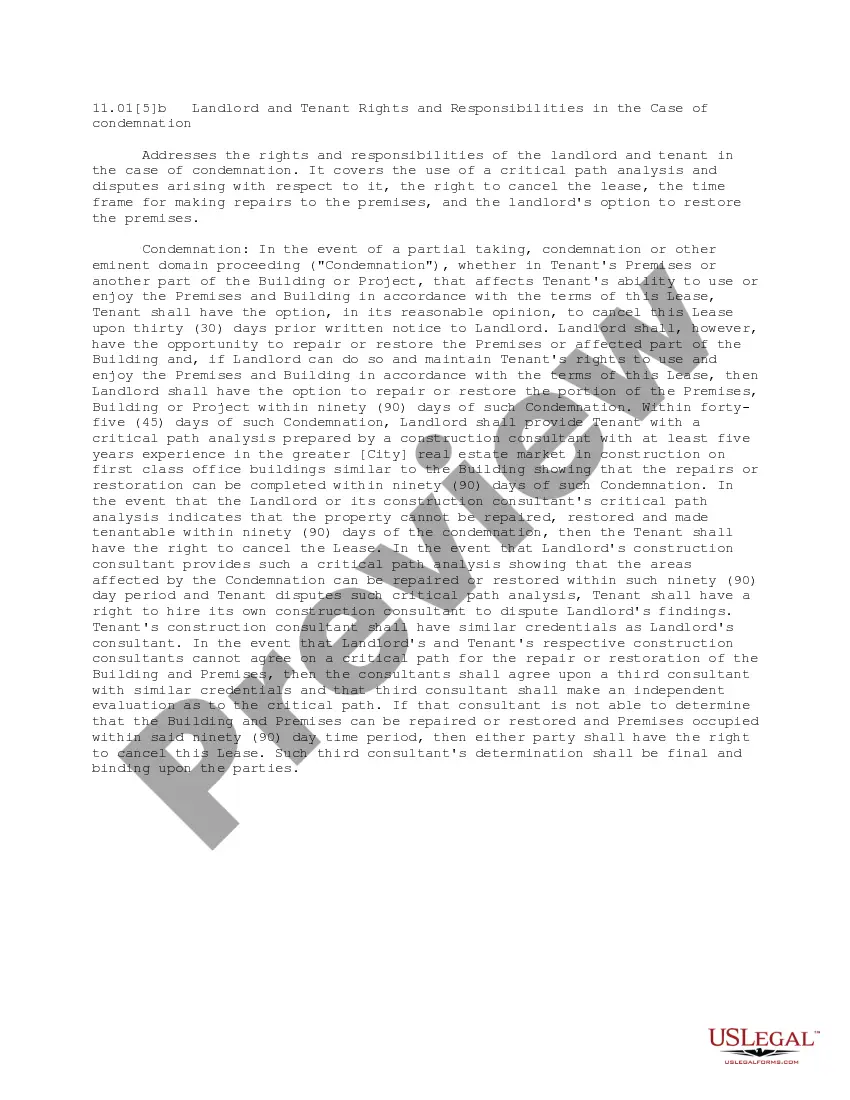
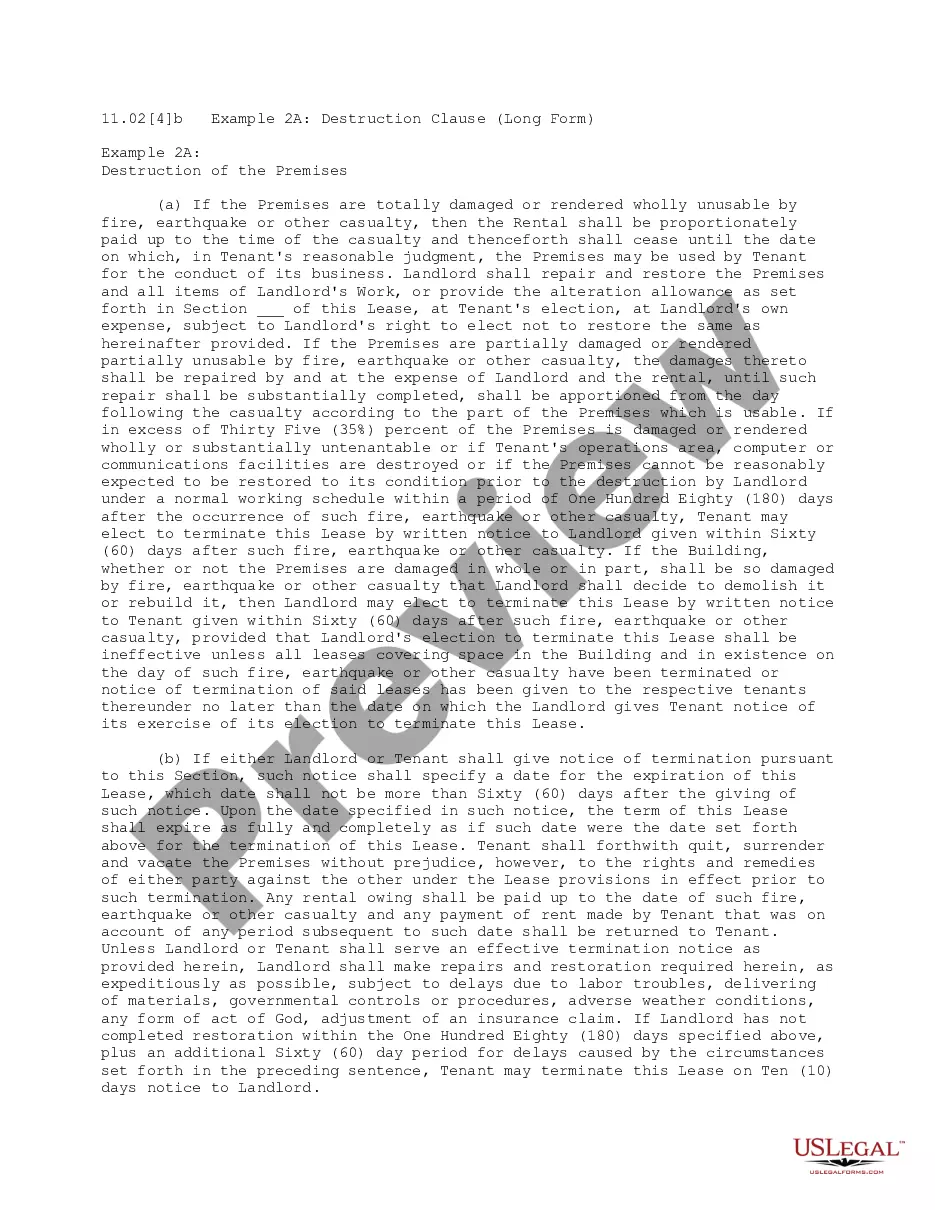
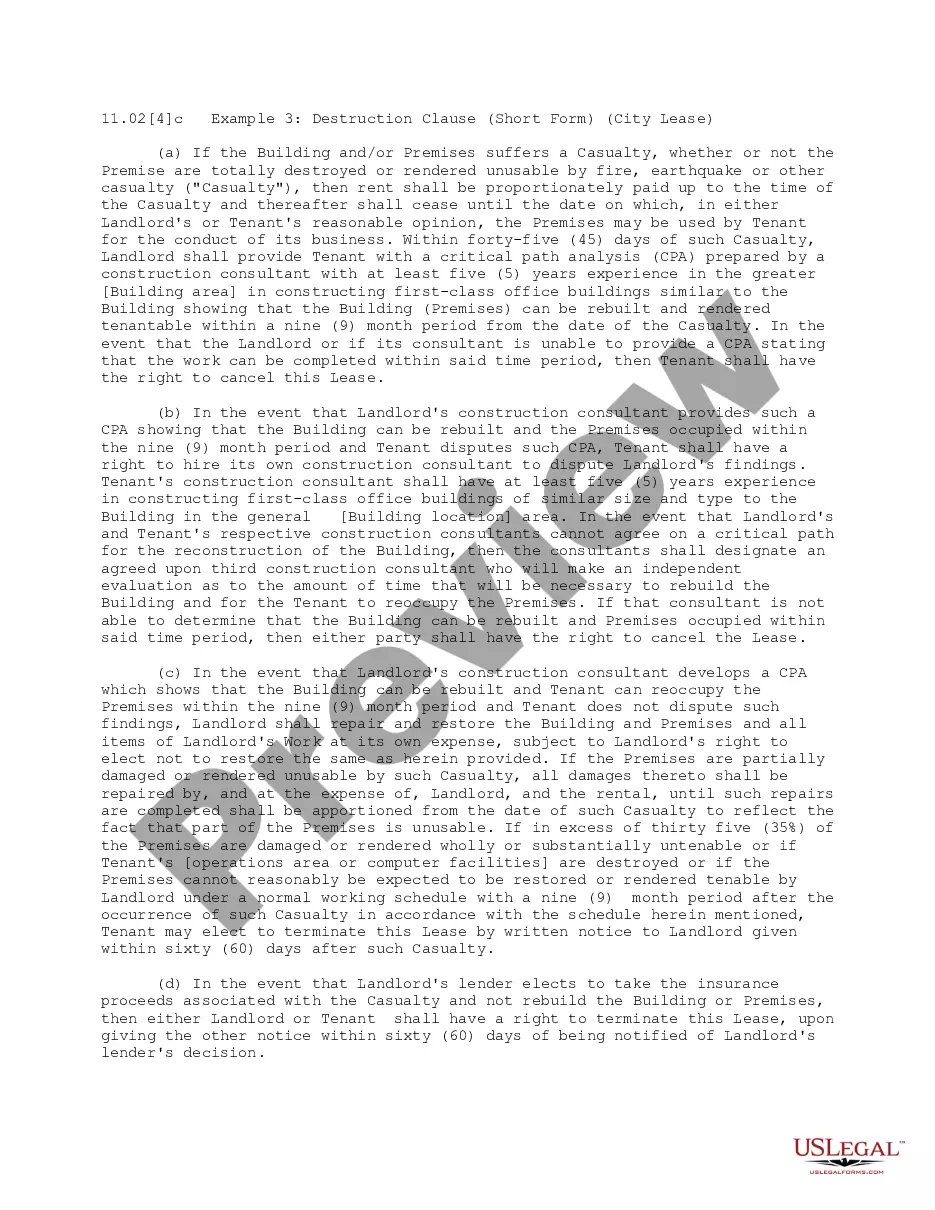
The condemnation clause is a specific part of an office lease that outlines the rights and obligations of both the landlord and tenant in the event that the property is condemned for public use. This form serves to clarify what happens if either the entire building or a significant portion of it is taken by the government, thus ensuring both parties understand their options and responsibilities. Unlike other lease agreements, this clause provides a framework for addressing potential disruptions caused by condemnation and helps protect tenant investments in the property.
Main sections of this form
- Definition of condemnation and what it entails for the lease.
- Termination of the lease upon full condemnation.
- Options for both landlord and tenant regarding substantial partial takings.
- Apportionment of Base Rent and additional rent upon termination.
- Provisions for restoring the remaining property after a partial condemnation.
- Rights regarding claims for improvements and unamortized costs in case of condemnation.
When this form is needed
This form is essential when entering into a lease agreement for commercial property, particularly in areas where governmental projects may result in property condemnation. It is necessary to incorporate this clause to safeguard against unexpected losses and to clarify the terms of lease termination or rent adjustments if the property is taken for public use. Businesses should consider using this form if they anticipate potential condemnation due to local development initiatives or public projects.
Who can use this document
- Commercial landlords leasing office space.
- Tenants entering into a lease for office space.
- Property managers overseeing commercial real estate.
- Real estate attorneys drafting lease agreements.
Completing this form step by step
- Identify the parties involved, including the landlord and tenant.
- Clearly specify the property being leased, including any relevant details.
- Include the terms pertaining to condemnation and termination of the lease.
- Outline the apportionment of Base Rent and any additional rent due upon termination.
- Ensure both parties review the clause and agree to its terms by signing the lease.
Does this form need to be notarized?
This form usually doesn’t need to be notarized. However, local laws or specific transactions may require it. Our online notarization service, powered by Notarize, lets you complete it remotely through a secure video session, available 24/7.
Get your form ready online
Our built-in tools help you complete, sign, share, and store your documents in one place.
Make edits, fill in missing information, and update formatting in US Legal Forms—just like you would in MS Word.
Download a copy, print it, send it by email, or mail it via USPS—whatever works best for your next step.
Sign and collect signatures with our SignNow integration. Send to multiple recipients, set reminders, and more. Go Premium to unlock E-Sign.
If this form requires notarization, complete it online through a secure video call—no need to meet a notary in person or wait for an appointment.
We protect your documents and personal data by following strict security and privacy standards.

Make edits, fill in missing information, and update formatting in US Legal Forms—just like you would in MS Word.

Download a copy, print it, send it by email, or mail it via USPS—whatever works best for your next step.

Sign and collect signatures with our SignNow integration. Send to multiple recipients, set reminders, and more. Go Premium to unlock E-Sign.

If this form requires notarization, complete it online through a secure video call—no need to meet a notary in person or wait for an appointment.

We protect your documents and personal data by following strict security and privacy standards.
Avoid these common issues
- Failing to include all relevant details of the property.
- Not specifying the conditions under which the lease can be terminated.
- Overlooking the process for apportioning rents upon condemnation.
- Not discussing the clause with all involved parties beforehand.
Advantages of online completion
- Convenience of instant access and downloadable format.
- Editability allows customization to specific lease agreements.
- Reliability of professionally drafted content from licensed attorneys.
Legal use & context
- Condemnation clauses are enforceable in most jurisdictions, protecting landlords and tenants.
- Understanding local laws regarding condemnation is crucial for enforceability.
- This form helps mitigate financial losses and clarifies rights in condemnation scenarios.
What to keep in mind
- The condemnation clause outlines processes related to property condemnation in lease agreements.
- It is essential for both landlords and tenants to understand their rights and obligations.
- Using this form helps safeguard investments and clarify terms regarding potential property takings.
Looking for another form?
Form popularity
FAQ
Eminent domain is the right of the government to seize property and transfer from private to public ownership. Condemnation is the legal process utilized by the government to seize property via eminent domain.The government is required to provide "just compensation" for the condemned property.
Condemning Authority - This term refers to a government or private entity that has the power to take private property by eminent domain.
Typically, a condemnation clause permits a landlord or a tenant to either terminate the lease or abate the rent in the event of a government "taking" of the leased property.
A taking by eminent domain proceedings generally terminates a lease. Foreclosure. A foreclosure extinguishes all prior interests in a property, including a leasehold. Death of tenant or landlord, with qualifications.
Condemning Authority means any person or entity with a statutory or other power of eminent domain.Condemning Authority means any public or quasi-public authority, or private corporation or individual, having the power of condemnation.
In a total condemnation the lease is terminated as soon as the condemning party takes possession of the property. This occurs because there is no longer any property to lease. In a partial condemnation, typically both the landlord and the tenant have the option to terminate the lease, usually with 30 days notice.
Defining Condemnation LawCondemnation is when a local, state, or federal government seizes private property from an owner and then compensates that owner for the property.In other words, the government doesn't need an owner's approval during condemnation.
Condemnation is the act of declaring something awful or evil. If your little brother does something unspeakably awful, express your condemnation so he will learn not to do it again.