Tenant Self-Help Clause
What this document covers
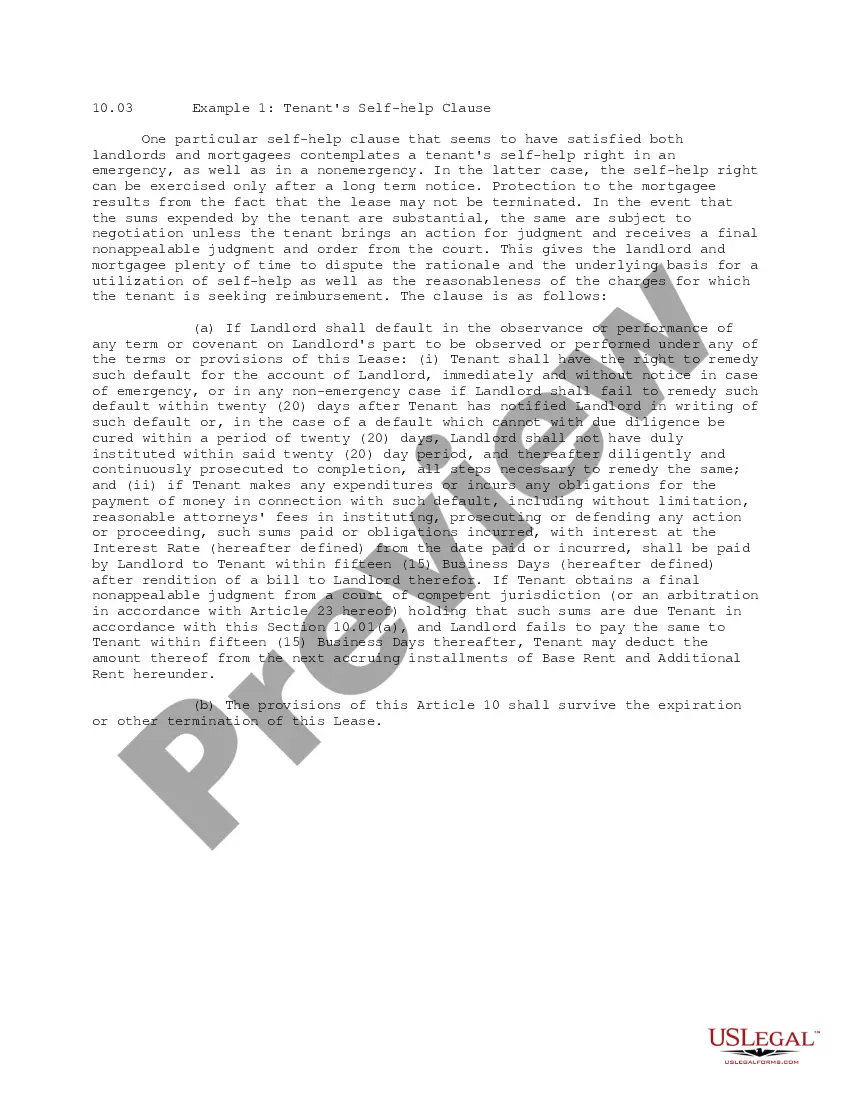
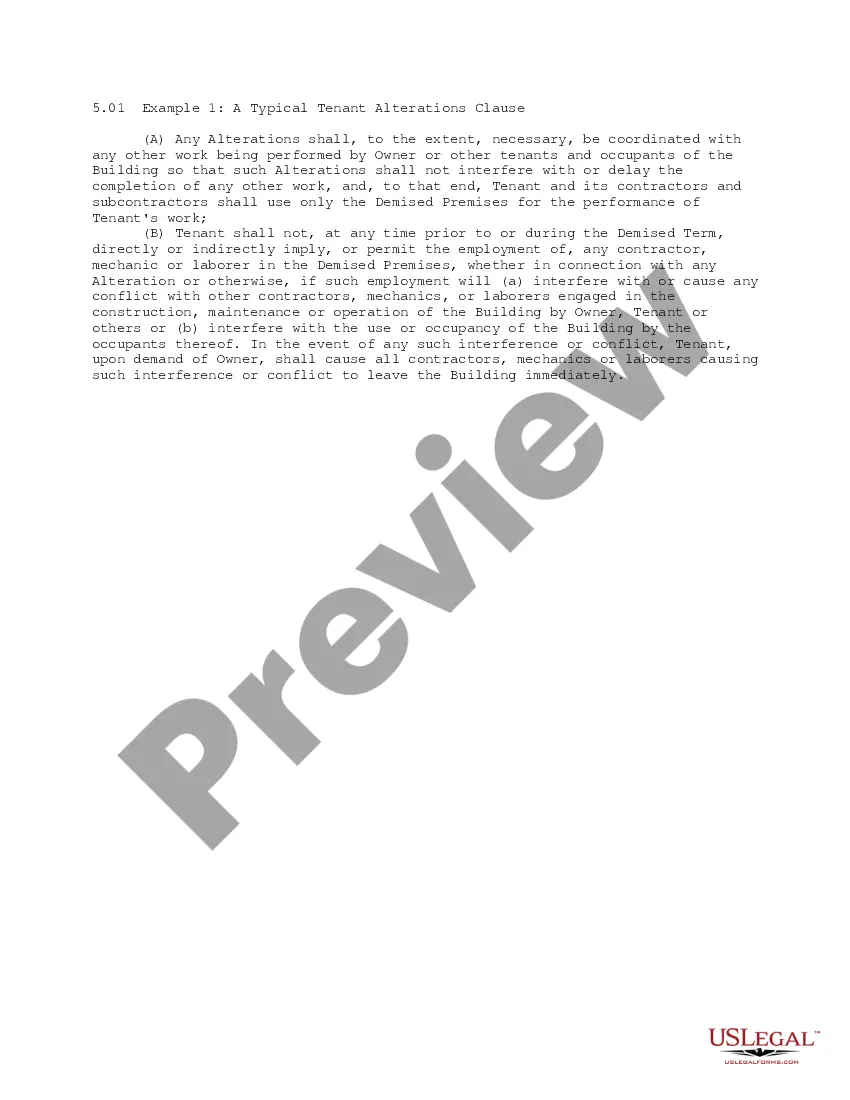
The Tenant Self-Help Clause is a legal document that outlines a tenant's right to address certain defaults by the landlord. This clause allows tenants to remedy emergencies immediately, while also providing a process for non-emergency defaults after proper notice. Unlike standard rental agreements, this clause specifically establishes how expenses incurred for repairs or issues can be charged back to the landlord, ensuring clear accountability for both parties.
Form components explained
- Emergency and non-emergency provisions allowing tenants to act when landlords fail to fulfill their obligations.
- A defined notice period for non-emergency defaults, giving landlords time to address issues.
- Details about tenant reimbursement for incurred expenses, including legal fees, if the landlord defaults.
- Protection clauses for landlords and mortgagees, preventing lease termination without due process.
- Provisions for the survival of the clause beyond the lease's expiration or termination.
Situations where this form applies
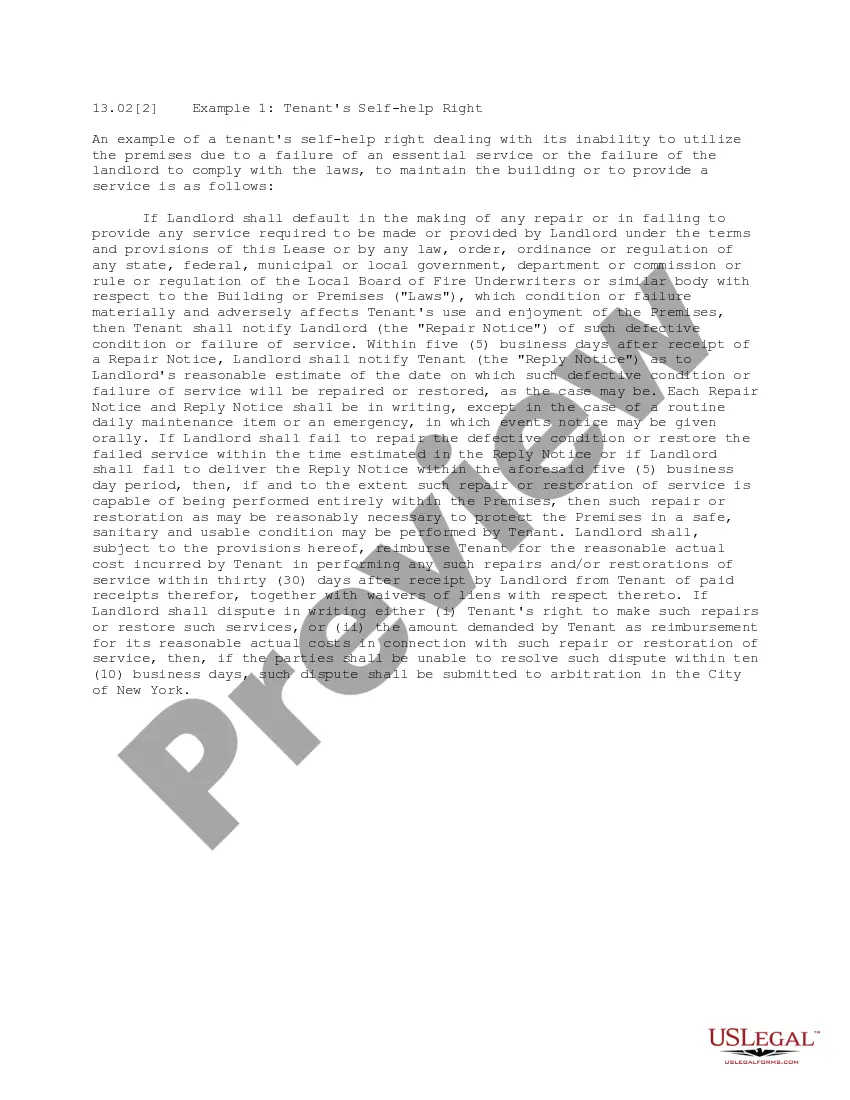
This form is particularly useful in scenarios where a tenant needs to address an urgent repair or issue that the landlord has failed to resolve. It applies in emergencies, such as significant water leaks or safety hazards, allowing immediate action. In non-emergency situations, it provides a structured approach for tenants to address problems after notifying the landlord, ensuring that both parties are aware of their rights and responsibilities.
Who can use this document
- Tenants who wish to ensure their rights are protected when landlords fail to address lease obligations.
- Landlords who want to clearly define the self-help rights of their tenants within a lease agreement.
- Property managers aiming to maintain clear communication and expectations regarding lease compliance.
Steps to complete this form
- Identify the parties involved in the lease agreement, including the landlord and tenant.
- Clearly specify the property subject to the lease and any relevant details about the tenancy.
- Enter the provisions detailing the emergency and non-emergency handling of landlord defaults.
- Include terms regarding reimbursement for expenses incurred by the tenant in addressing defaults.
- Ensure all parties sign and date the document to make it legally binding.
Does this form need to be notarized?
In most cases, this form does not require notarization. However, some jurisdictions or signing circumstances might. US Legal Forms offers online notarization powered by Notarize, accessible 24/7 for a quick, remote process.
Get your form ready online
Our built-in tools help you complete, sign, share, and store your documents in one place.
Make edits, fill in missing information, and update formatting in US Legal Forms—just like you would in MS Word.
Download a copy, print it, send it by email, or mail it via USPS—whatever works best for your next step.
Sign and collect signatures with our SignNow integration. Send to multiple recipients, set reminders, and more. Go Premium to unlock E-Sign.
If this form requires notarization, complete it online through a secure video call—no need to meet a notary in person or wait for an appointment.
We protect your documents and personal data by following strict security and privacy standards.

Make edits, fill in missing information, and update formatting in US Legal Forms—just like you would in MS Word.

Download a copy, print it, send it by email, or mail it via USPS—whatever works best for your next step.

Sign and collect signatures with our SignNow integration. Send to multiple recipients, set reminders, and more. Go Premium to unlock E-Sign.

If this form requires notarization, complete it online through a secure video call—no need to meet a notary in person or wait for an appointment.

We protect your documents and personal data by following strict security and privacy standards.
Common mistakes
- Failing to properly notify the landlord of a non-emergency default within the specified time frame.
- Not documenting expenses incurred during self-help actions, which may lead to disputes later.
- Ignoring local lease laws that could affect the enforceability of the self-help clause.
Why complete this form online
- Convenient access to templates that are easy to download and complete.
- Editability allows users to customize the form to meet their specific needs.
- Reliability of form templates drafted by licensed attorneys ensures legal compliance.
- The Tenant Self-Help Clause can provide tenants with critical rights in lease agreements.
- It helps balance the relationship between landlords and tenants by ensuring clear procedures for addressing defaults.
- Incorporating this clause may prevent disputes and misunderstandings regarding tenant rights and responsibilities.
Summary of main points
- The Tenant Self-Help Clause empowers tenants to address landlord defaults, ensuring timely resolution of issues.
- Using this clause can avoid disputes by clearly outlining rights and responsibilities for both landlords and tenants.
- Proper completion and understanding of the form are crucial to protect legal rights effectively.
Looking for another form?
Form popularity
FAQ
To evict a hold over tenant, the landlord must treat the tenant as a trespasser who does not have permission to be on the property and who is acting wrongfully by staying on the property from the moment the lease ends. The best way to deal with a trespasser will depend on the laws of your state and locality.
A holdover clause simply states that if a. tenant remains after the lease expires, the tenancy becomes month-to-month. at the increased rental rate.
A hold-over clause in a commercial lease typically provides that if a tenant remains in possession of the leased premises after the expiration of the stated lease term, the tenant must pay rent to the landlord in an amount substantially in excess of the rental rate at the end of the term often as high as 150 percent
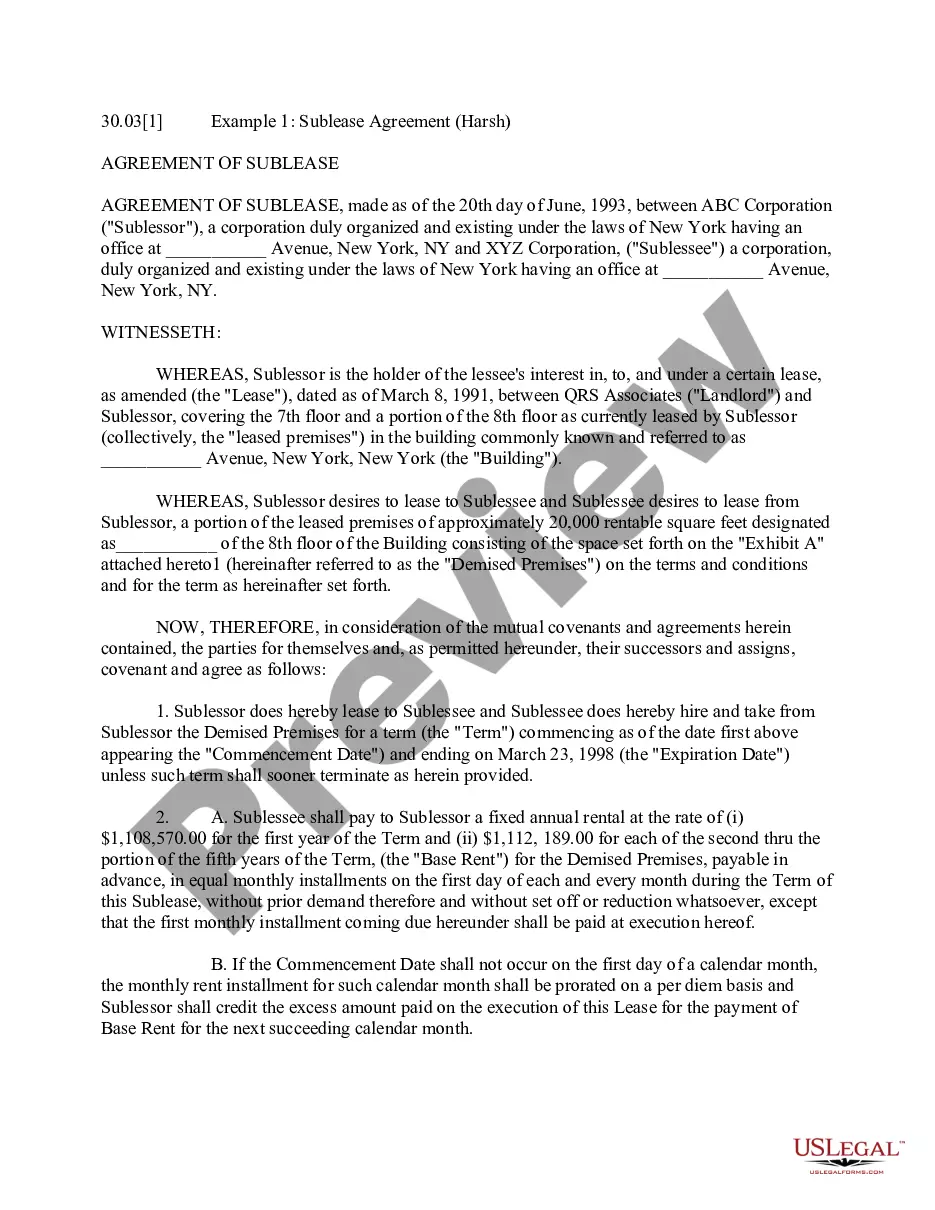
Subleasing occurs when the tenant transfers a part of their legal tenancy to a third-party as a new tenant.That means that if a new subtenant does not pay rent for three months, the original tenant that subleased the property is liable to the landlord for the overdue rent amount and any late fees.
Holding over is simply a tenant remaining in occupation of premises once the original term of their letting has come to an end.
: the action or process of bettering oneself or overcoming one's problems without the aid of others especially : the coping with one's personal or emotional problems without professional help.
On your sublease agreement, include a list of various areas of the property (including the subtenant's room, hardwood floors, walls, exterior, etc.) and note its condition. And since you and your subtenant will need to abide by the original lease that you signed, it's important to include this with your sublease.
Sublease. When a tenant transfers less than the remaining term or less than the tenant's entire estate, thus leaving the original tenant with a reversionary interest in the lease, the transfer is a sublease.
A holdover tenant is a renter who remains in a property after the expiration of the lease. If the landlord continues to accept rent payments, the holdover tenant can continue to legally occupy the property, and state laws and court rulings determine the length of the holdover tenant's new rental term.