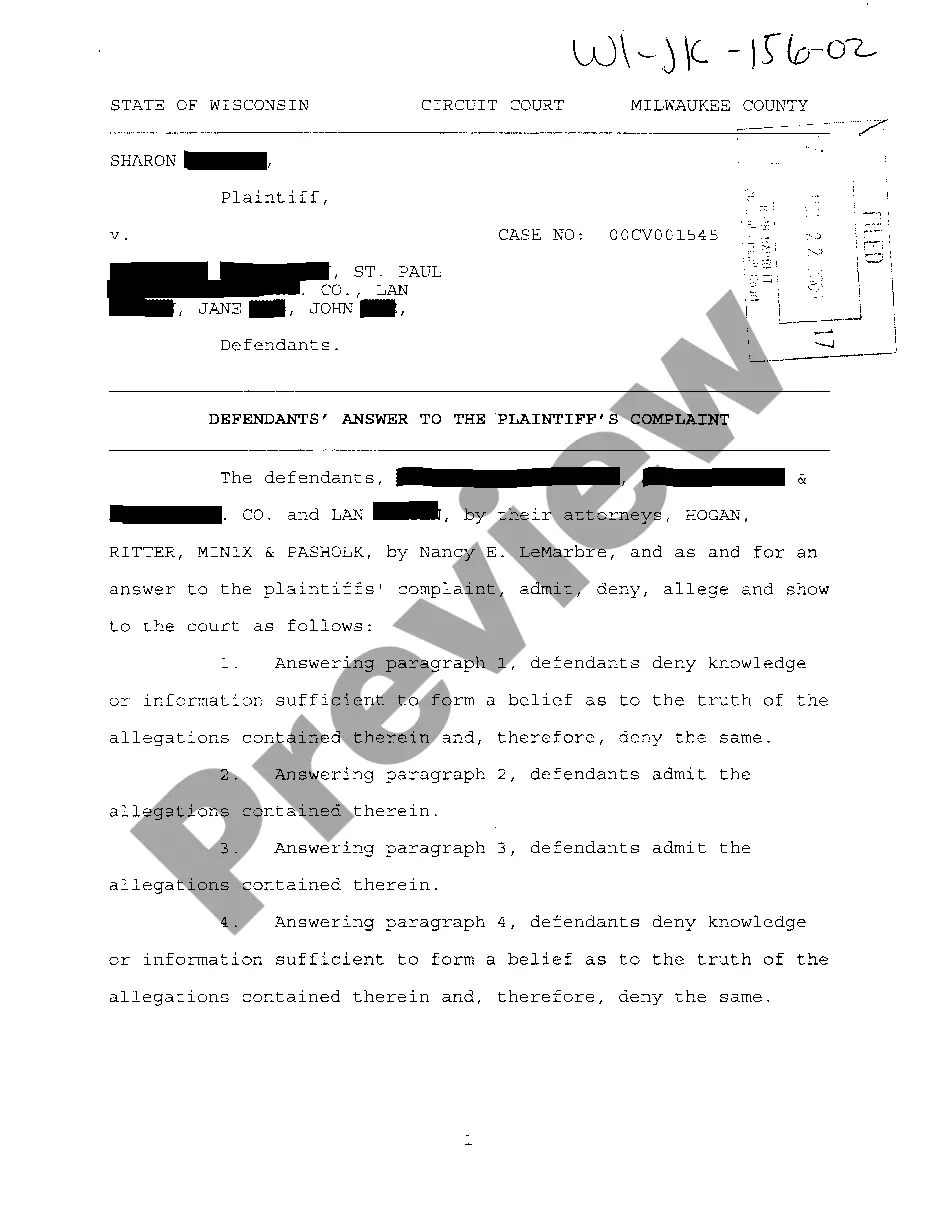
Assignment and Delegation Provisions - The Anti-Assignment Clause
Understanding this form
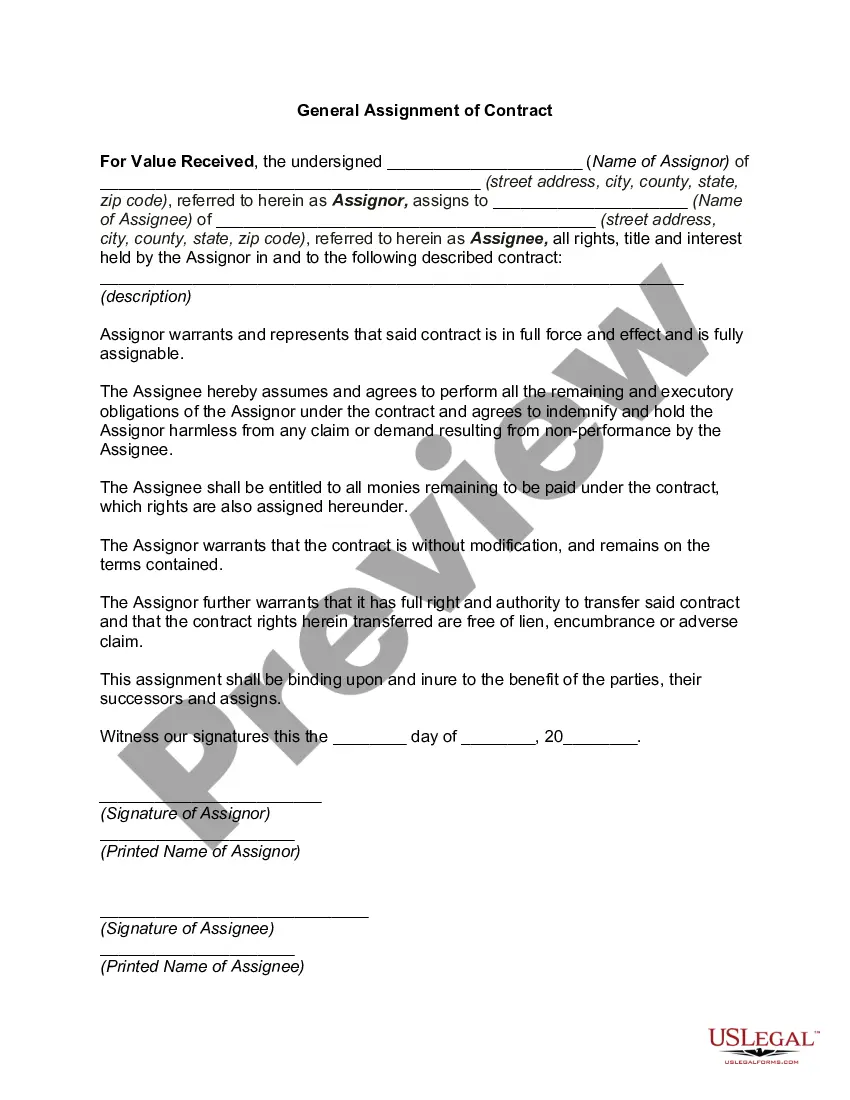
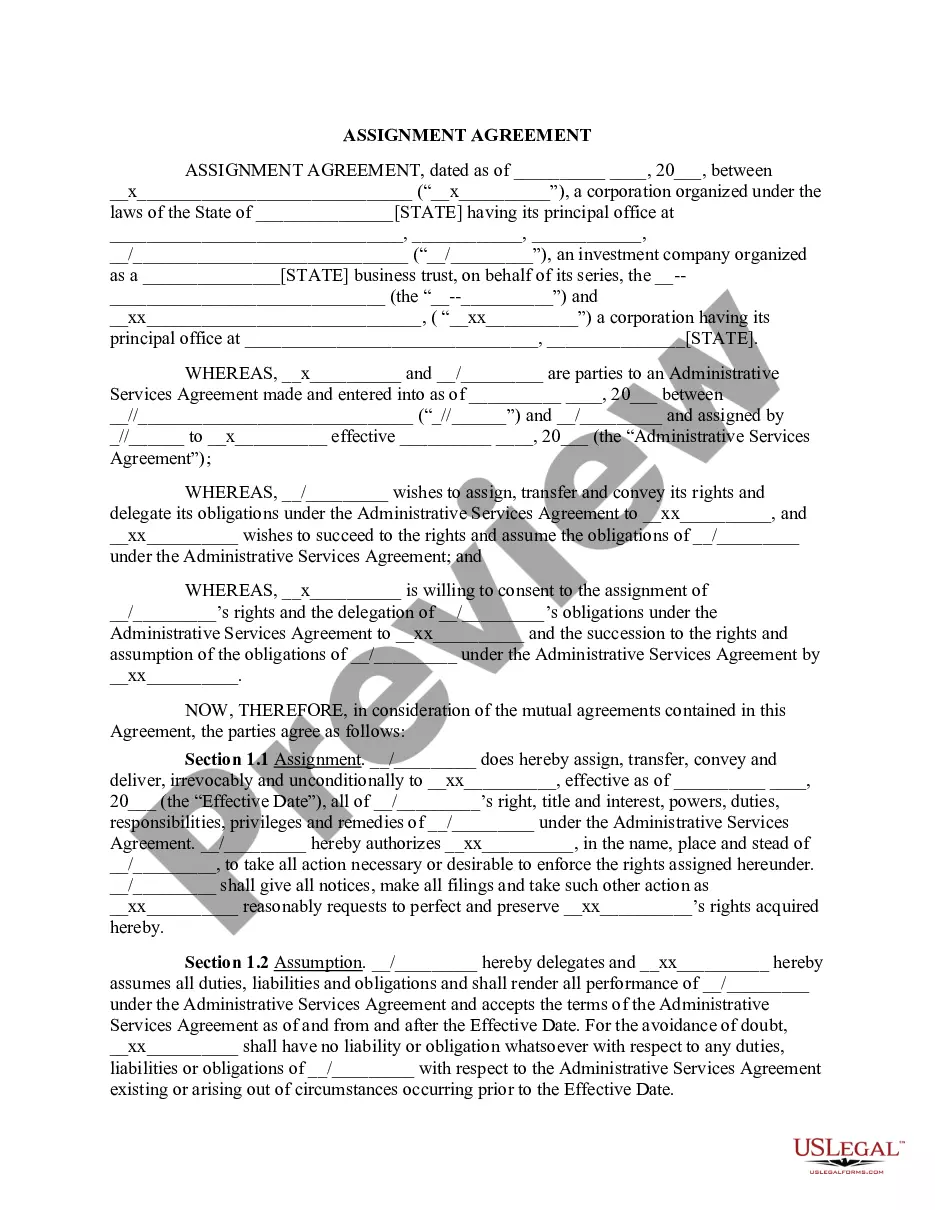
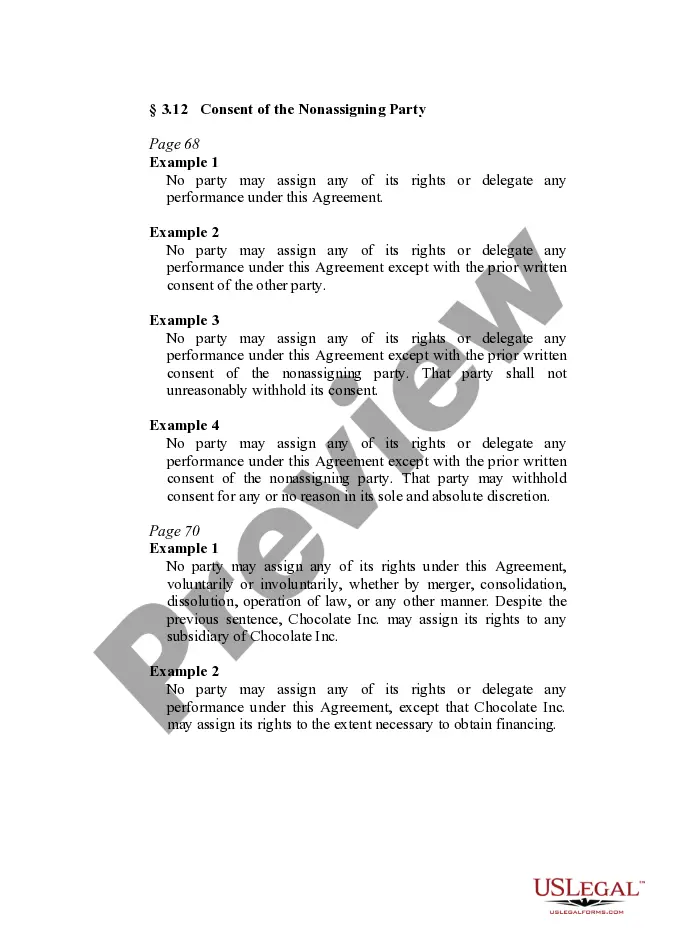
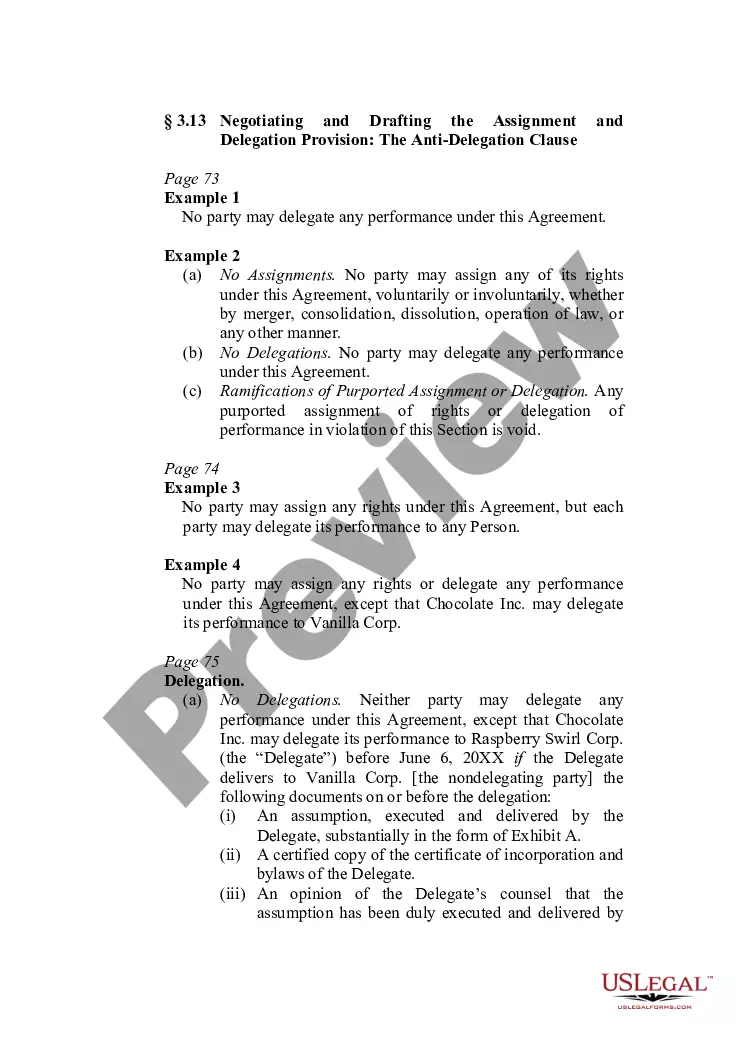
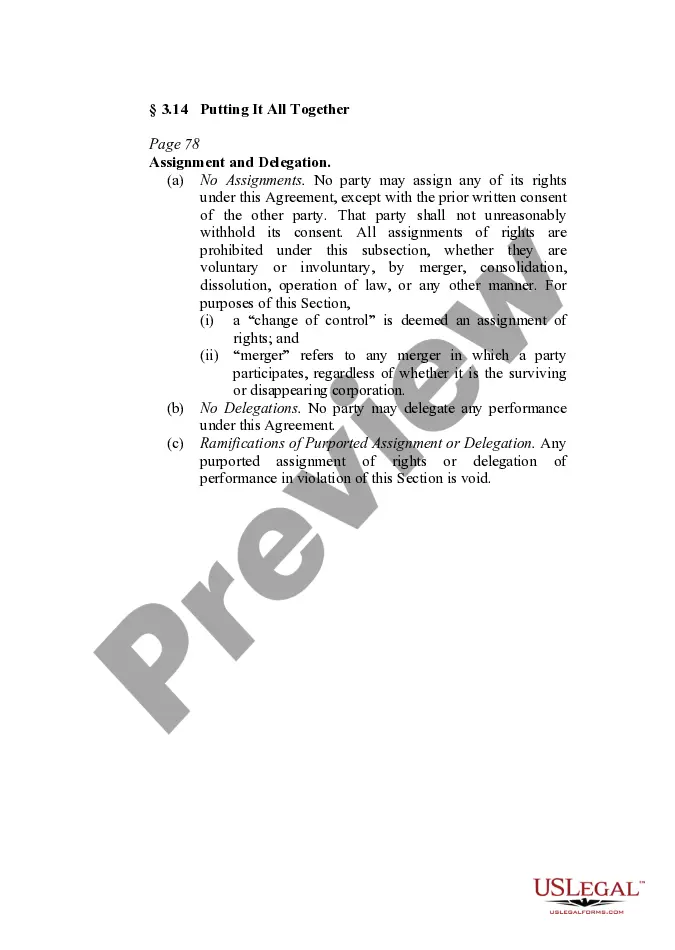
The Assignment and Delegation Provisions - The Anti-Assignment Clause is a legal form that includes contract language to prohibit or restrict the transfer of rights and obligations under a contract. It serves to protect parties involved in an agreement by maintaining control over who can assign their rights, ensuring that the original parties retain responsibility for the terms outlined in the contract. This form is crucial for contracts where the original parties wish to restrict third-party involvement, differing from general assignment clauses that might allow for wider assignments without restrictions.
What’s included in this form
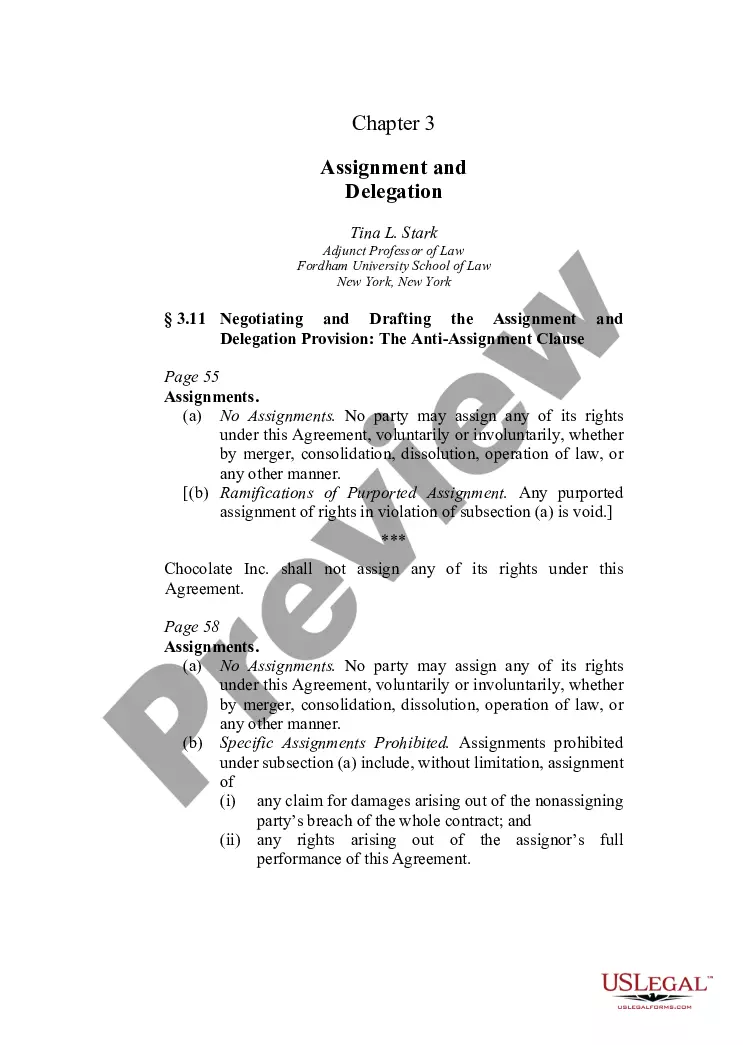
- Clause prohibiting all assignments unless otherwise specified.
- Clarifications on the ramifications of any purported assignments that violate the clause.
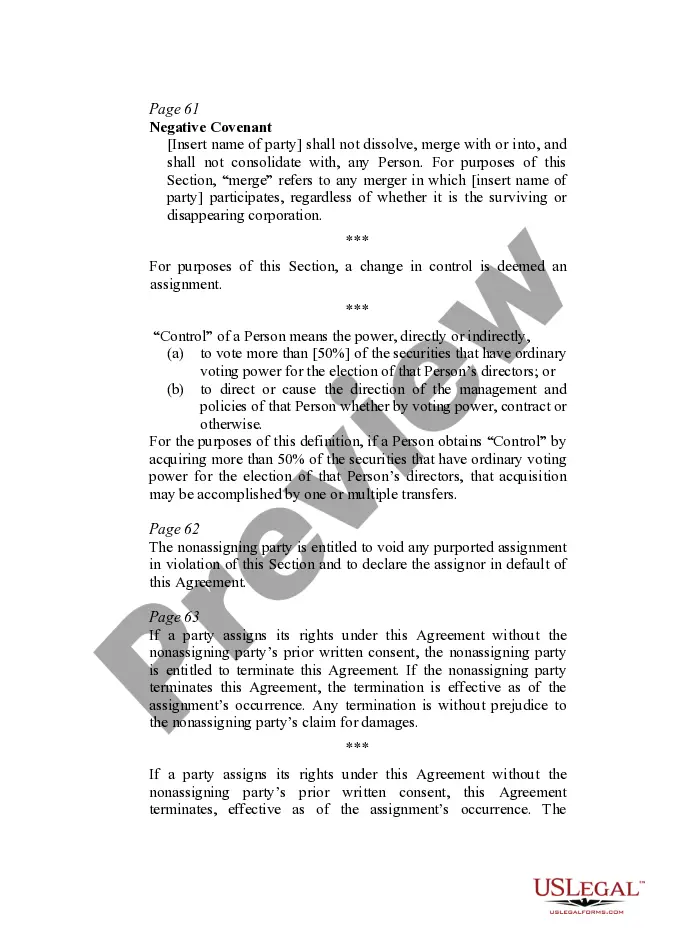
- Detailed definitions of what constitutes control and assignment for clarity.
- Specific prohibitions regarding assignments related to claims for damages or rights after a breach.
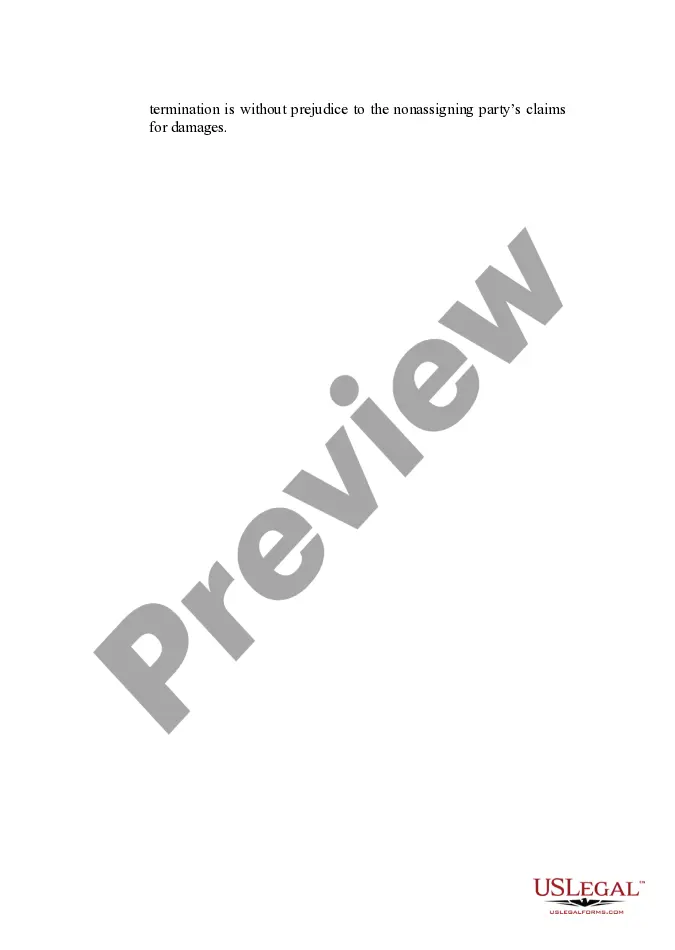
- Potential consequences for unauthorized assignments, including termination of the agreement.
When to use this document
This form is used when parties to a contract wish to prevent any assignments or delegations of their rights and obligations. It is particularly important in scenarios where the parties have specific interests in maintaining the integrity of their agreement, such as in business partnerships, service agreements, or situations involving sensitive proprietary information.
Intended users of this form
This form is intended for:
- Businesses entering into contracts where third-party assignments should be avoided.
- Individuals who want to retain control over contractual obligations.
- Legal professionals drafting contracts with stringent assignment restrictions.
- Parties to a contract that rely on trust and confidence in management and execution of contractual terms.
Completing this form step by step
To complete this form, follow these steps:
- Identify all parties involved in the agreement and ensure their information is accurately filled out.
- Specify the rights and obligations that are subject to assignment restrictions.
- Review and select suitable clauses that reflect the desired level of restriction on assignments.
- Include a definition section that outlines specific terms, such as "control" and "assignment."
- Ensure all parties sign the document to validate the terms outlined.
Does this form need to be notarized?
This form does not typically require notarization unless specified by local law. However, it is advisable to confirm local regulations that may affect the validity of the assignment and delegation provisions.
Get your form ready online
Our built-in tools help you complete, sign, share, and store your documents in one place.
Make edits, fill in missing information, and update formatting in US Legal Forms—just like you would in MS Word.
Download a copy, print it, send it by email, or mail it via USPS—whatever works best for your next step.
Sign and collect signatures with our SignNow integration. Send to multiple recipients, set reminders, and more. Go Premium to unlock E-Sign.
If this form requires notarization, complete it online through a secure video call—no need to meet a notary in person or wait for an appointment.
We protect your documents and personal data by following strict security and privacy standards.

Make edits, fill in missing information, and update formatting in US Legal Forms—just like you would in MS Word.

Download a copy, print it, send it by email, or mail it via USPS—whatever works best for your next step.

Sign and collect signatures with our SignNow integration. Send to multiple recipients, set reminders, and more. Go Premium to unlock E-Sign.

If this form requires notarization, complete it online through a secure video call—no need to meet a notary in person or wait for an appointment.

We protect your documents and personal data by following strict security and privacy standards.
Avoid these common issues
- Failing to clearly define what constitutes an assignment can lead to confusion.
- Not including all necessary parties involved in the agreement.
- Overly broad prohibitions that may contradict local laws.
- Neglecting to gather signatures from all parties, which can render the agreement unenforceable.
Benefits of using this form online
- Convenience of downloading and customizing the form to suit specific needs.
- Editability allows users to tailor the clauses directly to their situation.
- Reliable legal language drafted by licensed attorneys enhances enforceability.
- The Anti-Assignment Clause is enforceable in most jurisdictions, but its effectiveness depends on clarity and legality within local laws.
- Always ensure the form remains consistent with related contract provisions to avoid conflicts.
- Courts generally uphold the enforceability of clear anti-assignment clauses, provided they are reasonable and not overly restrictive.
What to keep in mind
- The Anti-Assignment Clause serves to protect parties by restricting assignments of rights.
- Understanding when and how to use this form is essential for contractual integrity.
- Proper completion and clarity on terms can prevent legal conflicts.
Looking for another form?

Form popularity
FAQ
An assignment clause spells out which contractual obligations, rights, and duties may be transferred from one of the contractual parties to another party.The assignment clause often overlaps with two other clauses: Parties in Interest. Successors and Assigns.
A delegation clause states that it is the arbitrator who decides whether the dispute is fit for arbitration.It held that where parties agree to delegate arbitrability, a court must give effect to that intent and cannot override delegation to an arbitrator even if the court believes the answer is obvious.
A contract may contain a non-assignment clause, which prohibits the assignment of specific rights and some various rights, or of the entire contract, to another. However, such a clause does not necessarily destroy the power of either party to make an assignment.
The difference between assignment and delegation is that an assignment can't increase another party's obligations. Delegation, on the other hand, is a method of using a contract to transfer one party's obligations to another party. Assigning rights is usually easier than delegating, and fewer restrictions are in place.
An anti-assignment clause may state that the contracting parties cannot transfer their obligations under the agreement to a third party.Neither party may assign, delegate, or transfer this agreement or any of its rights or obligations under this agreement.
Anti-assignment clauses protect only the obligor and do not affect the transaction between the assignee and assignor. Usually, a prohibition against the assignment of a contract does not prevent an assignment of the right to receive payments due, unless circumstances indicate the contrary.
In assignments, after the assignment is made, the assignor has no rights left in the original contract. However, with delegations, the delegator is not relieved of his duty to perform by making the delegation.
The burden of a contract can never be assigned without the consent of the other party to the contract in which event such consent will give rise to a novation."Conceptually therefore, there is no such thing as an assignment of obligations.