Musical Compositions Publishing Letter Agreement
Understanding this form
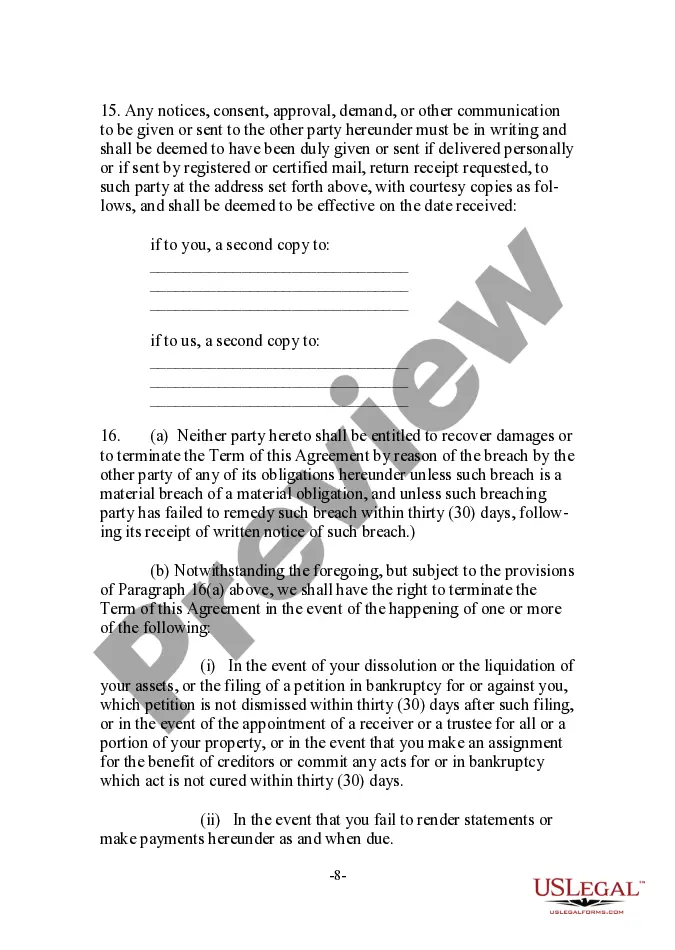
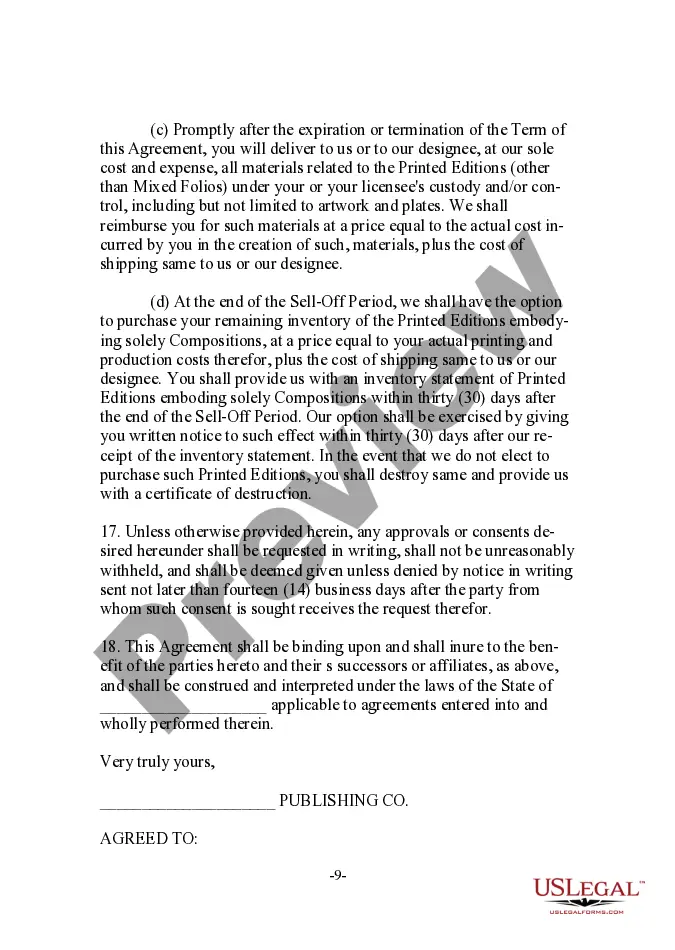
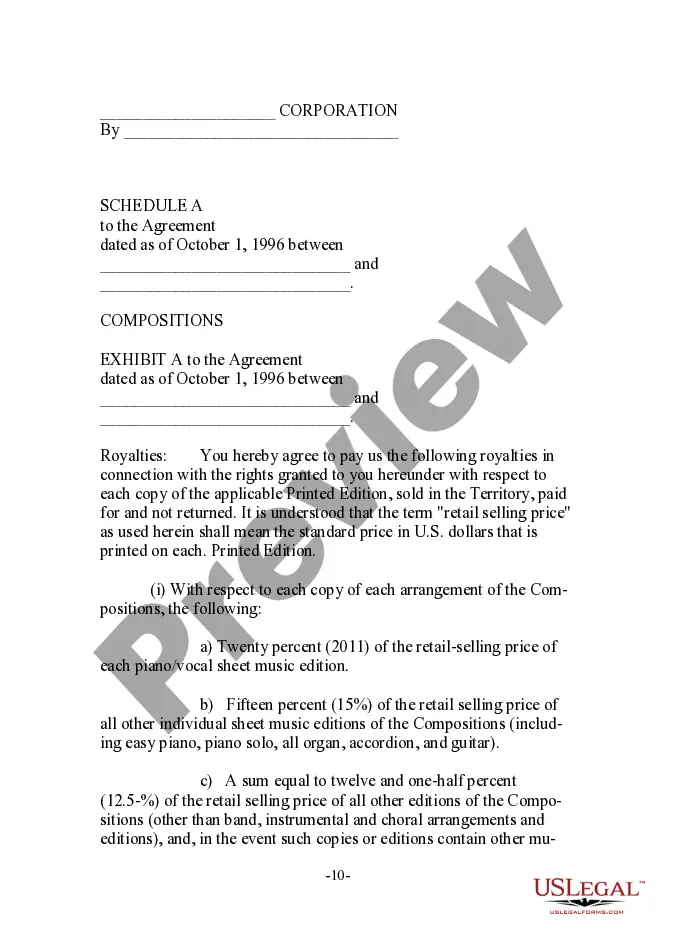
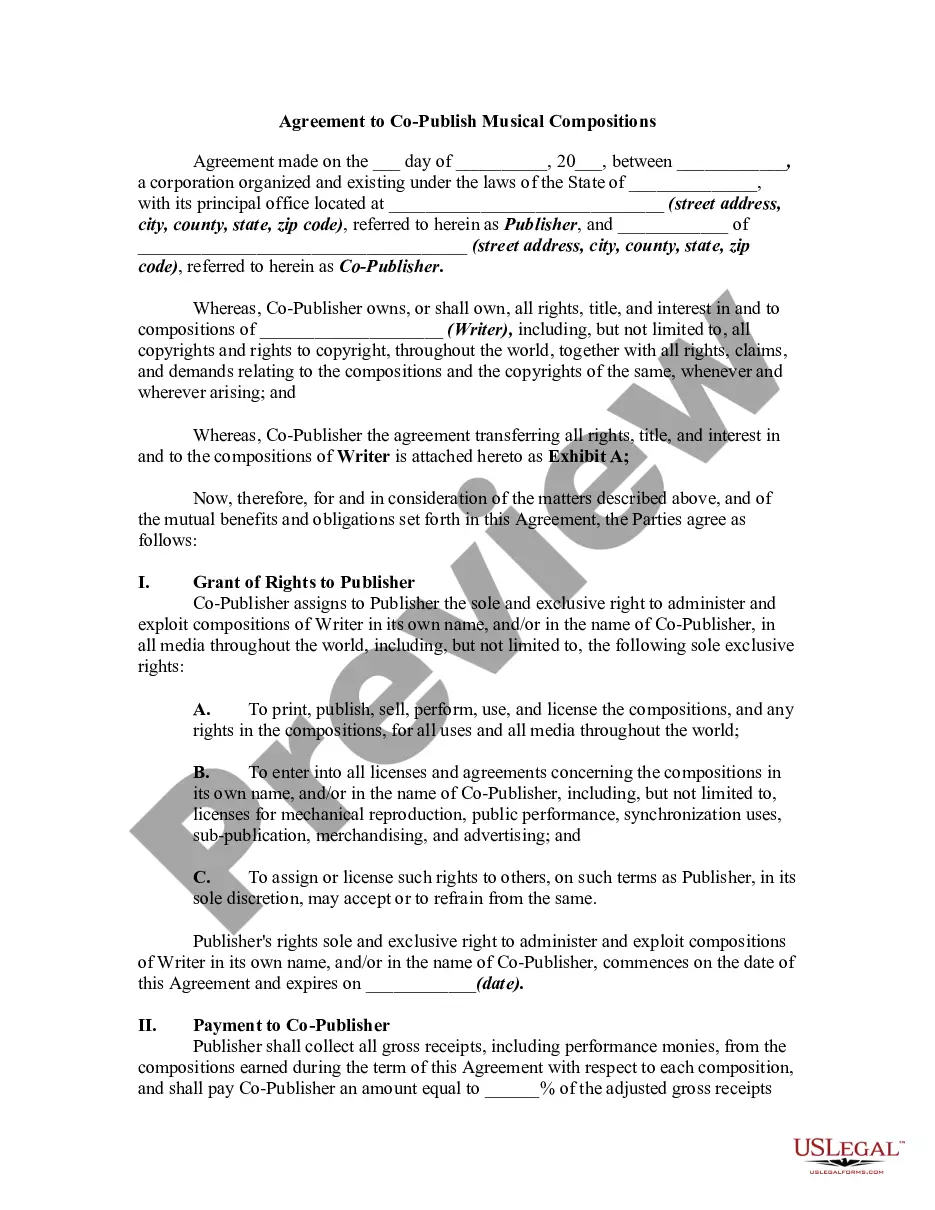
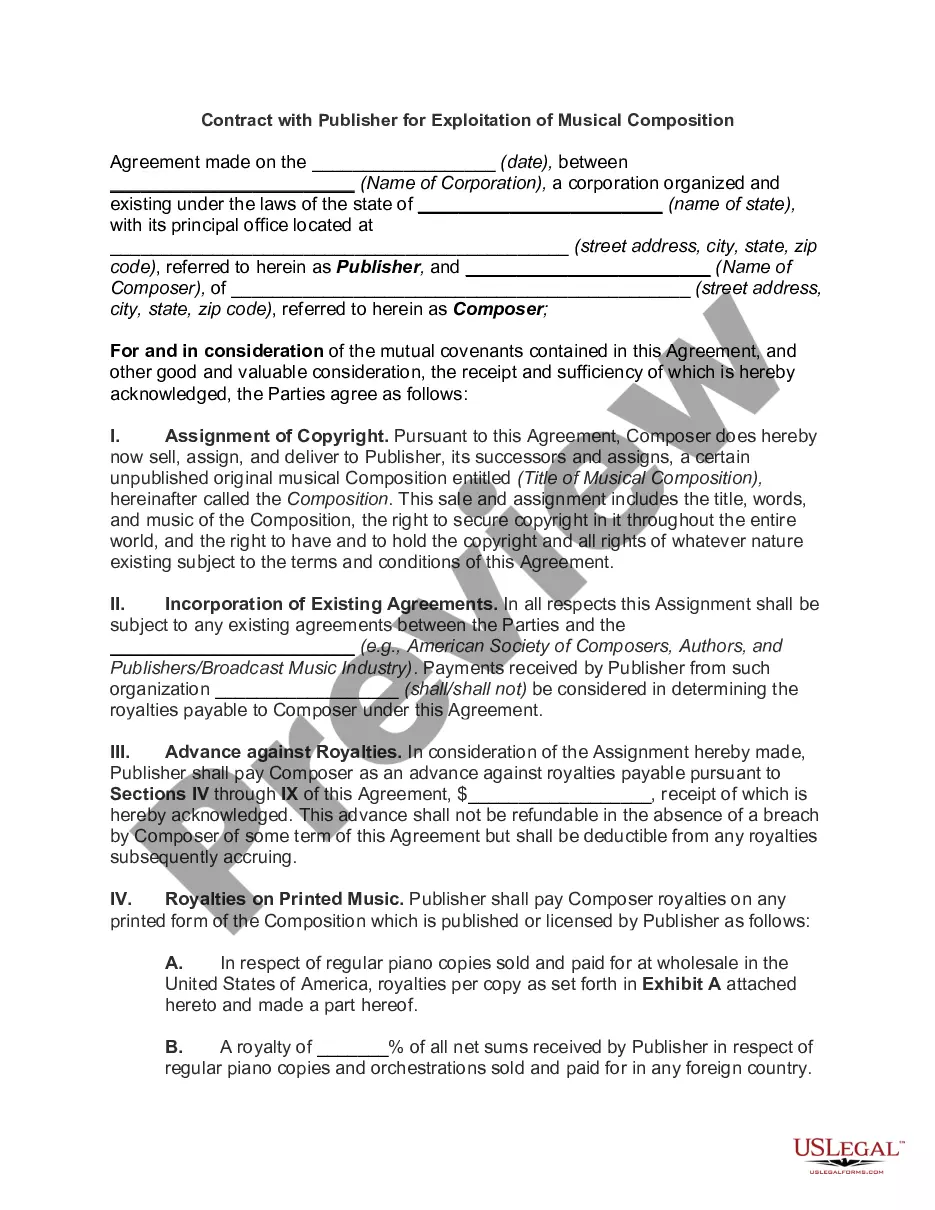
The Musical Compositions Publishing Letter Agreement is a legal document that outlines the terms under which one party grants another the rights to publish, distribute, and sell musical compositions. This form is especially important in the entertainment and intellectual property sectors, as it clarifies ownership, royalties, and licensing obligations relating to musical works. Unlike other publishing agreements, this document specifically addresses rights related to the arrangement, publication, and reproduction of musical compositions.
Main sections of this form
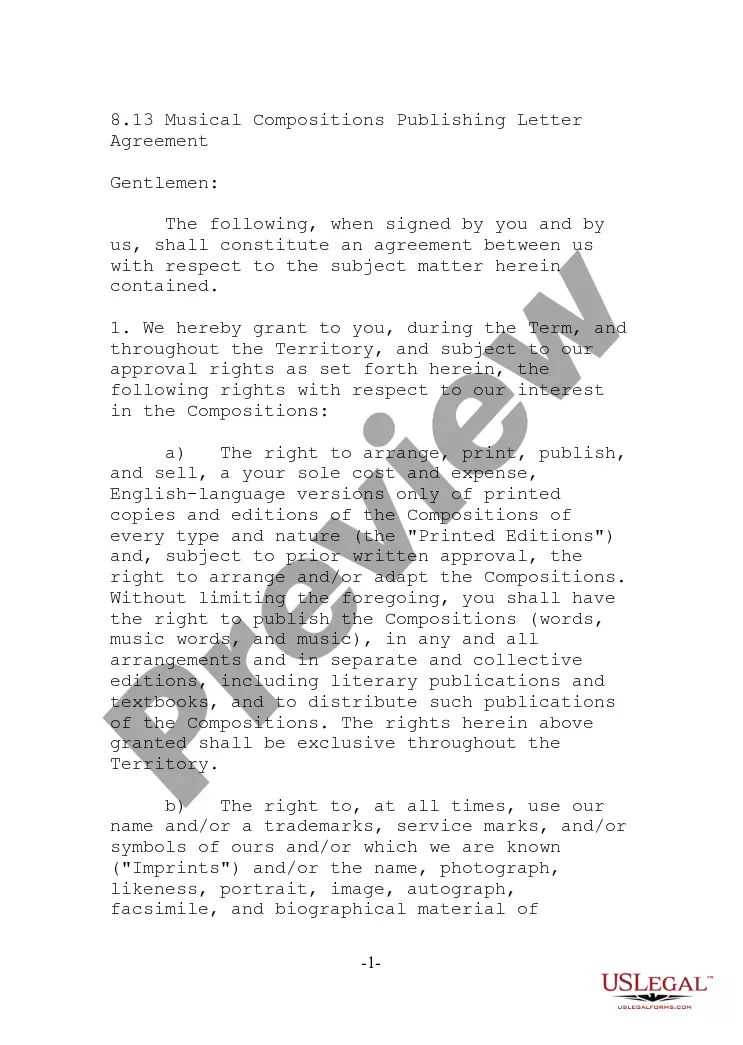
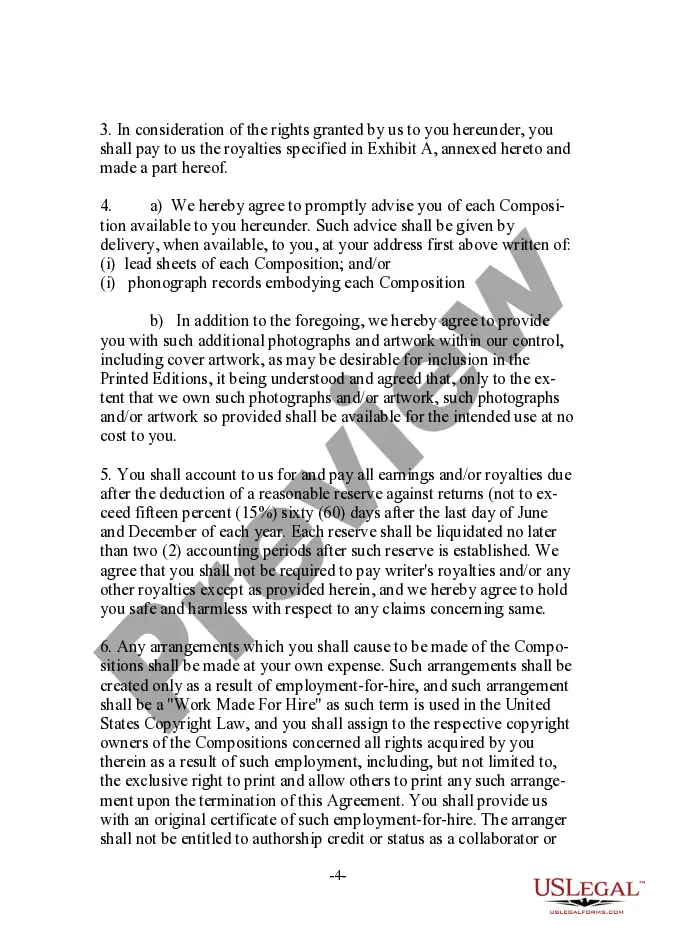
- Grant of rights: Specifies the rights granted to the publisher regarding the musical compositions.
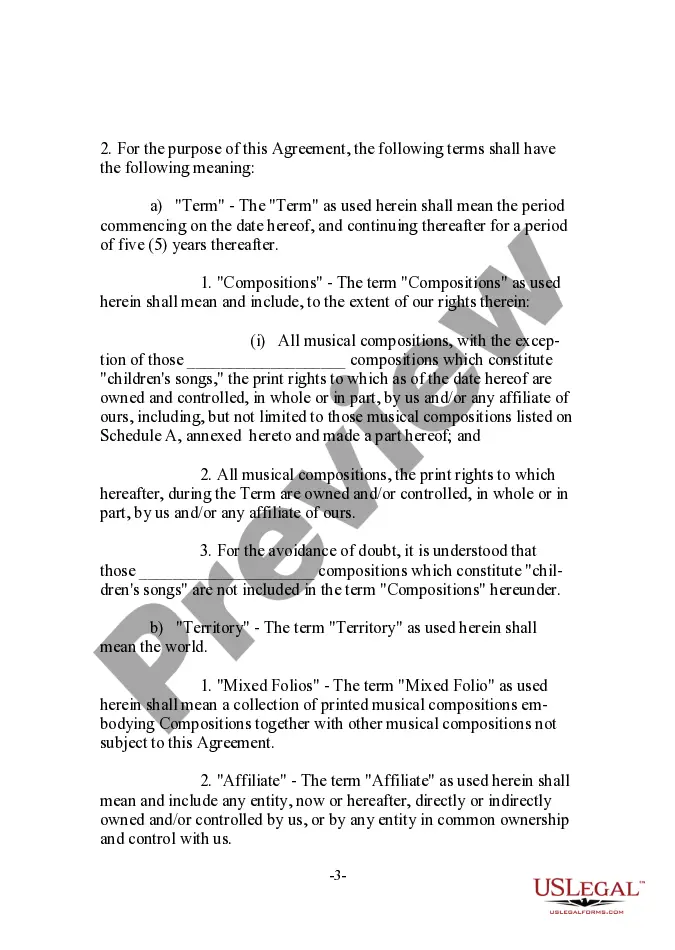
- Territory: Defines the geographical scope where these rights apply.
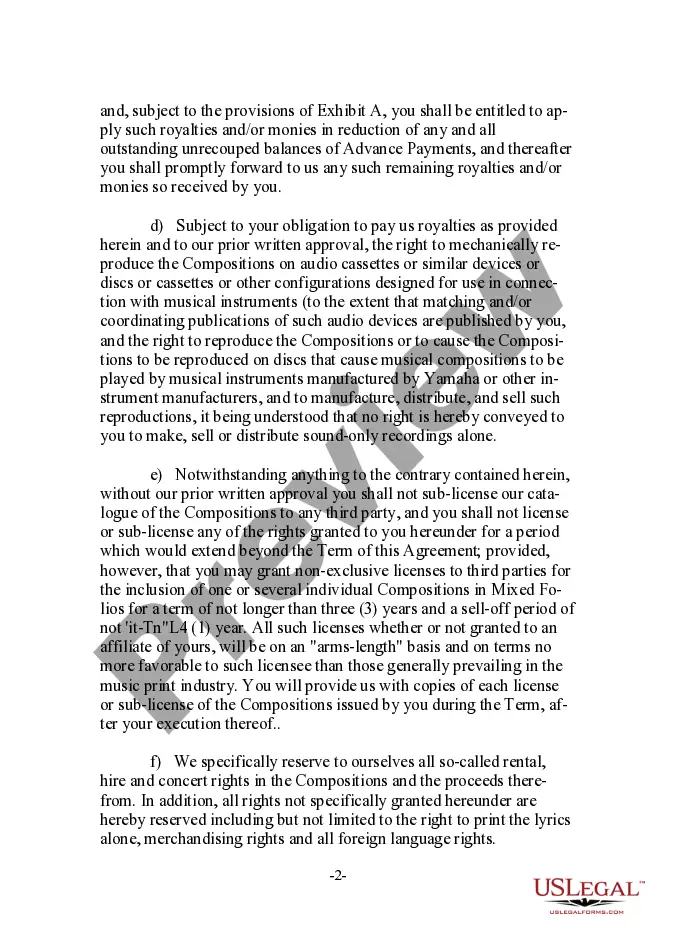
- Royalty payments: Details the percentages owed to the copyright holder based on sales.
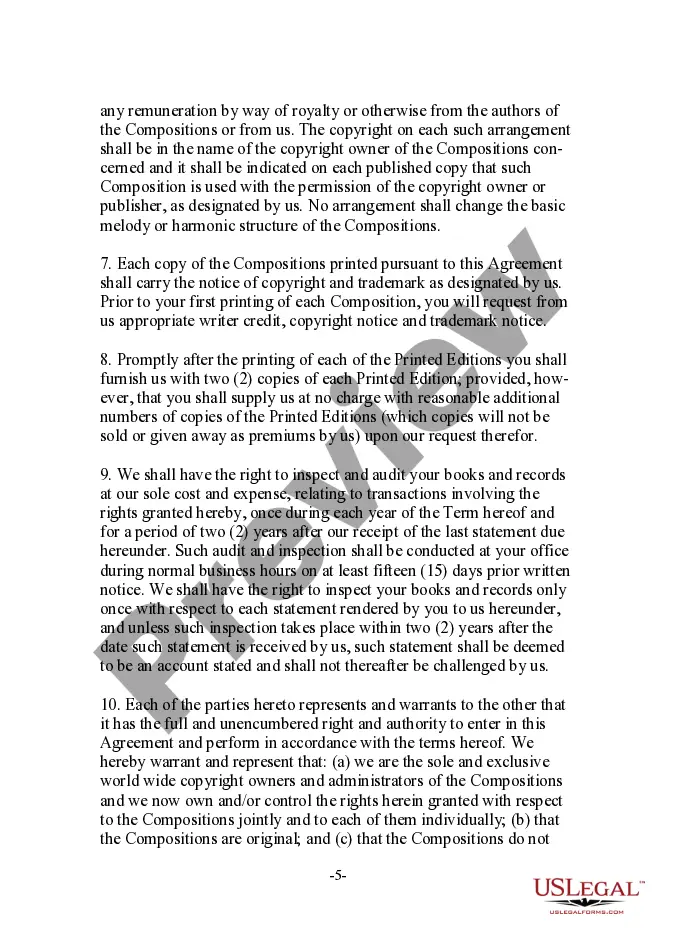
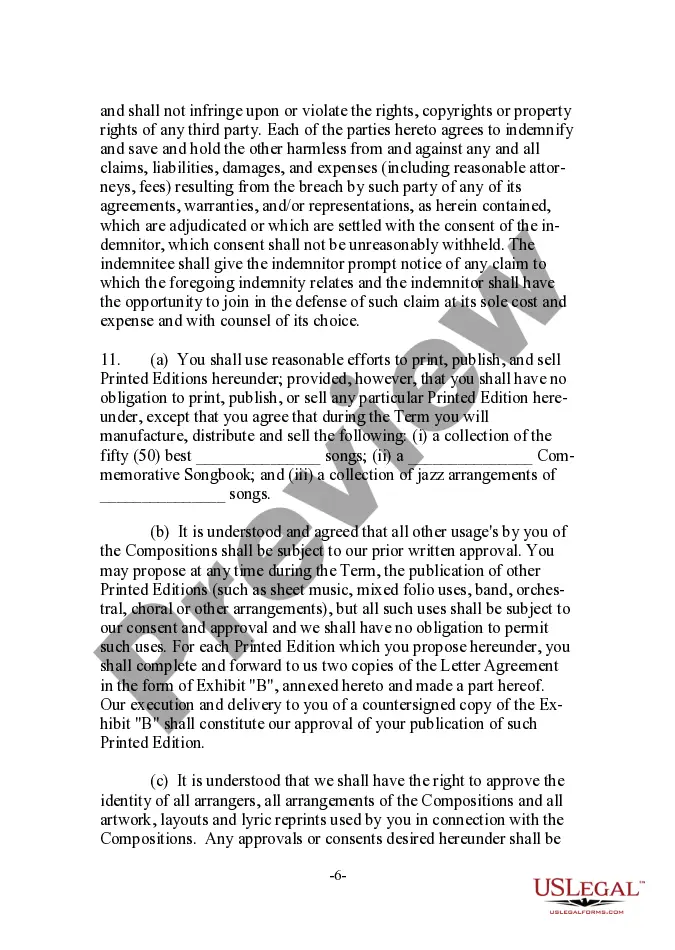
- Approval rights: Outlines the necessity for prior written approvals for adaptations and marketing use.
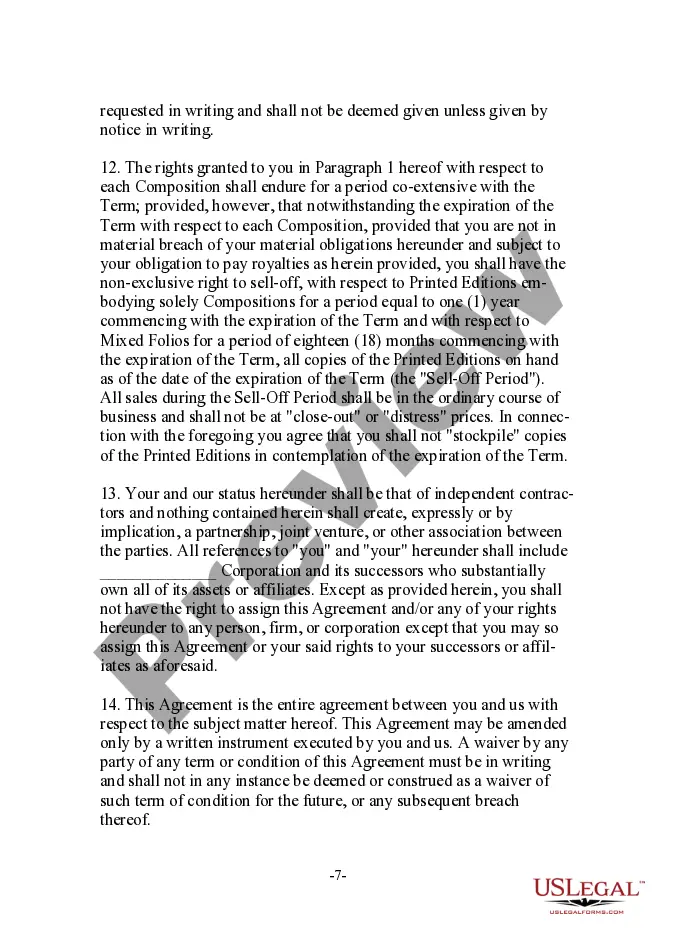
- Term: States the duration of the agreement and the conditions for termination and renewal.
- Indemnification clauses: Specifies responsibilities in case of breaches or legal claims regarding the compositions.

Common use cases
This agreement should be used when a publisher seeks to obtain rights to publish and distribute music composed by a songwriter or music producer. It is typically needed when launching a new musical work, entering into publishing partnerships, or adapting music for various formats, such as print editions or audio recordings. This form ensures both parties are clear about their rights and obligations, thereby reducing the risk of potential disputes.
Who can use this document
- Music publishers seeking to publish compositions from songwriters.
- Songwriters or composers looking to license their works for publication.
- Both parties involved in music production seeking to establish formal rights for song usage.
- Organizations or companies that manage music copyrights and royalties.
Instructions for completing this form
- Identify the parties involved: Clearly state the names and addresses of both the publisher and the copyright holder.
- Specify the compositions: List the musical compositions that are covered under this agreement, referring to any additional schedules if necessary.
- Outline the terms: Fill in the duration of the agreement, including start and end dates, and any conditions for termination.
- Detail the royalty structure: Indicate the agreed percentage of royalties to be paid and the manner in which payments will be collected.
- Include approval terms: Note any requirements for prior written consent for adaptations or marketing usage.
- Sign and date: Ensure that both parties sign the document and retain copies for their records.
Notarization guidance
This form does not typically require notarization to be legally valid. However, some jurisdictions or document types may still require it. US Legal Forms provides secure online notarization powered by Notarize, available 24/7 for added convenience.
Get your form ready online
Our built-in tools help you complete, sign, share, and store your documents in one place.
Make edits, fill in missing information, and update formatting in US Legal Forms—just like you would in MS Word.
Download a copy, print it, send it by email, or mail it via USPS—whatever works best for your next step.
Sign and collect signatures with our SignNow integration. Send to multiple recipients, set reminders, and more. Go Premium to unlock E-Sign.
If this form requires notarization, complete it online through a secure video call—no need to meet a notary in person or wait for an appointment.
We protect your documents and personal data by following strict security and privacy standards.

Make edits, fill in missing information, and update formatting in US Legal Forms—just like you would in MS Word.

Download a copy, print it, send it by email, or mail it via USPS—whatever works best for your next step.

Sign and collect signatures with our SignNow integration. Send to multiple recipients, set reminders, and more. Go Premium to unlock E-Sign.

If this form requires notarization, complete it online through a secure video call—no need to meet a notary in person or wait for an appointment.

We protect your documents and personal data by following strict security and privacy standards.
Common mistakes
- Failing to specify all compositions included in the agreement.
- Not clearly defining the duration of the agreement.
- Omitting royalty percentages or payment terms.
- Not obtaining the necessary written approvals where required.
- Allowing parties to sign the agreement without proper authority.
Why complete this form online
- Convenience: Access and fill out the agreement from anywhere, at any time.
- Editability: Customize the document to fit specific legal and business needs quickly.
- Reliability: Ensure that the document is drafted in accordance with established legal standards.
Legal use & context
- The agreement serves as a binding contract between the parties, recognizing the rights of each regarding music publications.
- It provides a legal framework to address disputes related to copyright and royalty payments.
- Enter into such agreements can enhance the legitimacy of creative projects and protect all parties involved in the musical composition's lifecycle.
Looking for another form?
Form popularity
FAQ
Music publishing contracts are used to set out the legal relationship between writers and music publishers. They deal with the rights in musical and lyrical copyright works, which are separate from the rights in sound recordings (the subject of recording contracts).
What is a Publishing Deal? In general terms, a typical publishing deal involves the assignment of some part of the ownership of your songs to a publishing company in exchange for a share of the royalties received by the publisher for exploitation of the songs.
Efficient Collection Network. Strong Creative Team. Account Management. Other Services.
Music publishing contracts are used by publishing companies and songwriters to address rights to songs (lyrics and music). Publishing companies use music publishing co-publishing and songwriter agreements to contract with a songwriter to obtain the rights to their songs.
Get to know music publishers organically. Co-write with signed writers. Do your homework. Use everything you do well to your advantage. Write great songs.
What is a Publishing Deal? In general terms, a typical publishing deal involves the assignment of some part of the ownership of your songs to a publishing company in exchange for a share of the royalties received by the publisher for exploitation of the songs.
Some of the most essential clauses of a standard (boilerplate) book publishing contract are: Grant of Rights, Subsidiary Rights, Delivery and Acceptance, Publication, Copyright, Advance (if there is any), Royalties, and Out of Print.
Keep it short and sweet. Briefly tell them who you are, what you do, and what it is you're looking for. Think about it: these publishing companies receive hundreds of emails every day. Don't write a 10-page essay; five to six sentences should be plenty.
Recording company details (name, contact info) Artist details (group name, names of each artist, contact info) Production details, e.g. studio address, recording session dates, control over song selections on the recording, and control over album title.