Ohio Quitclaim Deed from a Corporation to an Individual
Understanding this form
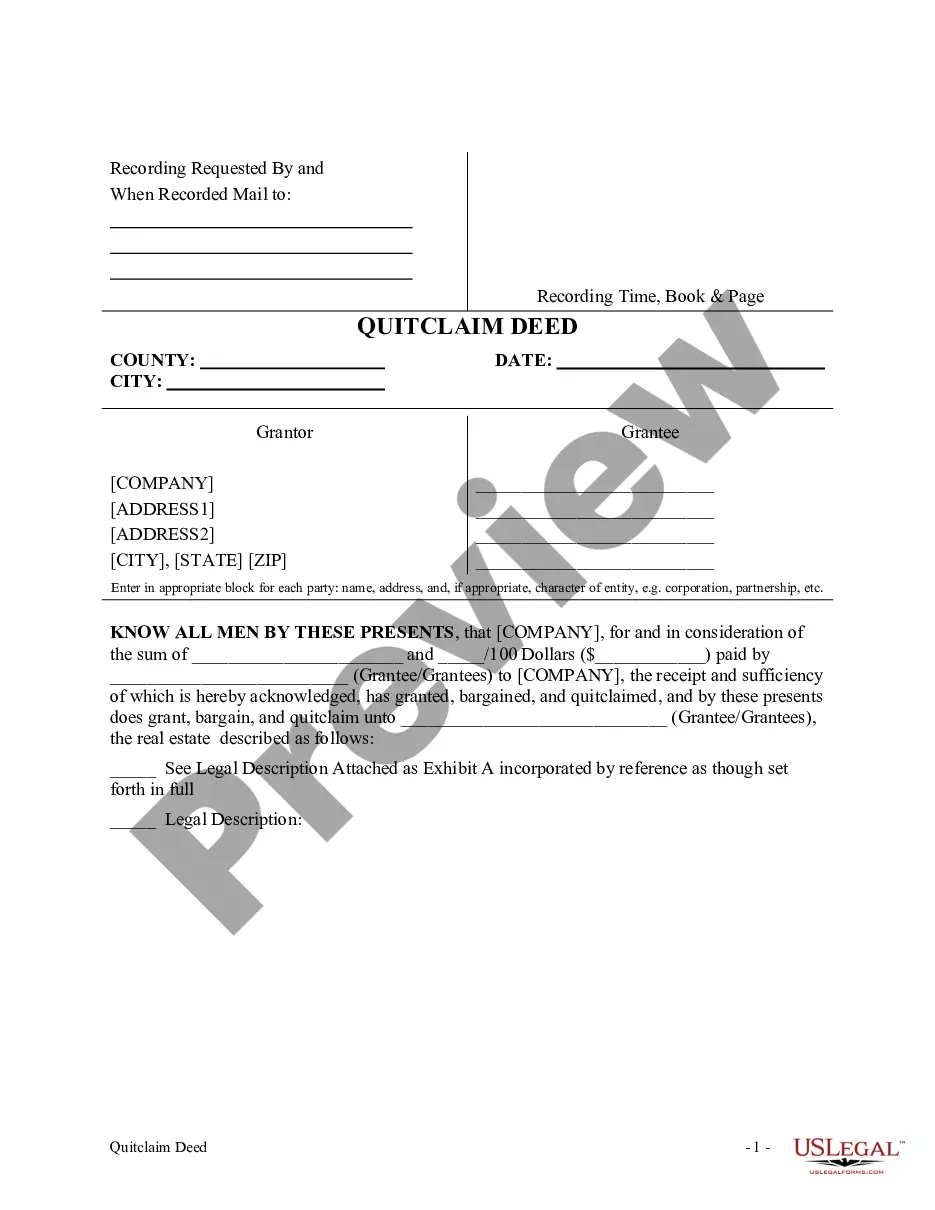
The Quitclaim Deed from a Corporation to an Individual is a legal document where a corporation (the Grantor) transfers its interest in a property to an individual (the Grantee). This form is often used for straightforward property transfers, particularly when there is no warranty of title. Unlike other deeds, it offers no guarantees about the property title, making it essential for users to understand its proper context.
Main sections of this form
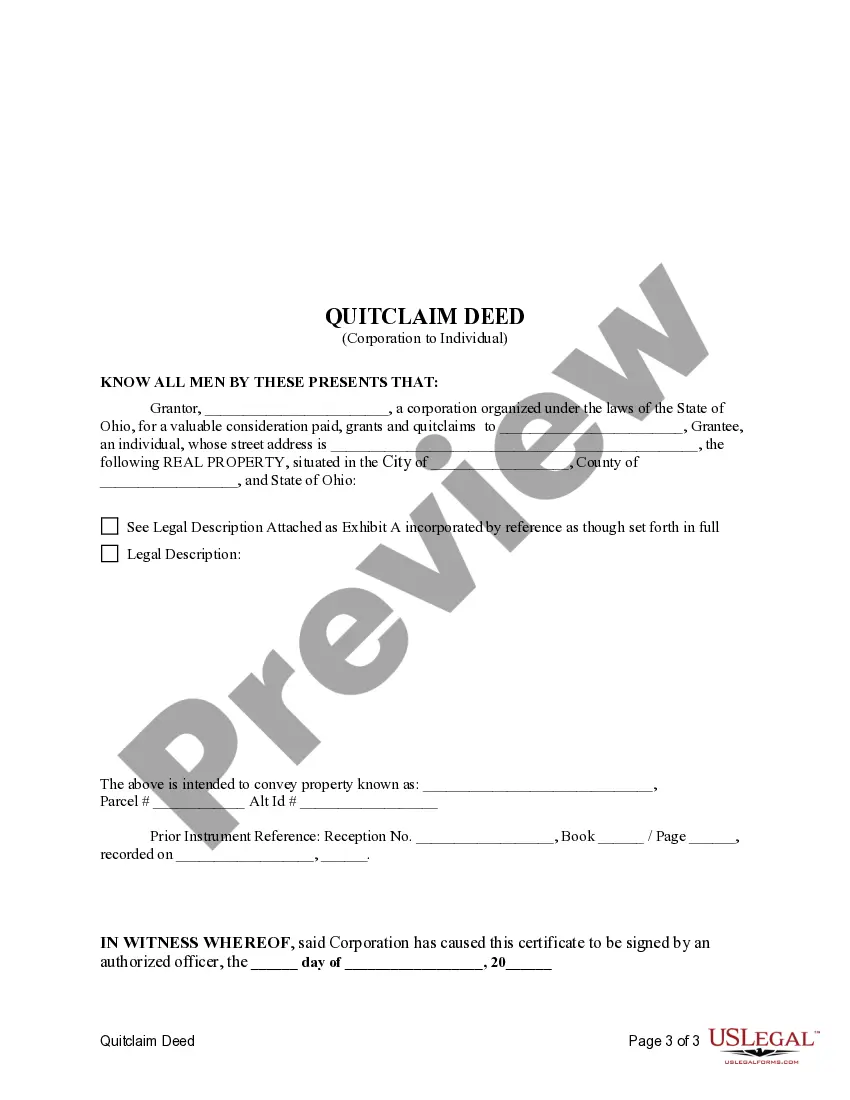
- Identification of parties: Clearly names the Grantor and Grantee.
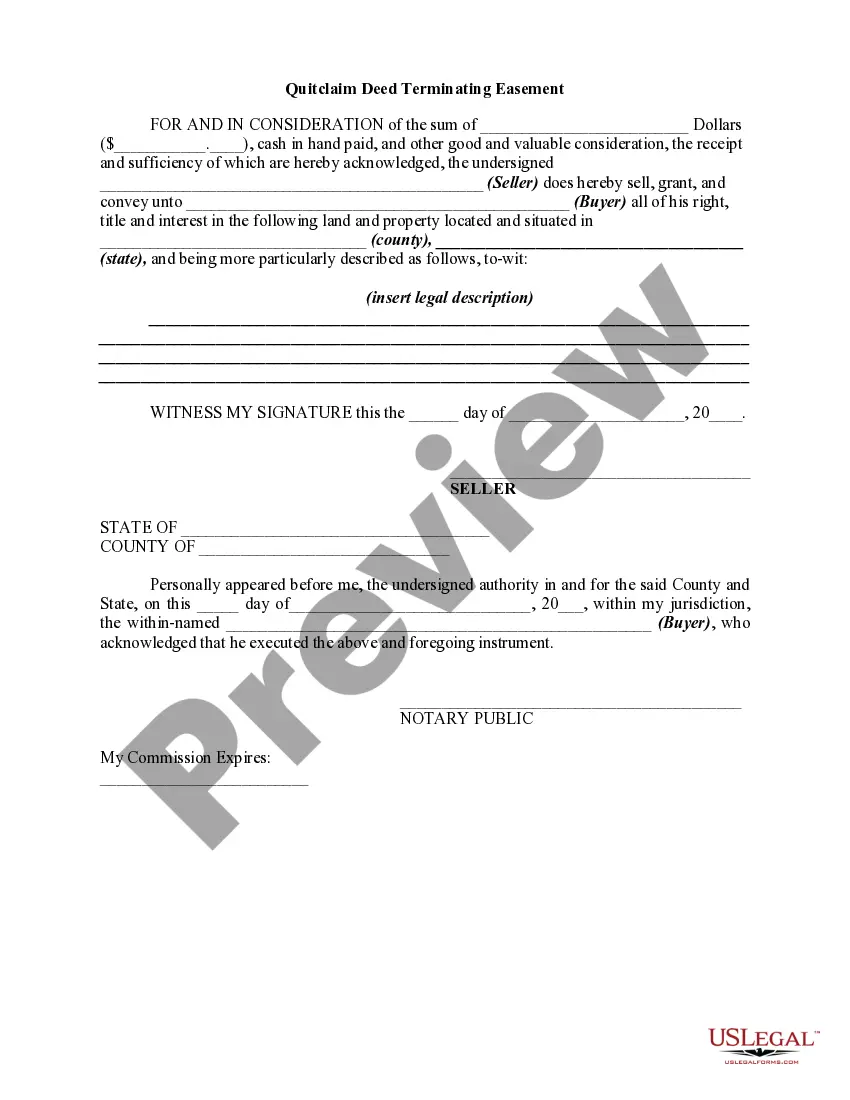
- Description of property: Specifies the property being transferred, including legal descriptions.
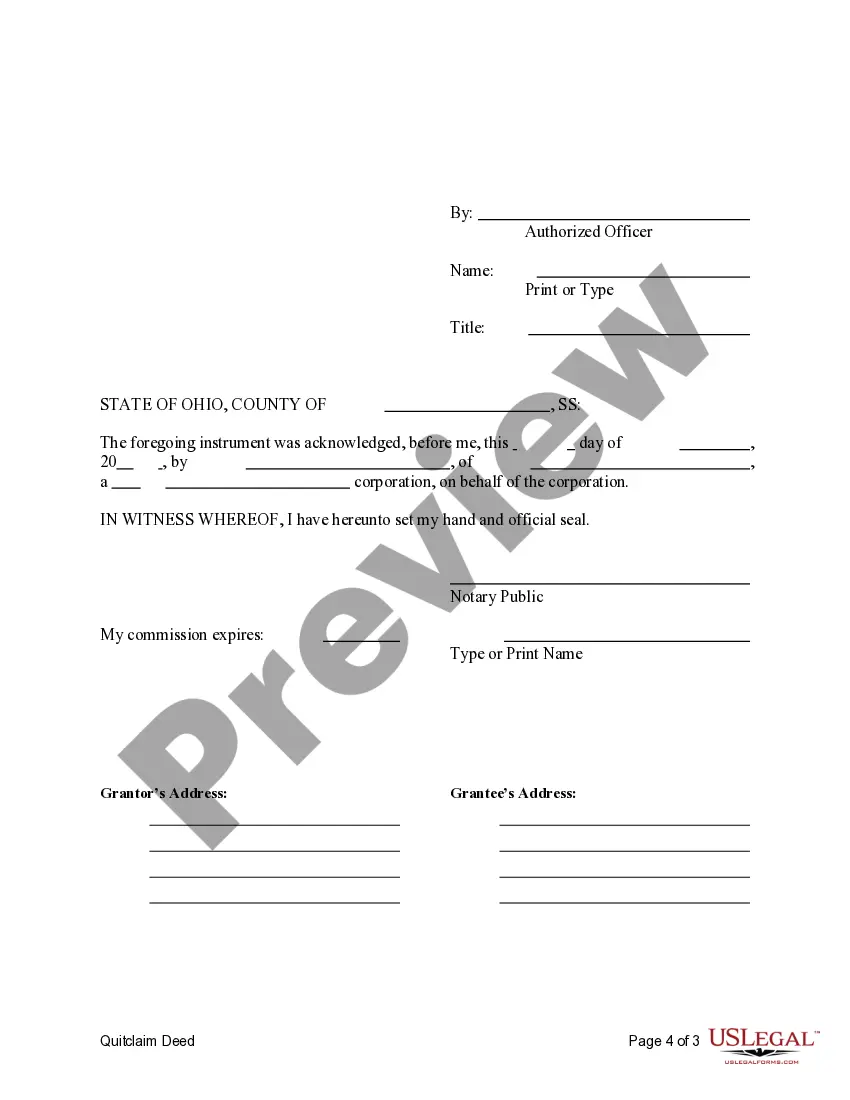
- Signatures: Requires signatures from duly authorized representatives of the corporation.
- Notarization section: Designates space for notarization, if needed.
- Exhibit A: Includes any additional property descriptions as necessary.
When to use this form
This form is needed when a corporation wishes to transfer its interest in a property to an individual without any warranties attached. Common scenarios include transferring property as part of a sale, gift, or when resolving disputes. It is frequently used in real estate transactions where the parties have a mutual understanding and trust regarding the property history.
Who this form is for
- Corporations looking to transfer ownership of property.
- Individuals receiving property from a corporation.
- Real estate professionals managing transactions involving corporate properties.
- Legal representatives facilitating property ownership changes for clients.
Completing this form step by step
- Identify the parties involved: Enter the names and legal descriptions of the Grantor and Grantee.
- Specify the property: Include detailed property descriptions and any applicable Parcel numbers.
- Complete the date: Fill in the date of the transfer.
- Obtain signatures: Have the appropriate corporate officials sign the document.
- Notarize if necessary: Follow state laws regarding notarization of the deed.
Is notarization required?
To make this form legally binding, it must be notarized. Our online notarization service, powered by Notarize, lets you verify and sign documents remotely through an encrypted video session.
Get your form ready online
Our built-in tools help you complete, sign, share, and store your documents in one place.
Make edits, fill in missing information, and update formatting in US Legal Forms—just like you would in MS Word.
Download a copy, print it, send it by email, or mail it via USPS—whatever works best for your next step.
Sign and collect signatures with our SignNow integration. Send to multiple recipients, set reminders, and more. Go Premium to unlock E-Sign.
If this form requires notarization, complete it online through a secure video call—no need to meet a notary in person or wait for an appointment.
We protect your documents and personal data by following strict security and privacy standards.

Make edits, fill in missing information, and update formatting in US Legal Forms—just like you would in MS Word.

Download a copy, print it, send it by email, or mail it via USPS—whatever works best for your next step.

Sign and collect signatures with our SignNow integration. Send to multiple recipients, set reminders, and more. Go Premium to unlock E-Sign.

If this form requires notarization, complete it online through a secure video call—no need to meet a notary in person or wait for an appointment.

We protect your documents and personal data by following strict security and privacy standards.
Typical mistakes to avoid
- Failing to provide accurate property descriptions, which can lead to confusion or disputes.
- Not obtaining the necessary signatures from authorized corporate representatives.
- Overlooking notarization requirements, which may vary by state.
- Using outdated forms that may not comply with current state laws.
Advantages of online completion
- Easy completion: Forms can be filled out and edited digitally, saving time.
- Accessibility: Downloadable format allows for easy printing and storage.
- Compliance assurance: Forms are drafted in accordance with state laws.
- Revisions: Easy to make adjustments as needed before finalizing the document.
Looking for another form?
Form popularity
FAQ
Yes, you can use a Quitclaim Deed to transfer a gift of property to someone. You must still include consideration when filing your Quitclaim Deed with the County Recorder's Office to show that title has been transferred, so you would use $10.00 as the consideration for the property.
A Quitclaim Deed must be notarized by a notary public or attorney in order to be valid.Consideration in a Quitclaim Deed is what the Grantee will pay to the Grantor for the interest in the property.
In Ohio, you need to have the quitclaim deed signed by both parties and notarized by a notary public. Step 6: File the deed at the Recorder's Office. The deed must be filed at the Recorder's Office in the county where the property is located to finalize the transfer.
A person who signs a quitclaim deed to transfer property they do not own results in no title at all being transferred since there is no actual ownership interest. The quitclaim deed only transfers the type of title you own.
They are commonly used to add/remove someone to/from real estate title or deed (divorce, name changes, family and trust transfers). The quitclaim deed is a legal document (deed) used to transfer interest in real estate from one person or entity (grantor) to another (grantee).
But you might be wondering if an owner can transfer a deed to another person without a real estate lawyer. The answer is yes. Parties to a transaction are always free to prepare their own deeds.A quitclaim deed, for example, is far simpler than a warranty deed.
Contact the county auditor's office to find out about the county's property transfer tax and exemptions. Contact the county recorder's office to find out the volume and page numbers for the prior deed on the property. Fill in the deed form. Print it out.
Fill out the quit claim deed form, which can be obtained online, or write your own using the form as a guide. The person giving up the interest in the property is the grantor, and the person receiving the interest is the grantee.