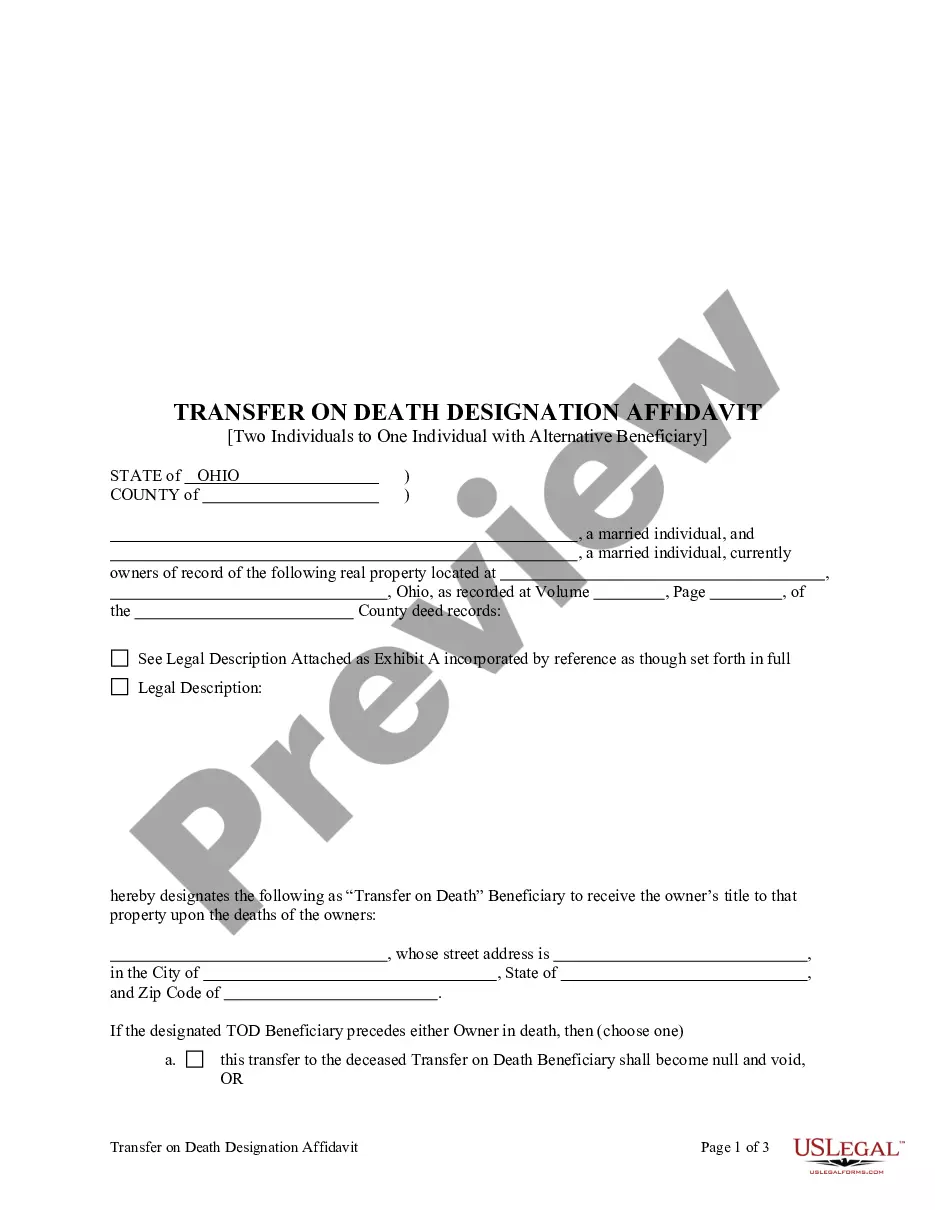
Ohio Transfer on Death Designation Affidavit - TOD from Two Individuals to One Individual
About this form
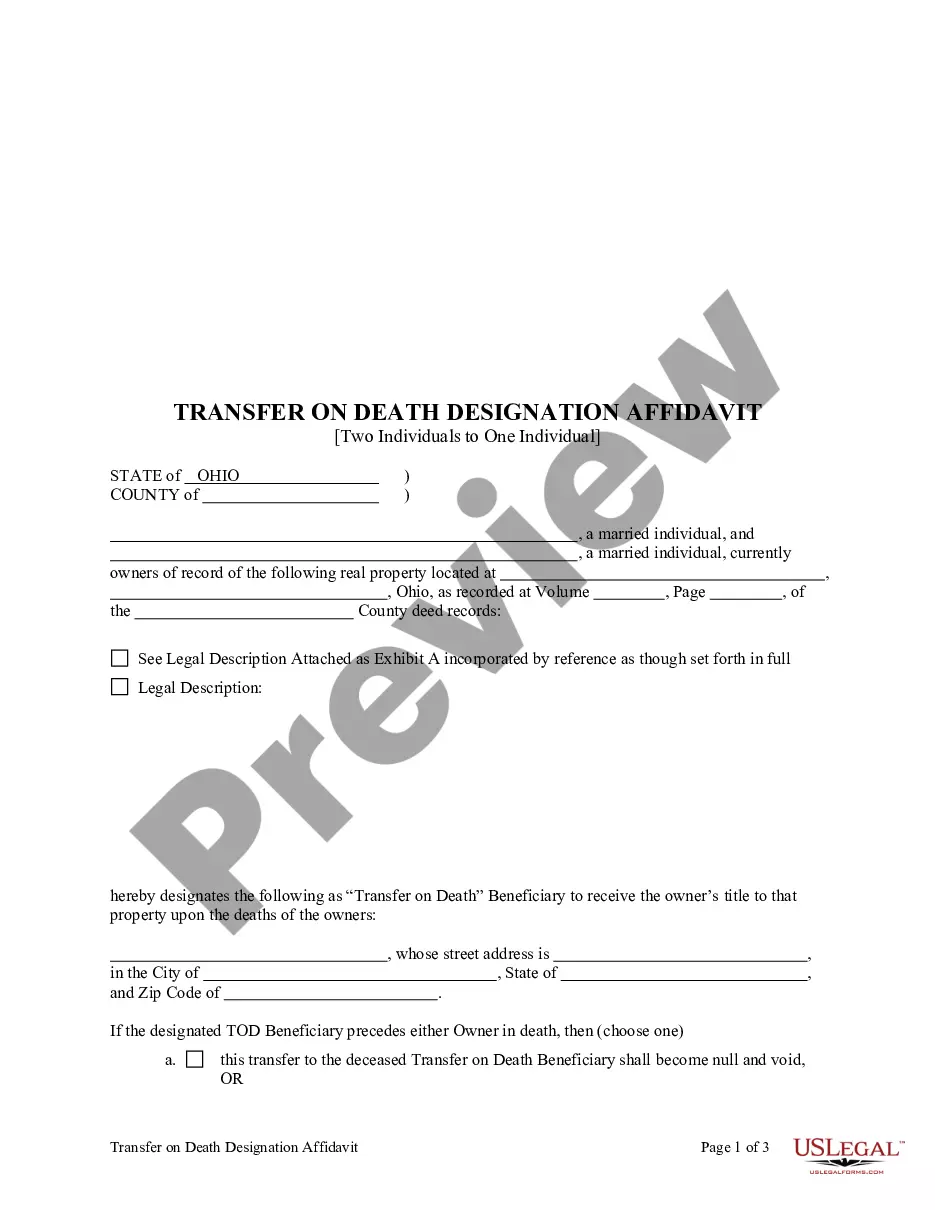
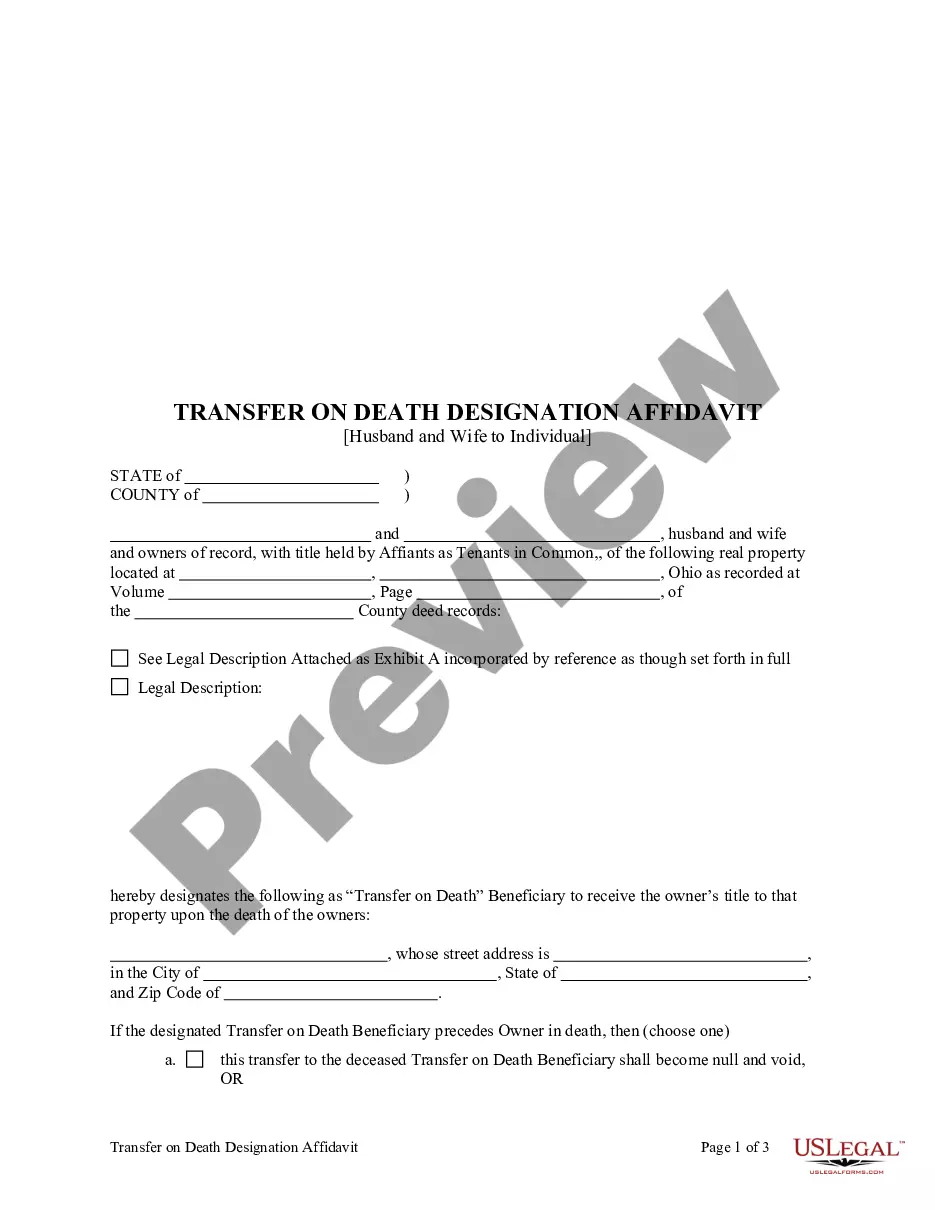
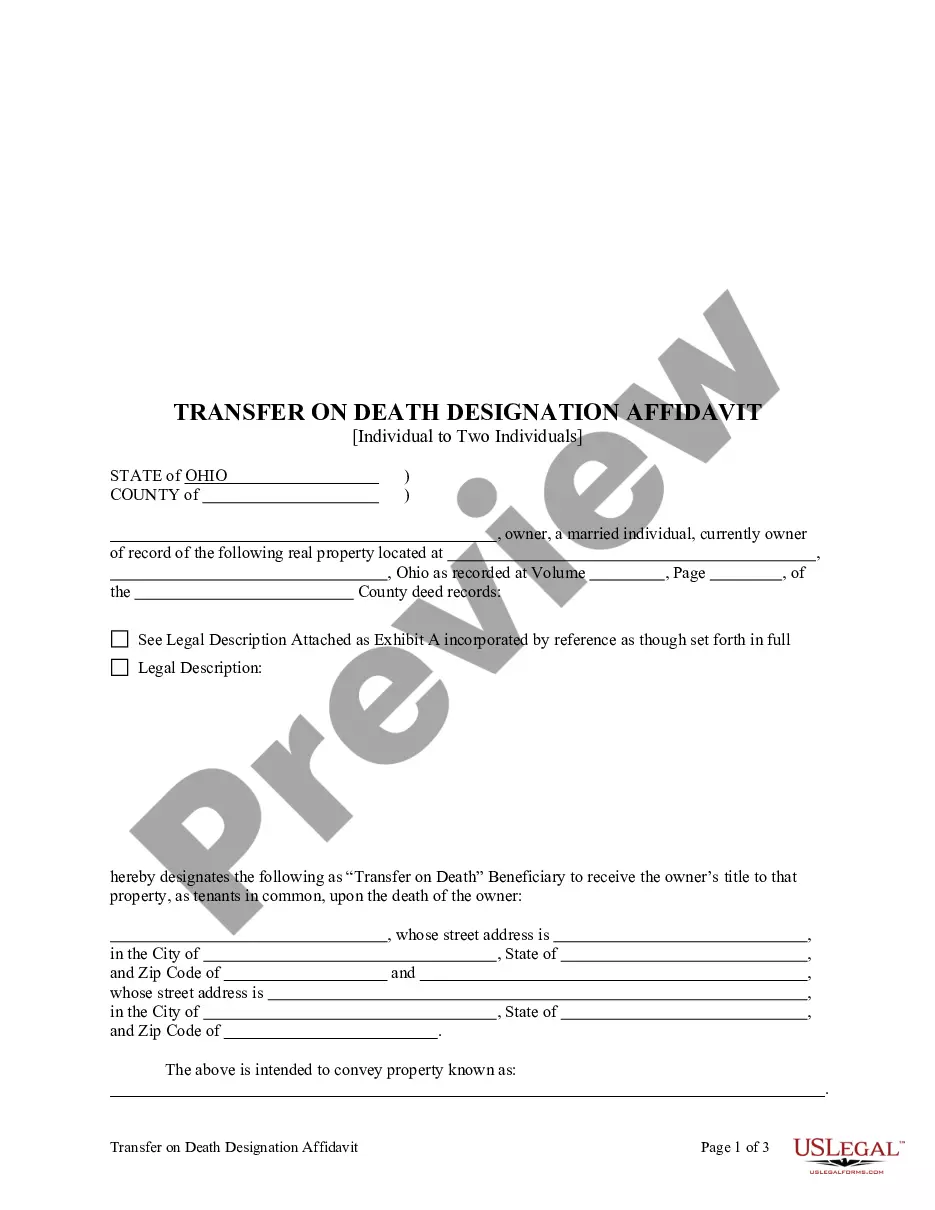
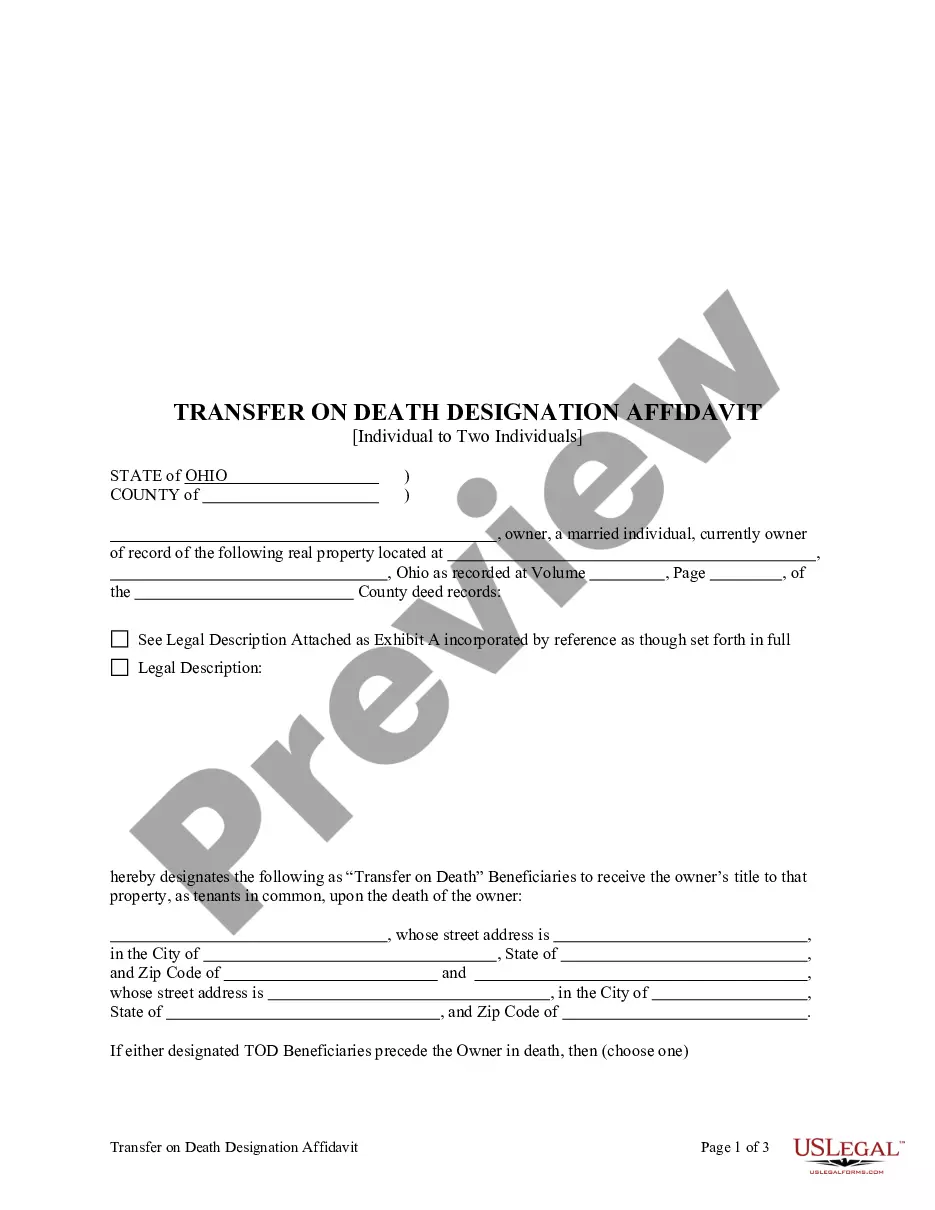
The Transfer on Death Designation Affidavit allows owners to designate a beneficiary who will receive the title of a parcel of land after the owners pass away. Unlike a typical will, this affidavit directly transfers property title to the designated beneficiary without going through probate. It is particularly useful for simplifying the transfer process and ensuring your property goes to the intended recipient upon your death.
Main sections of this form
- Identification of the parcel of land to be transferred.
- Designation of the primary beneficiary who will receive title upon the death of the owners.
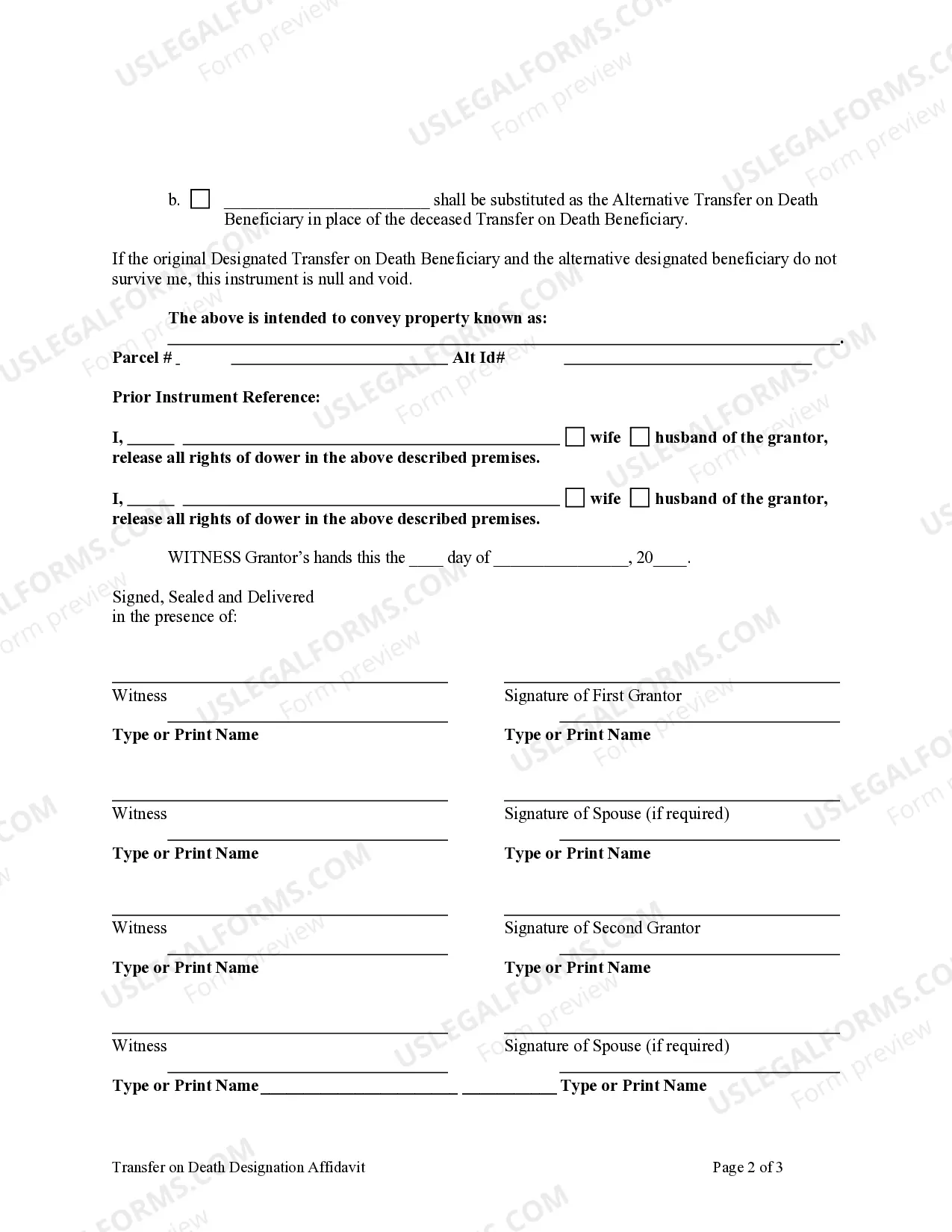
- Statement regarding the nullification of the affidavit if the designated beneficiary does not survive the owners.
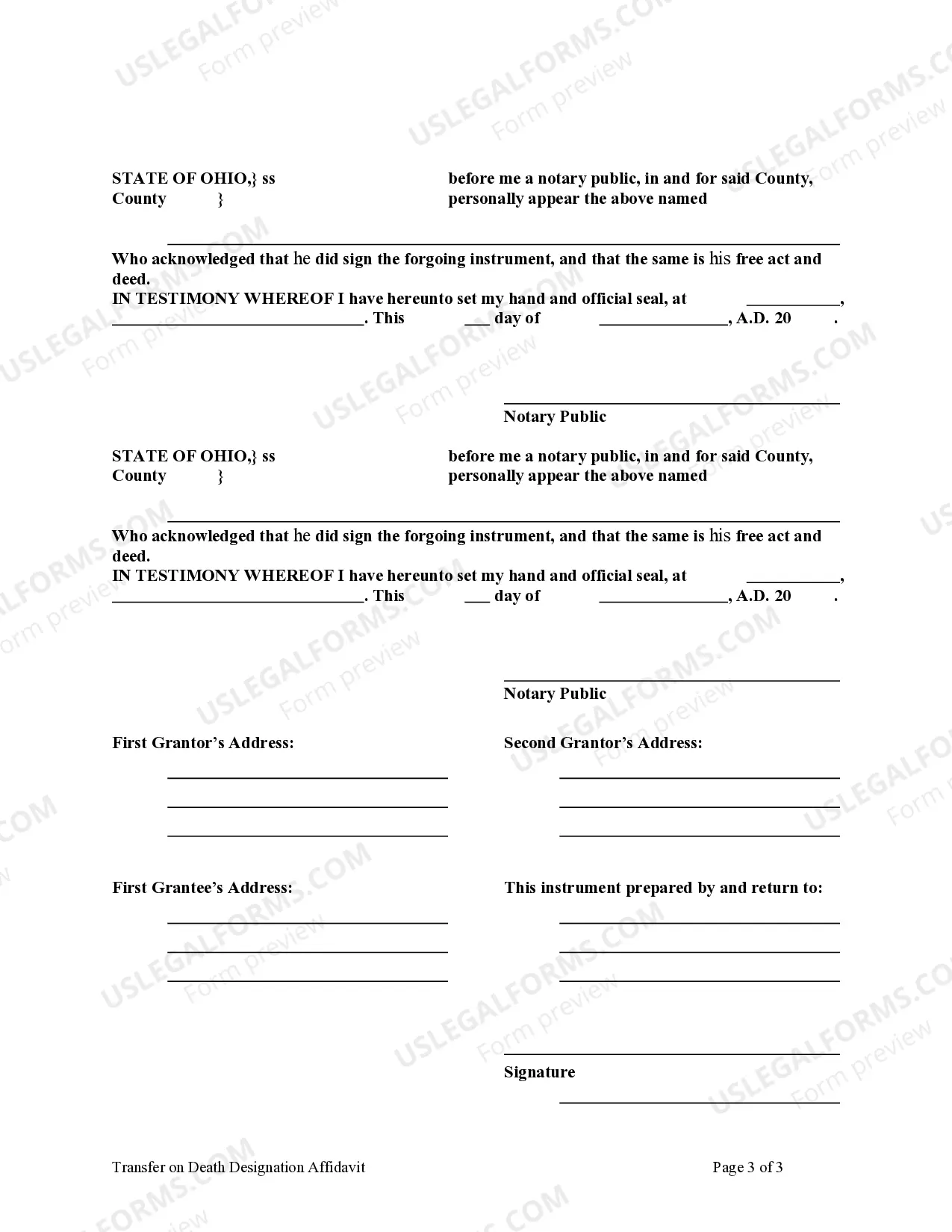
- Space for signatures of the owners before a Notary Public.
- Revocation or modification clause allowing changes to the designation at any time by the owners.


Common use cases
You should use this affidavit when you want to ensure that your property is transferred directly to a designated beneficiary upon your death. This form is particularly beneficial for individuals or couples who want to avoid the complications of probate and ensure a smooth transition of property ownership. It is also useful if you need to make changes to your beneficiary designations without the involvement of a lawyer.
Who this form is for
- Property owners who wish to designate a beneficiary for their real estate.
- Couples who jointly own property and want to simplify the transfer process after their deaths.
- Individuals wanting to avoid probate for their real estate properties.
- Those who wish to modify their beneficiary designations easily.
Instructions for completing this form
- Identify the owners (Affiants) of the property explicitly.
- Specify the property being transferred in clear legal terms.
- Designate the beneficiary who will inherit the property upon the death of the owners.
- Sign the affidavit in front of a Notary Public for validation.
- Keep the form in a secure place or file it with the local recorder as required by state law.
Is notarization required?
Yes, this form must be notarized to be legally valid. The signing must occur in front of a Notary Public, ensuring that the identities of the owners are verified, which prevents fraud and ensures the authenticity of the document.
Get your form ready online
Our built-in tools help you complete, sign, share, and store your documents in one place.
Make edits, fill in missing information, and update formatting in US Legal Forms—just like you would in MS Word.
Download a copy, print it, send it by email, or mail it via USPS—whatever works best for your next step.
Sign and collect signatures with our SignNow integration. Send to multiple recipients, set reminders, and more. Go Premium to unlock E-Sign.
If this form requires notarization, complete it online through a secure video call—no need to meet a notary in person or wait for an appointment.
We protect your documents and personal data by following strict security and privacy standards.

Make edits, fill in missing information, and update formatting in US Legal Forms—just like you would in MS Word.

Download a copy, print it, send it by email, or mail it via USPS—whatever works best for your next step.

Sign and collect signatures with our SignNow integration. Send to multiple recipients, set reminders, and more. Go Premium to unlock E-Sign.

If this form requires notarization, complete it online through a secure video call—no need to meet a notary in person or wait for an appointment.

We protect your documents and personal data by following strict security and privacy standards.
Common mistakes to avoid
- Failing to clearly identify the property being transferred.
- Not having the affidavit signed in front of a Notary Public.
- Overlooking the need to inform the designated beneficiary of their designation.
- Not checking state-specific requirements for recording the affidavit.
Benefits of using this form online
- Convenience of downloading and completing the form at your own pace.
- Editability allows you to make changes easily before finalizing.
- Reliable access to attorney-drafted templates ensuring legal compliance.
- Quick access to required documents without the need for in-person consultations.
Main things to remember
- The Transfer on Death Designation Affidavit facilitates seamless transfer of property upon death, bypassing probate.
- Ensure accurate identification of property and beneficiaries.
- This form must be notarized for legal validity.
- Property owners can modify or revoke the designation any time prior to death.
Looking for another form?


Form popularity
FAQ
Fill in information about you and the TOD beneficiary. provide a description of the property. check over the completed deed. sign the deed in front of a notary public, and.
TOD account holders can name multiple beneficiaries and divide assets any way they like.However, the beneficiaries have no access or rights to a TOD account while its owner is alive. Those beneficiaries can also be changed at any time, so long as the TOD account holder is deemed mentally competent.
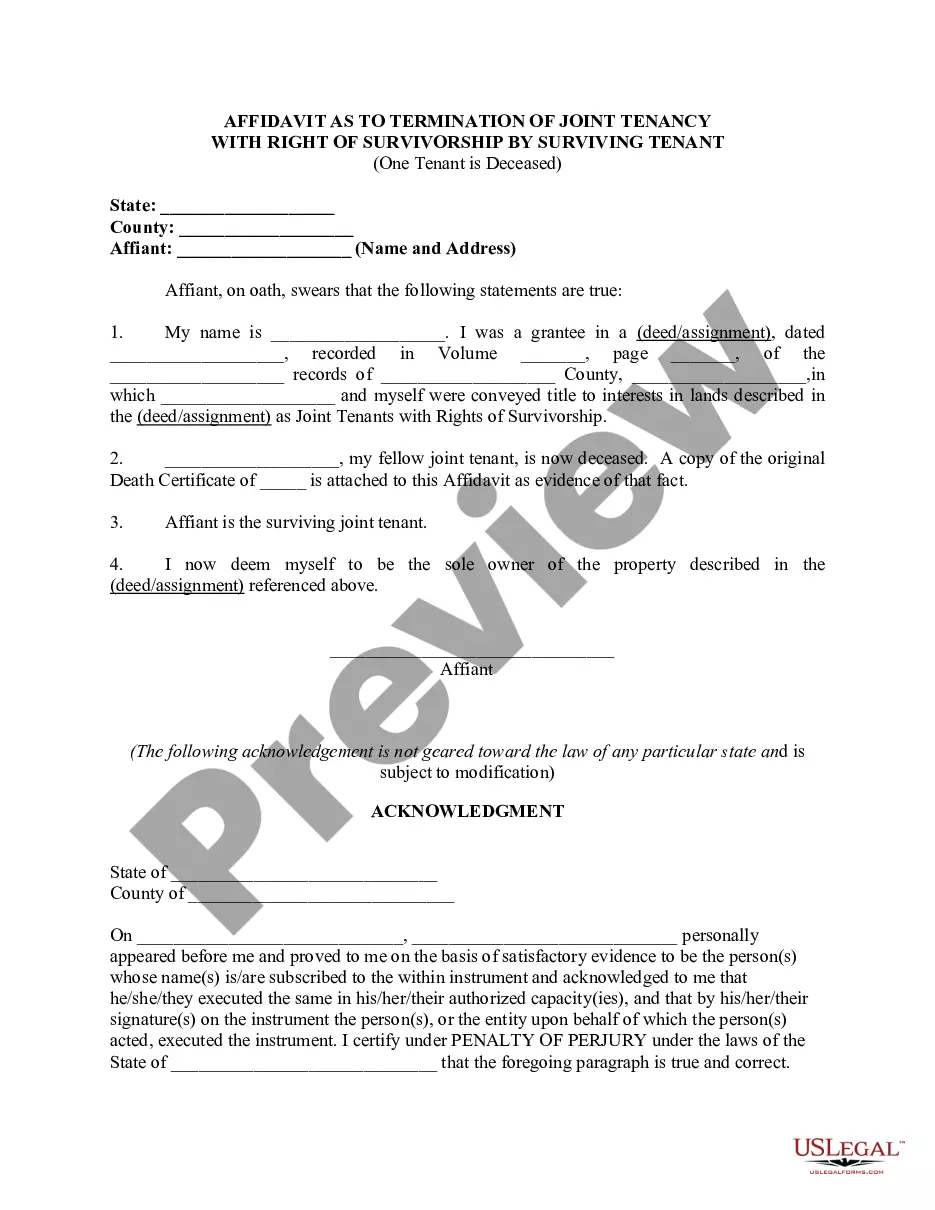
TOD becomes effective for joint accounts if both owners pass away simultaneously. Joint and TOD registration generally allow an account to pass outside the probate estate, enabling the surviving owner or beneficiaries to avoid the time and expense of that process for this account.
Yes. Ohio law allows individuals who do not need the estate administration benefits of a trust agreement to avoid Probate on the transfer of real property by executing a legal document called a Transfer-On-Death (TOD) Designation Affidavit.