Domain Name Assignment Agreement
Overview of this form
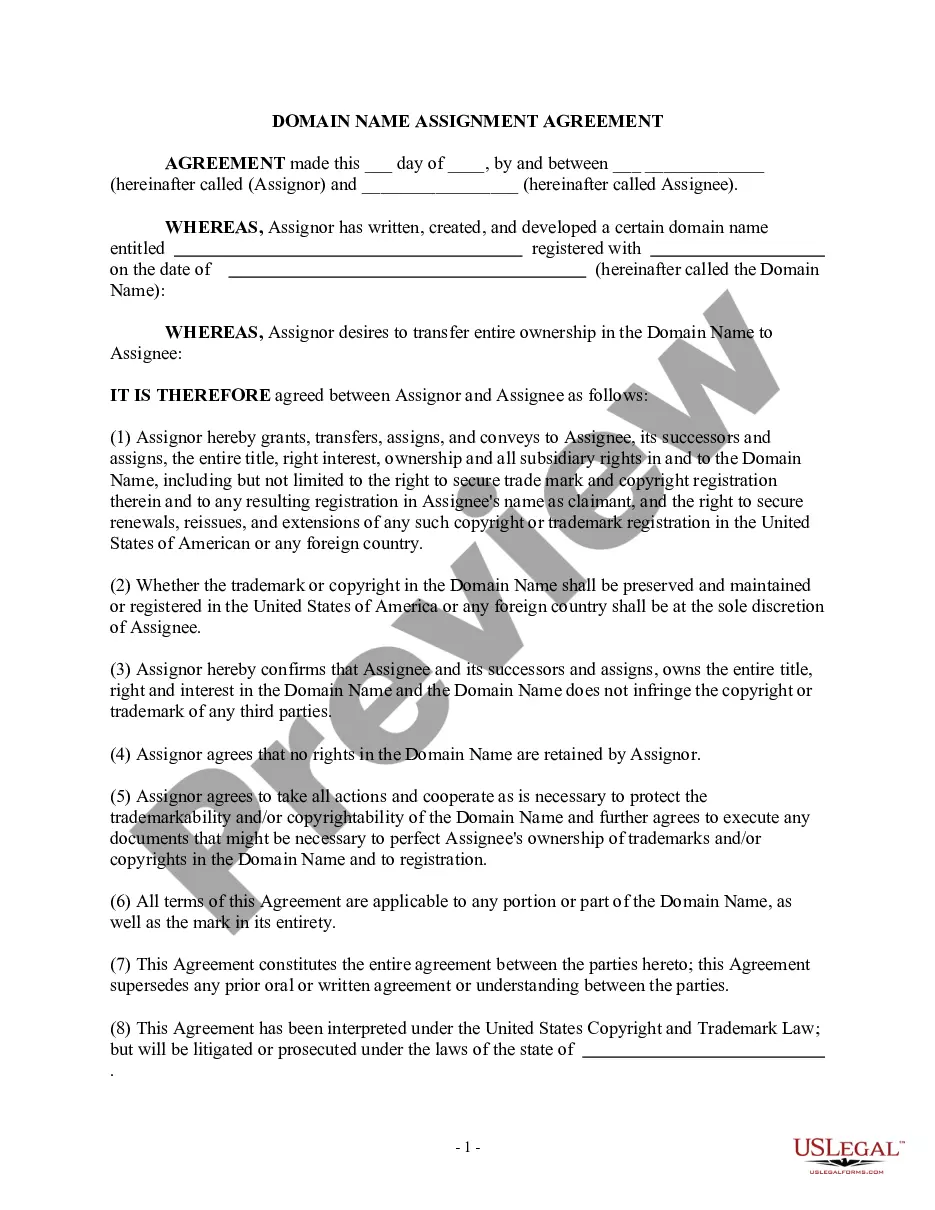
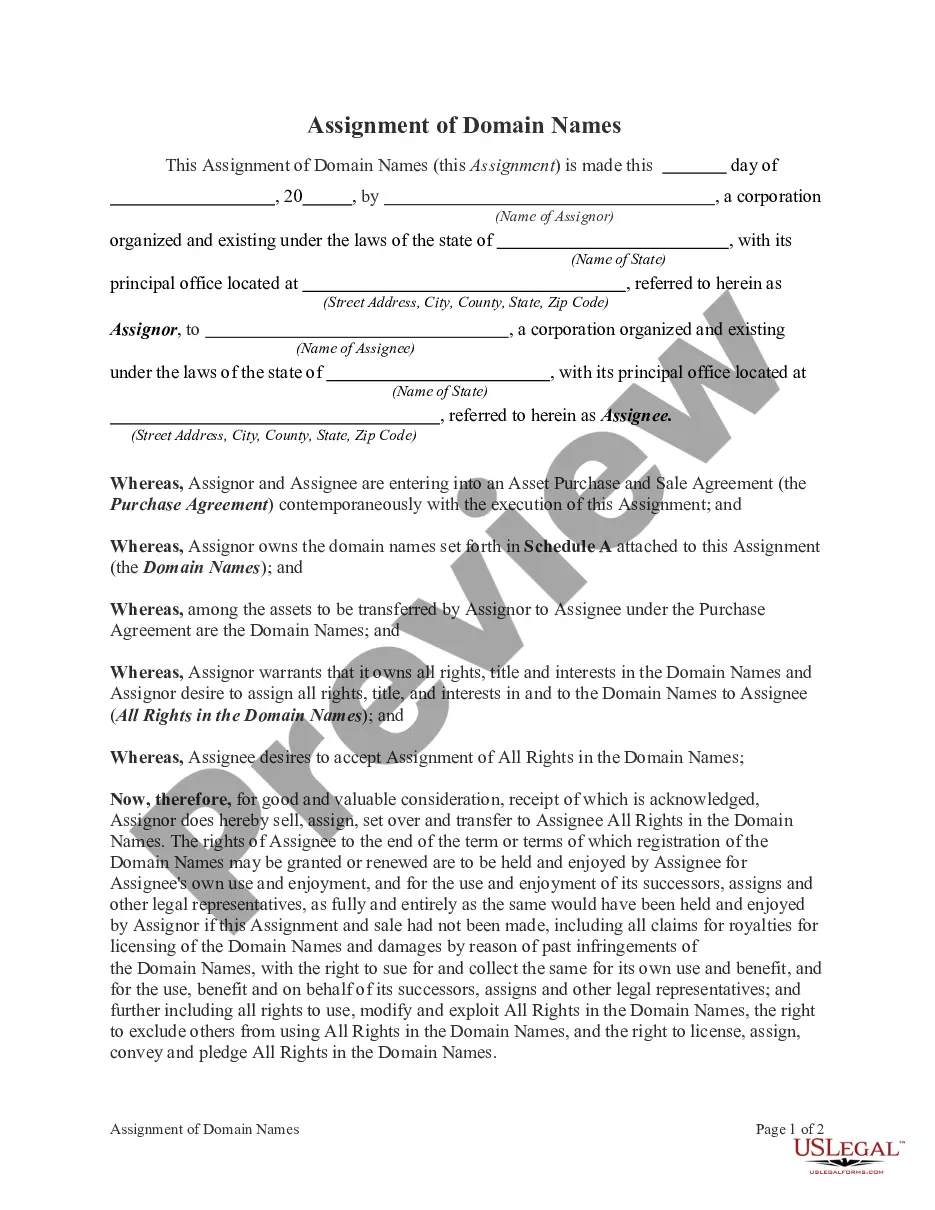
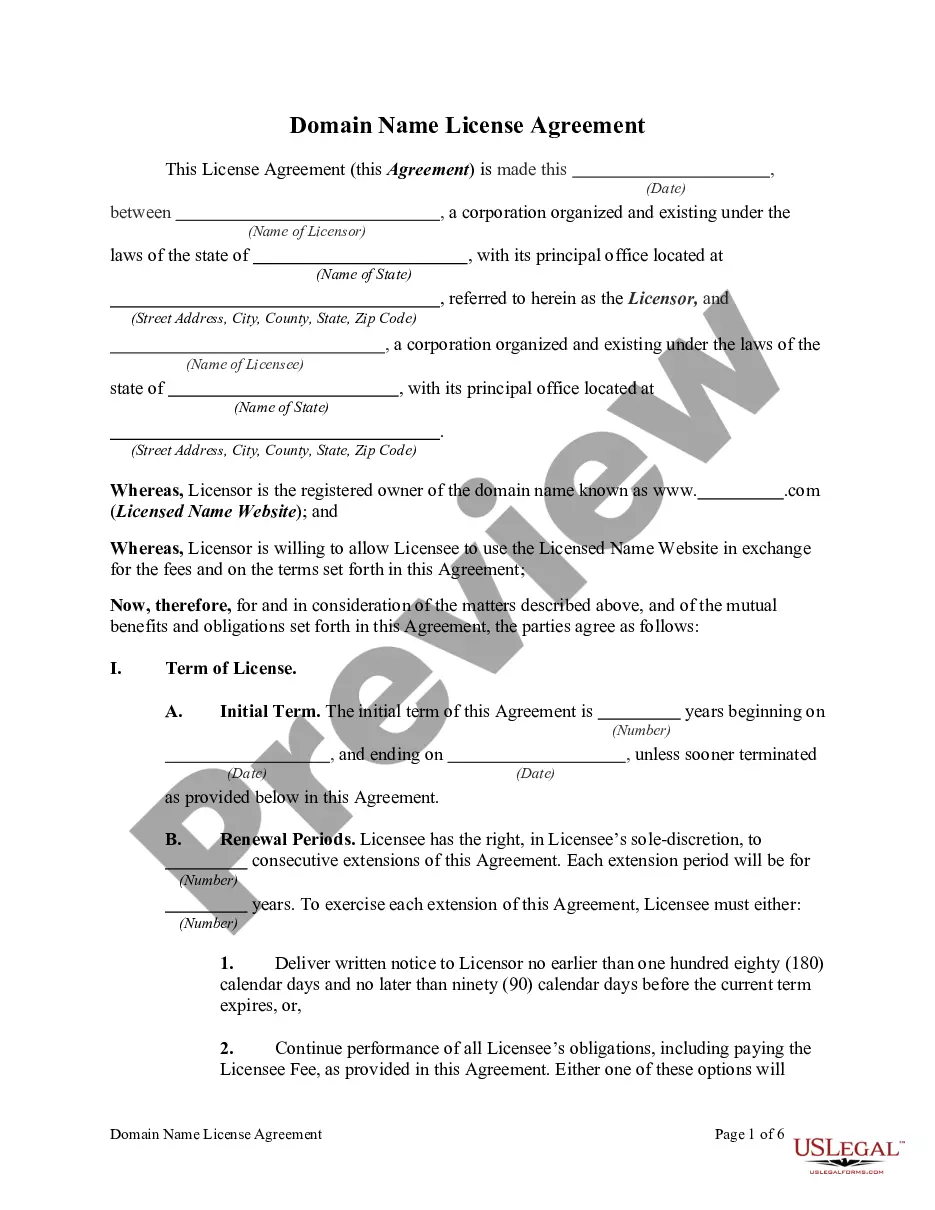
The Domain Name Assignment Agreement is a legal document used to transfer ownership of a domain name from one party (the assignor) to another (the assignee). This form ensures that the assignor relinquishes all rights and claims to the domain name, allowing the assignee to fully control the domain without any ongoing rights retained by the assignor. This differs from similar documents, such as licensing agreements, where the original owner may retain some rights to the domain name.
Main sections of this form
- Parties involved: Identifies the assignor and assignee involved in the agreement.
- Domain name details: Specifies the domain name being transferred and its registration information.
- Transfer of ownership: Clearly states that the assignor is transferring all rights to the assignee.
- No retained rights: Confirms that the assignor will not retain any rights in the domain name after the transfer.
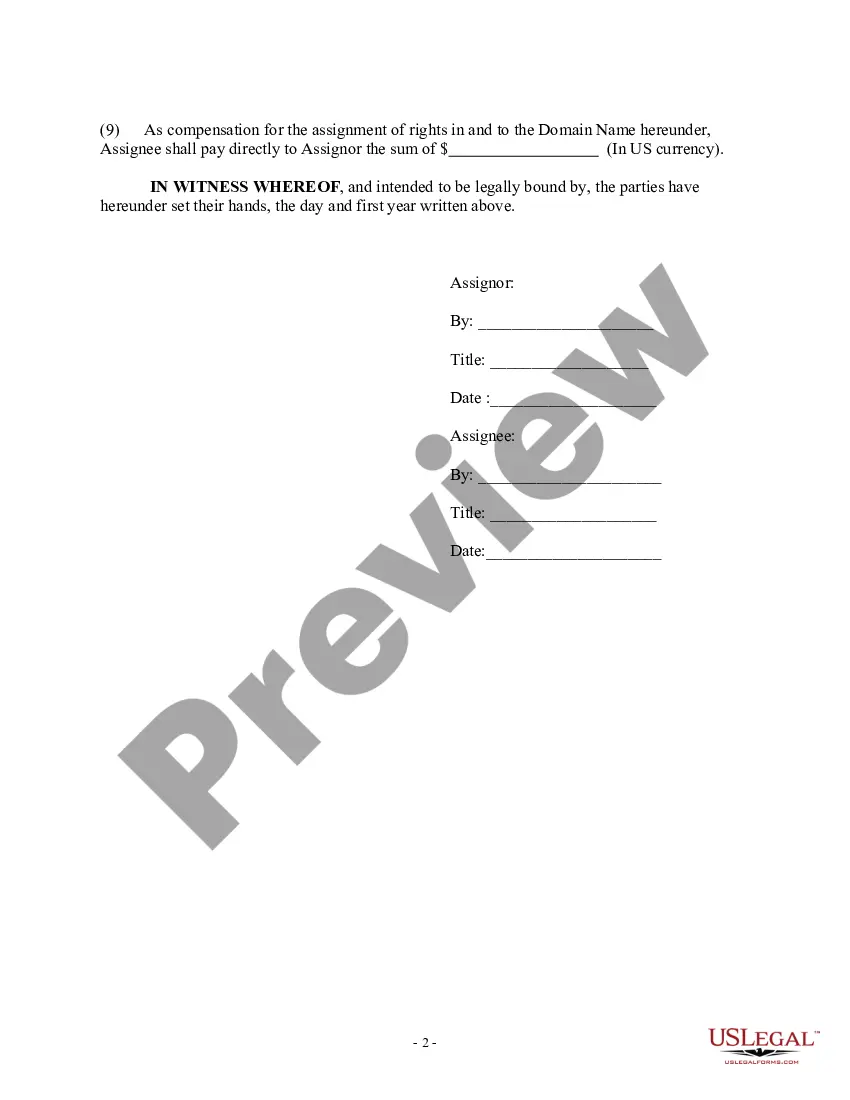
- Compensation: Outlines the payment that the assignee agrees to pay the assignor for the domain name.
- Governing laws: Indicates which state's laws govern the agreement.

Common use cases
This form is essential when a business or individual wishes to fully transfer a domain name to another party. It can be used when selling a domain, transferring ownership to a partner, or changing the primary registrant of the domain. This agreement is particularly useful in formalizing the transfer and protecting both the assignor's and assignee's interests.
Who should use this form
- Individuals or businesses selling a domain name.
- Partners or associates who need to transfer domain ownership within their business structure.
- Anyone looking to formalize the transfer of a domain name with legal documentation.
How to prepare this document
- Identify the parties: Fill in the names of the assignor and assignee at the beginning of the form.
- Specify the domain name: Enter the exact domain name being transferred and its registration details.
- Complete the payment section: Specify the compensation amount that the assignee will pay the assignor.
- Sign and date the agreement: Both parties must sign and date the document to make it legally binding.
- Consider notarization: Depending on state requirements, decide if a notary is needed for validation.
Does this document require notarization?
Notarization is generally not required for this form. However, certain states or situations might demand it. You can complete notarization online through US Legal Forms, powered by Notarize, using a verified video call available anytime.
Get your form ready online
Our built-in tools help you complete, sign, share, and store your documents in one place.
Make edits, fill in missing information, and update formatting in US Legal Forms—just like you would in MS Word.
Download a copy, print it, send it by email, or mail it via USPS—whatever works best for your next step.
Sign and collect signatures with our SignNow integration. Send to multiple recipients, set reminders, and more. Go Premium to unlock E-Sign.
If this form requires notarization, complete it online through a secure video call—no need to meet a notary in person or wait for an appointment.
We protect your documents and personal data by following strict security and privacy standards.

Make edits, fill in missing information, and update formatting in US Legal Forms—just like you would in MS Word.

Download a copy, print it, send it by email, or mail it via USPS—whatever works best for your next step.

Sign and collect signatures with our SignNow integration. Send to multiple recipients, set reminders, and more. Go Premium to unlock E-Sign.

If this form requires notarization, complete it online through a secure video call—no need to meet a notary in person or wait for an appointment.

We protect your documents and personal data by following strict security and privacy standards.
Avoid these common issues
- Failing to specify the domain name accurately.
- Not including signatures and dates from both parties.
- Neglecting to confirm that no rights are retained by the assignor.
- Overlooking state-specific legal requirements.
Why complete this form online
- Convenience: Downloadable format allows for quick access anytime and anywhere.
- Editability: Users can customize the form easily to fit their specific needs.
- Reliability: Professionally drafted by licensed attorneys to ensure compliance with legal standards.
Main things to remember
- A Domain Name Assignment Agreement transfers ownership rights from one party to another.
- The Assignor must not retain any rights to the domain name after the transfer.
- Clear descriptions and signatures are crucial for the legality of the document.
- Online forms offer ease of use and legal compliance.
Looking for another form?
Form popularity
FAQ
It is a standard document used to transfer ownership of a domain name from the assignor to the assignee, giving the assignee full control with no rights left with the assignor. It covers the parties, domain details, transfer of ownership, compensation, and governing law, aligning with common use when selling or reassigning a domain.
In this domain transfer context, proof of prior ownership isn't contained within the form itself; instead, the agreement requires detailed domain name and registration information to document the transfer. Retain registrar records and signed documents to support ownership transfer, and consult an attorney if there are disputes.
The form requires listing the domain name being transferred and its registration information to identify the asset clearly. Include the domain name, registrar, and registration status, ensuring the assignee has complete ownership rights after execution of the transfer. This ensures there is a clear, verifiable record of what is being transferred.
It states that the assignor transfers all rights to the domain name to the assignee, with no rights retained by the assignor. This clause ensures the assignee gains full control and reduces potential future claims, defining the operative change in ownership.
The form identifies which state's laws govern the agreement. In multi-state use, the language is typically general and indicates the chosen state's law will govern interpretation and enforcement. Users should ensure the selected governing law aligns with their transaction and consider consultation with an attorney.
The core difference is ownership transfer. This agreement transfers all rights to the domain name with no retained rights and includes a defined compensation. A license typically grants limited usage rights while preserving ownership with the licensor. The document also specifies the governing law and requires domain details to record the transfer.