Journalist - Reporter Agreement - Self-Employed Independent Contractor
About this form
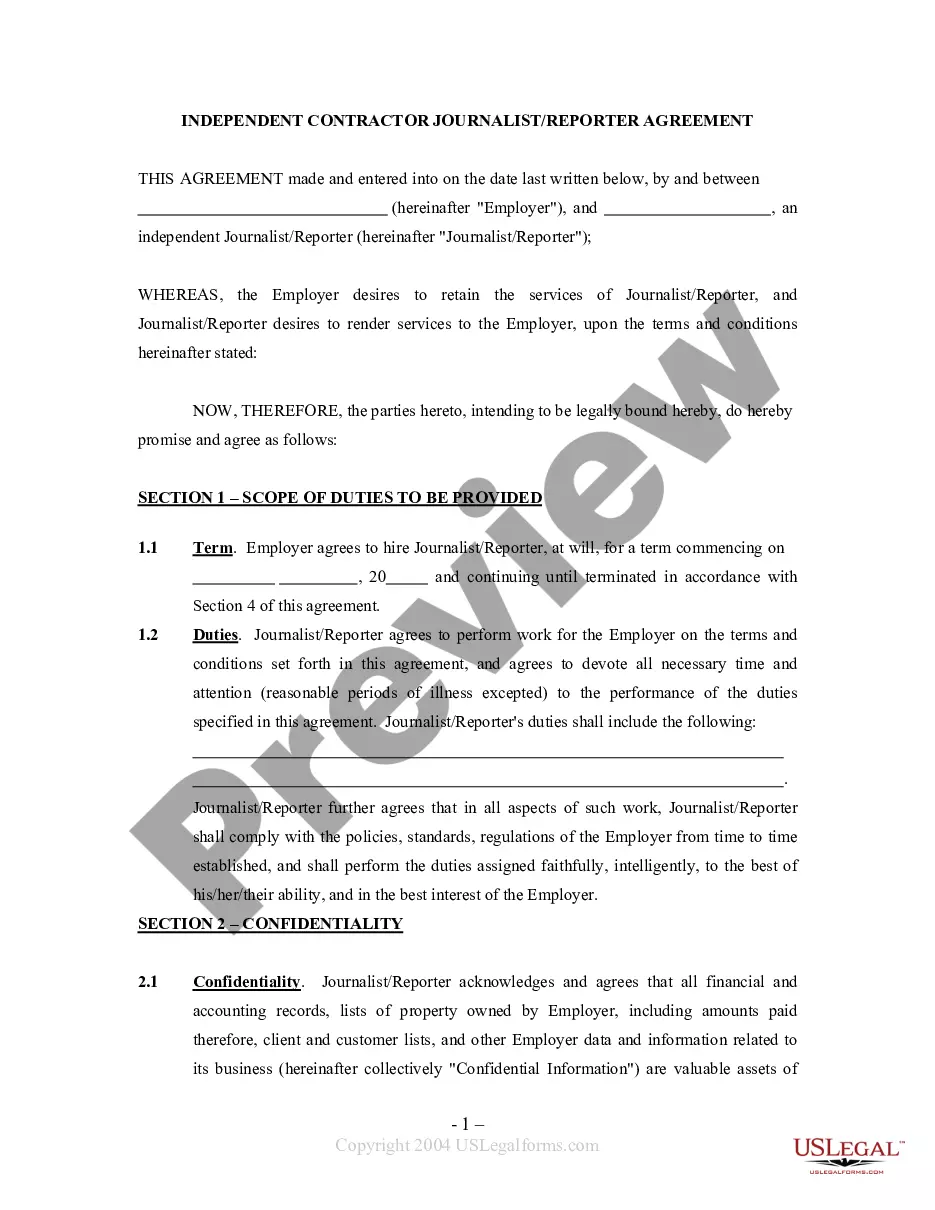
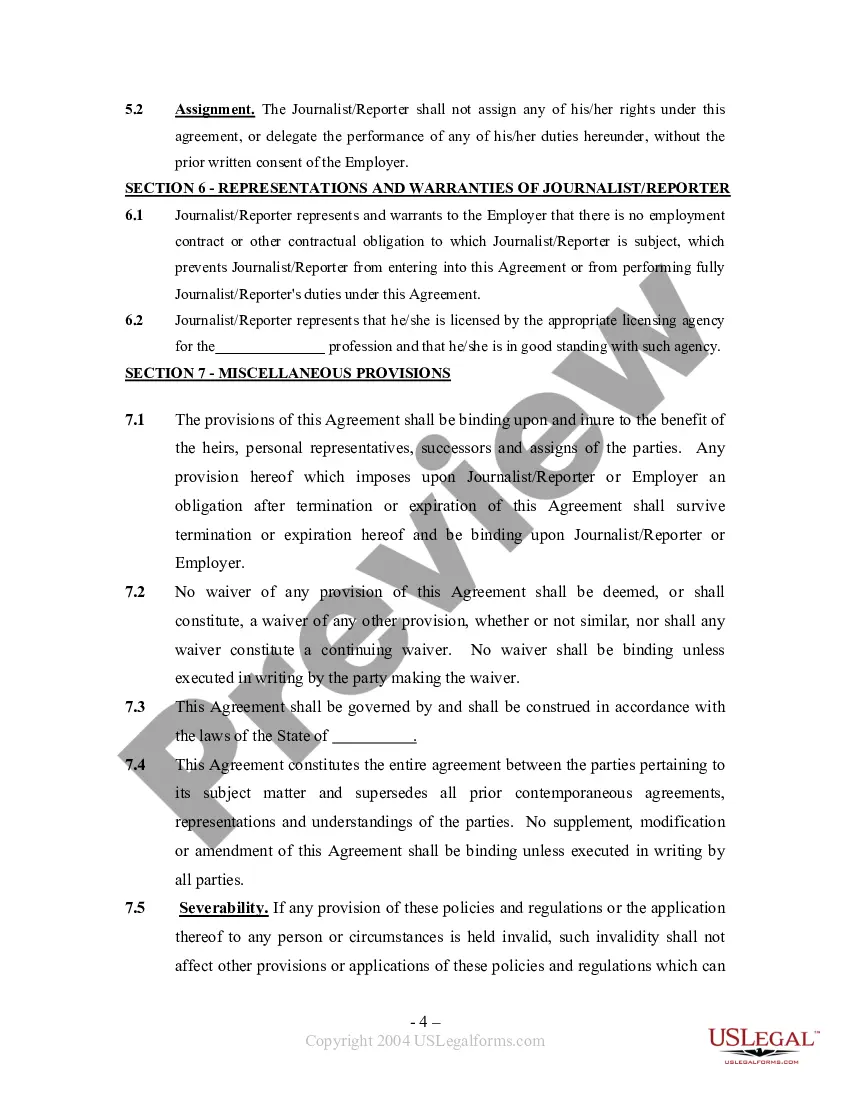
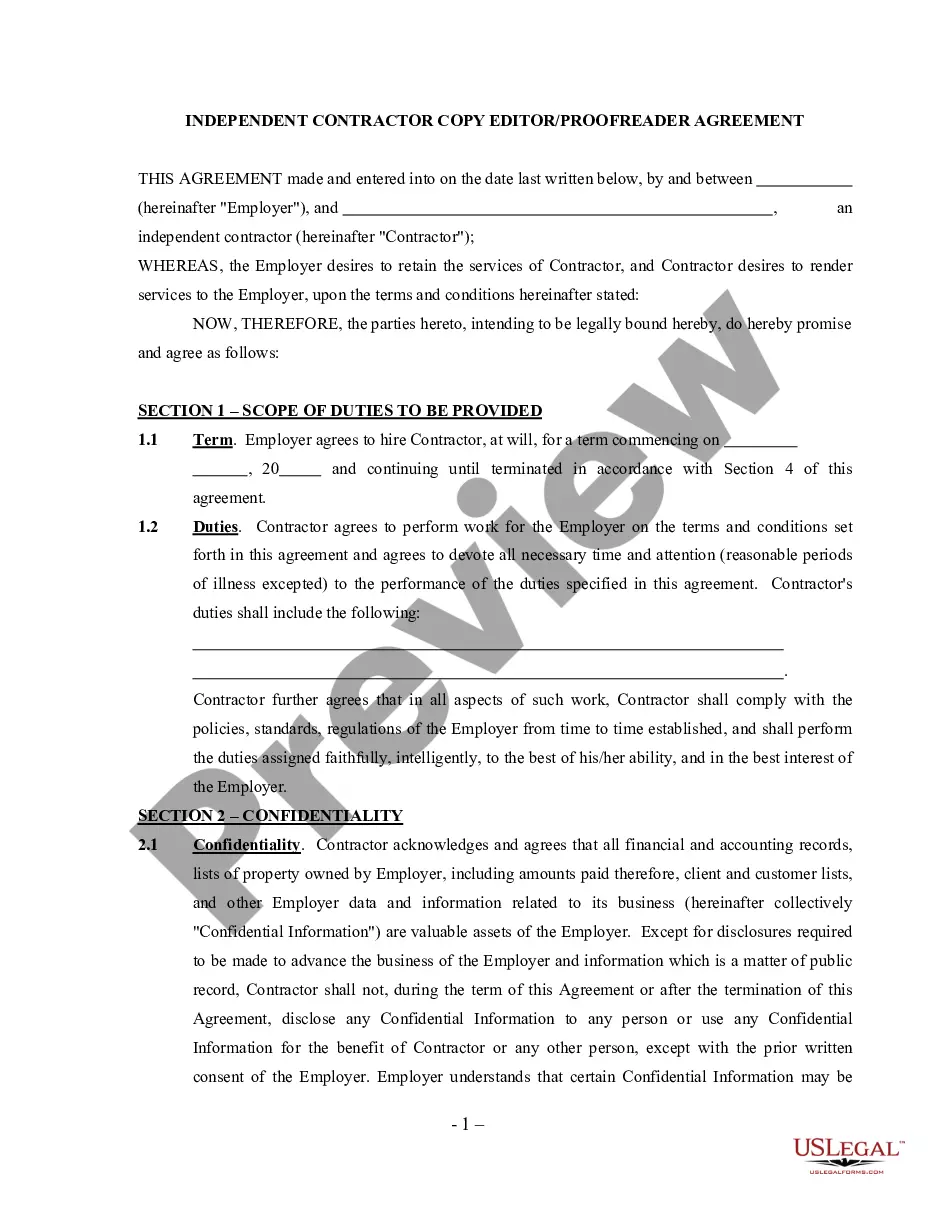
The Journalist - Reporter Agreement - Self-Employed Independent Contractor is a legal document used to establish a formal relationship between an employer and a self-employed journalist or reporter. This agreement outlines the scope of work, confidentiality obligations, and payment terms. Unlike employment contracts, this form clarifies the independent status of the journalist, ensuring that both parties understand their rights and responsibilities in this professional arrangement. It is essential for protecting sensitive information and defining the nature of the collaboration between the reporting professional and the employer.
What’s included in this form
- Scope of Duties: Outlines the specific services the journalist/reporter will provide.
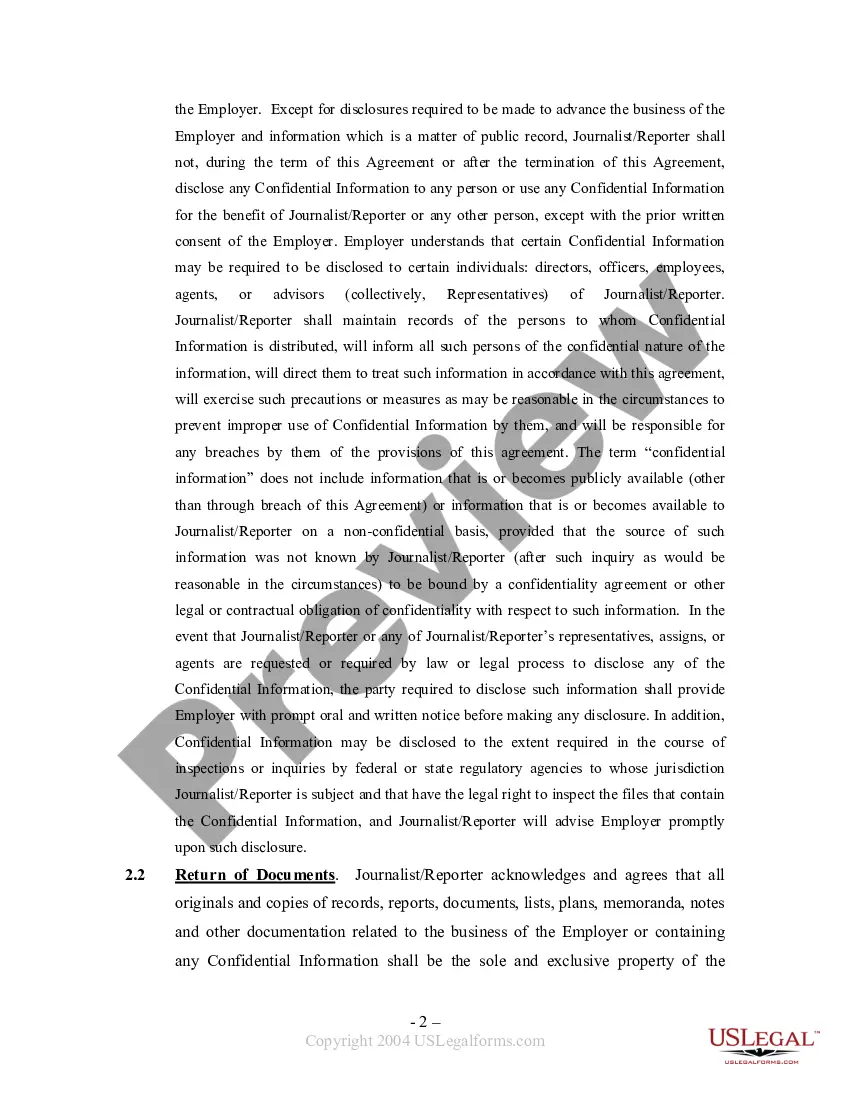
- Confidentiality: Details the handling and protection of the employer's confidential information.
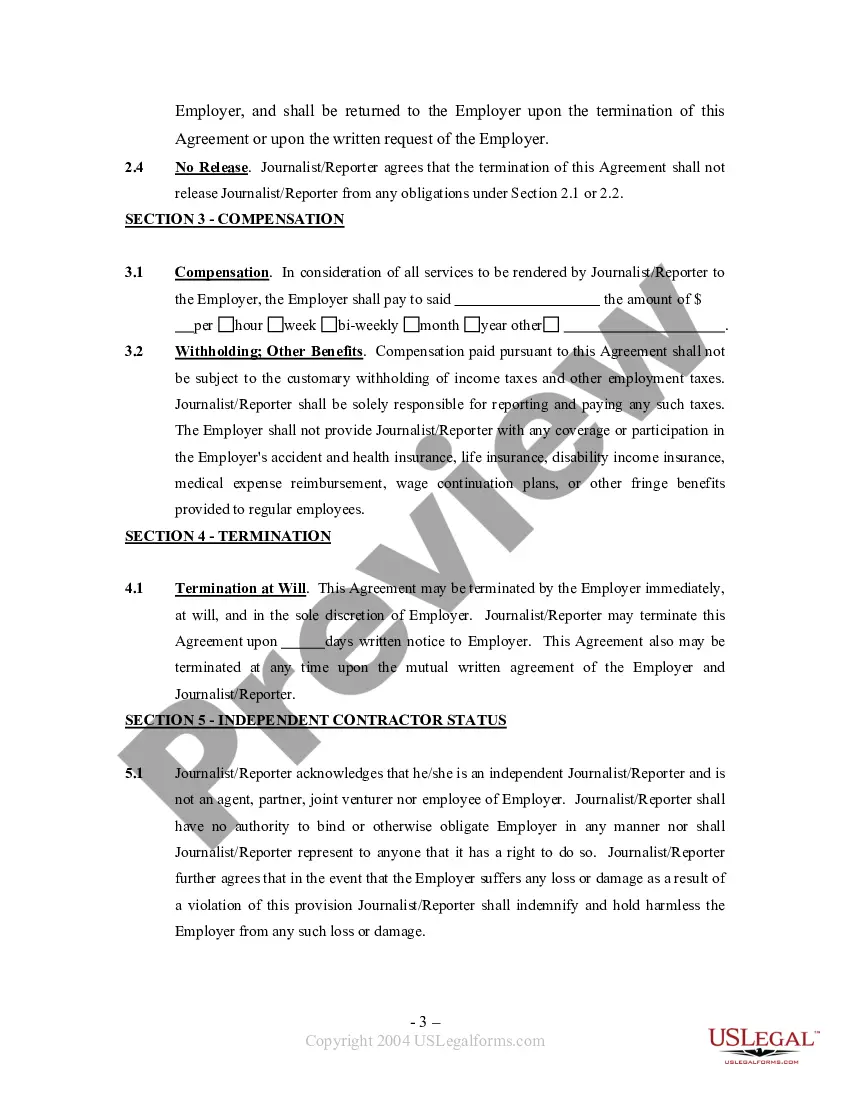
- Compensation: Describes the payment structure for the journalist's services.
- Termination: Specifies the conditions under which the agreement can be terminated by either party.
- Independent Contractor Status: Clarifies that the journalist/reporter is not an employee of the employer.
- Representations and Warranties: Affirms the journalist's ability to enter into the agreement without conflicting obligations.
When this form is needed
This agreement is ideal for employers seeking to hire freelance journalists or reporters for specific projects, articles, or assignments without entering into an employer-employee relationship. It is particularly useful when the journalist will handle sensitive information, require clear payment structures, or when confidentiality agreements are necessary to protect the employer's interests.
Who should use this form
- Employers who need to hire freelance journalists or reporters for specific tasks.
- Self-employed journalists or reporters looking to establish clear terms with their clients.
- Organizations or businesses that require professional reporting services on an independent contractor basis.
How to prepare this document
- Identify the parties: Clearly state the names and contact information of both the employer and the journalist/reporter.
- Specify the scope of duties: Detail the specific services the journalist is expected to perform.
- Outline confidentiality requirements: Include any necessary confidentiality obligations to protect the employer's information.
- Enter compensation details: Specify how and when the journalist will be paid for their services.
- Include termination conditions: State how either party can terminate the agreement, including notice requirements.
Does this form need to be notarized?
This form usually doesn’t need to be notarized. However, local laws or specific transactions may require it. Our online notarization service, powered by Notarize, lets you complete it remotely through a secure video session, available 24/7.
Get your form ready online
Our built-in tools help you complete, sign, share, and store your documents in one place.
Make edits, fill in missing information, and update formatting in US Legal Forms—just like you would in MS Word.
Download a copy, print it, send it by email, or mail it via USPS—whatever works best for your next step.
Sign and collect signatures with our SignNow integration. Send to multiple recipients, set reminders, and more. Go Premium to unlock E-Sign.
If this form requires notarization, complete it online through a secure video call—no need to meet a notary in person or wait for an appointment.
We protect your documents and personal data by following strict security and privacy standards.

Make edits, fill in missing information, and update formatting in US Legal Forms—just like you would in MS Word.

Download a copy, print it, send it by email, or mail it via USPS—whatever works best for your next step.

Sign and collect signatures with our SignNow integration. Send to multiple recipients, set reminders, and more. Go Premium to unlock E-Sign.

If this form requires notarization, complete it online through a secure video call—no need to meet a notary in person or wait for an appointment.

We protect your documents and personal data by following strict security and privacy standards.
Common mistakes
- Failing to clearly define the scope of work, which can lead to misunderstandings.
- Omitting confidentiality clauses, exposing sensitive information.
- Misclassifying the journalist as an employee instead of an independent contractor.
- Not including payment terms, causing potential disputes over compensation.
Why complete this form online
- Quick access to professionally drafted legal documents tailored for various needs.
- Easy to edit and customize based on specific circumstances.
- Convenient download options providing instant access to forms anytime.
Looking for another form?
Form popularity
FAQ
A 1099 Form reports income from self employment earnings, interest and dividends, government payments, and more.
The key thing to note for independent contractors is that self-employment taxes are assessed on net income, not gross. So you'll need to calculate your net income by subtracting deductions from your gross earnings.
Protect your social security number. Have a clearly defined scope of work and contract in place with clients. Get general/professional liability insurance. Consider incorporating or creating a limited liability company (LLC).
The earnings of a person who is working as an independent contractor are subject to Self-Employment Tax. If you are an independent contractor, you are self-employed. To find out what your tax obligations are, visit the Self-Employed Tax Center.
You are required to report independent contractor information if you hire an independent contractor and the following statements all apply:You pay the independent contractor $600 or more or enter into a contract for $600 or more. The independent contractor is an individual or sole proprietorship.
Simply put, being an independent contractor is one way to be self-employed. Being self-employed means that you earn money but don't work as an employee for someone else.An independent contractor is someone who provides a service on a contractual basis.
Terms. This is the first section of any agreement or contract and states the names and locations of the parties involved. Responsibilities & Deliverables. Payment-Related Details. Confidentiality Clause. Contract Termination. Choice of Law.
Paying Taxes as an Independent Contractor You'll need to file a tax return with the IRS if your net earnings from self-employment are $400 or more. Along with your Form 1040, you'll file a Schedule C to calculate your net income or loss for your business.
Independent contractors report their income on Schedule C (Form 1040), Profit or Loss from Business (Sole Proprietorship). Also file Schedule SE (Form 1040), Self-Employment Tax if net earnings from self-employment are $400 or more.You may need to make estimated tax payments.