Freelance Writer Agreement - Self-Employed Independent Contractor
Overview of this form
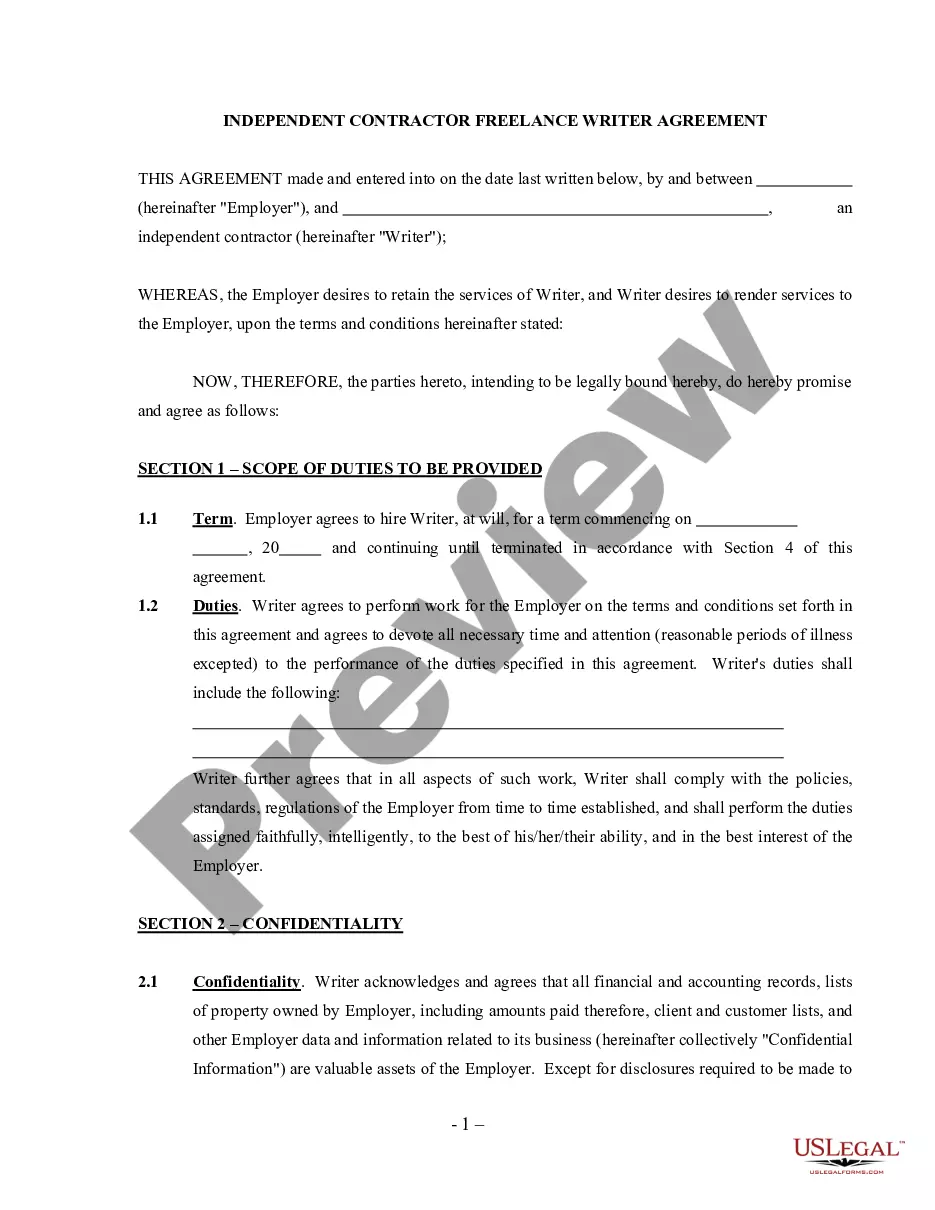
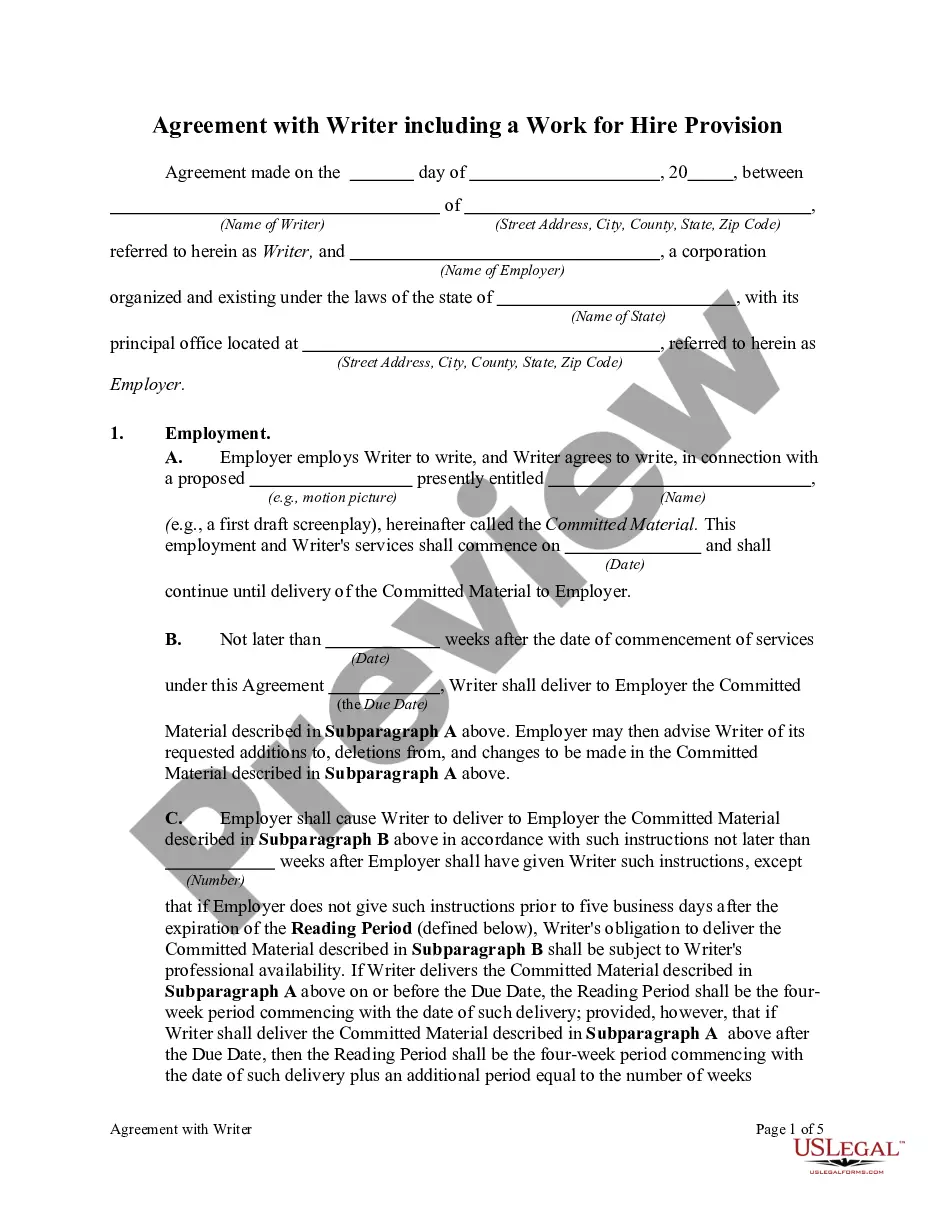
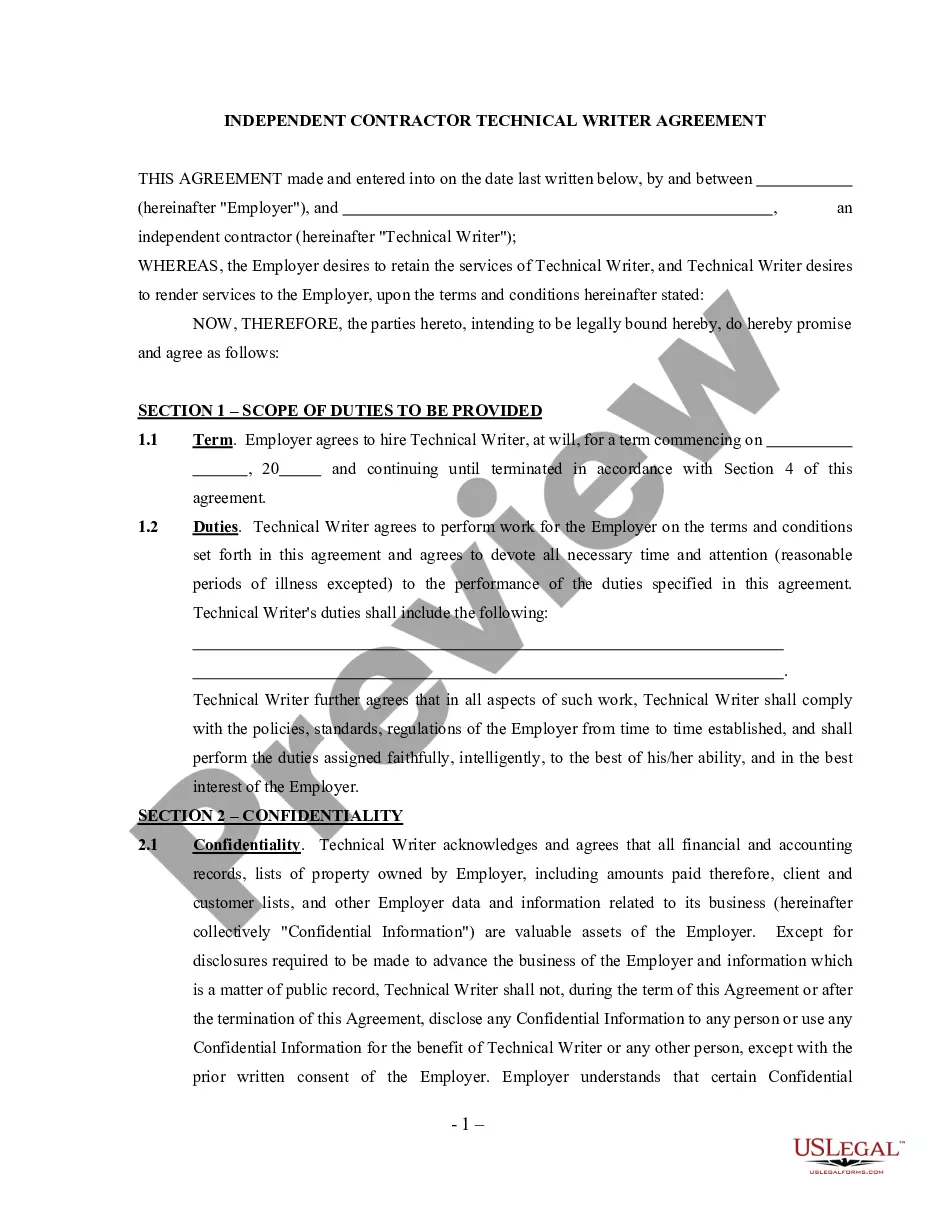
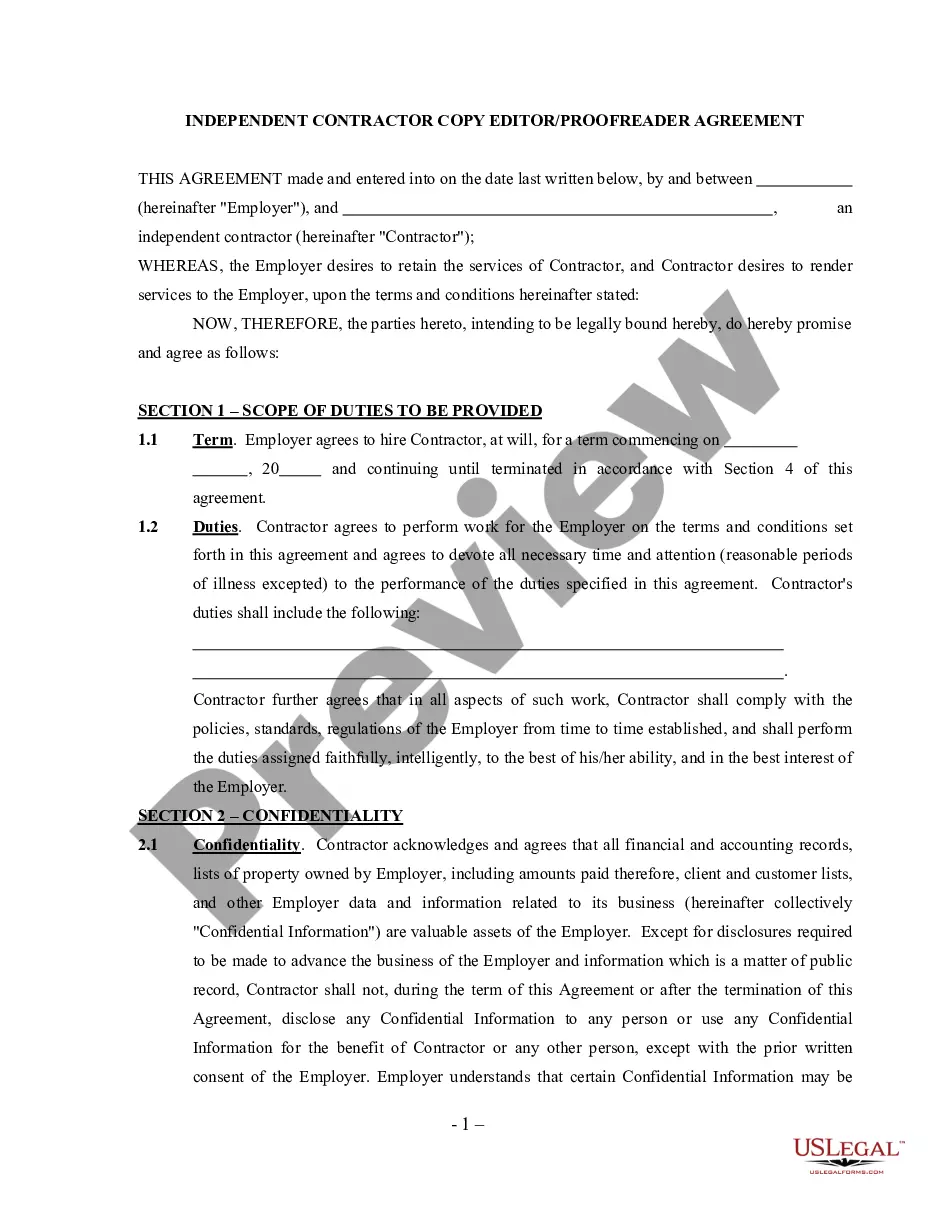
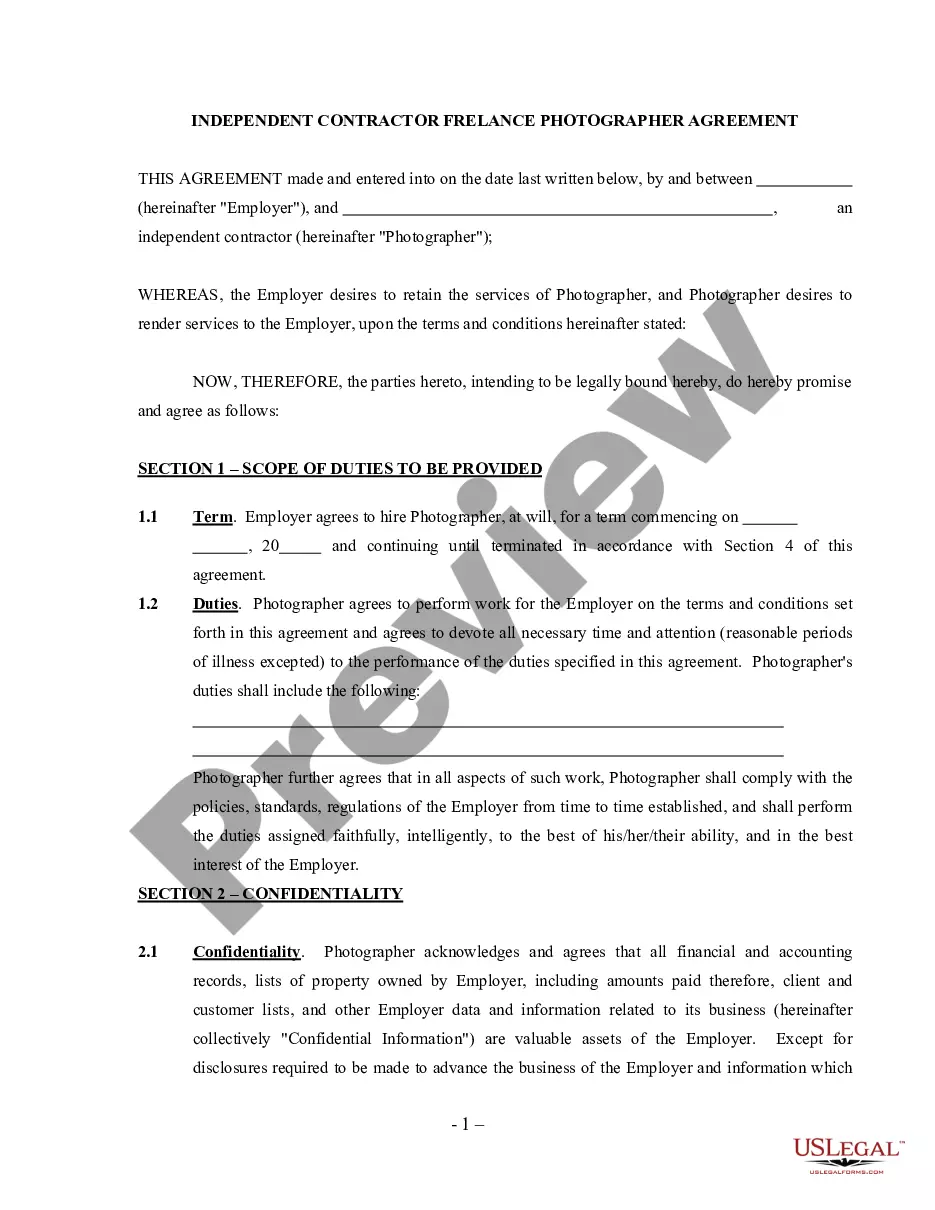
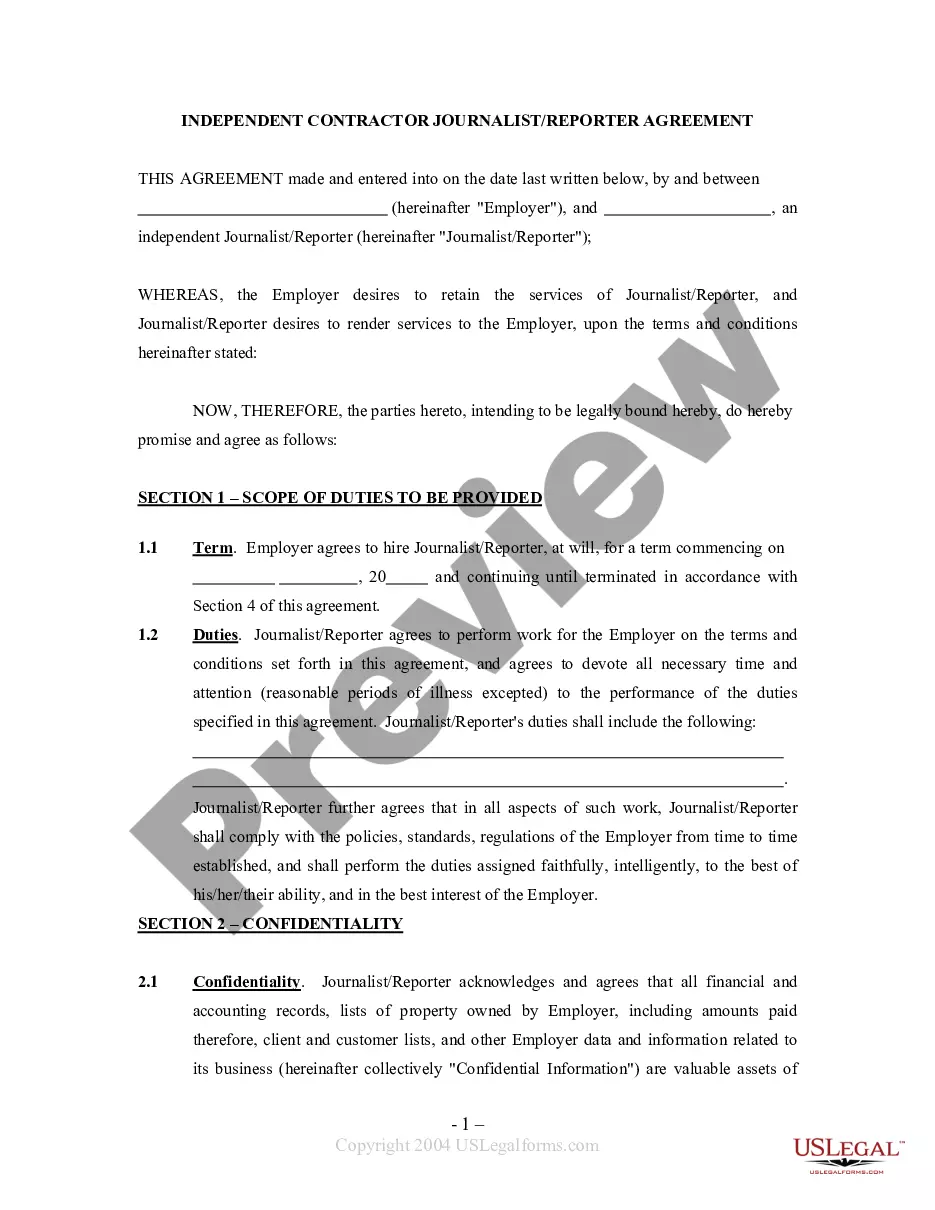
The Freelance Writer Agreement - Self-Employed Independent Contractor is a legal document that outlines an agreement between an employer and a freelance writer. This form establishes the terms under which the writer will provide writing or journalistic services as an independent contractor. Unlike traditional employment agreements, this document emphasizes the freelance nature of the relationship, ensuring clarity in roles, responsibilities, and payment arrangements.
Key parts of this document
- Scope of Duties: Defines the specific writing or journalistic services the writer will provide.
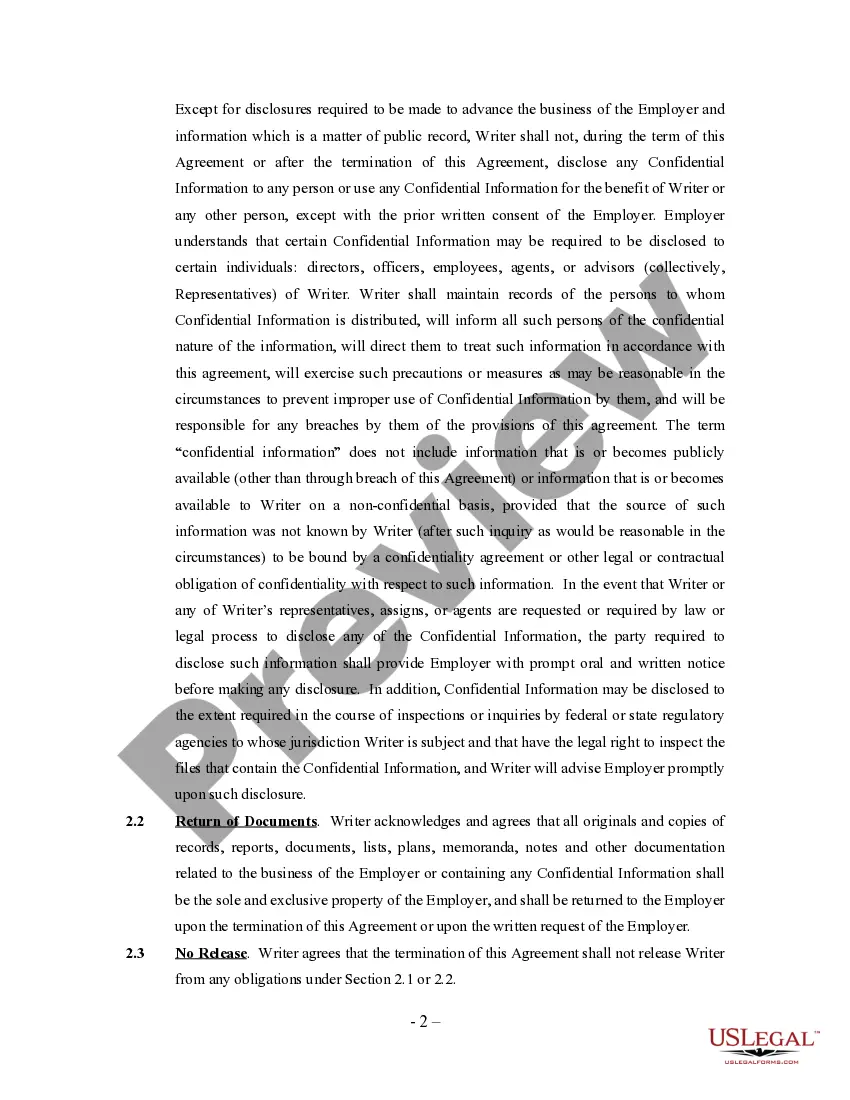
- Confidentiality: Outlines obligations regarding the handling of confidential information related to the employer's business.
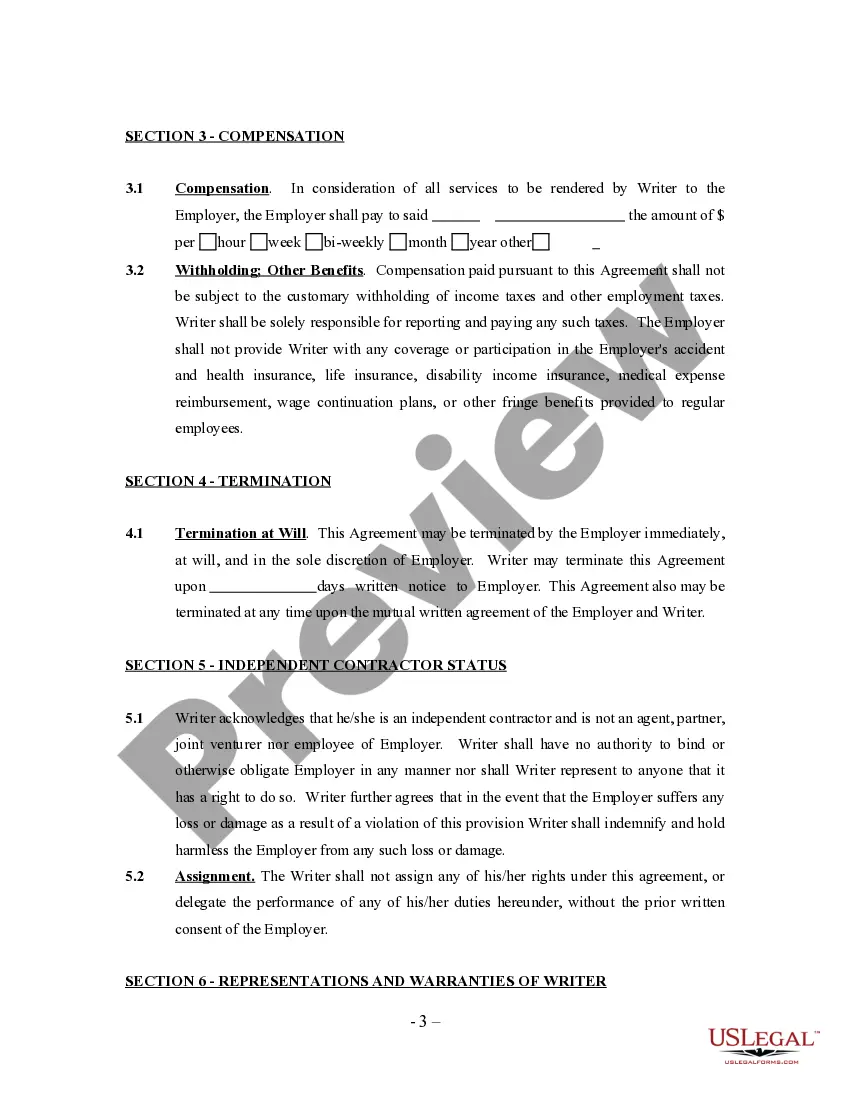
- Compensation: Details the payment structure for the services rendered by the writer.
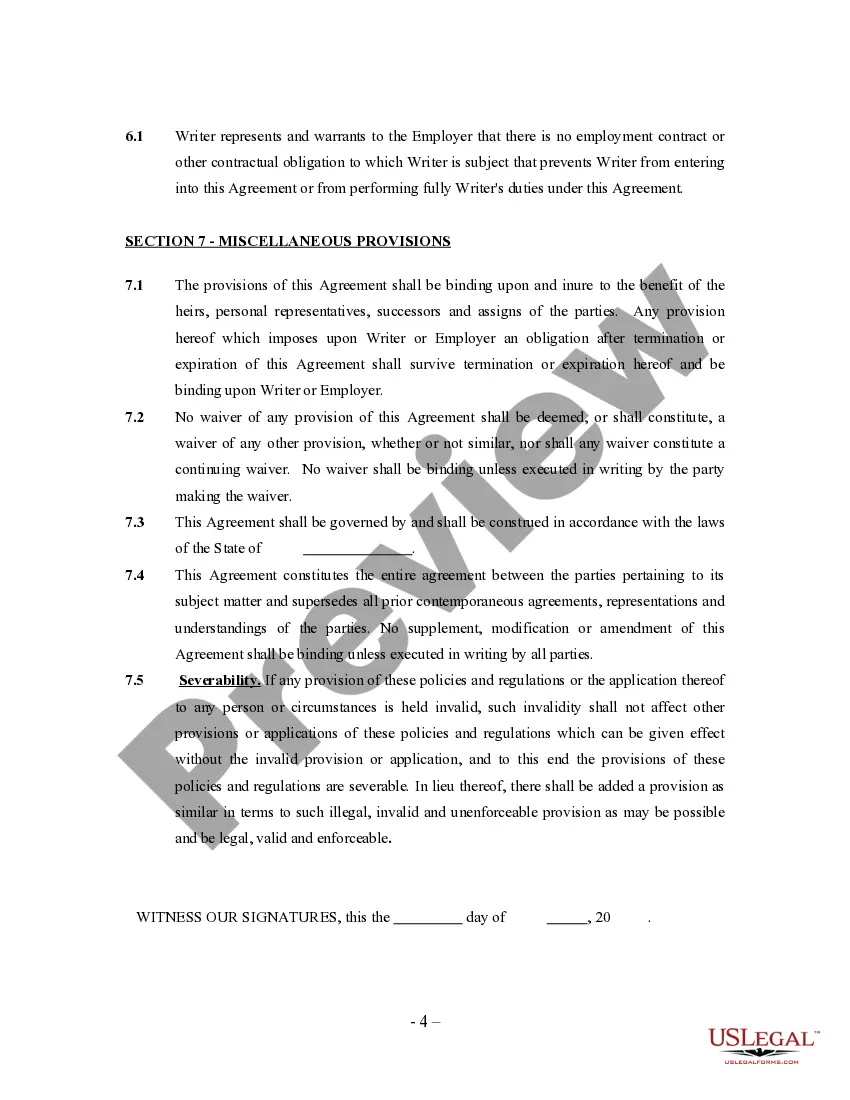
- Termination: Specifies conditions under which the agreement can be ended by either party.
- Assignment: Prohibits the writer from transferring their contractual rights without written consent from the employer.

When this form is needed
This agreement is essential when an employer hires a freelance writer to produce content, such as articles, blogs, or reports, without establishing an employee-employer relationship. It is typically used by newspapers, magazines, and other organizations seeking to engage writers for specific projects or ongoing contributions.
Who this form is for
- Employers seeking to hire freelance writers for specific projects or ongoing work.
- Freelance writers who want to clarify their working relationship and protect their rights.
- Organizations, including publishers and media companies, looking for clear contractual terms with independent writers.
Steps to complete this form
- Identify the parties: Clearly state the names and addresses of the employer and the writer.
- Specify the scope of services: Describe in detail the writing or journalistic tasks the writer will perform.
- Outline compensation: Indicate payment terms, including rates and any deadlines for payment.
- Include confidentiality terms: Ensure the writer acknowledges their responsibility toward confidential information.
- Sign the agreement: Both the employer and the writer must sign and date the document to make it legally binding.
Notarization guidance
Notarization is generally not required for this form. However, certain states or situations might demand it. You can complete notarization online through US Legal Forms, powered by Notarize, using a verified video call available anytime.
Get your form ready online
Our built-in tools help you complete, sign, share, and store your documents in one place.
Make edits, fill in missing information, and update formatting in US Legal Forms—just like you would in MS Word.
Download a copy, print it, send it by email, or mail it via USPS—whatever works best for your next step.
Sign and collect signatures with our SignNow integration. Send to multiple recipients, set reminders, and more. Go Premium to unlock E-Sign.
If this form requires notarization, complete it online through a secure video call—no need to meet a notary in person or wait for an appointment.
We protect your documents and personal data by following strict security and privacy standards.

Make edits, fill in missing information, and update formatting in US Legal Forms—just like you would in MS Word.

Download a copy, print it, send it by email, or mail it via USPS—whatever works best for your next step.

Sign and collect signatures with our SignNow integration. Send to multiple recipients, set reminders, and more. Go Premium to unlock E-Sign.

If this form requires notarization, complete it online through a secure video call—no need to meet a notary in person or wait for an appointment.

We protect your documents and personal data by following strict security and privacy standards.
Common mistakes
- Not clearly defining the scope of services, which can lead to misunderstandings.
- Failing to outline payment terms, resulting in disputes over compensation.
- Neglecting to include confidentiality clauses, which can risk sensitive information.
- Forgetting to secure signatures from both parties, rendering the agreement invalid.
Benefits of completing this form online
- Convenience: Access and complete the form from anywhere at any time.
- Editability: Fill in and modify the document to suit specific agreements quickly.
- Reliability: Rely on professionally drafted content ensuring legal compliance.
Legal use & context
- The agreement is enforceable as long as both parties consent to its terms.
- It is advised to consult with a legal professional to ensure all provisions are compliant with applicable laws.
- Keep a copy for personal records after signing to reference in case of future disputes.
What to keep in mind
- The Freelance Writer Agreement formalizes the relationship between the employer and the writer.
- Confidentiality and clear terms of payment are critical components of this agreement.
- This form can be adapted for various jurisdictions, providing flexibility for users.
Glossary of terms used in this form
- Independent Contractor: A person or business that provides services to another entity under terms specified in a contract, without being an employee.
- Confidential Information: Sensitive data and proprietary information that must be kept secret to protect the interests of the employer.
- Scope of Duties: A detailed description of the specific tasks and responsibilities to be performed under the agreement.
Looking for another form?
Form popularity
FAQ
An Independent Contractor Agreement should contain all of these basic terms: Description of the services to be provided.Explanation of what the hiring party will provide or not provide, such as equipment, for the independent contractor to use. Ownership of work product if that is relevant to the work being performed.
California Governor Newsom has signed Assembly Bill 2257,exempting freelance writers, musicians, artists and others from the stringent rules established by the 'ABC' test for independent contractors, which makes them more likely to be reclassified as employees.
If you are an independent contractor, you are self-employed.However, your earnings as an employee may be subject to FICA (Social Security tax and Medicare) and income tax withholding.
1. Not Having a Written Contract.The taxing, labor and employment, and insurance authorities expect a written contract that states that the worker is an independent contractor and will be paid as such with no tax withholding, no benefits, etc.
The Internal Revenue Service considers freelancers to be self-employed, so if you earn income as a freelancer you must file your taxes as a business owner. While you can take additional deductions if you are self-employed, you'll also face additional taxes in the form of the self-employment tax.
Freelancer vs ContractorFreelancers are self-employed individuals who are not affiliated to any company or an agency.A contractor on the other hand, is an external employee who may or may not be self-employed. In the traditional sense of the word, a contractor is actually employed by a vendor or an agency.
Freelance workers generally work on a project with expected outcomes for an agreed fee.Furthermore, they might work through a third party or agency but can also work on their own. If an independent contractor works on their own, they are responsible for taxes and insurance.
For most types of projects you hire an independent contractor (IC) to do, the law does not require you to put anything in writing. You can meet with the IC, agree on the terms of your arrangement, and have an oral contract or agreement that is legally binding. Just because you can doesn't mean you should, however.
The general rule is that an individual is an independent contractor if the payer has the right to control or direct only the result of the work and not what will be done and how it will be done. The earnings of a person who is working as an independent contractor are subject to Self-Employment Tax.