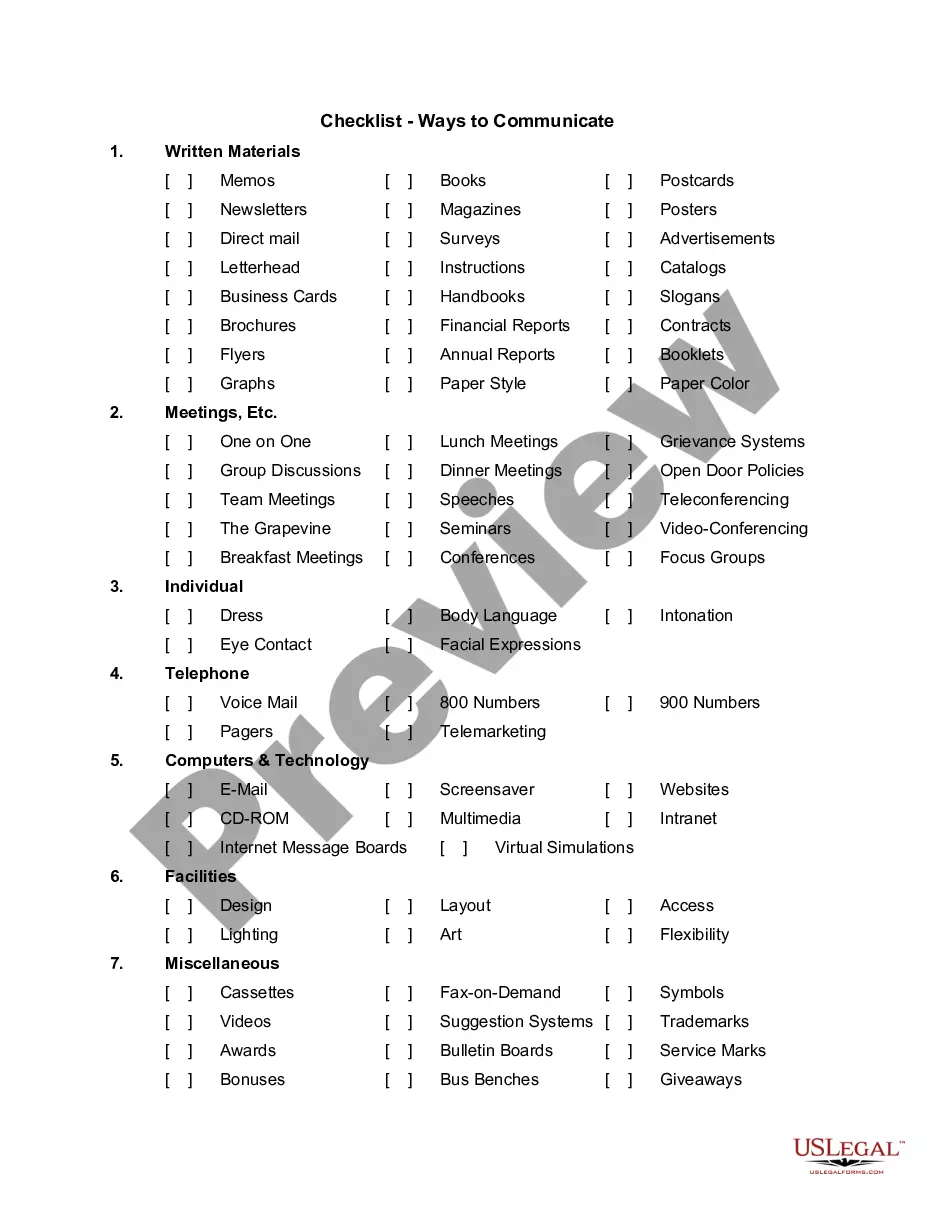
Checklist - Ways to Communicate
What this document covers
The Checklist - Ways to Communicate is a comprehensive tool designed to help individuals and organizations evaluate various communication methods. This form provides a structured overview of communication channels, enabling users to enhance their interactions with employees, clients, and stakeholders. Unlike other forms focused on singular communication types, this checklist covers written materials, meetings, technology, and more, making it a versatile resource for improving communication strategies.
What’s included in this form
- Written materials, including memos, newsletters, brochures, and business cards.
- Meetings, such as one-on-one discussions, team meetings, and seminars.
- Individual communication aspects like body language, intonation, and eye contact.
- Telephonic tools including voicemail and telemarketing.
- Digital communication through email, websites, and multimedia.
- Environmental factors like facility design and lighting.
- Miscellaneous communication methods, including videos, awards, and community activities.
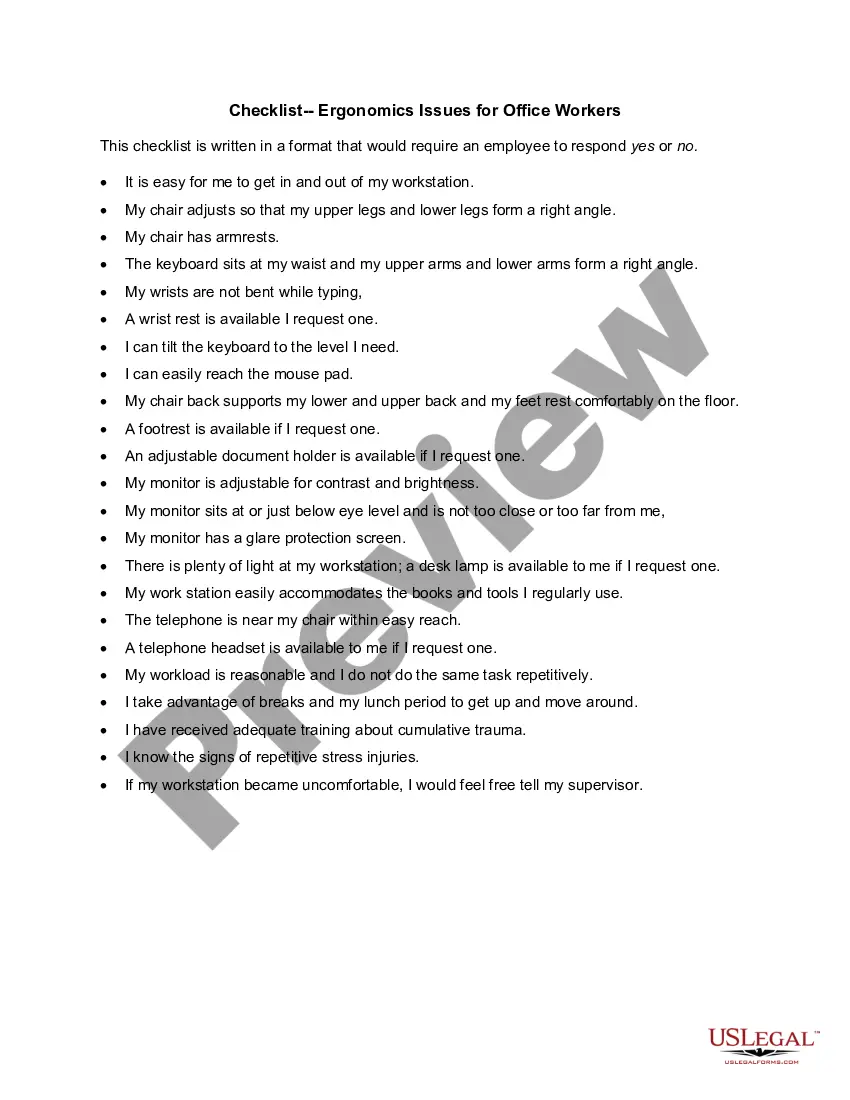
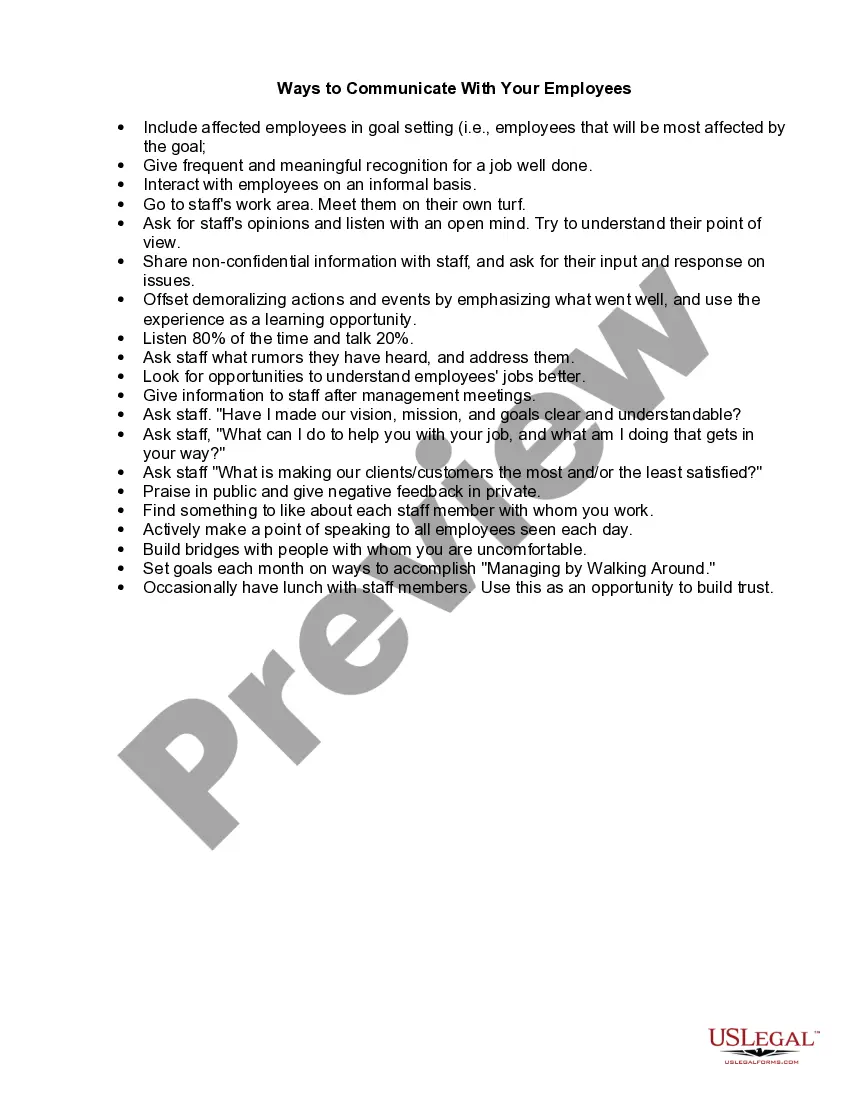
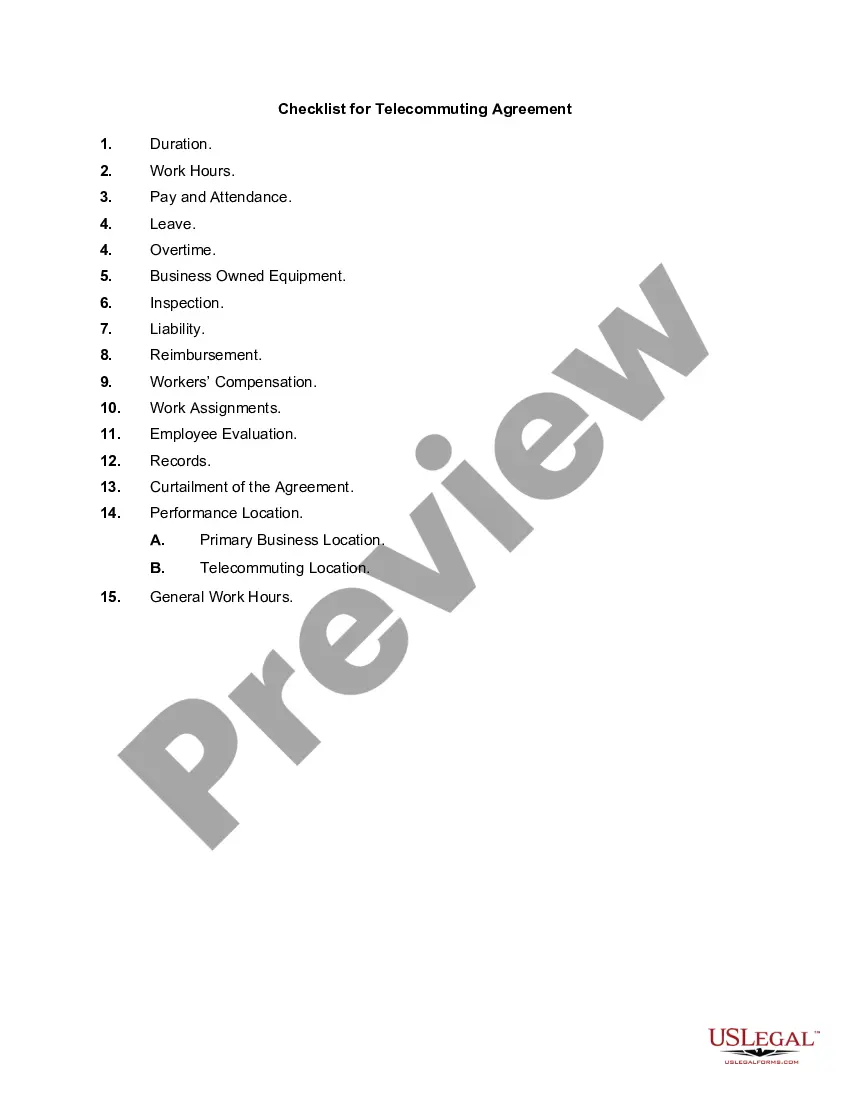
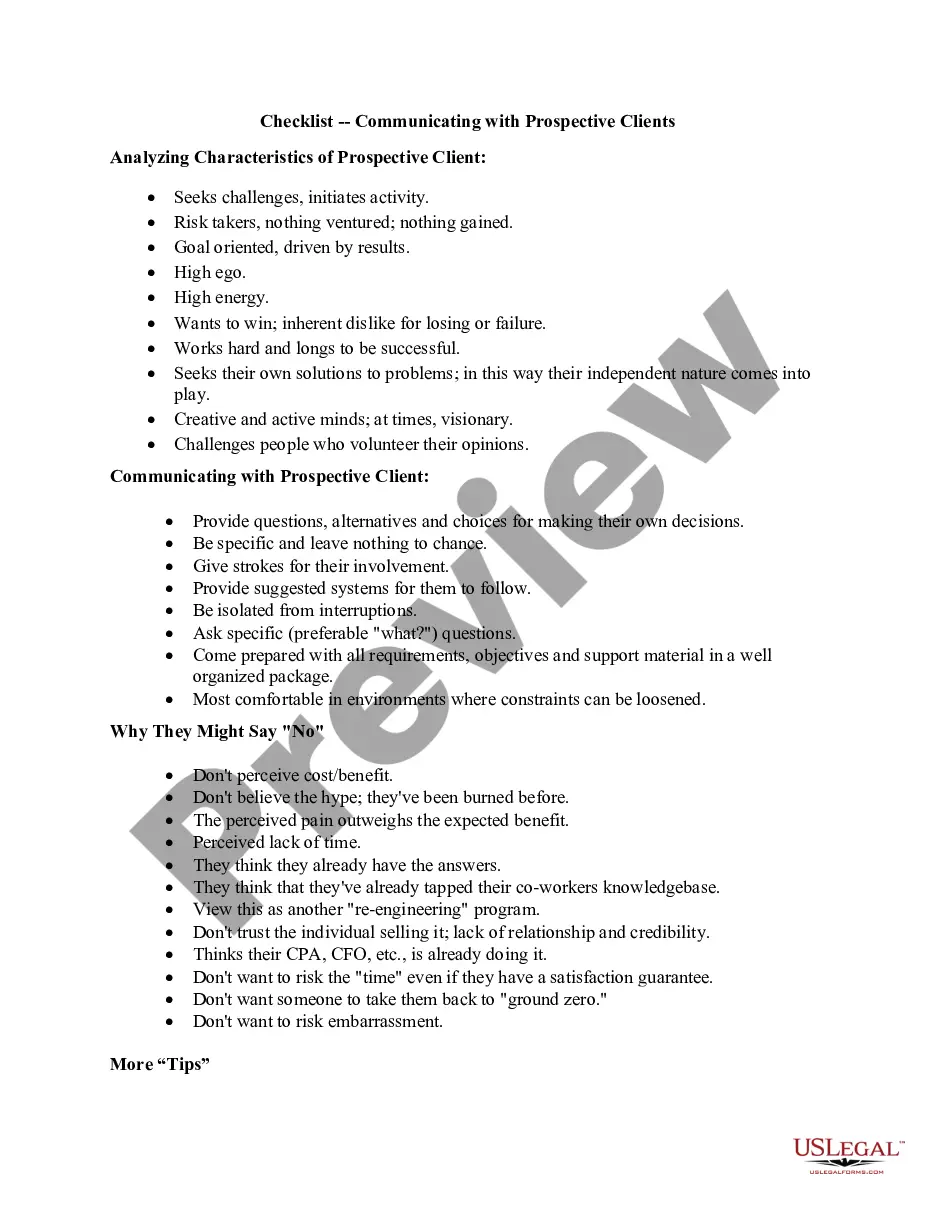
Situations where this form applies
This checklist is ideal for anyone looking to assess and enhance their communication methods within an organization or business. Use this form when creating communication plans, preparing for employee engagement activities, developing marketing strategies, or assessing stakeholder relationships. It can also be useful in training sessions focused on effective communication techniques.
Intended users of this form
- Business owners and managers looking to improve internal and external communication.
- Human resources professionals involved in employee training and engagement.
- Marketing teams aiming to evaluate their outreach methods.
- Consultants and advisors facilitating communication strategy development.
- Anyone managing relationships with clients or stakeholders.
Steps to complete this form
- Review the different categories of communication listed in the checklist.
- Select the methods that are most relevant to your needs or situation.
- Customize the checklist by adding any additional communication tools not listed.
- Evaluate current communication practices based on the selected methods.
- Implement the improved communication strategies in your organization.
Notarization requirements for this form
This form usually doesn’t need to be notarized. However, local laws or specific transactions may require it. Our online notarization service, powered by Notarize, lets you complete it remotely through a secure video session, available 24/7.
Get your form ready online
Our built-in tools help you complete, sign, share, and store your documents in one place.
Make edits, fill in missing information, and update formatting in US Legal Forms—just like you would in MS Word.
Download a copy, print it, send it by email, or mail it via USPS—whatever works best for your next step.
Sign and collect signatures with our SignNow integration. Send to multiple recipients, set reminders, and more. Go Premium to unlock E-Sign.
If this form requires notarization, complete it online through a secure video call—no need to meet a notary in person or wait for an appointment.
We protect your documents and personal data by following strict security and privacy standards.

Make edits, fill in missing information, and update formatting in US Legal Forms—just like you would in MS Word.

Download a copy, print it, send it by email, or mail it via USPS—whatever works best for your next step.

Sign and collect signatures with our SignNow integration. Send to multiple recipients, set reminders, and more. Go Premium to unlock E-Sign.

If this form requires notarization, complete it online through a secure video call—no need to meet a notary in person or wait for an appointment.

We protect your documents and personal data by following strict security and privacy standards.
Mistakes to watch out for
- Overlooking the importance of non-verbal communication elements.
- Failing to customize the checklist to fit specific organizational needs.
- Neglecting to assess the effectiveness of chosen communication methods periodically.
- Using all listed methods indiscriminately rather than selecting the most effective ones.
Advantages of online completion
- Immediate access to a structured checklist that can be downloaded and printed.
- Easy customization to fit unique communication strategies and needs.
- Time-efficient as it provides a comprehensive overview without the need for extensive research.
- Guided insights into various methods of communication enhance effectiveness.
Summary of main points
- The Checklist - Ways to Communicate serves as a valuable tool for improving communication.
- Utilizing this checklist can strengthen relationships with stakeholders.
- Adapt and personalize the checklist to fit your unique communication needs.
Looking for another form?
Form popularity
FAQ
Verbal Communication. Verbal communication occurs when we engage in speaking with others. Non-Verbal Communication. What we do while we speak often says more than the actual words. Written Communication. Listening. Visual Communication.
As you can see, there are at least 6 distinct types of communication: non-verbal, verbal-oral-face-to-face, verbal-oral-distance, verbal-written, formal and informal types of communication.
Reading, writing, speaking, and listening are basic communication skills necessary for effective communication in any environment, particularly the workplace. In a recent study, researchers examined the relationships between these four skills through TOEIC® test scores and found some interesting results.
There are four main types of communication we use on a daily basis: verbal, nonverbal, written and visual.
There are four main types of workplace communication: verbal, body, phone and written.
Pause before responding. Be trustworthy and honest. Don't rush communication. Adapt your ideas to others. Stay in the moment. Pay attention to non-verbal cues. Intend to understand. Be patient and open-minded.
Facial Expressions. You think you know what angry, sad, and happy look like on someone's face? Gestures. Hobo Signs. Emoticons. Sign Language. Music. The Big Five Languages. English.
When communication occurs, it typically happens in one of three ways: verbal, nonverbal and visual. People very often take communication for granted.
Verbal Communication. Verbal communication occurs when we engage in speaking with others. Non-Verbal Communication. What we do while we speak often says more than the actual words. Written Communication. Listening. Visual Communication.