Fire Protection Service Contract - Self-Employed
About this form
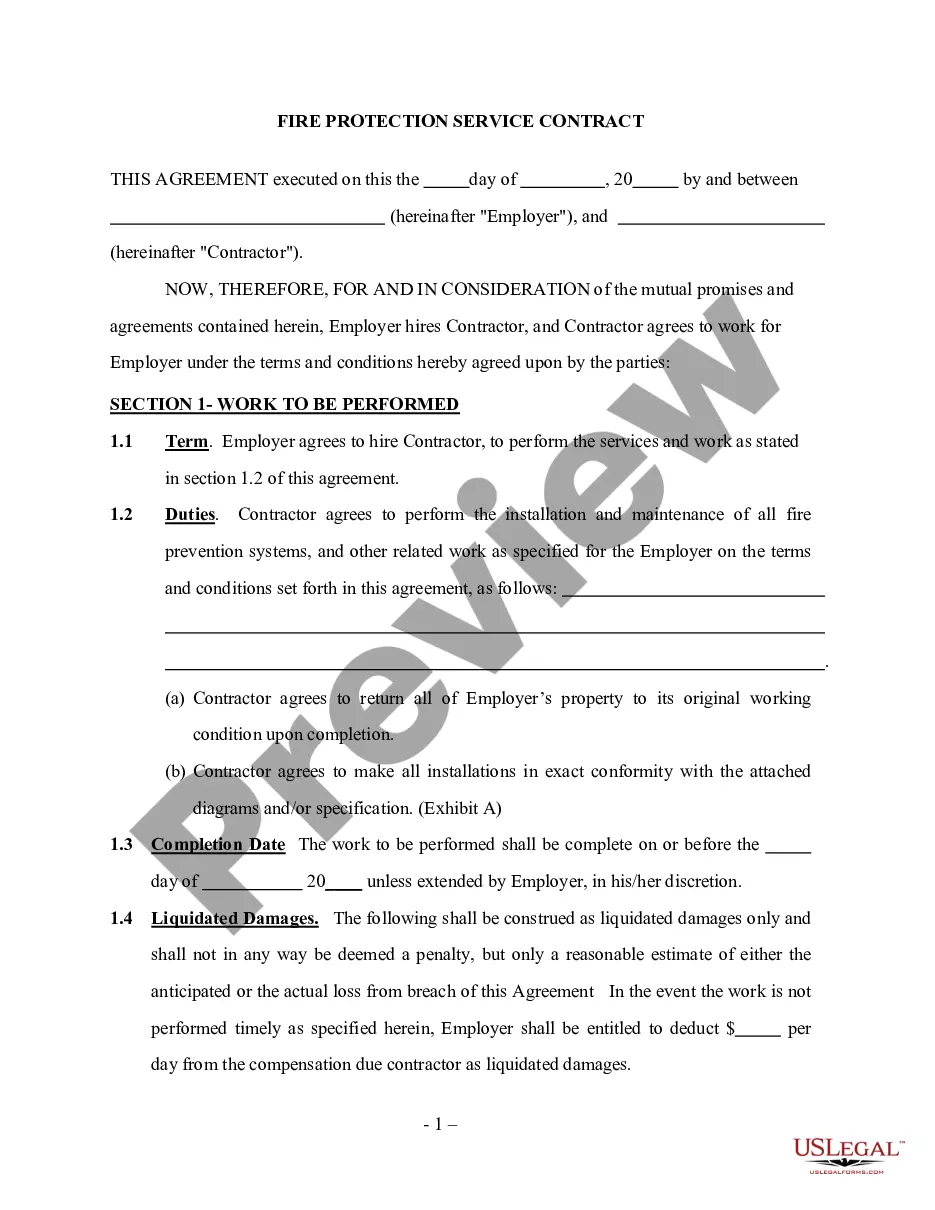
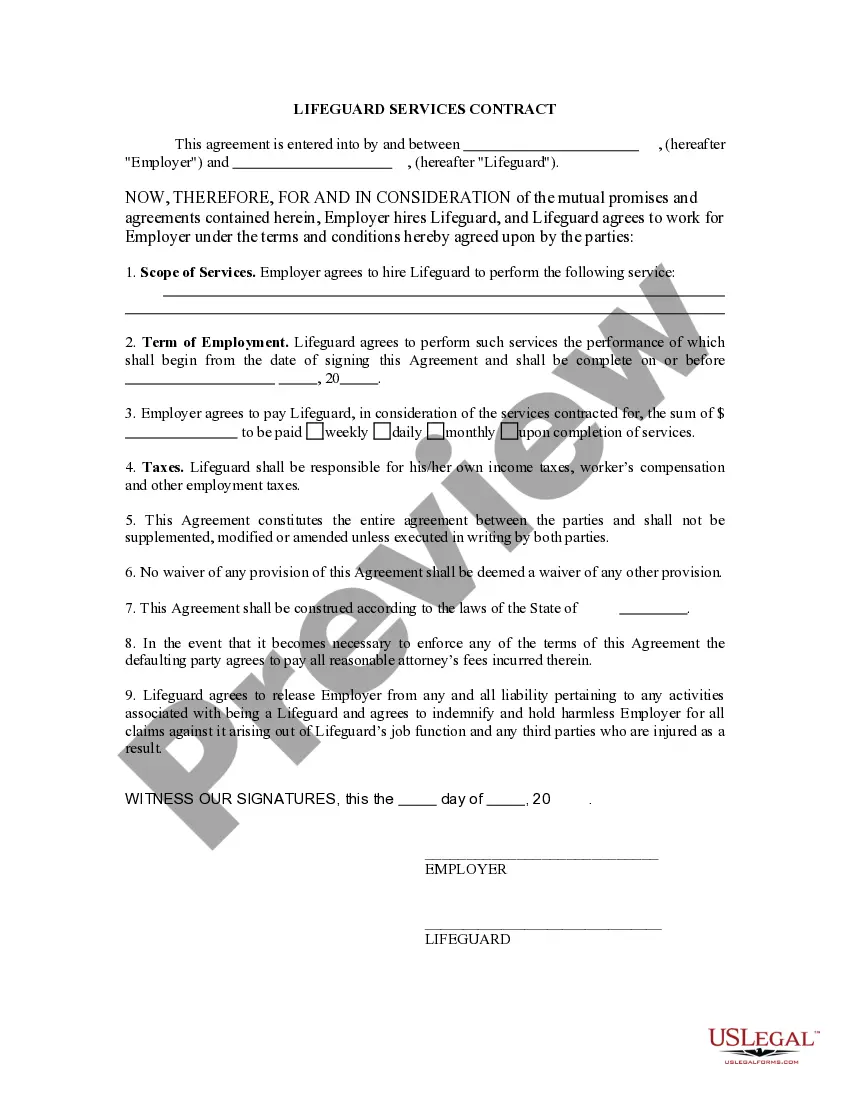
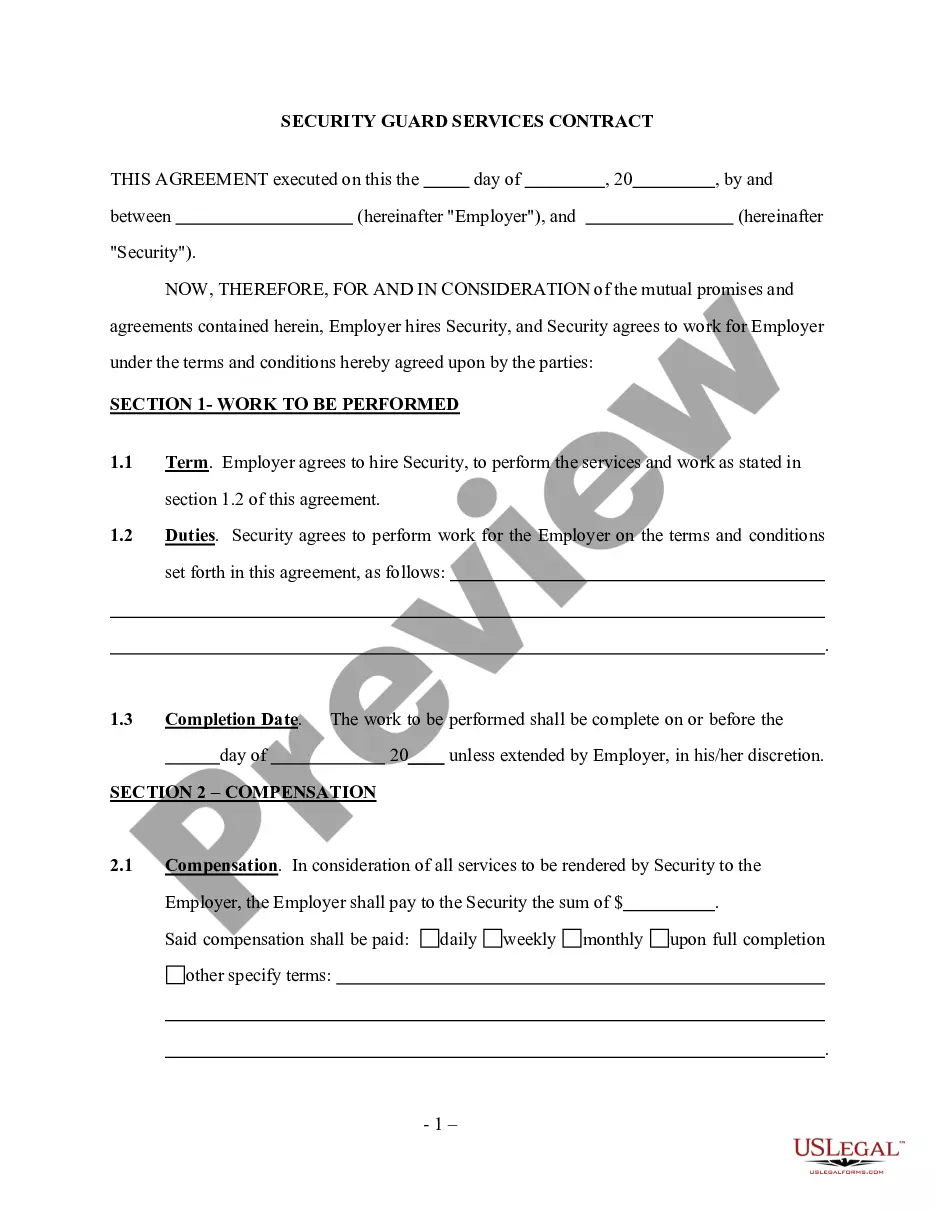
The Fire Protection Service Contract - Self-Employed is a legal agreement between an employer and an independent contractor who is hired to provide, install, and service fire protection systems. This contract outlines the expectations and responsibilities of both parties, ensuring compliance and clarity in the provision of specialized fire protection services. Unlike standard employment contracts, this form recognizes the contractor's independent status, setting clear boundaries on their authority and obligations.
What’s included in this form
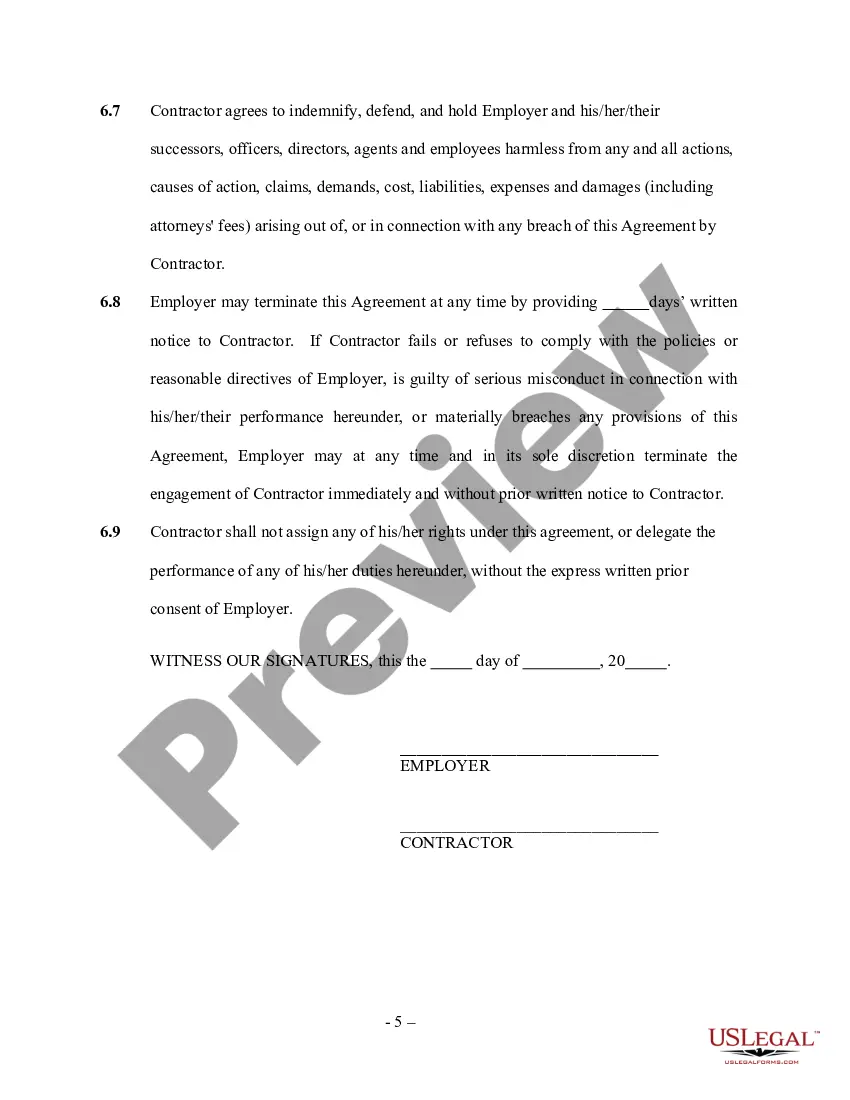
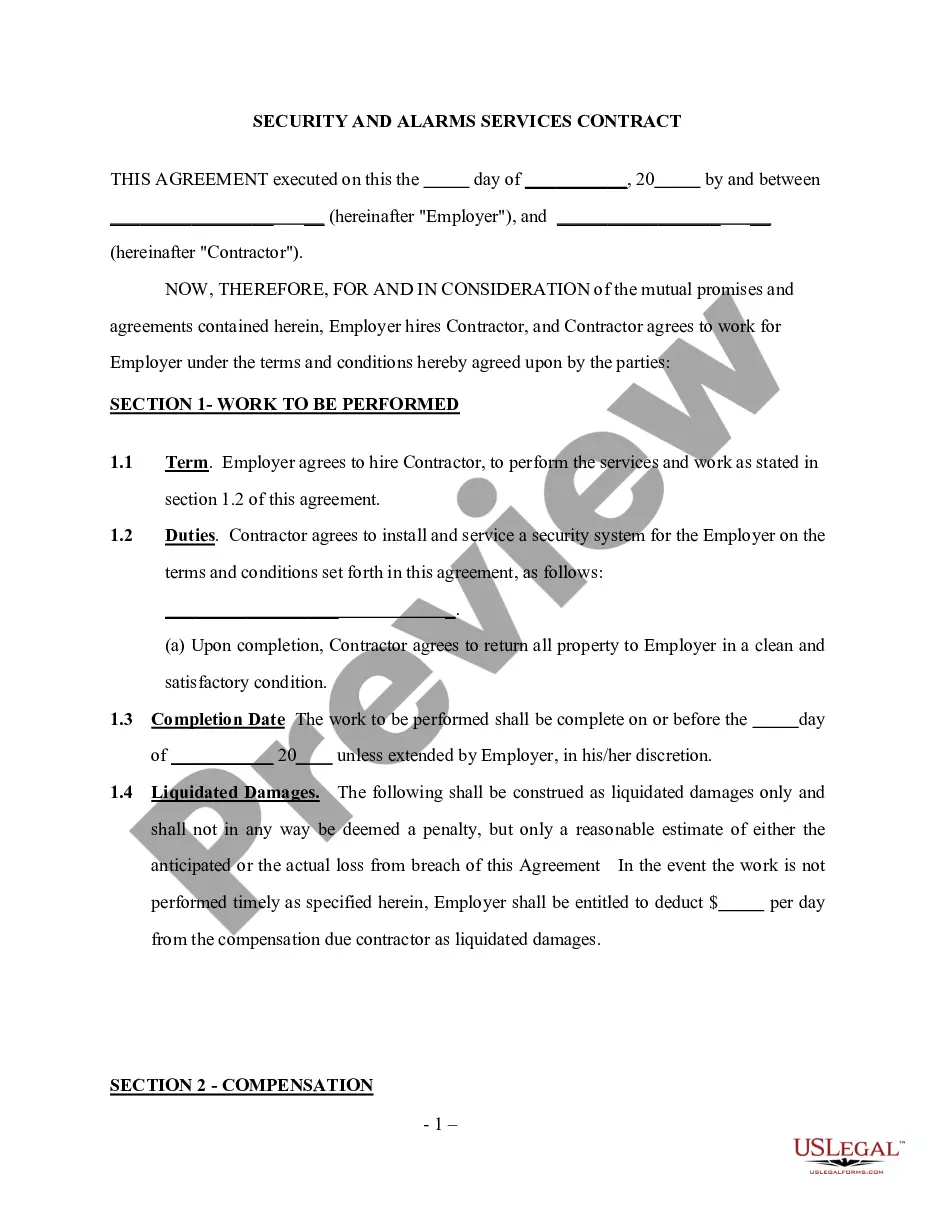
- Work to be Performed: Details the specific services the contractor will provide and the term of the agreement.
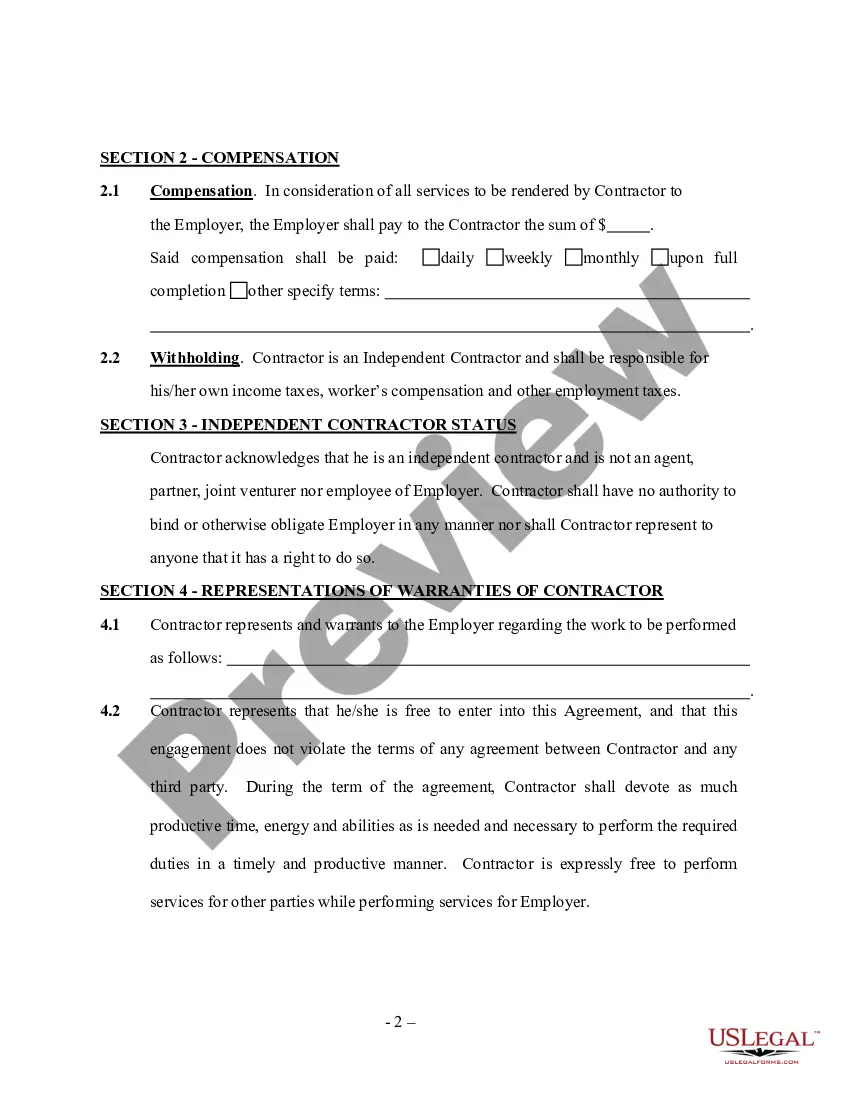
- Independent Contractor Status: Clarifies that the contractor is not an employee and does not have the authority to represent the employer.
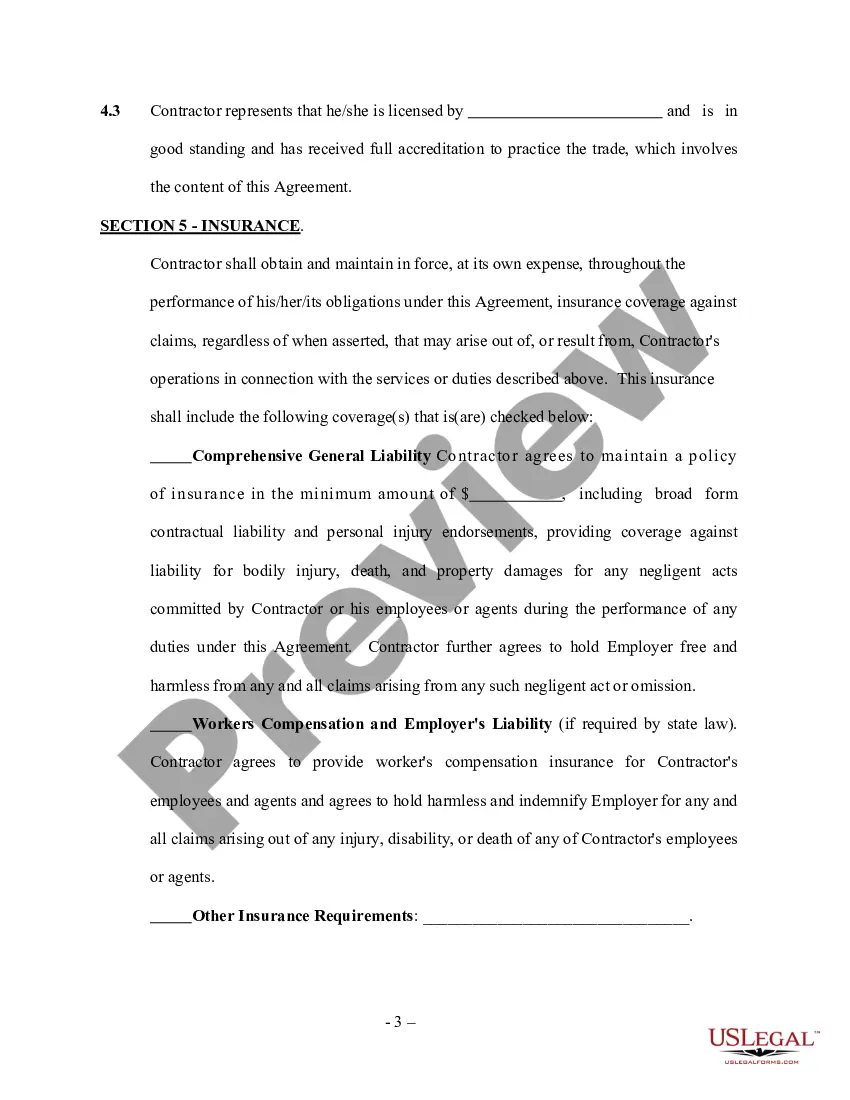
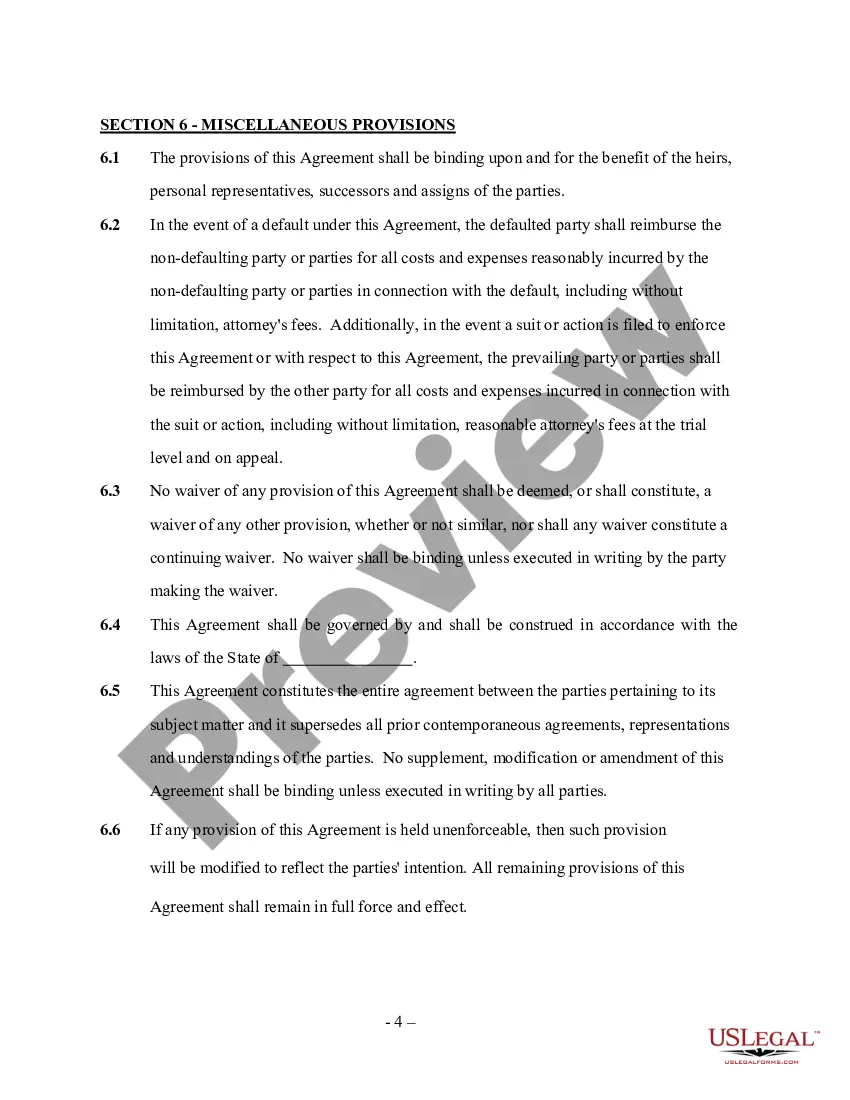
- Terms and Conditions: Provides the conditions under which the contractor will operate and the expectations for service delivery.

When this form is needed
This form is essential when an employer wants to engage a self-employed contractor for fire protection services. Scenarios where this form is particularly useful include when a company requires installation or maintenance of fire systems, when a facility manager needs to ensure compliance with safety regulations, or when a business is expanding and needs specialized contractor services in fire safety.
Who this form is for
- Employers looking to hire independent contractors for fire protection services.
- Independent contractors who provide installation and maintenance services in fire safety.
- Facilities managers seeking to formalize agreements with specialized vendors.
How to prepare this document
- Identify the parties: Enter the names and addresses of the employer and the independent contractor.
- Specify the work to be performed: Clearly outline the services to be provided by the contractor.
- Enter the term: Indicate the start date and duration of the contract.
- Review terms and conditions: Ensure both parties understand their rights and obligations.
- Sign and date the contract: Both parties must sign to agree to the terms laid out in the contract.
Notarization guidance
This form does not typically require notarization unless specified by local law. It is always best practice to check state regulations regarding notarization for contractor agreements.
Get your form ready online
Our built-in tools help you complete, sign, share, and store your documents in one place.
Make edits, fill in missing information, and update formatting in US Legal Forms—just like you would in MS Word.
Download a copy, print it, send it by email, or mail it via USPS—whatever works best for your next step.
Sign and collect signatures with our SignNow integration. Send to multiple recipients, set reminders, and more. Go Premium to unlock E-Sign.
If this form requires notarization, complete it online through a secure video call—no need to meet a notary in person or wait for an appointment.
We protect your documents and personal data by following strict security and privacy standards.

Make edits, fill in missing information, and update formatting in US Legal Forms—just like you would in MS Word.

Download a copy, print it, send it by email, or mail it via USPS—whatever works best for your next step.

Sign and collect signatures with our SignNow integration. Send to multiple recipients, set reminders, and more. Go Premium to unlock E-Sign.

If this form requires notarization, complete it online through a secure video call—no need to meet a notary in person or wait for an appointment.

We protect your documents and personal data by following strict security and privacy standards.
Mistakes to watch out for
- Failing to clearly define the scope of work, which can lead to misunderstandings.
- Not specifying the term of the agreement, which can create uncertainty for both parties.
- Confusing independent contractor status with employee status, which can affect liability and tax obligations.
Why use this form online
- Convenience of downloading and editing the form to meet specific needs.
- Access to legal form templates drafted by licensed attorneys.
- Time-saving as users can complete the form at their own pace.
Legal use & context
- This contract establishes a clear framework for the hiring of a contractor, which helps in minimizing legal disputes.
- It defines the independent status of the contractor, protecting both partiesâ interests under the law.
- Without a proper contract, disputes regarding services rendered and payment could be more challenging to resolve.
Key takeaways
- The Fire Protection Service Contract - Self-Employed is essential for defining the roles and responsibilities of both parties.
- This form protects the rights of the employer and contractor and ensures legal compliance.
- Careful completion of this contract minimizes potential future disputes.
Looking for another form?


Form popularity
FAQ
Employees are paid by a fixed salary or hourly wage while independent contractors are often paid per project. Can the hiring entity terminate the worker at any time? Usually, independent contractors cannot be fired at-will like employees can because they have contracts that outline termination.
A contractor or subcontractor can abandon a contract upon breach by the owner or general contractor, but cannot terminate the contract.Termination for convenience allows the owner/general contractor to stop the work for just about any reason without having to pay for anticipated profit or unperformed work.
Protect your social security number. Have a clearly defined scope of work and contract in place with clients. Get general/professional liability insurance. Consider incorporating or creating a limited liability company (LLC).
Payments that businesses make to independent contractors and self-employed workers are not payroll expenses that qualify for Paycheck Protection Program (PPP) loans. However, independent contractors and sole proprietors themselves are small businesses who can qualify for the loans.
Contact the other person well in advance and explain that you have decided to end the agreement. Your contract should state how much notice you need to give if you want to end the contract early. How you get in touch depends on your relationship (or what is written in your contract).
Always terminate the contractor in writing, rather than orally. Even if the contractor doesn't show up for work, you have to document the termination by sending a written notice specifying the reason for termination without defaming the contractor.
The IRS requires contractors to fill out a Form W-9, request for Taxpayer Identification Number and Certification, which you should keep on file for at least four years after the hiring. This form is used to request the correct name and Taxpayer Identification Number, or TIN, of the worker or their entity.
If your independent contractor agreement contains a provision that allows the parties to terminate the relationship at any time, revise the agreement to include a notice provision with at least some kind of a notice period required for termination of the contract.
Terms. This is the first section of any agreement or contract and states the names and locations of the parties involved. Responsibilities & Deliverables. Payment-Related Details. Confidentiality Clause. Contract Termination. Choice of Law.