Demand for Collateral by Creditor
Overview of this form
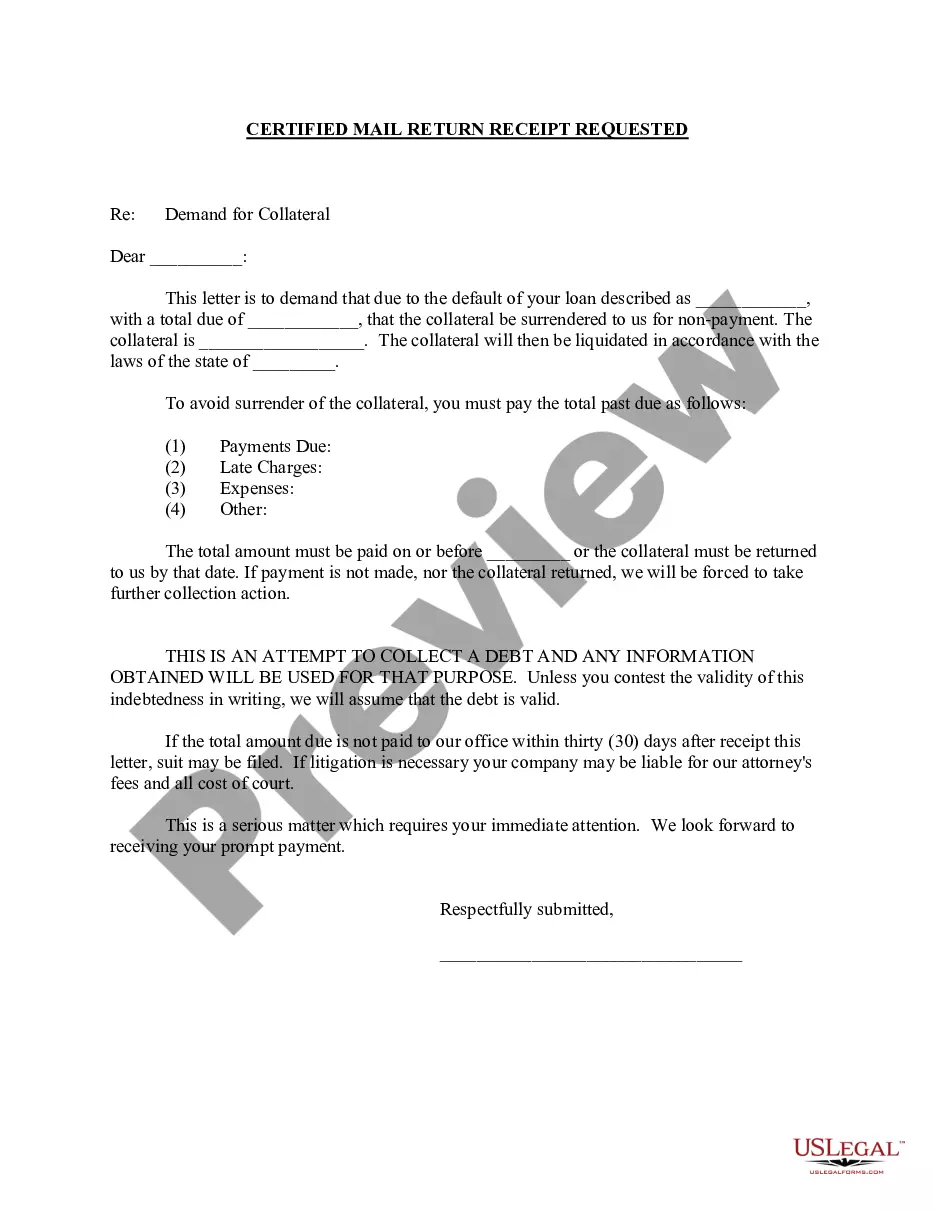
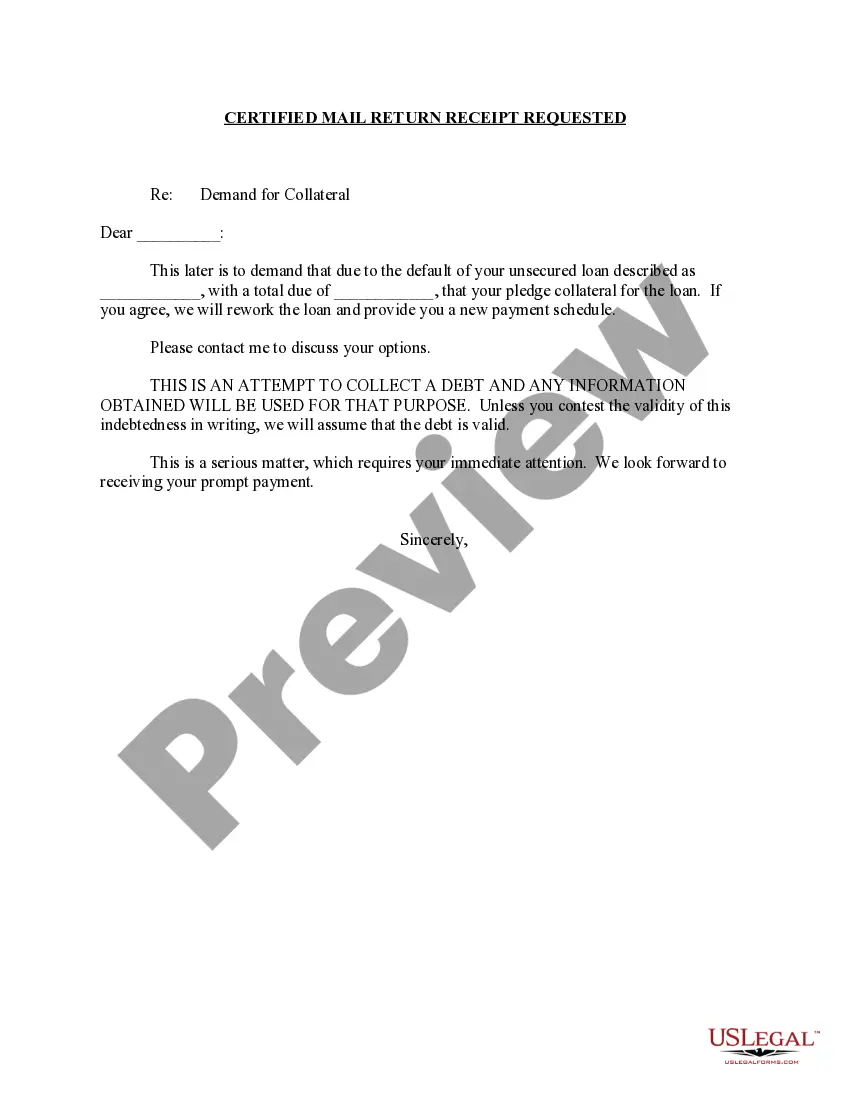
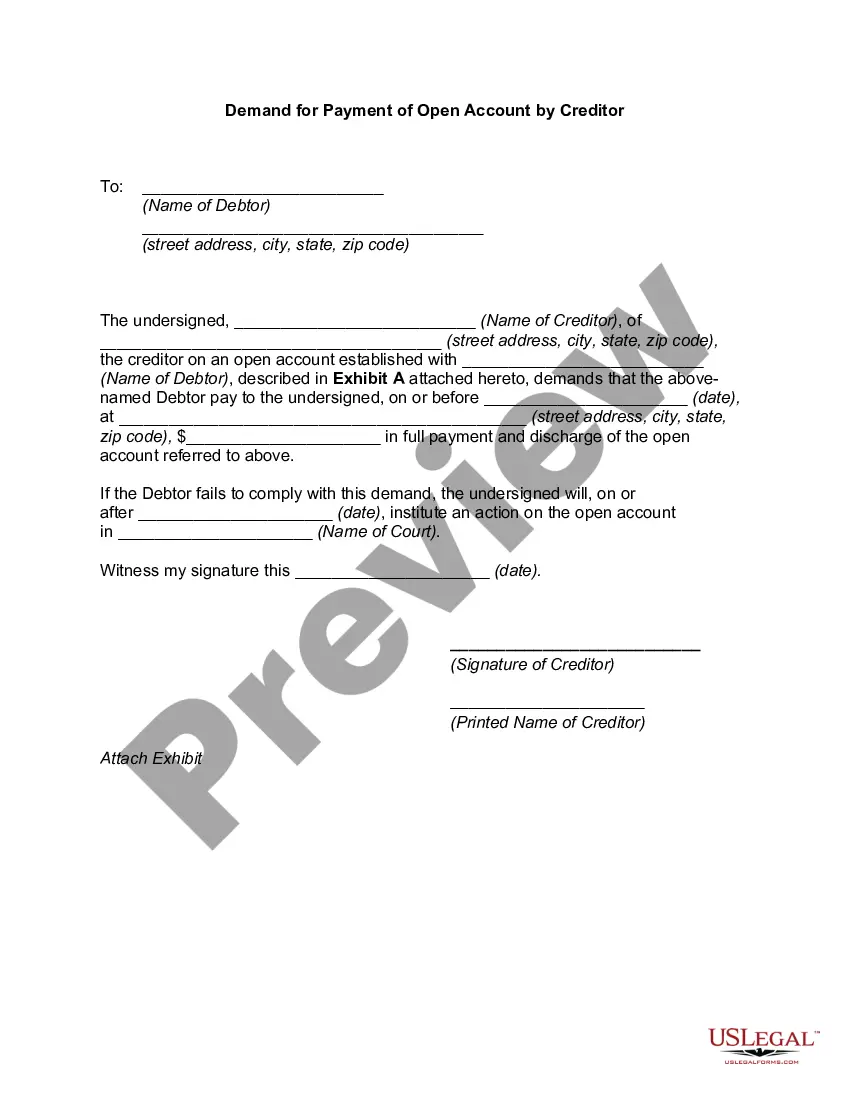
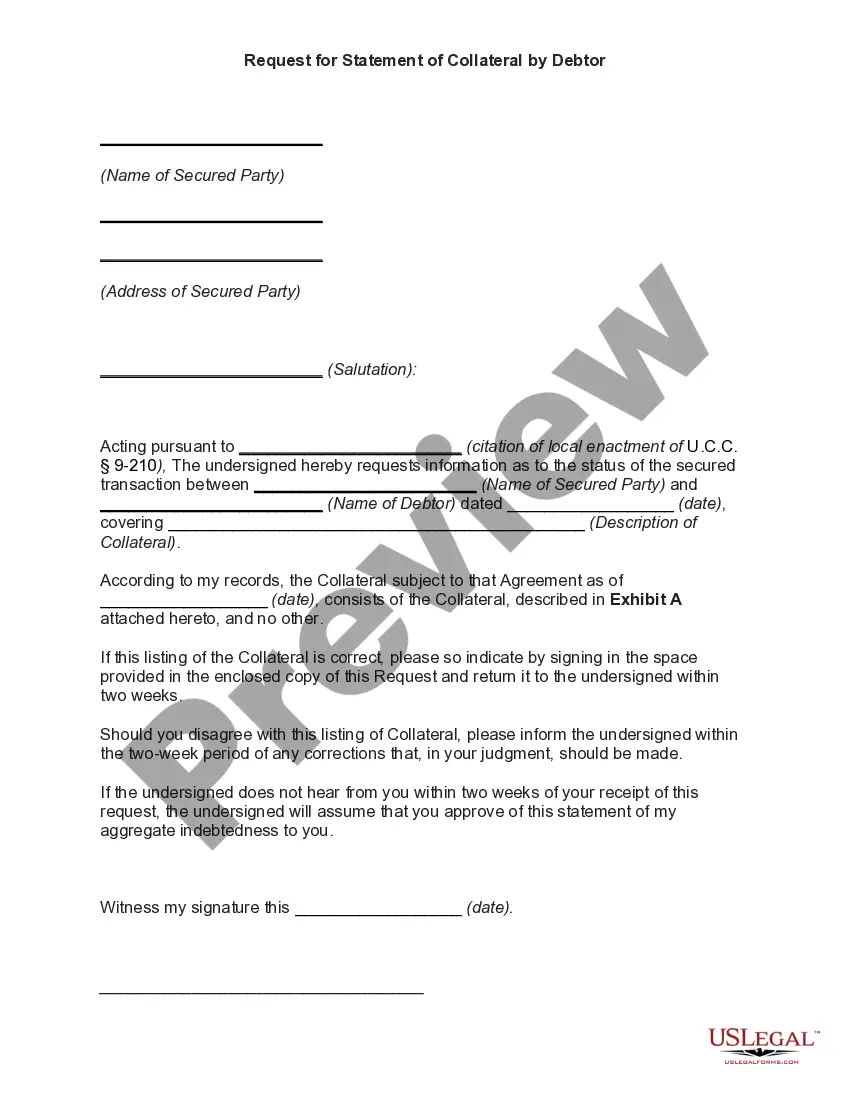
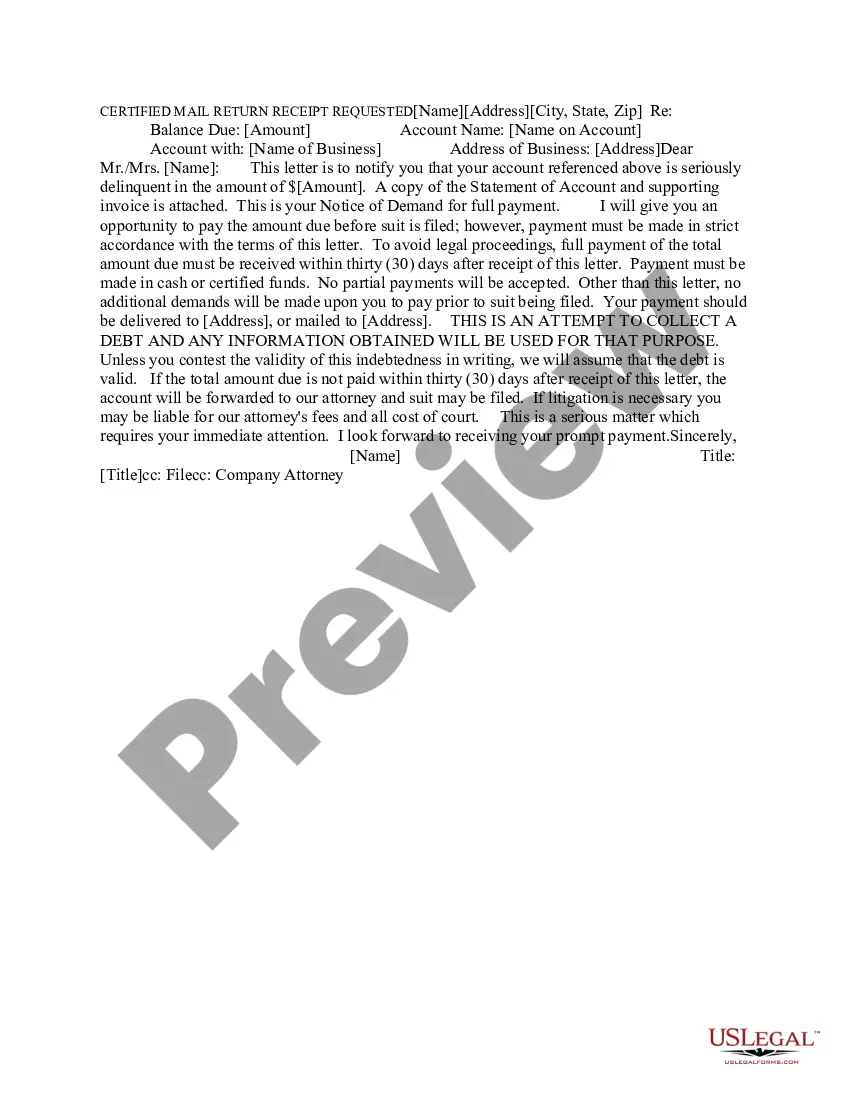
The Demand for Collateral by Creditor is a legal letter that enables creditors to formally request the surrender of collateral due to a default on a loan. This demand underscores the total amount due and outlines the process for liquidating the collateral in accordance with applicable state laws. It serves as a crucial tool for creditors seeking to reclaim secured assets when a borrower fails to fulfill their repayment obligations.
Main sections of this form
- Creditor's name and address
- Borrower's name and address
- Description of the loan and total amount due
- Details about the collateral
- Payment instructions and deadlines
- Legal notice regarding collection action
When to use this document
This form is necessary when a borrower has defaulted on a loan and the creditor wishes to reclaim collateral securing that loan. Use this demand letter if you have not received payments and need to formally request the return of collateral to avert further collection action.
Intended users of this form
- Creditors seeking the return of pledged collateral
- Financial institutions dealing with loan defaults
- Individuals or businesses who have extended credit secured by collateral
How to prepare this document
- Identify and enter the names and addresses of both the creditor and borrower.
- Clearly state the details of the loan, including the total amount due.
- Provide a description of the collateral being demanded.
- Outline the payment requirements and the deadline for compliance.
- Include a legal notice regarding potential collection actions if payment is not received.
Notarization requirements for this form
Notarization is generally not required for this form. However, certain states or situations might demand it. You can complete notarization online through US Legal Forms, powered by Notarize, using a verified video call available anytime.
Get your form ready online
Our built-in tools help you complete, sign, share, and store your documents in one place.
Make edits, fill in missing information, and update formatting in US Legal Forms—just like you would in MS Word.
Download a copy, print it, send it by email, or mail it via USPS—whatever works best for your next step.
Sign and collect signatures with our SignNow integration. Send to multiple recipients, set reminders, and more. Go Premium to unlock E-Sign.
If this form requires notarization, complete it online through a secure video call—no need to meet a notary in person or wait for an appointment.
We protect your documents and personal data by following strict security and privacy standards.

Make edits, fill in missing information, and update formatting in US Legal Forms—just like you would in MS Word.

Download a copy, print it, send it by email, or mail it via USPS—whatever works best for your next step.

Sign and collect signatures with our SignNow integration. Send to multiple recipients, set reminders, and more. Go Premium to unlock E-Sign.

If this form requires notarization, complete it online through a secure video call—no need to meet a notary in person or wait for an appointment.

We protect your documents and personal data by following strict security and privacy standards.
Mistakes to watch out for
- Failing to include complete contact information for both parties.
- Omitting or inaccurately stating the amount due on the loan.
- Not specifying the exact collateral being demanded.
- Neglecting to include a clear deadline for compliance.
Why complete this form online
- Convenient and quick access to professionally drafted legal documents.
- Editable formats allow customization to meet individual loan agreements.
- Reliable templates that comply with legal standards in multiple states.
Legal use & context
- This form is legally enforceable as a demand for collateral under contract law.
- Creditors should keep copies of all correspondence for their records.
- The formal demand can aid in legal proceedings, should further action become necessary.
Quick recap
- The Demand for Collateral by Creditor form is essential for creditors recovering secured assets after loan defaults.
- It is crucial to provide accurate and detailed information when completing the form.
- This legal document serves as both a formal request and a notice of potential collection actions.
Looking for another form?


Form popularity
FAQ
Real estate. The most common type of collateral used by borrowers is real estate. Cash secured loan. Cash is another common type of collateral because it works very simply. Inventory financing. Invoice collateral. Blanket liens.
A secured loan is a loan that has collateral attached to it. This type of loan generally has a lower interest rate because the bank is taking a lower risk because it can collect the collateral if you default on payments. A secured loan is a good way to build credit.
Collateral Demand means the notice given by the Agent (at the direction or with the concurrence of the Majority Revolving Credit Lenders) to the Borrowers to deliver the items listed in Section 7.15 (a), after the occurrence of a Default or an Event Default.
The biggest risk of a collateral loan is you could lose the asset if you fail to repay the loan. It's especially risky if you secure the loan with a highly valuable asset, such as your home. It requires you to have a valuable asset.
Collateral may take the form of real estate or other kinds of assets, depending on the purpose of the loan. The collateral acts as a form of protection for the lender. That is, if the borrower defaults on their loan payments, the lender can seize the collateral and sell it to recoup some or all of its losses.
Obvious forms of collateral include houses, cars, stocks, bonds and cash -- all things that are readily convertible into cash to repay the loan. Some of those assets are "hard," such as houses and automobiles; others are "paper," such as stocks and bonds.
Sometimes creditors require additional collateral to keep a given loan at a constant interest level.Since collateral offers some security to the lender should the borrower fail to pay back the loan, loans that are secured by collateral typically have lower interest rates than unsecured loans.
Right Answer is: CLenders demand any assets of the borrower as a collateral security.