Approval of Clean Up (Fiber Optic System)
Understanding this form
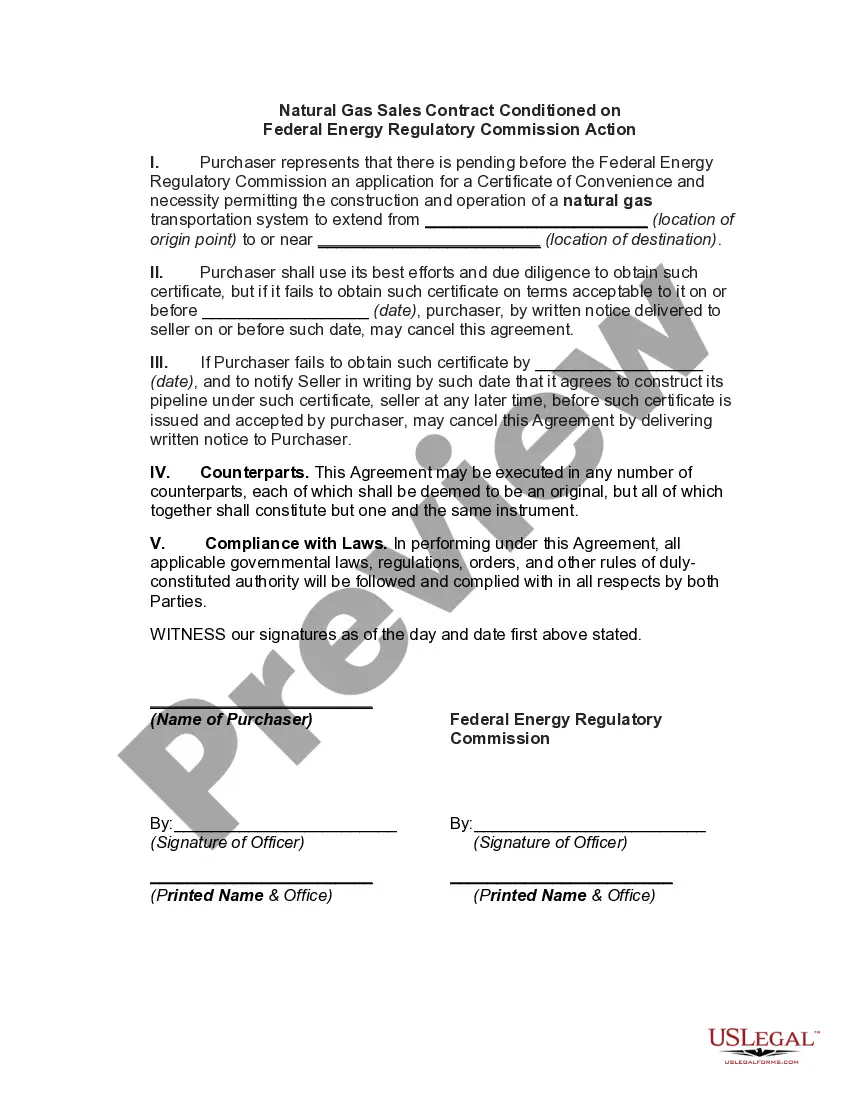
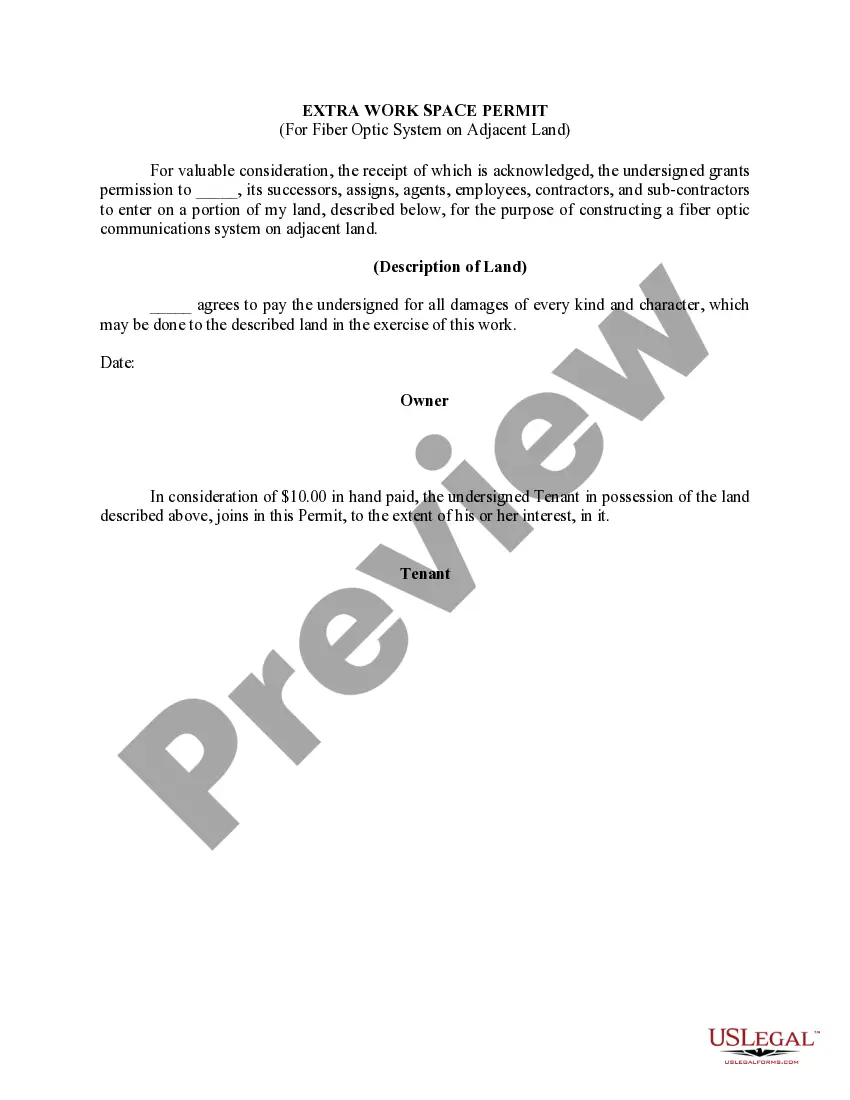
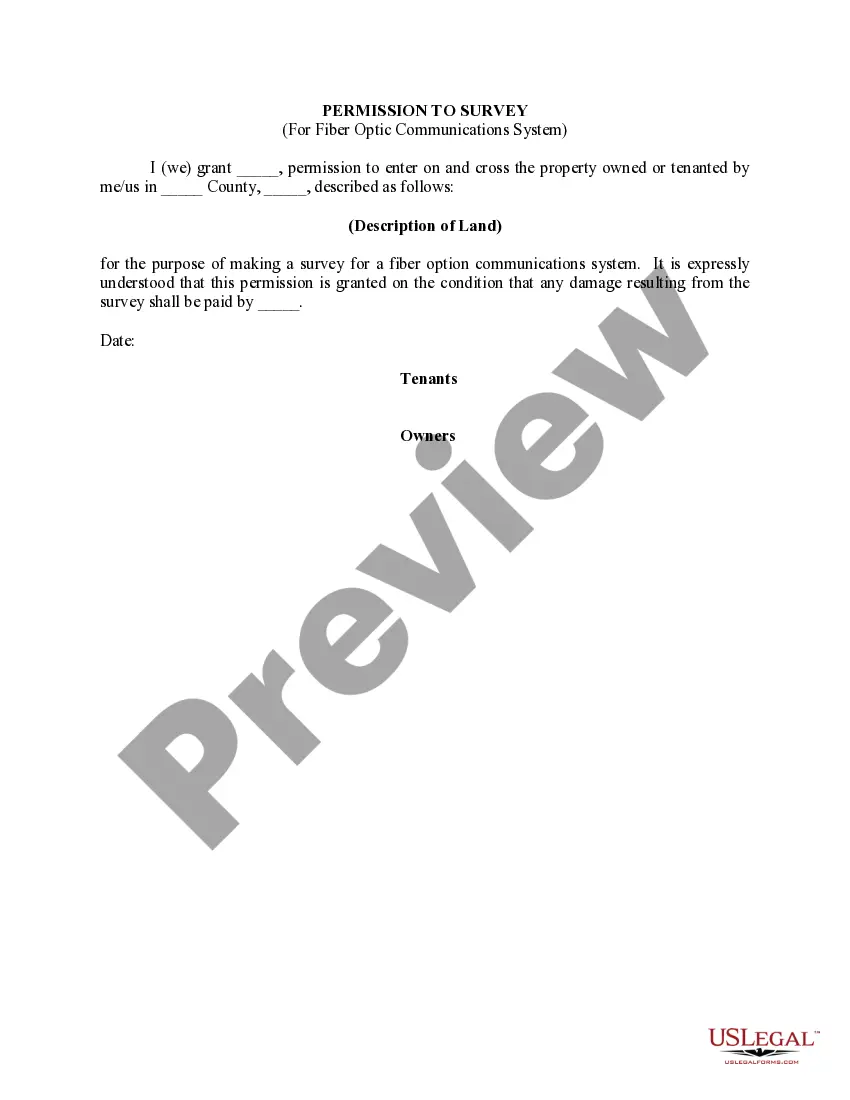
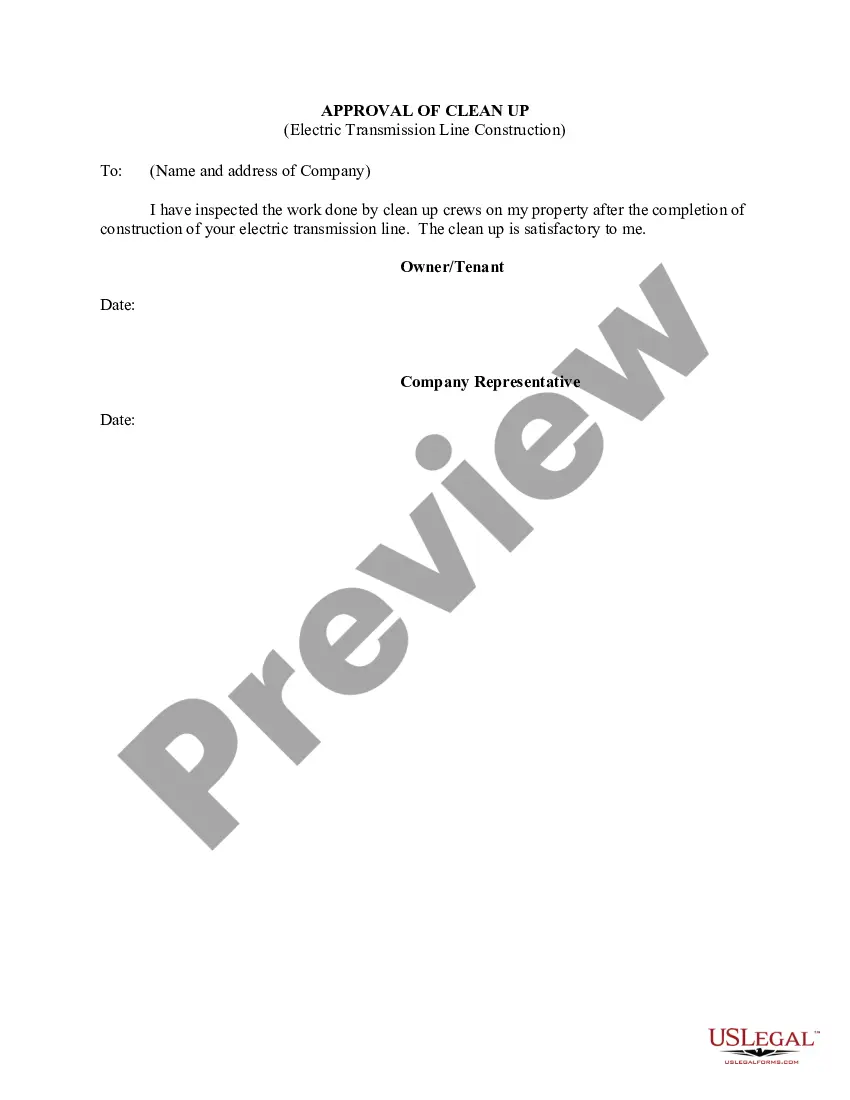
The Approval of Clean Up for a Fiber Optic System is a legal document used to confirm that a property owner is satisfied with the clean-up work conducted by crews following the installation of a fiber optic communications system. This form serves as a formal acknowledgment that the cleanup has met the owner's expectations and differs from other property approval forms by focusing specifically on the cleanup rather than general construction completion.
Key parts of this document
- Inspection confirmation: Signature required to indicate that the property owner has reviewed the cleanup work.
- Owner or tenant details: Fields for the name of the owner or tenant responsible for the property.
- Company representative: A section for the representative of the fiber optic company to sign, acknowledging the approval.
- Date of signing: A field to include the date when the form is completed.
- Property details: A section to specify the location and parcel number for clarity.
Situations where this form applies
This form is necessary when a fiber optic communications system has been installed on a property, and the owner needs to confirm that all cleanup operations have been completed satisfactorily. Use this form to finalize the installation process and ensure that there are no outstanding issues related to cleanup.
Intended users of this form
- Property owners who have had a fiber optic communications system installed on their premises.
- Tenants who have authority to approve cleanup work after construction.
- Representatives of fiber optic installation companies seeking formal approval from property owners.
Completing this form step by step
- Identify the parties involved, including the property owner or tenant and the fiber optic company.
- Specify the property details, including the parcel number and location.
- Review the cleanup work to ensure it meets your expectations.
- Provide the date of inspection and approval.
- Sign and date the form in the designated fields for the owner/tenant and company representative.
Notarization guidance
Notarization is not commonly needed for this form. However, certain documents or local rules may make it necessary. Our notarization service, powered by Notarize, allows you to finalize it securely online anytime, day or night.
Get your form ready online
Our built-in tools help you complete, sign, share, and store your documents in one place.
Make edits, fill in missing information, and update formatting in US Legal Forms—just like you would in MS Word.
Download a copy, print it, send it by email, or mail it via USPS—whatever works best for your next step.
Sign and collect signatures with our SignNow integration. Send to multiple recipients, set reminders, and more. Go Premium to unlock E-Sign.
If this form requires notarization, complete it online through a secure video call—no need to meet a notary in person or wait for an appointment.
We protect your documents and personal data by following strict security and privacy standards.

Make edits, fill in missing information, and update formatting in US Legal Forms—just like you would in MS Word.

Download a copy, print it, send it by email, or mail it via USPS—whatever works best for your next step.

Sign and collect signatures with our SignNow integration. Send to multiple recipients, set reminders, and more. Go Premium to unlock E-Sign.

If this form requires notarization, complete it online through a secure video call—no need to meet a notary in person or wait for an appointment.

We protect your documents and personal data by following strict security and privacy standards.
Mistakes to watch out for
- Forgetting to specify the parcel number and property details.
- Not signing the form, which can render it invalid.
- Failing to date the form, which is crucial for tracking approval timelines.
Benefits of using this form online
- Convenience: Download and complete the form at your own pace.
- Editability: Easily make changes before finalizing your approval.
- Reliability: Access professionally drafted forms, ensuring legal accuracy.
Looking for another form?
Form popularity
FAQ
Avoiding Dirty Fiber: Cleaning and Inspection of Optical Fiber Connectors. Cleanliness of fiber optic connections is critical to the performance of optical communication networks.Dirty fiber that blocks the fiber core generates strong back reflections (Return Loss), and may impact attenuation (Insertion Loss).
A suitable source for an optical fiber communications system must have certain characteristics which include the following: emission at a wavelength within a window of low fiber transmission loss, efficient conversion of prime power to light coupled into the fiber, high reliability, ease of modulation, adequate
An optical fiber-end face must be flat, smooth, and perpendicular to the fiber's axis to ensure proper fiber connection. Light is reflected or scattered at the connection interface unless the connecting fiber end faces are properly prepared.
IEC Standard 61300-3-35 is a global common set of requirements for fiber optic connector end face quality designed to guarantee insertion loss and return loss performance.
Dry cleaning, cleaning with isopropyl alcohol, and wet cleaning of connectors provide poor results. The best fiber optic connector cleaning method is the combination cleaning method. This technique involves using a small amount of solvent on a wiping material and immediately drying the surface.
For plastic optical fibers, the fiber core size ranges from 0.25mm to 3mm of which 1mm is the most popular.
When you unplug a fiber-optic cable from a transceiver, place rubber safety caps over the transceiver and on the end of the cable. Anchor fiber-optic cables to prevent stress on the connectors. Avoid bending fiber-optic cables beyond their minimum bend radius.
For multimode fiber, the loss is about 3 dB per km for 850 nm sources, 1 dB per km for 1300 nm. (3.5 and 1.5 dB/km max per EIA/TIA 568) This roughly translates into a loss of 0.1 dB per 100 feet (30 m) for 850 nm, 0.1 dB per 300 feet(100 m) for 1300 nm.
Benefits to using the IEC 61300-3-35 standard for fiber-endface measurement and inspection.