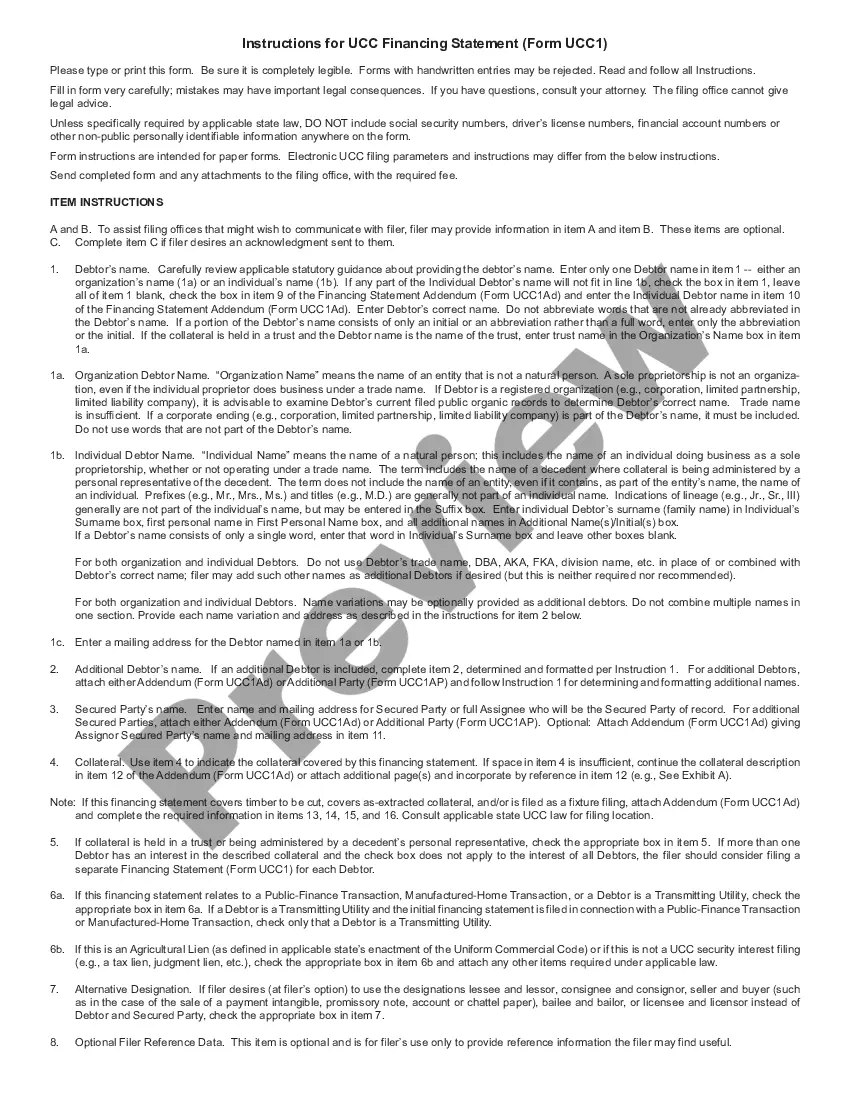
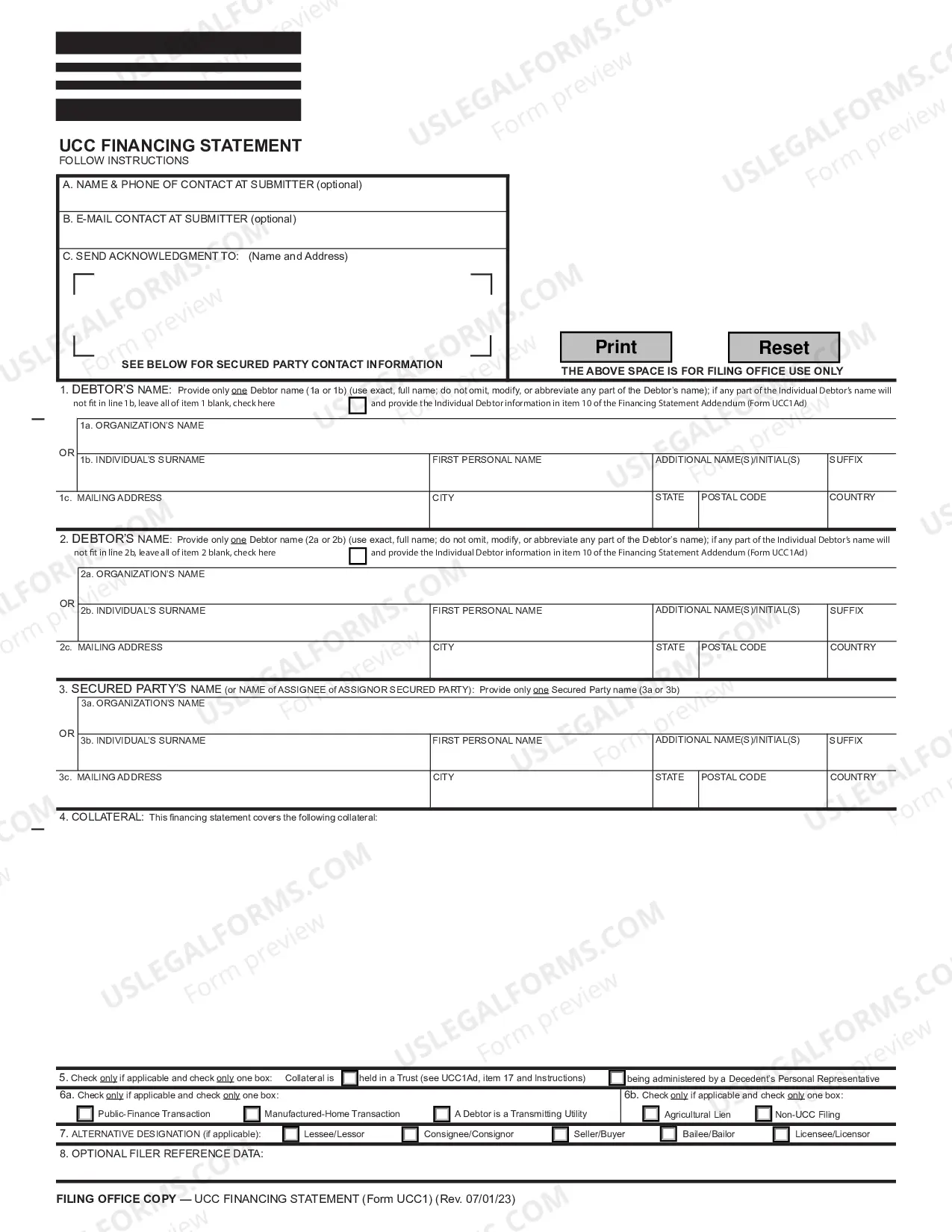
North Carolina UCC1 Financing Statement
Description
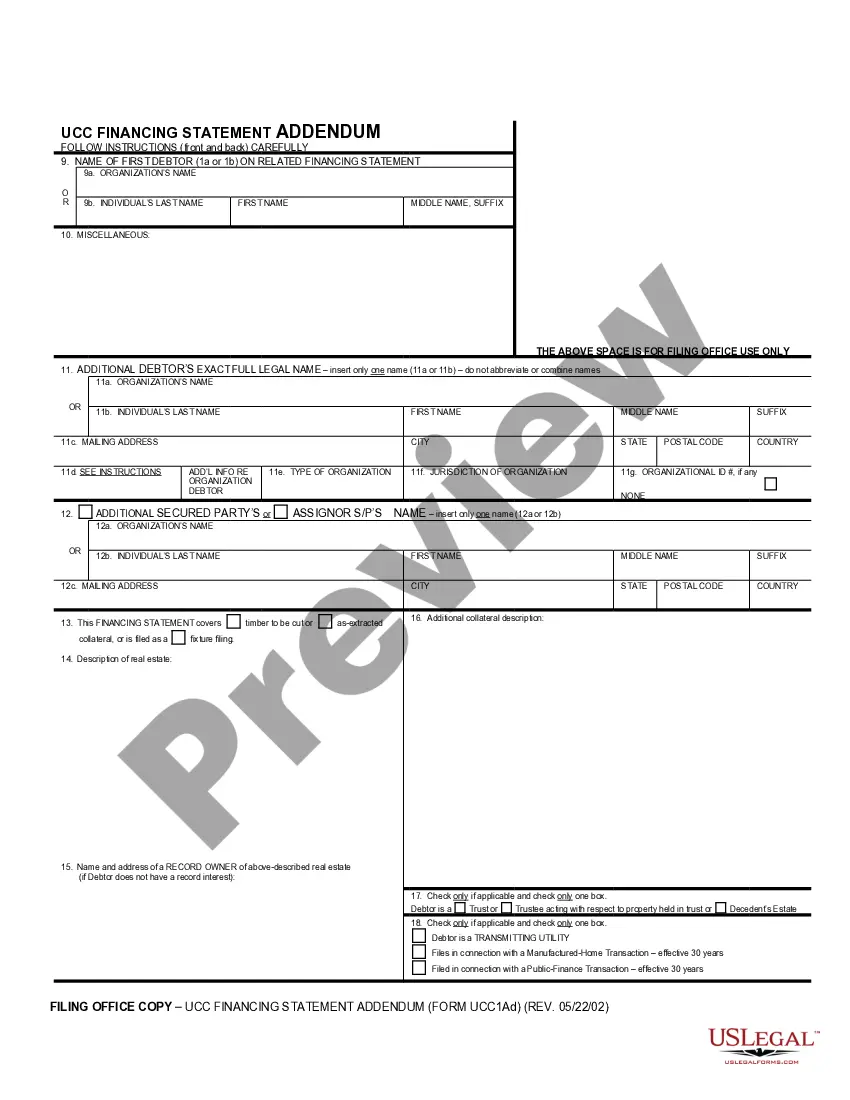
Get your form ready online
Our built-in tools help you complete, sign, share, and store your documents in one place.
Make edits, fill in missing information, and update formatting in US Legal Forms—just like you would in MS Word.
Download a copy, print it, send it by email, or mail it via USPS—whatever works best for your next step.
Sign and collect signatures with our SignNow integration. Send to multiple recipients, set reminders, and more. Go Premium to unlock E-Sign.
If this form requires notarization, complete it online through a secure video call—no need to meet a notary in person or wait for an appointment.
We protect your documents and personal data by following strict security and privacy standards.

Make edits, fill in missing information, and update formatting in US Legal Forms—just like you would in MS Word.

Download a copy, print it, send it by email, or mail it via USPS—whatever works best for your next step.

Sign and collect signatures with our SignNow integration. Send to multiple recipients, set reminders, and more. Go Premium to unlock E-Sign.

If this form requires notarization, complete it online through a secure video call—no need to meet a notary in person or wait for an appointment.

We protect your documents and personal data by following strict security and privacy standards.
Looking for another form?

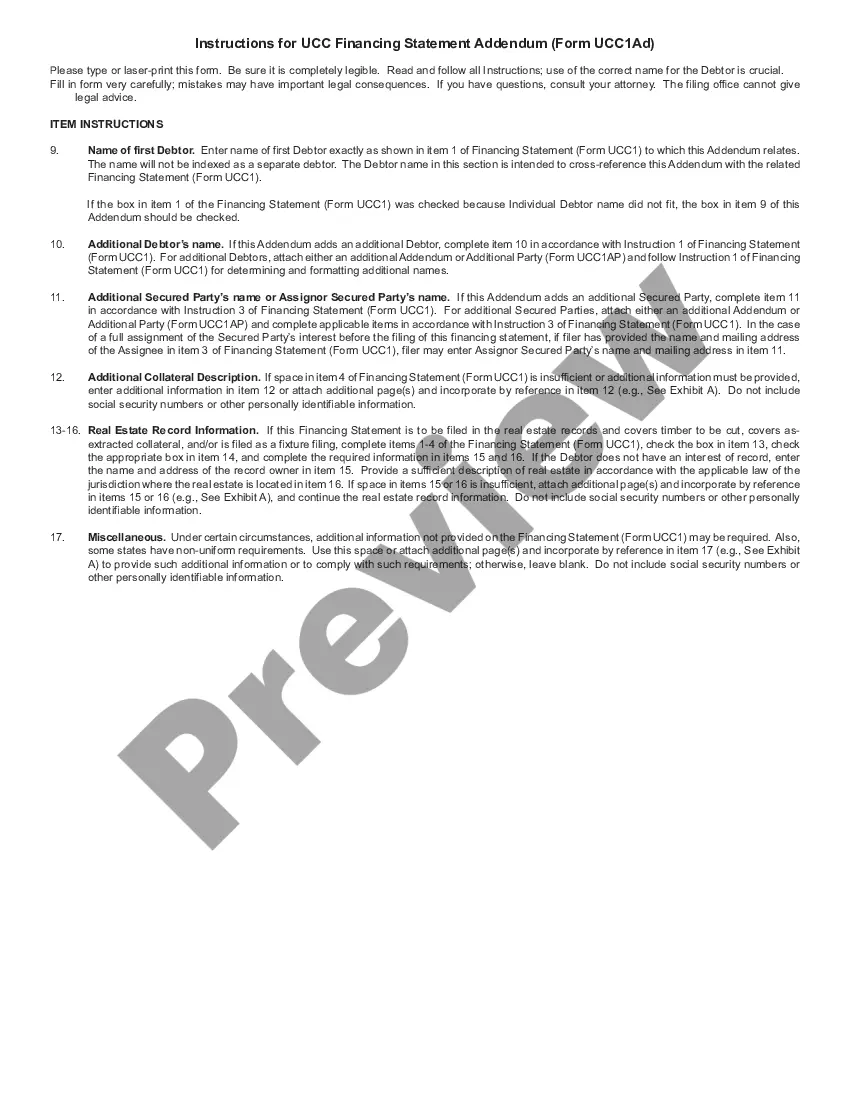
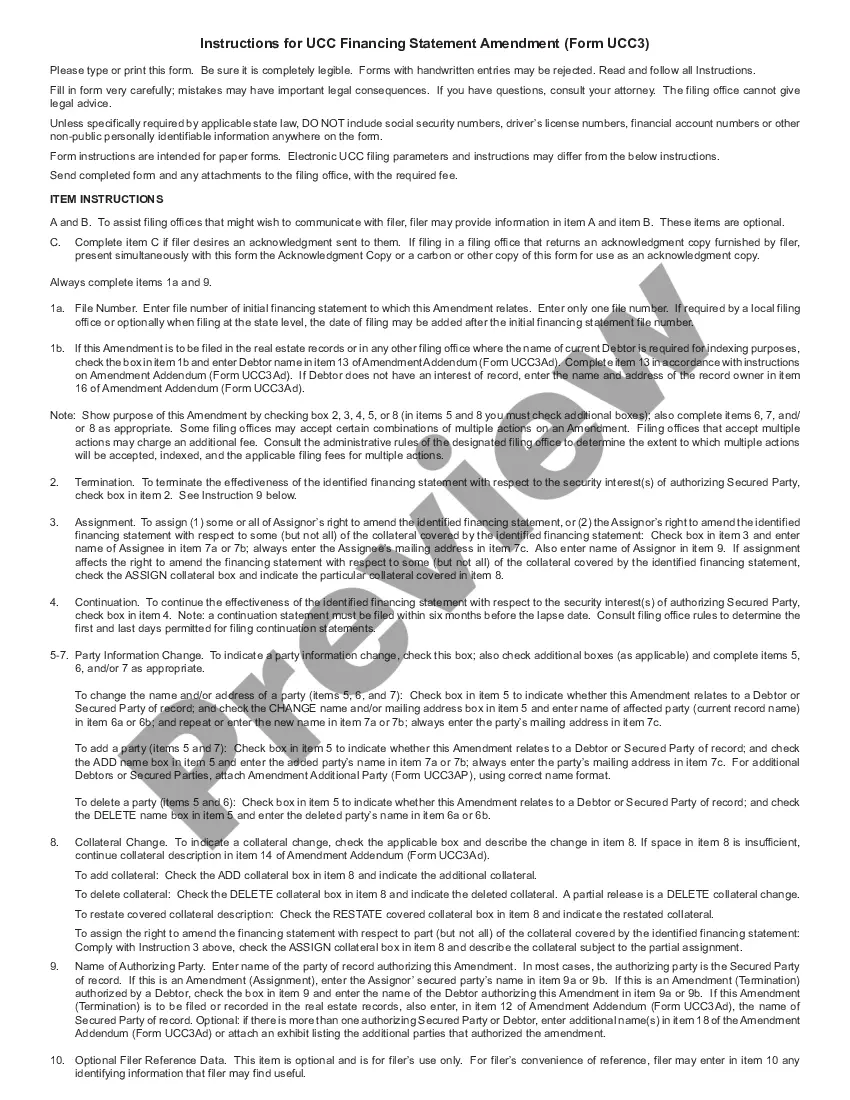
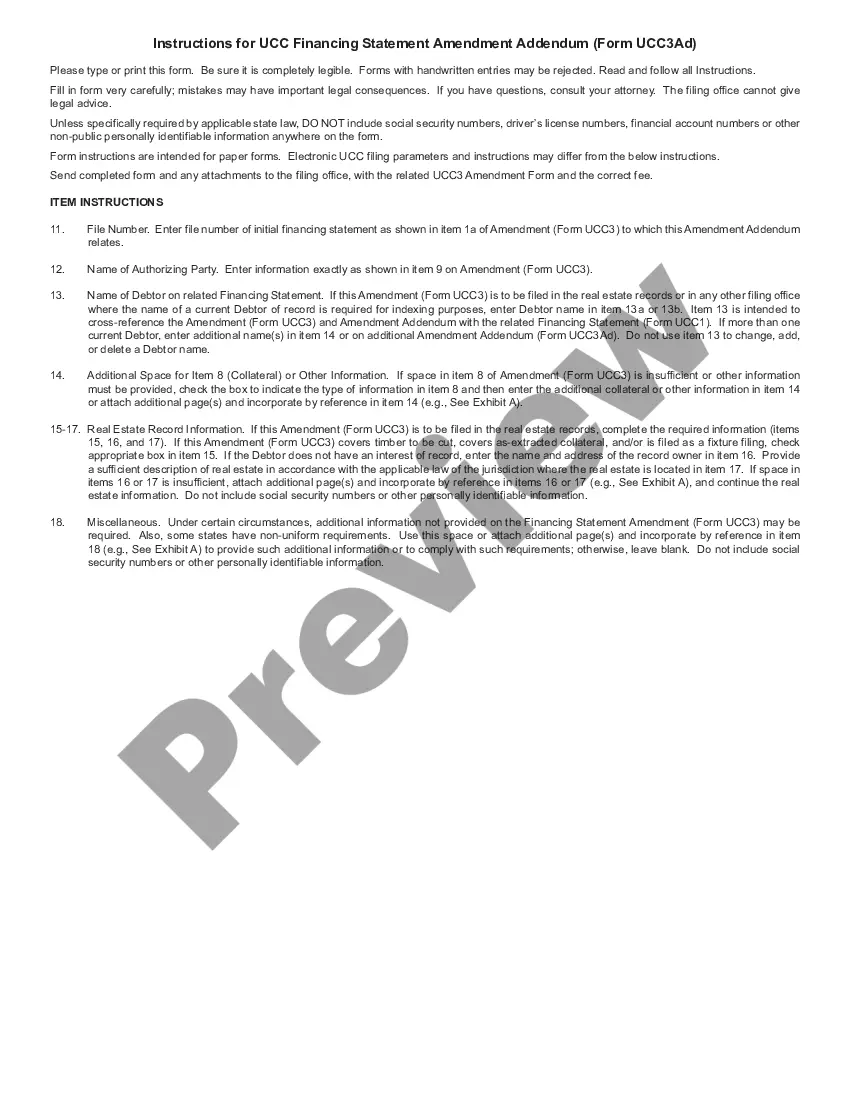
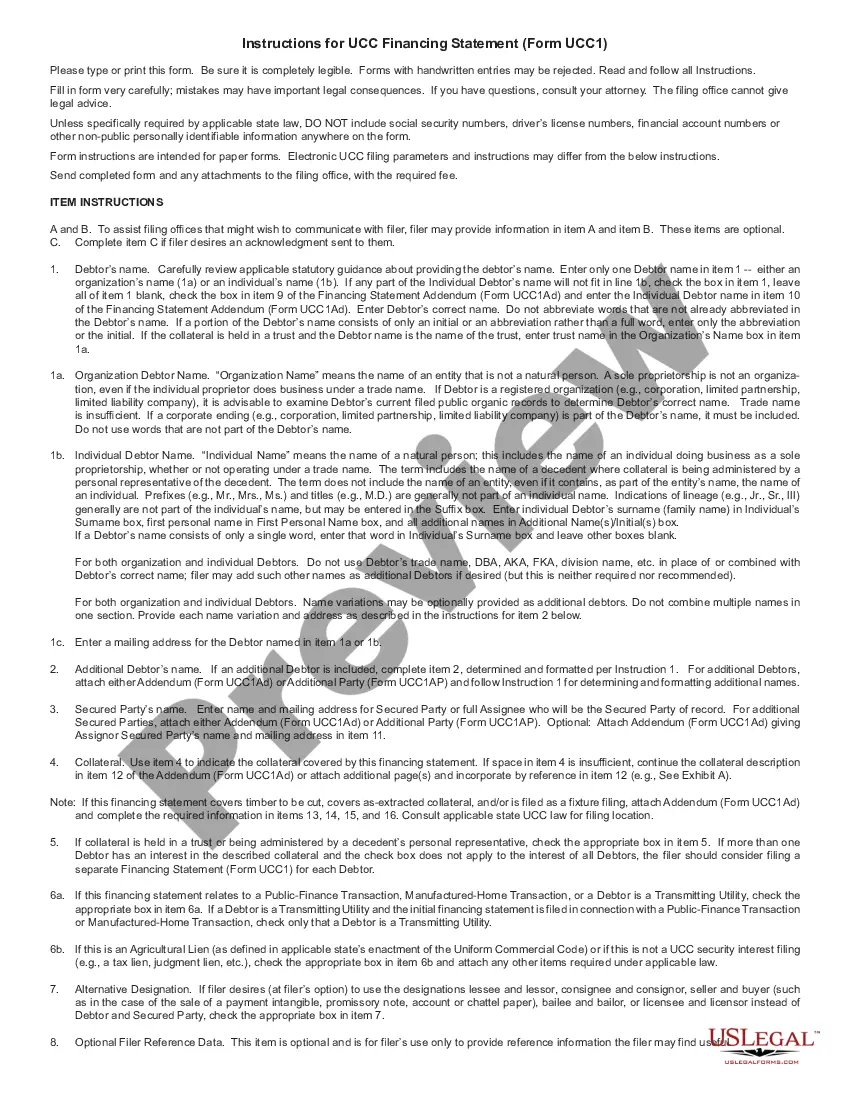
How to fill out North Carolina UCC1 Financing Statement?
Steer clear of expensive attorneys and discover the North Carolina UCC1 Financing Statement you seek at an economical rate on the US Legal Forms site.
Utilize our straightforward categories feature to locate and acquire legal and tax documents. Review their descriptions and preview them before downloading.
Select to receive the document in PDF or DOCX format. Simply click Download and locate your form in the My documents tab. You can save the template to your device or print it. After downloading, you may fill out the North Carolina UCC1 Financing Statement by hand or with editing software. Print it and reuse the template multiple times. Achieve more for less with US Legal Forms!
- Moreover, US Legal Forms provides users with detailed instructions on how to download and fill out each template.
- US Legal Forms clients simply need to sign in and access the specific document they require from their My documents section.
- Those who do not have a subscription yet should adhere to the guidelines outlined below.
- Ensure the North Carolina UCC1 Financing Statement is valid for use in your jurisdiction.
- If applicable, browse the description and utilize the Preview feature before downloading the sample.
- If you are certain the document meets your requirements, click Buy Now.
- If the form is incorrect, use the search bar to find the correct one.
- Next, create your account and choose a subscription plan.
- Pay via credit card or PayPal.
Form popularity
FAQ
A creditor files a UCC-1 to provide notice to interested parties that he or she has a security interest in a debtor's personal property. This personal property is being used as collateral in some type of secured transaction, usually a loan or a lease.
UCC filings or liens are legal forms that a creditor files to give notice that it has an interest in the personal or business property of a debtor. Essentially, UCC lien filings allow a lender to formally lay claim to collateral that a debtor pledges to secure their financing.
UCC-1 Financing Statements do not have to be signed by either the Debtor or Secured Party; however, they must be authorized.Although the UCC-1 Financing Statement does not require signatures, any attachment such as the legal description or special terms and conditions may require the signature of the Debtor.
The UCC-1 statement serves as a lien on secured collateral, where the components and filing procedures are comparable to the lien requirements in residential mortgage loan contracts.
The UCC-1 Financing Statement is filed to protect a lender's or creditor's security interest by giving public notice that there is a right to take possession of and sell certain assets for repayment of a specific debt with a certain debtor.
Searching Secretary of State Records Online. Locate the correct secretary of state's website. UCC financing statement forms must be filed in the state where the borrower is located. Most states have online directories of UCC filings available on the secretary of state's website.
When is a UCC-1 Filed? UCC-1 filings typically happen when a loan is first originated. If the borrower has loans from more than one lender, the first lender to file the UCC-1 is first in line for the borrower's assets. This motivates lenders to file a UCC-1 as soon as a loan is made.
The financing statement is generally filed with the office of the state secretary of state, in the state where the debtor is located - for an individual, the state where the debtor resides, for most kinds of business organizations the state of incorporation or organization.