Tennessee Tenancy Agreement
What this document covers
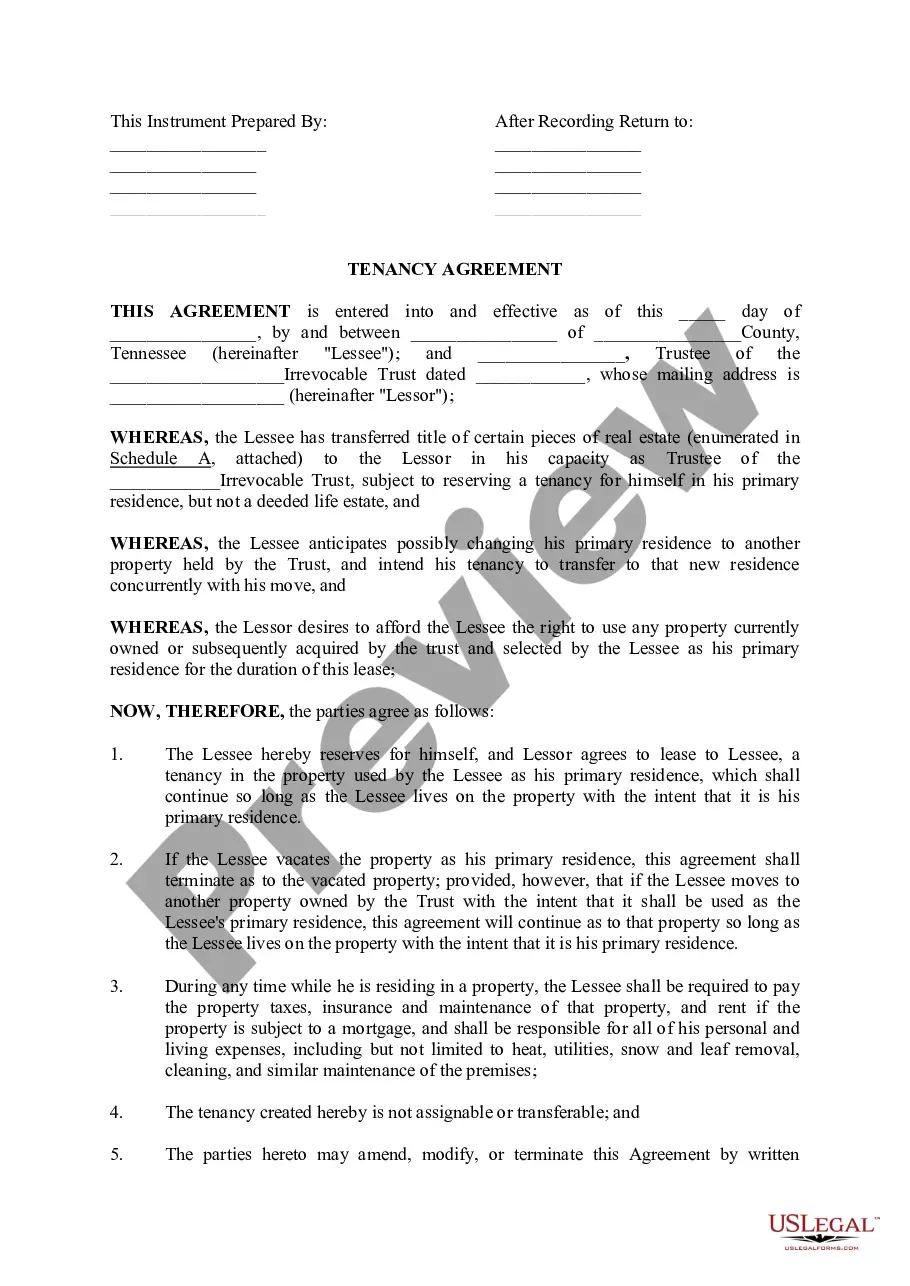
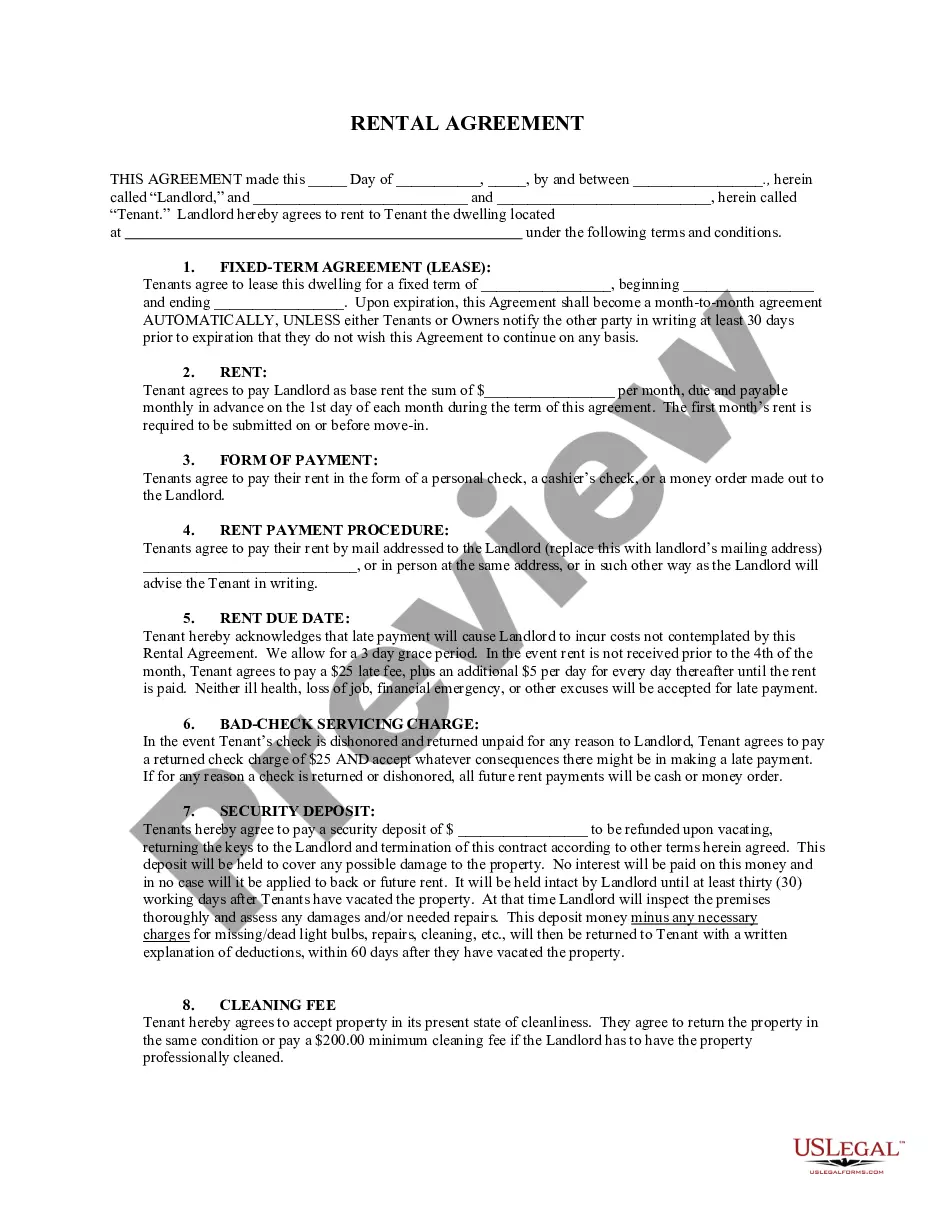
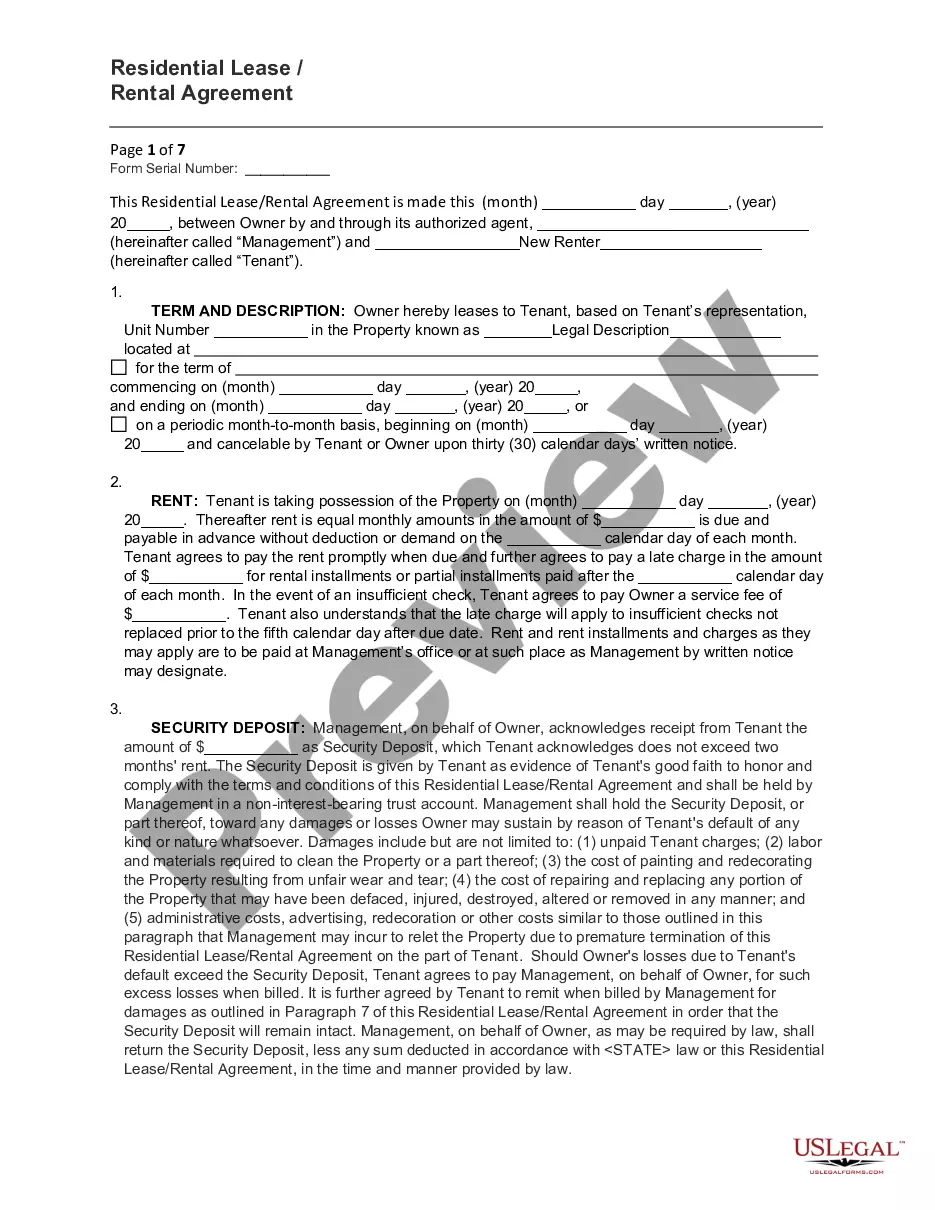
The Tenancy Agreement is a legal document that establishes the rental relationship between a lessee and a trustee of an irrevocable trust. This form allows the lessee to reserve a tenancy in a property held by the trust while enabling the flexibility to transfer their tenancy should they change their primary residence to another property owned by the trust. This unique arrangement is different from standard rental agreements as it specifically addresses the interests of both the lessee and the trust, ensuring clarity in situations of property transfer within the trust.
Form components explained
- Identification of the parties involved: Lessee and Trustee.
- Reservation of tenancy rights in the primary residence.
- Conditions for transferring tenancy to other properties held by the trust.
- Responsibilities of the lessee, including property upkeep and payment of associated costs.
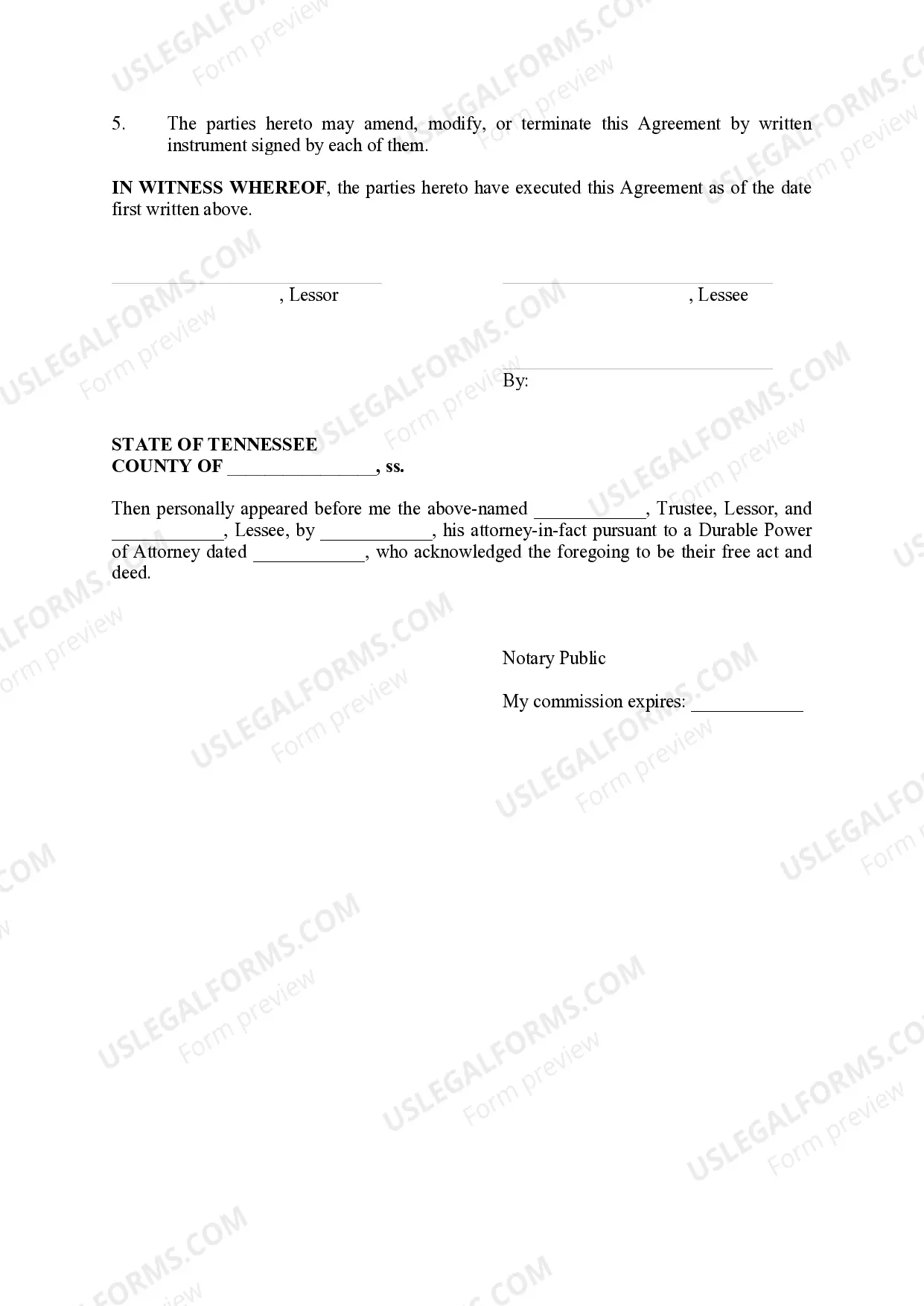
- Provisions for amendments or terminations of the agreement.
When this form is needed
This form is useful when a property owner, who has transferred their real estate into an irrevocable trust, wants to maintain the right to reside in a primary property while having the ability to move to another property within the trust without losing tenancy rights. It is appropriate for individuals planning to change their residence among properties owned by an irrevocable trust.
Who can use this document
- Individuals who have established an irrevocable trust owning real estate.
- Those who wish to maintain tenancy rights in a primary residence even after transferring property into the trust.
- Trustees managing real estate for the benefit of the trust beneficiaries.
Steps to complete this form
- Identify the parties involved: ensure the names and addresses of the lessee and trustee are properly recorded.
- Describe the property: Include details of the primary residence and any properties to which tenancy may transfer.
- Specify the effective date of the agreement and any reservation of tenancy rights.
- Detail the responsibilities of the lessee, including payment of taxes, insurance, and maintenance obligations.
- Ensure both parties sign the agreement to acknowledge their acceptance of the terms.
Notarization guidance
This form does not typically require notarization unless specified by local law. However, to ensure legal validity, it's advised to acknowledge the agreement before a notary public.
Get your form ready online
Our built-in tools help you complete, sign, share, and store your documents in one place.
Make edits, fill in missing information, and update formatting in US Legal Forms—just like you would in MS Word.
Download a copy, print it, send it by email, or mail it via USPS—whatever works best for your next step.
Sign and collect signatures with our SignNow integration. Send to multiple recipients, set reminders, and more. Go Premium to unlock E-Sign.
If this form requires notarization, complete it online through a secure video call—no need to meet a notary in person or wait for an appointment.
We protect your documents and personal data by following strict security and privacy standards.

Make edits, fill in missing information, and update formatting in US Legal Forms—just like you would in MS Word.

Download a copy, print it, send it by email, or mail it via USPS—whatever works best for your next step.

Sign and collect signatures with our SignNow integration. Send to multiple recipients, set reminders, and more. Go Premium to unlock E-Sign.

If this form requires notarization, complete it online through a secure video call—no need to meet a notary in person or wait for an appointment.

We protect your documents and personal data by following strict security and privacy standards.
Typical mistakes to avoid
- Failing to accurately identify and describe the properties involved.
- Not specifying the terms of tenancy transfer when moving between properties.
- Neglecting to include all responsibilities of the lessee, which can lead to disputes.
Advantages of online completion
- Convenience: Easily download the form at your convenience without the need for an appointment.
- Editability: Tailor the document to fit specific needs and circumstances before printing.
- Reliability: Forms are created by licensed attorneys, ensuring legal compliance and effectiveness.
Looking for another form?

Form popularity
FAQ
The first thing a landlord must do is provide the tenant with a written notice that an eviction will occur in 30 days if the tenant does not comply with the terms of the lease within 14 days. This notice is required by T.C.A. Section 66-28-505.
Title 66 - Property. Chapter 28 - Uniform Residential Landlord and Tenant Act. (b) The landlord may enter the premises without consent of the tenant in case of emergency.
These types of tenancy agreements are most commonly used by private landlords who are choosing to forgo using a letting agent or property management firm. People can even draw up their own tenancy agreements based on the free downloadable templates available on the internet.
Your landlord can end the let at any time by serving a written 'notice to quit'. The notice period will depend on the tenancy or agreement, but is often at least 4 weeks.
Notice Requirements for Tennessee Landlords A landlord can simply give you a written notice to move, allowing you 30 days as required by Tennessee law and specifying the date on which your tenancy will end.
Tennessee definitely landlord friendly. If you have the tenant waive their right to the whole legislative eviction process, which you can legally do, you can put them out real fast after the legal grace period (5 business days).
You are responsible for: paying your rent on time, paying any late fees, keeping the place clean and safe, not letting anyone else damage it, not breaking the law, disposing of your garbage, and following your landlord's rules. If you break your lease, then it may become a legal issue.
Landlords are prohibited from harassing or retaliating against tenants who exercise their legal rights. In Tennessee, the landlord must not terminate, refuse to renew a lease, or fine a tenant for complaining to the landlord regarding the deposit, complaining to a government agency, or exercising a legal right.