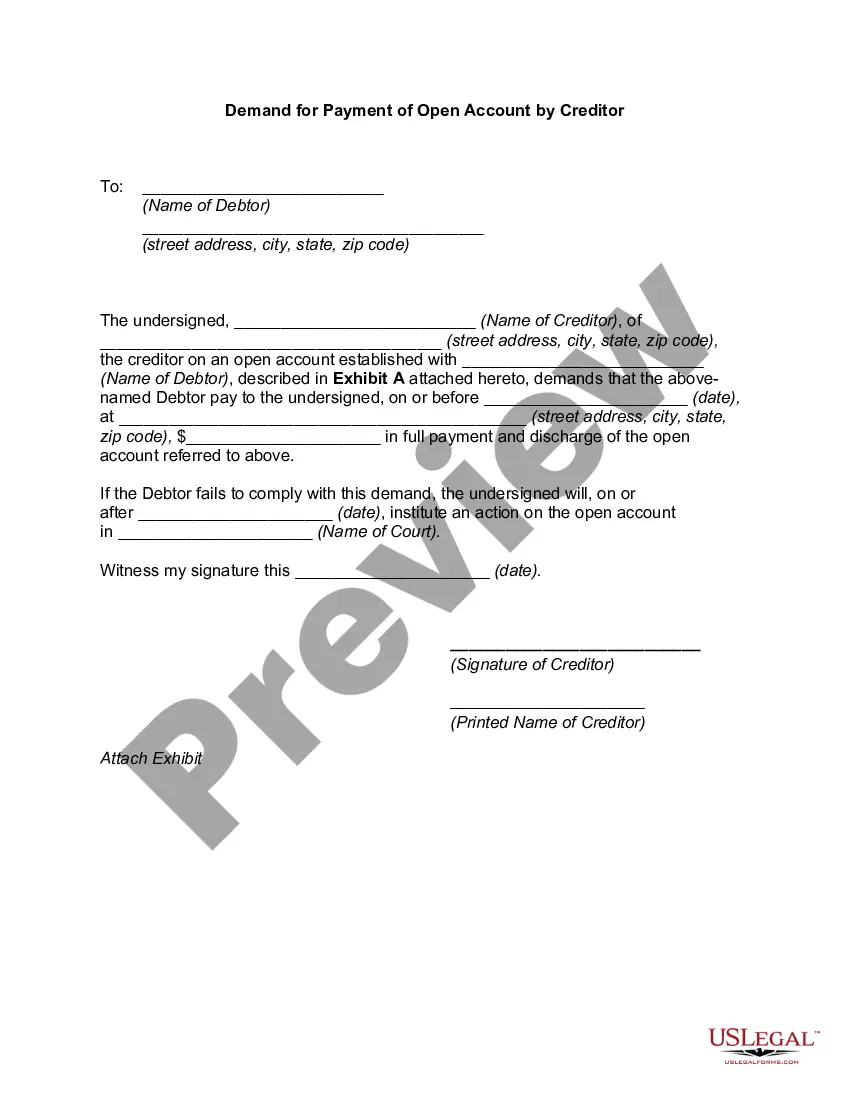
Demand for Payment of an Open Account by Creditor
Overview of this form
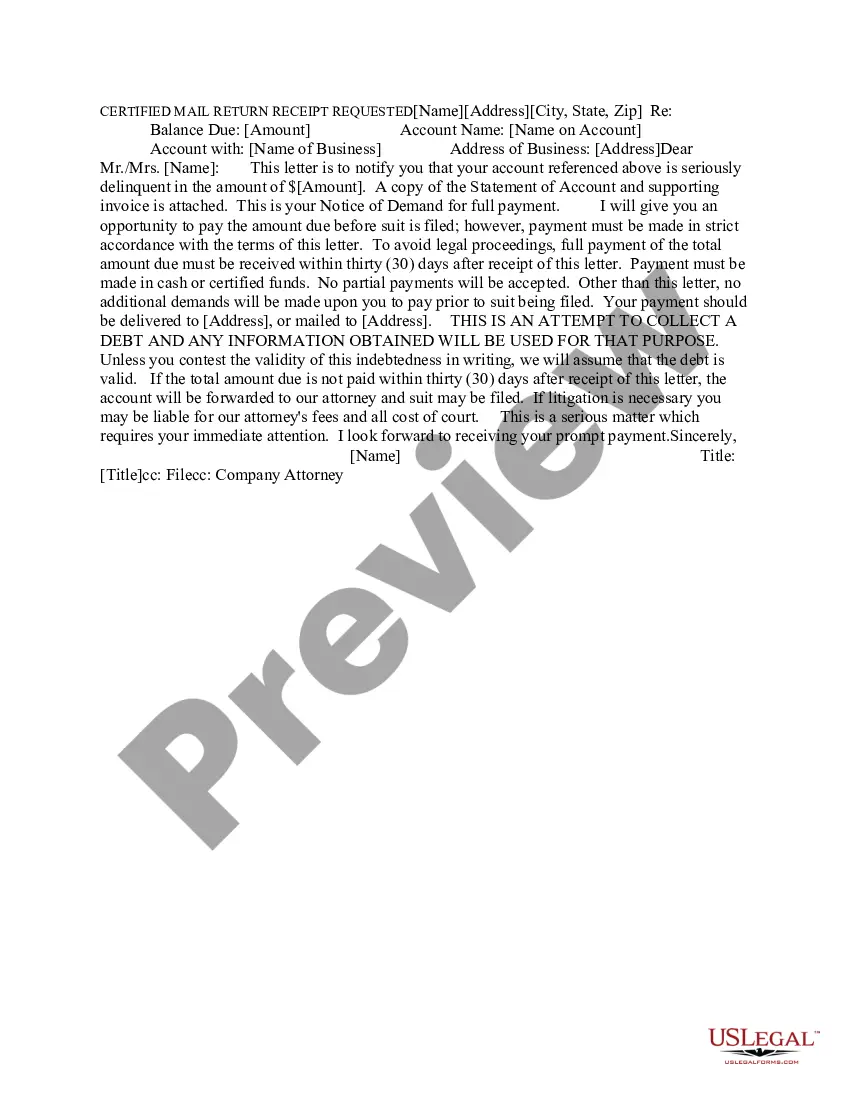
The Demand for Payment of an Open Account by Creditor is a formal document that creditors use to request payment for outstanding debts in an open account. This form signifies a series of interconnected transactions rather than individual debts, establishing a single liability for the debtor. It is essential for credit transactions where the account remains active until payment is made or the account is settled, distinguishing it from other debt recovery methods.
Key components of this form
- Name and address of the debtor
- Name and address of the creditor
- Description of the open account with reference to Exhibit A
- Specified payment amount and due date
- Court information if the debtor does not comply with the demand
- Signature and printed name of the creditor
Common use cases
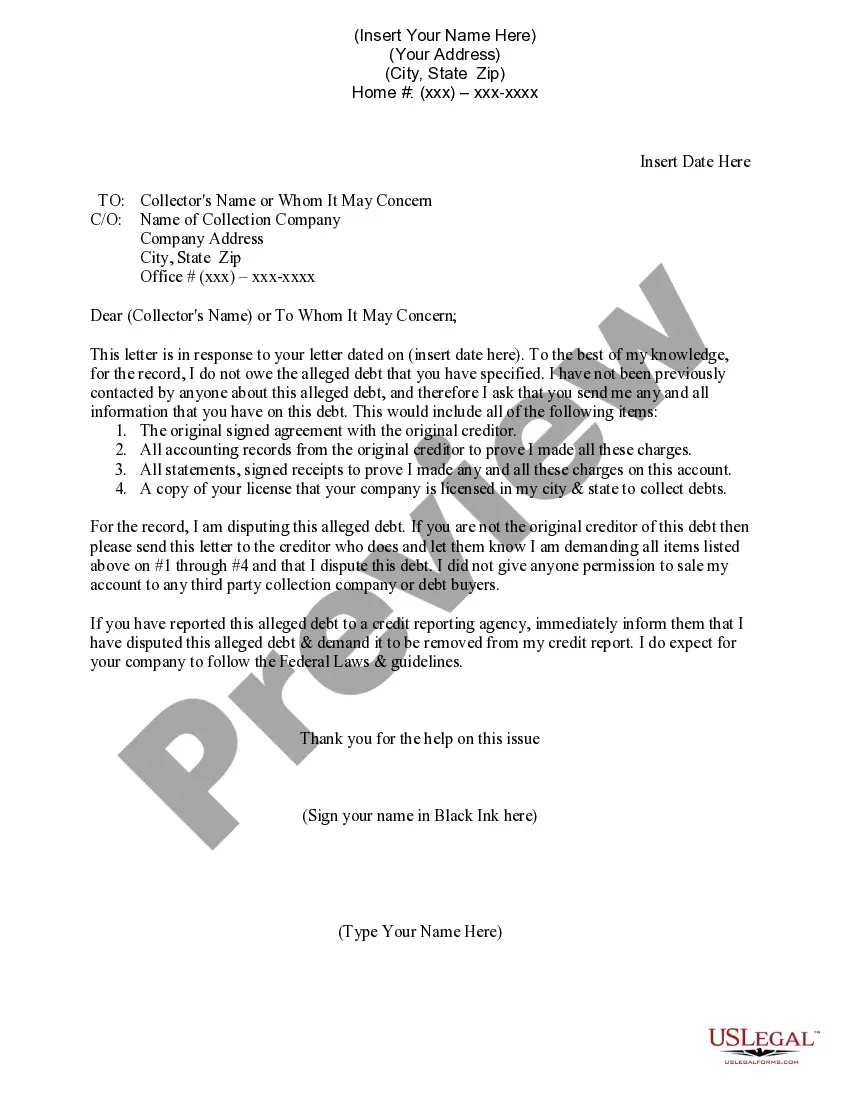
This form is used when a creditor wants to formally demand payment for an outstanding balance on an open account. It is particularly useful in situations where the debtor has not made payments as agreed, and the creditor seeks to ensure that the debtor is aware of their obligation before considering legal action.
Who can use this document
- Creditors seeking payment from a debtor for a series of transactions.
- Businesses or individuals involved in credit agreements that remain open over time.
- Any party that intends to formally demand payment before pursuing legal action.
Steps to complete this form
- Identify the debtor by providing their name and complete address.
- Enter the creditor's details, including their name and address.
- Describe the open account, referencing Exhibit A if necessary.
- State the amount due and the payment deadline.
- Sign and print your name as the creditor.
- Consider adding court information for potential legal action if payment is not received.
Is notarization required?
In most cases, this form does not require notarization. However, some jurisdictions or signing circumstances might. US Legal Forms offers online notarization powered by Notarize, accessible 24/7 for a quick, remote process.
Get your form ready online
Our built-in tools help you complete, sign, share, and store your documents in one place.
Make edits, fill in missing information, and update formatting in US Legal Forms—just like you would in MS Word.
Download a copy, print it, send it by email, or mail it via USPS—whatever works best for your next step.
Sign and collect signatures with our SignNow integration. Send to multiple recipients, set reminders, and more. Go Premium to unlock E-Sign.
If this form requires notarization, complete it online through a secure video call—no need to meet a notary in person or wait for an appointment.
We protect your documents and personal data by following strict security and privacy standards.

Make edits, fill in missing information, and update formatting in US Legal Forms—just like you would in MS Word.

Download a copy, print it, send it by email, or mail it via USPS—whatever works best for your next step.

Sign and collect signatures with our SignNow integration. Send to multiple recipients, set reminders, and more. Go Premium to unlock E-Sign.

If this form requires notarization, complete it online through a secure video call—no need to meet a notary in person or wait for an appointment.

We protect your documents and personal data by following strict security and privacy standards.
Avoid these common issues
- Failing to provide the complete address of the debtor.
- Not including specific details about the open account referenced.
- Leaving out the payment amount or deadline.
- Neglecting to sign the form properly.
- Failing to attach Exhibit A, if required.
Why use this form online
- Convenient access to a legally drafted form tailored for your needs.
- Easy to download, complete, and store digitally.
- Editable fields allowing for customization based on your specific situation.
- Reliability, with the assurance that the form meets legal standards.
Summary of main points
- The Demand for Payment of an Open Account by Creditor is essential for recovering debts from an open account.
- It is crucial to include all necessary information accurately to avoid delays in payment.
- This form serves as a formal reminder to the debtor before legal proceedings may be initiated.
Looking for another form?

Form popularity
FAQ
I am responding to your contact about a debt you are attempting to collect. You contacted me by phone/mail, on date. You identified the debt as any information they gave you about the debt. Please stop all communication with me and with this address about this debt.
Outline The Incident. You will need to start by outlining the details of the accident. Detail Your Injuries. Explain All Of Your Damages. Calculate Your Settlement Demand. Attach Relevant Documents. Get Help From An Attorney.
One way is to pay the agency to collect the money on the creditor's behalf. The other is to sell the debt outright. Say you owe $500 on an unpaid debt. Your creditor calls, sends warning letters and finally gives up.
Your company name and address. recipient's name and address. today's date. a clear reference and/or any account reference numbers. the amount outstanding. original payment due date. a brief explanation that no payment has been received.
Establish facts. Don't assume everyone knows the facts. Refer to evidence. If there's evidence (like a contract), you don't need to include it, but you should refer to it. Make a demand. Be specific as to what you want. Set a deadline and establish method of payment. Offer a consequence.
A Final Demand Letter is the final letter sent in attempt to collect a debt or repayment. The letter is sent prior to a collector or financial institution filing legal action against a debtor.
Step 1 Enter the Header Information. Step 2 Enter the Amount Due. Step 3 Complete the Debtor's Details. Step 4 Enter the Payment Option. Step 5 Detail the Consequences and Sign.
Sometimes the creditor will hire a collection agency to chase the money for them. Ask the debt collector if they own the debt. If not, you still might be able to negotiate with the original creditor.In this case, the debt collector owns the debt, so any payment is made to the collection agency.
Be Flexible With Payment Type. Provide a Discount for Early Payment. Put Penalties in Your Contract. Don't Waiver on Payment Terms. Make Polite Contact. Keep a Good Rapport With Clients. Outsource to a Debt Collector Quickly.