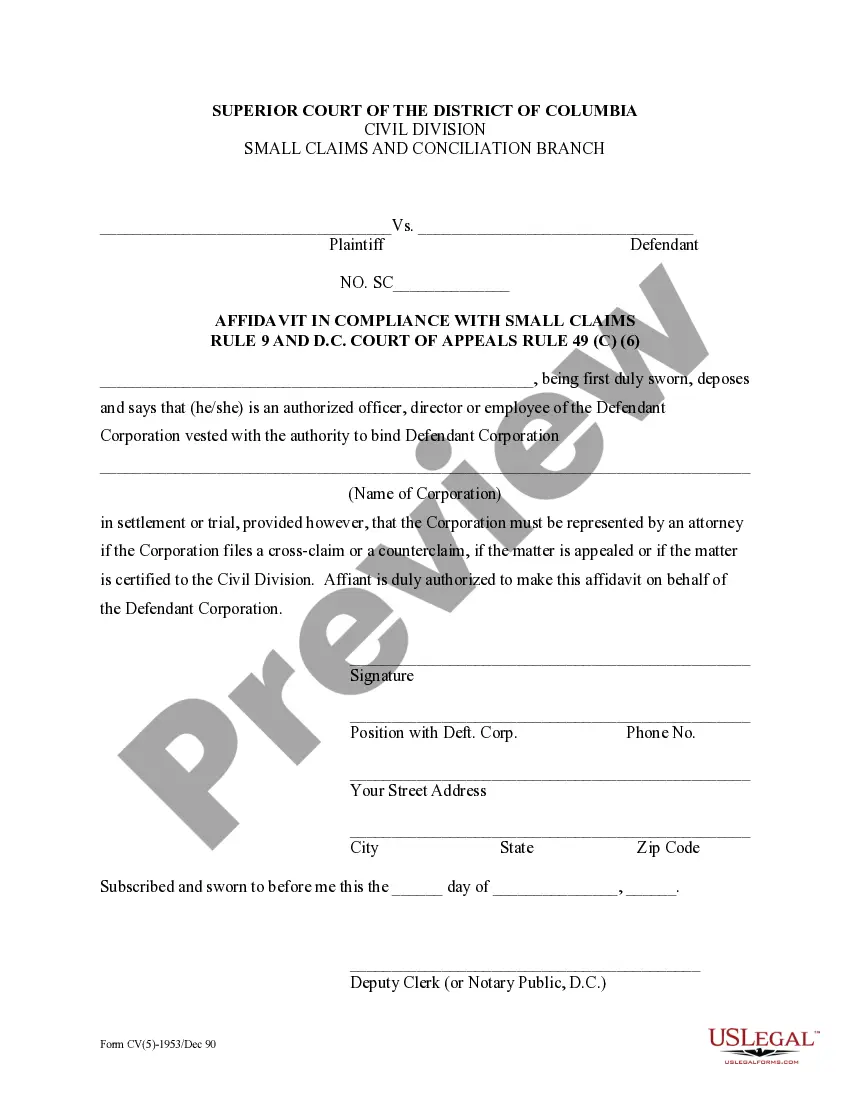
Alabama Demand of Defendant for Discovery and Inspection of Evidence - Criminal Case
Understanding this form
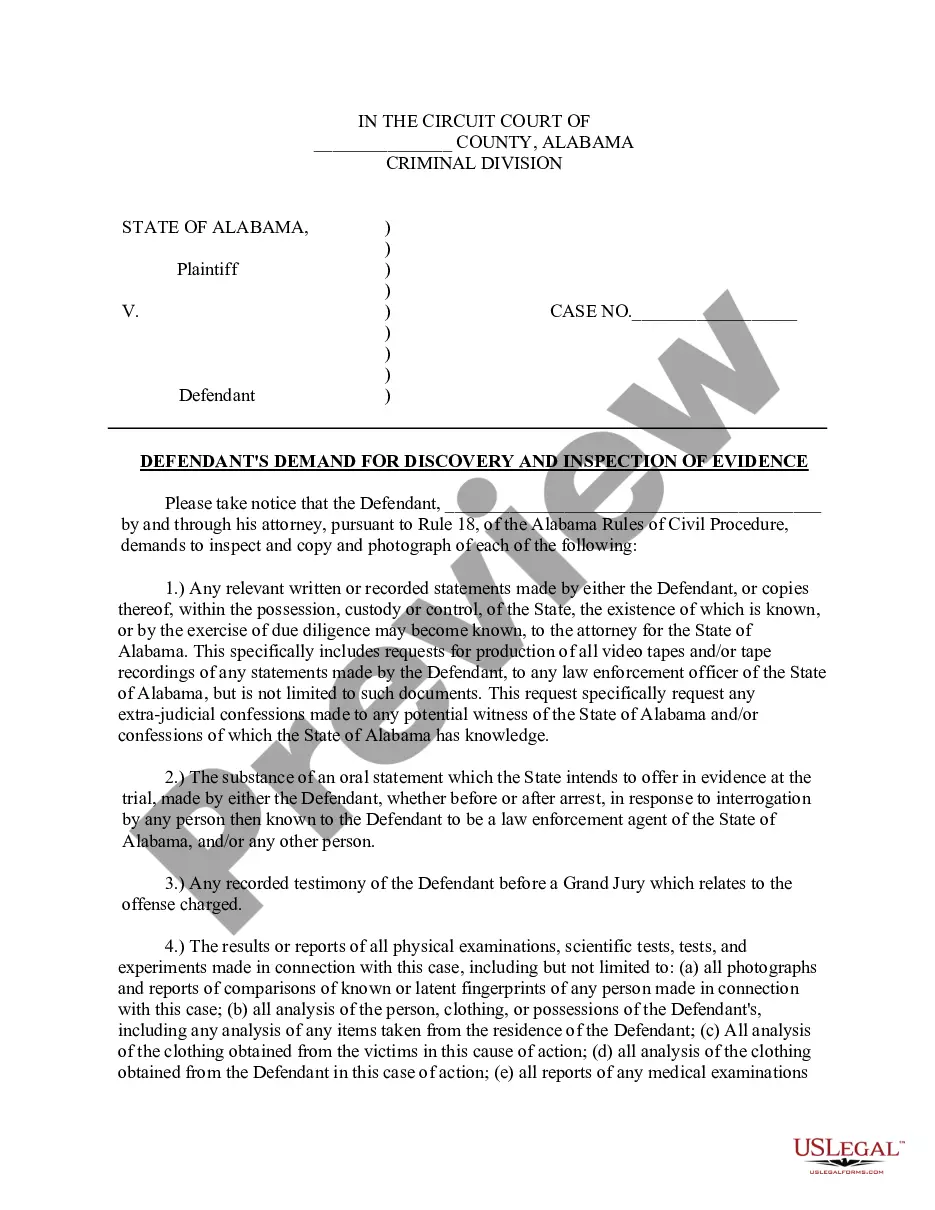
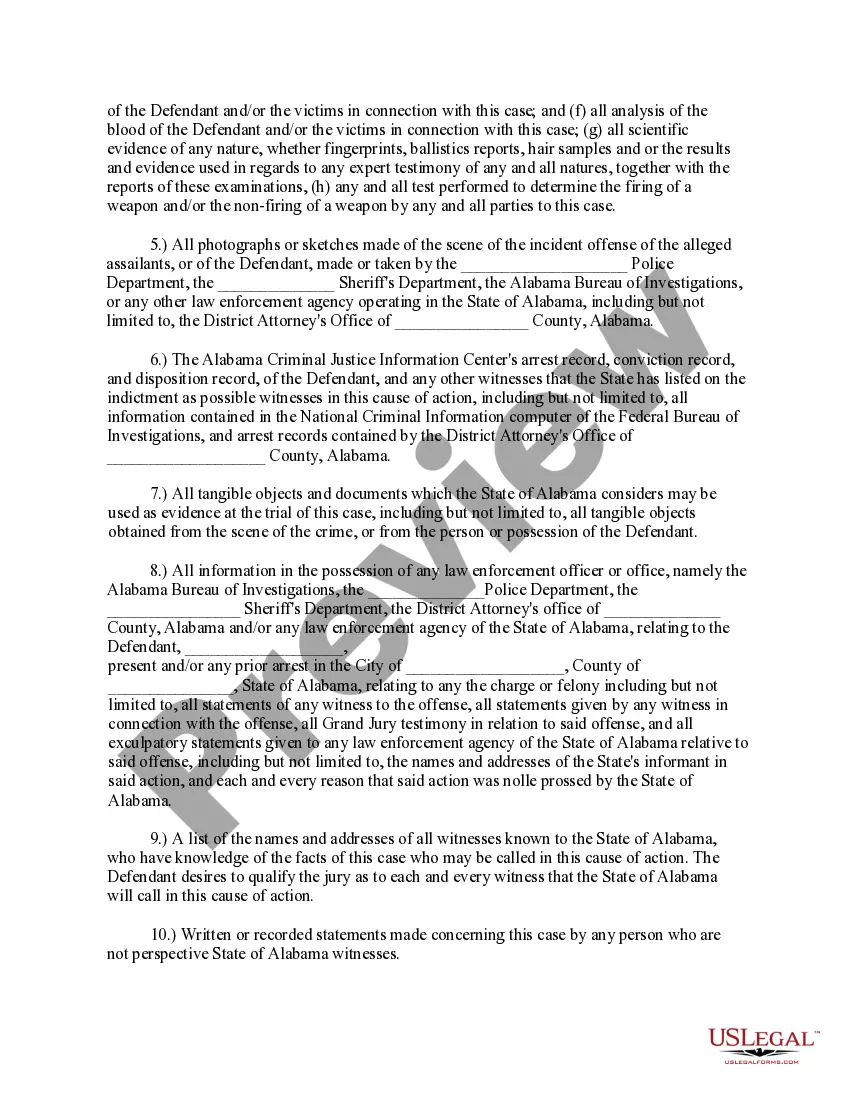
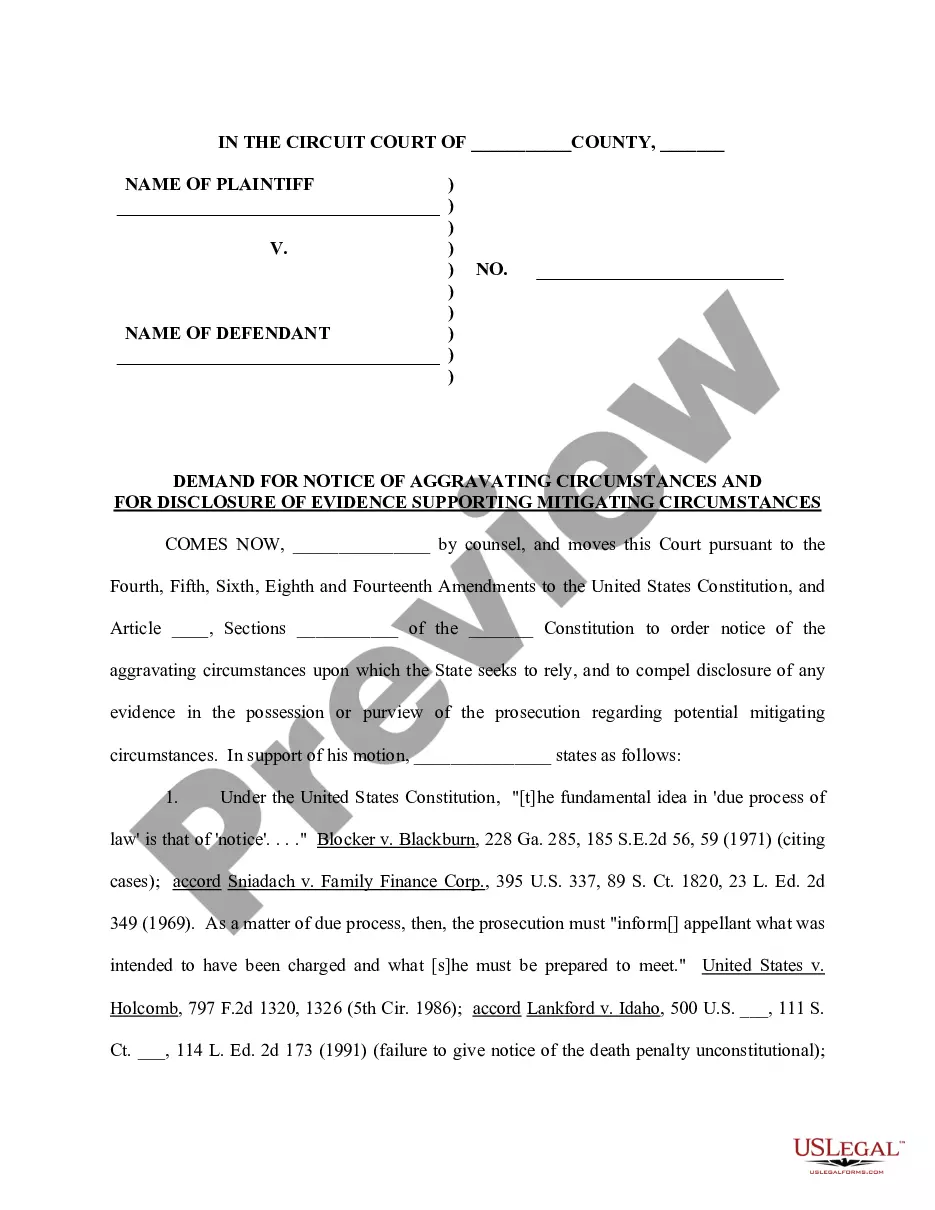
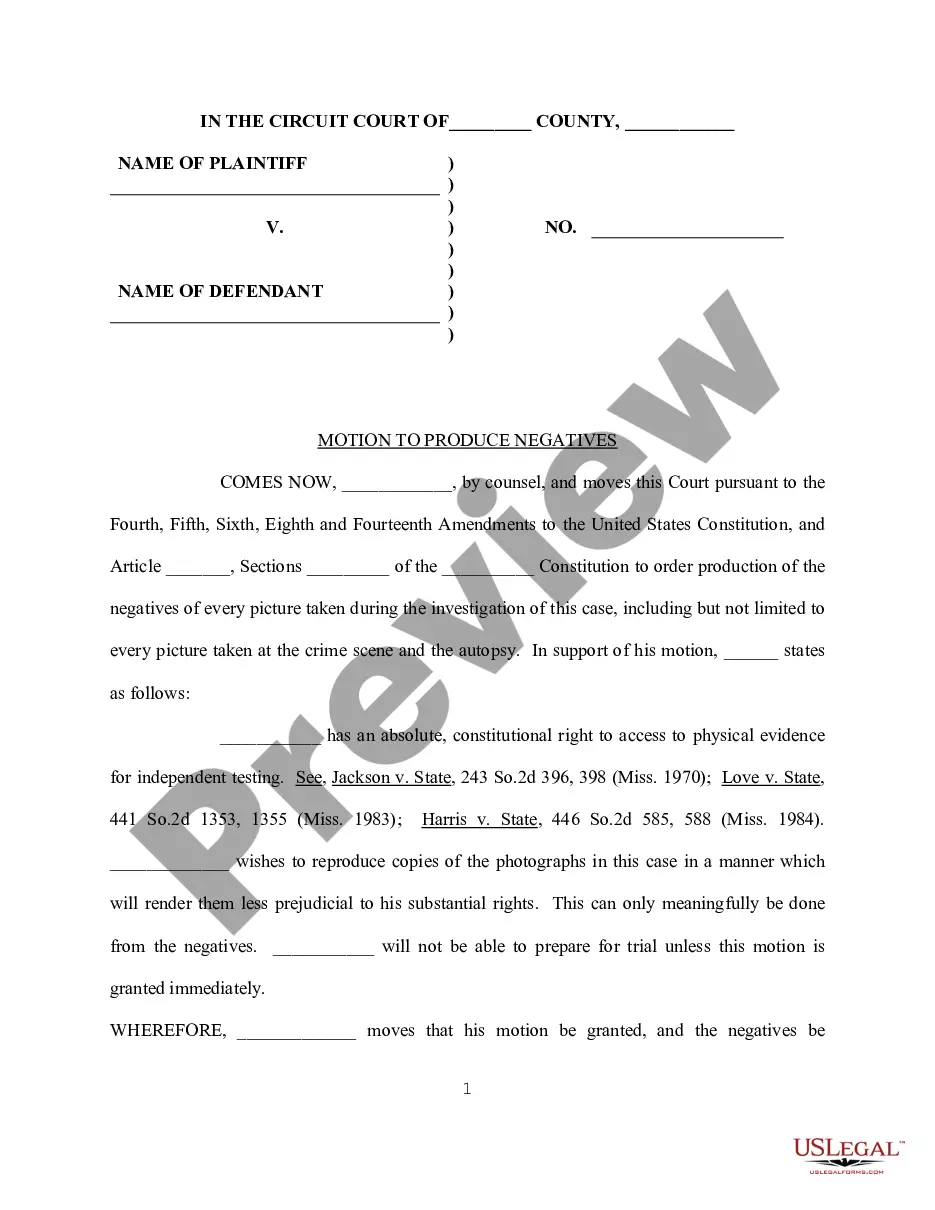
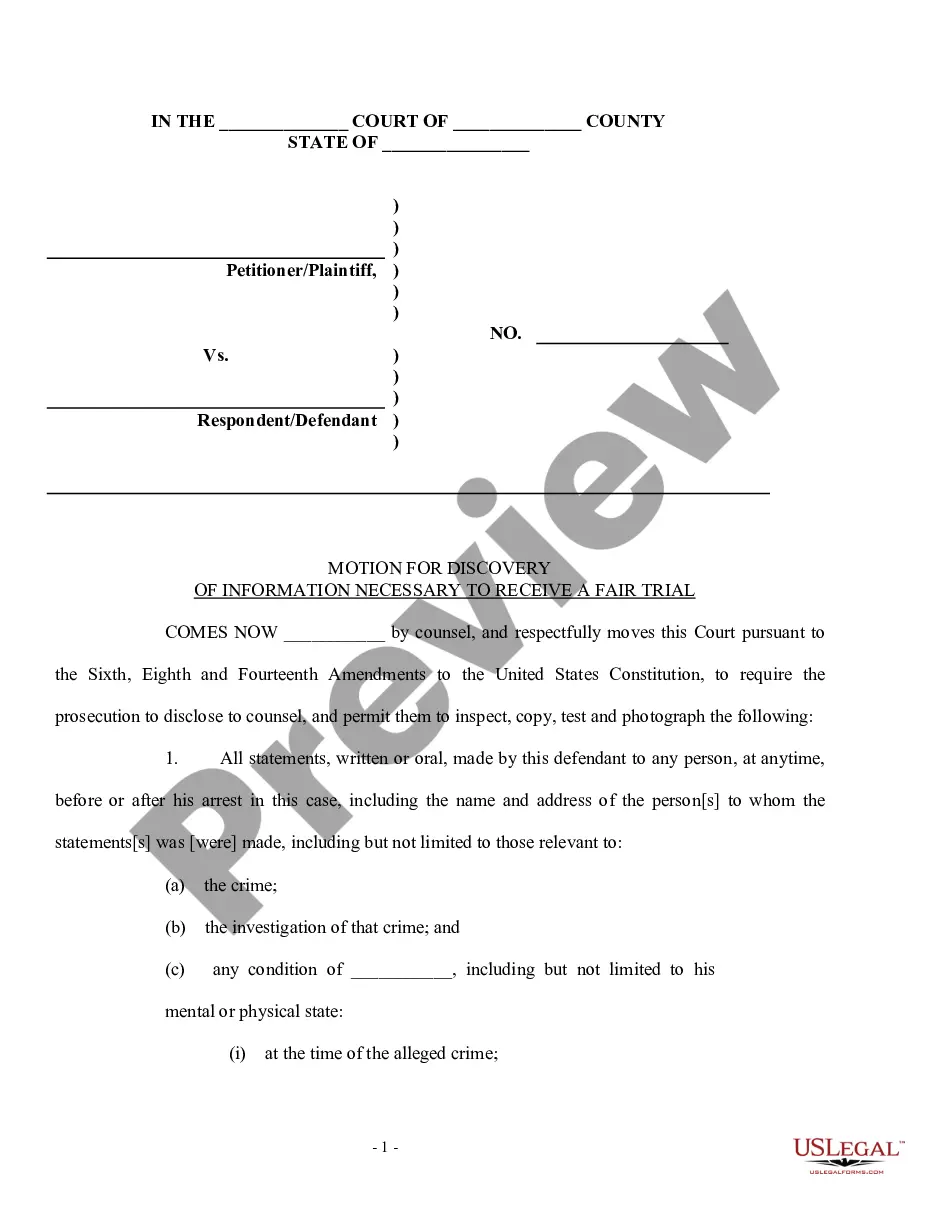
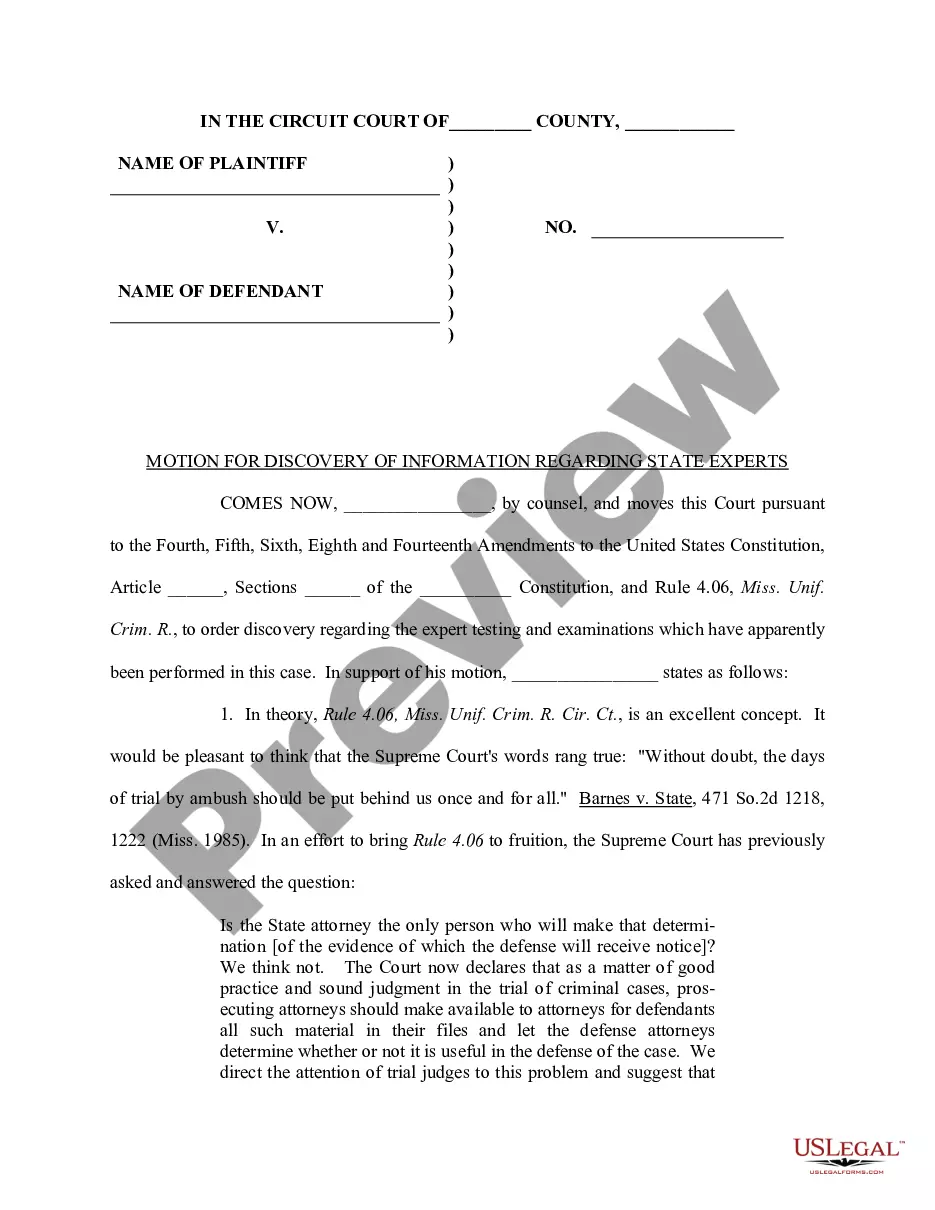
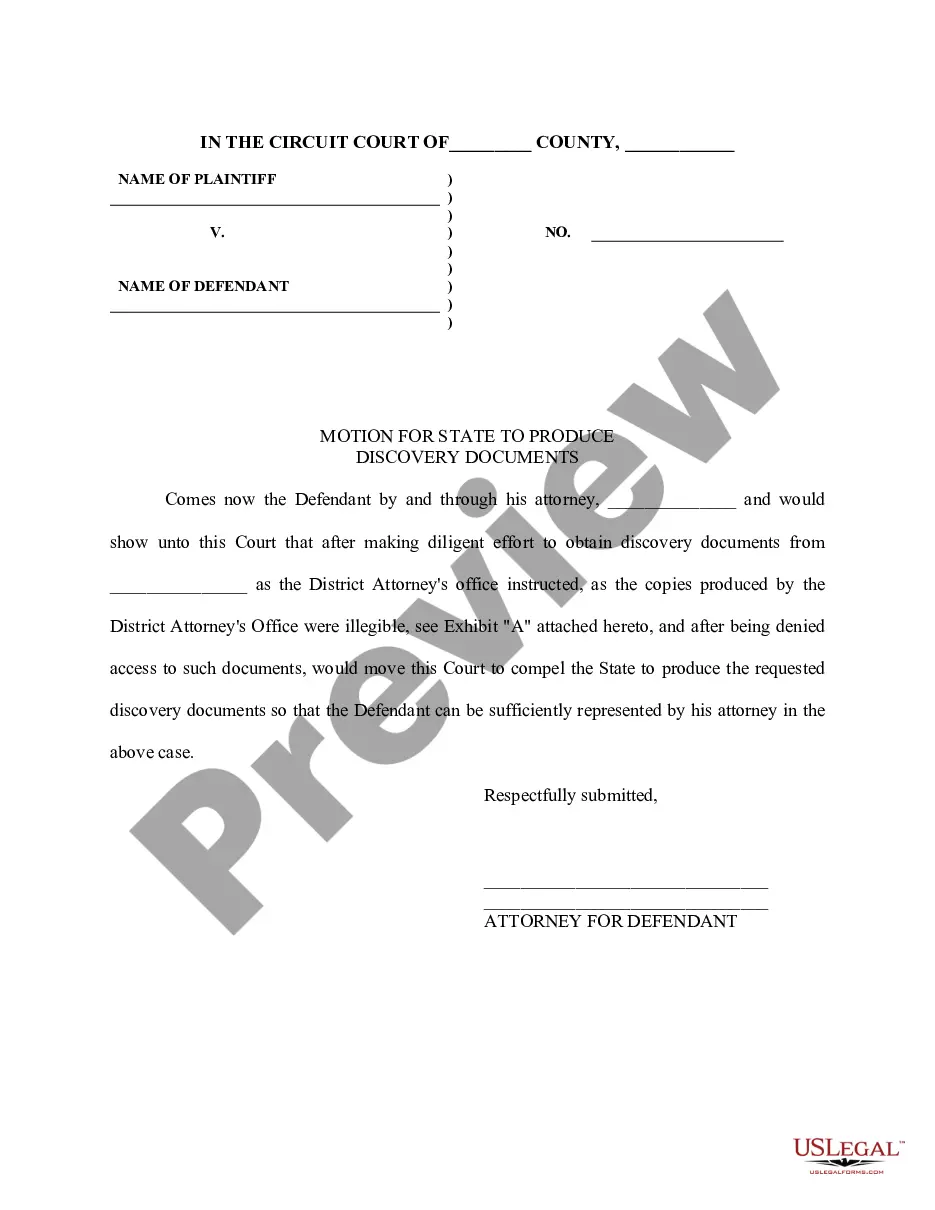
The Demand of Defendant for Discovery and Inspection of Evidence is a crucial legal document in criminal cases. It allows the defendant to formally request access to evidence that the prosecution possesses. This request aims to ensure a fair trial by allowing the defendant to prepare an adequate defense based on all relevant evidence. Unlike other legal forms, this document specifically focuses on the disclosure of evidence and does not serve as a general request for discovery in civil matters.
Main sections of this form
- Identification of the defendant and plaintiff, including their legal representation.
- Detailed list of evidence requested, including written statements, physical evidence, and expert reports.
- Procedural rules under which the demand is made, citing relevant laws.
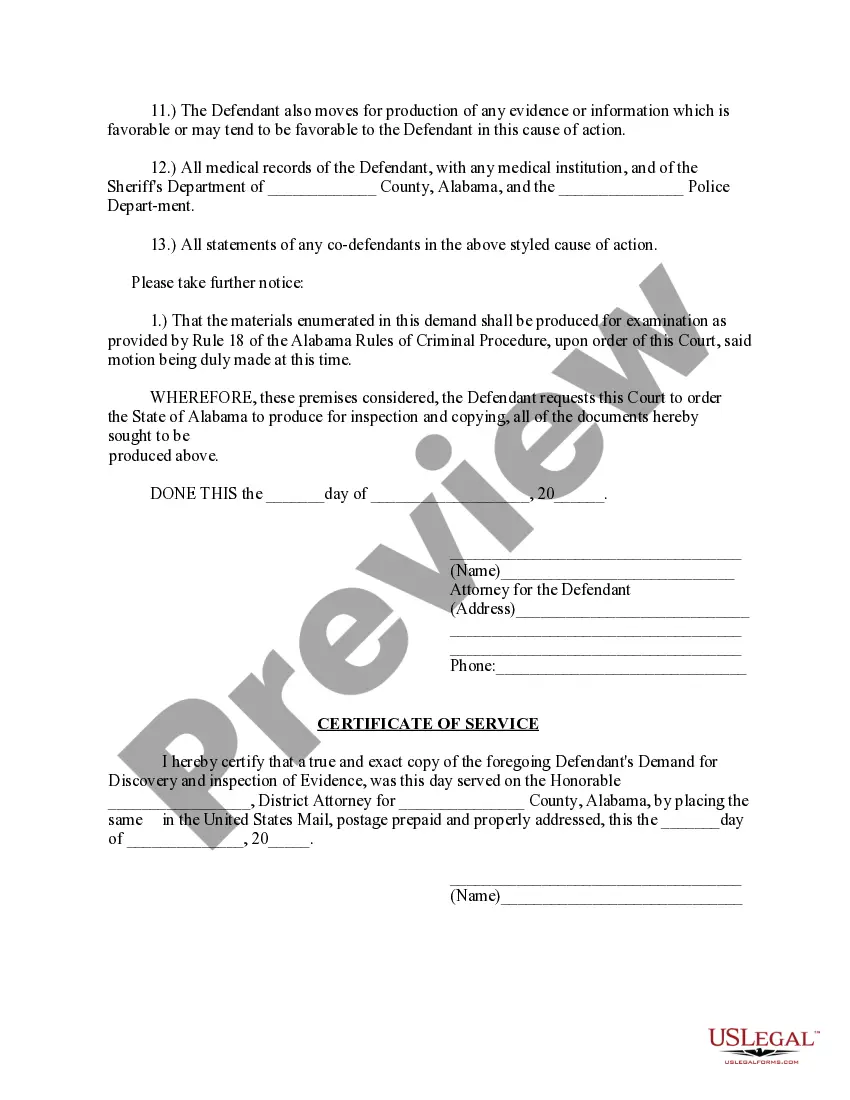
- Space for dates and signature of the defendant's attorney.
- Certificate of service confirming the demand was properly served on the prosecution.
When to use this document
This form should be used when a defendant charges that the prosecution has not disclosed all evidence in their possession. It is important in cases where the defense attorney needs to obtain information that may support the defendantâs case, help in challenging the prosecutionâs evidence, or clarify any claims made during the trial proceedings. It is particularly relevant in preparing motions and trial strategies.
Who this form is for
- Defendants in a criminal case who are represented by an attorney.
- Defense attorneys seeking to gather evidence to support their clients.
- Anyone involved in criminal proceedings who needs to ensure fair disclosure of evidence.
Instructions for completing this form
- Identify the parties involved by entering the names of the defendant and the state.
- List all items of evidence you wish to inspect, focusing on details provided in the form's clauses.
- Include any specific requests for the types of evidence such as audio, video, or physical evidence.
- Fill in the date and sign at the bottom of the form.
- Serve a copy to the prosecution to ensure compliance with the demand.
Does this form need to be notarized?
This form does not typically require notarization unless specified by local law. It is important to verify any jurisdiction-specific requirements that may apply in your case.
Get your form ready online
Our built-in tools help you complete, sign, share, and store your documents in one place.
Make edits, fill in missing information, and update formatting in US Legal Forms—just like you would in MS Word.
Download a copy, print it, send it by email, or mail it via USPS—whatever works best for your next step.
Sign and collect signatures with our SignNow integration. Send to multiple recipients, set reminders, and more. Go Premium to unlock E-Sign.
If this form requires notarization, complete it online through a secure video call—no need to meet a notary in person or wait for an appointment.
We protect your documents and personal data by following strict security and privacy standards.

Make edits, fill in missing information, and update formatting in US Legal Forms—just like you would in MS Word.

Download a copy, print it, send it by email, or mail it via USPS—whatever works best for your next step.

Sign and collect signatures with our SignNow integration. Send to multiple recipients, set reminders, and more. Go Premium to unlock E-Sign.

If this form requires notarization, complete it online through a secure video call—no need to meet a notary in person or wait for an appointment.

We protect your documents and personal data by following strict security and privacy standards.
Avoid these common issues
- Failing to specify all evidence needed can weaken the demand.
- Not serving the form to the correct prosecution office can lead to delays.
- Overlooking the required format or procedural details may result in rejection.
Benefits of using this form online
- Easy access to the form allows for timely filing.
- Editability ensures that specific details about the case can be customized.
- Reliability of the form templates drafted by licensed attorneys ensures legal compliance.
Legal use & context
- This form is legally recognized in Alabama and supports the defendant's right to information relevant to their defense.
- Failure to properly request discovery can weaken a defense and may jeopardize the outcome of a case.
Main things to remember
- The form is essential for defendants seeking evidence in criminal trials.
- Utilizing the form ensures compliance with Alabama's legal requirements.
- Completing the form accurately is crucial for a strong defense.
Looking for another form?

Form popularity
FAQ
To begin preparing for trial, both sides engage in discovery . This is the formal process of exchanging information between the parties about the witnesses and evidence they'll present at trial. Discovery enables the parties to know before the trial begins what evidence may be presented.
14. Section 34 of the 2003 Act inserted section 6C into the Criminal Procedure and Investigations Act 1996, requiring the defence to give the prosecutor and the court advance details ie name, address and date of birth of any witnesses they intend to call at a trial.
Discovery in a criminal case refers to the exchange of evidence and statements between opposing sides of a case. Both the prosecution and the defense have a duty to provide discovery before trial.Instead, discovery is exchanged by demand of the parties.
Under the provision approved in Friday's ruling, the defense is required to provide the names and statements of all witnesses it intends to call at trial, other than the defendant, and disclose any physical evidence, expert reports or scientific tests it intends to present.
Discovery enables everyone involved to know the facts and information about the case. Discovery may be completed before settlement negotiations occur and certainly before a trial beings. Discovery consists of four key actions: interrogatories, requests for production, requests for admission and depositions.
Discovery is the process through which defendants find out about the prosecution's case. For example, through standard discovery procedure, they can: get copies of the arresting officers' reports and statements made by prosecution witnesses, and. examine evidence that the prosecution proposes to introduce at trial.
: the act of finding or learning something for the first time : the act of discovering something. : something seen or learned for the first time : something discovered. See the full definition for discovery in the English Language Learners Dictionary. discovery. noun.
Discovery in civil cases (like a California personal injury case) is a process where both sides, plaintiff (person hurt), and the defendant (person defending the injury claim), can obtain information from each other to help not only build a case or defense, but also to prepare evidence for a jury trial, if necessary.
The purpose of discovery is to allow the parties to obtain full knowledge of the issues and facts of the lawsuit before going to trial. An experienced family law attorney will use discovery to help you identify the various strengths and weaknesses of each side of the case.