Assignment of Contracts and Agreements (Form B)
Understanding this form
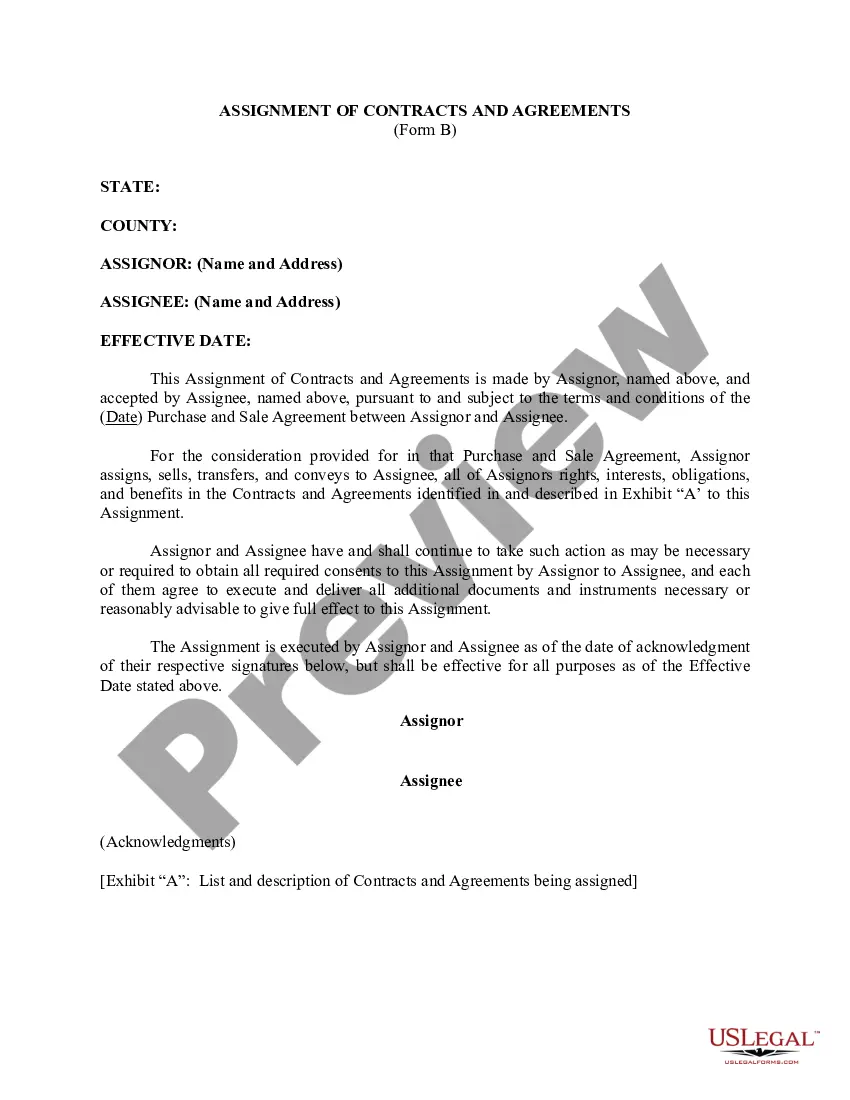
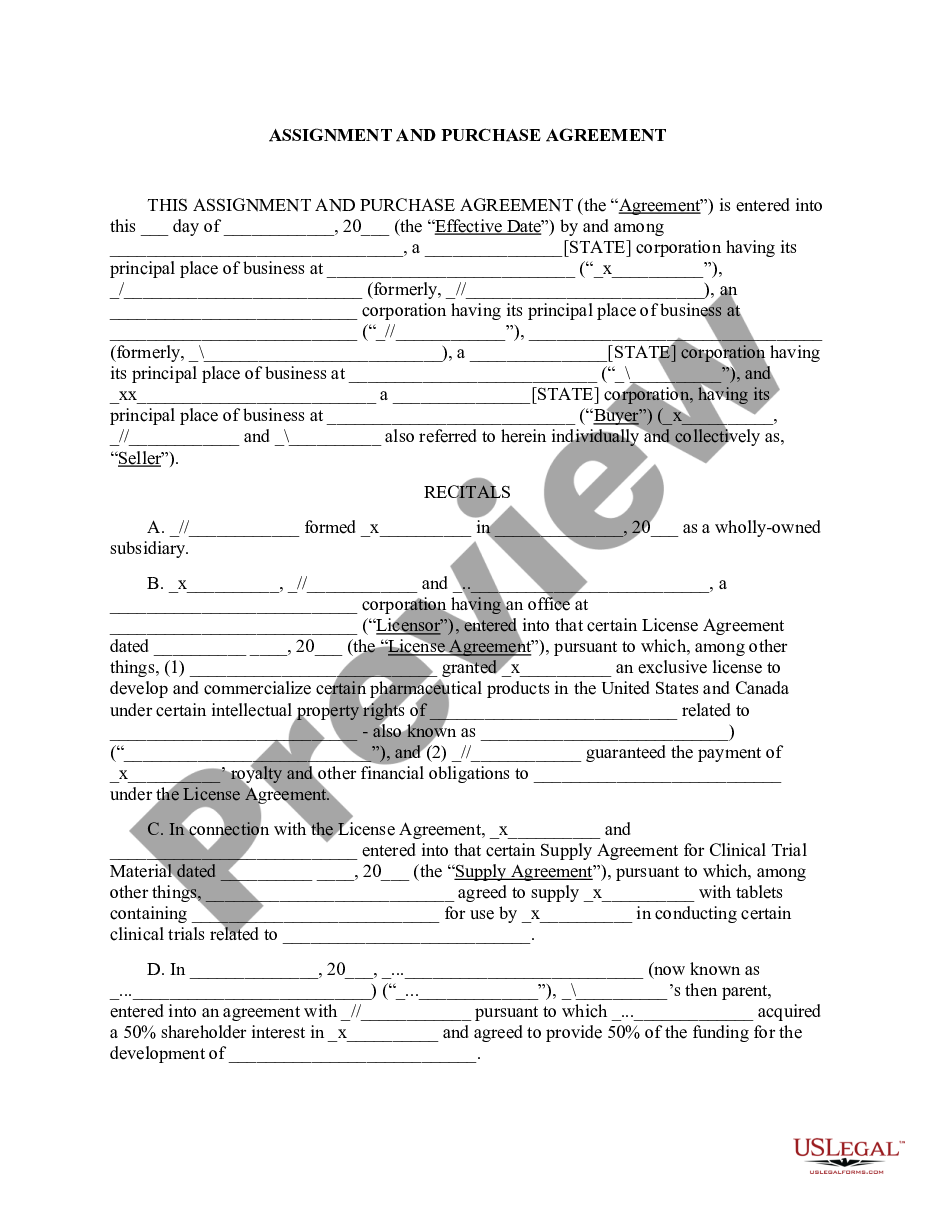
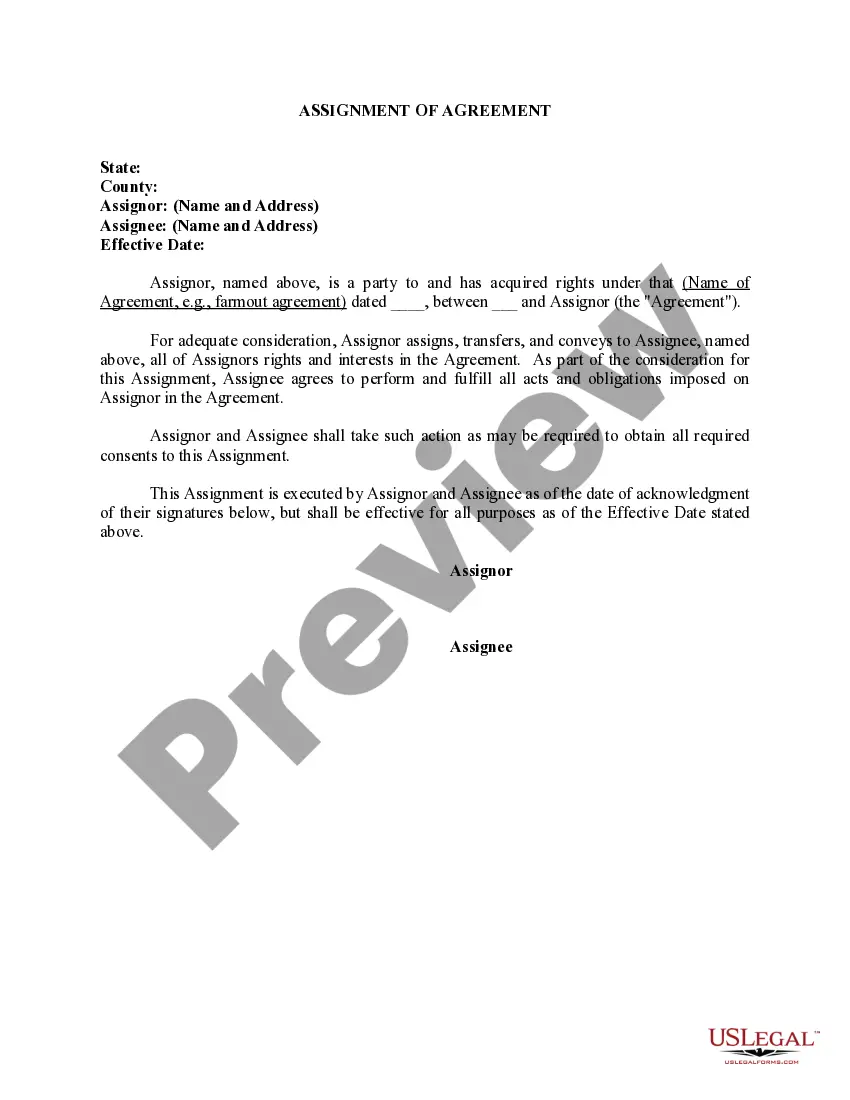
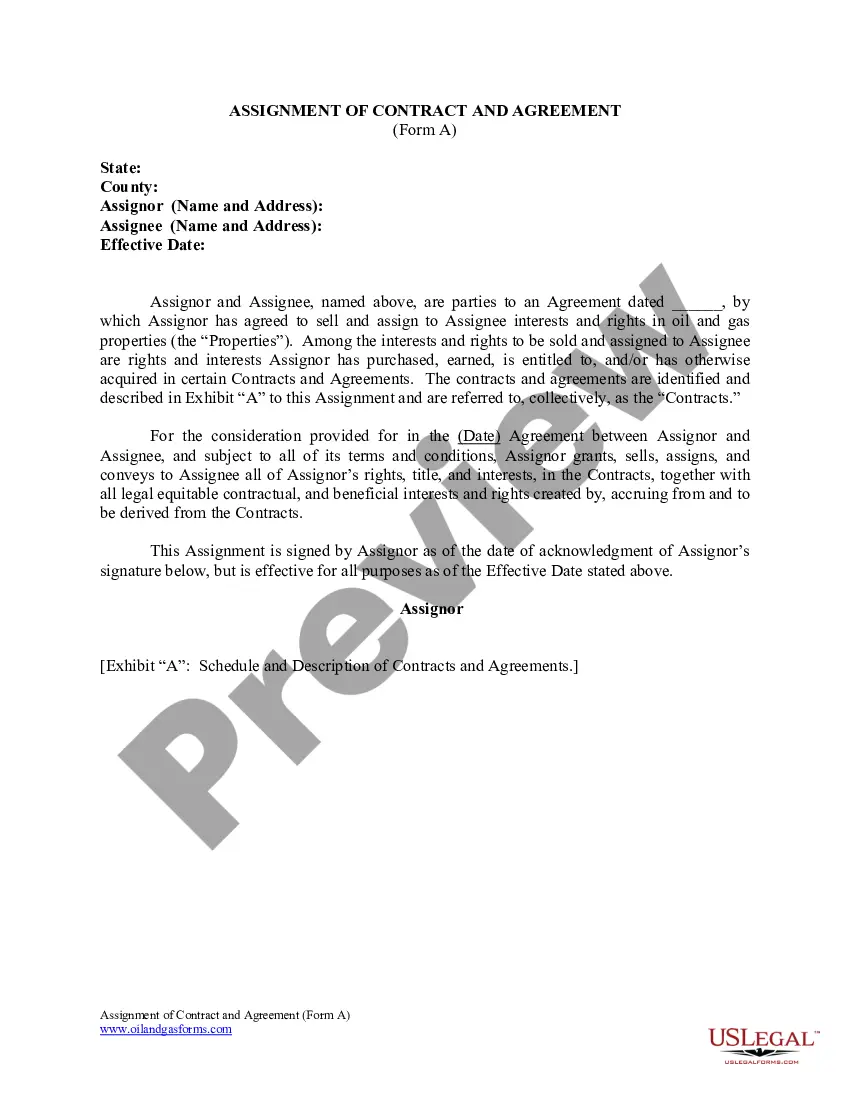
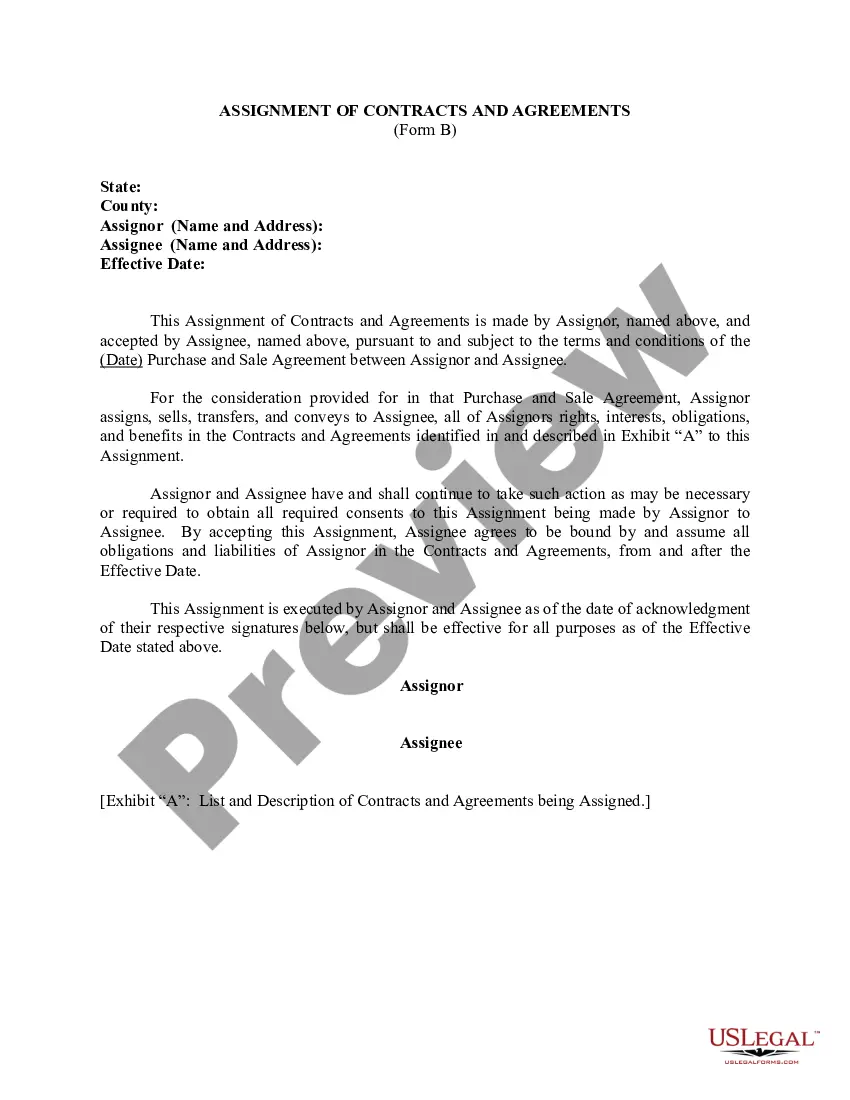
The Assignment of Contracts and Agreements (Form B) is a legal document used to transfer rights, interests, and obligations under existing contracts from one party (the Assignor) to another (the Assignee). This form serves as an official record of the assignment, distinguishing itself from other contract forms by focusing specifically on the assignment of rights and obligations rather than creating a new contract. It is essential for ensuring that all parties are aware of the transfer and agree to it.
Form components explained
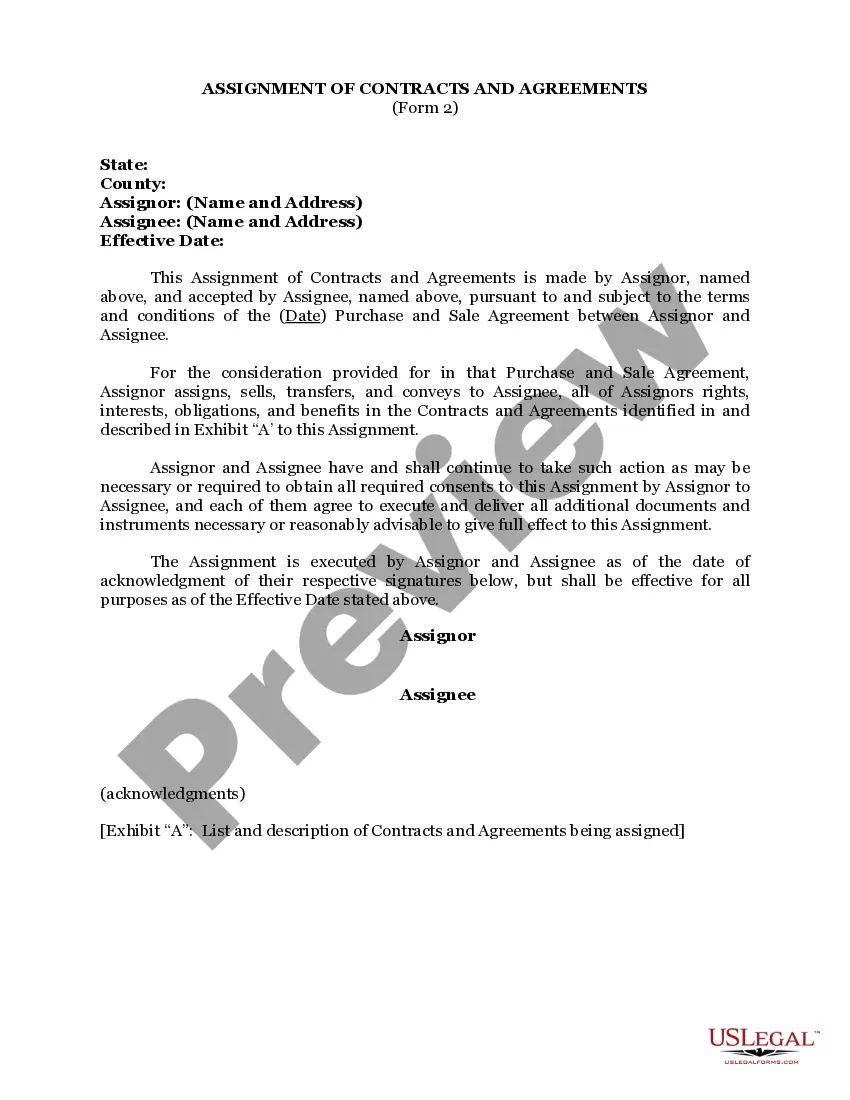
- Name and address fields for Assignor and Assignee.
- The effective date indicating when the assignment becomes active.
- Outline of the original Purchase and Sale Agreement that forms the basis of the assignment.
- A clause detailing the rights, interests, obligations, and benefits being assigned, usually outlined in an attached Exhibit A.
- Signature lines for both Assignor and Assignee, along with acknowledgment sections.
When this form is needed
This form is necessary when one party wants to assign their contractual rights and obligations to another party. Common scenarios include business transactions where a seller transfers their contractual agreements to a buyer or when an individual assigns a lease or service contract to another person. It is crucial to have this form in place to ensure that the contract remains enforceable and to avoid any potential disputes between the parties involved.
Who this form is for
Individuals and entities should consider using this form if they are:
- Assignors looking to transfer their rights and obligations under an existing contract.
- Assignees who are accepting the transfer of rights and responsibilities.
- Businesses engaged in mergers or acquisitions where existing contracts are part of the asset transfer.
Completing this form step by step
- Identify and enter the names and addresses of both the Assignor and Assignee.
- Specify the effective date of the assignment.
- Reference the Purchase and Sale Agreement by including its date.
- List the specific rights and obligations being assigned in Exhibit A.
- Both parties should review and sign the document, ensuring acknowledgment of their signatures.
Does this form need to be notarized?
Notarization is generally not required for this form. However, certain states or situations might demand it. You can complete notarization online through US Legal Forms, powered by Notarize, using a verified video call available anytime.
Get your form ready online
Our built-in tools help you complete, sign, share, and store your documents in one place.
Make edits, fill in missing information, and update formatting in US Legal Forms—just like you would in MS Word.
Download a copy, print it, send it by email, or mail it via USPS—whatever works best for your next step.
Sign and collect signatures with our SignNow integration. Send to multiple recipients, set reminders, and more. Go Premium to unlock E-Sign.
If this form requires notarization, complete it online through a secure video call—no need to meet a notary in person or wait for an appointment.
We protect your documents and personal data by following strict security and privacy standards.

Make edits, fill in missing information, and update formatting in US Legal Forms—just like you would in MS Word.

Download a copy, print it, send it by email, or mail it via USPS—whatever works best for your next step.

Sign and collect signatures with our SignNow integration. Send to multiple recipients, set reminders, and more. Go Premium to unlock E-Sign.

If this form requires notarization, complete it online through a secure video call—no need to meet a notary in person or wait for an appointment.

We protect your documents and personal data by following strict security and privacy standards.
Mistakes to watch out for
- Failing to include all relevant contracts in Exhibit A.
- Not clearly specifying the effective date.
- Omitting signatures or acknowledgments, which can invalidate the assignment.
- Assuming verbal agreements are sufficient without a written record.
Advantages of online completion
- Convenient access to legal templates without the need for in-person consultations.
- Editability allows for customization to fit specific needs.
- Reliability of documents drafted based on legal standards and practices.
Looking for another form?
Form popularity
FAQ
The contract doesn't allow assignment Some contracts come with an anti-assignment clause which prohibits any assignments. The assignment violates public policy or the law Some jurisdictions have laws that prohibit or limit assignments.
Find a motivated seller. First, let's understand what a motivated seller is. Get the contract. Submit contract to title. Assign the contract to the buyer. Get paid!
Generally speaking, contracts can be freely assigned to third parties.This contract cannot be assigned to anyone without the written consent of both parties.
An agreement in which one party transfers its contractual rights and obligations to another party.For a form of an assignment and assumption agreement used with an asset purchase, see Standard Document, Assignment and Assumption Agreement.
An assignment of contract occurs when one party to an existing contract (the "assignor") hands off the contract's obligations and benefits to another party (the "assignee"). Ideally, the assignor wants the assignee to step into his shoes and assume all of his contractual obligations and rights.
'Assignment' means transfer of contractual rights or liability by a party to the contract to some other person who is not a party. It would not be wrong to say that as a matter of established principle, obligations are not assignable and once assigned it amounts to novation.
In your Assignment Agreement, you should include information like: the name of the person handing over contractual duties (called "the assignor"); the recipient of the contractual rights and obligations (called "the assignee"); the other party to the original contract (called "the obligor"); the name of the contract