Assignment of Contracts and Agreements Form 1
Overview of this form
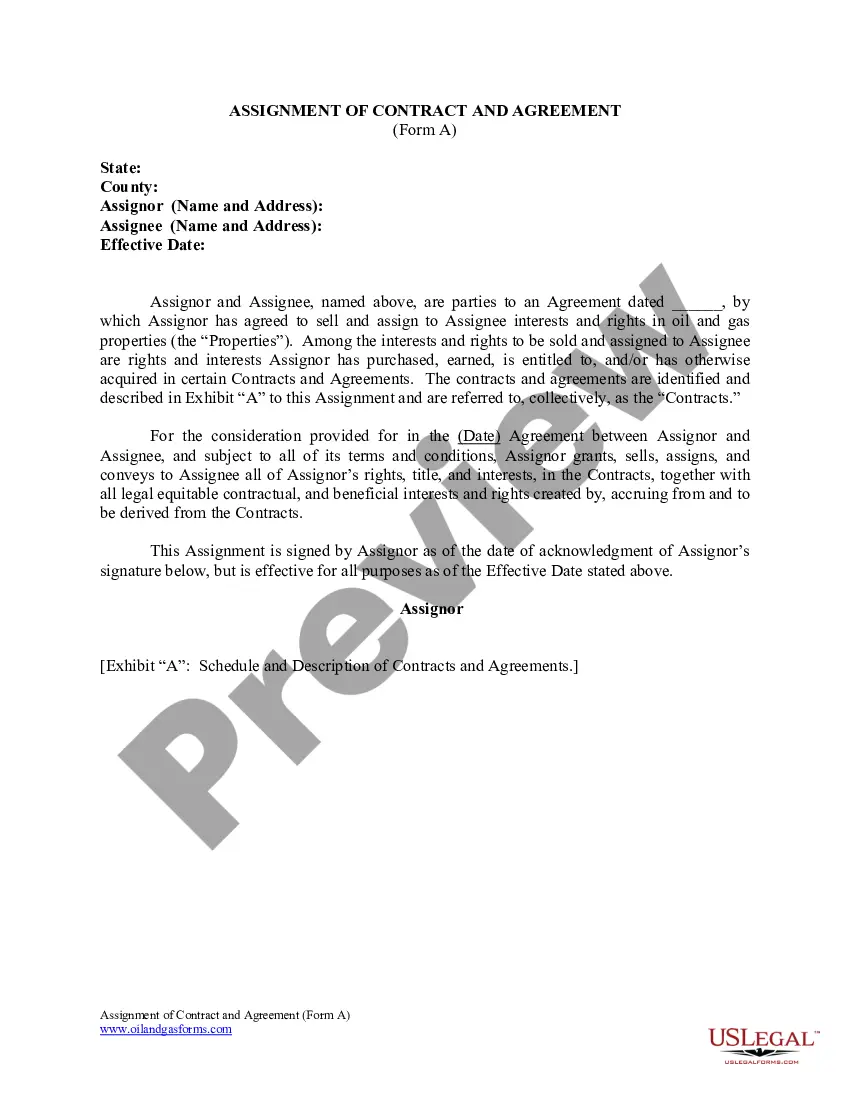
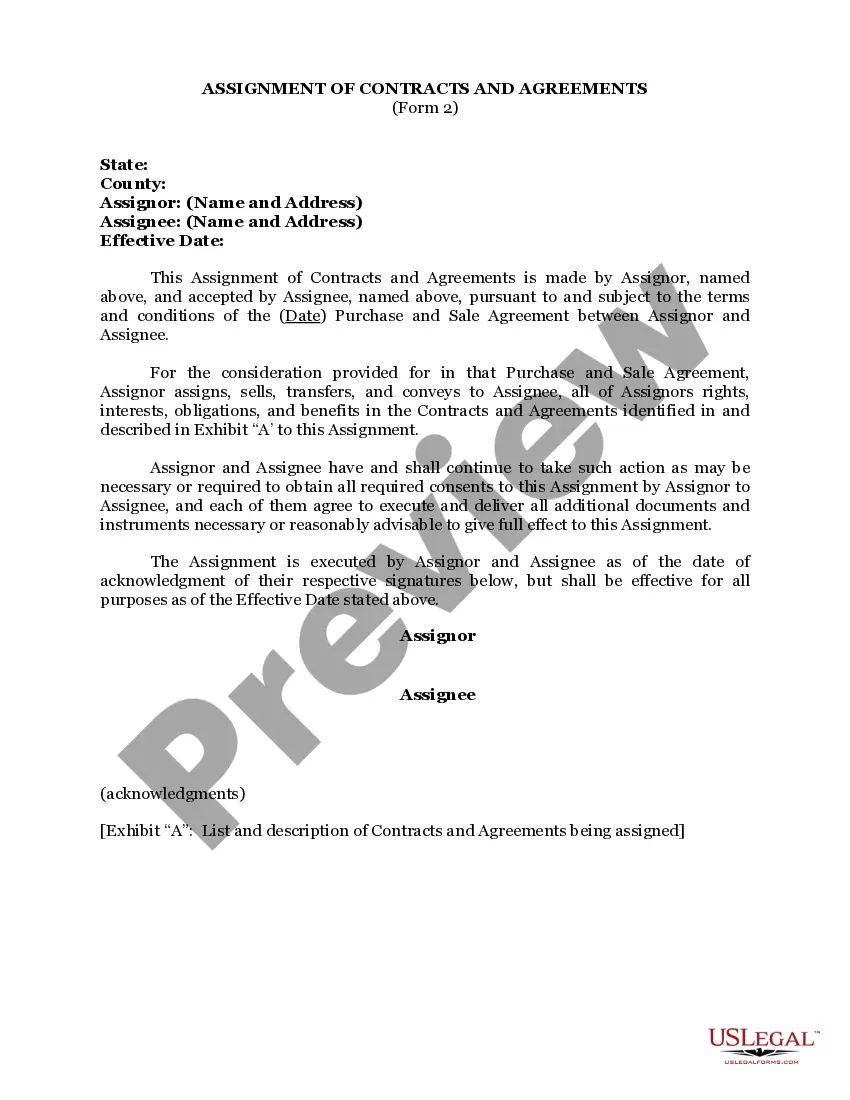
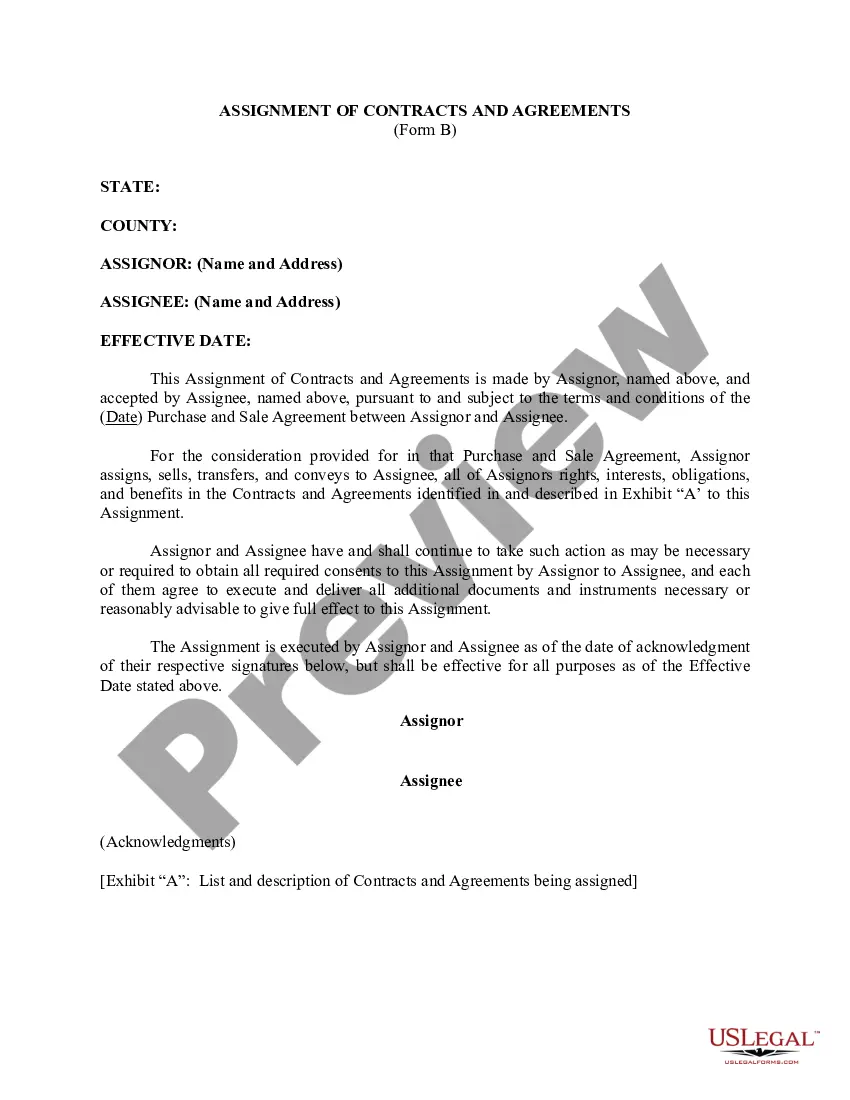
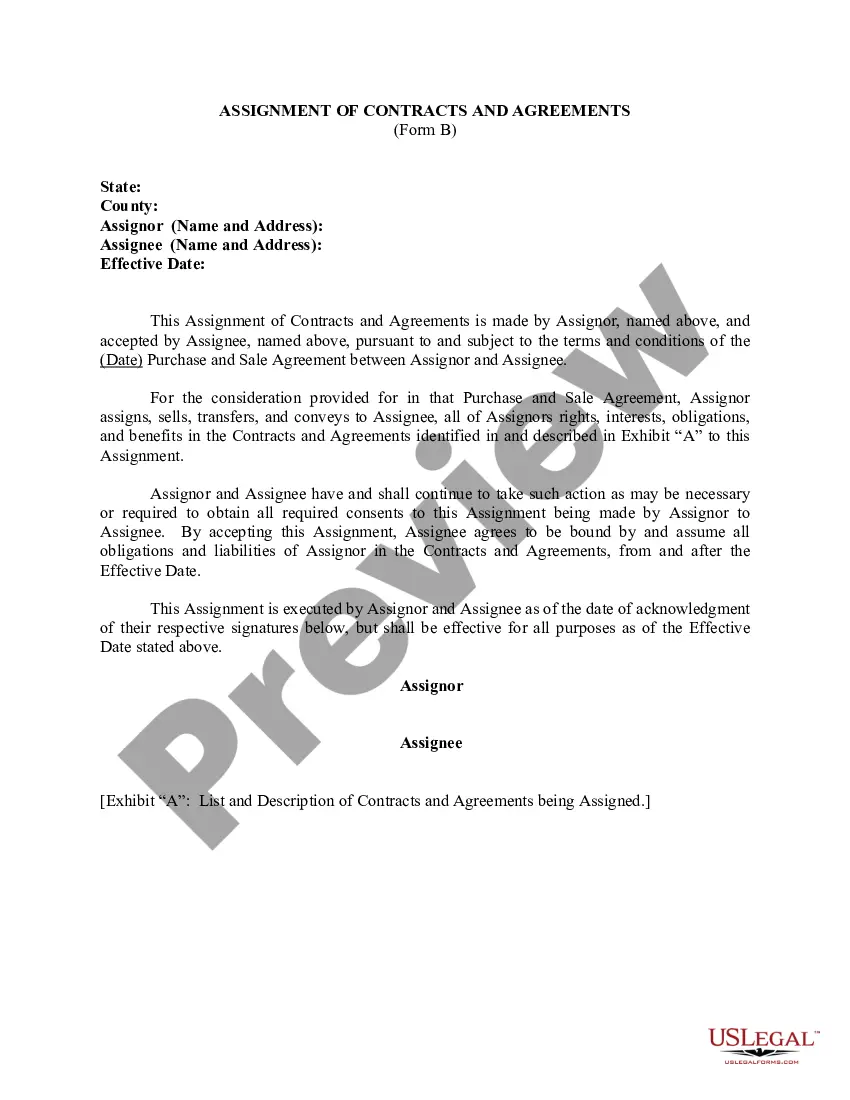
The Assignment of Contracts and Agreements (Form 1) is a legal document that transfers the rights and interests of one party (the assignor) to another party (the assignee) regarding oil and gas properties. This form is specifically designed for use in the context of purchase and sale agreements, distinguishing it from other types of contract assignment forms that may not focus on oil and gas interests.
Key parts of this document
- Identifies the Assignor and Assignee, including name and address.
- Specifies the Effective Date of the assignment.
- Describes the original Agreement between the parties, which must be referenced.
- Lists the specific rights and interests being assigned, detailed in Exhibit A.
- Contains signatures for acknowledgment by the Assignor.
When this form is needed
This form should be used when an assignor wishes to transfer their contractual rights and interests in oil and gas properties to an assignee. Common situations include the sale of an oil lease or interest in an oil and gas contract, where the assignor no longer wishes to retain their rights or responsibilities. It formalizes the transfer and provides legal protection for both parties involved.
Who can use this document
- Individuals or entities involved in the sale of oil and gas rights.
- Those who are parties to an existing purchase and sale agreement related to oil and gas properties.
- Real estate investors and legal practitioners in the energy sector.
- Anyone needing to clarify or formalize the transfer of contracts related to oil and gas interests.
Completing this form step by step
- Identify the parties involved: fill in the names and addresses of the Assignor and Assignee.
- Specify the Effective Date of the assignment accurately to denote when the transfer takes effect.
- Detail the agreement by referencing the original contract and summarizing the rights being transferred.
- Attach Exhibit A, which lists the specific contracts and agreements involved in the assignment.
- Obtain the necessary signatures of the Assignor to formalize the assignment.
Does this document require notarization?
This form does not typically require notarization unless specified by local law. However, it is advisable to check your jurisdiction's requirements for legal validation.
Get your form ready online
Our built-in tools help you complete, sign, share, and store your documents in one place.
Make edits, fill in missing information, and update formatting in US Legal Forms—just like you would in MS Word.
Download a copy, print it, send it by email, or mail it via USPS—whatever works best for your next step.
Sign and collect signatures with our SignNow integration. Send to multiple recipients, set reminders, and more. Go Premium to unlock E-Sign.
If this form requires notarization, complete it online through a secure video call—no need to meet a notary in person or wait for an appointment.
We protect your documents and personal data by following strict security and privacy standards.

Make edits, fill in missing information, and update formatting in US Legal Forms—just like you would in MS Word.

Download a copy, print it, send it by email, or mail it via USPS—whatever works best for your next step.

Sign and collect signatures with our SignNow integration. Send to multiple recipients, set reminders, and more. Go Premium to unlock E-Sign.

If this form requires notarization, complete it online through a secure video call—no need to meet a notary in person or wait for an appointment.

We protect your documents and personal data by following strict security and privacy standards.
Typical mistakes to avoid
- Failing to provide complete information for both the Assignor and Assignee.
- Not clearly identifying all rights and interests to be assigned.
- Missing the Effective Date, leading to potential misunderstandings about the timing of the assignment.
- Neglecting to attach Exhibit A, which may cause ambiguities regarding what is being assigned.
Benefits of using this form online
- Convenience of downloading and filling out from anywhere, at any time.
- Editability allows users to tailor the document to their specific situation.
- Reliability of using a form drafted by licensed attorneys ensures that legal standards are met.
Legal use & context
- The assignment is legally binding once the form is completed and signed.
- Ensure compliance with local regulations that may affect enforceability.
- Use of the form in business transactions is widely accepted in the oil and gas industry.
Looking for another form?
Form popularity
FAQ
An assignment of contract occurs when one party to an existing contract (the "assignor") hands off the contract's obligations and benefits to another party (the "assignee"). Ideally, the assignor wants the assignee to step into his shoes and assume all of his contractual obligations and rights.
Generally speaking, contracts can be freely assigned to third parties.This contract cannot be assigned to anyone without the written consent of both parties.
'Assignment' means transfer of contractual rights or liability by a party to the contract to some other person who is not a party. It would not be wrong to say that as a matter of established principle, obligations are not assignable and once assigned it amounts to novation.
An agreement in which one party transfers its contractual rights and obligations to another party.For a form of an assignment and assumption agreement used with an asset purchase, see Standard Document, Assignment and Assumption Agreement.
Find a motivated seller. First, let's understand what a motivated seller is. Get the contract. Submit contract to title. Assign the contract to the buyer. Get paid!
The contract doesn't allow assignment Some contracts come with an anti-assignment clause which prohibits any assignments. The assignment violates public policy or the law Some jurisdictions have laws that prohibit or limit assignments.
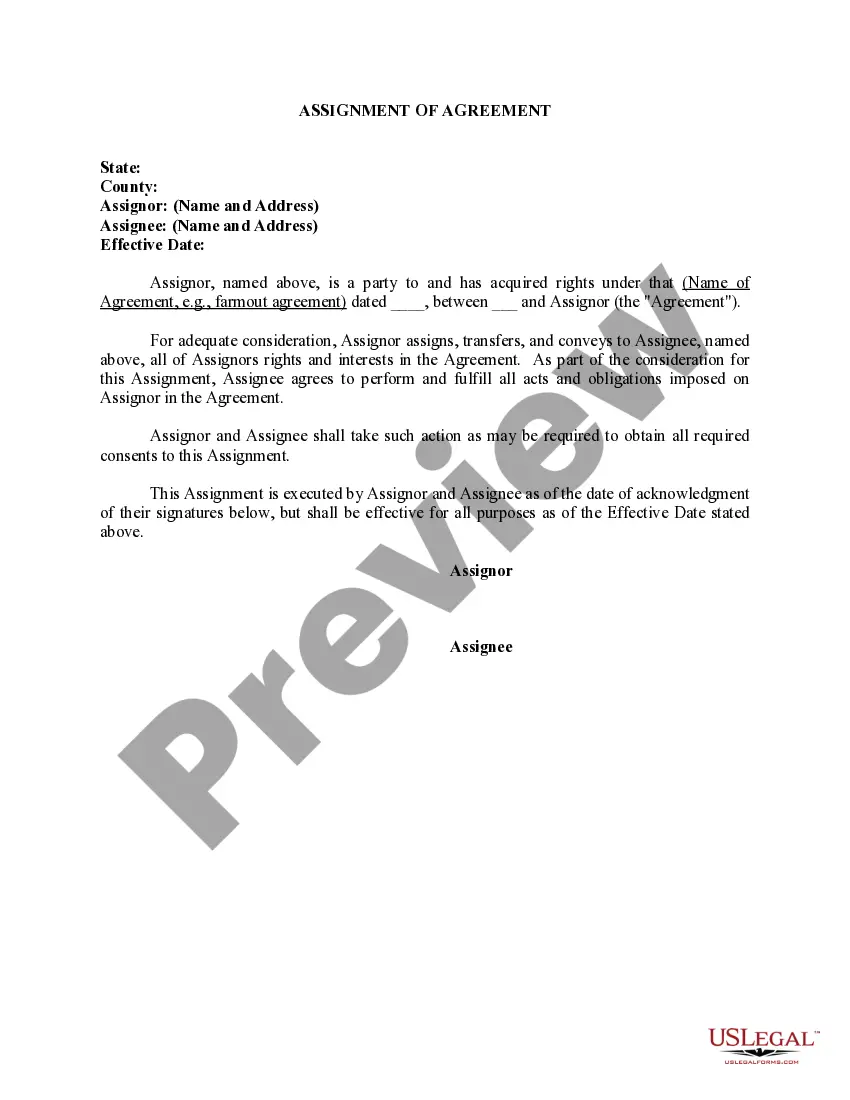
In your Assignment Agreement, you should include information like: the name of the person handing over contractual duties (called "the assignor"); the recipient of the contractual rights and obligations (called "the assignee"); the other party to the original contract (called "the obligor"); the name of the contract
In your Assignment Agreement, you should include information like: the name of the person handing over contractual duties (called "the assignor"); the recipient of the contractual rights and obligations (called "the assignee"); the other party to the original contract (called "the obligor"); the name of the contract